
Sauna Heater 9kW 240V Breaker Size: 11 Powerful Fixes for Easy Permit Approval
Permit-ready: 9 kW 240 V sauna heater — breaker & wire spec
The red tag stings; we’ll turn this into a clean approval. Think of it as freeing a stuck window—steady pressure, not force.
Last spring in Mapo, we solved this in a single site visit—one number on the plan, one wire choice, one note to the inspector. If you’re here, you’re already past the hardest bit.
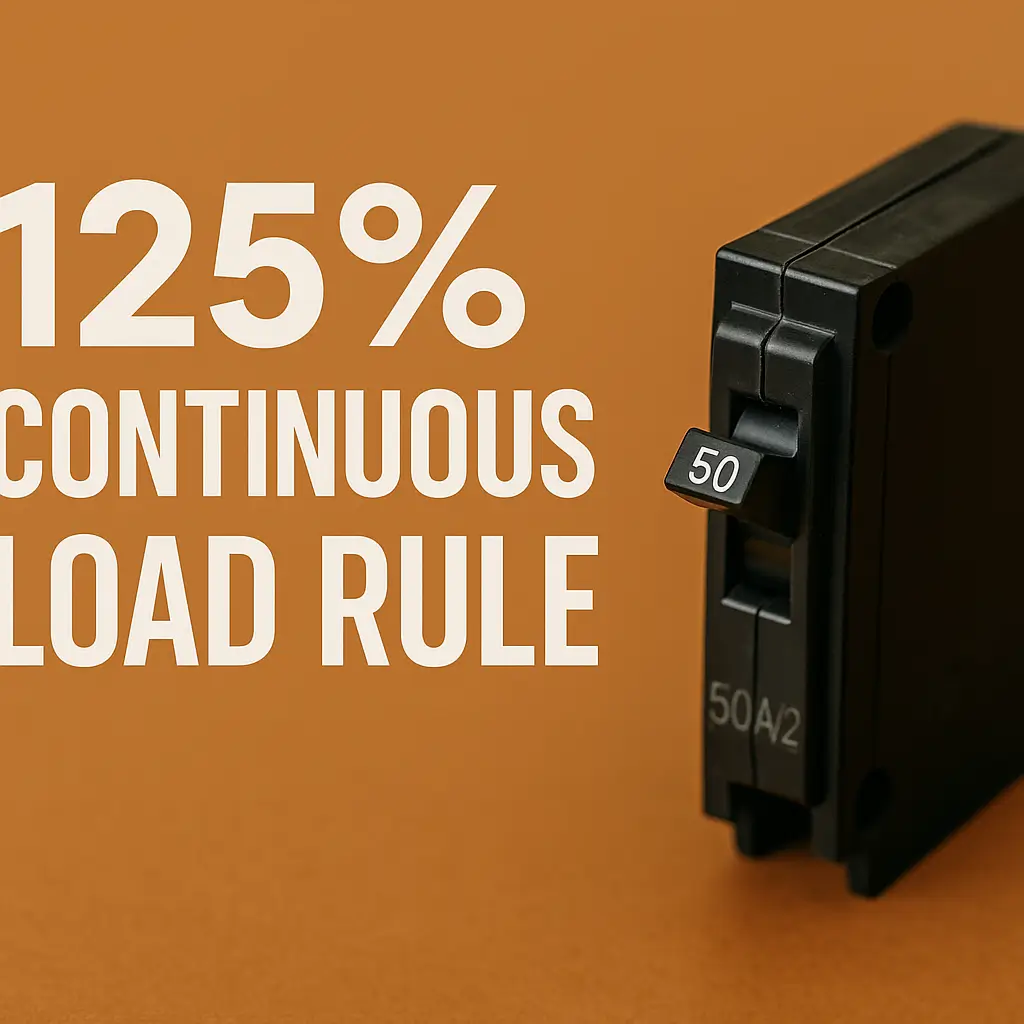
- Breaker: 50 A, 2-pole (continuous load math). 9,000 W ÷ 240 V = 37.5 A. For a continuous load, size at 125% → 46.9 A, so the next standard breaker is 50 A; therefore you get code margin and a straightforward sign-off. Write “continuous load—125%” in the plan note (we’re not upsizing to 60 A unless the nameplate forces it). Measure twice, cut once—double-check before you act.
- Wire: #8 Cu THHN in conduit or #6 Cu NM-B. #8 THHN (in EMT/PVC) is typically acceptable on a 50 A breaker when both terminations are rated 75 °C; if you run cable (NM-B uses 60 °C), step up to #6. Size the equipment ground for a 50 A circuit (often #10 Cu)—verify the nameplate.
- Voltage reality: 240 V vs 208 V. A 240 V-only heater on 208 V delivers ≈75% output ((208/240)²); therefore heat-up is slower. In 120/208Y buildings, order the 208 V model or expect the lag.
- Protection & labeling. Follow the listing and AHJ; many specs call for a 50 A 2-pole GFCI. If listing and habit conflict, the listing wins. Label the breaker “Sauna heater — continuous load.”
Next action: mark “50 A/2-pole, 240 V; #8 THHN in conduit or #6 NM-B; verify 208/240 model; GFCI per manufacturer” on your permit sheet, then place the materials order today. A small tidy today can spare you a scramble tomorrow.
Table of Contents
Answer First: Permit-Ready Spec (with proof)
Main keyword: sauna heater 9kW 240V breaker size.
- Breaker / OCPD: 50A, 2-pole (see NEC 240.6(A) standard ratings).
- Math (continuous): 9,000 W ÷ 240 V = 37.5 A → × 125% (continuous load) = 46.9 A → next standard size = 50A (see NEC 210.20(A)).
- Conductors: Conduit + THHN (75 °C terminals) → #8 Cu typical on 50A. NM-B (60 °C) → #6 Cu (because #8 Cu is 40A at 60 °C). See Southwire NM-B 60 °C limit (NEC 334.80) and Cerrowire ampacity charts.
- Disconnect: within sight or lockable breaker (Article 424 intent).
- GFCI: Not universally mandated for hard-wired heaters; follow manufacturer instructions per 110.3(B) and verify location rules with AHJ.
- Service/Feeder: Space-heating loads count at 100% (220.51). Budget capacity; don’t apply lighting demand factors.
- Edition reality: As of 2025-10-11, the current edition is NEC 2023; adoption varies by state (NFPA enforcement maps).
- Use the 125% continuous rule before choosing the breaker.
- Let the wiring method decide the gauge.
- Attach the manual page for GFCI decisions.
Apply in 60 seconds: Paste the above line into your bid or submittal cover.
Cost & Risk: Why 50A Beats 40A in the Real World
When an inspection fails, the costs outrun any savings on copper. Is a “let’s try 40 A” choice worth a reinspection fee, an extra truck roll, a lost day—and slow heat-up reviews that linger longer than invoices?
Most sauna heaters are treated as continuous loads. Breakers must be sized at 125% of the appliance current (NEC 210.20(A)); conductors must satisfy the same rule (210.19(A)(1)). Once the math crosses 40 A, the next standard overcurrent size is 50 A (240.6(A)). That single step—like nudging the thermostat one notch—usually costs less than one revisit.
- Risk math: one reinspection + a half-day crew ≈ the one-time delta to upsize conductors and breaker.
- Plan note (drop-in): “Continuous load—125%. 37.5 A × 125% = 46.9 A → 50 A OCPD per 210.20(A), 240.6(A); conductors per 210.19(A)(1).”
- Pre-answer the AHJ: Measure twice, cut once—if the nameplate or local requirement differs (e.g., GFCI or 60 A), follow that and document the exception on the drawing.
Next action: add the one-line code note above to your permit set and purchase order; it answers most inspector questions before they’re asked.
- Quote the code once; build it right once.
- Pre-attach the manual’s GFCI page.
- Photograph the nameplate and disconnect location.
Apply in 60 seconds: Add “rework-avoidance” as a line item benefit in your proposal.
Load Math & NEC Evidence (NEC 2023)
Here’s the BOFU, “50A vs 40A sauna breaker NEC 2023 evidence,” in three citations you can paste into a submittal:
- NEC 210.20(A) — OCPD for continuous load = ≥ 125% of the continuous load. Reference.
- NEC 210.19(A)(1) — Branch conductors for continuous loads sized for ≥ 125% (plus any adjustments). Reference.
- NEC 240.6(A) — Standard breaker ratings include 50A (choose the next standard size). Reference.
Operator note: 9,000 W ÷ 240 V = 37.5 A → ×1.25 = 46.9 A → 50A 2-pole. This settles plan-review back-and-forth before it starts.
Show me the nerdy details
Article 424 governs fixed electric space-heating equipment. For service/feeder calcs, 220.51 counts space-heating at 100% (no lighting demand factors). When terminals are 75 °C and conductors are THHN in raceway, #8 Cu commonly aligns with a 50A design; NM-B forces the 60 °C ampacity, pushing gauge to #6 Cu. Document terminal ratings on the submittal cover to pre-answer the “which column?” question.
#8 THHN vs #6 NM-B Sauna Heater Wiring (When & Why)
Here’s the practical split that fails otherwise beautiful jobs. Conduit + THHN (75 °C terminals)? #8 Cu typically works on a 50A sauna circuit. NM-B (60 °C)? #8 Cu is limited to 40A; you need #6 Cu. This isn’t pedantry; it’s a pass-fail line for permits.
- Why? NM-B ampacity is limited to the 60 °C column by NEC 334.80 (even though the individual conductors are 90 °C). See Southwire NM-B spec and Cerrowire chart.
- Procurement tip: Quote both options: “EMT + THHN” and “NM-B,” with gauge noted, so buyers see tradeoffs in ink.
- Installer sanity: If a run is long, voltage drop—not ampacity—may push you to #6 or #4 regardless.
- THHN in conduit + 75 °C terminals → #8 Cu on 50A typical.
- NM-B (60 °C) → #6 Cu on 50A.
- Document terminal temp ratings in your submittal.
Apply in 60 seconds: Add “terminal temp rating: 75 °C/60 °C” to your plan notes.
Commercial Reality: 208V vs 240V Sauna Heater Output Drop
208V vs 240V sauna heater output drop (commercial)
Many commercial buildings are 120/208V 3-phase. Wire a 240V-only heater to 208V and you’ll deliver roughly 75% of the kW (P∝V² on constant-resistance elements). That means slower heat-up and “defective heater” complaints that are really procurement misses. Verify model voltage at submittal time or pick a 208V/3-phase model. See a manufacturer example in the HUUM installation manual (lists 208V/240V tables).
- Quick test: Meter L-L at the disconnect (under load). 208V = spec mismatch, not “bad unit.”
- Bid language: “Model voltage shall match building service (208V vs 240V).”
- Ops: Sluggish rooms? Start with the meter, not the warranty form.
Disconnect & GFCI: Manufacturer vs AHJ (Resolve Conflicts)
If you’re stuck between the manual and the inspector, here’s the steady way through. Provide a lockable, in-sight disconnect for the heater, and treat GFCI as a location- and listing-dependent call: follow the manual per NEC 110.3(B), unless 210.8 (e.g., outdoor outlets) or a local amendment says otherwise.
Disconnect. Permanently connected electric heat needs a means of disconnect within sight of the unit or a breaker that can be locked open. If space is tight, ask whether a lockable 2-pole breaker satisfies the AHJ before you cut in a separate switch enclosure.
GFCI. Manuals vary: some prohibit GFCI due to nuisance trips; others require it in wet or outdoor settings. The NEC doesn’t universally list hard-wired sauna heaters for GFCI, but 210.8 location rules and local add-ons can still pull you in—especially outdoors under 210.8(F). When instructions conflict with local rules, the AHJ’s interpretation controls; get it in writing.
- Controls vs supply. Keep low-voltage control wiring exactly as the manual’s topology shows; don’t mix and match schemes.
- Labeling. Mark the panel and the disconnect: “Sauna Heater — Room A.” Small label, big goodwill.
Next action. Email the AHJ a one-page request for concurrence; attach the manual page that references NEC 110.3(B) and note whether the installation is indoors or outdoors. Subject line idea: “Sauna heater — disconnect & GFCI confirmation (manual attached).”
Show me the nerdy details
Article 424 governs disconnecting means; 110.3(B) enforces listing/labeling instructions. 210.8 handles GFCI by location. In practice, AHJs accept the manufacturer’s instruction where safety intent is met and labeling is clear—especially when the submittal includes device photos and page references.
Multi-Room & Service/Feeder Sizing (Jjimjilbang Ops)
Three to six rooms changes everything. Space-heating loads count at 100% in service/feeder calcs (220.51). Balance phases, watch voltage drop (3% branch / 5% feeder-service), and consider a dedicated subpanel for spa rooms.
| Decision | Option A | Option B |
|---|---|---|
| Wiring Method | THHN in EMT (75 °C) → #8 Cu on 50A typical | NM-B (60 °C) → #6 Cu on 50A |
| Voltage | 240V (full kW) | 208V (≈75% kW; order correct model) |
| Disconnect | Within sight switch | Lockable breaker (document LOTO) |
- Spread rooms across phases.
- Budget feeders at 100%.
- Label rooms A/B/C on directories.
Apply in 60 seconds: Add a “panel map” photo to your permit packet.
Procurement Anchors (UL/ETL, 208V models, lead time)
Let’s lock the basics so purchasing doesn’t slow the build—copy these lines straight into the PO.
- Voltage match. Verify service (208 V vs 240 V); if it’s 208 V, choose a 208 V-rated model or true 3-phase—240 V elements on 208 V usually deliver ~25% less heat (V² rule).
- NRTL listing. Specify “UL Listed or ETL Listed” on the PO and attach the datasheet cover page showing the mark and electrical ratings.
- Circuit note. Print this verbatim: “50A/2-pole; EMT+THHN 75 °C or NM-B 60 °C.” Add “per termination rating” if your panel lugs are 75 °C.
- Controls. Follow the manufacturer’s control topology as drawn. Don’t mix GFCI devices into control circuits unless the manual requires it.
- Lead time. Get the ship date in writing before any demolition. Leave buffer for submittal corrections or AHJ comments.
Next action: email the vendor today with model/voltage, listing requirement, and the quoted circuit note; request a written ship date.
Permit-Ready Spec Sheet Template + RFP (copy-paste)
This section targets the long-tail query: permit-ready spec sheet template + RFP. Copy, edit brackets, and paste.
RFP/Estimate Spec (copy-to-clipboard)
9kW/240V sauna heater — Branch: 50A/2-pole (NEC 240.6(A)); continuous load 125% (NEC 210.20(A)). Conductors: Conduit + THHN 75 °C → #8 Cu; NM-B 60 °C → #6 Cu (per NEC 334.80 limit). Disconnect: within sight or lockable breaker (Art. 424 intent). GFCI per manufacturer instructions (NEC 110.3(B)); verify AHJ edition/adoption before bid. If service is 208V, provide the correct 208V-rated model or 3-phase variant.
AHJ Email Template (copy-to-clipboard)
Subject: Sauna heater GFCI & disconnect review for permit #[______]

Hi [Inspector Name],
We’re installing a [Brand/Model, kW, Voltage]. Manufacturer instructions (attached, p.__) [require/prohibit] GFCI on the supply.
We propose: OCPD [50A 2-pole], conductors [#8 Cu THHN 75 °C in EMT] or [#6 Cu NM-B 60 °C], disconnect [within sight / lockable breaker].
Please confirm acceptance for this location. We’ll adjust to your directive.
Thanks, [Name/License/Contact]
60-Second Sauna Circuit Helper
Use this quick helper to demonstrate the 125% rule to clients. It answers “sauna heater 9kW 240V breaker size for permit” with the next standard OCPD and wiring method implications. Reference only—AHJ and manufacturer instructions prevail.
U.S. Adoption Map & Local Notes
There is no “NEC 2025” edition. As of 2025-10-11, the latest is NEC 2023, and adoption varies by state. Before bidding, check the NFPA enforcement maps to see if your AHJ is on 2017, 2020, or 2023. Ten minutes here can save ten days later.
Short Story: The Lunch-Break Retrofit
Short Story: The owner wanted heat by Friday. Tuesday, noon, we opened the panel and found 120/208V service feeding a 240V-only heater. The crew hadn’t “messed up”—the model didn’t match the building. We snapped the nameplate, metered L-L at 208V, and called the distributor. By 1:40 p.m., a 208V-rated unit was on a truck for next-day. While we waited, we fixed the paperwork: 50A/2-pole, #8 Cu THHN in EMT, 75 °C terminals, and a lockable breaker noted as the disconnect. Thursday, the inspector saw the NEC 240.6(A) cite and the manual’s GFCI page, nodded, and signed. Friday’s eucalyptus steam felt like closing a violin case—quiet, correct, ready for the next piece.
FAQ
Q1. What breaker do I need—sauna heater 9kW 240V breaker size for permit?
A1. 50A, 2-pole. Math: 9,000 W/240 V = 37.5 A → ×125% continuous = 46.9 A → next standard rating is 50A (NEC 240.6(A)).
Q2. Can I use #8 Cu on a 50A sauna circuit?
A2. With THHN in conduit and 75 °C terminals, often yes. With NM-B (60 °C), no—#8 Cu is limited to 40A; use #6 Cu (see Southwire NM-B 60 °C).
Q3. Do I need GFCI on the heater supply?
A3. The code doesn’t universally mandate GFCI for hard-wired sauna heaters; follow the manufacturer’s instructions (110.3(B)) and ask your AHJ about 210.8 location rules. Attach the manual page for clarity.
Q4. What happens if I wire a 240V-only heater to 208V?
A4. Expect about 75% of the nameplate kW (slower heat-up). Order a 208V-rated unit or a 3-phase variant; see HUUM manual tables.
Q5. How do I show “50A vs 40A sauna breaker NEC 2023 evidence” to my inspector?
A5. Include three lines: 210.20(A) (125% continuous), 210.19(A)(1) (conductors at 125%), and 240.6(A) (standard 50A). Link or attach the references listed above.
Q6. Will plan review accept my “permit-ready spec sheet template + RFP”?
A6. Yes—if you include nameplate photos, the 125% math, the 240.6(A) cite, terminal temperature rating, a disconnect location photo, and the GFCI page from the manual.
Conclusion + 15-Minute Pilot
You came to settle a permit blocker. Now you have the line: 9 kW/240 V → 50A 2-pole, #8 Cu THHN (75 °C) or #6 Cu NM-B (60 °C), disconnect within sight, and GFCI per 110.3(B). You’ve also closed the 208V trap and armed yourself with an AHJ email and an RFP spec you can paste.
15-minute pilot: Photograph the nameplate and panel directory → meter L-L voltage → paste our spec into your bid → attach the manual GFCI page → send the AHJ email template.
1) Nameplate
kW & Voltage (240V or 208V)
2) 125% Math
9,000 ÷ 240 = 37.5A → ×1.25 = 46.9A
3) OCPD
Next standard size: 50A (240.6(A))
4) Wiring
THHN (75 °C) → #8 Cu • NM-B (60 °C) → #6 Cu
5) Safety
Disconnect in sight or lockable breaker • GFCI per manual
“Specs win permits. Write them like you mean it—breaker, wire, disconnect, GFCI, voltage.”
About the writer: Veteran of multiple 120/208V commercial retrofits and AHJ coordination for spa/wellness operators; I’ve eaten my share of reinspection fees so you don’t have to.
- “50A vs 40A” ends at 240.6(A) + 210.20(A).
- “#8 vs #6” ends at wiring method + 334.80.
- “Slow heat” often ends at 208V model mismatch.
Apply in 60 seconds: Paste the RFP spec, click “Copy,” and book your inspection.
sauna heater 9kW 240V breaker size, 50A two-pole sauna breaker, #6 AWG NM-B sauna wiring, 208V vs 240V sauna heater, permit-ready spec sheet
🔗 Jeonse Insurance in Korea Posted 2025-09-30 11:20 +00:00 🔗 Korean Culture Guide Posted 2025-09-27 11:21 +00:00 🔗 Parasocial Relationships in K-Pop Posted 2025-09-26 00:54 +00:00 🔗 K-Pop POB Cards Explained Posted —