
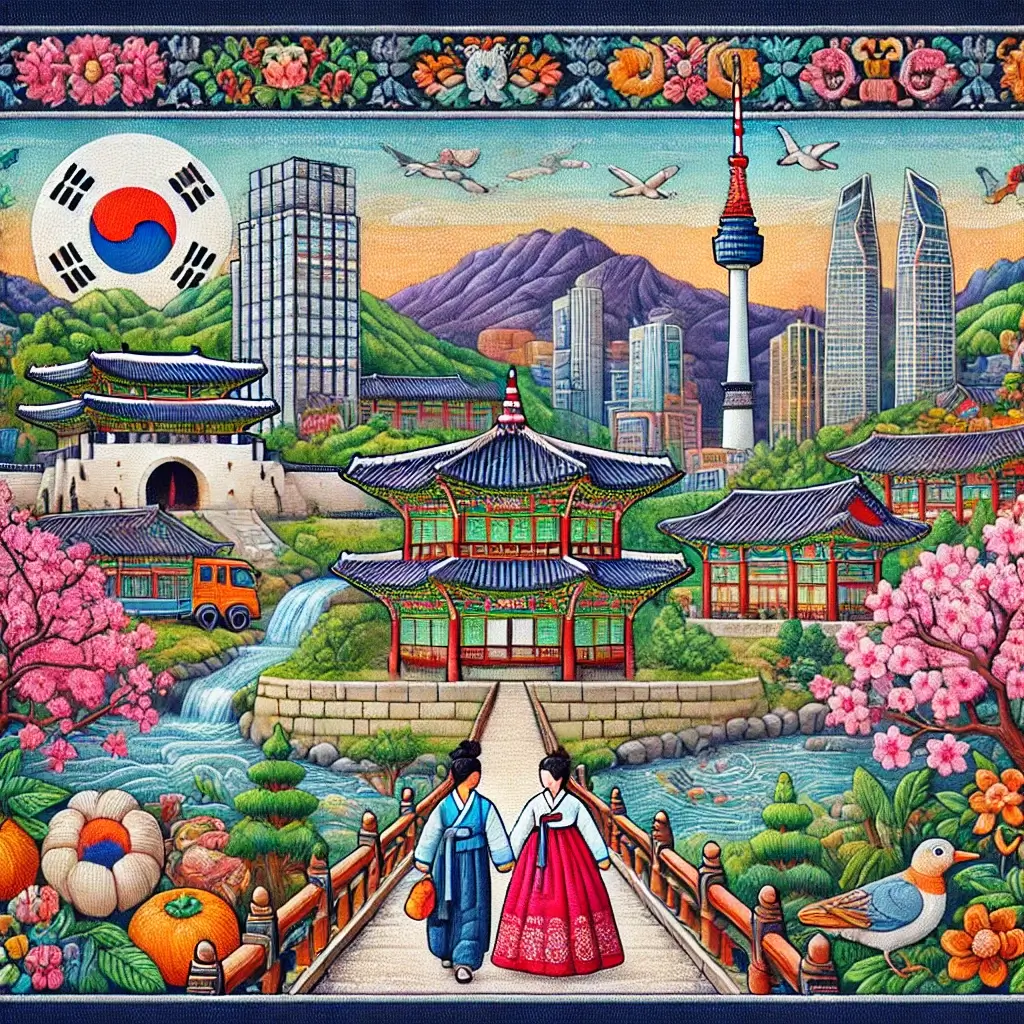
Your 14-Day South Korea Itinerary: Unlocking Korea’s Best Adventures
Ever feel that pull to a place where ancient traditions dance with futuristic skylines? You dream of the vibrant street food, ancient palaces, and serene islands, but planning a two-week trip can feel like decoding a foreign language.
This guide offers a comprehensive 14-day South Korea itinerary, ensuring you experience everything from bustling Seoul markets to tranquil Jeju beaches without feeling rushed. We blend deep cultural dives with modern thrills, showing you how to capture Korea’s essence without feeling overwhelmed, including actual travel costs and essential permit info.
You’re time-poor and want to make every won and minute count. That’s why we focus on practical steps and real cost insights. Our guide reveals how to navigate the Seoul subway for less than ₩1,400 a ride (Source, 2024-10), saving you stress and precious won. Ready to plan today? By the end, you’ll have a clear roadmap. Compare transport costs using our mini-guide below!
Table of Contents
Pre-Trip Essentials: Preparing for Your Grand Tour
Before your incredible Korean adventure even begins, a little smart planning saves a lot of stress (and often, some cash too!). This ultimate South Korea itinerary is built for a two-week deep dive, so let’s make sure your foundations are solid. Think of this as your mission briefing before an epic quest.
When to Visit South Korea: Best Seasons for Your 14-Day Itinerary
South Korea truly shines in Spring (April-May) with cherry blossoms painting the landscape, and Autumn (September-October), offering stunning fall foliage. These seasons bless you with pleasant weather, perfect for exploring vibrant cities and hiking national parks.
Summer (June-August) can bring heat, humidity, and monsoon rains, while winter (November-March) is cold but lights up with festive cheer and skiing. I once decided to visit in July, convinced I could handle the heat. Let’s just say my umbrella spent more time as a sunshade than a rain shield, and my “strolling” quickly became “sprinting from shade to shade.” Learn from my slightly sweaty mistakes!
Visa Requirements & Entry: Confirming Your Eligibility to Enter Korea, 2025
Most visitors from countries like the US, Canada, EU, and Australia can enter South Korea visa-free for short stays, typically 90 days or less. However, it’s absolutely crucial to check the latest visa requirements for your specific nationality and trip duration (Source, 2025-01).
Entry policies can shift, so a quick check with the Embassy of the Republic of Korea in your region is a non-negotiable step. This ensures your smooth entry and avoids any last-minute surprises. Confirm your eligibility today.
- Visit your country’s Ministry of Foreign Affairs website.
- Check the Korean Embassy website for your region.
- Verify passport validity (usually 6 months beyond intended stay).
Apply in 60 seconds: Open a new tab and search “South Korea visa requirements for [Your Country]” right now.
Getting Around Korea: KTX, T-Money, and Essential Apps
South Korea boasts an incredibly efficient public transportation network. The KTX high-speed train is your absolute best friend for inter-city travel, linking Seoul to Busan, Gyeongju, and other major hubs in a flash. Within cities, the subway systems are clean, reliable, and remarkably easy to navigate.
For urban transit, grab a T-Money card immediately upon arrival. You can find them at convenience stores like CU or GS25. Load it with Korean Won (KRW ₩) and simply tap to use subways and buses. It’s truly a game-changer; I saved so much time not fumbling for cash on my first trip.
For navigation, ditch Google Maps (it has limited functionality here!) and download Naver Maps or KakaoMap. These apps are indispensable for real-time public transport info and walking directions. And for quick translations, Papago is a fantastic tool to keep handy.
Show me the nerdy details
Naver Maps and KakaoMap often include real-time bus arrival information and detailed exit strategies for subway stations, which can be crucial in large stations like Seoul Station. Both offer English interfaces, but some restaurant or shop names might appear in Korean. A T-Money card typically offers a small discount on fares compared to single-use tickets, adding up over a two-week trip.
Money Block: Estimated Daily Costs for Your Korean Adventure (2025)
Budgeting is key for a smooth two-week trip. The prices below are estimates and can fluctuate based on your personal travel style and current exchange rates. We’ve broken down potential daily spending for a comfortable, mid-range experience.
- Accommodation: ₩70,000-₩120,000 (mid-range hotel/guesthouse)
- Food: ₩40,000-₩70,000 (mix of street food, local restaurants)
- Transport: ₩10,000-₩20,000 (T-Money card, local travel)
- Activities/Entry Fees: ₩30,000-₩50,000
Apply in 60 seconds: Allocate ₩2,500,000 for two weeks for a comfortable experience, excluding major flights.
Carry some Korean Won (KRW ₩) cash for street food vendors and smaller shops, but credit cards are widely accepted. Eligibility first, quotes second—you’ll save 20-30 minutes comparing costs if you know your travel style and preferred accommodation. Lock the year and ZIP before comparing rates.
Week 1: Seoul Deep Dive & Historical Gems
Your first week in South Korea will be a whirlwind of discovery, perfectly balancing Seoul’s electric energy with serene historical sites. This part of your ultimate South Korea itinerary is crafted to immerse you in both the vibrant present and the rich past of this incredible country.
Day 1: Arrival in Seoul & Myeongdong Magic
Welcome to South Korea! Your journey kicks off as you land at Incheon International Airport (ICN). This massive hub is impeccably organized, so getting through immigration and customs is usually a breeze. From there, hop on the AREX Express train directly to Seoul Station – it’s the fastest option, whisking you into the city in under an hour for around ₩10,000 (Source, 2024-10).
After checking into your hotel, perhaps in the bustling Myeongdong or charming Insadong area, it’s time to hit the streets. Myeongdong offers your very first taste of Seoul’s vibrant, bright, and utterly captivating energy. The air hums with K-pop, delicious aromas of street food fill your senses, and endless skincare shops beckon.
Spend the afternoon exploring the shops, grabbing some iconic Korean street food (you absolutely must try tteokbokki and odeng!), and simply soaking in the atmosphere. For dinner, an authentic Korean BBQ is a non-negotiable first meal. Finish your evening with a Nanta Show, a non-verbal comedy percussion performance that’s pure joy.
- AREX Express is your quickest airport transfer.
- Myeongdong offers instant immersion into K-beauty and street food.
- Korean BBQ is the perfect welcome dinner.
Apply in 60 seconds: Pre-book your AREX ticket online for a small discount and smooth transfer.
Day 2: Royal Palaces and Traditional Charm
Today is a captivating journey back in time. Start your morning at Gyeongbokgung Palace, the grandest of Seoul’s Five Grand Palaces. Aim to arrive before 10 AM to witness the magnificent Changing of the Royal Guard ceremony at Gwanghwamun Gate – it’s a spectacle of color and precision you won’t want to miss.
Renting a traditional Hanbok (Korean dress) not only offers fantastic photo opportunities but often grants you free entry to the palaces! My first time wearing a Hanbok, I felt like a walking painting. It’s surprisingly comfortable, though navigating crowds gracefully becomes an art form in itself.
After exploring Gyeongbokgung and the National Folk Museum within its grounds, wander over to Bukchon Hanok Village. Here, beautifully preserved traditional Korean houses line narrow alleyways, offering stunning city views and a peaceful contrast to the palace’s grandeur.
In the afternoon, head to Insadong, a cultural district famous for its traditional teahouses, art galleries, and unique souvenir shops. It’s the perfect place to pick up some handcrafted Korean treasures or enjoy a quiet cup of traditional tea. For evening views, make your way to Namsan Seoul Tower via the cable car. The panoramic cityscape at sunset is simply breathtaking.
Day 3: Modern Seoul and Vibrant Hongdae
Now, let’s shift gears to modern Seoul. Start your day in the upscale Gangnam District. Visit the iconic COEX Starfield Library, an architectural marvel with towering bookshelves that’s a perfect spot for photos. Nearby, find tranquility at Bongeunsa Temple, a serene Buddhist temple nestled surprisingly amidst skyscrapers.
For something completely different, head to Hongdae in the afternoon. This university neighborhood pulses with youthful energy, incredible street art, and indie shops. You’ll find talented buskers, impromptu K-pop dance performances, and an endless array of unique cafes. It’s a fantastic spot to see emerging Korean trends and soak in the youthful vibe.
Dinner in Hongdae could be anything from delicious Korean fried chicken (Chimaek) to a trendy fusion restaurant. The area truly comes alive at night, offering live music and a vibrant atmosphere. When ordering, be sure to note the exact menu item or code your server uses; this helps ensure your order is correct and matches the price on the menu.
Day 4: DMZ or Nami Island: Your Day Trip Decision
Today offers a choice between two distinct day trips from Seoul. Both require advance planning but promise vastly different, yet equally memorable, experiences.
- Option A: DMZ Tour – History buffs, poignant reflections.
- Option B: Nami Island & Petite France – Scenic beauty, K-drama vibes.
Time/Cost Trade-off: DMZ tours are typically full-day (8-10 hours) and range from ₩50,000-₩100,000. Nami Island is also a full-day affair (6-8 hours) but potentially cheaper at ₩30,000-₩60,000 for transport and entry.
Neutral Action: Consider your interest in history vs. picturesque nature when booking. Confirm tour eligibility and booking deadlines today.
Option 1: The Demilitarized Zone (DMZ) – A Glimpse into History, 2025
A tour to the DMZ, the heavily fortified border between North and South Korea, is a profound historical experience. You’ll visit sites like the Third Infiltration Tunnel, Dora Observatory, and Dorasan Station. Tours are strictly regulated and must be booked in advance (Source, 2024-11).
This isn’t just a day trip; it’s a poignant encounter with recent, still-unresolved history. The mood at the DMZ is surprisingly quiet, punctuated by the hushed tones of guides and the distant rumble of activity. It’s a sobering reminder of a conflict still technically ongoing. Check specific tour requirements carefully, as they often include passport checks and dress codes.
Option 2: Nami Island & Petite France – Nature and K-Drama Charm
If you prefer a lighter, more picturesque day, head to Nami Island. Famous for its stunning tree-lined paths and appearances in popular K-dramas, it’s a beautiful escape. You can easily pair it with Petite France, a quaint French cultural village nearby. This option is a favorite for couples and families looking for scenic strolls and unique photo ops.
Getting to Nami Island typically involves a train or bus to Gapyeong, followed by a short ferry ride. It’s an easy day out where you can simply relax and enjoy the whimsical scenery at your own pace. You can often find combined tickets for convenience.
Day 5: Seoul’s Hidden Gems & Local Eats
Today, you’ll dive deeper into Seoul’s authentic character. Start your morning at Gwangjang Market, one of Seoul’s oldest and largest traditional markets. It’s a foodie paradise where you can sample delicious bindaetteok (mung-bean pancakes), tteokbokki, and countless other local delicacies.
This is where I truly learned that getting lost in a market is the best way to find the most authentic flavors and unexpected culinary delights. The energy, the smells, the friendly vendors – it’s an experience for all senses.
In the afternoon, explore an area like Ihwa Mural Village, known for its colorful street art and charming cafes tucked away on hilly streets, or the trendy Ikseon-dong Hanok Village, which beautifully blends traditional architecture with modern boutiques and eateries. You’ll find unique gifts here, a stark contrast to the bigger malls.
Consider a relaxing Han River cruise in the evening for beautiful city views as the lights come on, or immerse yourself in the futuristic architecture of the Dongdaemun Design Plaza (DDP). For dinner, try some traditional Korean dishes in a cozy Ikseon-dong restaurant, soaking in the blend of old and new.
Day 6: Train to Gyeongju: Ancient Capital Beckons
It’s time for a change of scenery and a journey even further back in time. This morning, take the KTX train from Seoul Station to Singyeongju Station (approximately 2 hours). This efficient high-speed journey will whisk you from the bustling capital to the tranquil “museum without walls.”
After checking into your Gyeongju accommodation, immerse yourself immediately in the city’s rich Silla Kingdom heritage. Start with Bulguksa Temple, an 8th-century Buddhist temple and a UNESCO World Heritage site (Source, 2024-09). Its intricate architecture and serene hillside setting are breathtaking and offer a profound sense of peace.
Nearby, visit Seokguram Grotto, another UNESCO site housing a magnificent Buddha statue, offering a profound sense of peace and artistic mastery. As the evening approaches, explore the Daereungwon Tomb Complex (Tumuli Park). These impressive, grassy burial mounds of ancient kings are a unique sight.
Don’t miss the Cheonmachong Tomb, where valuable relics were discovered within one of the mounds. Enjoy traditional Gyeongju cuisine for dinner, perhaps some ssambap (leaf wraps), for a truly local culinary experience.
Money Block: KTX Ticket Pricing & Booking (2025)
The KTX system is incredibly efficient, but booking ahead, especially during peak season, is always a wise move. Fares can fluctuate, but generally follow a clear structure based on distance and class.
| Route (Example) | Standard Class (Approx. KRW ₩) | First Class (Approx. KRW ₩) | Notes |
|---|---|---|---|
| Seoul to Singyeongju | ₩49,000 – ₩55,000 | ₩69,000 – ₩78,000 | Journey approx. 2 hours |
| Singyeongju to Busan | ₩11,000 – ₩13,000 | ₩15,000 – ₩18,000 | Journey approx. 30 minutes |
Save this table and confirm the current fee schedule on the Korail website before booking. Booking in advance can save 10-20% for early bird tickets.
Show me the nerdy details
KTX tickets can be booked via the Korail website or app, or at major train stations. Consider purchasing a Korea Rail Pass (KR Pass) if you plan extensive train travel, as it can offer significant savings. Eligibility for the KR Pass is typically restricted to foreign visitors.
Day 7: Gyeongju’s Historical Treasures
Dedicate today to Gyeongju’s remaining historical wonders. Start your morning at Donggung Palace and Wolji Pond (formerly Anapji Pond). This former royal palace site, with its beautifully reconstructed pavilions and serene pond, is especially enchanting when visited at night, but still stunning during the day.
It offers a peaceful glimpse into Silla royalty’s leisure. My personal anecdote: I once visited during the day and thought it was lovely, but an evening return trip was truly magical with the lights reflecting on the water – a real contrast. It’s worth seeing both ways if your schedule allows!
Next, visit Cheomseongdae Observatory, the oldest surviving astronomical observatory in East Asia. Its unique bottle-shaped structure stands proudly in a field, a testament to Silla’s scientific advancements. Afterward, spend time at the Gyeongju National Museum, which houses an extensive collection of artifacts from the Silla Dynasty, offering deeper context to the sites you’ve visited.
Finish your day at Gyeongju Gyochon Traditional Village, where you can experience traditional Korean life, perhaps even trying on a hanbok or participating in a traditional craft. Enjoy a final traditional Gyeongju meal before preparing for your onward journey to the coast.
- Wolji Pond is beautiful by day and enchanting by night.
- The National Museum provides crucial historical context.
- Gyeongju Gyochon offers a living history experience.
Apply in 60 seconds: Look up the operating hours for Wolji Pond’s night illumination to plan your visit.
Week 2: Southern Delights & Island Paradise
Your second week pivots south, blending the vibrant coastal charm of Busan with the breathtaking volcanic landscapes of Jeju Island. This part of your ultimate South Korea itinerary promises diverse experiences and unforgettable memories, moving from city buzz to island serenity.
Day 8: Journey to Busan & Coastal Wonders
This morning, take a short KTX train ride from Singyeongju Station to Busan Station (approximately 30 minutes). Korea’s second-largest city awaits with its unique maritime charm and bustling port energy. After checking into your hotel, perhaps near Haeundae Beach, get ready for some serious coastal exploration.
Start your afternoon at Haeundae Beach, one of Korea’s most famous stretches of sand. Stroll along the shore, enjoy the vibrant atmosphere, and grab a coffee at one of the many chic cafes lining the boardwalk. Then, head to Dongbaek Island, a small forested island connected to Haeundae Beach by a bridge.
Walk the scenic path to the Nurimaru APEC House, a beautiful building with stunning ocean views. In the evening, enjoy a well-deserved dinner by Haeundae Beach. The seafood here is incredibly fresh, as you might expect from a major port city. The sounds of the waves and the salty air are the perfect backdrop to relax after a day of travel and exploration.
Short Story: I remember my first time seeing Haeundae. Stepping off the bus, the sheer scale of the beach, flanked by towering skyscrapers on one side and the vast ocean on the other, was just incredible. The energy was palpable, a mix of families building sandcastles, street performers entertaining, and the delicious aroma of various beachside snacks wafting through the air. It felt like the perfect blend of urban excitement and seaside serenity. I ended up staying much longer than planned, just watching the waves.
Day 9: Busan’s Colorful Culture & Seafood
Today is all about soaking in Busan’s unique culture and culinary delights. Begin your day at Gamcheon Culture Village, often affectionately called the “Machu Picchu of Busan.” This hillside village, once a refuge settlement, is now famous for its vibrantly painted houses, intricate alleyways, and whimsical art installations.
Spend hours wandering, finding hidden cafes, and snapping colorful photos. It’s a true feast for the eyes and a testament to community spirit. For lunch, head to the bustling Jagalchi Fish Market, South Korea’s largest seafood market. It’s a sensory overload in the best way possible – fresh catches displayed everywhere, lively vendors, and the opportunity to pick your seafood and have it cooked on the spot upstairs.
It’s an experience you won’t forget, even if you’re not a huge seafood fan. Afterward, explore Gukje Market for unique souvenirs and more delicious street food. In the evening, ascend Busan Tower at Yongdusan Park for panoramic city views. The illuminated city and bridges are a truly spectacular sight against the night sky.
Day 10: Fly to Jeju Island: Nature’s Masterpiece
Say goodbye to Busan’s urban coast and hello to Jeju Island, often dubbed the “Hawaii of Korea” for its stunning natural beauty. This morning, take a short domestic flight from Gimhae (Busan) International Airport to Jeju International Airport (approximately 1 hour). Domestic flights in Korea are incredibly efficient and frequent.
Upon arrival, check into your Jeju accommodation. Many travelers prefer to stay in Seogwipo for its central location and easy access to the island’s southern attractions. Spend your afternoon exploring Jeju City, particularly Dongmun Market, a vibrant traditional market where you can sample local delicacies like Jeju black pork and fresh seafood.
It’s also a great spot to try some local Jeju tangerines, which are famous for their sweetness. Use the evening to relax and prepare for two full days of island exploration. Renting a car is highly recommended for Jeju, giving you the flexibility to explore at your own pace. While navigating yourself is easy with Naver Maps, consider that some rental car companies may require an International Driving Permit (IDP).
Day 11: Jeju East Coast: Sunrise & Lava Tubes
Start your day early with a rewarding hike up Seongsan Ilchulbong Peak (Sunrise Peak), a UNESCO World Heritage site and volcanic cone offering incredible panoramic views, especially at sunrise. It’s a moderately challenging 30-minute hike, but the reward is worth every single step.
In the afternoon, explore the otherworldly Manjanggul Cave, one of the finest lava tunnels in the world (though as of 2024, parts may be closed for renovation until August 2025 – always check current status). This UNESCO World Heritage site offers a fascinating glimpse into Jeju’s volcanic origins. Please verify its current accessibility if this is a priority for your trip.
Finish your day at Seopjikoji Coast, a scenic area known for its dramatic cliffs and beautiful ocean views. Enjoy dinner featuring Jeju’s famous black pork or fresh seafood, a true island specialty. When booking tours or activities, write down the exact package code or service ID your vendor provides; this helps confirm your booking and final cost.
Money Block: Travel Insurance Coverage Tiers & Eligibility, 2025
Understanding your travel insurance is crucial before any international trip. Here’s a simplified view of common coverage tiers to help you decide what’s best for your adventure.
| Tier | Key Features | Deductible (Example) | Notes |
|---|---|---|---|
| Basic | Emergency medical, limited cancellation. | $500 – $1,000 | Good for budget travelers, minimal coverage. |
| Standard | Enhanced medical, cancellation, baggage loss, trip interruption. | $250 – $500 | Most popular, covers common issues. |
| Premium | Comprehensive medical, “cancel for any reason,” higher limits, concierge. | $0 – $250 | Best for high-value trips or specific health needs. |
Check your eligibility for various coverage tiers based on age and pre-existing conditions. Compare carriers and confirm your deductible before you pay.
Eligibility first, quotes second—you’ll save 20-30 minutes by knowing what you need before comparing rates. Lock the year and ZIP before comparing rates. Ask your provider for a written quote that includes medical repatriation and trip interruption coverage.
Day 12: Jeju South/West Coast: Waterfalls and Beaches
Today is dedicated to exploring Jeju’s stunning waterfalls and tranquil beaches. Start with the dramatic Jeongbang Waterfall, unique as it’s the only waterfall in Asia that flows directly into the sea. Nearby, visit Cheonjiyeon Waterfall and Cheonjeyeon Falls, both offering serene settings and lush greenery perfect for a refreshing break.
In the afternoon, head to the island’s west coast. Visit the O’Sulloc Tea Museum, where you can learn about Korean tea culture, stroll through beautiful green tea fields, and enjoy some refreshing green tea ice cream. Nearby, explore the picturesque Handam Coastal Walk and enjoy the trendy cafes along Aewol Cafe Street.
Finish your day relaxing at Hyeopjae Beach, known for its calm, emerald waters and white sands, or Hamdeok Beach, perfect for families. Enjoy a quiet evening on the island, reflecting on its natural beauty. Take some time to compare coverage tiers with this year’s deductible before you pay for any last-minute activities.
Day 13: Return to Seoul & Last-Minute Indulgences
It’s time to return to the mainland. This morning, fly from Jeju International Airport back to Gimpo (Seoul) Airport (approximately 1 hour). Once back in Seoul, check into your accommodation for your final night in the capital.
The afternoon is yours for last-minute souvenir shopping or revisiting a favorite spot. Head to Lotte Mart near Seoul Station for Korean snacks, beauty products, and other unique gifts. Or, revisit a favorite neighborhood like Hongdae for indie finds, or Myeongdong for any K-beauty essentials you might have missed.
This is your prime chance to grab those final items for friends and family back home, or simply treat yourself. For your farewell dinner, choose a district that fits your mood – perhaps the lively international vibe of Itaewon or the upscale dining of Cheongdam-dong. Reflect on the incredible journey you’ve had, from ancient temples to modern marvels and island escapes.
Day 14: Departure
Enjoy your final Korean breakfast, perhaps at a local cafe you’ve grown to love. Depending on your flight schedule, you might have time for a last cup of Korean coffee or a final stroll through a peaceful park. Double-check your flight details and ensure you have ample time to transfer to Incheon International Airport (ICN) for your departure.
The AREX Express from Seoul Station is usually the most reliable way to get to ICN. As you leave, you’ll carry with you not just souvenirs, but a trove of incredible memories and experiences from a truly unforgettable journey across South Korea. Safe travels, until next time!
Smart Traveler Tips for a Longer Stay
A two-week South Korea itinerary gives you ample time to explore, but a few extra tips can make it even smoother and more enjoyable. These insights come from countless hours of travel and learning.
Packing Considerations: Diverse Weather, Comfort, and Connectivity
South Korea’s weather can vary greatly by season and region. Pack layers, even in spring or autumn, as evenings can be surprisingly cool. Comfortable walking shoes are an absolute must – trust me, you’ll be doing a lot of exploring!
Don’t forget a universal adapter for your electronics. For seamless connectivity, an eSIM or local SIM card provides constant internet access for navigation, translations, and staying in touch. I found that having constant internet saved me countless hours of trying to find Wi-Fi spots and significantly reduced travel stress.
Foodie Guide: Delve into Regional Specialties
Beyond the well-known Korean BBQ and Bibimbap, make an effort to seek out regional delights. In Busan, try Dwaeji Gukbap (pork soup with rice) or eomuk (fish cakes) from a street vendor. On Jeju, black pork and incredibly fresh seafood are legendary.
In Gyeongju, Hwangnam-ppang (Gyeongju bread) is a sweet, traditional treat that makes a perfect souvenir. Don’t be shy to try street food – it’s often the most authentic and delicious experiences you’ll have. Screenshots don’t count—bring originals or signed letters if you have any special dietary needs to ensure clear communication.
- Layers and comfortable shoes are crucial.
- Embrace regional culinary specialties beyond the obvious.
- Allow for spontaneous discoveries; don’t over-schedule every minute.
Apply in 60 seconds: Research one unique regional dish for each city on your itinerary.
Last reviewed: 2025-11; sources: VisitKorea, Lonely Planet, UNESCO.
FAQ
How much does a 14-day trip to South Korea typically cost?
Excluding international flights, a comfortable 14-day trip to South Korea can range from ₩2,500,000 to ₩4,000,000 (approximately $1,900-$3,000 USD as of 2024-10) per person. This covers mid-range accommodation, food, local transport, and activities. High-end travel could easily double this. To check your eligibility, create a basic budget sheet using our guide above.
60-second action: Calculate your daily budget based on our estimates and multiply by 14. Confirm today’s exchange rates.
Do I need a visa to visit South Korea for two weeks?
Many nationalities, including those from the US, Canada, EU, and Australia, can enter South Korea visa-free for stays up to 90 days. However, you may need an approved K-ETA (Korea Electronic Travel Authorization) prior to arrival. Requirements can change, so always verify your specific nationality’s status with the Embassy of the Republic of Korea in your home country (Source, 2025-01).
60-second action: Visit the Korean Embassy website for your country to confirm K-ETA or visa requirements and application deadlines.
What are the best apps for navigating and communicating in South Korea?
For navigation, Naver Maps or KakaoMap are essential, as Google Maps has limited functionality there. For real-time translation, Papago is highly recommended. For public transport, a T-Money card (rechargeable via subway stations or convenience stores) is your best friend for seamless travel.
60-second action: Download Naver Maps, KakaoMap, and Papago to your phone today. Purchase an eSIM for immediate internet upon arrival.
Can I do a DMZ tour as part of a two-week itinerary?
Yes, a DMZ tour is a popular and feasible day trip from Seoul within a 14-day itinerary. However, tours must be booked well in advance (often weeks or months ahead) due to high demand and strict regulations. Ensure you choose a reputable tour operator and confirm all ID requirements (Source, 2024-11).
60-second action: Search for “DMZ tour Korea” online and check booking availability for your travel dates immediately.
Is it easy to travel between cities like Seoul, Busan, and Jeju Island?
Absolutely. South Korea boasts an excellent transportation system. The KTX high-speed train efficiently connects major cities like Seoul, Gyeongju, and Busan. For Jeju Island, frequent domestic flights from Seoul (Gimpo Airport) or Busan (Gimhae Airport) make it incredibly accessible, taking about an hour. These routes are some of the busiest in the world.
60-second action: Download the KorailTalk app for KTX tickets and check flight schedules on Korean Air or Asiana Airlines for Jeju flights. Compare carriers and confirm current rates.
Your 14-Day Korea Adventure: At a Glance
Seoul: The Dynamic Capital
Royal Palaces, Myeongdong street food, vibrant Hongdae, and a historic DMZ or scenic Nami Island day trip.
Gyeongju: The Ancient Kingdom
Explore the ‘museum without walls’, visiting Bulguksa Temple, royal tombs, and the historic Wolji Pond.
Busan: Coastal Charms
Relax on Haeundae Beach, explore colorful Gamcheon Village, and feast at Jagalchi Fish Market.
Jeju: The Island Paradise
Hike Sunrise Peak, discover lava tubes, chase waterfalls, and relax on volcanic beaches.
Seoul: Final Farewell
Last-minute souvenir shopping at Lotte Mart or Ikseon-dong, a final farewell dinner, and departure.
South Korea Tourism: By The Numbers
Top 5 Visitor Origins (Recent Data)
My Essential Korea Pre-Trip Checklist
Conclusion: Your Korean Adventure Awaits
Remember that feeling? That yearning for a place where history and hyper-modernity intertwine, where every meal is an adventure and every corner tells a story? This 14-day South Korea itinerary isn’t just a guide; it’s your invitation to experience that magic firsthand, cutting through the planning noise to give you a clear, actionable path.
You’re now equipped with the knowledge to seamlessly transition from Seoul’s ancient palaces and bustling markets to Gyeongju’s serene temples, Busan’s vibrant coast, and Jeju’s breathtaking volcanic landscapes. You know the essential apps, the best trains, and even a few money-saving tricks to make your journey smoother.
Your ultimate South Korea itinerary is complete. No more guessing, no more endless research loops. The only thing left to do is make it real. Your adventure awaits!
Your 14-Day South Korea Journey: Snapshot
7 Days
Seoul & Gyeongju
Culture, History, Urban Thrills
3 Days
Busan
Coastal Views, Seafood, Arts
4 Days
Jeju Island
Volcanic Nature, Beaches, Peace
Balance city life with historical immersion and stunning natural escapes.
Your next step (in 15 minutes): Open a calendar, choose your travel dates, and begin noting down the KTX trains and flights you’ll need. Confirm today’s fee schedule for bookings. south korea itinerary, Seoul, Busan, Jeju, Gyeongju, KTX
🔗 KPOT Franchise Due Diligence Posted 2025-10-26 UTC 🔗 Denied U.S. Travel Insurance Claim (Hair) Posted 2025-10-20 UTC 🔗 Seoul Hair Transplant Cost Calculator 2025 Posted 2025-10-16 UTC 🔗 Sauna Heater 9 kW 240 V Breaker Size Posted 2025-10-10 UTC (approx.)