
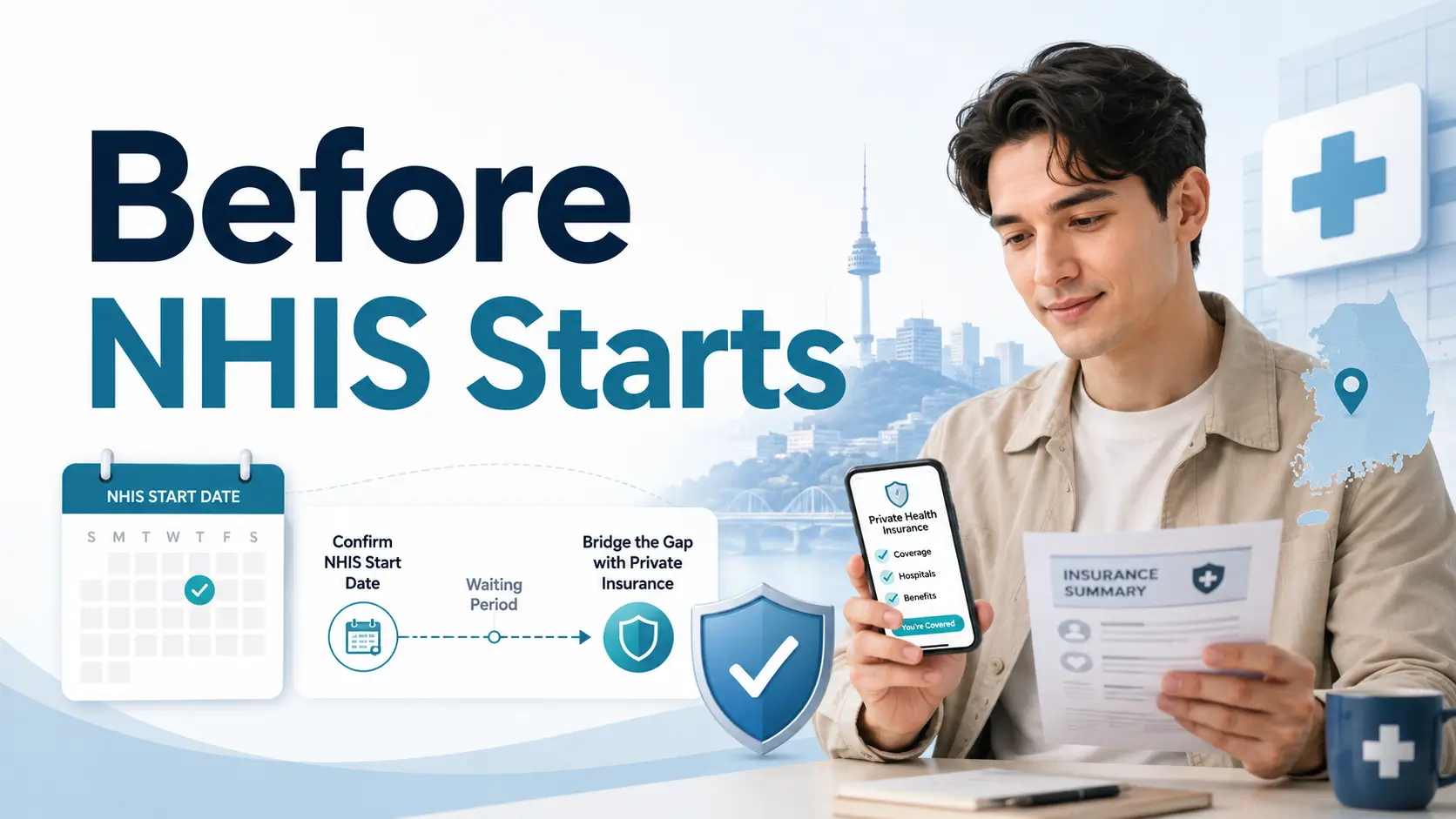
Private health insurance can protect you during the period before Korean National Health Insurance begins, but the first thing to verify is whether you actually have an NHIS waiting period. The widely repeated “six-month rule” applies to many non-employed foreign residents entering the regional insurance system. It does not apply in the same way to everyone.
A foreign employee may enter National Health Insurance through an insured workplace without waiting six months. Certain immigration statuses and study situations can also produce an earlier eligibility date. Foreign dependents follow another set of rules.
If there really is a gap, private insurance can bridge it. The expensive mistake is assuming that “insured” means the policy will pay for whatever happens in Korea. A travel medical policy, international health plan, and employer health plan can have very different rules for outpatient treatment, pre-existing conditions, prescriptions, pregnancy, mental health care, chronic disease, deductibles, and direct billing.
The decision sequence is therefore simple: confirm your actual NHIS start date first, then buy only the private coverage needed for the risk that remains.
Table of Contents
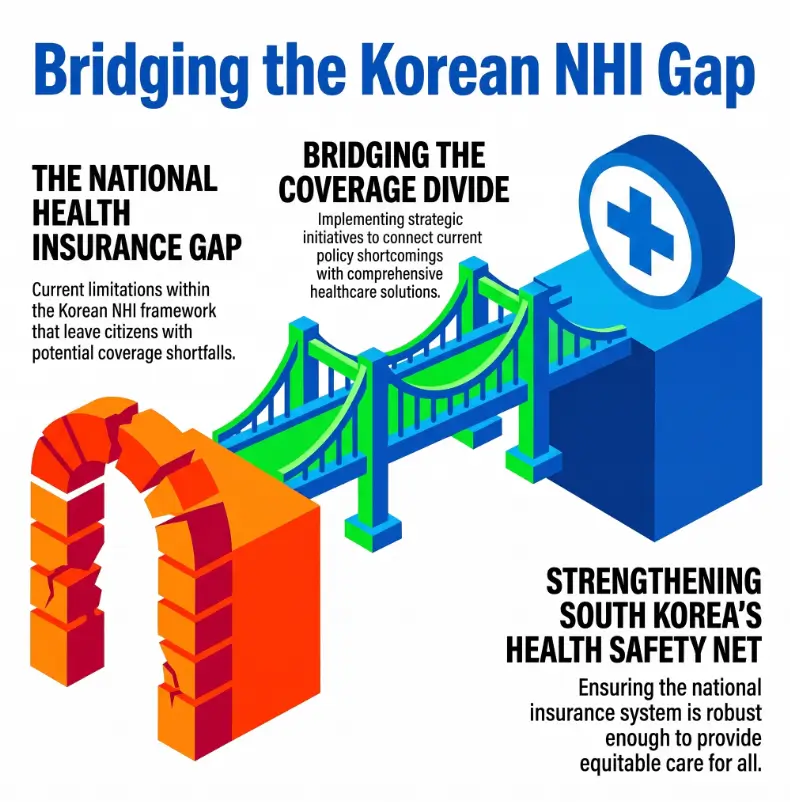
The Six-Month NHIS Gap Is Not Universal
Korea’s National Health Insurance system is administered by the National Health Insurance Service, or NHIS. For foreign residents, the route into the system matters more than the phrase “six months after arrival.”
| Situation | What Usually Matters | What to Verify |
|---|---|---|
| You work at an NHIS-covered workplace | Employee-insured rules apply rather than the ordinary regional six-month rule | Your actual employee eligibility date with your employer and NHIS |
| You are a non-employed long-term foreign resident | Many eligible foreign residents enter regional insurance after six months of Korean residence | Your visa, registration status, arrival history, and exact eligibility date |
| You have a status that permits earlier regional eligibility | Certain residence reasons, including specified study and immigration statuses, are treated differently | Whether your status qualifies from entry, enrollment, or another date |
| You want coverage as an employee’s dependent | Relationship, income, property, and residence conditions may apply | Whether NHIS accepts your dependent application |
| You are a short-term visitor | The long-term foreign-resident NHIS route may not apply at all | Your private or travel medical coverage for the entire stay |
NHIS currently states that foreigners who are not employee-insured and who meet the relevant long-term residence conditions are generally subject to regional insurance after six months. Its guidance for foreign residents also lists the visa categories and special situations covered by the foreign-resident rules.
The six-month calculation also has rules for time spent outside Korea. Do not simply count six calendar pages forward from the date stamped into your passport if you have had a substantial trip abroad.
For a broader explanation of employee, regional, and foreign-resident enrollment, see our guide to Korean health insurance for foreigners.
A Foreign Spouse or Child May Not Need the Same Gap Policy as You
Family coverage is an easy place to waste money because foreign family members are not automatically treated identically.
A foreign family member may be able to become a dependent of an employee-insured person if the statutory relationship and financial conditions are met. Under the current National Health Insurance Act, the ordinary residence-period condition is treated specially for an employee-insured person’s spouse and children under 19. Other dependent conditions still have to be satisfied.
That means a family arriving together should not automatically buy identical six-month private policies for every person. Ask NHIS whether a spouse or child can enter through dependent status first.
This distinction is particularly important when one spouse begins insured employment soon after arrival while the other spouse does not work. The employment route may change the family’s insurance problem before the regional six-month date arrives.
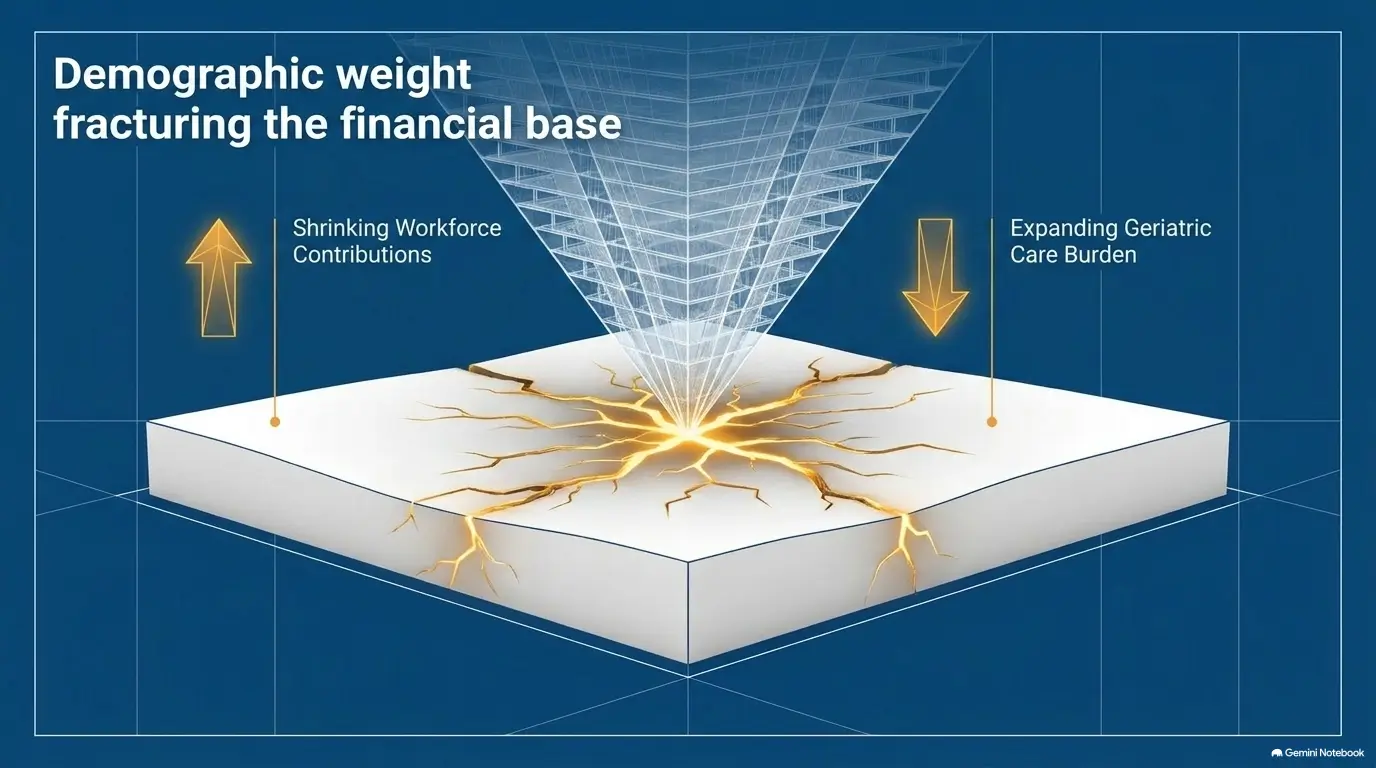
What Private Health Insurance Can Actually Bridge
Private insurance before NHIS should be thought of as a temporary risk-transfer contract, not as a private copy of Korea’s public insurance system.
Three broad forms of coverage appear most often.
| Coverage Type | Often Useful For | Main Question |
|---|---|---|
| Travel medical insurance | Unexpected illness, injury, emergency treatment during a defined trip | Does it cover non-emergency outpatient care or only unforeseen events? |
| International private medical insurance | Longer stays, hospitalization, outpatient care, ongoing international coverage | Which benefits are included rather than optional? |
| Employer or group medical plan | Employees and sometimes family members | When does coverage start, and what happens when employment ends? |
A relatively inexpensive travel plan may be perfectly sensible if your gap is short and your goal is protection against an unexpected hospitalization. It may be a poor fit if you need monthly prescriptions, repeated specialist visits, pregnancy care, psychiatric treatment, or management of a condition diagnosed before the policy began.
Conversely, paying for a broad international plan can be unnecessary if NHIS will begin through your employer next week. This is why the NHIS date belongs at the top of the buying decision, not at the bottom.
Check These Exclusions Before You Rely on a Private Policy in Korea
There is no universal list of private health insurance exclusions. The contract controls. Instead of assuming that a category is covered or excluded, search the policy wording for the following issues.
- South Korea and geographic limits: confirm that treatment received in Korea is inside the covered territory.
- Pre-existing conditions: check how the insurer defines a condition, symptom, diagnosis, treatment, or medication that existed before coverage started.
- Outpatient care: confirm whether ordinary clinic visits, specialists, diagnostics, and prescriptions are included.
- Chronic disease: check whether ongoing treatment and maintenance medication are covered or limited.
- Pregnancy and maternity: look for waiting periods, maternity sublimits, prenatal restrictions, newborn rules, and fertility exclusions.
- Mental health: confirm whether psychiatric visits, counseling, hospitalization, and related prescriptions are covered separately.
- Dental and vision: do not assume these are included in medical coverage.
- Preventive care: vaccines, screening, routine examinations, and checkups may be treated differently from illness treatment.
- Deductibles and coinsurance: identify what you must pay before or after the insurer contributes.
- Annual and per-condition limits: a policy can be “covered” while still placing a relatively low ceiling on a particular treatment category.
- Waiting periods: coverage may exist in the policy but not yet be usable for certain benefits.
- Preauthorization: hospitalization, surgery, advanced imaging, or expensive treatment may require approval before care begins.
- Emergency evacuation and repatriation: these benefits are different from ordinary Korean medical treatment and may have separate conditions.
The most dangerous sentence in an insurance summary is often not “excluded.” It is a sentence such as “subject to policy terms,” “medically necessary treatment only,” or “prior approval required.” Those phrases send you back to the full policy wording.
A Visa Insurance Requirement Is Not the Same as Good Gap Coverage
Foreign residents sometimes buy insurance because immigration requires evidence of medical coverage. That solves a documentation problem. It does not automatically solve every medical-cost problem.
A policy may satisfy a visa-related insurance requirement yet still contain a deductible, reimbursement process, exclusions, or benefit limits that matter when you actually visit a hospital.
If you are in Korea under the digital-nomad route, treat immigration compliance and medical protection as two separate checks. Our Korea digital nomad visa insurance guide covers the visa-specific side of that decision.
Before Treatment, Separate the Hospital Price From the Insurance Claim
A foreign insurance card does not necessarily change the amount a Korean clinic asks you to pay at the counter.
Some international insurers have direct-billing arrangements with particular hospitals. Many do not. In a reimbursement model, you pay the Korean provider first and submit documents to the insurer afterward.
If you do not yet have Korean National Health Insurance on the treatment date, do not assume the familiar NHIS copayment percentages apply to your bill. Ask the provider what you will be charged as a self-paying patient before non-urgent treatment.
Before a planned consultation, scan, procedure, or admission, ask these questions:
- What is the expected self-pay amount if I do not have NHIS coverage on the treatment date?
- Does the estimate include doctor fees, facility charges, tests, medication, anesthesia, medical materials, and follow-up?
- Is any deposit required?
- Can you provide an itemized medical cost statement?
- Can you provide documents in English, or will the insurer accept Korean documents?
- Are document-issuance fees charged separately?
For insurance claims, useful Korean document names to recognize include 진료비 계산서·영수증, the medical bill and receipt, and 진료비 세부산정내역서, the detailed medical cost statement. Your insurer may also ask for a prescription, treatment record, or medical certificate depending on the claim.
Ask the insurer what it needs before purchasing extra certificates. Korean hospitals can charge separately for some medical documents, and there is little reason to buy paperwork that your insurer does not require.
NHIS Will Still Leave Copayments and Non-Covered Services
Reaching your NHIS eligibility date does not turn Korean health care into a zero-cost system.
Once eligible, foreign subscribers generally receive the same National Health Insurance benefits as Korean subscribers. NHIS covers qualifying medical benefits while the patient pays the applicable share. The amount depends on factors such as the type of treatment and level of medical institution.
NHIS also distinguishes covered services from non-covered services, called 비급여. Non-covered charges can remain entirely the patient’s responsibility. The official NHIS benefits information explains the public insurance benefit and copayment structure.
This is why “NHIS starts next month” does not necessarily mean “all private insurance becomes useless next month.” A private policy may still have value if it provides benefits you want beyond NHIS. It may also become unnecessary or poor value if its main purpose was merely to cover the pre-NHIS interval.
Private Insurance Does Not Automatically Let You Opt Out of NHIS
This is the distinction many foreign residents discover too late: owning private insurance and being legally excluded from Korean National Health Insurance are not the same thing.
Under Article 109 of the National Health Insurance Act, a foreign resident who can receive medical protection equivalent to Korean health insurance through foreign law, foreign insurance, or an employer arrangement may be able to apply for exclusion from NHIS. This is an application-based statutory exception, not an automatic effect of carrying an insurance card.
There is another important trap. The current National Health Insurance Act Enforcement Rule limits foreign insurance used for this exclusion route to insurance obtained before the relevant Korean registration or reporting described in the Act. NHIS must also accept the evidence and the level of medical protection.
In other words, buying a foreign policy after becoming subject to NHIS should not be treated as a simple way to cancel Korean public insurance.
NHIS guidance also contains timing rules for exclusion applications that can affect when employee or regional eligibility ends. If opting out would materially affect your premiums or coverage, confirm the procedure with NHIS before acting rather than relying on an insurer, employer, online forum, or relocation agent to interpret the rule.
Your 10-Minute Gap-Coverage Check
Before buying or renewing private insurance, put four dates and ten policy answers on one page.
Step 1: Write Down Your Four Dates
- Date you entered Korea
- Date of foreigner registration or relevant residence registration
- Date employment began, if applicable
- Date NHIS says your coverage becomes effective
The fourth date is the one that determines the size of the genuine coverage gap.
Step 2: Search Your Policy PDF
Search the document for these words rather than reading only the marketing summary:
- Korea or South Korea
- pre-existing
- waiting period
- outpatient
- inpatient
- prescription
- maternity
- mental health
- deductible
- coinsurance
- preauthorization
- direct billing
- exclusion
- cancellation
Step 3: Ask One Claims Question
Ask your insurer: “If I receive non-emergency outpatient or inpatient treatment in South Korea before my Korean NHIS coverage begins, exactly what do I pay first and what documents do I submit for reimbursement?”
A useful answer should identify the deductible, coinsurance, benefit limits, exclusions, preauthorization requirements, and claim documents. “You are covered in Korea” is not enough.
When a Broader Private Plan Is Worth Paying For
The more predictable your medical needs, the less useful a bare-bones emergency policy becomes.
A simple travel-style plan may be enough when the NHIS gap is short, you mainly want protection from an unexpected major event, and the exclusions are acceptable.
A broader international plan deserves closer consideration if you expect repeated outpatient care, take expensive medication, need specialist follow-up, are planning pregnancy care, travel frequently outside Korea, or need continuous multinational coverage.
Even then, verify whether the need you are paying to insure is actually covered. A more expensive policy with a pre-existing-condition exclusion may solve less than a cheaper plan with clearer benefits for your real risk.
Most straightforward gap decisions can be handled without paid professional advice. A licensed insurance adviser or broker becomes more useful when you need to compare complicated underwriting, existing medical conditions, family coverage, maternity benefits, multiple countries, or coordination between employer insurance and statutory systems.
If the unresolved question is your legal NHIS eligibility date rather than private policy design, an insurance salesperson is not the controlling authority. Ask NHIS.
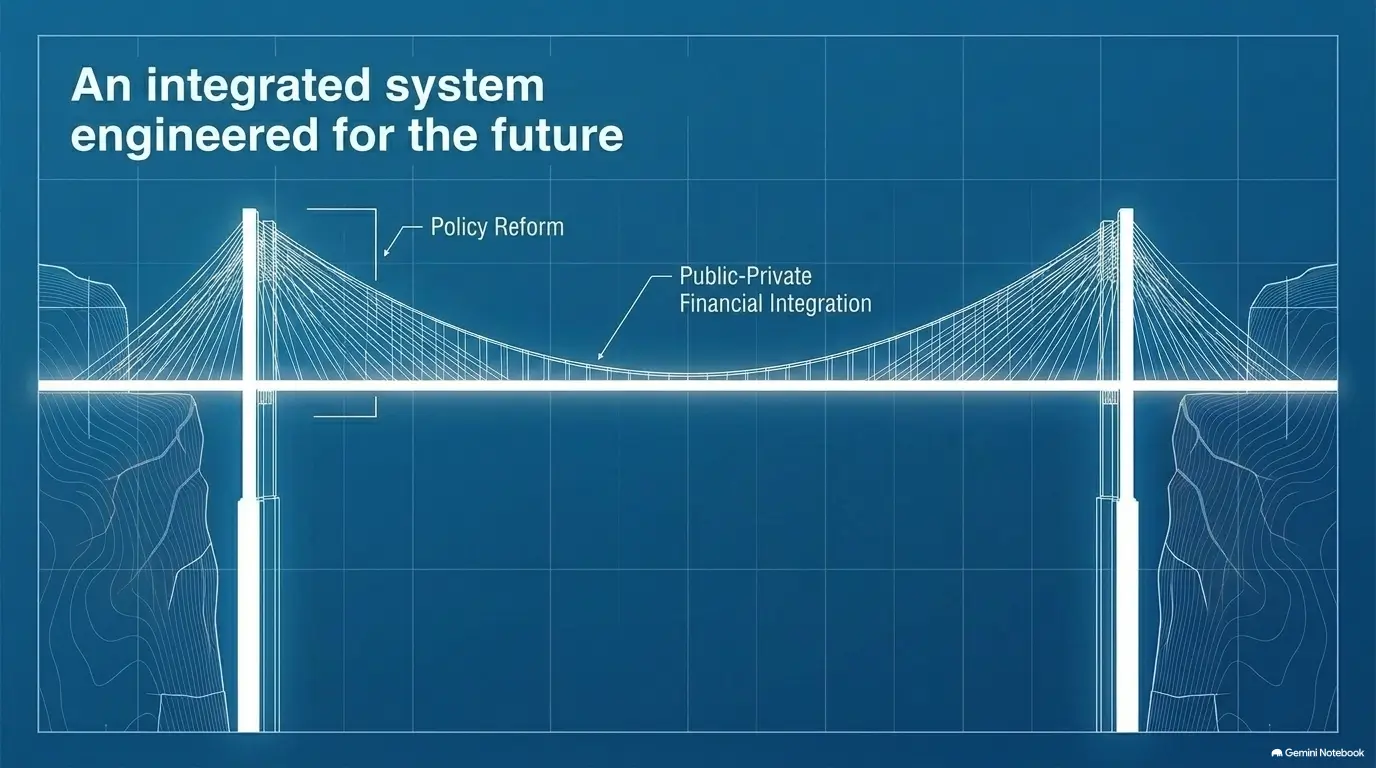
FAQ About Private Insurance Before Korean NHIS
What if my NHIS paperwork is delayed but my coverage should have started earlier?
Do not assume either that the medical bill is permanently uninsured or that NHIS will automatically reimburse it. First confirm your legal NHIS eligibility date. If your eligibility was effective on the treatment date but administrative reporting occurred later, ask NHIS and the medical provider whether the claim or bill can be processed again under the corrected status.
Will a Korean hospital bill my international insurer directly?
Not necessarily. Direct billing depends on the insurer, hospital, treatment, and any preauthorization arrangement. Many private policies require the patient to pay first and submit a reimbursement claim afterward. Confirm this before an expensive planned procedure.
What should I do if I need regular medication during the NHIS gap?
Check three things before relying on the policy: whether the underlying condition is treated as pre-existing, whether outpatient prescriptions are included, and whether there is a drug or outpatient sublimit. Also ask your Korean clinic what records or prescription information it needs to continue treatment safely. Insurance coverage and a clinician’s prescribing decision are separate questions.
Should I cancel private insurance as soon as NHIS begins?
Not automatically. Compare the private policy’s remaining benefits against what NHIS covers, your NHIS copayments, non-covered treatment you actually use, overseas coverage, and the private policy’s cancellation or refund terms. Cancel because the overlap no longer has value, not merely because an NHIS card arrived.
Before You Pay for Another Month of Private Insurance
Spend the next few minutes confirming one fact: the date on which NHIS says your own coverage becomes effective.
Have your visa or residence status, foreigner registration information, arrival date, employment date if relevant, and family relationship information ready. The NHIS Center for Foreign Residents provides foreign-resident insurance assistance, and NHIS lists 033-811-2000 for foreign-language consultation.
Then compare that date with the end date of your private policy. If a real gap remains, read the exclusions that matter to your actual medical needs and confirm how claims work in Korea. If there is no gap, you may have just avoided paying for insurance you did not need.
Last reviewed: 2026-10