
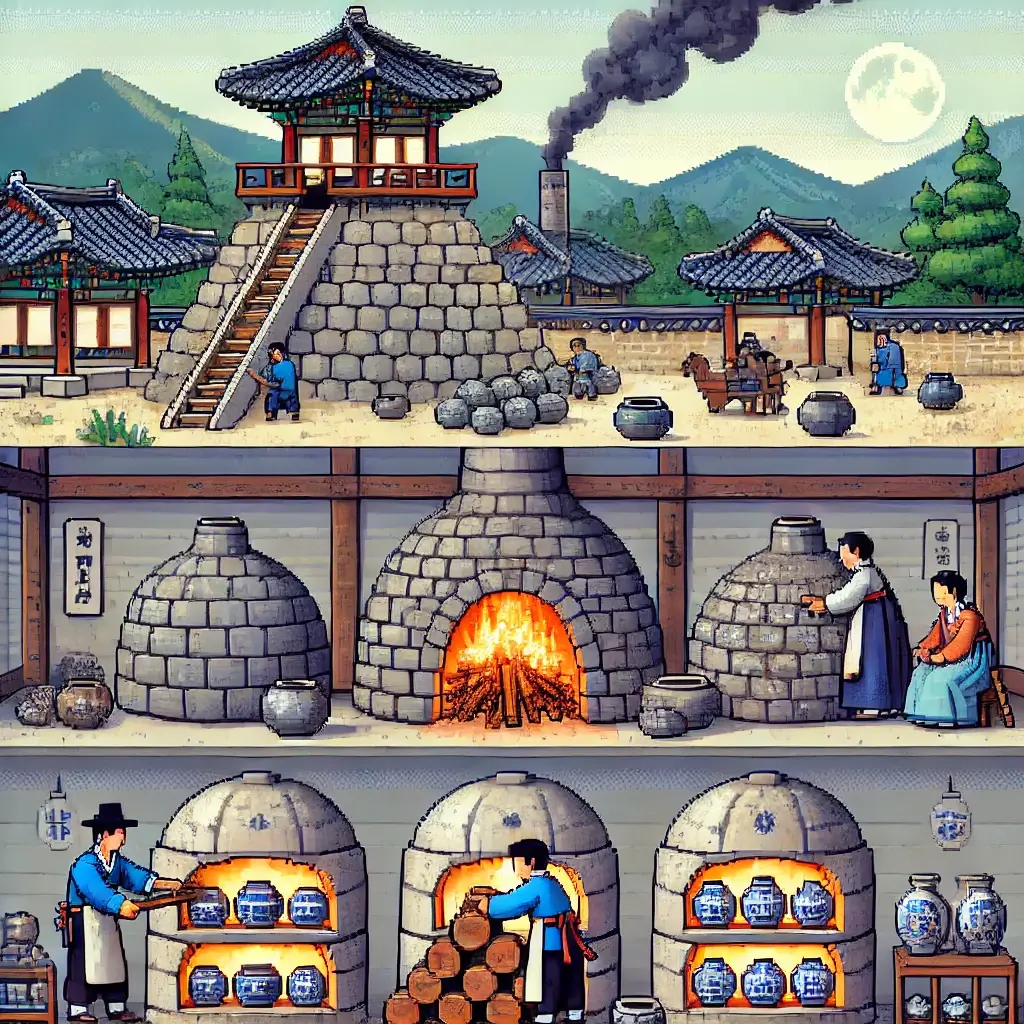
A kiln is part of a ceramic production system involving clay, forming, surface treatment and firing. Korean ceramics changed across periods and locations. A single dramatic firing story cannot explain every earthenware, celadon or porcelain object.
Identify the object before the kiln story
Read the collection record for material, date, technique and any kiln attribution. A green glaze or a white surface alone cannot identify the production site. Distinguish an excavated association from a seller’s visual guess.
Connect firing with the material
Temperature and kiln atmosphere can affect the fired body and glaze, but recipes and processes differ. Do not apply one temperature, duration or fuel type to every Korean ceramic tradition. Ask what evidence supports the explanation for the actual object.
Compare celadon and porcelain carefully
The National Museum of Korea distinguishes Goryeo celadon, buncheong ware and Joseon white porcelain through materials and techniques. Compare dated examples, including surface decoration, rather than describing an unbroken technological recipe lasting thousands of years.
Visit or learn through an appropriate program
For a kiln site or demonstration, check the institution’s current access and safety instructions. Observe barriers and hot-work restrictions. A historical description is not a safe firing manual; practical firing requires suitable equipment and qualified supervision.
A practical next step
Further reading: official or specialist reference for this topic. Check the specific entry, object, edition or current provider notice relevant to your question.
Editorial revision: October 18, 2026. Practice examples are editorial constructions. The discussion distinguishes documented information, interpretation and personal choice.