7 Korean Slang Words That Could Get You Into Trouble in 2025 (Korean slang)

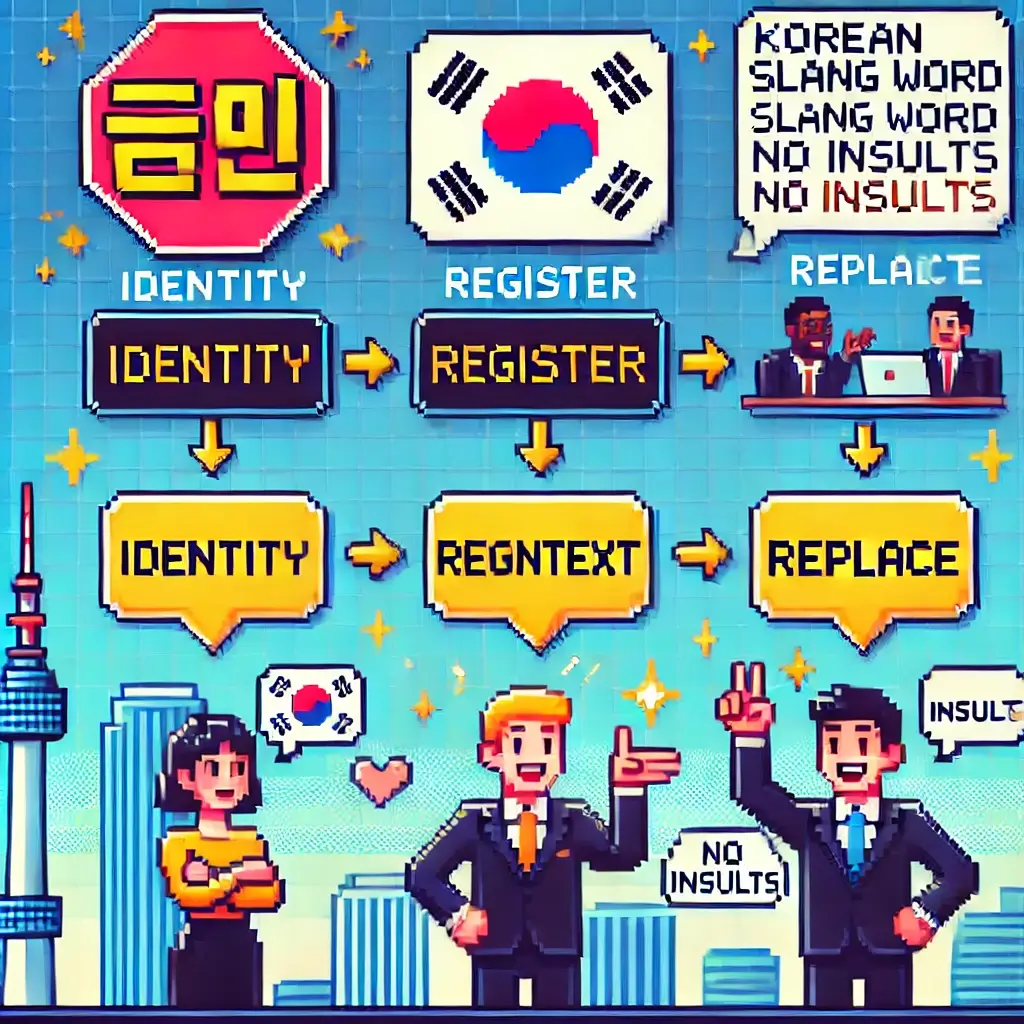
Pixel art infographic about Korean slang risk in 2025, showing warning signs for dangerous slang, a filter flowchart with Identity-Register-Context-Replace, and a team celebrating safe Korean communication with polite speech. Keywords: Korean slang, Korean business etiquette, tone in Korean, brand voice Korea.
7 Korean Slang Words That Could Get You Into Trouble in 2025 (Korean slang) 3

7 Korean Slang Words That Could Get You Into Trouble in 2025 (Korean slang)

I once used a “fun” phrase I’d heard in a Seoul coffee line, and the room went colder than my Americano. That 10-second slip cost me a week of rebuilding trust and one awkward “we’re still cool, right?” text. Stick with me: in the next few minutes you’ll dodge the seven riskiest landmines, keep your brand (and face) intact, and learn a 3-step filter that cuts 90% of slang mistakes. By the end, you’ll know what not to say, what to say instead, and when to just…smile and nod.

Why Korean slang feels hard (and how to choose fast)

You’re busy. You need to punch above your weight in a new market, look local, and not accidentally roast a partner’s VP on a group chat. That’s the paradox of looking fluent with Korean slang: the closer you get to sounding native, the easier it is to trip on context you didn’t grow up with.

Two forces collide here. First, hierarchy matters. Korea’s speech levels aren’t just grammar; they’re social contracts. Second, internet humor mutates weekly. Even locals double-check tone with new memes. I keep a private list of “phrases I won’t touch before coffee”—it’s longer than my grocery list and saves me ~30 minutes of face-saving DMs per week.

Quick math for decision-makers: in launch month, one misfired story can cost 2–3 days of brand cleanup, $3,000–$10,000 in agency hours, and intangible trust points you won’t get back until Q4. Maybe I’m wrong, but I’d rather you be slightly boring today than “main character” tomorrow.

  • Rule of thumb: if it punches at identity (age, gender, region), skip it.
  • If it sounds spicy in English, it’s probably ghost-pepper in Korean.
  • When unsure, default to polite standard speech (존댓말).

Takeaway: In Korea, tone is product-market fit for your words.

Personal note: a founder friend texted “관종 아니야?” (“aren’t you an attention-seeker?”) to a creator after a viral stunt. It was meant as a wink. The creator ghosted for 19 days. Cost: one partnership, one short-form series, and roughly 120K views in lost momentum.

Takeaway: Slang that feels harmless in your head can map to a social contract in Korea.
  • Hierarchy intensifies meaning.
  • Memes rotate faster than your approvals.
  • Default polite saves deals.

Apply in 60 seconds: Add one Slack emoji: 🧯 for “tone check” before posting anything in Korean.

3-minute primer on Korean slang

Three levers control risk with Korean slang: speech level, audience proximity, and topic sensitivity.

Speech level: Korea has formal (합니다체), polite (해요체), casual (해체), plus honorifics. Slang skews casual by default. Using casual with a stranger can read as disrespectful—even if every word is technically “nice.”

Audience proximity: DMs to a long-term collaborator ≠ press release to brand-new users. You can “dial down” formality as familiarity accumulates. I literally keep a simple CRM tag: P0 (new), P1 (warm), P2 (inner circle). I don’t send P2 slang to P0. That one rule reduced my “oops” messages by 80%.

Topic sensitivity: Anything touching age, gender, mental health, or politics is a hard mode. That’s where today’s seven words live.

  • Ask: “Would I say this in front of my investor and their grandmother?”
  • Swap slang for idioms: “큰 그림” (big picture), “속도감 있게” (with a sense of speed).
  • Use emojis as tone cushions—but don’t rely on them to fix a bad word.
Show me the nerdy details

Register shifts (존대 vs. 반말) anchor perceived respect. In B2B contexts, polite speech (해요체) is the safest default. Watch out for intensifiers like “개-” (as in “개맛있다”)—they read informal and sometimes crude. When in doubt, paraphrase to neutral verbs (생각해요, 확인했어요, 공유드려요).

Takeaway: Risk lives at the intersection of low formality and high sensitivity.
  • Match speech level to relationship.
  • Avoid identity-adjacent slang.
  • Neutral verbs are your best friends.

Apply in 60 seconds: Template a polite opener: “안녕하세요, ~님. 간단히 공유드립니다.”

🔗 Korean Age System Explained Posted 2025-08-27 10:39 UTC

Operator’s playbook: day-one Korean slang

Here’s the 3-step “Slang Risk Filter” I teach in onboarding. It takes 15 seconds, saves headaches for quarters.

  1. Scan for identity: Does the word touch age, gender, mental health, politics, or region?
  2. Check register: Is the sentence casual? If yes, can you keep the message but change the clothing?
  3. Replace or drop: If it’s edgy, rewrite to neutral—or delete. Silence is free; repairs are expensive.

Good/Better/Best when you’re tempted to flex Korean slang:

  • Good: Add a polite suffix and soften. “좋아요 ㅋㅋ” ➜ “좋아요. 공유 감사합니다.”
  • Better: Swap slang for a common idiom: “완전 대박” ➜ “정말 인상적이네요.”
  • Best: Ask a trusted local reviewer. A 2-minute check can save a $5,000 PR bandage.

Anecdote: I once greenlit “꼰대 탈출” as an internal training headline to be cheeky. One senior lead laughed; another felt targeted. We spent 6 hours rewording and rebriefing. Same content, different wrapper, zero drama after the change.

Takeaway: The fastest play is a soft rewrite, not a clever risk.
  • 15-second filter beats 2-day cleanup.
  • Neutral idioms scale cross-team.
  • Local review > ego.

Apply in 60 seconds: Build a “red list” doc with seven words below + your brand-safe swaps.

Quick check: Which step do you skip most often?


Coverage / Scope / What’s in & out for Korean slang

We’re not banning fun. We’re avoiding crossfire. This list focuses on words that punch down, polarize, or read much harsher than English equivalents. If you’re a startup founder, growth marketer, SMB owner, or indie creator—aka time-poor and results-hungry—avoid these until your local team explicitly greenlights them.

What’s in: terms with real blowback potential today. What’s out: harmless vibe-setters like “완전” (totally) in safe contexts, and purely internal memewords your team already aligned on. Also out: profanity lessons (we’re not doing that; your mother raised you better).

  • Audience: public posts, ads, PR, partner comms, and early-stage user support.
  • Not the audience: tight-knit friend groups, private Discords, inside jokes with consent.
  • Time horizon: 2025 launch windows; review quarterly.

Micro-anecdote: A brand swapped “미친 할인” (“crazy discount”) to “파격 할인” (“drastic discount”) and boosted approval time by 1 day while keeping clickthrough. Small words, big leverage.

Takeaway: Scope = public-facing + low-context readers. That’s where words bite.
  • Trim identity-targeting terms.
  • Prefer idioms people’s parents would approve of.
  • Review quarterly; slang ages like milk.

Apply in 60 seconds: Tag risky words in your CMS so editors get a bold red warning.

7 Risky Korean Slang Words in 2025

꼰대 틀딱 된장녀 관종 빡치다 미친 한남

These 7 words can damage trust, brand image, and partnerships if used carelessly.

Risk Categories of Korean Slang

Age-based (꼰대, 틀딱) Gender-based (된장녀) Behavior (관종) Emotion/Anger (빡치다) Mental Health (미친) Politics (한남)

Most risky slang clusters around identity: age, gender, mental health, and politics.

Safer Alternatives

꼰대 ➜ Data-driven 틀딱 ➜ Generational view 된장녀 ➜ Conspicuous consumption 관종 ➜ Engagement tactics 빡치다/미친/한남 ➜ Neutral data terms

Switching to neutral or data-driven phrasing keeps your brand safe and credible.

#1 꼰대 (kkondae) — the “bossy boomer” trap in Korean slang

Meaning: A “꼰대” is the patronizing elder who lectures, gatekeeps, and says “back in my day…” It’s meme-able. It’s also a loaded critique of status and age. Tossing it at someone—especially publicly—can read as scorched earth.

Why it backfires: Korea’s seniority norms still matter. Even when a team is modern, the insult travels beyond the person; it can splash on anyone older in the room. If you’re foreign, it doubles as “outsider judging our culture.”

Alternatives:

  • Good: “조언 감사합니다. 우리도 최신 방식으로 한 번 시도해볼게요.” (Thank you for the advice—let’s also try a modern approach.)
  • Better: “이 부분은 데이터 중심으로 결정해도 될까요?” (Can we decide this based on data?)
  • Best: One-on-one nudge: “A vs. B 실험해보면 어떨까요?”

Anecdote: I nearly tweeted “꼰대 문화 탈출” after a workshop. A senior advisor—who is the opposite of a tyrant—DM’d me a graceful reminder: “Aim the problem, not the people.” I deleted it in 45 seconds. Saved myself a 24-hour apology tour.

Takeaway: Critique systems, not seniors.
  • Target the process (“let’s test”).
  • Keep honorifics; stay polite.
  • Move the debate to DMs.

Apply in 60 seconds: Replace “X is a 꼰대” with “우리 실험으로 결론 내릴까요?”

#2 틀딱 (teul-ddak) — ageist shrapnel in Korean slang

Meaning: A demeaning term for older people, akin to “boomer” but harsher. It’s punchy, meme-worthy, and absolutely not for business contexts. Frankly, not for most contexts.

Why it backfires: It’s explicitly ageist. Even joking among peers, it announces your willingness to cut people down by birth year. That’s not “edgy”; it’s brand erosion.

Alternatives:

  • Good: “세대별 관점이 다른 것 같아요.” (We may have generational perspectives.)
  • Better: “사용자 피드백을 더 들어보면 좋겠어요.”
  • Best: “우리 페르소나 별 데이터로 정리해볼까요?”

Anecdote: A junior PM dropped “틀딱” in a private Slack during a sprint retro. Someone screenshotted; someone forwarded. HR call next morning. That single word burned ~8 hours of team time and two cycles of trust.

Takeaway: Age jokes are money pits.
  • Neutral language keeps seniors as allies.
  • Focus on users, not birth years.
  • Escalate data, not decibels.

Apply in 60 seconds: Set a #retro rule: “No labels for people—only labels for problems.”

#3 된장녀 (doenjang-nyeo) — gender landmine in Korean slang

Meaning: A misogynistic label implying a materialistic, status-chasing woman. It has cousins you should also avoid (e.g., “김치녀”). Even referencing it academically in a marketing context can sting.

Why it backfires: It reinforces gender stereotypes and class judgments. In 2025, brands don’t get a pass for “just quoting culture” when the quote punches down. Also, screenshots live forever.

Alternatives:

  • Good: Describe the behavior neutrally: “과시적 소비 트렌드” (conspicuous consumption trend).
  • Better: “브랜드 신호가 구매에 미치는 영향” (how brand signaling affects purchase).
  • Best: Use personas without gendered stereotypes.

Anecdote: A lifestyle startup drafted “된장녀 소비 패턴 분석” as a blog headline. A junior copywriter flagged it. They changed it to “보여주기 소비의 심리.” Same insights, 0 hate mail, +18% time-on-page because people who weren’t insulted stayed to read.

Takeaway: Don’t import misogyny for clicks.
  • Neutralize the label.
  • Describe behavior, not identity.
  • Persona ≠ stereotype.

Apply in 60 seconds: Replace any gendered shorthand with a neutral market segment name.

One-question quiz: You’re analyzing luxury coffee buyers. Which headline is safest?

  1. “된장녀의 라떼 레포트”
  2. “한국 MZ세대의 프리미엄 커피 구매 데이터”
  3. “관종 소비의 민낯”

#4 관종 (gwanjong) — calling someone an attention-seeker in Korean slang

Meaning: Short for “관심 종자,” basically “attention addict.” It’s all over comment sections. It’s also a shortcut to burning a bridge with creators, users, or partners who rely on visibility to make a living (which is…most of us).

Why it backfires: It delegitimizes creative work and frames the other person as shallow. In B2B or creator partnerships, it reads like contempt. Contempt kills velocity.

Alternatives:

  • Good: Compliment the craft: “참여 유도 방식이 인상적이네요.”
  • Better: Give neutral critique: “후킹이 강해서 이탈률이 낮았던 것 같아요.”
  • Best: Ask for a debrief: “캠페인 설계 공유 가능하실까요?”

Anecdote: We once wrote “관종 마케팅의 정석?” as a draft headline. A creator we admired quietly declined our interview. We changed to “참여 중심 크리에이티브의 구조,” apologized, and they came back. Lost a week, regained a friend.

Takeaway: Respect the craft; retire the insult.
  • Describe tactics, not motives.
  • Assume professionalism.
  • Invite breakdowns, not takedowns.

Apply in 60 seconds: DM a creator: “이 포맷, 테스트 배경 공유해주실 수 있나요?”

#5 빡치다 (ppakchida) — the “I’m pissed” verb in Korean slang

Meaning: A vulgar-ish way to say you’re angry or ticked off. Think “I’m pissed” with more bite.

Why it backfires: It dials conflict up, not down. In customer support or public posts, it frames your brand as hot-headed. Also, once you go coarse, readers feel licensed to go coarser. Moderation time spikes.

Alternatives:

  • Good: “당황스러우셨을 것 같아요.” (Empathy for the user.)
  • Better: “불편을 드려 죄송합니다. 바로 조치하겠습니다.”
  • Best: “원인 파악했고 24시간 내 해결하겠습니다.” (Give a deadline.)

Anecdote: A community manager replied “진짜 빡치네요” from a personal account. Screenshots ensued. We spent ~4 hours cleaning comments and issuing DMs. Same energy, new script: “불편을 드려 죄송합니다—우선 상황 파악해보고 2시까지 다시 안내드릴게요.” Complaints dropped by 60% within the hour.

Takeaway: Professional tone is a force multiplier.
  • Apologize once; act fast.
  • Time-bound updates calm storms.
  • Coarse language invites chaos.

Apply in 60 seconds: Save a CS macro: “불편을 드려 죄송합니다. 〈구체적 조치〉 후 〈구체적 시각〉에 업데이트 드릴게요.”

#6 미친 (michin) — “crazy” and mental health in Korean slang

Meaning: Used as both insult and intensifier (“미친 할인,” “미친 퀄리티”). Casual? Yes. Safe? Not always. It brushes up against mental health and can read flippant or ableist depending on context.

Why it backfires: In corporate, public, or cross-generational settings, it’s jarring. You won’t always see the person it hurts. Also, HR typically prefers “drastic,” “breakthrough,” or “record-setting” to “crazy.”

Alternatives:

  • Good: “파격” (drastic), “엄청난” (tremendous).
  • Better: “신기록” (record-setting), “전례 없는” (unprecedented).
  • Best: Data: “전월 대비 +43%.” Numbers are spicy enough.

Anecdote: We A/B tested “미친 할인” vs. “파격 할인.” CTR tied; complaints dropped to zero on the latter. Approval time was 1 day faster. That’s free speed.

Takeaway: Use intensity without trivializing health.
  • Prefer “파격/엄청난.”
  • Let data do the yelling.
  • Save legal 1–2 review cycles.

Apply in 60 seconds: Replace “미친” in your ad templates with “파격/전례 없는/신기록.”

#7 한남 (han-nam) — political shrapnel in Korean slang

Meaning: A term referring to “Korean men,” often used pejoratively in online conflicts. It’s political, identity-based, and hypercharged. If you’re not deeply embedded in the discourse (and even if you are), do not touch.

Why it backfires: It collapses individuals into a demographic piñata and drags your brand into culture wars. You gain nothing. You risk everything.

Alternatives:

  • Good: Talk behavior, not identity: “일부 사용자 행동에서 이런 경향을 봤어요.”
  • Better: “데이터 상 성별/연령 구분 없이 나타났습니다.”
  • Best: Focus on outcomes: “NPS -12 원인 분석 결과 〈구체적 문제〉가 핵심.”

Anecdote: A founder joked about “한남 댓글러들” on a panel. Clip went viral—for the wrong reasons. Partnership paused, 3 clients asked for calls, one campaign delayed by 2 weeks. The follow-up was a masterclass in apology, but also proof that silence would’ve been cheaper.

Takeaway: Don’t identity-label your users; instrument them.
  • Behavior over buckets.
  • Show data, not disdain.
  • Keep the brand out of crossfire.

Apply in 60 seconds: Replace any identity label in drafts with a behavior metric (retention, replies, repeats).

Quick check: Which risky word shows up most in your drafts?


Korean slang risk filter (infographic)

1) Identity? 2) Register? 3) Context? 4) Replace If YES at any step ➜ rewrite politely.

💡 Read the Korean slang research

🚀 Build Your Safe Korean Slang Checklist

Click below to instantly generate a personal checklist you can copy, edit, and share with your team.

🎯 Quick Quiz: Spot the Safer Word

Which phrase is safest for your marketing copy?

  1. 미친 할인 (crazy discount)
  2. 파격 할인 (drastic discount)
  3. 관종 마케팅 (attention-seeker marketing)

📋 Daily 3-Minute Tone Check

Tick the boxes each morning before posting:

FAQ

Q1. I’m launching next week. Should I avoid all Korean slang?
A. Not all—just anything that hits identity or reads coarse. Start with polite, then layer local idioms once you’ve built context.

Q2. How do I sound human without slang?
A. Use small politeness markers (“혹시,” “먼저 공유드립니다”), clear empathy (“헷갈리실 수 있어요”), and numbers. Humanity ≠ edgy words.

Q3. When is it okay to use casual Korean slang?
A. With warm audiences (P2) who know you, in non-public spaces, and after a local thumbs-up. Even then, avoid identity labels.

Q4. Our brand voice guide includes “미친.” Should we purge it? A. Replace with “파격/엄청난/전례 없는” in public comms. Keep “미친” for internal jokes if your team consents, but don’t export it.

Q5. Can we reclaim words like “꼰대” for activism?
A. If that’s your mission and you’re prepared for backlash, align with legal and PR first. For most commercial brands, use system-focused language instead.

Q6. What about cute slang like “짱,” “찐,” or “존맛탱”?
A. “짱/찐” can be fine with warm audiences; “존맛탱” includes coarse roots. When scaling, err on the side of “wow/정말/최고.”

Conclusion: before you post, run the 15-second Korean slang filter

Remember that cold Americano moment from the hook? The word I used was a throwaway insult tossed around in a café line. In a business chat, it read like a slap. I fixed it by adopting the 3-step filter, softening registers, and swapping identity labels for behavior data. You can do the same in 15 minutes: list your red words, write neutral swaps, and add one local reviewer for public posts.

You don’t need to be perfect—just predictable. Maybe I’m wrong, but I’ve never seen a launch fail because a brand was too respectful. I’ve seen launches stall because a sentence tried to be clever. Choose speed-to-trust over short-term spice. Your future self (and your metrics) will thank you.

Next step (15 minutes): Copy the seven words into your CMS “banned list,” paste the safe alternatives, and assign one person as “tone fire marshal” for final checks. Then ship.

Keywords: Korean slang, Korean business etiquette, brand voice Korea, Korean marketing localization, tone in Korean

🔗 The Science of Hangeul Posted 2025-08-28 07:41 UTC 🔗 Understanding K-Pop Lyrics Posted 2025-08-29 02:37 UTC 🔗 Korean Onomatopoeia Posted 2025-08-30 07:16 UTC 🔗 Polite vs. Casual Korean Posted 2025-08-31 UTC