

Childcare pickup in Korea can involve parents, grandparents, school or daycare staff and after-school arrangements. The practical challenge is making the handoffs clear: who is responsible, when the pickup happens and what to do when a work or transport plan changes. The combination differs from family to family.
Many Anglo-American readers misread the scene: they see one grandmother at the daycare gate and assume they understand the family. In reality, they have only seen the doorway, not the complex system behind it.
“Keep guessing, and you risk turning ordinary family logistics into the wrong cultural story.”
This guide helps you navigate the lived patterns created by distance, timing, and authority. By understanding the relay, you gain clarity on:
- ✔ Why grandparents matter so much.
- ✔ Why proximity often matters more than ideology.
- ✔ Why the smoothest pickup can hide the most negotiation.
Fast Answer: In Korea, childcare pickup often works through a practical family network rather than a parent-only routine. Grandparents frequently help with daycare or kindergarten pickup, meal coverage, and after-school transitions, especially in dual-income households. It may look highly coordinated from the outside, but it usually depends on proximity, trust, school rules, work hours, and unspoken family expectations more than on formal planning alone.
Contents — choose a section
Table of Contents
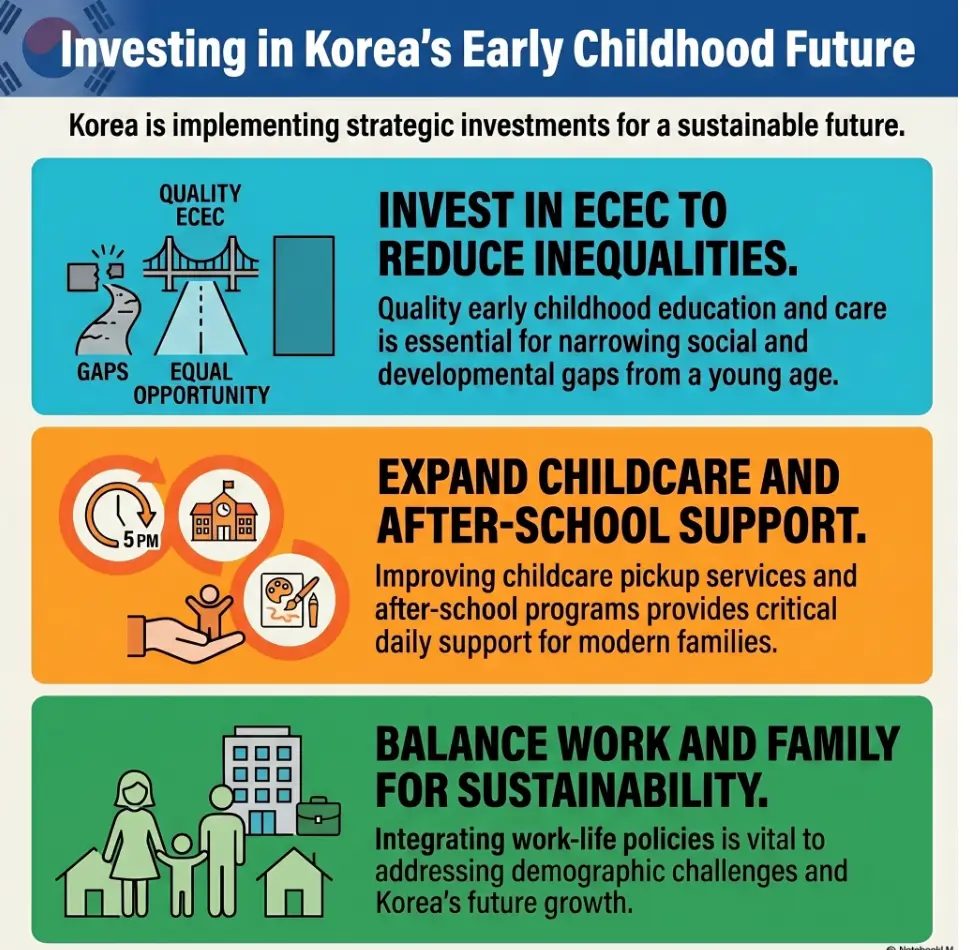
Why Pickup Looks Different in Korea Than Many Americans Expect
The routine is often family-centered, not parent-exclusive
Many Americans arrive with a parent-centered mental model: mother or father picks up, then the family goes home, then the evening begins. In Korea, the evening often begins before the parent arrives. Pickup may be done by a grandparent, an aunt, a hired driver, or another trusted adult, with the parent stepping into the chain later. The child is not necessarily “with someone else.” The child may already be inside the family system, simply at a different point in it.
Constructed illustration, not a reported event: a fictional narrator has seen foreigners misread this as emotional distance when it is often the opposite. The family is involved enough to build backup layers. That does not automatically make the arrangement idyllic. It just means the household treats childcare as shared logistics rather than solo performance. The child moves through adults the way a baton moves through hands: ideally smoothly, sometimes clumsily, always revealing who lives close, who has time, and who can be trusted at 6:10 p.m. on a rainy Tuesday.
Work hours, school schedules, and distance quietly shape everything
This is where romance usually loses to the bus timetable. Korea’s work-family conversation has long been shaped by long hours and rigid schedules, and that larger rhythm connects naturally to Korea’s workplace leave culture, where time off can be shaped as much by team norms as by written rules. Childcare services help, but they do not magically solve late office departures or inflexible work culture. That is why pickup patterns often look more strategic than sentimental. Families do not simply ask, “Who loves the child most?” They ask, “Who can get there on time three days in a row?”
The “village” may be small, but it is usually very active
The village is often not a giant cast of characters. It may be just four adults and one KakaoTalk thread. Yet that small network can be intensely active. A grandmother picks up. A father buys dinner. A mother joins after work. A grandfather covers one emergency day. This is not chaos. It is compressed coordination, and anyone familiar with Korean group chat culture will recognize how much family life can run through short, efficient messages.
- Pickup may happen before the parent’s workday ends
- Family help is often scheduled, not spontaneous
- Distance and timing usually matter more than ideals
Apply in 60 seconds: When you observe a pickup routine, ask who handles the next handoff, not just who opened the gate.
Grandparents First? Why They Often Become the Hidden Backbone
Proximity matters more than ideology
Grandparents often become central not because every Korean family worships tradition, but because they live nearby and can actually do the job. That sounds almost too plain, but plain truths are sturdy. When one set of grandparents lives fifteen minutes away and both parents commute longer distances, the arrangement nearly writes itself. When grandparents live in another city, the “traditional family support system” suddenly develops very modern limitations.
People often over-explain grandparent involvement as culture when geography is doing half the work. In many households, love is abundant but parking is not. A grandmother who can walk to the daycare has more practical influence than a deeply caring grandparent two hours away by train. If you want a broader window into how older women are often imagined in Korean family life, this look at the meaning of halmeoni in Korean culture adds useful texture.
Help with pickup can mean help with dinner, homework, and handoff too
Pickup is rarely just pickup. It usually opens a second and third task. The child may go to the grandparents’ home for a snack, wait there until a parent finishes work, eat an early dinner, or move on to an academy. By the time the parent reconnects, a meaningful part of the child’s evening has already happened. This is why grandparent help can feel far bigger than the single phrase “they help with pickup” suggests.
Support is often practical before it is sentimental
People sometimes expect family help to arrive wrapped in a glowing speech about devotion. Real life is less cinematic. Often it arrives as peeled fruit, a weather check, an extra pair of socks, and a reminder that the art-school bag is still at the apartment. The emotional content is there, but it travels inside practical labor. Korean family care can be deeply affectionate while sounding like logistics.
Eligibility Checklist: Is a Grandparent-Led Pickup Routine Likely to Work?
- Yes: Grandparents live within about 10 to 30 minutes and the school accepts authorized pickup adults.
- Yes: One or both parents have commute or work-hour gaps that make direct pickup difficult.
- Yes: The family is comfortable with regular handoffs and shared decision-making.
- No: Grandparents are far away, unwilling, in fragile health, or already stretched thin.
- No: Adults disagree sharply on discipline, food, schedule, or after-school priorities.
Next step: Treat this as a household fit question, not a moral test.
What This Usually Looks Like on a Normal Weekday
Daycare pickup, short-term care, dinner, then parent handoff
A very ordinary weekday can look like this: daycare ends, a grandparent picks up, the child goes to the grandparents’ apartment, has fruit or rice balls, plays a little, maybe naps, then one parent arrives after work and takes the child home. Nothing dramatic happens, which is exactly why the routine works. Good family logistics often look boring from the outside. Boring is underrated. Boring gets children fed.
Kindergarten and hagwon schedules create layered transitions
Once children are old enough for kindergarten and later after-school classes, the day often stops being a single block and becomes a chain of blocks. Morning drop-off, midday end time, after-school extension, academy pickup, evening return. The logic becomes even clearer when you look at how hagwons fit into family life for foreign families in Korea. Childcare and after-school care are policy questions as well as family questions, because families are trying to bridge these transition hours somehow. In daily life, those bridges are often built with grandparents, paid transport, or a very committed calendar.
The evening often runs on relay timing, not one clean block
This is the part many outsiders miss because they are still looking for one clean line. Evenings in many Korean households do not unfold as “school, home, dinner, bedtime.” They unfold as “pickup, wait, move, snack, handoff, class, return, dinner, bath, collapse.” A child may spend the evening in two or three care zones before bedtime. That does not automatically signal instability. Often it simply reflects the modern arithmetic of work, schooling, and city movement.
Illustrative Scenario: A friend once described her daughter’s weekday to me using a hand gesture instead of a paragraph. She moved her palm across the table in four small hops. Daycare. Grandma’s place. Piano class. Home. “She’s fine,” the friend said, and she meant it. The child was fed, loved, and usually cheerful.
But then she laughed the tired laugh of someone who knows the choreography too well. “What exhausts me isn’t the child,” she said. “It’s the coordination.” That line stayed with me because it explained the whole architecture. The family’s challenge was not whether they cared. It was whether everyone could keep the relay smooth enough that the child never had to feel the strain in the adult system underneath.
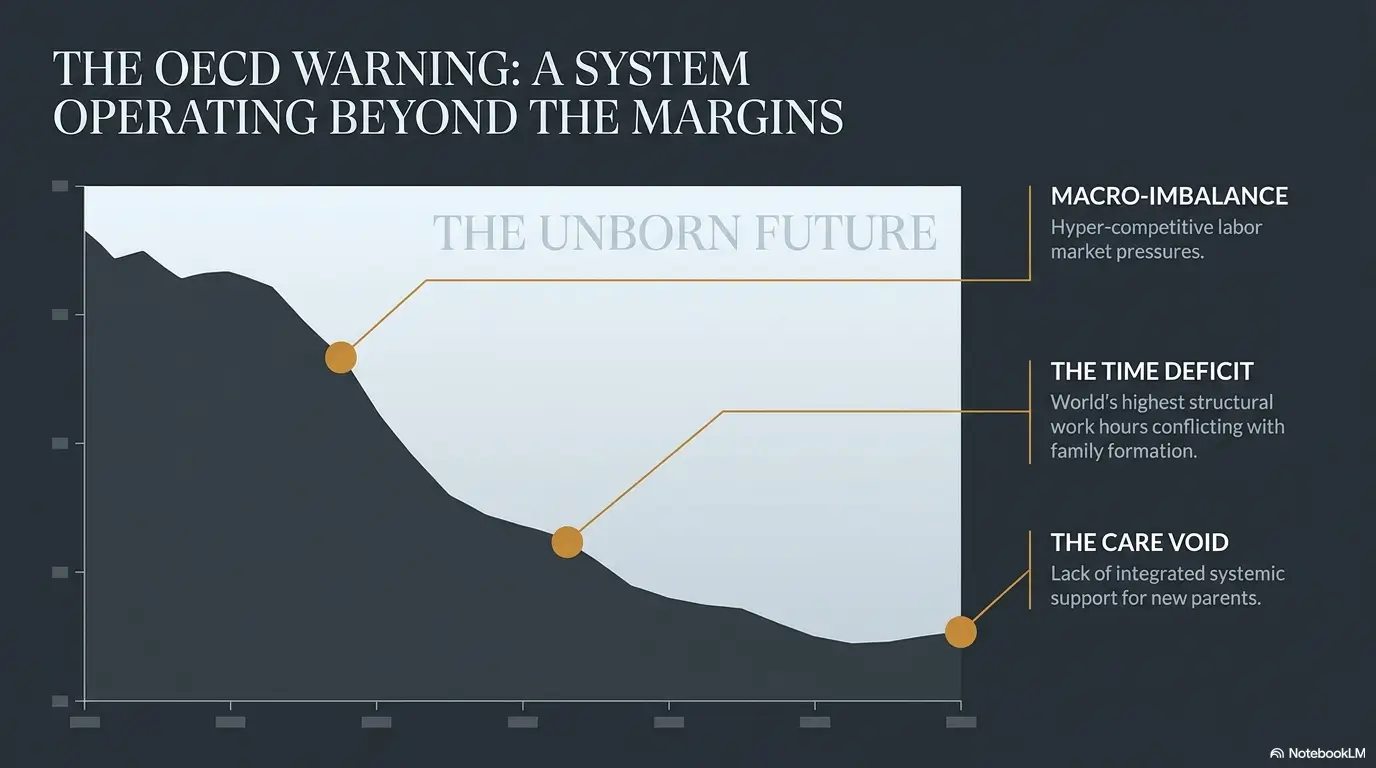
Not Just Babysitting: What Grandparent Help Often Includes
Transportation, snacks, supervision, and emotional continuity
Grandparent help often includes the invisible middle layer of care that working adults struggle to provide at the exact needed moment. Not just transport, but mood regulation. Not just watching, but smoothing. A child arrives cranky, hungry, over-stimulated, or sleepy, and the adult handling that window matters. Grandparents often provide continuity in this transition period because they know the child’s rhythms and can absorb small storms before the next handoff.
Emergency backup when parents work late
Families with reliable grandparent support often have something priceless: emergency elasticity. A late meeting, subway delay, school closure, mild fever, or unexpected schedule change becomes difficult, not catastrophic. This is one reason the system can look “stronger” than it really is. Sometimes it is less strong than cushioned. One dependable grandparent can prevent ten small household collapses per month.
Quiet labor that families may treat as “normal”
Because this labor repeats so often, families can begin to treat it as ordinary background matter, like electricity or clean towels. That can breed gratitude, but it can also breed under-recognition. A grandmother doing pickup four times a week is not just being “helpful.” She may be structuring the household’s entire ability to remain dual-income.
Show me the nerdy details
When analysts talk about childcare systems, they often focus on formal services first: daycare capacity, after-school programs, leave policy, and cost support. But the lived system is bigger. It also includes commute times, authorization rules for pickup, transport availability, academy scheduling, meal timing, and the unpaid labor of relatives. If you ignore those hidden inputs, the visible routine looks more effortless than it is.
The Real Divider Is Distance, Not Love
Nearby grandparents can change a household’s entire rhythm
Two households may love their children equally and value family equally, yet end up with completely different lives because one set of grandparents lives nearby and the other does not. Nearby grandparents can reduce stress, protect careers, lower transportation costs, and create recovery space when work runs late. That is not a tiny advantage. It can shape housing choices, fertility choices, and job choices over years, which is part of why broader conversations about the effects of Korea’s low birth rate often circle back to care infrastructure and family support.
Long commutes and separate cities make help harder, not weaker
When grandparents live far away, families often compensate with tighter scheduling, more paid services, or one parent absorbing more risk. The absence of nearby grandparent help is not evidence of weaker family feeling. It is often evidence of modern dispersion. Korea may be geographically compact on paper, but daily life is measured in minutes, not maps. Family rhythm also changes by place, and Korean city identity and local lifestyle differences can quietly shape how possible these support networks are.
When family is far away, paid care and tighter parent scheduling rise
The household then becomes more clock-driven. Parents choose schools or homes partly around care availability. They may pay more for longer coverage or accept jobs with less upward mobility in exchange for schedule stability. This is where childcare stops being a “family values” conversation and becomes an infrastructure conversation wearing a family sweater.
Decision Card: Nearby Grandparents vs No Nearby Grandparents
| Situation | What usually changes | Time or cost trade-off |
|---|---|---|
| Grandparents nearby | More flexible pickup, emergency coverage, smoother dinner handoffs | Lower direct care cost, but more family coordination |
| Grandparents far away | Parents rely more on paid care, school programs, drivers, or reduced work flexibility | Higher direct cost, but sometimes clearer boundaries |
Next step: Compare by rhythm, not by ideology.
Here’s the Part Outsiders Often Miss
Help can be generous and still come with pressure
Family help can be freely given and still emotionally expensive. These two truths sit in the same room more often than people admit. A grandparent who provides daily pickup may also gain more influence over meals, routines, clothing, discipline, or even housing decisions. The help is real. So is the leverage.
Gratitude, obligation, and authority may travel together
This is especially relevant in Korea, where age hierarchy and family role can shape how decisions are voiced. Not always harshly. Often very politely. But politeness can still direct traffic. When grandparents are heavily involved, younger parents may feel grateful, indebted, relieved, constrained, or all four before dessert. Outsiders who read only the sweetness of the arrangement miss half the architecture. Readers who have noticed similar layers in Korean politeness or indirect communication in Korea may already recognize this pattern.
A smooth pickup routine can hide a lot of negotiation
Some of the most efficient-looking family systems run on nightly small compromises. Who decides the child’s dinner? Can the grandmother add one more hagwon? Should the parent refuse and risk friction? The child may see only a clean handoff, while the adults are quietly editing a constitution.
- Support and pressure can coexist
- Authority often follows daily labor
- Smooth routines may hide ongoing negotiation
Apply in 60 seconds: When interpreting family help, ask what decisions come bundled with that help.
Who This Is For, and Who It Is Not For
This is for readers trying to understand Korean family logistics in daily life
If you are a foreign spouse, partner, teacher, expat, researcher, or simply a curious observer trying to understand why a Korean child seems to move through several adults before bedtime, this article is for you. The goal is not to decorate the topic with exotic language. The goal is to make ordinary patterns legible.
This is for foreigners dating, marrying into, or living near Korean families
It is especially useful if you are trying to interpret what you are seeing without overreacting. Maybe you wonder why a grandmother seems to be everywhere. Maybe you assumed a mother was carrying everything alone. Maybe you are realizing that one apartment choice can change the whole caregiving map. If your relationship to Korea is becoming more personal, pieces on Korean couple culture and the F-6 marriage visa path can also help fill in adjacent parts of the picture.
This is not for readers looking for one rule that fits every household
Korea has urban-rural differences, class differences, generation differences, and wildly different household preferences. A Seoul dual-income family in a dense apartment complex may look very different from a smaller-city family with closer kin networks or a family that deliberately avoids heavy grandparent involvement.
This is not for readers who want to reduce Korean families to stereotypes
There is no prize for the fastest simplistic conclusion. “Korean families are super close.” “Korean parents rely too much on grandparents.” “Mothers do everything.” All of these can be wrong in the same neighborhood.
When Grandparents Are Involved, Family Roles Can Feel More Formal
Age hierarchy can shape pickup decisions and communication style
Even in warm households, older family members may speak with more practical authority. This can affect who is comfortable pushing back, who asks rather than tells, and who gets treated as the final voice on small daily matters. If you come from a more openly negotiable family culture, the rhythm can feel formal even when nobody is visibly fighting.
Parents may still be decision-makers, but not always in an obvious way
Sometimes the parents remain fully in charge but choose their battles carefully. They may let grandparents set snacks and screen time while holding the line on school choices or medical decisions. Outsiders often fail to see this selective governance and misread the family as either parent-led or elder-led when it is actually a mixed system with shifting zones of control.
Respect language and family position affect everyday logistics
In Korea, relationship position often affects tone. That matters because tone affects logistics. A simple request like “Please pick up earlier today” may carry different weight depending on who says it, how it is said, and whether the speaker is older or younger. The grammar of respect can become the traffic system of caregiving. For readers new to this terrain, Korean titles versus first names and a practical guide to Korean honorifics for foreigners make the social machinery easier to hear.
Quote-Prep List: What to Notice Before You Judge a Family Routine
- Who handles pickup most weekdays?
- Who handles emergency days?
- Who chooses food, after-school classes, and bedtime timing?
- How far apart do the adults live and work?
- Does the child move through one handoff or three?
Next step: Watch patterns for one week before drawing cultural conclusions.
Don’t Read the Routine Too Quickly
A grandmother doing pickup does not automatically mean the parents are absent
This may be the most common misreading. The visible pickup adult is not always the primary caregiving adult. A parent may be doing breakfast, nighttime care, medical appointments, school communication, weekend activities, and most financial planning while a grandparent handles the most public handoff of the day. Outsiders see the doorway and think they have seen the whole novel.
Heavy family involvement does not always mean conflict or dependence
Sometimes a family has simply chosen efficiency. Sometimes the adults genuinely like being interdependent. Sometimes grandparents want that daily role. And yes, sometimes dependence and resentment are real. The point is not to deny any possibility. The point is to resist over-reading one scene.
Let’s be honest, “help” and “expectation” often arrive in the same car
There are households where support feels like grace. There are households where it feels like surveillance wearing sensible shoes. Most families live somewhere between those poles. That middle zone is where reality usually sits, eating cut fruit and checking the time.
Common Mistakes People Make When Interpreting Korean Childcare Logistics
Mistaking family interdependence for lack of boundaries
Interdependence is not the same as chaos. A family can be highly involved and still have rules, routines, and clear expectations. The boundaries may simply be expressed differently than in a more individualistic household.
Assuming all grandparents want or enjoy daily pickup duty
This is another easy mistake. Some grandparents are delighted. Some are tired. Some feel duty more than pleasure. Some want to help twice a week, not five times. If you treat all older relatives as naturally eager childcare reserves, you erase their agency and their limits.
Treating Korea as uniform across class, city, and generation
A family in Seoul with long commutes, academy-heavy schedules, and high housing pressure may manage care very differently from a family in a smaller city with closer relatives and shorter transit times. One of the laziest mistakes in cross-cultural reading is assuming one observed pattern explains an entire country.
Here’s what no one tells you: convenience can create emotional debt
Reliable help is valuable. It can also generate a quiet ledger in the family mind. Not always maliciously. Just humanly. The more one adult carries the practical burden, the more their preferences may begin to matter. Convenience is never just convenience for long.
- Observe repeated patterns, not one scene
- Separate care labor from symbolic assumptions
- Allow for both generosity and strain
Apply in 60 seconds: Replace “This means…” with “This might mean…” the next time you interpret a family handoff.
Don’t Assume the Mother Is Handling Everything Alone
Dual-income households often depend on multi-adult coordination
There is no question that mothers in Korea often bear heavy caregiving expectations. But it is still a mistake to assume the visible mother-child bond explains the whole logistical system. In many households, several adults are carrying different sections of the load. One handles school notices. One handles pickup. One handles bedtime. One pays for the academy and races across town for the last transition.
Fathers, grandparents, drivers, and after-school systems may all be involved
Sometimes the father is less visible but still structurally essential. He may not be the person at the gate, but he may be the one doing late pickup from the grandparents’ apartment, weekend transport, or the evening grocery run that keeps the relay from breaking. Modern childcare systems often hide labor unevenly. Visibility is a terrible accountant.
What looks invisible from the outside may still be real labor
Constructed illustration, not a reported event: a fictional narrator once watched a family gathering where everyone praised the grandmother for pickup, which was fair, and nobody mentioned the father who had changed his work route for months to collect the child at the final evening handoff. He joked about it, because men often do that when they want credit without asking for it. But the joke had mileage on it.
Why Hagwons and After-School Care Change the Whole Picture
Pickup is often only one link in a longer childcare chain
Once hagwons enter the picture, pickup becomes a hinge rather than an endpoint. The child may need to move from school to home to academy or from school to academy to home. Each transition creates another coordination point, another chance for lateness, and another place where grandparents become useful.
After-school academies can reduce gaps, but add transportation complexity
They solve one problem by creating another. A structured program can cover hours parents cannot, but then someone has to connect those dots. Families with strong local support often absorb that complexity more easily. Families without it may feel as if they are running a tiny transport ministry out of their kitchen.
Family logistics often expand as children get older, not simpler
People imagine that older children make things easier. Sometimes yes. But older children often come with more places to be, not fewer. Korean education policy has increasingly highlighted after-school care expansion for younger students, but the lived family puzzle continues long after formal pickup stops being the main event. The shape changes. The coordination remains. You can see part of that wider school ecosystem in pieces on Korean school uniform culture and South Korean school lunch culture, both of which show how ordinary school life carries more social structure than outsiders first expect.
Infographic: A Simple View of the Korean Childcare Relay
The key insight is not who appears first, but how many transitions the family must keep stable in one evening.
What Happens When Family Help Is Not Available
Parents build tighter schedules and pay more for coverage
When grandparents are unavailable, families often turn into stricter planners. They choose apartments by commute, schools by care coverage, and jobs by schedule tolerance. Money begins to absorb what kinship cannot. That may mean after-school programs, paid transport, babysitters, reduced hours, or one parent taking the career hit nobody wanted to name out loud.
Neighborhood choice becomes a childcare strategy
Housing is not only about rent, schools, and subway access. It is often about care geometry. Can a child safely move between school, home, and academy? Is there a grandparent nearby? Is the school care program strong enough? These are not small variables. They can determine whether a household runs with manageable strain or constant panic. In that sense, a family’s childcare map can overlap with the same practical concerns found in a Korean apartment move-in checklist.
The absence of grandparents can reshape work, housing, and stress
This is where people finally see that “grandparent help” is not a sentimental side topic. It can influence household economics, marital stress, and whether two careers remain viable. In other words, the absence of family help does not create one inconvenience. It changes the shape of the whole week.
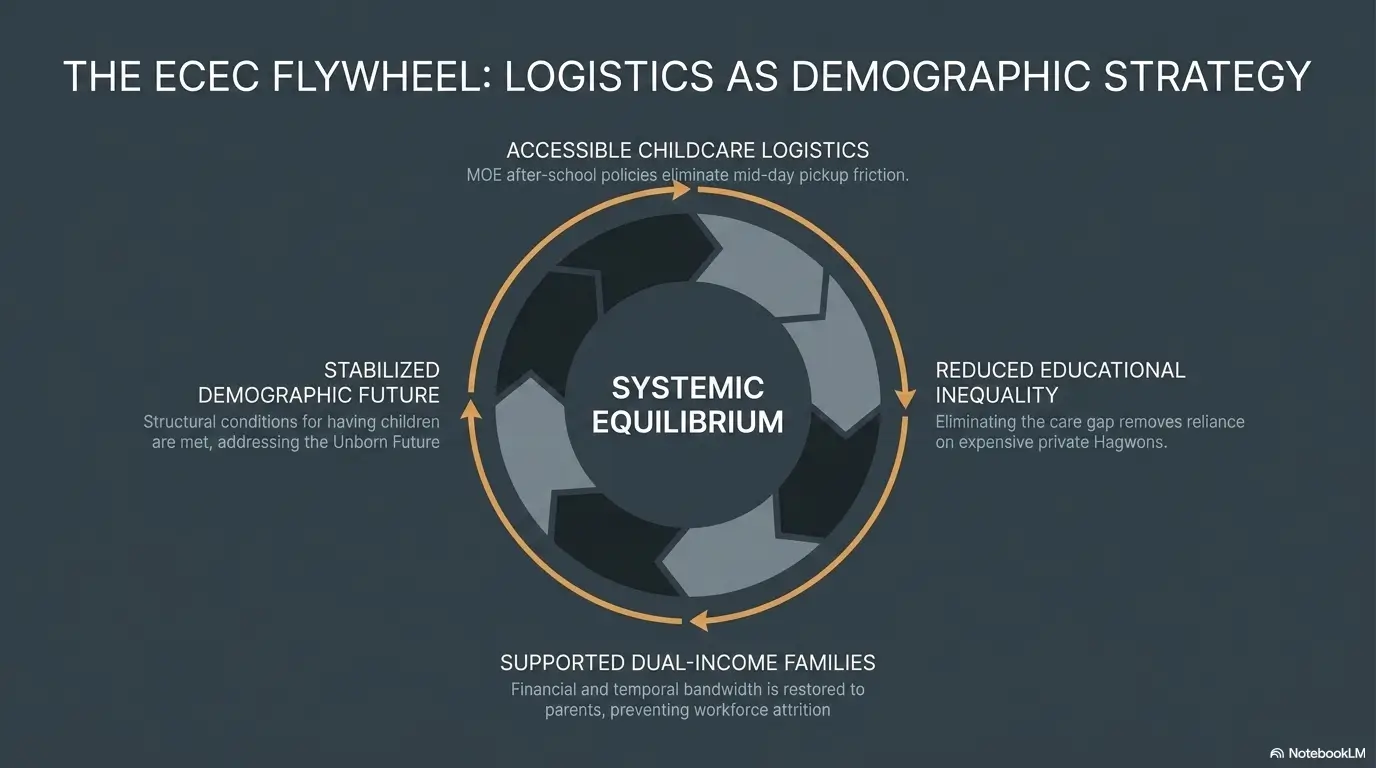
FAQ
Do grandparents commonly pick up children from daycare in Korea?
Yes, it is common enough to be widely recognizable, especially in households where both parents work and grandparents live nearby. But it is not universal, and frequency varies by distance, health, willingness, and school rules.
Is grandparent childcare help expected in Korean families?
Sometimes it is expected, sometimes it is negotiated, and sometimes it is unavailable. In many families, it feels normal rather than formally requested. That does not mean everyone experiences the expectation the same way.
Do all Korean families live close enough for grandparents to help?
No. Many do not. Housing prices, job location, and movement between cities can make nearby family support impossible. Proximity changes the whole equation.
Why does childcare in Korea seem so tied to extended family?
Because formal care, work schedules, commuting realities, and school timing do not always fit neatly together. Extended family often fills the gaps that institutions and employers leave open.
Are working parents in Korea heavily dependent on grandparents?
Some are, especially during high-friction years of early childhood and elementary transitions. Others rely more on daycare, after-school care, private services, or one parent adjusting work. There is no single pattern that fits all households.
How do hagwons affect childcare pickup routines?
They often turn pickup into a longer chain of movements. Someone must connect school, home, academy, and return. That can increase the importance of grandparents or other support adults.
Can family help create pressure or conflict in Korean households?
Yes. Support can bring relief and strain at the same time. Daily help may also bring stronger opinions about discipline, food, schedule, or priorities.
What happens when grandparents are unwilling or unavailable?
Families usually compensate with tighter scheduling, higher spending on care, different housing choices, or one parent making work compromises. The system still functions, but often at greater cost or stress.
Is this more common in cities or smaller towns?
It can appear in both, but the form differs. Cities may have more transport complexity and longer commutes; smaller towns may offer closer kin networks but different job patterns. Local context matters more than broad guesswork.
Why do foreigners sometimes misread these family patterns?
Because they often interpret the most visible adult as the main caregiver, or they treat one observed pattern as a cultural rule. Korean family logistics usually reward slow observation, not quick symbolism.
Create a pickup plan that works when the usual adult is late
Confirm the childcare provider’s authorized-pickup process, then record the usual adult, an approved backup and the way changes must be communicated. In a constructed family plan, a grandparent may collect on one day and a parent on another, but staff still need the provider’s required authorization. Keep contacts current and share only the information the provider needs. Do not assume that being a relative automatically satisfies the collection rules.
| Focus | What to check |
|---|---|
| Authorization | Confirm who is permitted to collect the child. |
| Backup | Name an approved adult and current contact. |
| Change | Use the provider’s stated notification process. |
A reader question: What should happen if plans change at the last minute?
Use the provider’s official contact route and follow its identity and authorization procedure. Agree on a backup before a delay occurs rather than relying on a forwarded family-chat message.
Next Step: Watch the Handoff, Not Just the Pickup
Pay attention to who picks up, who feeds, who waits, and who decides
The doorway scene is only the first sentence. The real meaning often emerges in the transition between adults. Who receives the child next? Who prepared the meal? Who changes the plan when one adult is late? Who has the power to say no? That is where the family structure becomes visible.
One week of observation reveals more than one dramatic anecdote
If you are trying to understand a Korean family, resist the temptation to build a theory from one afternoon. Watch the week. The same child may be picked up by three different adults for three different reasons. Patterns are wiser than impressions.
The clearest insight usually lives in the transition between adults
That is the curiosity loop we opened at the beginning, and it is the one worth closing honestly. Korean childcare logistics often reveal themselves in handoffs, not headlines. The pickup matters, but the relay matters more. If you want a practical next step within the next 15 minutes, sketch one weekday chain on paper: school, pickup adult, waiting place, next adult, dinner, bedtime. The simple map will tell you more than any dramatic stereotype ever could.
- Look for repeated transitions
- Separate logistics from symbolism
- Let distance, work hours, and authority explain the pattern
Apply in 60 seconds: Draw one family’s weekday relay from 3 p.m. to bedtime and note where the real pressure points sit.
Last reviewed: 2026-04.
Practical example and reader question added October 20, 2026. Existing source dates are retained; this addition is not a fresh verification of every earlier claim.