

Foreigners in Korea • Criminal defense cost and process guide
Korea Criminal Defense Lawyer for Foreigners:
Cost, Process, and First 48-Hour Decisions
A criminal case in Korea can feel like being handed a map in a language you only half-recognize, while everyone else is already walking. For foreigners, the problem is rarely one single thing. It is the stack: police questioning, Korean-language statements, interpreter quality, detention risk, visa consequences, family back home, and the nervous question of how much a defense lawyer should cost.
This guide is built for the moment before panic becomes paperwork. It explains what a Korea criminal defense lawyer actually does, how fees are commonly structured, what questions to ask before paying a retainer, and why signing a statement you do not fully understand may become the hinge on which the case turns.
No article can replace a licensed Korean attorney reviewing the file. But a clear first map can stop expensive guesswork, especially for US and UK readers trying to help a friend, student, teacher, traveler, spouse, or employee caught inside a fast-moving Korean legal process.
Know the timeline
Police contact, detention review, prosecutor decisions, court hearings, and immigration follow-up each need different preparation.
Compare lawyer quotes
A cheaper fee can become expensive if it excludes questioning attendance, translation coordination, written submissions, or detention work.
Avoid statement mistakes
Interpreter issues and Korean-language paperwork are not side details. They can shape the case record from day one.
Bottom line: before anyone signs, pays, apologizes, leaves Korea, or “just explains what happened,” slow the room down and build a defensible first move. ⚖️
Snapshot
This article is for foreigners in Korea, families overseas, English teachers, students, travelers, expats, and employers trying to understand a Korean criminal case. You will learn how lawyer fees are usually quoted, what happens after police contact, why interpreters matter, what to ask before hiring counsel, and how to prepare a one-page case brief before a consultation.
Table of Contents
Before You Act: What This Guide Can and Cannot Do
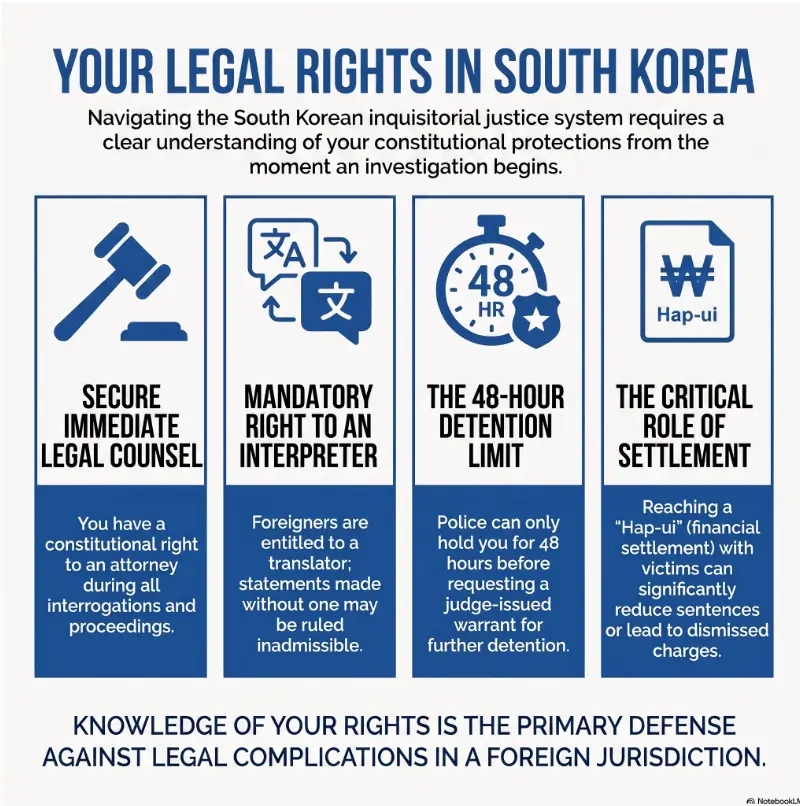
A criminal accusation in Korea is not the place to freestyle. The room may be polite. The paperwork may look routine. The officer may sound calm. Still, the choices made early can affect detention, charging decisions, settlement strategy, court outcomes, employment, school status, visa status, and future travel.
This article gives general legal information for English-speaking readers comparing Korea criminal defense options. It is not legal advice, does not create an attorney-client relationship, and cannot tell any specific person whether to answer police questions, sign a statement, leave Korea, contact immigration, accept a settlement, or pay a retainer.
If you are detained, arrested, summoned as a suspect, asked to sign a Korean-language statement, or facing allegations involving drugs, assault, sex crimes, fraud, serious injury, immigration status, or military access, contact a licensed Korean criminal defense lawyer as soon as possible.
Key takeaway
Use this guide to prepare better questions, compare fee scopes, organize documents, and avoid obvious mistakes. Do not use it as a substitute for case-specific advice from a Korean lawyer who can review the evidence and procedural status.
Korean criminal law applies to both Korean nationals and foreigners for crimes committed within South Korea. You can review the official English translation of Korea’s Criminal Act through Korea’s statutory information service, while remembering that English translations may be provided for understanding and may not carry the same legal effect as the Korean text.
The First Call: What a Korea Criminal Defense Lawyer Actually Does
The first useful lawyer call is not a courtroom speech. It is triage. A good criminal defense lawyer in Korea should help identify the stage of the case, the immediate risk, the next deadline, what documents exist, what has already been said, and whether the person is a witness, victim, suspect, defendant, or detainee.
From panic to paperwork: the first 24-hour triage
The lawyer will usually want the unvarnished facts first: who contacted you, when, what they said, whether a summons exists, whether your passport was taken, whether you already gave a statement, whether there is a complainant, and whether any deadline is written in Korean.
For families in the US or UK, the first call may feel foggy because the person in Korea is scared, tired, or unable to explain the Korean documents. That is normal. The practical move is to gather screenshots, call logs, location details, names, case numbers, and every document before trying to interpret the whole case from memory.
Police station, prosecutor, court: who controls which stage
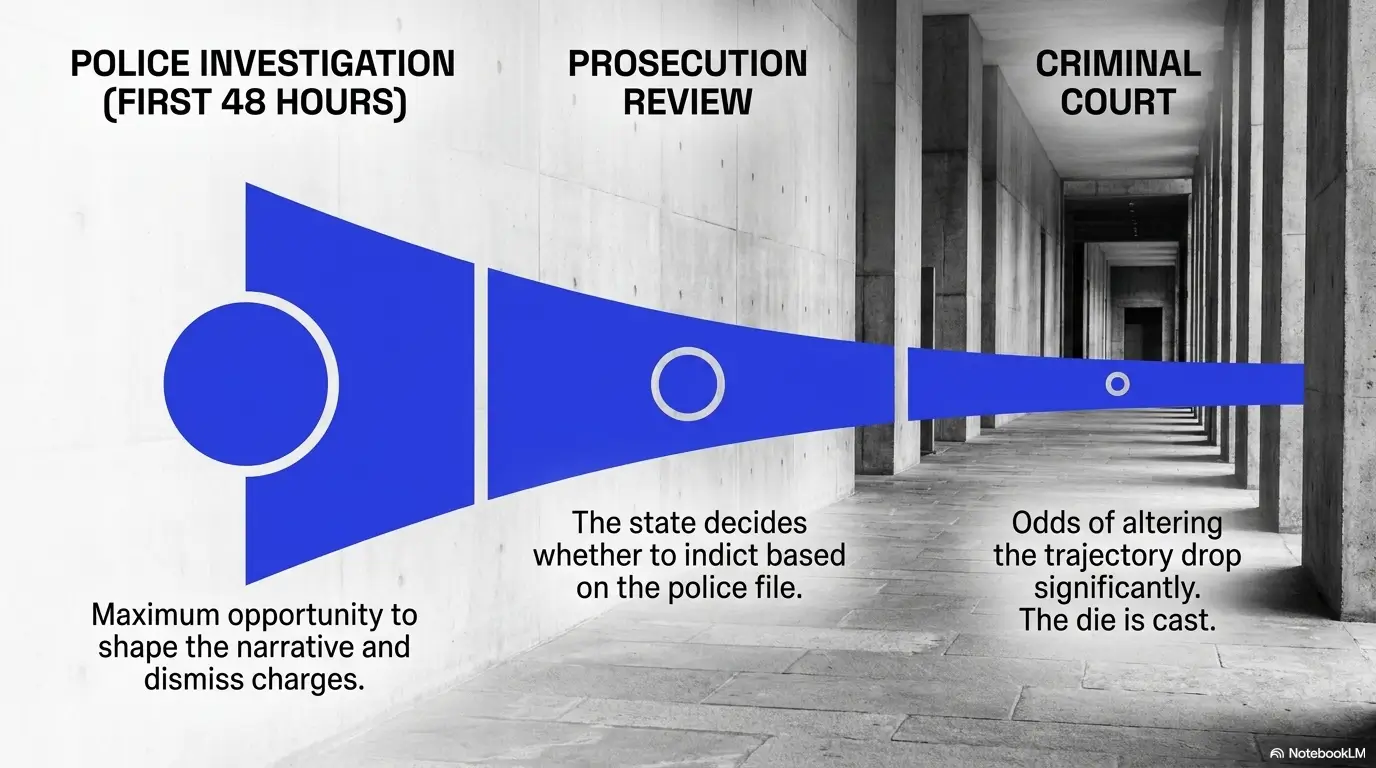
A Korea criminal case may move through police investigation, prosecutor review, and court proceedings. Each stage has a different rhythm. Police may gather statements and evidence. Prosecutors may review the file and make charging decisions. Courts handle hearings, trial management, sentencing, and some detention-related issues.
The lawyer’s job is not only to “argue later.” In many cases, the lawyer’s most valuable work happens before the file hardens: attending questioning, reviewing statements, preparing submissions, organizing evidence, protecting the client from accidental admissions, and coordinating interpreter issues.
The English-speaking lawyer filter that matters more than marketing
An “English-speaking lawyer” is not just someone who can chat in English. For a foreign defendant, the real test is whether the lawyer can explain Korean criminal procedure in plain English, identify translation risks, coordinate with interpreters, summarize Korean documents accurately, and keep overseas family or employers informed within confidentiality limits.
Ask whether the lawyer personally attends police questioning or sends a junior lawyer. Ask whether updates are in English. Ask whether written submissions are drafted in Korean only or explained in English. Small details become large when the case crosses languages.
Who This Is For, and Who Should Not Rely on It Alone
This guide is especially useful when the reader is outside Korea and trying to make sense of a sudden message: “Police called me,” “My friend was arrested,” “The school says there is an investigation,” or “They want me to come in and explain.” Those words can make a normal afternoon collapse like a paper umbrella in rain.
For: foreigners already contacted by police, prosecutors, or immigration
If a Korean authority has contacted you about a possible criminal matter, treat the situation as formal until a lawyer tells you otherwise. A friendly call, a request to “just come in,” or a short written notice can still be part of a criminal investigation.
Foreign residents may also face practical consequences beyond the criminal file: employer reporting, school discipline, housing issues, online identity verification problems, visa timing, travel bookings, and family pressure. For related daily-life systems, readers may also find this guide to Korean identity verification for foreigners useful when organizing documents and access records.
For: family members in the US or UK trying to understand a Korea arrest
Families overseas often want two things immediately: “Is my person safe?” and “How much will this cost?” Both matter. But the better first question is: “What stage is the case in right now?” Cost makes little sense until you know whether the lawyer is being hired for a consultation, police questioning, detention review, settlement discussions, court defense, appeal, immigration follow-up, or all of those.
Consular services can be helpful for detained citizens, but they are not a substitute for private criminal defense counsel. A consulate may help with contact, welfare checks, family notification, or lists of local attorneys, but it generally cannot act as the defendant’s lawyer or override Korean legal process.
Not for: DIY visa advice, civil disputes, or “can I just pay a fine?” guesses
This article is not a shortcut for immigration advice, civil settlement strategy, employment disputes, family law, or online defamation questions unless those issues overlap with a criminal case. If the issue is primarily speech-related, a related starting point is this guide to defamation law in Korea, but criminal defense questions still need case-specific review.
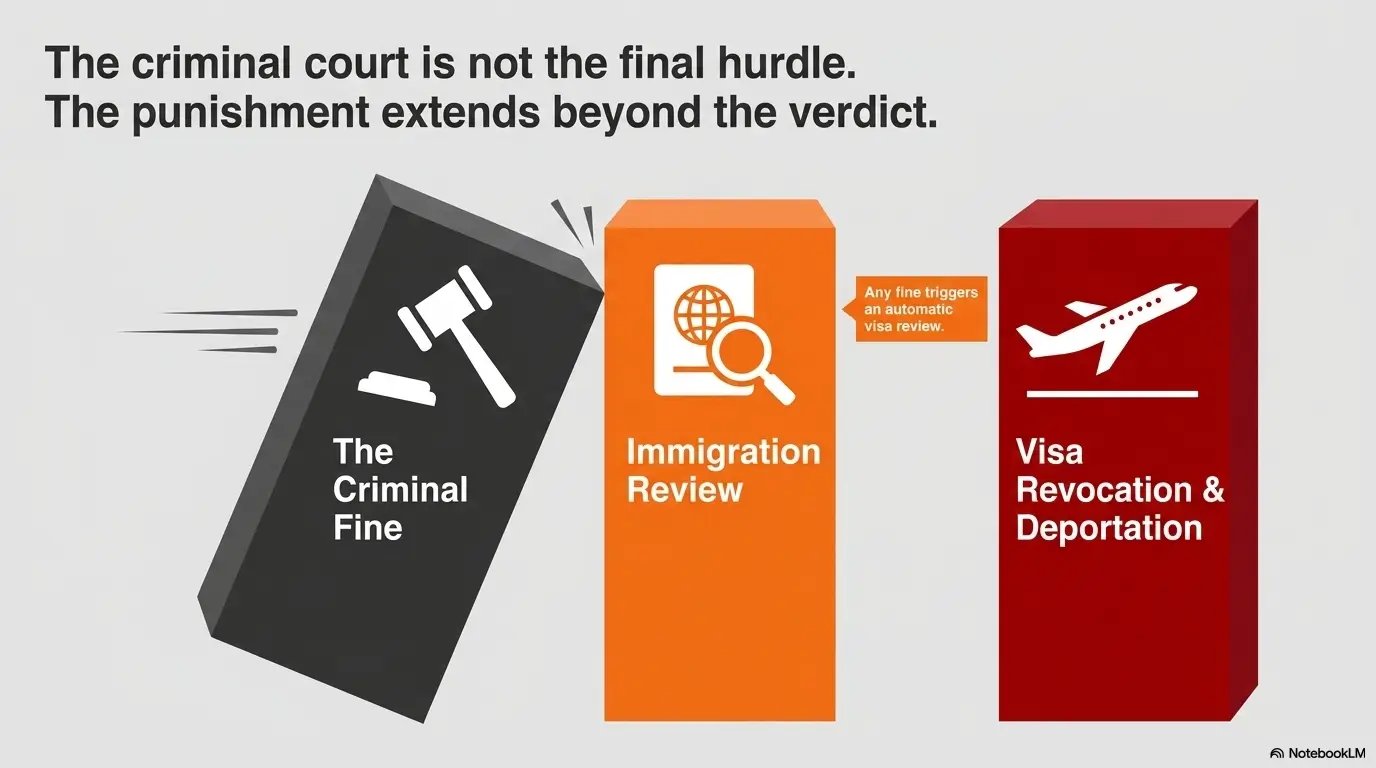
The phrase “just pay a fine” is especially dangerous. Some cases may resolve through fines or summary procedures, but others can trigger a record, deportation review, employment fallout, professional licensing issues, or future entry problems. Cheap certainty is not clarity. It is confetti in a courtroom.
The Cost Puzzle: Why Korean Criminal Defense Fees Vary So Much
People usually search for “Korea criminal defense lawyer cost” because they want a number. The honest answer is that the number depends on the stage, seriousness, urgency, evidence volume, detention risk, language work, lawyer seniority, location, and whether the quote includes court appearances or only investigation-stage support.
Instead of asking only “How much?” ask “What exactly is included, what is excluded, and what event triggers the next fee?” That question turns a foggy price into a usable comparison.
Flat fee, stage fee, or hourly: the three quote structures
Korean criminal defense fees are often quoted as a flat fee for a defined scope, a stage-based fee for investigation and trial separately, or an hourly arrangement for limited advice, document review, or ongoing consultation. Hybrid quotes are common, especially when the matter may grow.
| Fee structure | How it usually works | Best for | Watch for |
|---|---|---|---|
| Flat fee | One fee for a defined scope, such as police-stage defense | Clear, contained matters with known next steps | Vague wording about court dates, written submissions, translation, or detention work |
| Stage fee | Separate fees for police investigation, prosecution review, trial, appeal, or immigration follow-up | Cases where the path may change | Low first-stage price that becomes costly when the case escalates |
| Hourly or consultation-based | Time billed for advice, review, calls, or document analysis | Second opinions, family briefings, pre-consultation review | No cap, unclear billing increments, or limited availability in urgent situations |
Here’s what no one tells you about “cheap” criminal defense
The cheapest quote may be perfectly fine for a narrow consultation. It may also be a trap door if it excludes the work that actually protects you: attending police questioning, reviewing the written statement line by line, preparing a Korean submission, handling urgent calls, coordinating with an interpreter, or responding to detention risk.
When comparing criminal defense lawyers in Korea, think of the quote less like buying a single plane ticket and more like choosing a flight path during bad weather. The bargain fare is not a bargain if it drops you in the wrong city.
What the quote should include
A useful quote should define the stage, expected deliverables, who does the work, how many attendances or court dates are included, how client updates happen, whether English explanations are included, and what extra fees may apply.
- Police station attendance for questioning
- Pre-questioning preparation call or meeting
- Review of Korean-language statement before signature
- Written opinion, defense submission, or mitigation letter if needed
- Communication with family, employer, school, or consulate when appropriate and authorized
- Translation coordination or explanation of translated documents
- Court attendance count if the case has already moved to trial
- Emergency response if detention becomes an issue
Key takeaway
Do not compare lawyer fees by number alone. Compare scope, stage, attendance, translation support, written work, court-date limits, and escalation fees.
Good, Better, Best: a practical lawyer-scope comparison
| Option | What it may include | When it may be enough | Main risk |
|---|---|---|---|
| Good | Paid consultation, document review, general process explanation | You need quick orientation before deciding next steps | Not enough if questioning, detention, or statement signing is imminent |
| Better | Investigation-stage representation, police attendance, statement review, written submission | You have a summons, suspect interview, or active police file | May not include trial, appeal, or immigration issues |
| Best | Full-stage defense plan covering police, prosecutor, court, settlement, mitigation, detention, and immigration coordination | Serious charges, foreign defendant, public job risk, visa risk, or detention concern | Higher upfront fee, so the scope must be written clearly |
The First 48 Hours: The Window People Underestimate
The first 48 hours can decide whether the case begins with clarity or confusion. That does not mean every case becomes a detention case. It means the earliest statements, documents, calls, apologies, chats, and procedural choices can become hard to unwind later.
Arrest, emergency arrest, voluntary questioning: very different doors
Foreigners may encounter Korean authorities through different doors: a polite phone call, a written summons, questioning as a witness, questioning as a suspect, an arrest, or detention after warrant review. The words used in Korean matter. The stage matters. Whether the person is free to leave matters.
A person who thinks they are “just helping” may later discover they were treated as a suspect. Before attending questioning, ask the lawyer to confirm the procedural status, location, expected duration, whether an interpreter will be present, and whether the lawyer should attend.
Detention risk: flight concern, evidence issues, seriousness of charge
Foreign defendants may face extra detention concern because investigators or prosecutors may worry about departure from Korea, lack of stable residence, evidence tampering, or seriousness of the alleged crime. That does not mean detention is automatic. It means residence, employment, family ties, passport status, cooperation history, and defense strategy should be documented early.
If you have a Korean address, Alien Registration Card or residence card, employer letter, school enrollment proof, family ties, medical needs, return-ticket explanation, or other evidence showing stability, organize it before the lawyer asks. The folder you build today may matter tomorrow.
Consular contact: helpful support, not a substitute for defense counsel
For US citizens, the US Embassy in Seoul explains that it can provide certain assistance after arrest, such as helping contact family, friends, or employers and providing information about local attorneys. That support can matter. It is still different from legal defense.
Citizens of other countries should check their own embassy or consular service. Consular staff may be able to visit, communicate with family, provide lists of lawyers, or explain local detention conditions. They generally cannot represent the person in court, force release, pay legal fees, or erase local legal consequences.
Silence can feel rude, but it may be legally safer
Many foreigners in Korea worry that refusing to answer questions will look disrespectful. That social instinct is understandable. Korea is a highly relational culture, and a police room can amplify the urge to cooperate, apologize, and explain.
Still, answering questions without counsel or a reliable interpreter may create more risk than calm. If you are unsure, ask to speak with a lawyer before making a statement. Politeness is good. Uncontrolled self-incrimination is not.
Key takeaway
In the first 48 hours, focus on status, counsel, interpreter, documents, and deadlines. Do not treat a criminal investigation like a customer-service misunderstanding.
Interpreter Problems and Police Statements: The Quiet Risk Inside the Room
Interpreter issues are where many foreigner cases become slippery. A person may understand restaurant Korean, office Korean, or dating-app Korean. That does not mean they understand criminal-law Korean, procedural warnings, evidence summaries, or the precise language of a written suspect statement.
Why “I understand some Korean” can become dangerous fast
Partial language ability can be worse than no language ability because it tempts everyone to move too quickly. The officer assumes you understand. You nod because you understand the general topic. The interpreter compresses a sentence. A legal term becomes a casual phrase. Then the written record quietly grows teeth.
If you do not fully understand Korean, request an interpreter before interrogation and before any written statement is reviewed for signature. Canada’s official travel guidance for South Korea explains that people who do not understand Korean may request certified interpreter assistance during interrogation and oral translation of statements they are required to sign.
Statement review: never sign what you cannot fully understand
A police statement is not “just a form.” It may become a central part of the file. It may influence how investigators understand the case, how prosecutors review it, and how later disputes about intent, timing, apology, consent, payment, violence, knowledge, or possession are framed.
Before signing, the person should understand every material sentence. If a sentence is wrong, incomplete, translated poorly, or missing context, raise it before signature. If pressure builds, ask for time to review with counsel. A signature can feel like a small pen stroke. Later, it may sound like a door locking.
Interpreter quality: ask early, correct errors immediately
Interpreters vary. Some are excellent. Some are overworked. Some may summarize too aggressively. Some may miss legal nuance. The safest habit is to slow down the exchange and correct errors immediately, calmly, and clearly.
- Ask the interpreter to translate the full question, not only the general idea.
- Answer in short, precise sentences.
- Do not let the interpreter add facts you did not say.
- Ask for repeated translation if a legal term is unclear.
- Before signing, ask for oral translation of the written statement.
- Tell your lawyer about any interpretation issue right away.
Real-world example: the tiny word that changed the tone
An English teacher is questioned after a late-night argument outside a bar. In English, he says, “I pushed his hand away because he grabbed my jacket.” The Korean summary becomes closer to “I pushed him during the argument.” The difference sounds small to a tired person at 1 a.m., but it changes the emotional center of the statement.
The safer move is not to argue theatrically. It is to pause, identify the exact line, ask for correction, and have counsel review the final wording before signature. Criminal defense is often less thunderbolt and more needlework.
Process Map: From Police Contact to Final Outcome
Every case is different, but most foreigner criminal cases in Korea can be understood through a basic sequence. The sequence helps families and defendants ask better questions without pretending that every case follows the same speed or result.
Korea criminal case flow for foreigners
1. Contact
Summons, call, complaint, arrest, or request to attend questioning.
2. Questioning
Lawyer attendance, interpreter request, statement review, evidence gathering.
3. Prosecutor
File review, charging decision, possible settlement or written defense submission.
4. Court
Hearings, evidence, mitigation, sentencing, appeal deadline if needed.
5. Aftermath
Visa, employment, school, departure, record, deportation, or re-entry questions.
Stage 1: Initial contact, summons, or arrest
The first stage is identifying what happened. A phone call from police, a written summons, a request to attend as a witness, a suspect interview, and an arrest are not the same. Save the document, note the time, write down the officer’s name and station if known, and contact counsel before volunteering a narrative.
Stage 2: Police questioning and evidence gathering
This stage often creates the record that follows the case. The defense lawyer may attend questioning, prepare the client, coordinate interpreter issues, review the statement, advise on silence, and help gather messages, CCTV locations, receipts, ride records, witnesses, medical records, or employment documents.
Stage 3: Prosecutor review and charging decision
After police work, the prosecutor may review the file and decide whether to proceed, request more investigation, pursue charges, or consider other outcomes depending on the case type. Defense submissions, settlement materials, restitution evidence, apology letters, or mitigation documents may matter at this stage.
Stage 4: Court hearing, settlement strategy, or negotiated resolution
If the case moves to court, the lawyer’s work may include trial strategy, evidence challenges, witness issues, sentencing materials, settlement documentation, and court appearances. Some matters may resolve more quickly than others, but foreigners should not assume a short case means a small consequence.
Stage 5: Sentencing, appeal, immigration follow-up, and travel consequences
After a criminal decision, the practical questions may continue. Can the person leave Korea? Will immigration review the case? Does the employer need notice? Will the school take action? Is there an appeal deadline? Will a future visa or entry application ask about the case?
This is why criminal and immigration issues should not be placed in separate boxes too neatly. They may be handled by different professionals, but the consequences can speak to each other.
Show me the nerdy details
Foreign criminal cases in Korea often turn on procedure as much as facts. The defense team may need to track the client’s procedural status, detention clock, statement authenticity, interpreter appointment, complaint history, police transfer to prosecution, charging decision, court scheduling, settlement evidence, and appeal timing. For foreigners, a parallel administrative file may matter too: visa type, residence address, employer sponsorship, school enrollment, passport status, and departure plans. This is why a “simple” case can become document-heavy very quickly.
The Fee Quote Trap: What to Ask Before Paying a Retainer
A criminal-defense retainer should not feel like buying a mystery box. You may not know the outcome, but you should know the scope. Before paying, ask direct questions in writing. A careful lawyer should not be offended by reasonable scope questions.
“Will you personally attend questioning?”
This is one of the most important questions. If the lawyer will not attend, ask who will. If a junior lawyer or staff member will attend, ask how the strategy is prepared and who reviews the statement. If the quote includes only office consultation, do not assume police attendance is included.
“How many court dates are included?”
If the case is already in court, ask how many hearings are included and what happens if additional hearings are scheduled. Court calendars can stretch. A fee that looks manageable at first may change if each extra date has a separate charge.
“Will written submissions be bilingual or Korean-only?”
Korean submissions to police, prosecutors, or court will usually need to be in Korean. The client, however, may need an English explanation. Ask whether the lawyer will provide an English summary of filings, key arguments, and legal strategy. You do not need literary translation of every comma, but you do need to understand what is being said in your name.
“Who handles translation and client updates?”
Some firms use attorneys for all updates. Others use paralegals, translators, or bilingual staff. That can be fine if the system is clear. The problem is silence. Ask how often updates are given, in what language, and whether urgent family communications are included with the client’s permission.
Retainer checklist before you pay
- Scope by stage: consultation, police, prosecution, court, appeal, immigration coordination
- Who attends questioning and court
- Number of included meetings, calls, and appearances
- Whether statement review is included
- Whether English updates are included
- Extra fees for detention hearings, settlement talks, expert evidence, appeals, or urgent weekend work
- Refund policy or termination terms, if any
- Written engagement letter or fee agreement
Common Mistakes Foreigners Make in Korean Criminal Cases
Many mistakes in foreigner cases are not reckless. They are human. People are scared, embarrassed, far from home, and trying not to make trouble. Unfortunately, the legal system does not always reward improvisation.
| Mistake | Why it causes trouble | Safer alternative |
|---|---|---|
| Treating the case like a US or UK misdemeanor ticket | Korean procedure, statement practice, detention risk, and immigration consequences may differ sharply | Ask a Korean lawyer to explain the exact stage and likely procedural path |
| Assuming the embassy can act as your lawyer | Consular support can help, but it does not replace defense counsel | Use consular support for welfare and contact while hiring legal defense separately |
| Waiting until indictment to hire counsel | Early statements and evidence collection may already shape the file | Seek advice before questioning or signing documents |
| Ignoring immigration consequences | A criminal outcome may affect visa status, employment, departure, or re-entry | Ask counsel when immigration review may become relevant |
| Using apology money without legal strategy | Settlement, restitution, or apology may help in some cases but harm in others if handled poorly | Coordinate any payment, apology, or contact with counsel first |
Mistake 1: Treating the case like a ticket back home
Foreigners often import mental models from home. A US traveler may think of plea bargaining. A UK reader may think of solicitor-at-police-station norms. A Canadian may expect consular framing from travel guidance. Those reference points can help you ask questions, but they cannot replace Korean procedure.
Mistake 2: Assuming the embassy can fix the case
Embassies and consulates can be valuable, especially when detention, medical needs, family contact, or lawyer lists are involved. They cannot usually choose your lawyer, argue the case, force Korean authorities to release you, or give private legal defense.
Mistake 3: Waiting until court to take it seriously
By the time a case reaches court, the file may already contain statements, CCTV summaries, chat records, complainant statements, police opinions, and prosecutor analysis. A lawyer can still help, but waiting may shrink the room for early correction.
Mistake 4: Paying apology money without a plan
In some Korean cases, apology, restitution, or settlement materials may matter. In others, direct contact can create new problems, feel like pressure, or be interpreted badly. Do not send money, messages, gifts, apologies, or third-party contacts without legal advice.
Cultural context can matter too. If you are trying to understand Korean apology habits more broadly, see this guide to Korean apology phrases. In a criminal case, however, social apology and legal strategy are not the same instrument.
Lower-Cost Help: Legal Aid, Public Defense, and Reality Checks
Not every foreigner can afford private criminal defense. That reality should be handled plainly, not with shame. The key is knowing what lower-cost help may do, what it may not do, and when urgency makes bargain-hunting dangerous.
Korea Legal Aid Corporation: who may qualify
The Korea Legal Aid Corporation provides legal consultation and legal aid for people who meet certain criteria, including some foreign residents. Eligibility, case type, income rules, documentation, and availability can change, so check directly rather than assuming you qualify.
Court-appointed counsel: when it may apply
Court-appointed counsel may be available in certain criminal situations, especially where detention or serious proceedings are involved. But do not assume public defense will be available at every early police moment or that it will automatically cover every language, family, immigration, or employer communication need.
Private counsel: when urgency outweighs bargain-hunting
If questioning is scheduled tomorrow, if the person is detained, if the case involves a serious allegation, if a statement is ready for signature, or if the person’s visa and job depend on the outcome, the most expensive option may be delay. That does not mean overpay blindly. It means compare scope quickly and in writing.
| Help option | Possible benefit | Limit to confirm |
|---|---|---|
| Free consultation | Basic orientation and referral direction | May not include representation or urgent attendance |
| Legal aid | Lower-cost or free help for eligible people | Eligibility and case coverage must be checked directly |
| Court-appointed counsel | Defense support in qualifying criminal proceedings | May not cover all early-stage, language, or family-communication needs |
| Private lawyer | More tailored strategy, availability, English updates, and stage planning | Higher cost and scope must be written clearly |
Key takeaway
Lower-cost help can be valuable, especially for eligibility-based support. But when a suspect interview, statement signature, or detention issue is imminent, scope and speed matter as much as price.
Evidence Strategy: What Your Lawyer Needs From You
A criminal defense lawyer cannot build a clean strategy from scattered panic. The client’s job is to help turn memory into a file: dates, places, messages, witnesses, documents, and deadlines. Think of it as packing a legal emergency bag.
Timeline: dates, places, messages, witnesses
Start with a timeline. Keep it factual. Avoid long emotional essays. Include dates, times, locations, who was present, who contacted whom, what documents were received, what police said, and what has already been signed.
If the situation involves Korean offices, documents, or appointment systems, the broader guide to Korean admin culture may help family members understand why paperwork and procedure can feel unusually precise.
Digital evidence: chats, CCTV locations, receipts, ride logs
Digital evidence disappears faster than people expect. Chat apps get deleted. CCTV may be overwritten. Ride records become harder to access. Receipts vanish into laundry. If a location had cameras, note the exact address and likely camera angle quickly.
- Preserve KakaoTalk, WhatsApp, iMessage, Instagram, email, and SMS screenshots.
- Export chats where possible without editing the content.
- Save ride-hailing logs, taxi receipts, card receipts, hotel records, and entry records.
- Write down CCTV locations before footage is overwritten.
- Keep original files and create copies for the lawyer.
- Do not alter, crop, or “clean up” evidence before counsel reviews it.
Character and mitigation: employment, school, family, restitution
When appropriate, mitigation materials may include employment proof, school enrollment, volunteer history, medical documents, family responsibilities, apology letters, restitution evidence, treatment records, or counseling participation. Your lawyer can tell you what helps, what is irrelevant, and what might backfire.
The missing folder: immigration documents and travel plans
Foreigners should also prepare passport copies, visa type, residence card, address registration, employer or school documents, planned travel, and any immigration notices. For broader document context, this guide to Korea resident registration and foreigner records may help you understand which records often matter in daily Korean administration.
One-page case brief template
- One-sentence allegation: “Police are investigating me for…”
- Current status: witness, suspect, detained, charged, court date, or unknown
- Next deadline: questioning date, court date, document deadline, or detention review
- People involved: complainant, witnesses, officers, lawyer, interpreter, consular contact
- Documents received: summons, statement, warrant, notice, court document, immigration notice
- Evidence list: chats, receipts, CCTV locations, photos, ride logs, medical records
- Immigration facts: visa type, residence card, employer or school, passport status, travel plans
- Questions for lawyer: fee scope, attendance, statement review, detention risk, immigration coordination
FAQ
What is the typical lawyer fee structure in a Korea criminal case?
Fees may be quoted as a flat fee, stage fee, hourly consultation, or hybrid arrangement. The important issue is not only the amount but the scope: police questioning, statement review, written submissions, court dates, translation support, detention work, settlement strategy, and appeal work may be included or billed separately.
Can a foreigner leave Korea during a criminal investigation?
It depends on the case, status, passport situation, investigation stage, and any restrictions or practical risks. Do not assume departure is safe simply because you still have your passport. Ask a Korean criminal defense lawyer before leaving Korea while a criminal matter is active.
What can an embassy do after an arrest?
An embassy or consulate may help with welfare checks, family contact, attorney lists, and communication support depending on nationality and circumstances. It generally cannot act as your lawyer, force local authorities to release you, pay your legal fees, or guarantee a result.
Can police questioning happen in English?
Questioning may involve an interpreter if the person does not understand Korean well enough. Do not rely on partial Korean ability for a serious criminal interview. Ask for an interpreter early, answer clearly, and do not sign a written statement unless you fully understand it.
How long does a Korean criminal case take?
Timing depends on the charge, detention status, evidence, prosecutor review, court schedule, settlement issues, and whether appeals or immigration follow-up occur. Some matters move quickly. Others last months or longer. Ask counsel for the likely procedural path, not a guaranteed calendar.
Does settlement end the criminal case?
Not always. Settlement or restitution may influence some cases, but it does not automatically erase every criminal process. In some allegation types, settlement may be legally important. In others, it may be only one factor. Handle apology, payment, and contact through counsel.
Can a criminal record affect a visa?
It can. The effect depends on the person’s nationality, visa type, allegation, outcome, sentence, immigration review, and future application questions. Ask your criminal lawyer whether an immigration lawyer or specialist should be involved before the criminal case ends.
Should a lawyer attend police questioning?
In many suspect interviews, lawyer attendance can be valuable because the lawyer can help prepare the client, monitor procedure, request clarification, address interpreter issues, and review the written statement before signature. Ask whether attendance is included in the fee quote.
Your 15-Minute Next Step: Build a One-Page Case Brief
If you are overwhelmed, do not try to solve the whole case tonight. Spend 15 minutes building a one-page case brief. That single page can make the first lawyer consultation sharper, cheaper, and less emotionally chaotic.
Write the allegation in one sentence. Add the next deadline. List every authority involved. Attach photos of Korean documents. Note what has already been said or signed. Add passport, visa, employer, school, and travel facts. Then write five questions: What stage is this? Should I attend questioning? Do I need an interpreter? What is included in the fee? What happens if detention or immigration becomes an issue?
A criminal case can make time feel metallic, loud, and strangely thin. A brief returns the first little square of floor beneath your feet. From there, the next move becomes less about fear and more about sequence: lawyer, interpreter, documents, statement, evidence, deadlines.
Final practical move
Before the consultation, send the lawyer a clean one-page brief and ask for a written scope of work. In a foreigner criminal case in Korea, clarity is not decoration. It is defense infrastructure.
Last reviewed: 2026-08