

Why Rooftop Homes Fascinate Foreigners
but Feel Less Romantic in Real Life
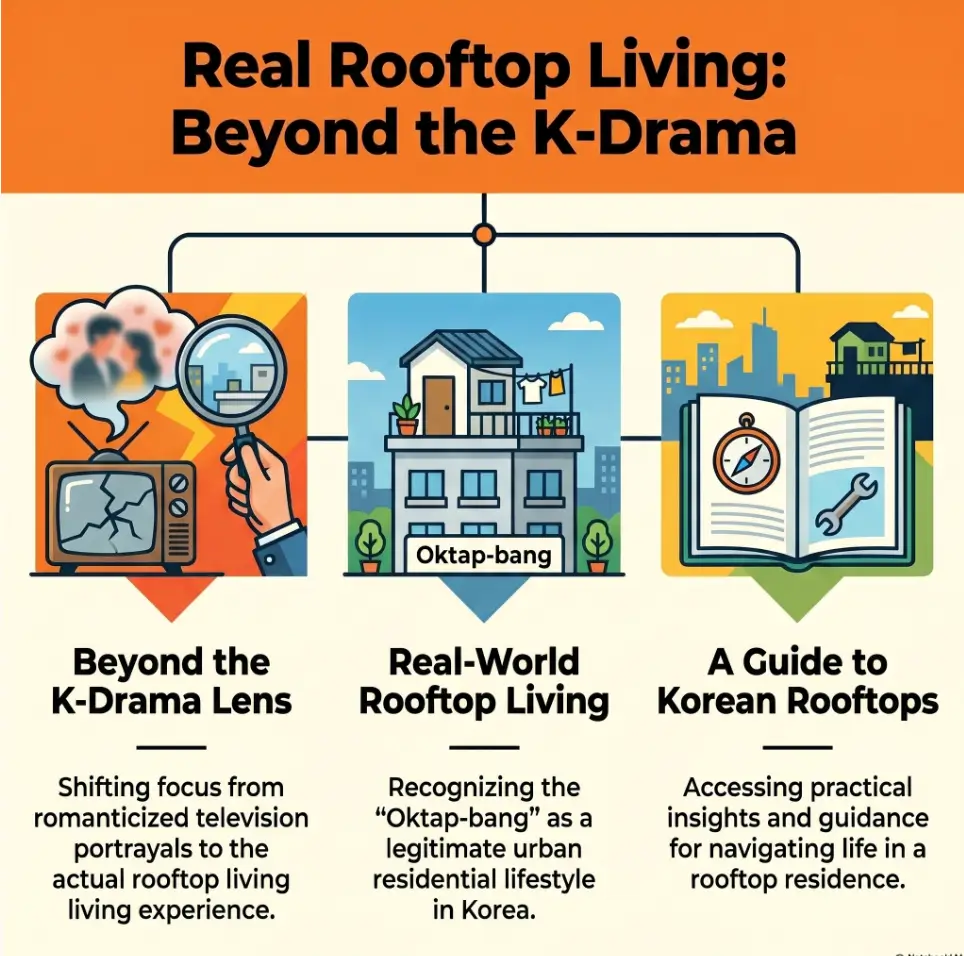
A Korean rooftop home can look like the perfect little room above the city: warm light, a private terrace, laundry moving in the evening air, ramen steam in a tiny kitchen, and Seoul blinking below like a patient machine.
Then real life arrives with grocery bags, summer heat, winter drafts, leaky corners, steep stairs, delivery confusion, and the quiet discovery that a beautiful view does not insulate a ceiling.
Quick Snapshot: The Rooftop Dream, With Shoes On
Rooftop homes fascinate foreigners because they compress privacy, skyline, struggle, and independence into one cinematic space. In daily life, though, they can be physically demanding and less comfortable than they appear on screen.
- Best for: short-term renters, solo residents, students, creators, and people who value atmosphere over convenience.
- Not for: families, mobility-limited renters, heat-sensitive sleepers, heavy commuters, or anyone who needs predictable comfort.
- Core outcome: Learn how to admire the romance without missing the practical red flags.
Table of Contents
Safety First: A Pretty Terrace Still Needs a Serious Inspection
This article is for cultural understanding and practical housing awareness, not legal, real estate, or building-safety advice. Rooftop homes can be perfectly livable, but they deserve more inspection than a regular studio because weather, stairs, roof drainage, and older construction all matter.
If you are actually renting in Korea, read the contract carefully, ask a trusted local speaker or licensed agent for help, and verify the basics before paying money. The view can wait. Your deposit cannot always tap-dance back into your account on command.
- Check stairs, locks, leaks, heating, cooling, and drainage.
- Visit during more than one time of day.
- Ask what is included in rent, utilities, repairs, and maintenance.
Apply in 60 seconds: Write down three deal-breakers before you view the room.
Rooftop Romance Starts With the View, Not the Floor Plan
The camera loves what renters later have to maintain
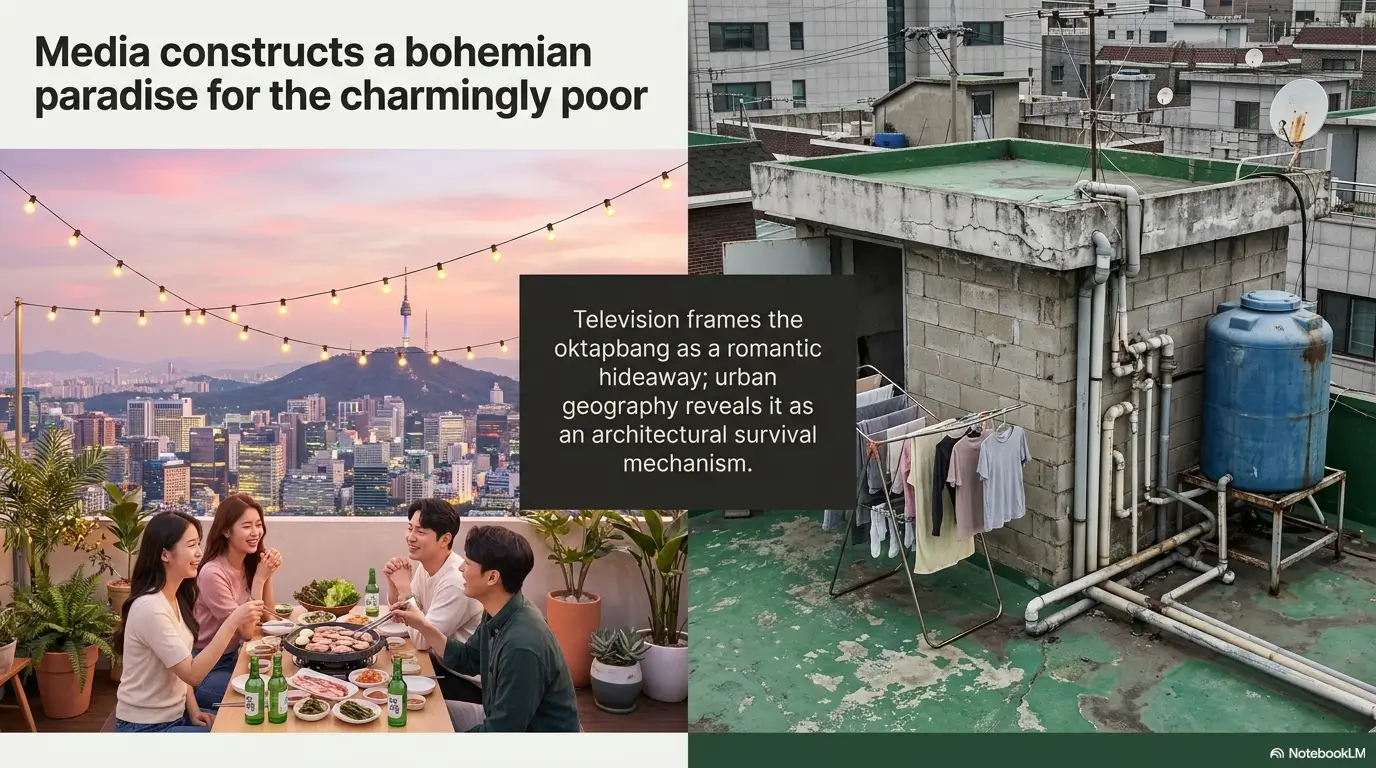
A rooftop home looks generous from the outside because the sky does half the decorating. The terrace feels bigger than the room. The lights soften rough edges. A plastic chair becomes a mood piece. A laundry rack suddenly looks like visual poetry.
But renters do not live in camera angles. They live with dust, bugs, rainwater, heat, pipes, thin walls, and the daily task of keeping a small space functional. The floor plan is where the romance quietly takes off its shoes.
Why skyline privacy feels rare to foreign visitors
For many foreign visitors, especially those used to dense apartments or shared housing, even a tiny private outdoor area feels luxurious. A rooftop terrace says: this little corner is mine. That feeling is powerful.
In Korean cities, where vertical density shapes daily life, a private patch of open air can feel like a secret garden wearing concrete slippers. The space may be modest, but the emotional signal is large.
The “tiny home above the city” fantasy has emotional gravity
Rooftop homes combine two stories people already love: the tiny home and the city escape. You are still in the city, but slightly above it. Near everything, yet apparently apart from it.
That is the hook. The renter imagines morning coffee, late-night writing, soft music, and a skyline that understands them better than their group chat. Real housing rarely performs that tenderly every day, but the idea has magnetic pull.
K-Drama Made the Rooftop Feel Like a Character
Why rooftop homes became shorthand for struggle, hope, and independence
Korean dramas often use rooftop homes as visual shorthand. A character may not have wealth, but they have a door, a view, a little air, and a place to be alone. The home says, “I am struggling, but I have not vanished.”
That makes the rooftop emotionally efficient. In one frame, viewers understand youth, pressure, poverty, ambition, loneliness, and stubborn hope. It is housing as autobiography.
The visual recipe: laundry lines, neon streets, ramen steam
The classic rooftop image works because it is tactile. There is laundry moving in the wind, aluminum bowls, cheap slippers, a small table, city noise below, and a moon that looks suspiciously well-lit for production reasons.
Foreign viewers absorb those details as intimacy. The home feels humble, but not empty. Small, but not soulless. It feels like a place where a character could cry, laugh, eat instant noodles, and become someone else by episode sixteen.
Here’s what no one tells you: the set designer chose the flattering angle
A drama rooftop is curated. The clutter is artful. The lighting is forgiving. The rain is romantic only because nobody has to email the landlord about a damp ceiling at 1 a.m.
Real rooftop homes can still be beautiful, but they are not staged for your comfort. The camera gets to leave. You have to sleep there.
- The setting often represents independence and pressure.
- Visual charm can hide maintenance problems.
- A memorable scene is not the same as a comfortable lease.
Apply in 60 seconds: When viewing a rooftop home, ask: “What would this feel like on a rainy Tuesday?”
Foreigners Often See Freedom Where Locals See Compromise
The outsider lens: charm, novelty, and cinematic distance
Foreigners may see a rooftop home as a portal into “real Korea.” It feels less polished than a high-rise apartment and more personal than a hotel. That can be exciting, especially for travelers, exchange students, or new expats.
The problem is that novelty makes excellent perfume. It can cover practical smells for a while. A steep stairwell becomes “atmospheric” until you carry bottled water up it in August.
The local lens: rent pressure, older buildings, and fewer comforts
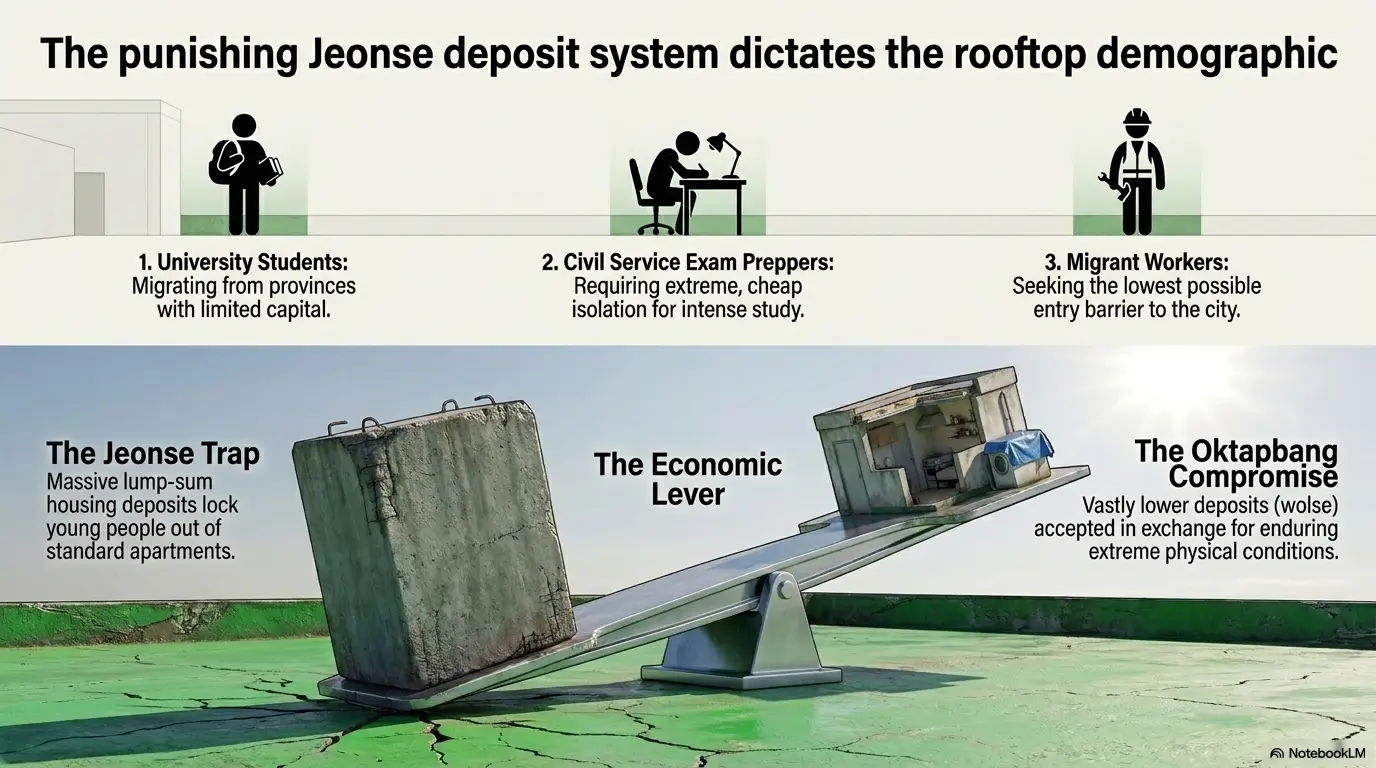
Many locals read rooftop homes differently. They may associate them with older low-rise buildings, lower rent, limited insulation, awkward layouts, and the kind of compromises people make when the budget is not wearing a tuxedo.
That does not mean every rooftop home is bad. It means the local eye often starts with function: Is it warm? Is it dry? Is it secure? Will the stairs become a personal villain?
Why “authentic” can mean “hard to heat in January”
Authenticity is lovely in essays and dangerous in leases. An “authentic” rooftop home may also mean older windows, exposed weather, patchy repairs, and higher utility use.
If you are planning a move, pair cultural curiosity with practical reading. For broader renter context, this Korean apartment move-in checklist is a useful companion before you sign anything with your optimistic hand.
The Weather Plot Twist: Summer and Winter Do Not Care About Aesthetics
Rooftop heat can turn romance into a toaster scene
Rooftop homes sit close to the roof, which means they can absorb more sun and hold heat longer. On a postcard, this looks golden. At bedtime, it can feel like living inside a polite appliance.
Air conditioning helps, but weak insulation can make cooling expensive and uneven. A room that looks peaceful at 5 p.m. may become sticky and airless by midnight.
Cold drafts make winter feel longer than the lease
Winter is the other half of the plot. Thin windows, exposed walls, and poor sealing can make a rooftop home feel colder than expected. Heated floors may not solve everything if the room leaks warmth like gossip.
Ask directly about heating type, average winter bills, window condition, and whether past tenants complained about drafts. A vague answer is not a charming answer.
Don’t romanticize weak insulation until you’ve paid the utility bill
Cheap rent can become less cheap when heating and cooling costs rise. Comfort is not only about monthly rent. It is rent plus utilities plus inconvenience plus the emotional tax of bad sleep.
| Weather issue | What to check before renting | Why it matters |
|---|---|---|
| Summer heat | Air conditioner age, shade, ventilation, top-floor sun exposure | Poor cooling can affect sleep and bills |
| Winter cold | Window seals, heating type, door gaps, floor warmth | Drafts can make daily life miserable |
| Rain | Ceiling corners, roof drains, terrace slope, wall stains | Leaks often show up after signing |
| Wind | Door strength, terrace items, railings, window noise | Rooftop exposure can amplify discomfort |
Common Mistakes Foreign Renters Make With Rooftop Homes
Mistake 1: Judging the place only during perfect daylight
Daylight is a generous editor. It makes small rooms feel cleaner, terraces feel wider, and old paint feel intentional. Visit again after dark if you can.
Night reveals noise, lighting, stair safety, neighborhood rhythm, and whether the terrace feels peaceful or exposed. The same rooftop can whisper at noon and shout at midnight.
Mistake 2: Ignoring water stains, ceiling corners, and roof drainage
Look at corners, ceiling edges, window frames, and the floor near exterior walls. Brown marks, bubbling paint, soft spots, or musty smells can point to water trouble.
On the terrace, check whether water has a clear path to drain. Standing water is not ambience. It is a tiny future complaint practicing its lines.
Mistake 3: Forgetting every grocery bag has to climb the stairs
One viewing day does not show the full cost of stairs. Imagine laundry, bottled drinks, luggage, food delivery, moving boxes, rainy shoes, and coming home tired after work.
If the stairwell is narrow, dark, slippery, or irregular, the home may become less romantic with every errand. Your calves may become excellent citizens, but your patience may file a complaint.
Mistake 4: Assuming the terrace is always private, quiet, or usable
Some terraces are lovely. Others are shared, overlooked, too hot, too windy, or filled with building equipment. Ask whether the terrace is private, what can be stored there, and whether there are restrictions.
Enjoy it, but do not let it outrank comfort.
Check heat, cold, drafts, shade, and rain marks.
Test daily access with groceries, luggage, and rain in mind.
Inspect ceilings, corners, drains, and exterior walls.
Look at doors, locks, lighting, railings, and stair visibility.
Confirm rent, deposit, repairs, utilities, and what space is yours.
The Stairs Change Everything After Week Two
Moving in is the first reality check
Rooftop homes often come with no elevator. That matters most on moving day, when boxes, suitcases, bedding, and small furniture must travel upward by human willpower.
Before renting, ask how previous tenants moved in. If the answer sounds like a mountain-climbing documentary, budget time, helpers, and possibly delivery limits.
Daily errands become a tiny endurance sport
A staircase is not only architecture. It is a daily subscription. You pay with knees, breath, time, and the mild drama of realizing you forgot your umbrella upstairs.
If you commute heavily or often return home late, the stairs may feel different after two weeks. During the viewing, walk up slowly and then imagine doing it tired.
Let’s be honest: the sunset does not carry your suitcase
The sunset may be spectacular. It will not help with a 23-kilogram suitcase. It will not bring toilet paper. It will not make the stairwell less slippery after rain.
- Test the route from street to door.
- Check lighting, handrails, surface grip, and stair width.
- Imagine carrying laundry, water, luggage, and groceries.
Apply in 60 seconds: During a viewing, walk the stairs twice before deciding how you feel.
Who This Is For, and Who Should Keep Looking
Good fit: short-term renters who value atmosphere over convenience
A rooftop home may work beautifully for a short stay, a study semester, a creative season, or a solo chapter where the mood matters. If you know the trade-offs and choose them willingly, the experience can be memorable.
The key word is willingly. A charming inconvenience is still an inconvenience. It only stays charming when it does not ambush your daily routine.
Good fit: creators, students, and solo renters with flexible routines
Creators may love the light. Students may love the lower rent. Solo renters may love having outdoor space without sharing a living room. For the right person, a rooftop home can feel like a private lookout post.
It also helps if you pack lightly, tolerate stairs, and do not need perfect temperature control. Minimalists have an advantage here. So do people who do not own seven suspiciously heavy boxes of “important cables.”
Not ideal: families, mobility-limited renters, heavy commuters, and heat-sensitive sleepers
If you need easy access, predictable comfort, storage, quiet, or strong insulation, be cautious. Rooftop living can magnify small problems because the home is exposed, elevated, and often older.
Families with young children should be especially careful about stairs, railings, terrace access, and emergency exits. A good photo cannot answer those questions.
| Renter type | Rooftop fit | Main reason |
|---|---|---|
| Solo short-term renter | Often good | Can accept quirks for atmosphere |
| Remote creator | Possible | Terrace and light may be valuable |
| Heavy commuter | Risky | Stairs and weather add daily friction |
| Family with children | Often not ideal | Safety, space, and access need more care |
| Heat-sensitive sleeper | Risky | Top-floor rooms can get hot |
The Hidden Costs Are Not Always in the Rent
Heating, cooling, repairs, and delivery inconvenience add up quietly
The listed rent may look friendly, but rooftop homes can carry hidden costs. Cooling may run longer. Heating may work harder. Repairs may be slower if the landlord sees the space as a budget unit.
Delivery can also be awkward. Some drivers may call for directions. Large items may cost extra or require pickup at the building entrance. Your sofa may discover philosophy halfway up the stairs.
Cheap rent can become expensive if comfort collapses
When comfort collapses, people spend money trying to patch the problem. They buy fans, heaters, rugs, draft blockers, storage bins, dehumidifiers, delivery workarounds, and more café drinks because home feels hard to sit in.
That does not make rooftop homes a bad choice. It means the true cost is monthly rent plus the cost of making the space livable.
Ask this before signing: what problem is the low rent solving for the landlord?
Lower rent often exists for a reason. Maybe the room is small. Maybe the building is old. Maybe the stairs are steep. Maybe there is noise, heat, or a maintenance history.
Ask politely but directly: “Why is this unit priced this way?” The answer may tell you more than the listing photos. If you are comparing deposits and contract types, the guide to jeonse deposit protection can help frame the bigger rental-risk picture.
- Estimate heating and cooling costs.
- Ask who pays for repairs and appliance issues.
- Consider moving, delivery, and daily access friction.
Apply in 60 seconds: Add a “comfort cost” line to your rental budget before comparing homes.
Show me the nerdy details
Rooftop units often sit at the edge of a building’s thermal envelope, meaning the room can be more exposed to solar gain in summer and heat loss in winter. Comfort depends on insulation, window quality, roof material, sealing, ventilation, heating equipment, shade, and moisture control. The terrace may also change drainage behavior around the unit. This is why two rooftop homes in the same neighborhood can feel completely different: one may be carefully renovated, while another is essentially a scenic weather experiment with a rent contract.
The Best Rooftop Homes Have Boring Details Done Right
Strong drainage beats a pretty terrace
A terrace is wonderful only when it handles rain properly. Check slopes, drains, wall seams, and places where water could pool near the door.
Ask whether there have been leaks. If the answer is too quick, look again. Water problems often leave quiet signatures in corners and paint.
Good insulation beats a dramatic city view
A dramatic view is delightful for ten minutes. Good insulation is delightful for an entire winter. Prioritize comfort systems that keep the space stable when the weather gets bossy.
Ask about recent renovations. New windows, better sealing, updated heating, and reliable cooling may matter more than terrace size.
Secure doors, safe stairs, and reliable heating are the real luxury items
Luxury in a rooftop home is not marble. It is a door that locks well, stairs that feel safe, lights that work, railings that feel sturdy, and heating that does not require a nightly negotiation.
If the home feels peaceful at 2 p.m. and 2 a.m., you may have found a rare good one. If it only shines during the viewing, keep your pen in your pocket.
Short Story: The Night View Test
Mina, a Canadian exchange student, fell in love with a rooftop studio near a busy university area. At 3 p.m., it looked perfect: blue sky, tiny terrace, a view over tiled roofs, and enough room for a desk by the window. The landlord smiled. The rent looked kind. She almost signed that afternoon.
A Korean classmate suggested one more visit after dinner. At 9:30 p.m., the stairwell was darker, the street below was louder, and the terrace faced three neighboring windows close enough to exchange weather reports. Then Mina noticed a damp line in the ceiling corner that daylight had politely hidden.
She rented a less photogenic studio two streets away. No terrace, no drama, no ceiling stain. Her lesson was simple: if a home needs perfect lighting to make sense, it may be auditioning, not offering.
When to Walk Away or Ask for Help
Walk away from visible water damage without a clear repair plan
Water stains, musty smells, swollen flooring, bubbling paint, or vague promises deserve caution. A landlord saying “It is fine” is not the same as a repair history.
Ask what caused the issue, when it was fixed, and whether documentation exists. If the answer becomes misty, let the room keep its view without you.
Ask for help before paying a deposit you cannot afford to lose
If you do not read Korean fluently, get help before signing. This is especially important if the deposit is large, the contract is unclear, or the agent rushes you.
Foreign residents can also learn more about local offices and administrative support through this guide to local district offices in Korea. Housing questions often connect to address registration, documents, and local procedures.
Stop if the pressure feels wrong
A good rental decision can survive a few careful questions. Be cautious if someone discourages inspection, refuses photos, avoids repair questions, or pressures you to transfer money quickly.
- Pause before sending money.
- Get contract help if language is a barrier.
- Walk away from safety issues that get brushed aside.
Apply in 60 seconds: Save photos of every concern during the viewing and review them later when the skyline spell has cooled.
FAQ
Are rooftop homes common in Korea?
They exist in many urban neighborhoods, especially in older low-rise buildings, but they are not the default housing choice. They are often associated with affordability, independence, compact living, and older rental stock.
Why do Korean dramas show so many rooftop homes?
They are visually memorable and emotionally efficient. A rooftop home can show financial pressure, solitude, ambition, romance, and resilience in one frame.
Are rooftop homes cheaper than regular apartments?
They can be cheaper, but lower rent may come with trade-offs such as weaker insulation, older facilities, steep stairs, leaks, or less convenient access.
Are rooftop homes safe to live in?
Some are safe and well-maintained. Others may have issues with stairs, railings, locks, leaks, electrical systems, or weather exposure. A careful inspection matters.
Do rooftop homes get very hot?
Many can get hot because they sit directly under the roof and receive more sun exposure. Cooling quality depends on insulation, shade, ventilation, and air conditioning.
Do locals see rooftop homes as romantic?
Some do, especially if the home is renovated and has a good terrace. Many also associate rooftop units with practical compromises, older buildings, and budget limits.
Should foreigners rent a rooftop home in Korea?
It can work for the right person, especially for short-term stays or lifestyle-focused renters. Inspect comfort, heating, cooling, stairs, leaks, neighborhood noise, and contract terms first.
Next Step: Inspect the Romance in Daylight and After Dark
Visit once during the day and once at night
The rooftop fantasy begins with a view, but the decision should end with evidence. Visit in daylight to inspect water marks, terrace condition, windows, and layout. Visit after dark to test noise, lighting, privacy, and stair safety.
Check heat, noise, stairs, water stains, locks, and delivery access
Use a simple rule: if the view is the only great feature, keep looking. A good rooftop home should feel livable when the sky is gray, the grocery bags are heavy, and the camera crew has gone home.
The 15-minute rooftop renter test
- Stand quietly inside for two minutes and listen for noise.
- Check every ceiling corner, window edge, and exterior wall.
- Walk the stairs twice and imagine carrying luggage.
- Ask about average heating and cooling bills.
- Confirm who repairs leaks, appliances, locks, and drainage problems.
- A rooftop home can be beautiful and inconvenient at the same time.
- The best units win on boring details, not just views.
- Your final decision should survive bad weather, darkness, and stairs.
Apply in 60 seconds: Before saving a listing, write: “Would I still want this place without the terrace?”
Rooftop homes fascinate foreigners because they make independence visible. They place a small life against a big city and ask us to believe that a private corner can change everything. Sometimes it can. But the best version of that dream is not the most cinematic one. It is the one that stays dry, safe, warm, cool, and peaceful after the sunset stops performing.
Last reviewed: 2026-05
Tags: Korean rooftop homes, Korea housing guide, Korean culture, expat life Korea, Seoul rentals
Meta description: Why Korean rooftop homes look romantic but often feel harder in real life, with renter checks for weather, stairs, leaks, and costs.