
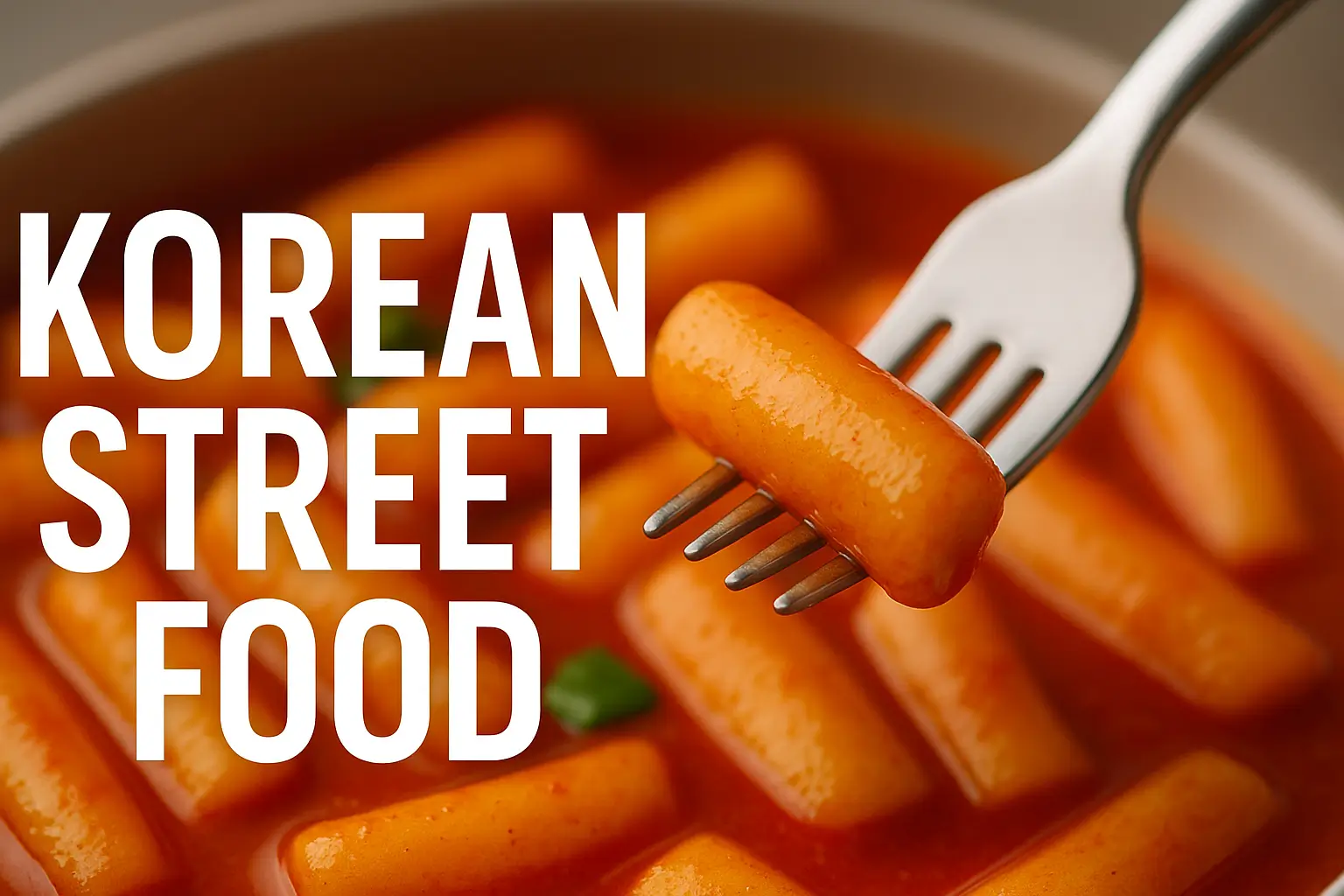
Street-food names help you explore a menu, but recipes, portions and payment options differ by vendor. Ask about the actual dish and current price. A busy queue, spicy sauce or familiar appearance cannot guarantee food safety or allergen suitability.
Compare sauces, fillings and broth
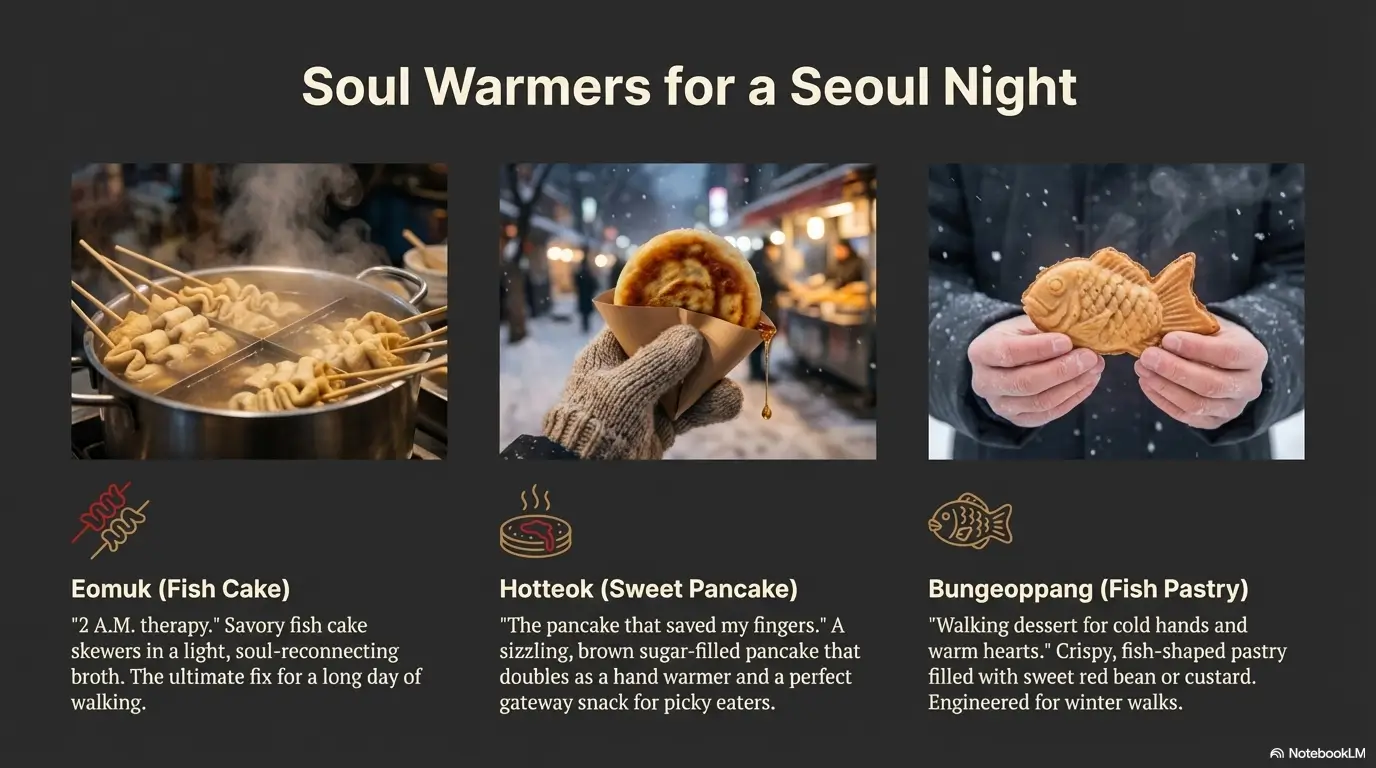
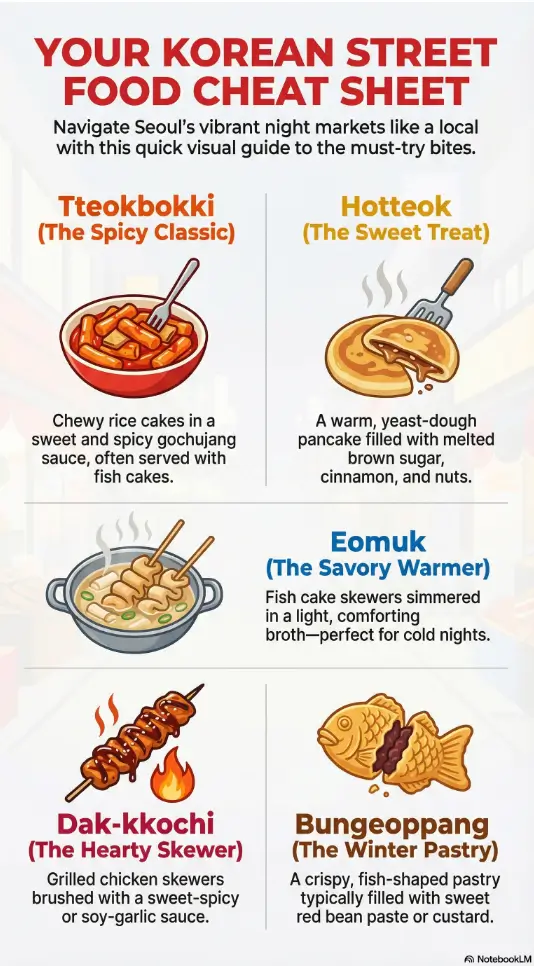
Tteokbokki commonly combines rice cakes with sauce, while eomuk involves fish-cake products and often broth. Hotteok is a filled pancake and bungeoppang a fish-shaped pastry. Fillings and sauces vary; ask about the specific ingredients rather than inferring them from the shape.
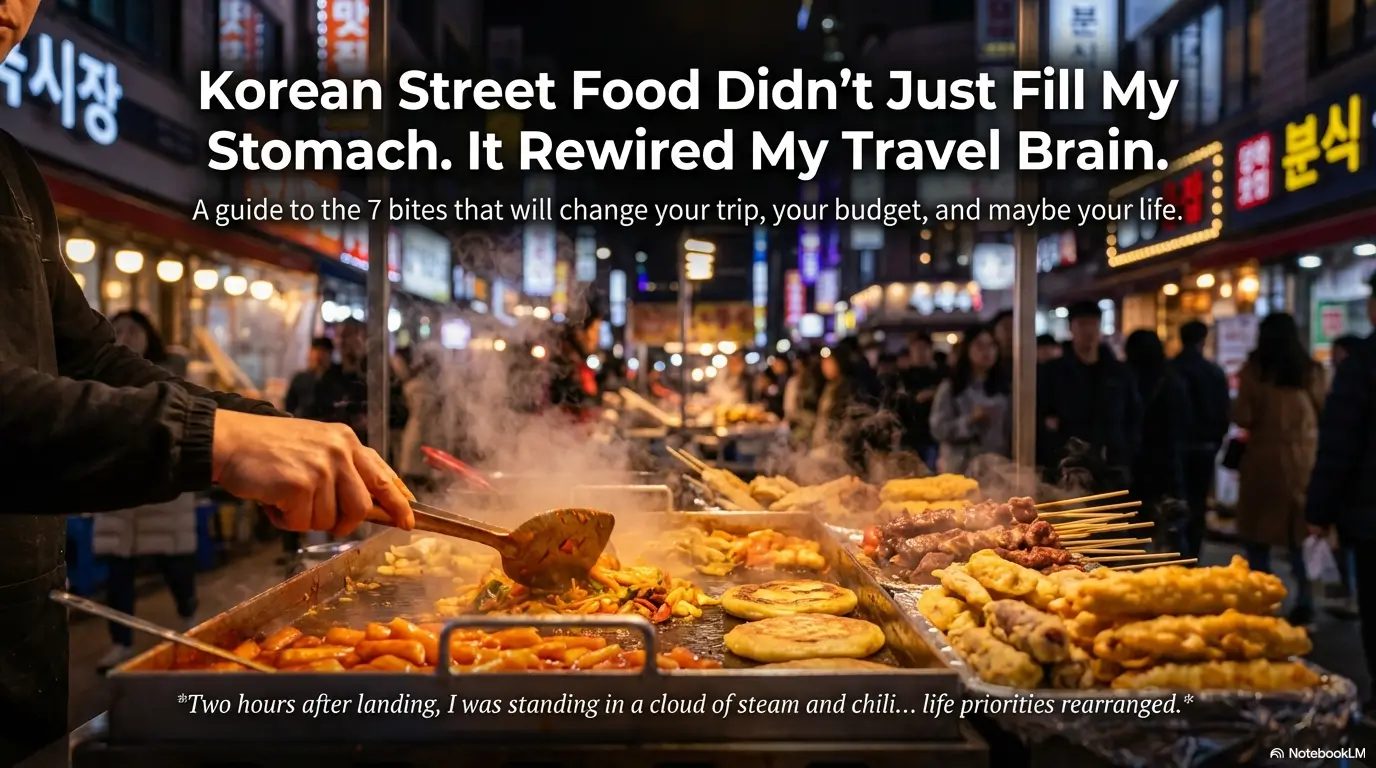
Check rolls, skewers and sundae individually
Small gimbap rolls can contain varied fillings and seasonings. Dak-kkochi are chicken skewers, with sauce and preparation differing by stall. Sundae can contain animal ingredients and other fillings. A dish name alone does not establish vegetarian, religious or allergy compatibility.
Build a budget from displayed prices
Record portion, included extras and the payment method accepted by each vendor. Constructed example: three items costing 3, 4 and 5 units total 12 units. These invented figures demonstrate addition, not a current Seoul price guide or spending recommendation.
Ask before ordering
Confirm ingredients, preparation and how the food is served. If a vendor cannot answer a question important to your dietary needs, choose another option. Follow appropriate medical advice for allergies; this cultural menu guide cannot determine individual safety.
A practical next step
Order one street-food item with a clear ingredient question
Consider a stall serving a dish you recognize from a photograph. The visible filling is only part of the recipe: sauces, stocks and shared preparation can matter to your needs. Ask about the particular item before ordering rather than assuming every stall uses an identical recipe.
If you have a dietary requirement, explain it plainly and accept when the vendor cannot verify the answer. A smaller order can help you compare taste and portion size without turning an uncertain ingredient answer into a tasting experiment.
| Compare | What to record |
|---|---|
| Item | Point to the exact menu item and serving size. |
| Ingredients | Ask about the ingredient or allergen relevant to you, including sauce or stock. |
| Price | Confirm the amount, optional additions and payment method before ordering. |
A reader question: Can the name of a Korean dish prove that it is vegetarian?
Usually the name alone cannot answer that question. Recipes and seasonings vary. Ask the maker about the actual preparation, and use a clearly verified alternative when the answer is uncertain. An English menu label is not a complete ingredient declaration.
Further reading: Korea Tourism Organization: VISITKOREA. Check the specific entry, object, edition or current provider notice relevant to your question.
Editorial revision: October 20, 2026. Practice examples are editorial constructions. The discussion distinguishes documented information, interpretation and personal choice.