Unleash 5 Mesmerizing Korean Embroidery Secrets!
Have you ever seen something so beautiful, so intricately made, that it just stops you in your tracks? Something that whispers stories of centuries past, of meticulous hands and incredible dedication? That’s exactly how I feel about Korean traditional embroidery. It’s not just a craft; it’s an art form that’s bursting with history, culture, and a level of detail that will absolutely blow your mind. Forget everything you thought you knew about needle and thread – we’re about to dive deep into a world where every stitch tells a tale, and frankly, it’s nothing short of breathtaking.
I remember the first time I truly appreciated Korean embroidery. I was at a small, hidden museum in Seoul, tucked away from the bustling city streets. There, under soft lighting, sat a collection of embroidered screens and garments. They weren’t just pretty; they felt alive. Each flower, each mythical creature, seemed to pulse with an almost magical energy. It wasn’t just fabric; it was a canvas of dreams, painstakingly brought to life thread by thread. And let me tell you, once you start looking, you’ll see this artistry everywhere in Korea, from ancient relics to modern designs. It’s truly woven into the fabric of the nation!
So, get ready to embark on a journey with me. We’re going to uncover some of the most fascinating aspects of Korean traditional embroidery, explore its incredible techniques, and understand why it’s not just beautiful, but profoundly significant. Trust me, by the end of this, you’ll have a whole new appreciation for this stunning art form, and maybe even a burning desire to pick up a needle yourself!
Korean traditional embroidery, Silk Embroidery, Cultural Heritage, Handcrafts, Decorative Arts —
Table of Contents
—
The Timeless Threads: A Brief History of Korean Embroidery
Imagine a time when every garment, every scroll, every piece of fabric told a story not with words, but with meticulously placed threads. That’s essentially what Korean embroidery has been doing for thousands of years! Its roots stretch back further than you might imagine, deep into the Three Kingdoms period (around 57 BC to 668 AD). Archeological digs have unearthed fragments of embroidered silk from this era, showing that Koreans were already masters of the needle even then. Isn’t that wild?
Initially, this exquisite art was primarily for the elite – royalty, nobles, and religious figures. Think of it as the ultimate status symbol, a way to display wealth, power, and devotion. Buddhist temples, in particular, were vibrant centers of embroidery, creating stunning tapestries and altar cloths adorned with deities, lotus flowers, and mythical creatures. These weren’t just decorations; they were sacred objects, imbued with spiritual meaning through every stitch.
But here’s where it gets really interesting: while the upper crust enjoyed the most lavish pieces, embroidery wasn’t exclusively for them. In fact, it was often a significant part of women’s lives across all social strata. From court ladies crafting intricate designs for their royal patrons to ordinary women creating everyday items like pouches, pillowcases, and folding screens, the needle was a constant companion. It was a skill passed down through generations, a silent language spoken between mothers and daughters.
The Goryeo Dynasty (918-1392) saw a flourishing of Buddhist embroidery, reaching new heights of complexity and spiritual depth. Then came the Joseon Dynasty (1392-1910), a period that truly solidified many of the styles and techniques we recognize today. This era brought a fascinating shift. While religious themes remained, secular embroidery boomed. Court embroidery, known as gungsu (궁수), became incredibly sophisticated, adorning royal robes, palace decorations, and official insignia. These pieces were not just beautiful; they were packed with symbolism, each motif carefully chosen to represent auspiciousness, longevity, or prosperity. Think of it as a hidden code, understood by those in the know!
Beyond the court, everyday embroidery, or minsu (민수), also thrived. This was where the personal touch really shone through. Women would embroider items for their homes, their families, and as gifts for special occasions. These pieces often featured vibrant colors and motifs drawn from nature – birds, flowers, butterflies – reflecting hopes for happiness, good fortune, and a harmonious life. It was art created with love, for love, and that really resonates, doesn’t it?
The 20th century, with its wars and rapid industrialization, saw a decline in traditional embroidery, much like many other heritage crafts. But thankfully, in recent decades, there’s been a beautiful resurgence. Artists, scholars, and passionate individuals are working tirelessly to preserve these techniques, pass them on to new generations, and ensure that the timeless threads of Korean embroidery continue to tell their magnificent stories for centuries to come. It’s a testament to the enduring power and beauty of this art form that it continues to captivate and inspire us, even in our fast-paced modern world.
Korean embroidery history, Joseon Dynasty, Goryeo Dynasty, Traditional crafts, Cultural preservation —
Beyond the Basics: Unraveling 3 Core Types of Korean Embroidery
When we talk about Korean embroidery, it’s not just one thing. Oh no, it’s a whole universe of styles and purposes! While there are countless variations, we can generally categorize them into a few major types, each with its own unique charm and history. Understanding these helps you appreciate the incredible diversity and skill involved. It’s like discovering different dialects of the same beautiful language!
1. Gungsu (궁수): The Royal Splendor of Court Embroidery
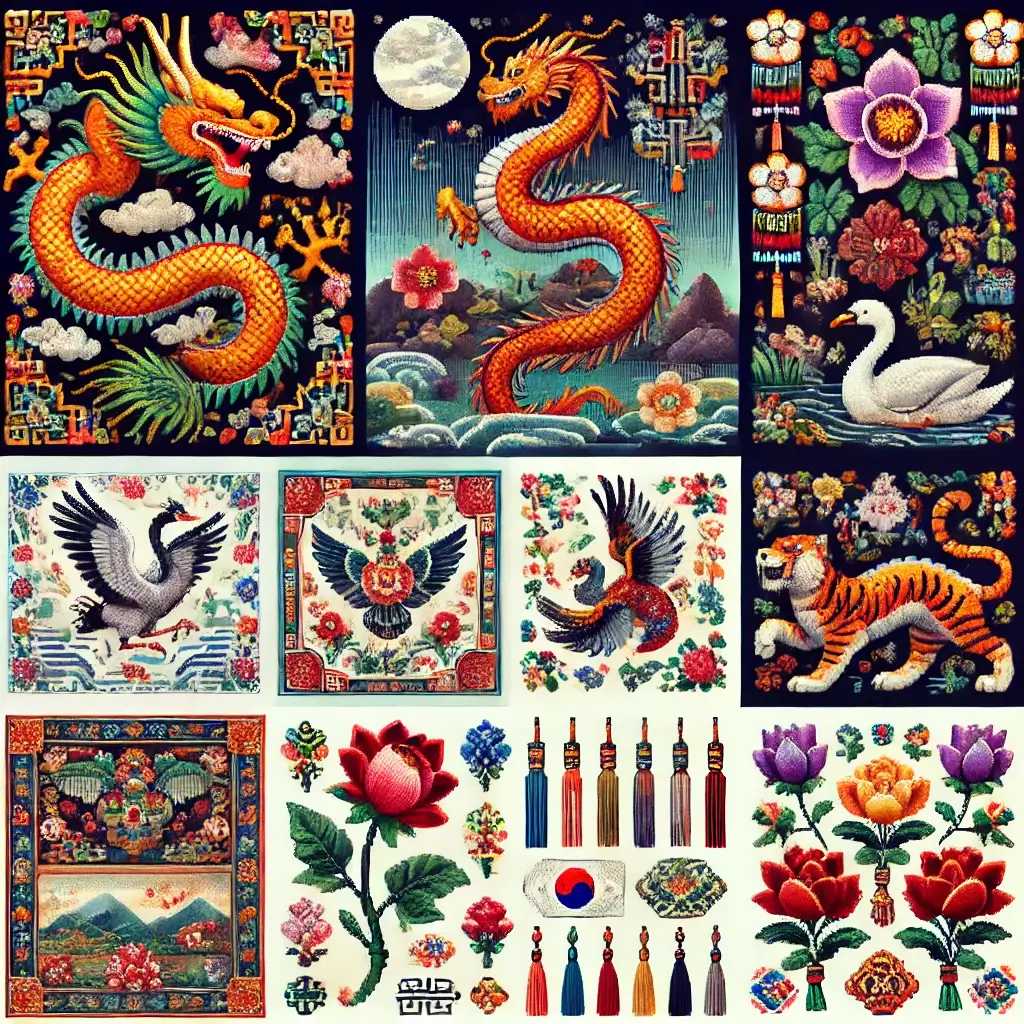
Imagine the opulent courts of the Joseon Dynasty, where every detail screamed luxury and power. That’s where gungsu comes in. This is court embroidery, the pinnacle of the art form, created exclusively for the royal family and high-ranking officials. And let me tell you, it was lavish. We’re talking about incredibly fine silk threads, often dyed with natural pigments to achieve rich, deep colors. The designs were meticulously planned, often featuring auspicious symbols like dragons (for the king), phoenixes (for the queen), clouds, waves, and mythical creatures. Each stitch was a testament to the embroiderer’s skill and the patron’s status.
The patterns on royal robes, folding screens, ceremonial banners, and even decorative pouches were not just pretty; they were imbued with deep political and spiritual meaning. For example, a five-clawed dragon was reserved only for the emperor, while four-clawed dragons might be used by princes. It was a complex visual language that everyone at court understood. These pieces were often crafted by professional embroiderers working in royal workshops, dedicating countless hours to achieve perfection. It’s truly mind-boggling to think about the level of precision and patience required for these masterpieces. They weren’t just decorations; they were pronouncements of power and prestige, stitched into existence!
It’s fascinating to realize that many of the most iconic images we associate with Korean art – the majestic dragons, the soaring phoenixes, the vibrant peonies – often found their most exquisite expression through gungsu.
2. Minsu (민수): The Heartfelt Charm of Folk Embroidery
Now, let’s pivot from the grandeur of the court to the warmth of everyday life. Minsu is folk embroidery, and it’s arguably where the true soul of Korean needlework shines brightest. Unlike gungsu, minsu was created by ordinary people, primarily women, for their own homes and families. This doesn’t mean it was less skilled; it just had a different purpose and, often, a more immediate, personal touch. These pieces were made with love and hope, reflecting the daily lives, beliefs, and aspirations of the common folk.
You’d find minsu on everything from everyday clothing, pouches for personal items, spectacles cases, and tobacco pouches to more decorative pieces like wrapping cloths (bojagi), pillow ends, and small screens. The designs were often simpler, more stylized, and vibrant. Common motifs included animals like tigers (for protection), cranes (for longevity), and ducks (for marital bliss). Flowers like peonies (for wealth and honor) and lotus flowers (for purity) were also incredibly popular. These weren’t just random choices; each symbol carried a specific meaning, a wish for good fortune, happiness, or health for the recipient.
What makes minsu so captivating is its accessibility and heartfelt nature. It’s less about rigid formality and more about expressing personal hopes and dreams through the vibrant language of stitches. It’s the kind of art that makes you feel like you’re peering into someone’s life, seeing their aspirations laid bare in thread. It embodies a beautiful blend of practicality and artistry, truly showing how art can enrich the everyday.
3. Jonggyosu (종교수): The Sacred Art of Religious Embroidery
Finally, we have jonggyosu, or religious embroidery. This category spans a vast period, with some of the earliest surviving pieces being from Buddhist temples. Religious embroidery was created to adorn temples, shrines, and ceremonial objects, serving as visual aids for devotion and a means of expressing profound faith. The scale could be enormous, from grand Buddhist banners (taenghwa) depicting deities and scenes from scriptures to intricate covers for sutras and small personal devotional pieces.
The motifs in jonggyosu are, as you might expect, deeply spiritual. Think of Buddhas, bodhisattvas, celestial beings, lotus flowers (symbolizing purity and enlightenment), and intricate mandala-like patterns. The colors often had symbolic significance, too. For instance, gold thread was frequently used to highlight sacred elements, making them literally shine with divine light.
The creation of jonggyosu was often a collaborative effort, with skilled artisans dedicating their lives to these sacred works. It wasn’t just about making something beautiful; it was an act of devotion, a form of meditation. The repetitive nature of stitching, the focus required, and the symbolic imagery all contributed to a profound spiritual experience for the embroiderer. These pieces aren’t just historical artifacts; they are tangible expressions of faith, offering a glimpse into the spiritual landscape of ancient Korea.
So, there you have it – three major windows into the incredible world of Korean embroidery. Each type, with its distinct purpose and aesthetic, contributes to the rich tapestry of this enduring art form. It’s like discovering three different sides of a magnificent diamond, each facet catching the light in its own unique way!
Gungsu, Minsu, Jonggyosu, Korean embroidery types, Traditional Korean art —
The Secret Language of Stitches: 7 Essential Techniques You Need to Know
Okay, so we’ve talked about the history and the different types of Korean embroidery. But how do they actually DO it? What makes these pieces so incredibly detailed and often, so vibrant? The answer lies in the stitches themselves. Just like a painter has an arsenal of brushstrokes, a Korean embroiderer has a vast vocabulary of stitches, each chosen for its specific texture, line, and ability to bring a design to life. It’s like learning a secret language, spoken entirely through thread!
Now, while there are dozens, if not hundreds, of variations, let’s explore 7 of the most fundamental and frequently used stitches. These are the building blocks, the core elements that give Korean embroidery its distinctive character. You’ll be amazed at what can be created with just a needle and thread, a little patience, and a lot of skill!
1. Jaryeonsu (자련수): The Versatile Long and Short Stitch
If you’re going to learn just one stitch, make it jaryeonsu. This is the absolute workhorse of Korean embroidery, the equivalent of a painter’s go-to shading technique. It’s essentially the long and short stitch, where stitches of varying lengths are laid down, often in slightly different shades, to create incredibly smooth transitions of color and realistic shading. Think of it as painting with thread. This stitch is what gives flowers their delicate petals, birds their feathery texture, and animals their soft fur.
It’s used to fill in large areas with subtle changes in tone, creating a sense of depth and realism that is truly remarkable. Mastering jaryeonsu is a sign of a truly skilled embroiderer, as it requires an eye for color and a steady hand to blend threads seamlessly. You’ll see this stitch in almost every piece of Korean embroidery, from the most elaborate court pieces to charming folk designs.
2. Jaryeonjisu (자련지수): The Directional Long and Short Stitch
This is a close cousin to jaryeonsu, but with an important distinction: jaryeonjisu focuses on the *direction* of the stitches. While jaryeonsu creates blending, jaryeonjisu emphasizes the flow and movement of the form being embroidered. Imagine the delicate veins on a leaf or the subtle ripples in water – this stitch uses the direction of the long and short stitches to mimic those natural lines and textures. It adds another layer of realism and dynamism to the embroidered piece, making elements feel truly alive and three-dimensional. It’s all about making the thread follow the natural contours of the design, which, honestly, is pure genius!
3. Dungsugu (둥수구): The Solid Satin Stitch
Need a smooth, shiny surface? Enter dungsugu, the satin stitch. This stitch involves laying parallel stitches very close together, covering an area completely to create a smooth, lustrous surface that reflects light beautifully. It’s often used for filling in smaller, defined shapes where a rich, solid color is desired, like the eyes of an animal, the center of a flower, or a specific block of color in a pattern. When executed perfectly, dungsugu creates a wonderfully uniform and glossy appearance, making the embroidered area truly pop. It looks deceptively simple, but getting those stitches perfectly parallel and even takes serious practice!
4. Eomchisu (엄치수): The Raised (or Padded) Stitch
Want your embroidery to literally stand out? Then eomchisu is your go-to. This is a raised or padded stitch, where a foundation of stitches is first laid down to create volume before the final layer of satin or long and short stitches is applied over it. This technique gives the embroidered elements a wonderful three-dimensional quality, making them appear to lift off the fabric. Imagine the plumpness of a bird’s breast or the roundedness of a fruit – eomchisu is what makes those elements feel tangible and alive. It adds a whole new dimension of artistry to the work, making it feel less like a flat drawing and more like a sculpted masterpiece!
5. Heopsu (헛수): The Outline Stitch (or Stem Stitch)
Every good drawing needs an outline, and in embroidery, that’s often handled by heopsu. This is essentially an outline stitch, similar to a stem stitch. It’s used to define the edges of shapes, create delicate lines, or add fine details like veins on leaves or the whiskers of an animal. It’s a foundational stitch for giving definition and crispness to the overall design, ensuring that each element stands out clearly. Often done in a contrasting color, it can truly make the main embroidered areas sing!
6. Saseulsu (사슬수): The Decorative Chain Stitch
For more decorative lines and filling in smaller, less critical areas, the chain stitch, or saseulsu, comes into play. This stitch creates a series of interlocking loops, forming a textured, rope-like line. It’s fantastic for borders, outlines, or even filling small areas with a distinct texture. While perhaps less about realism than jaryeonsu, saseulsu adds a charming, handcrafted feel and can be surprisingly versatile for adding a bit of flair and visual interest. It’s one of those stitches that looks simple but adds so much character.
7. Maedeupsu (매듭수): The Knotted French Knot
Finally, for those delightful little dots and textures, we have maedeupsu, the Korean version of the French knot. This tiny, textured knot is perfect for creating small, raised dots that can represent eyes, pollen on a flower, or simply add a touch of playful texture to an area. It’s a wonderful way to add intricate detail and dimension without covering a large area. Think of it as the artistic cherry on top of a beautifully embroidered cake!
These 7 stitches are just the tip of the iceberg, but they represent the core techniques that have been passed down through generations of Korean embroiderers. When you see a piece of traditional Korean embroidery, remember that it’s not just a pattern; it’s a symphony of these stitches, each played with incredible precision and artistic vision. It’s truly a marvel to behold!
Korean embroidery stitches, Jaryeonsu, Dungsugu, Eomchisu, Traditional techniques —
From Silk to Spirit: The Soulful Materials of Korean Embroidery
You can have all the skill in the world, but without the right materials, even the most talented embroiderer can’t create a masterpiece. In Korean traditional embroidery, the choice of fabric and thread is just as crucial as the stitches themselves. These weren’t just any materials; they were carefully selected, often prepared with great care, and imbued with their own significance. It’s not just about what you stitch with, but what you stitch on, and what you stitch from.
The Canvas: Fabrics That Tell Their Own Story
The primary canvas for Korean embroidery has almost always been silk. And not just any silk! We’re talking about incredibly fine, lustrous silk, often hand-woven to perfection. Why silk? Well, for starters, its smooth surface allows the needle to glide through effortlessly, making it ideal for the intricate and often dense stitching characteristic of Korean embroidery. But beyond practicality, silk has a natural sheen that beautifully enhances the vibrant colors of the threads, giving the finished piece a luxurious, almost glowing quality.
Different types of silk were used depending on the item and its purpose. For court embroidery, the finest, most tightly woven silks were preferred, often a crisp, even weave that could hold precise details. For everyday items, slightly coarser, but still high-quality, silks or even hemp fabrics might be used, reflecting the more rustic charm of folk art.
Sometimes, other fabrics like ramie (a traditional Korean summer fabric, known for its coolness and crispness) or fine cotton might also be used, especially for everyday items where durability and breathability were key. But silk, with its unparalleled elegance and ability to showcase the threads, always reigned supreme for the most exquisite pieces. It’s like a perfect stage for the threads to perform on!
The Palette: Threads of Life and Color
Now, let’s talk about the stars of the show: the threads! The vast majority of threads used in Korean traditional embroidery are, you guessed it, silk threads. These aren’t your average embroidery floss from the craft store. We’re talking about twisted silk threads, often very fine, which allows for incredible detail and density of stitching. The natural sheen of silk thread, combined with its strength, makes it the ideal medium for creating the smooth, often shimmering surfaces found in Korean embroidery.
But it’s not just about the type of thread; it’s about the color. Traditionally, natural dyes were used to color the silk threads, extracting pigments from plants, minerals, and even insects. Imagine getting a rich indigo from an indigo plant, a fiery red from madder root, or a vibrant yellow from gardenia seeds. This natural dyeing process resulted in a palette that was both vibrant and harmoniously subtle, with colors that truly felt organic and alive.
The practice of twisting multiple strands of silk thread together to achieve different thicknesses and textures was also common. This allowed embroiderers to create varying effects – from fine, delicate lines to bold, textured fills – all within the same piece. And sometimes, for truly opulent pieces, gold and silver threads were incorporated, adding a dazzling sparkle and further enhancing the sense of luxury and importance. These weren’t just threads; they were strands of meticulously prepared natural beauty, ready to be woven into art.
The Tools: Simple Yet Essential
Beyond the fabric and threads, the tools for Korean embroidery were surprisingly simple: a needle, a thimble, and an embroidery frame. The needles were typically fine, sharp, and made of steel, designed to pierce the silk fabric without damaging the delicate fibers. The thimble, often made of metal or leather, protected the embroiderer’s finger, especially during long hours of work. And perhaps most importantly, the embroidery frame (수틀 – sutul) was crucial. This frame holds the fabric taut, ensuring even tension and preventing puckering, which is vital for achieving the smooth, flat surfaces characteristic of high-quality Korean embroidery.
It’s truly remarkable how such exquisite art could be created with such fundamental tools. It speaks volumes about the skill, dedication, and ingenuity of the artisans. The materials weren’t just inert objects; they were carefully chosen, lovingly prepared, and transformed through the hands of the embroiderer into something truly soulful and enduring.
Silk fabric, Natural dyes, Silk threads, Embroidery tools, Traditional materials —
More Than Just Pretty Pictures: The Deep Symbolism Behind Every Stitch
One of the most captivating aspects of Korean traditional embroidery, and indeed much of Korean art, is its profound symbolism. These aren’t just random pretty pictures; almost every motif, every color, and even the arrangement of elements holds a specific meaning. It’s like a visual language, where each embroidered piece tells a story, expresses a wish, or offers a blessing. Understanding this symbolism adds an entirely new layer of appreciation for the art, turning a beautiful object into a fascinating narrative. It’s like cracking a secret code that’s been passed down for centuries!
Imagine receiving a beautifully embroidered gift. If you knew that each element was a wish for your prosperity, longevity, or happiness, wouldn’t that make it even more special? That’s exactly the magic behind Korean embroidered symbolism. Let’s unravel some of the most common and compelling symbols you’ll encounter:
Nature’s Wisdom: Animals and Plants
The Dragon (용 – yong) & Phoenix (봉황 – bonghwang): Royal Power & Auspiciousness
These two mythical creatures are perhaps the most iconic symbols in Korean royal embroidery. The dragon, with its majestic power, symbolizes the Emperor or King. It represents strength, authority, and divine protection. The phoenix, on the other hand, is associated with the Empress or Queen and embodies grace, virtue, and rebirth. Together, they represent a harmonious and prosperous reign. Seeing them together on a royal robe is like a visual declaration of ultimate power and blessed union.
The Crane (학 – hak): Longevity & Purity
The elegant crane is a beloved symbol of longevity, purity, and nobility. Often depicted soaring amongst clouds, it represents a long and healthy life, often associated with scholars and virtuous individuals. It’s a frequent motif on scholars’ robes and items intended for elders, a beautiful wish for a long and peaceful existence. Who wouldn’t want a long life symbolized by such a graceful creature?
The Tiger (호랑이 – horang-i): Protection & Bravery
While majestic, the tiger in Korean folklore is often seen as a guardian spirit, symbolizing protection against evil spirits and bad luck. It also represents bravery and courage. You’ll often find tiger motifs on folk embroidery, particularly on items intended for children or on screens used in homes, acting as a fierce yet benevolent protector. It’s like having your own personal, embroidered superhero!
The Mandarin Duck (원앙 – won-ang): Marital Bliss & Fidelity
These beautiful ducks are famous for mating for life, making them the ultimate symbol of conjugal happiness, fidelity, and a harmonious marriage. You’ll often see pairs of mandarin ducks embroidered on wedding gifts, bedding, or personal items for newlyweds, a heartwarming wish for a long and loving partnership. It’s a truly sweet and enduring symbol.
The Peony (모란 – moran): Wealth, Honor & Prosperity
Known as the “king of flowers,” the vibrant peony symbolizes wealth, honor, and prosperity. Its lush, full blooms are a wish for abundance and good fortune. You’ll find peonies adorning everything from royal garments to folk embroidery, always signifying a hope for a rich and flourishing life. Who doesn’t want more peonies in their life, especially if they bring prosperity?
The Lotus Flower (연꽃 – yeonkkot): Purity & Enlightenment
Rising from the mud unsullied, the lotus flower is a powerful Buddhist symbol representing purity, spiritual enlightenment, and rebirth. It’s frequently seen in religious embroidery and often in other contexts to signify purity of heart and mind. Its journey from murky waters to pristine bloom offers a beautiful metaphor for spiritual growth.
Beyond Nature: Objects and Patterns
The Eight Precious Things (길상팔보 – gilsangpalbo)
These are a collection of auspicious objects, often borrowed from Buddhist iconography, that bring good fortune. They include things like the boundless knot, the lotus flower, the treasure vase, and the parasol, each with its own specific blessing. When these are embroidered together, they form a powerful talisman for overall good luck and prosperity. It’s like a whole toolkit of good vibes in one pattern!
Geometric Patterns: Longevity & Harmony
Beyond representational images, many geometric patterns also carry deep meaning. Swirling cloud patterns often symbolize good fortune and the heavens. Interlocking patterns like the fret motif can represent longevity and continuity. Even simple repeated patterns often evoke a sense of harmony and balance. These abstract designs add depth and rhythm to the overall composition.
This rich tapestry of symbolism is what elevates Korean embroidery from mere decoration to a profound cultural expression. Every piece is a whispered wish, a silent prayer, or a bold declaration, all woven into the very fabric of existence. So, the next time you encounter a piece of Korean embroidery, take a moment to look beyond its beauty and try to decipher the stories it’s telling. You’ll be amazed at the wisdom hidden in its threads!
Korean embroidery symbolism, Dragon, Phoenix, Crane, Peony, Lotus flower —
Stitching into the Future: Korean Embroidery Today
After centuries of tradition, you might wonder, “Where does Korean embroidery stand today?” Well, I’m thrilled to tell you that this ancient art form isn’t just surviving; it’s thriving and evolving in fascinating ways! While industrialization in the 20th century definitely hit traditional crafts hard, there’s been a beautiful resurgence, a renewed appreciation for the handmade and the historically rich.
Preservation and Education: Keeping the Legacy Alive
One of the most vital efforts today is the dedicated work of master embroiderers and cultural institutions to preserve these precious techniques. Many individuals, often designated as “Living National Treasures” (a truly fitting title, don’t you think?), devote their lives to teaching and passing down their knowledge. Workshops and classes are popping up, attracting both Koreans and international enthusiasts eager to learn. It’s a wonderful sight to see young people, with smartphones in hand, meticulously working on an embroidery frame, connecting with a craft that’s thousands of years old. This intergenerational transfer of knowledge is absolutely critical for the art’s survival.
Museums play a huge role too. Exhibitions showcase historical masterpieces, reminding us of the incredible legacy, while also featuring contemporary works that push the boundaries. These spaces are not just static displays; they’re vibrant centers for learning and appreciation, ensuring that the stories woven in thread continue to inspire. If you ever get a chance to visit, I highly recommend it – it’s an experience that truly brings history to life!
Contemporary Adaptations: A New Stitch in Time
Beyond strict preservation, Korean embroidery is also finding exciting new expressions in the modern world. Contemporary artists are taking traditional techniques and motifs and reinterpreting them in fresh, innovative ways. You might see abstract designs, bold color palettes, or unexpected combinations of materials. Some artists are incorporating embroidery into contemporary fashion, creating stunning haute couture pieces that blend ancient craftsmanship with modern aesthetics. Others are using it in fine art installations, pushing the boundaries of what embroidery can be.
This dynamic interplay between tradition and innovation is what keeps the art form vibrant and relevant. It shows that while the roots are deep in history, the branches are still growing, reaching for new artistic horizons. It’s exciting to witness this evolution, seeing how a craft from ancient times can feel so utterly fresh and impactful today.
Global Appreciation: Spreading the Threaded Word
Thanks to increased cultural exchange and the power of the internet, Korean traditional embroidery is gaining a global following. People from all over the world are becoming enchanted by its beauty and intricacy. Online communities, international exhibitions, and even social media are playing a huge role in spreading awareness and fostering appreciation. It’s a wonderful thing to see a craft that was once confined to royal courts or village homes now captivating hearts across continents. The universal language of beauty truly transcends borders, doesn’t it?
So, far from being a relic of the past, Korean traditional embroidery is a living, breathing art form. It’s a testament to resilience, creativity, and the enduring power of human hands to transform simple materials into something truly extraordinary. The future of this incredible art is being stitched one beautiful thread at a time, and it looks incredibly bright!
Modern Korean embroidery, Art preservation, Contemporary art, Cultural exchange, Global appreciation —
Why This Ancient Art Still Captivates Us Today
We’ve journeyed through the rich history, explored the intricate types, delved into the secret language of stitches, appreciated the soulful materials, and uncovered the deep symbolism of Korean traditional embroidery. But beyond all the technicalities and historical facts, why does this ancient art form continue to hold such a powerful spell over us, even today? Why does it resonate so deeply in our modern, fast-paced world?
For me, it boils down to a few core reasons, and they’re pretty profound.
The Human Touch: A Connection to Craftsmanship
In an age of mass production and instant gratification, there’s something incredibly appealing about an object created entirely by human hands, stitch by painstaking stitch. Each piece of traditional Korean embroidery is a testament to immense patience, skill, and dedication. It’s a physical manifestation of time, effort, and artistic vision. When you look at an embroidered piece, you’re not just seeing a design; you’re seeing the countless hours, the meticulous concentration, and the unwavering commitment of the artisan. That human touch, that connection to genuine craftsmanship, is something we increasingly crave and value. It reminds us that some things simply can’t be rushed or replicated by a machine, and that’s truly beautiful.
A Whisper of History and Culture
Every embroidered motif, every choice of color, every technique used, carries with it centuries of history and cultural narratives. When you behold a dragon, you’re connecting with ancient kings. When you see a crane, you’re embracing wishes for longevity that have been passed down for generations. It’s a tangible link to a vibrant past, a way to understand the aesthetics, beliefs, and daily lives of people who lived long before us. In a globalized world, preserving and appreciating these distinct cultural expressions becomes even more important. It helps us remember where we come from and appreciate the diverse tapestry of human creativity.
Timeless Beauty and Intricacy
Let’s be honest, it’s just incredibly beautiful. The vibrant colors, the shimmering silk, the incredible detail – it’s a feast for the eyes. The intricacy is often mind-boggling, making you wonder how such delicate lines and smooth shading could be achieved with just a needle and thread. This pursuit of perfection, this dedication to making something utterly exquisite, is a universal language of art that transcends time and culture. It’s the kind of beauty that makes you pause, examine closely, and feel a sense of wonder.
Mindfulness and Meditation in Motion
For those who practice it, embroidery can be a profoundly meditative experience. The rhythmic motion of the needle, the focus required, the slow, deliberate unfolding of a design – it’s a form of mindfulness. In our noisy, distracted world, engaging in such a focused and creative activity can be incredibly calming and fulfilling. It’s not just about the finished product; it’s about the journey of creation, the joy found in each precise stitch. Perhaps this is why more and more people are drawn to traditional crafts – they offer a sense of peace and accomplishment that’s hard to find elsewhere.
In essence, Korean traditional embroidery is more than just thread on fabric. It’s a legacy of human ingenuity, artistic passion, cultural wisdom, and enduring beauty. It captivates us because it speaks to something deep within us – a yearning for authenticity, connection, and the quiet magic of creation. And that, my friends, is why it will continue to mesmerize and inspire for countless generations to come.
Cultural heritage, Art appreciation, Handmade crafts, Mindfulness, Artistic legacy
Explore Korean Embroidery at The MetDiscover Korean Embroidery on Google Arts & CultureSee Korean Textiles at V&A Museum