
*This article was last updated on December 3, 2025.
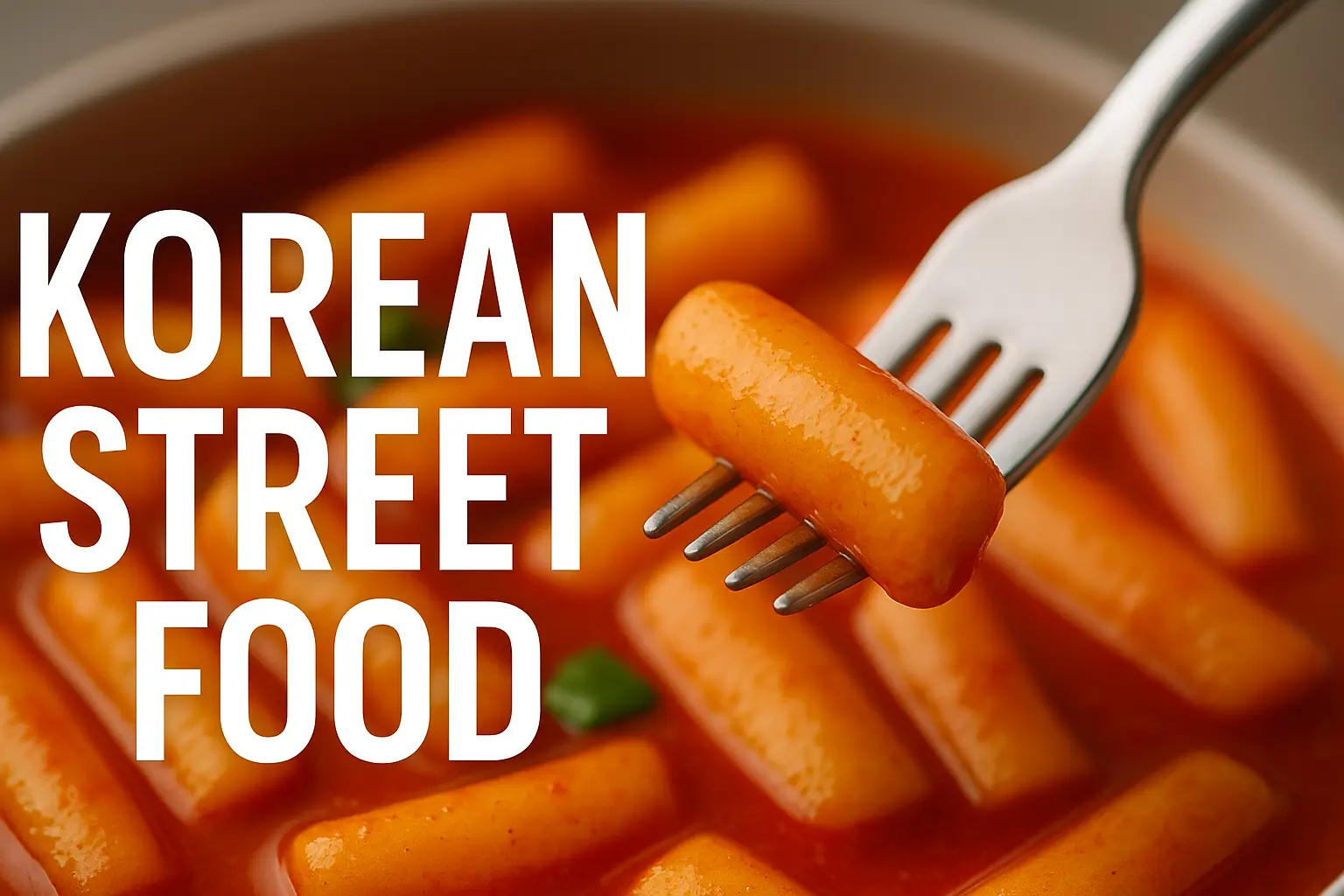
Korean Street Food: 7 Irresistible Bites That Totally Changed My Life
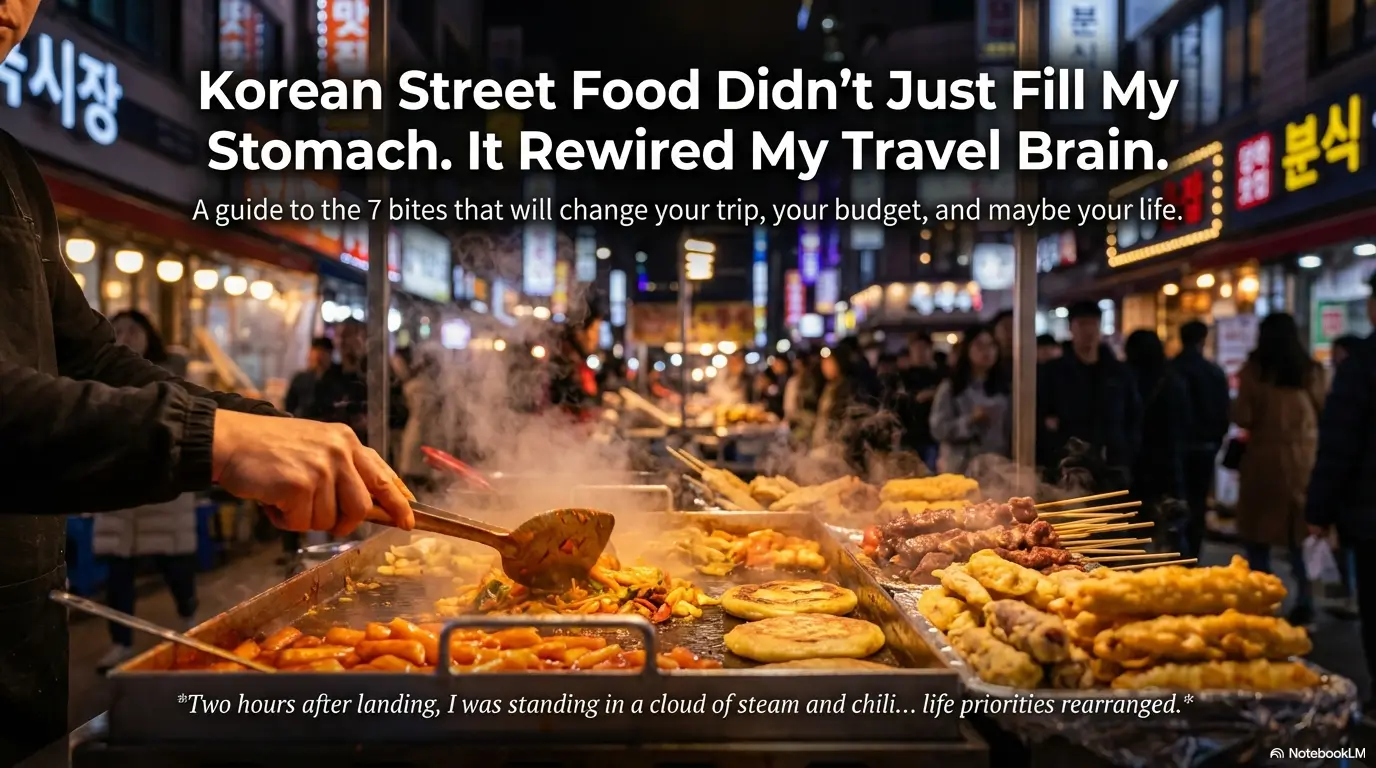
The first time I landed in Seoul, I told myself I’d just browse the street food—like a responsible adult with a budget and a dinner reservation. Famous last words. Two hours later, I was elbow-deep in tteokbokki, surrounded by steam, sweat, and the sweet chaos of sizzling pans, with my gloves forgotten in my pocket and my taste buds going through something spiritual.
Let’s just say my travel priorities… shifted. Dramatically. Korean street food didn’t just feed me—it humbled me, seduced me, and rewired my brain for good.
In this guide, I’ll take you through the seven bites that flipped the switch—and show you how to dive in like a local without blowing your budget, throwing off your itinerary, or declaring war on your digestive system. Scroll down for the 60-second budget block that’ll have you street-food ready by sundown.
Table of Contents
💸 60-Second Budget Estimator: How Much Cash Do You Actually Need Tonight?
If you’re time-poor and jet-lagged, use this tiny calculator to sanity-check your street food budget before you head out.
Save this number, and double-check live prices at the stall—no screenshots of old menus.
Why Korean Street Food Hits Different
Korean street food isn’t just “cheap snacks.” It’s how office workers decompress, how students celebrate exam season, and how jet-lagged travelers accidentally eat three dinners in one night. The stalls are there when you land late, when your itinerary falls apart, and when all you want is something hot, salty, and forgiving.
One rainy night in Hongdae, I watched a student in a soaked hoodie inhale a bowl of tteokbokki with the focus of someone defusing a bomb. Five minutes later, he walked away smiling like he’d just passed an exam. That’s the job description of Korean street food: fix your mood in under ten minutes.
Practically speaking, it’s also a powerful way to stretch a tight travel budget. In 2024 and 2025, most classic bites still fall roughly between 1,000 and 8,000 KRW per portion in major Seoul markets, with tourist hotspots like Myeongdong at the higher end but still far cheaper than sit-down restaurants.
- Expect fast service and fast turnover.
- Plan for 2–4 bites per person per night.
- Use cash or a no-foreign-fee card for smooth payment.
Apply in 60 seconds: Decide your per-night snack budget now and lock it in before you see the stalls.
How to Use This Guide in 10 Minutes
This isn’t an encyclopedia; it’s a decision tool. You’re busy. So here’s how to use it:
- Scan the seven bites and mark 3–4 that feel like “musts.”
- Use the price table and calculator to set a realistic nightly budget.
- Check the safety and insurance notes if you have health conditions or anxious parents.
On my third trip, I stopped trying to “eat everything” and picked one or two bites per neighborhood. My wallet calmed down, my stomach thanked me, and I actually remembered the flavors instead of the food coma.
💹 Typical 2025 Price Ranges (Seoul Night Markets)
| Item | Usual Price (KRW) | Notes |
|---|---|---|
| Tteokbokki (1 plate) | 2,500 – 5,000 | Tourist areas trend higher; portions are generous. |
| Hotteok (1 pancake) | 1,500 – 3,000 | Cheaper near universities; fancy fillings cost more. |
| Eomuk fish cake (per skewer) | 1,000 – 2,000 | Broth refills are usually free. |
| Dak-kkochi chicken skewers | 3,000 – 5,000 | Bigger skewers in nightlife districts. |
| Bungeoppang / dessert snacks | 1,500 – 3,500 | Often sold in sets of 2–3 pieces. |
Save this table and confirm live prices on the stall menu or board before ordering.
Bite #1 – Tteokbokki: My First “What Have I Been Doing With My Life?” Moment
My first night in Seoul ended under a red plastic awning, clutching a paper bowl of tteokbokki I couldn’t pronounce. The ajumma behind the stall saw my terrified face, smiled, and said, “Not that spicy.” She lied—but in a loving way.
Tteokbokki is chewy rice cakes in a sweet-spicy gochujang sauce, often with fish cake slices, green onion, and sometimes a boiled egg or instant ramen tossed in for drama. The texture is somewhere between gnocchi and mochi; the sauce is the culinary equivalent of a warm hug and a slap on the back at the same time.
On a practical level, tteokbokki is your warm-up boss. If you can handle this, most other Korean street foods will feel approachable. A standard bowl is enough for a light meal and keeps you full for hours, which makes it an ideal first stop before you start “just tasting” everything else.
One personal tip: if you’re sensitive to heat, ask for wenhan-geot (less spicy) or look for cream or cheese tteokbokki options—they soften the burn without killing the flavor.
- Plan 10–15 minutes to eat; it’s served lava-hot.
- Share one bowl if you want room for dessert.
- Pair it with a simple fish cake skewer for balance.
Apply in 60 seconds: Add “tteokbokki in a night market” as a non-negotiable line item on your itinerary.
Bite #2 – Hotteok: The Pancake That Saved My Fingers
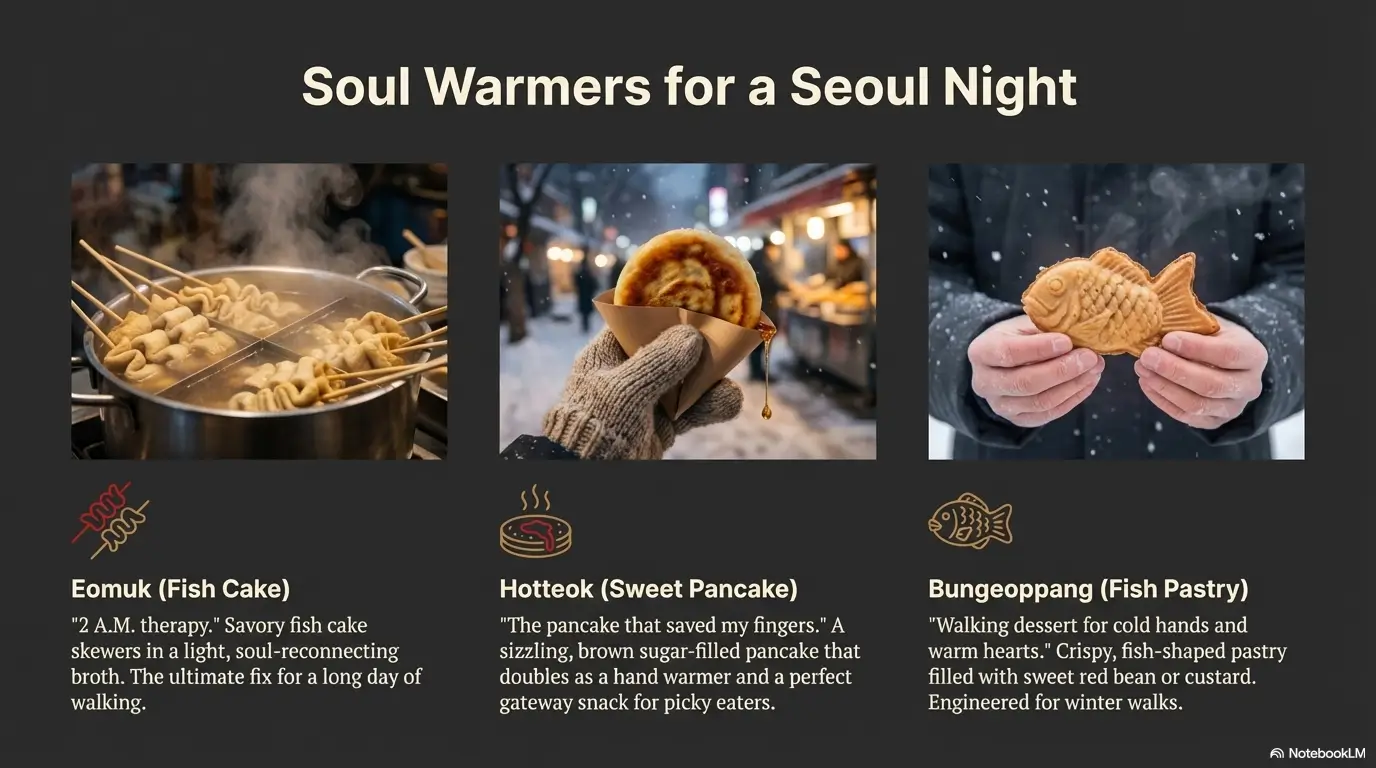
The first time I met hotteok was in Insadong in January. My fingers had stopped reporting to work, my phone battery was dying, and I was one sad tourist-shaped icicle. Then a vendor handed me a paper cup with a sizzling, sugar-filled pancake, and suddenly winter felt negotiable.
Hotteok is a yeast dough pancake stuffed with brown sugar, nuts, and cinnamon (or sometimes cheese or savory fillings). The magic is in the syrup that leaks out with each bite. It doubles as a hand warmer and therapy session.
Hotteok is also a great “gateway snack” if you’re traveling with kids or picky eaters. It’s familiar enough—sweet dough, caramel—but still very Korean in flavor. When I bring friends who are suspicious of spicy food, this is the first thing I hand them. Their guard drops; their appetite for adventure rises.
Budget-wise, one or two hotteok won’t break anything, but four or five nights in a row will quietly add up. Think of it as dessert, not dinner, and your future self will thank you when the credit card bill arrives.
Bite #3 – Eomuk: Fish Cake, Broth, and 2 A.M. Therapy
There’s a special kind of Seoul tired: the one that hits after you’ve walked 20,000 steps, gotten lost in two subway stations, and realized you accidentally booked a hotel on a hill. That’s when eomuk—Korean fish cake skewers—shows up like a grandma with a blanket.
At its simplest, eomuk is pressed fish paste on skewers, simmered in a light, savory broth. You grab a stick, dip it in sauce, slurp the broth from a tiny paper cup, and feel your soul reconnect with your body. The skewers are usually lined up like sleepy soldiers, waiting in that huge steaming pot you’ll see at almost every stall in winter.
One night in Myeongdong, I watched a group of office workers in crisp shirts loosen their ties, park their briefcases on plastic stools, and knock back fish cake and broth like shots. Ten minutes later they were laughing as if the workday had never happened. That’s the eomuk effect: it doesn’t change your life story, but it changes the mood of the chapter.
If you’re nervous about street food hygiene, start here. High turnover, constantly simmering broth, and locals crowding the stall are reassuring signs—and South Korea is widely praised for its food hygiene standards, even for street food.
- Perfect for late-night hunger without a full meal.
- Ideal if you want something mild and non-spicy.
- Use it as a “warm-up course” for bolder bites.
Apply in 60 seconds: Mark one cold evening in your schedule as “broth night” and seek out a busy eomuk stall near your hotel.
Bite #4 – Mayak Gimbap: The Tiny Rolls With a Criminal Name
Mayak literally means “drug” in Korean—not because there’s anything illegal in these mini gimbap rolls, but because once you start, you don’t stop. They are the popcorn of Korean street food.
Mayak gimbap are bite-sized seaweed rice rolls, often filled with a bit of carrot, radish, and spinach, and drizzled with sesame oil and seeds. They’re lighter than sushi and much lighter than their full-size gimbap cousins, which makes them dangerously easy to inhale while “just chatting” with friends.
My personal downfall happened at Gwangjang Market. I told the vendor I’d take “just one tray.” She smiled, sliced the rolls, and pushed over a soy-mustard dipping sauce that should be illegal. Three trays later, my friend gently took the tray away from me like a bartender cutting someone off.
If you’re trying to watch your budget and your calorie count, mayak gimbap is a good compromise: flavorful, relatively light, and usually not too spicy. Just be aware that “one tray” can quietly turn into “this is my entire dinner now.”
🧭 Decision Card: Street Food Night vs Sit-Down Restaurant
Choose mostly street food when:
- You want 3–4 different flavors in under an hour.
- Your per-person food budget is under 15,000–20,000 KRW for the night.
- You’re happy to eat standing or at plastic tables.
Choose a restaurant when:
- You need guaranteed seating and slower pacing.
- You’re traveling with someone who has strict dietary restrictions.
- You want alcohol, dessert, and table service bundled together.
Save this card and check it each night before you automatically default to the hotel restaurant.
Bite #5 – Bungeoppang: Fish-Shaped Pastries and Winter Walks
On a snowy evening along the Cheonggyecheon stream, I finally understood why Koreans queue for bungeoppang. The line was long, my toes were numb, and I almost bailed—until the smell of hot pastry and red bean hit. Suddenly, 15 minutes felt reasonable.
Bungeoppang is a fish-shaped pastry traditionally filled with sweet red bean paste, though modern versions come stuffed with custard, sweet potato, and even savory fillings. They’re crispy on the outside, soft inside, and engineered to be eaten while walking, which is why you’ll see people holding them like tiny space heaters in winter.
My favorite memory: watching an older couple share a bag, each taking turns biting off the “tail.” They argued about who got the last piece, and the vendor quietly slipped them one extra pastry, pretending it was a mistake. If you’re sentimental, bungeoppang is the snack most likely to make you think, “I could live here.”
- Best in winter markets and near streams or plazas.
- Try at least two fillings to find “your” pastry.
- Share a bag to sample more without overdoing it.
Apply in 60 seconds: Add “bungeoppang + short night walk” to one of your Seoul evenings.
Bite #6 – Dak-kkochi: Street-Side Korean BBQ on a Stick
If tteokbokki is comfort and eomuk is therapy, dak-kkochi is celebration. These grilled chicken skewers, brushed with sweet-spicy or soy-garlic sauce, smell like payday and victory and “let’s order one more, we deserve it.”
I still remember standing outside a bar in Hongdae, holding a dak-kkochi in one hand and my phone in the other, trying to answer emails and failing because the sauce kept winning. I missed the email. I remember the chicken.
Dak-kkochi tends to be pricier than other snacks but still reasonable; think of it as the “main course” of your street food lineup. The skewers are filling, protein-heavy, and perfect if you’re walking between bars or heading back to your hotel.
If you care about macros, this is the bite that makes you feel slightly more responsible. Just don’t pretend that ordering “mild sauce” automatically turns it into health food.
Bite #7 – Sundae: The “Scary” Bite That Wasn’t Scary at All
Let’s be honest: Korean blood sausage isn’t everyone’s dream snack. I avoided sundaeguk restaurants for a full trip because my brain insisted on being dramatic. Then one vendor handed me a small piece on a toothpick with a casual, “Try. If you hate it, spit it out.”
Sundae is usually made from pig intestine stuffed with glass noodles, vegetables, and blood, sliced thick and served with salt, chili, or a dipping sauce. The flavor is much milder than its reputation—more like a soft, herby sausage than anything metallic or intense.
When I finally tried it in a bustling market, I had that awkward moment of realizing I’d been scared of the wrong thing. It wasn’t “gross”; it was comforting and oddly nostalgic, like the Korean cousin of black pudding.
If you’re nervous, think of sundaeguk and sundaebap as “Level 2” adventures for a second or third trip. For your first street food run, a small piece at a stall is enough to either win you over or let you say, “I tried” and move on heroically.
- Ask for a tiny taste first; most vendors are generous.
- Share a portion so no one feels pressured to finish.
- Skip it guilt-free if your gut says “not today.”
Apply in 60 seconds: Decide now whether sundaes goes on your “try” or “respectfully skip” list, so you’re not pressured on the spot.
Budget, Safety & “What If I Get Sick?” (2025, Korea)
Now for the grown-up bit: money, safety, and insurance. The good news is that South Korea has excellent food hygiene and a strong public health system, and most travelers never have more than a mild stomach wobble, even when eating wildly from stalls.
Still, if you have medical conditions, severe allergies, or you’re traveling with kids, it’s smart to think like an operator, not a gambler. That means planning your budget, knowing your limits, and understanding what your travel insurance actually covers—especially for emergency medical care or food poisoning.
🧾 3-Minute Quote-Prep List: Street Food + Travel Insurance
Before you compare travel insurance for your Korea trip, have these ready:
- Your longest planned stay in days (affects premium and coverage tiers).
- Existing health conditions and medications, especially if food poisoning could be serious.
- Planned activities (heavy alcohol nights, winter sports, night markets every day).
- Maximum out-of-pocket amount you’re willing to absorb before emergency coverage kicks in.
- Emergency contact who understands your allergies and can speak for you.
Write this list down and confirm your actual coverage, deductible, and exclusions directly in your policy wording.
Show me the nerdy details
Most travel insurance policies treat food poisoning like any other sudden illness: what matters is emergency medical necessity, not whether you ate in a restaurant or at a stall. What changes the outcome is your documentation—receipts where possible, a clear diagnosis, and proof of dates. That’s why it’s worth knowing in advance which hospitals and clinics near your accommodation accept international patients and how your insurer handles direct billing versus reimbursement.
- Know your medical history and risk tolerance.
- Confirm how your policy defines “emergency treatment.”
- Keep a photo of your policy number and hotline on your phone.
Apply in 60 seconds: Open your policy, search “food poisoning” and “emergency medical,” and screenshot the key paragraphs.
Infographic: Korean Street Food Cheat Sheet
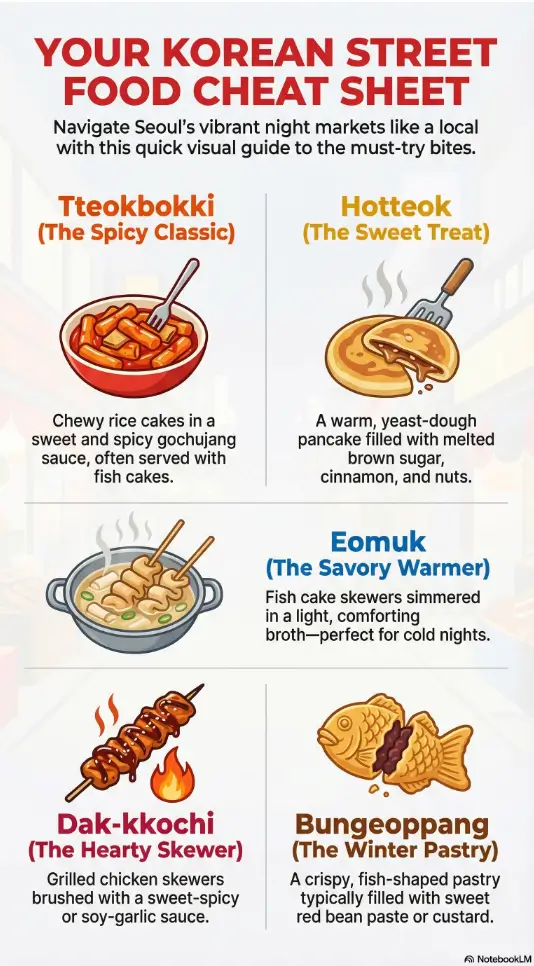
Here’s a quick visual-style snapshot you can mentally carry into the market.
🔥 Tteokbokki
Spice: Medium–High
Cost: ₩₂,₅₀₀–₩₅,₀₀₀
Best: Chilly nights, first-timers.
🍯 Hotteok
Spice: None
Cost: ₩₁,₅₀₀–₩₃,₀₀₀
Best: Winter, dessert, kids.
🍢 Eomuk
Spice: Low
Cost: ₩₁,₀₀₀–₩₂,₀₀₀
Best: Late nights, cold weather.
🌿 Mayak Gimbap
Spice: Mild
Cost: ₩₃,₀₀₀–₩₅,₀₀₀ (tray)
Best: Sharing, indecisive groups.
🐟 Bungeoppang
Spice: None
Cost: ₩₁,₅₀₀–₩₃,₅₀₀
Best: Winter walks, sweet tooth.
🍗 Dak-kkochi
Spice: Mild–High
Cost: ₩₃,₀₀₀–₩₅,₀₀₀
Best: Post-bar snack, protein hit.
🩸 Sundae
Spice: Low–Medium
Cost: ₩₄,₀₀₀–₩₇,₀₀₀ (portion)
Best: Adventurous eaters, second trip.
Short Story: One evening in Namdaemun Market, I watched a vendor work three pans at once: tteokbokki boiling in volcanic red sauce, hotteok sizzling in oil, and eomuk bobbing gently in broth. A little girl clutched her dad’s sleeve, deadly serious, and declared, “We can’t leave until we try the fish cake, the pancake, and the spicy rice.”
Her dad sighed theatrically and ordered all three. Ten minutes later, they were standing in total silence, cheeks puffed, mouths full, eyes shining. The dad caught my eye over his daughter’s head and shrugged with that universal parenting look: “I lost, but I also won.” That’s Korean street food in one frame—nobody really needs it, but life is unmistakably better with it.
FAQ
1. Is Korean street food safe to eat for most travelers?
For most healthy travelers, yes. South Korea has strong food hygiene standards, and busy street stalls turn over food quickly, especially in major cities. The bigger risk is overeating, not food poisoning. If you have specific medical conditions or severe allergies, choose stalls with lots of locals, freshly cooked items, and clear ingredient visibility, and keep over-the-counter meds and your insurer’s emergency number handy.
2. How much should I budget per night for Korean street food?
If you want 3–4 different bites plus a drink, budgeting around 10,000–20,000 KRW per person per night is realistic in 2025, depending on the neighborhood. Tourist-heavy areas and fancy markets will nudge you toward the upper end. Use the calculator near the top of this article with your own appetite and trip length plugged in, then treat that total as a ceiling, not a target.
3. Can I pay for street food with a card, or do I need cash?
Cash is still the simplest option, especially at tiny stalls and older markets, but more vendors now accept local cards and some accept major international ones. To avoid awkward line delays, bring a small stack of 1,000 and 5,000 KRW notes and use your card at cafes and restaurants instead. If you have a travel card with no foreign transaction fees, reserve it for bigger spends, not a single skewer.
4. Will my travel insurance cover food poisoning from street food?
Many travel insurance policies don’t care whether your meal came from a stall or a white-tablecloth restaurant; they care that treatment was medically necessary and documented. What changes is your deductible, coverage tier, and the claims process. Before you fly, look for phrases like “emergency medical expenses,” “hospitalization,” and “out-of-pocket costs” in your policy wording and screenshot the sections that mention foodborne illness or gastroenteritis.
5. I’m short on time. Which two bites should I prioritize?
If you only have one evening and want maximum “Korea in a bowl,” go for tteokbokki and hotteok. Together they give you the spicy-salty comfort and the sweet, winter-night magic most people remember years later. If you have a second evening, add dak-kkochi for protein and eomuk for broth therapy—you’ll walk away feeling like you’ve sampled a full mini-menu of the streets.
6. What’s the best way to fit street food into a 7–14 day Korea itinerary?
Think of street food as a recurring evening ritual rather than a one-time event. For a one-week trip, aim for two market nights in Seoul and one in another city (Busan, Daegu, Jeonju). For longer stays, add in neighborhood stalls near your accommodation so you’re not commuting just to eat. Plan sit-down lunches and street-food dinners, or the reverse, so your stomach and budget both get time to recover.
Final Thoughts & Your Next 15 Minutes
When I look back at my Korea trips, I don’t remember the hotel carpets or the airport lounges. I remember the moment my glasses fogged over above a tteokbokki pan, the way hotteok syrup burned my tongue in the best possible way, and the quiet satisfaction of sipping fish cake broth at midnight with strangers doing the exact same thing.
In the next 15 minutes, you can lock in your own version of that story: pick three bites from this list, run the budget estimator, and skim your travel insurance for emergency coverage. Screenshot the infographic, circle one market on your map, and promise yourself at least one night of wandering without a rigid plan.
Last reviewed: 2025-12; informed by current street food price ranges, traveler health guidance, and on-the-ground reports from recent visitors to South Korea.
Korean Street Food, Seoul street food, tteokbokki hotteok, South Korea travel tips, Korean night markets