
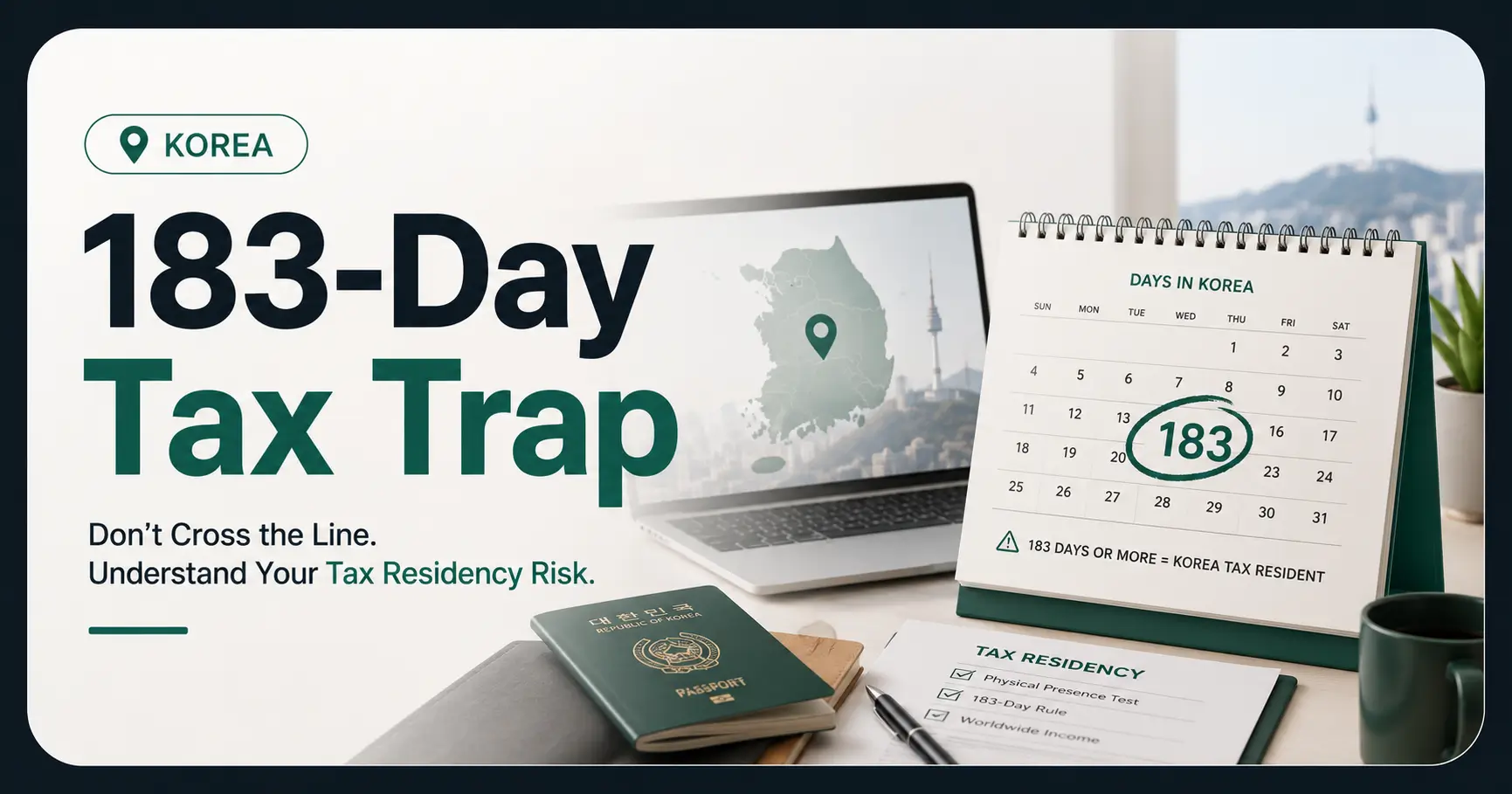
Korea tax residency guide for remote workers
Korea Tax Residency for Digital Nomads: The 183-Day Trap, Visa Myth, and US Tax Overlap
Moving your laptop to Seoul can feel clean and modern: fast Wi-Fi, quiet cafés, a T-money card in your pocket, and a calendar that seems harmless until it starts counting back. Korea tax residency is where “temporary” becomes a paper trail, and paper trails have a long memory.
The biggest mistake is treating tax like a visa sticker. Immigration permission, tax residence, income source, payroll exposure, treaty position, and US reporting are separate gears in the same small machine. When one slips, the whole clock starts making expensive sounds.
This guide is built for US-based remote workers, freelancers, founders, and expats who are considering Korea for one month, half a year, or “just one more season.” It will not replace a Korea-US tax professional, but it will help you walk into that conversation with clean facts instead of café receipts and hope.
Avoid the day-count fog
Know what to track before the 183-day line becomes a filing problem.
Separate visa from tax
Understand why a workation visa does not make income invisible.
Prepare a clean risk file
Turn your stay, income, housing, and work facts into a one-page review packet.
Your safest tax tool is not a clever loophole. It is a boring spreadsheet with receipts attached. 🧾
Snapshot
This article is for US remote employees, freelancers, founders, creators, and long-stay travelers who may spend meaningful time in Korea. It helps you understand the difference between visa permission and tax residency, spot the records that matter, compare DIY tracking with professional help, and build a one-page Korea residency risk file before your next long stay.
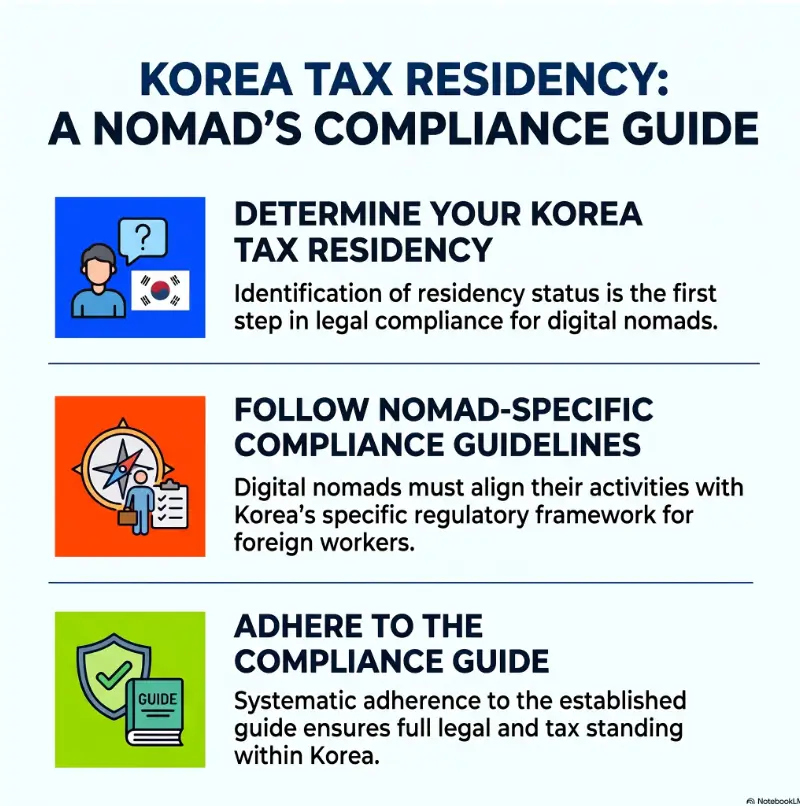
Before You Act: This Is Tax Risk, Not Travel Trivia
This article is general education, not tax, legal, immigration, payroll, accounting, treaty, or investment advice. Korea tax residency can turn on facts that look ordinary in real life: where you sleep, how long you stay, who pays you, where your employer thinks you work, whether you invoice Korean clients, and whether your repeated trips begin to look less like travel and more like residence.
For US taxpayers, the stakes are higher because US citizens and resident aliens generally continue to have US tax reporting obligations even while living abroad. That does not automatically mean double taxation, but it does mean you should compare foreign earned income exclusion, foreign tax credit, treaty position, payroll setup, and local filing duties before making assumptions.
Key takeaway
Use this guide to organize your questions. Do not use it to decide, alone, that you are definitely a Korean resident, definitely not a Korean resident, or definitely protected by a treaty.
If you are close to 183 days in Korea, work for a US employer from Korea, earn from Korean clients, own a company, hold crypto or equity compensation, or have foreign bank accounts, put professional review on the calendar early. Tax cleanup is possible in many cases, but it is rarely cheaper than clean planning.
Korea Tax Residency Starts Before You Feel “Settled”
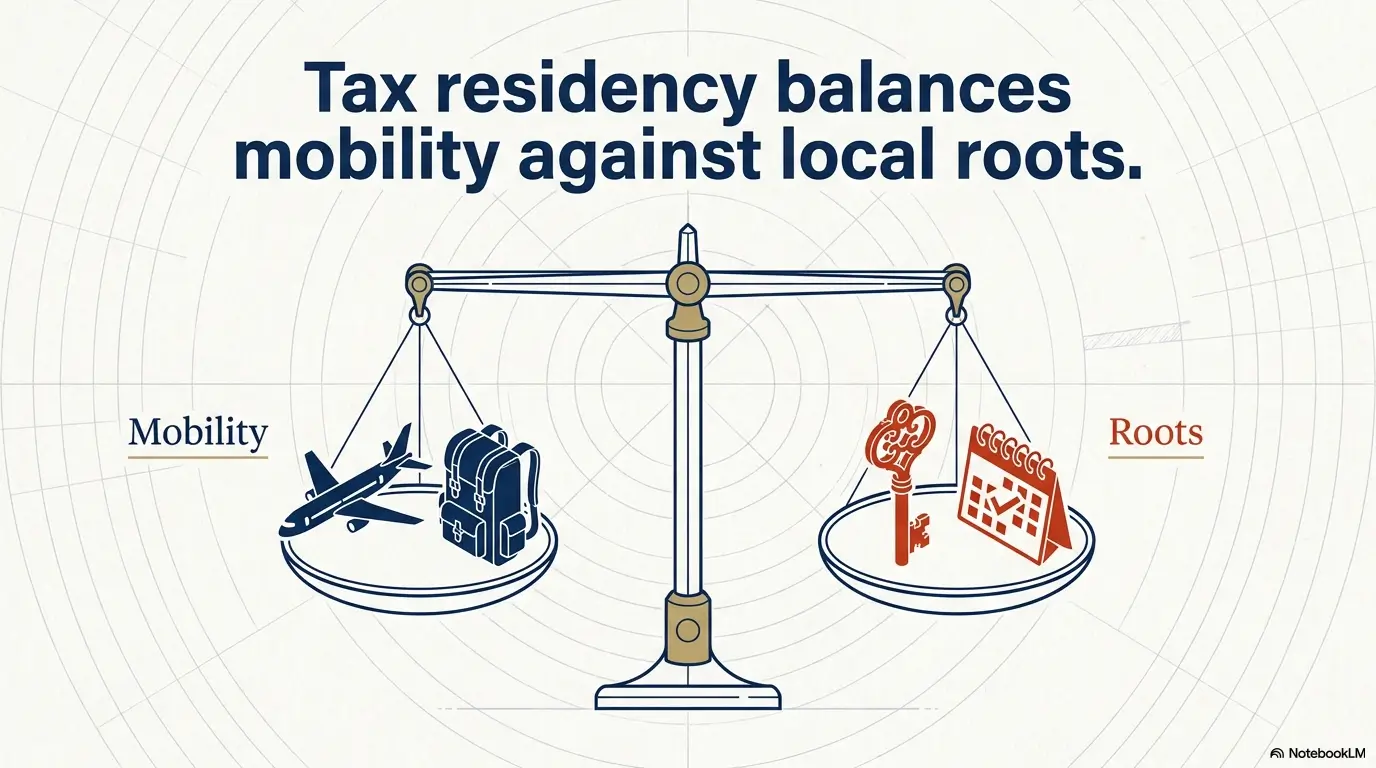
The phrase “tax residency” sounds grand, almost ceremonial, as if someone hands you a certificate at month six and the room applauds politely. Reality is quieter. A residency position is built from facts: days, domicile, residence, income, personal ties, repeated stays, housing, and the story your documents tell when placed in chronological order.
The 183-day rule is a gate, not the whole house
Korea commonly describes an individual resident as someone who has a domicile in Korea or has had a place of residence in Korea for at least 183 days. For a digital nomad, that phrase is both useful and dangerous. Useful, because it gives you a visible threshold. Dangerous, because it tempts you to believe all other facts disappear if you stay under the number.
Tax offices do not live inside your travel mood. They look at dates, addresses, income, repeated behavior, and ties. A person who rents a place, returns repeatedly, keeps local records, works from Korea, and builds a Korea-centered routine may have more to explain than someone who took a single short trip.
Domicile, residence, and repeated stays: the quiet facts tax offices notice
Domicile is not just a poetic word for “where my suitcase is.” It points toward the center of your living arrangement. A place of residence is also not limited to a formal apartment lease. Hotels, serviced apartments, officetels, short-term rentals, and repeated stays can all become relevant facts depending on the situation.
If your Korea plan includes housing, local health arrangements, a Korean bank account, family relocation, long-term school choices, business development, or local customer activity, slow down. These are not bad facts by themselves. They are simply facts that belong in your file, not in the attic of your memory.
Why “I’m just visiting” may not survive a calendar audit
Nomads often describe life by intention: “I meant to stay three months,” “I was testing Seoul,” “I was between leases,” or “I left for Tokyo for a week.” Tax analysis cares more about evidence than intention. Intention helps, but it is not a force field.
Build your first file while the facts are fresh. If you need practical context for daily life records, guides such as Korea resident registration, officetel leases in Korea, and the Korean mobile app ecosystem can help you understand why local addresses, apps, receipts, and administrative touchpoints matter.
The first document to build: your Korea day-count ledger
Your day-count ledger is the spine of the whole review. It should be boring, exact, and updated weekly. The best version is not glamorous. It is a table with entry date, exit date, city, lodging, work status, income activity, and proof saved.
| Field to track | Why it matters | Example proof to save |
|---|---|---|
| Entry and exit dates | Supports your physical presence count | Passport stamps, immigration record, flight receipts |
| Where you stayed | Shows whether you had a place of residence | Lease, Airbnb invoice, hotel folio, officetel contract |
| Work activity | Helps separate travel days from workdays | Employer approval, client calendar, timesheets |
| Income bucket | Helps identify Korean-source and foreign-source questions | Invoices, payroll slips, platform statements |
| Local ties | Shows whether your life center shifted toward Korea | Bank records, family records, school records, memberships |
Key takeaway
The day count is not your whole tax answer. It is the part of the answer you can control today with a calendar, receipts, and ten quiet minutes every Friday.
Who This Guide Is Really For
Not every foreigner in Korea has the same tax problem. A two-week food traveler, a remote designer on a six-month Seoul stay, a US founder managing a Delaware company from Gangnam, and a freelancer selling services to Korean clients are not living the same tax story. They may share a café table, but not a risk profile.
Good fit: US nomads testing Seoul, Busan, Jeju, or a Korea workation
This guide fits you if you are a US citizen, green-card holder, or US tax resident considering Korea for a meaningful stay while keeping foreign work. You may be planning three months in Seoul, six months in Busan, or a year split between Korea and nearby countries.
Your first problem is not whether Korea is enjoyable. Korea is very good at becoming comfortable quickly. Your first problem is whether comfort becomes residence, whether your work creates local tax or payroll questions, and whether your US tax filing remains properly coordinated.
Good fit: freelancers with foreign clients and no Korean customers
Freelancers often assume the answer is simple because their clients are outside Korea and payment lands in a US or foreign bank account. That may help the analysis, but it does not end it. Where you physically perform the work, whether you become a Korean tax resident, how your income is characterized, and whether you have Korean-source activity all matter.
A freelance writer in Hongdae working for US clients has a different fact pattern from a consultant in Seoul advising Korean startups, even if both use the same laptop and both say “remote work” on social media.
Not enough: founders hiring in Korea, opening an office, or selling locally
If you own or run a company, your personal tax position is only one room in the house. Company management, employee location, client contracts, local sales, Korean contractors, and authority to negotiate can create business-level questions. That includes payroll, withholding, social insurance, VAT, permanent establishment, and corporate filing concerns.
Founder risk is subtle because the company may have no sign on a Korean door. Sometimes the business presence is a person with decision authority, a laptop, and a calendar full of calls from Seoul. That is enough reason to get tailored advice before the stay becomes routine.
Not for this article: complex Korean national, family, property, or exit-tax issues
This guide focuses on digital nomads and US-linked remote workers. It does not fully cover Korean nationals, former Korean nationals, dual citizens with complex family ties, Korean real estate owners, inheritance issues, Korean securities, exit tax, or long-term residents with family and business history in Korea.
If your life touches those categories, use this article only as a map of questions. You need a more personal review, ideally from someone who can read both the law and the lived facts without flattening either one.
The Visa Myth: F-1-D Does Not Automatically Solve Tax
Korea’s workation-style digital nomad visa is attractive because it gives remote workers a cleaner immigration path than improvising around short tourist stays. That is useful. It is not the same thing as a tax exemption certificate, a payroll waiver, or a treaty ruling wrapped in a passport sticker.
What the Korea Workation visa actually gives you
The F-1-D Workation visa guidance describes a visa route for eligible foreign remote workers, including conditions around foreign-company remote work, income, insurance, and restrictions on local employment or profit-making activity in Korea. In plain English, it is an immigration permission pathway for a specific kind of stay.
For visa-specific requirements, start with the official Korean consular guidance rather than a random checklist copied across the internet.
Review Korea F-1-D Workation Visa GuidanceWhat it does not give you: a tax invisibility cloak
A visa can explain why you are allowed to stay. It does not, by itself, decide whether you are a Korean tax resident, whether your income is taxable in Korea, whether your employer has payroll duties, or whether treaty relief applies.
This is where many nomads step into the fog. They read “foreign employer” and hear “foreign tax only.” They read “workation” and hear “vacation tax treatment.” The terms rhyme emotionally, but tax law does not grade on vibes.
Foreign employer, foreign income, Korean stay: three boxes, three different rules
Keep three boxes separate. First, immigration: can you legally stay and work remotely under your visa conditions? Second, personal tax: are you a Korean tax resident or taxable on certain Korea-connected income? Third, employer or business compliance: does your work location create payroll, withholding, social insurance, or business presence issues?
When these boxes get mixed together, the advice becomes mush. A cleaner question sounds like this: “I am a US citizen working remotely for a US employer while spending 190 days in Korea under F-1-D. What are my Korean residency, Korean-source income, US tax, payroll, and treaty questions?” That is the kind of sentence a professional can actually work with.
Do not confuse immigration permission with tax residency
Immigration asks whether you may enter and stay under stated conditions. Tax asks whether Korea has a claim to tax you as a resident or nonresident on certain income. Payroll asks whether an employer or payer has obligations. Treaty analysis asks whether an agreement changes how the two countries allocate taxing rights.
The same person can be simple in one box and complicated in another. A clean visa status can still come with a messy tax profile. That is not a contradiction. It is cross-border life doing cross-border life things.
The 183-Day Trap: Where Nomads Miscount
The 183-day threshold is memorable, so it becomes the whole story in casual advice. That is how trouble starts. A threshold is a doorway, not a full legal analysis. Still, the day count matters enough that you should treat it like a financial account, not a travel diary.
Calendar-year days vs practical exposure
When counting Korea days, do not rely on fuzzy month labels. “June to December” is not a tax number. Count actual dates. Include arrival and departure treatment only after confirming the applicable rule with a professional, because cross-border day-count conventions can vary by tax purpose.
The practical exposure also includes adjacent years. If you spend 170 days in Korea one year, leave, and return for another long stay, your story may look different from a single short trip. Repeated patterns are not automatically fatal, but they deserve a careful file.
Hotel weeks count too: comfort is not a tax category
Some nomads count only lease days and ignore hotel days, guesthouse days, or “I was between neighborhoods” days. Do not do that. Physical presence does not become invisible because the bed had a lobby downstairs.
Save receipts from short-term stays, especially if you move between Seoul, Busan, Jeju, and smaller cities. A scattered stay is still a stay. The spreadsheet should not become shy just because your lodging was temporary.
The “I left for Japan” reset fantasy
A week in Japan may be a wonderful reset for your brain. It is not automatically a reset button for tax facts. Short exits can matter, but they do not erase prior presence, housing, work patterns, income activity, or local ties.
If your plan relies on border hops to stay under a threshold, get advice before building the strategy. Tax authorities tend to prefer substance over itinerary origami.
Real-world example: The Seoul summer that became a tax file
Maya, a US freelance product designer, planned to spend 90 days in Seoul. Her first officetel had sunlight, her client calls were easy at night, and the city began to feel less like a trip and more like a clean operating system for her life.
She extended twice, took a short trip to Fukuoka, returned to the same neighborhood, opened a local account for convenience, and accepted one small project from a Korean startup introduced by a friend. By December, she was not sure how many days she had actually spent in Korea.
The lesson is not “never stay longer.” The lesson is to build the file before the stay grows roots. Maya’s real risk was not one action. It was the pile: days, housing, local income, repeated presence, and no clean record until the year was already over.
Key takeaway
A short exit can change your travel rhythm. It does not automatically change the tax meaning of your whole year.
The US Tax Overlap Nobody Wants at Brunch
US citizens and resident aliens abroad generally remain inside the US tax reporting system. This is the part of expat life that arrives like a polite ghost at brunch: quiet, persistent, and absolutely not impressed by your latte art.
US citizens and resident aliens still face worldwide income reporting
If you are a US citizen or resident alien, living in Korea does not automatically end US filing. You may still need to report worldwide income, including wages, freelance income, investment income, royalties, platform income, and business income.
That does not always mean the same income is taxed twice in full. The US system includes tools such as the foreign earned income exclusion and foreign tax credit, but those tools have rules, forms, timing, and tradeoffs.
For US filing basics abroad, use the IRS page as your starting point before reading private summaries.
Check IRS Guidance for Americans AbroadKorea tax resident status can create a second reporting layer
If Korea treats you as a tax resident, your Korean filing questions can expand beyond Korean-source income. If Korea treats you as a nonresident, Korea may still tax certain Korean-source income. The exact result depends on facts and income type.
This is why “I already file US taxes” is not an answer to a Korean tax question. It is only one side of the bridge. The other side still has toll gates, signs, and sometimes paperwork in Korean.
Foreign earned income exclusion vs foreign tax credit: choose with care
The foreign earned income exclusion can reduce US taxable earned income for qualifying taxpayers abroad. The foreign tax credit can reduce US tax based on qualifying foreign taxes paid or accrued. They are not identical tools, and the best option can depend on income level, self-employment tax, housing, children, retirement contributions, future plans, and the foreign tax actually paid.
Do not choose based only on which phrase sounds more generous. For some people, foreign tax credit is cleaner. For others, exclusion may help. For self-employed nomads, the picture can be especially fiddly because income tax and self-employment tax are not the same animal.
Treaty relief is not a magic wand you wave after filing
The US-Korea income tax treaty can matter, but treaty positions require careful reading. Treaties can contain definitions, tie-breaker rules, saving clauses, income categories, and procedural requirements. A treaty is not a slogan. It is a document with hinges.
If you think you need treaty relief, ask early what forms, certificates, residency positions, disclosures, and supporting records may be needed. Waiting until after a notice arrives turns the process into tax archaeology.
Show me the nerdy details
For a Korea-US nomad, the hard part is not one rule. It is coordination. You may need to compare Korean domestic residency rules, Korean-source income rules, US worldwide reporting, US foreign earned income exclusion, US foreign tax credit, possible treaty tie-breaker rules, foreign account reporting, employer payroll treatment, and company-level risk. Each item uses different vocabulary. “Resident” can mean one thing for Korean domestic tax, another for treaty purposes, and another for US filing. That is why a professional review should start with a fact file rather than a vague question like “Will I owe tax?”
Income Source Is the Knife Edge
Once residency is on the table, income source becomes the next sharp edge. Nomads often ask, “Where was I paid?” That is relevant, but it is too narrow. The better question is: what type of income is it, where was the work performed, who benefited, who paid, where is the customer, and what does Korean tax law say about that category?
Foreign clients while physically in Korea: where ambiguity begins
A US freelancer working from Korea for US clients may feel foreign from every business angle. The client is foreign. The invoice is foreign. The bank account is foreign. The language, contract, and tax form may all be foreign.
But the work may physically happen in Korea. Depending on residency status and income characterization, that fact can matter. Do not assume payment location is the whole answer. Save project records, client locations, work dates, contract terms, and where you physically performed the services.
Korean customers, Korean platform income, and local business clues
Korean customers change the conversation. So can Korean platforms, Korean sponsors, Korean ad revenue, Korean teaching gigs, Korean consulting, Korean speaking fees, or local product sales. Even small amounts deserve a separate bucket because they may create different filing, visa, or business questions.
This is especially important for creators and consultants. A YouTube channel, newsletter, Substack, design service, tutoring offer, or paid community can look borderless on the screen while still producing country-specific tax questions behind the curtain.
Salary, consulting fees, royalties, crypto, and creator income need separate buckets
Do not pour every dollar into one “online income” jar. Salary is not consulting income. Royalties are not trading gains. Crypto staking rewards are not necessarily the same as capital gains. Equity compensation has its own timing and sourcing issues. Creator income may include ads, sponsorships, affiliate payments, digital products, and licensing.
The cleaner your buckets, the faster a tax professional can help. The messier your buckets, the more you pay someone to sort your sock drawer with a microscope.
| Income type | Common nomad assumption | Safer question to ask |
|---|---|---|
| US salary | “My US employer handles everything.” | Does my work location create Korea payroll, withholding, or employer registration issues? |
| Freelance services | “My clients are abroad, so Korea is irrelevant.” | Where did I perform the work, and how does residency affect the result? |
| Korean client project | “It was only one small invoice.” | Does local client income affect tax, visa, or business registration risk? |
| Creator revenue | “Platforms are global, so it is simple.” | Which revenue streams are ads, sponsorships, royalties, affiliates, or product sales? |
| Crypto and investing | “It is not work income.” | What reporting, gain, account, and exchange records are required in both systems? |
Key takeaway
“Where was I paid?” is only the opening note. The full melody includes where you worked, who paid, what income type it was, whether Korea treats you as resident, and whether a treaty position applies.
Employer, Payroll, and Company-Risk Layer
Remote work makes one person mobile. It does not always make the employer mobile-ready. A US company may be happy for you to work from Denver, Austin, or London for a week. Korea for six months is a different compliance conversation.
Remote employee in Korea: why HR may panic for a reason
If you are an employee, your employer may worry about payroll withholding, labor rules, social insurance, data security, benefits, workers’ compensation, export controls, and whether your presence creates tax exposure for the company. Some of those fears may be manageable. Some may be serious. None should be discovered through a casual Slack message after you have already moved.
Ask for written work-location approval before you rely on remote work from Korea. If the answer is “we do not know,” that is still an answer. It means the company has not reviewed the risk.
Founder working from Seoul: the company-risk layer
Founders and executives carry extra weight because they may manage, negotiate, hire, approve spending, sign contracts, or make strategic decisions from Korea. That can raise permanent establishment or corporate residency questions depending on the facts.
If you are a founder, do not ask only, “Do I owe personal tax?” Ask, “Can my physical presence in Korea create tax or registration issues for the company?” It is a less fun question, but it is the one that keeps the floorboards from creaking later.
Contractor vs employee: the label may not carry the whole load
A contract label helps, but it is not always decisive. If a company controls your schedule, tools, duties, exclusivity, reporting, and work process, calling you an independent contractor may not settle every question. Cross-border worker classification can be especially awkward because each country may care about different facts.
Before you work from Korea, save your contract, scope of work, invoices, employer policy, remote-work approval, and any written statement about where you are allowed to perform services.
Nomad Tax Risk Flow
Use this four-step framework before your Korea stay turns from travel into residence risk.
1. Count days
Track entry, exit, city, lodging, and proof.
2. Split visa from tax
Immigration permission is not a tax ruling.
3. Bucket income
Separate salary, freelance, Korean-source, creator, crypto, and investments.
4. Review exposure
Ask about payroll, treaty, company, and filing duties before month seven.
Records That Make Your Tax Position Less Flimsy
A tax position is not only what you believe. It is what your records can support after the year has cooled and memory has become a soft fruit. If you are going to spend serious time in Korea, your documentation should begin before you feel any urgency.
Track physical presence by date, city, and entry record
Create a day-count ledger with every Korea day. Include airport entry and exit records, flight confirmations, passport stamps where available, hotel receipts, and short-term rental invoices. If you move from Seoul to Busan to Jeju, list the city changes too.
A calendar alone is not enough. A calendar says what you planned. Receipts and travel records help show what happened.
Save housing contracts, hotel invoices, and address records
Housing is a loud fact. A short hotel stay says one thing. A six-month officetel contract says another. A lease with renewal options, local utility records, or address registration can become especially relevant.
If housing is part of your Korea plan, read practical guides such as officetel lease basics in Korea and a Korean apartment move-in checklist. These are not tax guides, but they help you spot the documents your tax file may later need.
Separate Korean-source income from foreign-source income
Create income buckets from the beginning. Do not wait until filing season to remember which payments came from US clients, foreign clients, Korean customers, ad platforms, sponsors, affiliates, royalties, trading, or crypto.
For each income item, save the contract, invoice, payer location, payment date, currency, platform statement, and where you physically performed the work. If that sounds tedious, congratulations. You have identified the exact kind of tedium that saves money.
Ask your employer about payroll, social insurance, and work-location approval
If you are an employee, get written approval for Korea work location. Ask whether your employer has a policy for working abroad, whether there is a maximum day limit, whether payroll changes are needed, whether benefits are affected, and whether the company has reviewed Korea-specific risk.
- Where may I legally work under company policy?
- How many days abroad trigger internal review?
- Does the company allow remote work from Korea specifically?
- Will payroll, benefits, insurance, or tax withholding change?
- Does my role involve contract authority, sales, hiring, or management decisions?
Key takeaway
Screenshots beat memory. Save official pages, employer approvals, visa records, housing documents, invoices, and income statements as you go.
Free Checklist vs Paid Help: What Is Worth Paying For
Not every Korea stay requires a high-priced advisory project. A short, clean, clearly documented trip with no Korean income and no long-stay pattern may only require careful tracking and ordinary US filing discipline. But some situations are too expensive to solve with search tabs alone.
When a free DIY file may be enough
A free DIY approach may be enough for early planning if you are still choosing dates, have no Korean clients, have not crossed a meaningful day threshold, and simply need to understand what to track. In that case, build your ledger, collect official links, and avoid making irreversible promises to clients or employers.
DIY tracking is also useful before hiring help. A professional can do better work when you bring clean dates, income buckets, housing records, employer facts, and questions. Paying someone to reconstruct your year from inbox confetti is a sad little bonfire of money.
When paid professional help is worth considering
Consider paid Korea-US tax help if you are near or over 183 days, have Korean-source income, are a US citizen or green-card holder with foreign accounts, are self-employed, own a company, manage employees, hold equity compensation, trade crypto, need treaty analysis, or have already filed inconsistently.
The goal is not to buy comfort. The goal is to buy a structured answer, written assumptions, filing steps, and a defensible record. Ask what the provider will actually deliver: a memo, filing support, treaty review, payroll review, company exposure review, or only a general consultation.
| Option | Best for | What it can do | What it cannot do |
|---|---|---|---|
| Free DIY tracker | Early planning, short stays, low complexity | Organize dates, housing, income buckets, and questions | Confirm your legal tax position or treaty eligibility |
| Basic tax consultation | Nomads approaching longer stays or mixed income | Identify likely filing issues and missing documents | Replace full filing, payroll, or company review |
| Cross-border filing support | US taxpayers with Korea filing questions | Coordinate US and Korea reporting, credits, exclusions, and documents | Guarantee tax savings or eliminate penalties |
| Employer or founder advisory | Employees, executives, founders, company owners | Review payroll, permanent establishment, contractor, and company exposure | Make risky work arrangements safe without factual changes |
Good / Better / Best setup for a Korea tax risk file
| Setup | What to include | Who it fits |
|---|---|---|
| Good | Day-count spreadsheet, flight receipts, lodging records, income summary | Short-stay remote workers still below major thresholds |
| Better | Good setup plus employer approval, contract copies, income-source buckets, bank records, visa documents | Six-month nomads, freelancers, repeat visitors, long-stay planners |
| Best | Better setup plus professional memo, treaty review, payroll review, company-risk review, filing calendar | US taxpayers near 183 days, founders, executives, high earners, crypto or equity-comp holders |
Questions to ask a Korea-US tax professional before you pay
- Do you handle both Korean tax and US expat tax, or only one side?
- Will you review Korean residency, US filing, treaty position, and income sourcing together?
- Can you advise on payroll or company exposure if I am an employee, founder, or executive?
- What documents do you need before the first meeting?
- Will I receive a written summary of assumptions, risks, and next steps?
- Do you assist with certificates, treaty forms, or only annual tax returns?
For treaty documents, official certificate forms, and cross-border paperwork, start with official pages before paying for interpretation.
View IRS Korea Tax Treaty Documents View Korea NTS Forms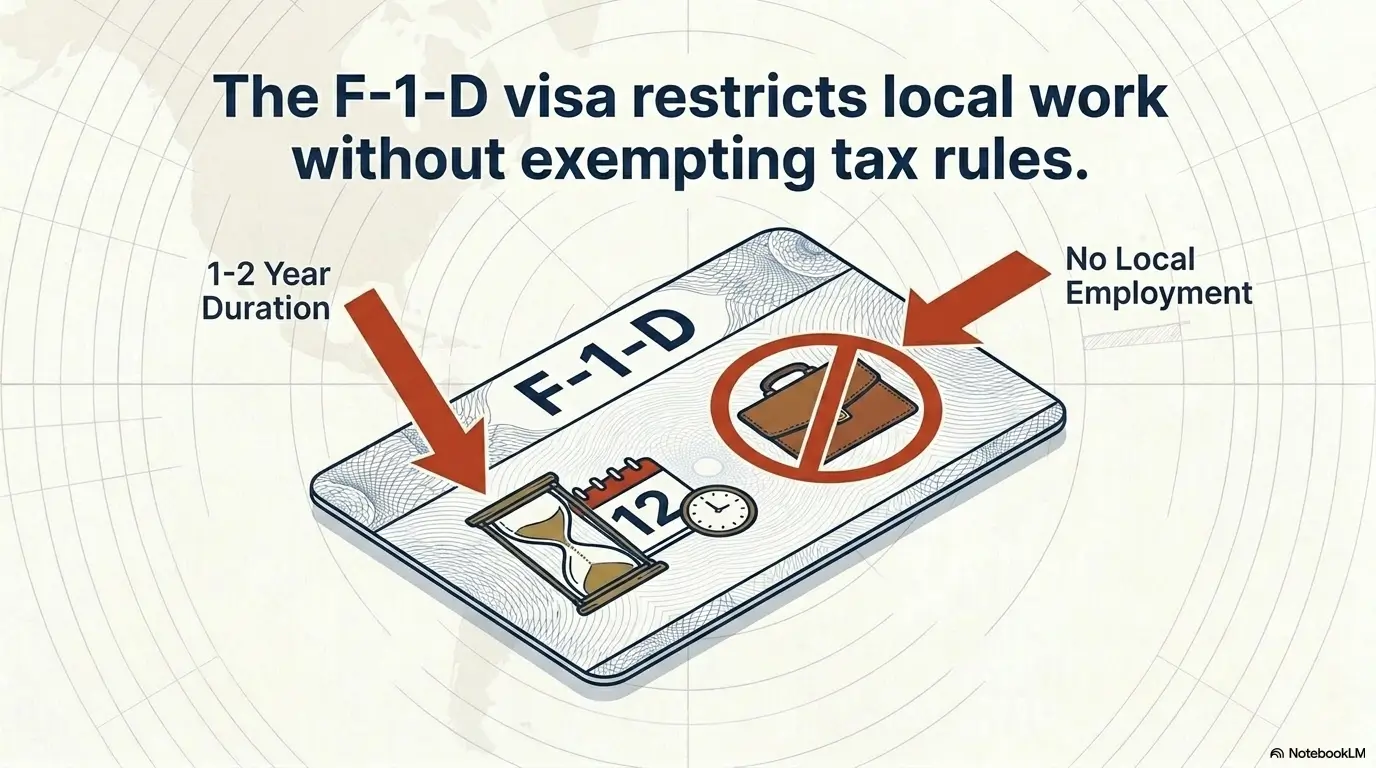
FAQ: Korea Tax Residency for Digital Nomads
Can a digital nomad become a Korean tax resident without a Korean employer?
Yes, it may be possible depending on facts such as domicile, residence, days in Korea, repeated stays, housing, and other ties. A Korean employer is not the only possible path into Korean tax questions.
Does the Korea digital nomad visa make my foreign income tax-free?
No. A visa can allow a type of stay, but it does not automatically make income tax-free. You still need to review Korean tax residency, income source, treaty position, and US tax reporting if you are a US taxpayer.
If I stay under 183 days, am I automatically safe?
Not automatically. Staying under a visible threshold may reduce one kind of risk, but domicile, repeated stays, local income, Korean clients, employer issues, and other facts can still matter. Treat 183 days as a major warning light, not the only bulb on the dashboard.
Do US citizens still file US taxes while living in Korea?
Generally, yes. US citizens and resident aliens abroad usually remain subject to US reporting on worldwide income, though exclusions, credits, and treaty rules may affect the final result. Filing is how many of those benefits are claimed.
Can I use the Korea-US tax treaty to avoid double taxation?
Possibly, but treaty relief is fact-specific. A treaty position may depend on residence, income type, saving clauses, certificates, forms, and disclosure requirements. Do not assume treaty protection without a professional review.
What records should I keep if I work remotely from Korea?
Keep entry and exit records, lodging documents, visa records, work-location approval, contracts, invoices, income statements, bank records, client locations, platform statements, and a weekly day-count ledger. Save screenshots of official guidance you rely on.
Is Airbnb enough proof that I was only temporary?
Not by itself. Short-term lodging can support a temporary-stay story, but it does not override day count, repeated stays, work activity, local income, or other ties. It is one document, not the whole case.
What happens if I work for Korean clients while on a workation visa?
That can create immigration, tax, and business issues. Workation visa guidance generally focuses on foreign remote work and restrictions on local employment or profit activity. If Korean clients are involved, get advice before invoicing or performing the work.
Build a One-Page Residency Risk File in 15 Minutes
The goal is not to become a tax expert by lunchtime. The goal is to stop being a fog machine. In 15 minutes, you can build the first version of a Korea residency risk file that makes every later decision cleaner.
- Open a document and title it “Korea Residency Risk File.”
- Add your planned Korea entry and exit dates, plus any prior Korea stays in the current and previous year.
- Add your lodging plan: hotel, short-term rental, officetel, apartment, friend’s home, or mixed stays.
- Add income buckets: US salary, foreign clients, Korean clients, creator income, royalties, investments, crypto, and equity compensation.
- Add work facts: employee, contractor, founder, manager, signer, salesperson, or passive owner.
- Add proof you already have: visa records, employer approval, contracts, invoices, bank statements, and travel receipts.
- Add three questions you need answered before month seven.
That file will not solve everything. It will do something better: it will turn your risk from a cloud into a shape. Once the shape exists, you can compare options, ask better questions, and decide whether a free checklist is enough or a Korea-US tax professional is worth the fee.
Korea rewards the prepared traveler. The subway is precise, the cafés are wired like command centers, and paperwork moves best when you respect its appetite. Count your days, separate your income, save your proof, and ask for help before the calendar becomes a trapdoor.
Final 15-minute action
Create the day-count ledger today. Add every Korea stay, every lodging record, every income bucket, and one note beside each item: “proof saved” or “proof missing.” That tiny phrase is where your safer plan begins.
Last reviewed: 2026-07