
Foreigner property risk guide
Korea Reconstruction Apartments:
Foreigner Investment Risks Before You Buy the “Upside”
The old apartment with cracked stairwell tiles, a quiet security booth, and a view of newer towers across the road can feel like a secret map. For foreign buyers, Korean-American families, expats, and overseas Koreans, reconstruction apartments in Korea often carry a tempting promise: buy the aging unit, wait through the project, and meet the future at a higher floor.
But reconstruction upside is not a simple property upgrade story. It is a bundle of law, timing, association politics, taxes, bank underwriting, exchange rates, residency rules, construction costs, and Korean paperwork that does not always pause politely for an overseas owner in a different time zone.
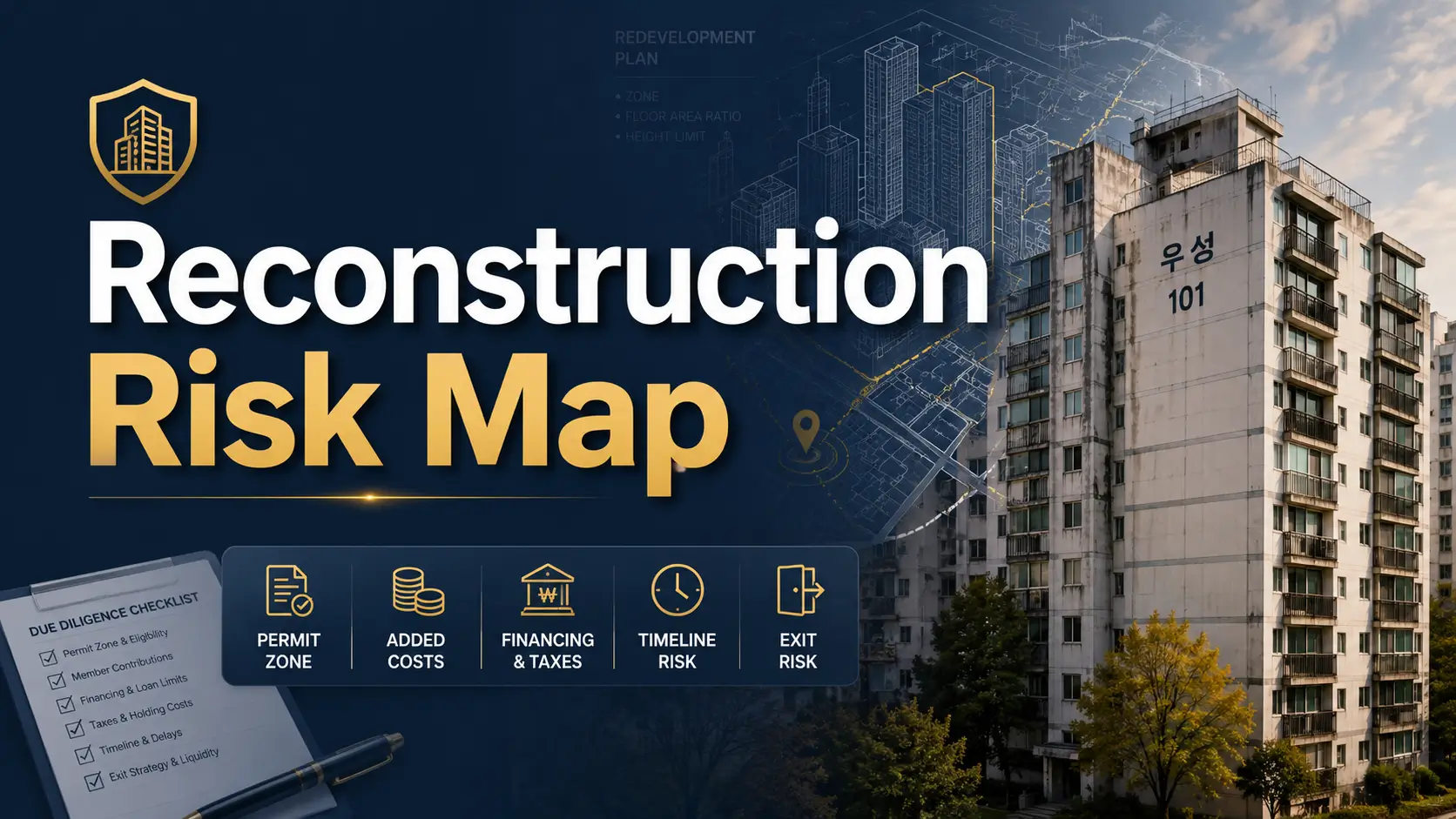
This guide turns the glittering rumor of “future redevelopment profit” into a practical risk map. You will learn what to verify before signing, how to compare deals without being hypnotized by the word reconstruction, and when professional help is not a luxury but a seatbelt.
Permit risk
Check whether the unit sits in a foreign land transaction permit zone before you treat the contract as routine.
Cost risk
Model added member contributions, construction inflation, taxes, and currency movement before celebrating the purchase price.
Exit risk
Plan how you would sell before, during, or after reconstruction if the timeline stretches longer than expected.
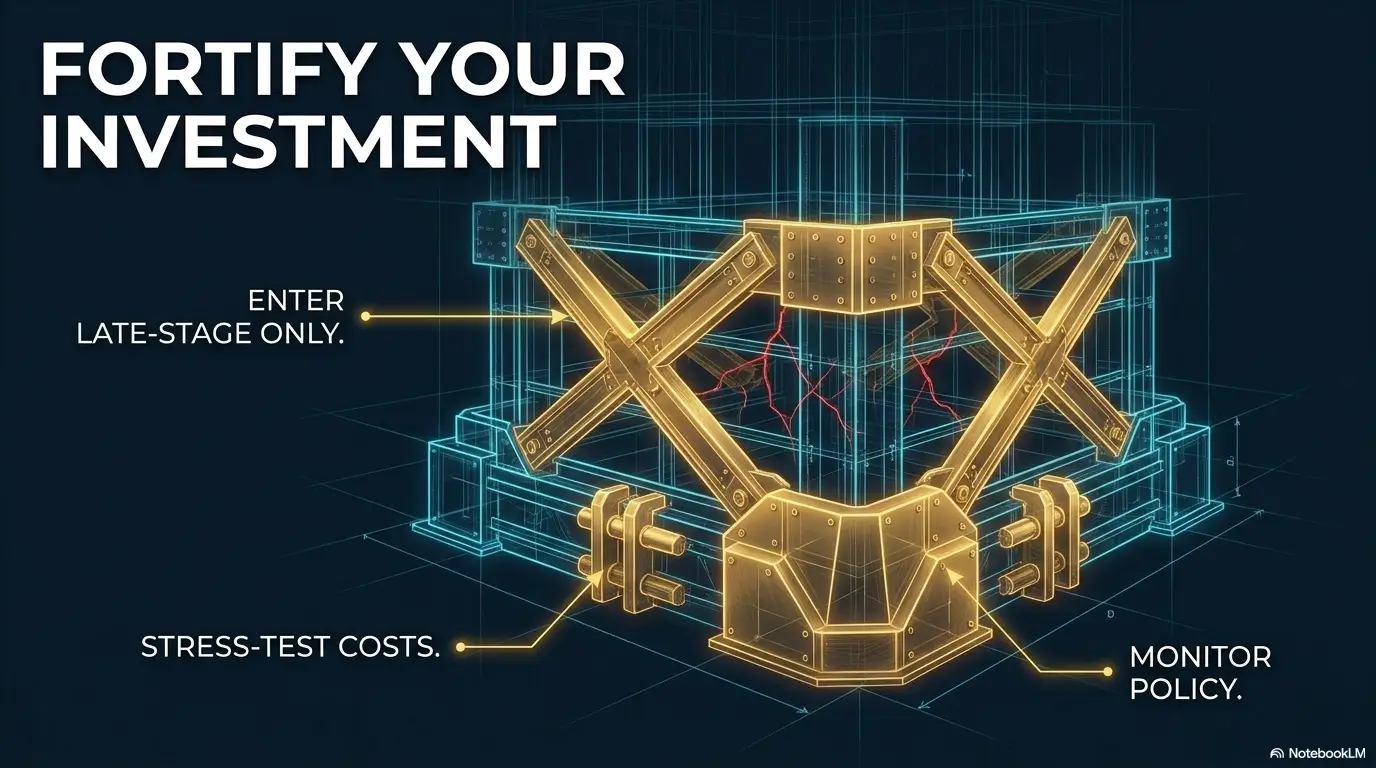
Bottom line: do not buy a Korean reconstruction apartment by price alone. Buy only after the paperwork, timeline, and second invoice have all been dragged into daylight. 🧭
Snapshot
This article is for US-based foreign investors, Korean-American buyers, expats, and overseas Koreans comparing older Korean apartments for reconstruction potential. It helps you spot permit, tax, financing, project, rental, and exit risks so you can build a one-page risk sheet before viewing units or wiring funds.
Before You Act: This Is a Risk Map, Not Advice
Buying an older Korean apartment for reconstruction upside can be financially meaningful, but it is also a high-friction decision. This guide is designed to help you ask better questions, compare risk more clearly, and avoid the most expensive blind spots.
It is not legal, tax, financing, immigration, or investment advice. Reconstruction projects are local, document-heavy, and sensitive to regulation. A rule that applies to one Seoul district, buyer status, visa situation, or association stage may not apply cleanly to another.
Before signing, wiring money, using a family member, forming an entity, or assuming you can rent instead of occupy, compare your plan with qualified Korean real estate counsel, a tax professional familiar with cross-border issues, and a bank that can review your actual documents.
Key takeaway
The dangerous assumption is not “foreigners cannot buy.” The dangerous assumption is “foreigners can buy, so this works like a normal apartment purchase.” Those are very different sentences.
Rules Can Change Mid-Deal
Real estate policy in Korea can move quickly, especially around housing speculation, foreign ownership, financing, and redevelopment. Permit-zone designations, tax treatment, reporting steps, and bank requirements can shift while a buyer is still collecting documents.
That means you should verify status at the moment that matters: before contract, before deposit, before closing, and before any major association decision that affects your obligations.
Confirm Before Signing, Not After Wiring
A foreign buyer may feel pressure to move quickly because a seller, broker, or relative says the opportunity will disappear. That pressure is exactly when the risk checklist earns its coffee.
If a broker cannot clearly explain permit-zone status, association stage, added contribution estimates, encumbrances, tenant status, and your expected reporting path, pause. The apartment may still be worth studying, but it is not yet ready for your deposit.
Who This Is For, and Who Should Probably Walk Away
Reconstruction apartments attract different kinds of buyers. Some are looking for long-term Seoul exposure. Some are Korean-Americans who grew up hearing neighborhood names at the dinner table. Some are expats who want a future home but may not live in Korea immediately.
The risk profile changes depending on which buyer you are. A local resident with Korean income, fluent paperwork support, and a long time horizon is not playing the same game as a US-based investor who needs liquidity in two years.
Good-Fit Buyers Usually Have Time, Documents, and Patience
This article is most useful if you are considering a Korean apartment because you believe reconstruction could improve value over time, but you do not want to rely on neighborhood gossip or glossy future renderings.
You may be a good-fit buyer if you can hold for years, read or professionally translate association notices, document the source of funds, tolerate currency swings, and pay for competent review before the deal becomes emotional.
Buyers Who Need Extra Caution
You need extra caution if you are buying through a family member, using a nominee arrangement, relying on overseas income for Korean financing, or assuming you can rent out the unit without restrictions.
Korean-American buyers sometimes have a hidden risk: cultural familiarity can feel like legal knowledge. Knowing the neighborhood, the apartment brand, or the auntie network is useful, but it is not a substitute for reading the registry, association documents, permit status, and tax exposure.
Who Should Probably Walk Away
If you need an easy resale within 12 to 24 months, cannot handle Korean notices, cannot fund added contributions, or would be financially strained if the project stalls, reconstruction apartments may be too heavy for your current situation.
There is no shame in choosing a newer apartment, a simple rental, or a wait-and-watch strategy. In real estate, avoiding the wrong deal is not hesitation. It is a quiet form of profit preservation.
| Buyer situation | Risk level | Practical move |
|---|---|---|
| Long-term overseas Korean buyer with family support and legal review | Medium to high | Proceed only after permit, tax, and association document review |
| US investor seeking a quick flip | High | Consider simpler Korea exposure or a more liquid asset |
| Expat who may live in the unit later | Medium to high | Check residency, rental, financing, and demolition timing |
| Buyer using a family nominee | Very high | Get legal and tax advice before any agreement |
The Permit Zone Can Quietly Change the Deal
For foreign buyers, the first question is not “Is the apartment cheap compared with Gangnam?” The first question is whether the property sits in a zone where a foreign buyer needs land transaction approval before acquiring residential property.
Permit-zone rules matter because they can affect timing, eligibility, intended use, contract negotiation, and whether a pure investment plan is realistic. A seller may care only about price. The district office may care about your buyer status, purpose, documents, and compliance.
Foreign Buyer Approval Is Not a Small Checkbox
Approval steps can become a practical deal issue. If you need permit approval before closing, the seller may prefer a domestic buyer who can move faster. A broker may describe the process casually, but you should treat it as a gating item.
Ask the district office, your lawyer, and the broker the same question in writing: does this exact unit require prior approval for a foreign buyer, and what must be true for approval to be granted?
Seoul and Capital-Region Designations Matter First
In current official guidance, designated areas have included all areas of Seoul, selected districts in Incheon, and many cities and counties in Gyeonggi-do during the relevant enforcement period. That is why you should check the current district notice, not a random blog comment from six months ago.
Official check, not rumor check
For current designation status and local instructions, start with official Korean government or district-office pages. Save screenshots or PDFs of the exact page you relied on, because timing can matter.
Check foreign land permit-zone guidanceThe Residency Requirement Can Break a Pure Investment Plan
Some approval frameworks may require the buyer to use the property for a permitted purpose, which can include actual residence rather than passive holding. That is the pebble in the shoe for a foreign investor who wants to buy, rent, and wait from overseas.
Do not assume that “I can buy” means “I can buy as a nonresident investor and lease it exactly as planned.” Ask whether your intended use, visa status, residence plan, and timeline match the permit conditions.
Key takeaway
If the permit-zone answer is unclear, do not treat the apartment as a normal investment property. Treat it as a conditional deal until a qualified professional confirms the path.

The Reconstruction Premium Has a Second Invoice
Many buyers focus on the purchase price because it is easy to compare. One old unit costs less than a new apartment nearby, and the future tower looks nicer in everyone’s imagination.
But reconstruction math has another bill: the added member contribution. This can change the economics of the deal as sharply as a hidden interest rate.
Purchase Price Is Only the Front Door
The purchase price gets you into the project. It does not guarantee that your final cost will be attractive after construction costs, member assessments, taxes, moving costs, vacancy, financing, and exchange-rate movement.
A unit can look “cheap” only because the next owner is expected to absorb years of uncertainty and a meaningful future contribution. The discount may be real. It may also be the market politely handing you a heavy suitcase.
Added Member Contributions Can Rewrite Your Return
In Korean reconstruction, existing owners may need to pay an added contribution depending on the project economics, new unit allocation, construction cost, project financing, sales revenue from general units, and other factors.
Before buying, ask for the most recent estimate, the assumptions behind it, and whether members have been warned that the amount could rise. A number without its assumptions is just a postcard from the fog.
Construction Cost Inflation Hits Members Before Headlines Hit Buyers
Construction cost increases can move through a project slowly, then suddenly. Labor, materials, financing, design changes, and contractor negotiations may all affect member obligations.
When comparing units, build a sensitivity model. Ask what happens if the added contribution rises by 10%, 20%, or 30%. If the deal only works under the prettiest estimate, the deal is fragile.
| Cost item | Why it matters | What to verify |
|---|---|---|
| Purchase price | Determines entry basis | Compare with similar old units, not only new-build dreams |
| Added member contribution | Can materially change final cost | Request latest estimate and assumptions |
| Acquisition and holding taxes | Reduce net return | Confirm buyer-specific tax treatment |
| Financing cost | May be higher or unavailable for foreigners | Get written bank feedback before contract |
| Currency movement | Can change USD or GBP returns | Stress-test KRW weakness and strength |
| Vacancy or tenant transition | Can interrupt income | Map lease terms against reconstruction timeline |
“Cheap Old Apartment” Can Mean “Expensive Future Obligation”
A reconstruction apartment should never be compared by purchase price alone. Compare total expected cost, total uncertainty, and the cash you must keep available after purchase.
For a budget-conscious buyer, the safer move may be to choose a less famous neighborhood with clearer paperwork rather than a trophy district where every assumption is priced like champagne.
Do Not Buy the Story Before the Votes
Reconstruction is not a single event. It is a sequence of legal, administrative, technical, financial, and association steps. Two apartments can both be called “reconstruction candidates,” yet sit at completely different risk levels.
The phrase “scheduled for reconstruction” is not enough. You need to know where the project stands, what has been approved, what remains disputed, and whether the association has the authority and consensus people claim it has.
Association Stage Determines the Real Risk
Ask whether the project is still a rumor, a promoted committee, an established association, an approved project, or a later-stage plan with a management disposal plan. Each stage has different implications for timing, financing, member rights, and exit value.
One useful question is simple: what exact official document proves the stage the seller is advertising?
Consent Rates, Project Approval, and Disposal Plans Are Not Interchangeable
A high consent rate may be encouraging, but it is not the same as final approval. A project approval is meaningful, but it is not the same as completion. A brand-name builder may be exciting, but it is not the same as a guaranteed return.
When someone uses a confident phrase, ask which file supports it. “Everyone knows” is not a document category.
The Developer Brand Is Not the Same as Project Certainty
Korean apartment brand names carry emotional weight. Buyers may pay more because a future tower might carry a prestigious name. That can matter for resale, but it should not replace project analysis.
If apartment branding and local perception matter to your resale thesis, pair this guide with a broader understanding of Korean apartment brand names and how they shape buyer expectations. Then return to the documents, because sentiment does not pay construction invoices.
Show me the nerdy details
A reconstruction deal should be modeled as a staged probability tree, not a simple before-and-after price chart. Each stage has its own failure points: consent, administrative review, litigation, contractor negotiation, financing, member allocation, demolition, construction, and completion.
For each stage, assign three values: expected time, expected cash requirement, and exit discount if you had to sell at that stage. This forces you to price inconvenience rather than treating it as a footnote.
The most useful stress test is not “What if it succeeds?” It is “What if it succeeds, but two years late, with a higher contribution, after the KRW moves against me?”
The Timeline Trap: Five Years Can Become Ten
Reconstruction stories are often told in compressed time. Buy now, wait a bit, receive a beautiful new apartment, and enjoy the upside. Real projects can move much more slowly.
Lawsuits, design changes, safety reviews, market cycles, member disputes, construction negotiations, public policy shifts, and financing conditions can all add drag. For an overseas buyer, time delay is not only emotional. It is a return calculation.
Reconstruction Is a Process, Not a Flip
If you buy with a short hold period, you are depending on the next buyer’s optimism. That can work in a hot market, but it can punish you when credit tightens or reconstruction sentiment cools.
For foreign investors, the timeline also affects reporting, tax planning, currency strategy, travel, translation, property management, and family coordination.
Lawsuits, Design Changes, and Market Cycles Add Drag
A project can look healthy from the outside while members argue over allocation, compensation, design, contractor terms, or contribution amounts. These conflicts may not be visible in a sales listing.
Ask for association minutes, recent notices, litigation status, and major unresolved issues. If the seller or broker says those are unnecessary, that answer is itself useful information.
Short Story: The Apartment That Was Always “Two Years Away”
A Korean-American buyer once studied an aging Seoul apartment because relatives described it as “basically ready.” The stairwells were tired, the neighborhood was strong, and the future rendering looked like a promise printed on silk.
The buyer loved the price compared with nearby new units. What they did not love, after a lawyer reviewed the file, was the project stage. The association had momentum, but key approvals were not as final as the family had understood.
The buyer passed. Two years later, the project had not collapsed, but it had not become the easy win either. The lesson was not that the apartment was bad. The lesson was that “eventually” and “investable now” are different doors.
Good due diligence does not kill dreams. It simply asks dreams to bring receipts.
Exit Value Depends on the Next Buyer’s Patience
If you sell before completion, the buyer after you must inherit the remaining uncertainty. That buyer may demand a discount, especially if contributions rise or project updates become confusing.
Model three exits: sell before major approval, sell after major approval but before demolition, and hold through completion. If only one path works, the investment may be too narrow for your risk tolerance.
Financing, Currency, and Tax Are Where Optimism Gets Audited
A reconstruction apartment can look attractive in Korean won and still disappoint a US or UK buyer after financing limits, tax layers, and currency movement. This is where the spreadsheet stops being polite.
The safest approach is to separate three questions: can you finance it, what is your return in your home currency, and what taxes or reports follow you across borders?
Foreigner Financing May Be Narrower Than Expected
Korean mortgage access can depend on residency, visa status, Korean income, debt rules, bank policy, property type, collateral assessment, and documentation. Overseas income may not translate cleanly into Korean underwriting.
Before signing a contract, ask at least two banks or a qualified mortgage professional what documents they would require for your exact buyer profile. Do not rely on a verbal “foreigners can get loans” answer.
Currency Risk Can Turn a Good KRW Deal Into a Bad USD Return
If your savings, income, or future spending are in dollars or pounds, your real return is not only the apartment’s KRW price movement. It is the KRW result translated back into your life currency.
Stress-test the deal under a weaker won, a stronger won, slower resale, and higher contribution. Currency is not background music. Sometimes it grabs the conductor’s baton.
Korean Taxes Can Quietly Eat the Margin
Korean real estate buyers should confirm acquisition tax, holding tax, potential rental income tax, and capital gains tax treatment. Rates and outcomes can depend on property count, value, location, buyer status, holding period, and other facts.
Use official Korean tax and investment information as a starting point, but do not stop there. Your personal tax profile may require tailored review.
Useful official reference
For a broad official overview of taxes that may apply to foreign investors and real estate activity in Korea, review Invest Korea’s tax information and then confirm your own case with a professional.
Review Korea real estate tax overviewUS Reporting May Still Follow You Home
US citizens and tax residents generally need to think beyond Korean tax. Foreign rental income, capital gains, foreign bank accounts, entity ownership, and transfers may create US filing or reporting questions.
If you are using a Korean bank account, corporation, family structure, or nominee arrangement, get cross-border tax advice early. Fixing a structure after purchase can be far more expensive than designing it correctly before the first wire.
| Approach | Good for | Cost or friction | Main risk |
|---|---|---|---|
| DIY checklist only | Early screening before viewings | Low cost, high time requirement | Missing legal or tax issues |
| Local lawyer review | Contract, registry, permit, association documents | Professional fee | Scope must be clear in writing |
| Cross-border tax review | US or UK taxpayers, entity buyers, rental plans | Professional fee | Advice may need both countries covered |
| Property manager | Overseas owners renting or monitoring unit | Ongoing cost | Quality varies; reporting must be documented |
Key takeaway
The best way to choose a reconstruction apartment is to compare after-tax, after-contribution, after-currency scenarios. Anything less is just window shopping with a calculator nearby.
Rental Income and Exit Plans Need Their Own Stress Test
Many foreign buyers assume rent will cushion the waiting period. Sometimes it can. Sometimes tenant rights, lease structures, demolition timing, and overseas management costs make the income less comfortable than expected.
Rental income is not a magic pillow. It is an operating plan with legal, practical, and timeline constraints.
Tenant Rights Can Limit Flexibility
Korean rental arrangements can involve monthly rent, jeonse, fixed terms, renewal rights, deposits, repair duties, and timing issues. These details matter even more when a reconstruction schedule may require vacancy later.
If you are new to Korean lease culture, review how deposits and leases work before you treat rental income as passive. Guides on jeonse deposit protection and officetel leases in Korea can help you understand the broader rental context.
Jeonse and Monthly Rent Require Different Risk Math
Jeonse may provide a large deposit instead of monthly income, while monthly rent may offer cash flow but different tenant and management dynamics. Each has its own risk if you are overseas.
Ask what happens if demolition timing arrives before the lease aligns neatly. Also ask how deposit return obligations would be funded if market conditions tighten.
Foreign Landlord Management Is a Real Operating Cost
Someone must handle repairs, notices, tenant communication, association updates, taxes, insurance, banking, and emergency issues. If that person is a family member, write down exactly what they are doing and what authority they have.
If you use a property manager, compare fees, reporting frequency, repair approval limits, tenant screening process, and experience with reconstruction areas. The cheapest manager may be expensive if notices are missed.
Your Exit Plan Should Cover Before, During, and After Reconstruction
A strong deal has more than one exit. Can you sell before approval? Can you sell after key approvals? Can you hold through completion if the market freezes?
If you are buying partly for lifestyle reasons, also compare the move-in realities of Korean apartments. A simple guide like the Korean apartment move-in checklist can help you think beyond investment math and into daily life.
The Due-Diligence Stack Before You Sign
Your goal is not to become a Korean real estate lawyer over the weekend. Your goal is to collect the right documents, identify unanswered questions, and know which issues require professional review.
A reconstruction apartment should pass six gates before you move from curiosity to contract: title, permit status, reconstruction stage, contribution estimate, financing plan, and exit path.
Reconstruction risk flow
1. Registry
Confirm owner, liens, rights, and restrictions.
2. Permit
Check foreign buyer approval and use conditions.
3. Stage
Verify official project status and association authority.
4. Contribution
Stress-test added member contribution estimates.
5. Financing
Confirm bank path, currency plan, and source of funds.
6. Exit
Plan sale or hold options across project stages.
Property Registry and Encumbrances
Start with title. Confirm the owner, mortgages, liens, provisional registrations, easements, lease rights, seizure notices, and any other encumbrances. Do not rely on a broker summary when the official registry can be reviewed.
If you are outside Korea, ask how documents will be obtained, translated, dated, and stored. A document from three months ago may not be enough when closing is near.
Reconstruction Stage and Association Documents
Request recent association notices, minutes, project status documents, member contribution estimates, litigation updates, contractor information, and any materials given to members. Then have them reviewed by someone who understands Korean reconstruction practice.
Do not buy because a neighbor said the area is “definitely going soon.” In reconstruction, the word “soon” can stretch like warm taffy.
Free Checklist vs Paid Professional Help
A free checklist is useful for screening. Paid help becomes worth considering when the deal enters contract territory, the rules are unclear, or the buyer structure involves another country.
| Need | Free or low-cost step | When paid help may be worth it |
|---|---|---|
| Initial neighborhood comparison | Compare listings, transit, school zones, age, and nearby new-build prices | When price depends heavily on reconstruction assumptions |
| Permit-zone screening | Check official district pages and broker disclosures | When buyer is foreign, nonresident, or unsure about intended use |
| Registry review | Request current registry documents | When liens, leases, or unusual rights appear |
| Tax estimate | List purchase price, ownership structure, rental plan, and exit timing | When US, UK, Korean, or entity tax issues overlap |
| Association analysis | Collect notices and minutes | When contribution estimates or project stage are unclear |
Questions to Ask Before Paying Anyone
- Does this exact unit require foreign land transaction approval?
- What official document proves the current reconstruction stage?
- What is the latest added member contribution estimate, and when was it updated?
- Are there lawsuits, disputes, or unresolved association issues?
- What tenant rights or lease obligations come with the unit?
- Can my bank finance this property based on my actual residency, visa, and income profile?
- What Korean and home-country tax filings might apply?
- What happens if I need to sell before completion?
Key takeaway
A good broker finds units. A good lawyer finds problems. A good buyer listens to both, then decides with numbers instead of adrenaline.
FAQ
Can foreigners buy reconstruction apartments in Korea?
Foreigners may be able to buy Korean real estate, including apartments, but the process depends on the property, buyer status, reporting requirements, permit-zone rules, and intended use. Reconstruction status adds another layer because member obligations, association documents, and project timing matter.
Do foreign buyers need government approval in Seoul?
Foreign buyers should check current local rules before signing. Seoul and parts of the capital region have been subject to foreign land transaction permit-zone designations during specific periods. The exact status, timing, and conditions should be confirmed through official sources and qualified local review.
Is a reconstruction apartment better than a new Korean apartment?
Not automatically. A reconstruction apartment may offer upside if the project advances smoothly and costs stay controlled. A newer apartment may offer easier use, clearer condition, and fewer project risks. The better choice depends on your time horizon, cash reserves, risk tolerance, and ability to manage Korean documents.
What is an added contribution in Korean reconstruction?
An added contribution is an amount existing members may need to pay as part of the reconstruction project economics. It can be affected by construction costs, sales revenue, allocation, financing, and project changes. Buyers should request the latest estimate and stress-test increases.
Can I rent out a reconstruction apartment as a foreign owner?
Possibly, but do not assume it. Check permit conditions, lease laws, tenant rights, demolition timing, tax reporting, and practical management. In some cases, a plan to rent instead of occupy may conflict with approval requirements or project timing.
How long does Korean apartment reconstruction usually take?
It varies widely by project stage, approvals, disputes, financing, market conditions, and construction timeline. Buyers should avoid relying on optimistic verbal timelines and should model delays of several years where appropriate.
Do US citizens pay Korean and US tax on the same property?
US citizens and tax residents may have US reporting or tax obligations related to foreign rental income, capital gains, bank accounts, or entities, while Korea may also tax acquisition, holding, rental income, or gains. The interaction is fact-specific, so cross-border tax review is strongly worth considering.
Can I sell before the reconstruction project finishes?
It may be possible, but resale can be affected by project stage, transfer restrictions, buyer eligibility, permit rules, tax treatment, market sentiment, and remaining member obligations. Model a discounted exit before you assume liquidity.
Final official reference for buyer procedure
For a broad city-level overview of foreign property purchase procedures, review Seoul’s official housing purchase guidance, then confirm the exact district and property rules that apply to your deal.
Review Seoul purchase procedure guidanceYour 15-Minute Next Step: Build the One-Page Deal Risk Sheet
Before you view another unit, open a blank page and create five columns: permit status, reconstruction stage, estimated added contribution, financing path, and exit plan.
For each apartment, fill every box with a source, not a feeling. “Broker said” can go in your notes. “Official district page,” “registry document,” “association notice,” “bank email,” and “tax advisor comment” belong in the decision column.
Here is the quiet power of that page: it makes a shiny old apartment compete against reality. If the deal still looks good after the second invoice, the slow timeline, the foreign buyer rules, and the exit stress test, then it may deserve deeper review. If it only works when every question is answered generously, let it pass by like a beautiful train you do not need to board.
- Minute 1 to 3: write the property address, building age, unit size, and asking price.
- Minute 4 to 6: identify whether the area may be subject to foreign buyer permit rules.
- Minute 7 to 9: write the claimed reconstruction stage and the document that proves it.
- Minute 10 to 12: add the latest estimated member contribution and your stress-test amount.
- Minute 13 to 15: write your exit plan if the project takes twice as long as expected.
Key takeaway
A reconstruction apartment is not just a home with future scaffolding. It is a legal, financial, and timing machine. Your job is to inspect the machine before admiring the brochure.
Last reviewed: 2026-08