
Korea culture decoded
Why Apartment Brand Names Matter So Much in Korea
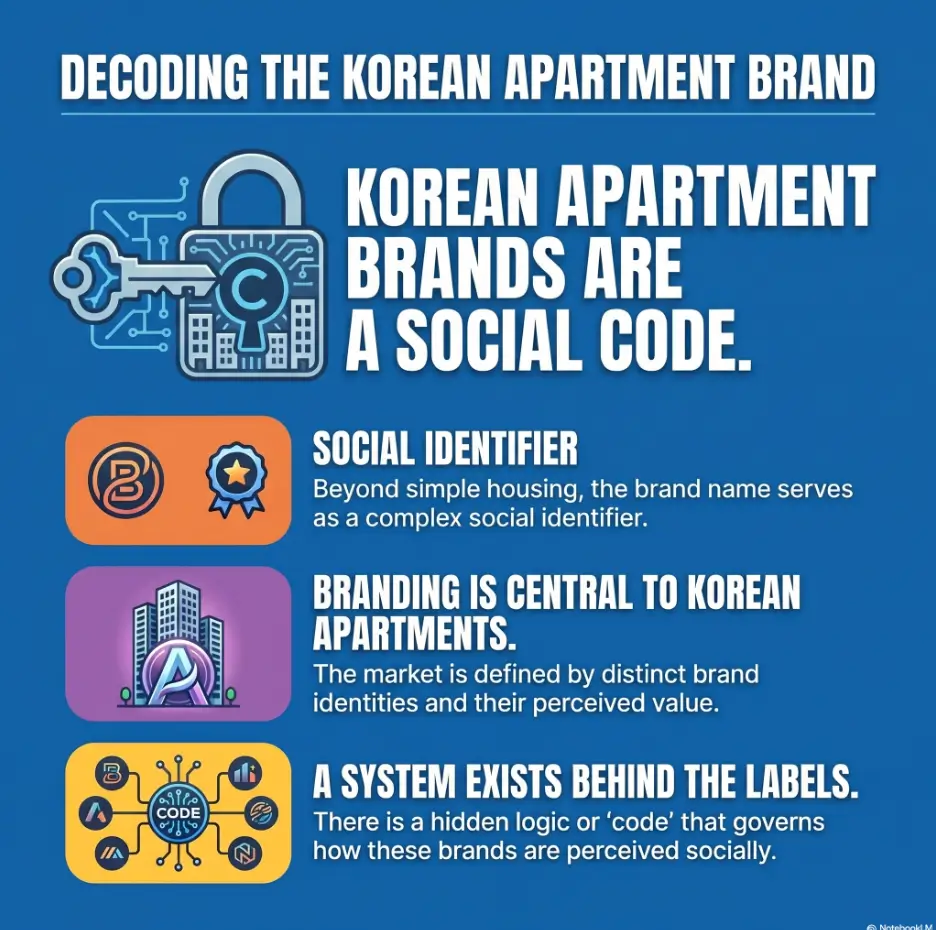
The Social Code Behind the Towers
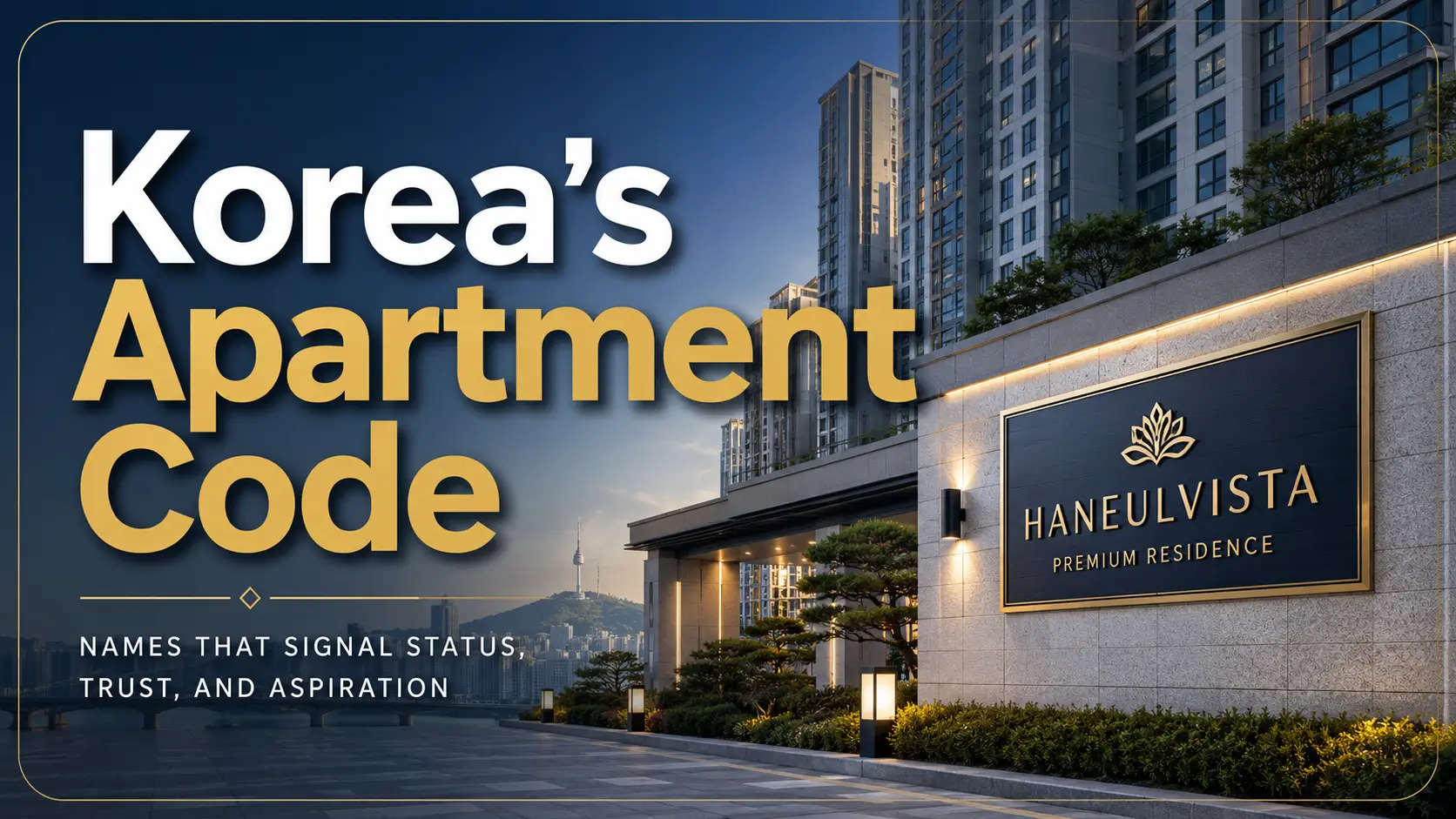
In Korea, an apartment name is rarely just a label on a gate. It can carry the weight of a school district, a construction company’s reputation, a family’s upward story, and a quiet hope that the next chapter of life will feel more secure than the last. For American and British readers, this can feel strange at first. A building name sounds like decoration. In Korea, it often behaves more like a social passport.
Names such as Raemian, Xi, Prugio, Hillstate, Lotte Castle, Acro, and The H are not only marketing ornaments. They help people sort an intense housing market at speed. They whisper about builder trust, neighborhood rank, resale confidence, subway access, school-zone gravity, and the emotional atmosphere a resident may want to project. The name becomes a small brass key, opening doors in conversation before anyone asks about square meters.
This guide translates that code without treating it as either magic or nonsense. You will learn why Korean apartment brands became so powerful, what their names suggest, where foreigners often misread them, and how to read one listing with calmer eyes. Think of it as a cultural map for a city where concrete towers sometimes speak in perfume-bottle English and family ambition.
Decode status signals
Understand why a name can imply quality, neighborhood confidence, and social identity.
Avoid easy mistakes
Learn why a glossy brand never replaces checks on age, fees, transit, and management.
Read listings better
Use a simple five-signal method before trusting the logo, lobby, or nameplate.
🏙️ The promise: by the end, a Korean apartment name will feel less like a random luxury word and more like a compact social sentence.
Snapshot
This article is for curious readers, expats, Korea-watchers, culture writers, and cautious renters who keep seeing Korean apartment names and wonder why they seem to matter so much. You will learn what the names signal, where the social meaning comes from, how not to overread them, and how to compare a real listing without being hypnotized by the brand glow.
Table of Contents
Name First, Building Second: The Korean Apartment Signal Americans Miss
For many Americans, a residential building name feels secondary. You might say you live in Brooklyn, Irvine, Austin, Manchester, or near a certain park. The street, neighborhood, school district, or commute usually does the heavy lifting.
In Korea, the apartment complex name often steps forward first. It can become the everyday shorthand for where someone lives, what kind of builder made the place, how the neighborhood reads socially, and what level of comfort the household may have reached. The name is small, but it travels fast.
That is why Korean apartment brand names can feel unusually charged. They do not simply identify buildings. They compress social meaning into a phrase that people can repeat over coffee, in a school parent chat, at a company dinner, or while comparing rents on a phone screen at 11:47 p.m., when hope and anxiety both wear slippers.
Why the Name Works Like a Social Shortcut
A Korean apartment name can work like a shortcut because the housing market is dense, competitive, and deeply tied to daily life. One name may signal a major builder, a certain price range, a known school zone, a popular subway corridor, a large complex with better facilities, or a newly rebuilt site with fresh status.
That does not mean everyone reads the signal the same way. A parent with school-age children may hear “good education environment.” A retiree may hear “elevator access, maintenance, hospital proximity.” A young professional may hear “commute, gym, parking, coffee shops nearby.” A real-estate agent may hear “liquidity and buyer demand.” Same name, different bell.
The apartment brand becomes a social filing system. Instead of explaining the entire building history, residents can say the name and let the listener fill in part of the picture. Sometimes that picture is accurate. Sometimes it is mostly fog with a marble lobby.
The Address Flex Hidden in Plain Sight
There is a reason saying “I live in Raemian” or “I live in Acro” can land differently from saying “I live on this street.” The brand name carries a ready-made emotional script. It sounds more polished, more searchable, and more socially legible.
In the US, a person may name a neighborhood because neighborhoods often carry the identity. In Korea, especially in apartment-heavy cities, a complex name can carry identity almost as strongly. It is not always boastful. Sometimes it is simply the easiest and most recognized way to explain a location.
Still, the social undertone is real. A name can quietly suggest whether a family has “arrived,” whether a child may attend a sought-after school, whether the household is in a stable area, and whether the building sits inside a desirable urban rhythm. The name becomes a sleeve label on the city’s tailored jacket.
Here’s What No One Tells You About the First Impression
A strong apartment name can make a building feel newer before anyone checks its completion year. It can make a building feel safer before anyone reads the inspection notes. It can make a complex feel elite before anyone sees the unit condition.
This is exactly why the name matters and why it can mislead. A name is a powerful entrance, not a full tour. It can open interest, but it cannot answer the practical questions that decide whether a home actually works: heating costs, noise, parking, elevator congestion, maintenance quality, sunlight, management fees, and the smell in the hallway after dinner.
Key takeaway
- Korean apartment names often carry builder, location, lifestyle, and status signals.
- The name is useful as a first clue, but weak as final proof.
- Foreign readers should treat the brand as a prompt for better questions.
Apply in 60 seconds: When you see a Korean apartment name, ask: “What is this name trying to make me assume?”
Before the Brands: How Apartments Became Korea’s Default Dream
To understand why Korean apartment names matter, start with the apartment itself. In South Korea, the high-rise apartment is not only a housing format. It is a symbol of modernization, family planning, urban convenience, and middle-class life.
Postwar Korea urbanized quickly. Cities grew, land became precious, and dense housing offered a practical solution. But over time, apartments became more than efficient boxes stacked into the sky. They became a preferred way to live, raise children, access schools, manage commuting, and participate in a shared urban rhythm.
For an American reader, it may help to imagine if suburban single-family homes, elite school districts, gated communities, and major condo towers were folded into one cultural category. Korean apartments can hold all of those meanings at once, depending on the district and brand.
From Practical Housing to Middle-Class Badge
The Korean apartment rose because it solved problems. It put many households near transit, schools, shops, clinics, and workplaces. It allowed cities to house people at scale. It brought predictable layouts, elevators, heating systems, parking, security, and management.
Then the meaning expanded. A good apartment complex became a sign of stability. Families could imagine a cleaner routine, a better commute, a stronger school environment, and a more respectable address. The dream was not only private space. It was organized life.
This is one reason the apartment name has such reach. It attaches to a household’s schedule, children’s education, family visits, social standing, and future resale hopes. A name on a gate can become part of the family story, whether anyone admits it over soup.
The Construction Company Behind the Curtain
Major builders matter in Korea because they are not seen as anonymous contractors. Companies such as Samsung C&T, Hyundai E&C, GS E&C, Daewoo E&C, DL E&C, and Lotte E&C have public reputations. Their apartment brands carry the glow, or the burden, of those names.
That corporate halo can affect trust. If buyers believe a builder has better engineering standards, stronger after-service, more polished landscaping, or more durable finishes, the apartment name becomes a kind of reassurance. It says, “This was not built by a stranger with a clipboard and a prayer.”
Of course, no big name guarantees perfection. Defects, construction disputes, and management problems can appear in any market. But in a crowded field of similar towers, a familiar builder gives buyers a mental handle. Humans like handles. Without them, every decision becomes soup with no spoon.
Brand Names Arrived When Apartments Needed Emotion
Apartment branding became especially powerful when builders needed to separate one complex from another. Once many towers offered similar layouts and similar promises, names had to do more work. They had to suggest atmosphere.
A brand name could turn a development into a lifestyle promise: greener, smarter, quieter, more refined, more international, more family-friendly, more elite. The apartment was still concrete, pipes, elevators, and fees. But the name added mood.
That mood matters because housing is never purely rational. People buy shelter, but they also buy a future self. They rent a floor plan, but they also rent a feeling: “This is where my life becomes a little more orderly.” Korean apartment brands learned to speak that feeling fluently.
Utility block: Korean apartment brand reading checklist
- Identify the brand name and parent builder.
- Check the completion year and whether the complex was remodeled or reconstructed.
- Look at the district, nearest station, and walking time.
- Compare school-zone reputation if family housing is part of the appeal.
- Review parking, management fees, elevators, heating, and noise comments.
- Ask whether the name reflects the actual complex or only the marketing mood.
The Prestige Code: What Names Like Raemian, Xi, Prugio, and Acro Suggest
Korean apartment brands are not identical. Each has its own mood, history, and public association. Some feel established and dependable. Some feel sleek and modern. Some aim directly at the luxury buyer who wants privacy, exclusivity, and a lobby that appears to have attended a Swiss finishing school.
For foreign readers, the key is not to memorize every brand like flashcards. The useful skill is to notice the kind of signal a name is trying to send. Once you can hear that signal, listings become easier to compare.
Raemian: Heritage, Trust, and Corporate Shine
Raemian is closely associated with Samsung C&T and often carries a legacy prestige signal. For many Koreans, the Samsung connection alone can make the brand feel stable, serious, and trustworthy. It has the kind of corporate shine that makes a name feel less like marketing and more like a household category.
That does not mean every Raemian complex is equal. Location, building age, unit condition, management quality, and local demand still matter enormously. But as a cultural signal, Raemian often starts with an advantage: people recognize it before they inspect it.
Think of it less as a guarantee and more as a familiar name on a resume. It gets attention. It may suggest competence. But the interview still matters.
Xi, Prugio, and Hillstate: Lifestyle as Architecture
Xi, Prugio, and Hillstate all show how Korean apartment brands sell more than square footage. Their names create a mood of planned living: polished entrances, curated landscaping, community facilities, refined materials, and a sense that the building has a story beyond “there are three bedrooms and a balcony.”
Prugio, for example, leans into a green and premium identity. Xi often sounds crisp and modern, almost tech-like to foreign ears. Hillstate suggests elevation, neighborhood stature, and calm. The specific emotional temperature differs, but the purpose is similar: make a complex feel recognizable before the buyer studies the details.
This is what branding does well. It puts a fragrance in the room before the furniture arrives. That fragrance may be pleasant, but you still need to check whether the windows close properly.
Acro, The H, and the Ultra-Premium Vocabulary
At the upper end, brands such as Acro and The H speak a different language. They often lean into exclusivity, privacy, scarcity, river views, high-end finishes, concierge-style mood, and an international tone. The name itself tries to feel less like mass housing and more like a private club with elevators.
This vocabulary matters in Seoul because luxury housing is not only about interior finishes. It is also about visibility and placement. A premium name in a trophy location can become shorthand for wealth, taste, and access. People may not know the floor plan, but they know the aura.
For a renter or buyer, the caution is simple: ultra-premium language can sharpen desire faster than it sharpens judgment. Compare the promise with real-world proof. Check floor level, view obstruction, management costs, commute fit, noise, sunlight, and whether the daily routine matches the theatrical entrance.
Utility table: What the brand signal may suggest
| Signal | What readers may assume | What to verify |
|---|---|---|
| Major builder | Better quality, stronger service, easier resale | Defect history, management reviews, actual maintenance |
| Luxury name | Prestige, privacy, refined amenities | Fees, location, unit condition, noise, view quality |
| Large complex | Better facilities, easier recognition, stronger community | Elevator wait, parking, crowding, governance |
| School-zone association | Family demand and stable neighborhood appeal | Actual school assignment, walking routes, local changes |
Don’t Translate Too Literally: Why the English Names Can Sound Strange
One of the funniest, and most revealing, parts of Korean apartment branding is the use of English, French, Italian, Latin-like fragments, and invented global-sounding words. To native English speakers, some names can sound slightly theatrical. A little luxury perfume. A little airport lounge. A little “the marketing team discovered Europe on a Tuesday.”
But literal grammar is not always the point. The name is often trying to create atmosphere. It wants to sound premium, international, elegant, fresh, serene, or exclusive. It is less concerned with whether the phrase would pass a copyediting desk in London.
“La Classy” Is Not Trying to Be Your English Teacher
Foreign-language apartment names often work through texture rather than strict meaning. A name may borrow from French because French suggests elegance. It may borrow from English because English suggests modernity or global reach. It may use an invented word because invented words can be owned, styled, and trademarked more easily.
For Korean audiences, the feeling may matter more than the dictionary. A name can sound refined even if it feels awkward to an American ear. This is not unique to Korea. Brands everywhere use language as perfume. The difference is that Korean apartment branding makes that perfume extremely visible on the skyline.
So when a name sounds odd, resist the easy laugh. The better question is: what status mood is this name trying to produce?
The Upscale Sound Comes Before the Grammar
Apartment names are built for social effect. A phrase that feels strange in a sentence may still work on a stone gate, a brochure cover, or a glowing sign beside landscaped pines. The audience is not reading it like a school essay. They are reading it as a lifestyle symbol.
This is why many names prefer atmosphere over clarity. They aim for smooth vowels, global polish, and memorable brevity. They are designed to be said, searched, photographed, and recognized.
A practical reader should treat these names as emotional packaging. Packaging can be meaningful. It can also distract from the contents. Open the box.
Let’s Be Honest About the Luxury Scrabble Effect
Some names will sound like luxury perfume, airport lounge, and Scrabble tiles held a board meeting. That reaction is fair. It can also be useful because it reminds us that status language often works by suggestion, not precision.
In Korea, the emotional code can matter more than the literal English. A name may say, “This is refined,” even if the words themselves wobble in translation. Once you understand that, the names stop looking random and start looking strategic.
Key takeaway
- Many Korean apartment names use foreign-language sounds to create a premium mood.
- Literal translation often misses the cultural function of the name.
- The right question is not “Is the English perfect?” but “What feeling is being sold?”
Apply in 60 seconds: Separate grammar from status mood when reading a Korean apartment name.
Resale Value Whisperer: How a Brand Name Can Shape Buyer Confidence
Housing decisions are emotional, but they are also financial. This is where apartment brand names become especially powerful. A trusted brand can make buyers feel more confident that others will want the same complex later.
That confidence may affect how people compare similar units. Two apartments can have comparable size, age, and location, but the stronger brand may feel safer. In a market where resale value matters deeply, “safer” is a very expensive feeling.
This article is not investment advice. Real-estate prices depend on many factors, and housing decisions require local expertise. But as a cultural pattern, the brand name can influence buyer psychology. It can nudge attention, trust, and willingness to consider a premium.
The Builder Reputation Premium
Builder reputation can matter because buyers worry about what they cannot easily see. Pipes, structural details, waterproofing, insulation, elevator systems, underground parking, finishing quality, and defect response are not obvious during a quick viewing.
A strong apartment brand reduces uncertainty. It tells buyers, fairly or not, that the builder has a reputation to protect. It can also imply better landscaping, cleaner common spaces, more desirable community facilities, and more organized management.
The premium is partly practical and partly psychological. Practical because good management and design really can improve daily life. Psychological because the name helps buyers feel they are choosing something other people will recognize.
When the Name Feels Safer Than the Brochure
Brochures can promise anything. A brand with a public track record feels harder to fake. That is why households may lean on brand recognition when comparing similar complexes in similar neighborhoods.
This shortcut can be helpful. Busy families cannot inspect every detail from scratch. A known brand gives them a starting point. But shortcuts have a shadow side. They can make people ignore warning signs because the logo has already done the emotional work.
A cautious buyer or renter should use brand recognition as the beginning of due diligence, not the end. The name gets the listing onto your shortlist. The facts decide whether it stays there.
The Price Is Not Just the Walls
Apartment prices are not only about walls, fixtures, and floor area. They also reflect expectations: who else wants the complex, how easy it may be to sell, whether the local school zone is desirable, whether transit is convenient, and whether the name carries public confidence.
This is why a less glamorous building in a stronger location may outperform a famous brand in a weaker one. The name matters, but it is one note in a larger chord. Location, schools, transit, age, fees, sunlight, view, floor level, and market timing all play their own instruments.
Utility block: Brand trust vs. reality check
- Write down what the brand makes you assume: luxury, safety, resale, family demand, or convenience.
- Find one piece of evidence for each assumption, such as completion year, amenities, reviews, or location.
- Find one possible contradiction, such as high fees, old elevators, poor sunlight, or long walk to transit.
- Decide whether the brand still deserves your attention after the practical checks.
School Zones, Subway Lines, and Status: The Name Is Only the Front Door
A Korean apartment brand can get attention, but location often closes the deal. Prestige usually comes as a stack, not a single ingredient. District, school zone, subway access, complex size, age, river view, builder, and amenities all combine to create the final impression.
This is especially important for foreign readers who may see a famous brand and assume the decision is simple. It is not. A known brand in a less convenient area may not outrank a quieter complex in a stronger school district or transit corridor.
The Brand Gets Attention, but Location Closes the Deal
In Korea, a few blocks can change the feel of a listing. Walking distance to a subway station, school assignment boundaries, slope, nearby roads, parks, hospitals, markets, and future redevelopment plans can all matter.
A polished apartment name cannot shorten a commute. It cannot move a school gate closer. It cannot make a noisy road disappear at midnight. The sign may be elegant, but daily life happens between the sign and the station.
For expats, this is where resources such as Korea bus arrival apps and a Korean apartment move-in checklist become useful. The brand tells one story. The commute and move-in details tell the rest.
Why Families Read Apartment Names Like Résumés
Families may connect certain apartment names with stable communities, safer routines, better infrastructure, and stronger educational environments. This does not mean the name creates the school quality by itself. It means the name often travels with neighborhoods where families already want to live.
In Korea’s education-conscious culture, school-zone reputation can shape housing demand. Parents may read an apartment name as part of a larger educational map: nearby hagwons, school commute, peer group, libraries, parks, and daily schedule.
For a US reader, this may resemble how some families read ZIP codes, school districts, and subdivision names. The Korean version is often more compressed because apartment complex names are so visible and searchable.
The Quiet Power of Complex Scale
Large complexes often feel desirable because they can support more facilities and services. They may have better-known names, stronger resident networks, more retail nearby, improved landscaping, and greater recognition among local agents.
Scale can also bring trade-offs. Bigger complexes may mean crowded elevators, busier parking, more noise near playgrounds, or slower decision-making in resident governance. The social prestige of scale does not erase the practical experience of living there.
Use scale as a clue. Ask whether it creates convenience or simply creates a more impressive entrance photo.
Korean Apartment Name Decoder
1. Brand
What mood does the name sell?
2. Builder
Who built it, and what is their reputation?
3. Location
Does the address support the promise?
4. Life Fit
Will daily routines work there?
5. Proof
What facts confirm or weaken the signal?
Common Mistakes Americans Make When Reading Korean Apartment Names
Foreign readers often make two opposite mistakes. Some dismiss apartment names as silly marketing. Others overtrust them as proof of luxury. Both reactions miss the middle path.
The smarter approach is to respect the cultural signal without surrendering your common sense. A name can tell you what the market admires. It cannot tell you whether your bedroom faces a wall, whether the boiler is moody, or whether the parking garage feels like a midnight maze.
Mistake 1: Assuming the Fancy Name Means Luxury
A grand name can be attached to a perfectly ordinary building. Some names sound premium because that is their job. The actual complex may be older, smaller, less convenient, or less polished than the name suggests.
Always separate name, brand tier, building age, location, and unit condition. A famous logo cannot repair poor maintenance. A charming name cannot widen a cramped parking space. A French-sounding syllable cannot fix morning elevator congestion.
Mistake 2: Ignoring the Builder Behind the Name
The parent construction company often matters more than the name’s surface. Some brands are tied to major companies with long histories. Others may be smaller, newer, or less familiar. A foreigner who only reads the English-looking name may miss the builder reputation underneath.
Look up the builder. Ask local agents how the brand is perceived in that district. Search for news, defect disputes, resident reviews, and completion history. A name is the front label. The builder is the kitchen where the product was made.
Mistake 3: Treating “Villa” and “Apartment” Like US Terms
Korean housing categories do not map neatly onto American or British usage. A Korean “villa” is usually not a Mediterranean estate with cypress trees and a wealthy uncle in linen. It often means a low-rise multi-unit building.
An “apartment” in Korea usually refers to a larger high-rise complex, often with standardized management and facilities. An officetel may mix residential and office-style uses. These categories affect expectations for maintenance, parking, trash disposal, heating, security, and deposits.
For readers comparing rentals, it helps to review apartments for rent in Seoul and Jeonse deposit protection basics before assuming familiar housing words mean familiar systems.
Mistake 4: Forgetting That Prestige Is Hyperlocal
A famous brand in a weaker location may not outrank a less glamorous complex in a stronger school zone, transit area, or redevelopment corridor. Korean real-estate prestige can be intensely local. A ten-minute walk can change the conversation.
This is why local context matters. Ask what the name means in that specific district, not only what it means nationally. Brand power has geography. It shines brightest when the location supports it.
Key takeaway
- Do not assume a fancy name means a luxury experience.
- Check Korean housing categories before applying US or UK meanings.
- Prestige depends heavily on local context, not just the brand logo.
Apply in 60 seconds: For any listing, write down one reason the name impresses you and one reason it might be misleading.
Who This Is For, and Who Should Slow Down
This guide is meant to explain culture, language, and housing perception. It is not a recommendation to buy, sell, rent, or invest in any specific property. Korean real estate is complex, and the stakes can be high.
If you are simply curious, you can enjoy the cultural code. If you are making a real housing decision, treat this article as a map legend, not the map itself. You still need local research, contract review, and practical inspection.
For Curious Readers Trying to Decode Korean Urban Life
This article is for readers who want to understand why apartments occupy such a large place in Korean urban imagination. If you watch Korean dramas, follow Seoul real estate news, study Korean culture, or simply wonder why high-rise names sound so important, you are in the right room.
The goal is not to mock the names or worship them. It is to understand what they do. They help people sort social information quickly in a dense and competitive society.
For Expats Comparing Rentals or Neighborhoods
Expats often meet apartment brands first through listings. You may see a sleek name, a deposit number large enough to make your tea go cold, and a photo of a lobby that looks calmer than your entire week. It is tempting to assume the brand explains everything.
Instead, use the brand as one line in your comparison sheet. Add commute, deposit type, management fees, heating, parking, noise, contract terms, building age, elevator count, floor level, sunlight, trash rules, and neighborhood fit.
Not For Anyone Seeking Investment Advice
This article does not tell you which apartment brand will rise in price. It does not evaluate individual complexes. It does not replace legal, tax, lending, or real-estate advice from qualified local professionals.
Brand perception can influence housing judgment, but the actual decision depends on many moving pieces. Use curiosity, then use caution. The two make a very good pair when money is involved.
Safety / disclaimer block
This article explains cultural and branding dynamics around Korean apartment names. It is not legal, financial, tax, immigration, or investment advice. If you are signing a lease, wiring a large deposit, buying property, or comparing a Jeonse arrangement, speak with qualified local professionals and review the contract carefully before acting.
The Luxury Theater: Why Apartment Names Sell a Future Self
Apartment branding works because a home is never only a container for furniture. It is a stage for identity. People imagine birthdays in the living room, parents visiting with approving eyes, children leaving for school, quiet evenings after work, and the subtle dignity of a good address.
Korean apartment brands understand this deeply. The name, lobby, landscaping, signage, community rooms, and entrance gates all help create a future self. Not always a false self, but a polished one. A version of life with better lighting.
A Home Name Can Become a Personal Brand
When someone says where they live, the apartment name can become part of how they are perceived. It may imply stability, taste, family success, professional achievement, or belonging to a desirable district.
This can feel uncomfortable to readers from cultures where discussing housing status is more subtle. But Korea’s apartment complexes are highly visible. Their names appear on gates, maps, delivery apps, school routes, and real-estate listings. The brand is public in a way that many private homes are not.
The Lobby, the Logo, the Life Script
Luxury branding is sensory. It is stone walls, warm lighting, water features, polished signage, manicured trees, quiet elevators, neat mailrooms, and entrance roads that feel separate from street noise. These features tell the body, not only the mind, that life is orderly here.
That sensory script matters. A busy parent walking through a calm lobby may feel that the family has crossed into a safer rhythm. A young professional may feel that hard work has become visible. A retiree may feel comfort in managed spaces and predictable routines.
Pattern Interrupt: The Apartment Is Also a Costume
A branded complex can work like a social outfit. Not fake, exactly. More like carefully tailored recognition. It helps the resident appear in a certain way before the conversation begins.
This does not make residents shallow. Housing is expensive, emotional, and deeply tied to family hopes. People naturally want their home to say something good about the life they are building. The trick is not to confuse the costume with the person, or the entrance sign with the lived experience inside.
Short Story: The Name on the Taxi App
Minji had moved into a new apartment complex on a rainy Friday. The boxes were still stacked like small cardboard towers, and her kitchen smelled faintly of tape, dust, and instant coffee.
That evening, she typed the apartment name into a taxi app for the first time. The driver nodded when he saw it. “Good place,” he said, as if the name had already explained half her life.
Minji laughed, but she remembered the moment. The apartment was not perfect. The parking was tight, and the upstairs child owned what sounded like iron tap shoes. Still, the name changed how strangers placed her.
Later, when a friend asked about moving, Minji said, “The name helps, but visit at night. Listen to the building. The walls tell the truth after the logo goes quiet.”
Key takeaway
- Apartment brands sell identity as well as housing features.
- The sensory experience of a complex can strengthen the name’s effect.
- Daily living conditions still matter more than social polish.
Apply in 60 seconds: Imagine living there on an ordinary Tuesday, not only arriving there as a guest.
When Renaming Becomes Strategy: Why Old Complexes Want New Names
In Korea, apartment names can change when complexes are reconstructed, redeveloped, remodeled, or repositioned. A new name can refresh a building’s image and help detach it from older associations.
This is not just cosmetic. In a market where names carry value, a name reset can alter how people talk about a place. It can make an old site feel newly competitive. It can also make buyers forget to ask what changed besides the sign.
Reconstruction, Remodeling, and the Name Reset
Older apartment complexes may seek major brand upgrades during redevelopment. A familiar builder name can make the future complex feel safer and more desirable. It can also help attract attention in a crowded market.
The name reset tells a new story: old land, new life. Residents may hope the upgraded brand improves social recognition, future demand, and neighborhood image. In some cases, the new name becomes part of the redevelopment dream itself.
The New Name Can Rewrite the Building’s Past
A polished name can soften memory. A complex once known for age, inconvenience, or modest status may gain a new public identity after reconstruction. The land remains, but the story changes.
This is powerful because housing markets run on stories as well as data. A neighborhood’s reputation, a builder’s name, and a new brand identity can combine into a fresh narrative that buyers understand quickly.
Don’t Do This: Judge by the Sign Alone
A new name can be useful, but it can also be a curtain. Before trusting a renamed or rebuilt complex, check the basics: defects, governance, fees, construction quality, transportation, school assignments, noise, drainage, parking, and long-term maintenance plans.
The better the name sounds, the more calmly you should inspect the reality. Luxury language can make the brain put on soft socks. Take them off before signing anything important.
Utility table: Renamed or rebuilt complex questions
| Question | Why it matters |
|---|---|
| Was this a full reconstruction, remodel, or simple rebranding? | The depth of change affects quality, age, and expectations. |
| Who is the builder and what is their local reputation? | Brand reputation can differ by project and district. |
| Are there known defect or resident dispute issues? | A beautiful name cannot hide recurring practical problems forever. |
| Do fees match the amenities you will actually use? | Premium facilities can become expensive decorations. |
The Cultural Translation: What US Readers Should Understand
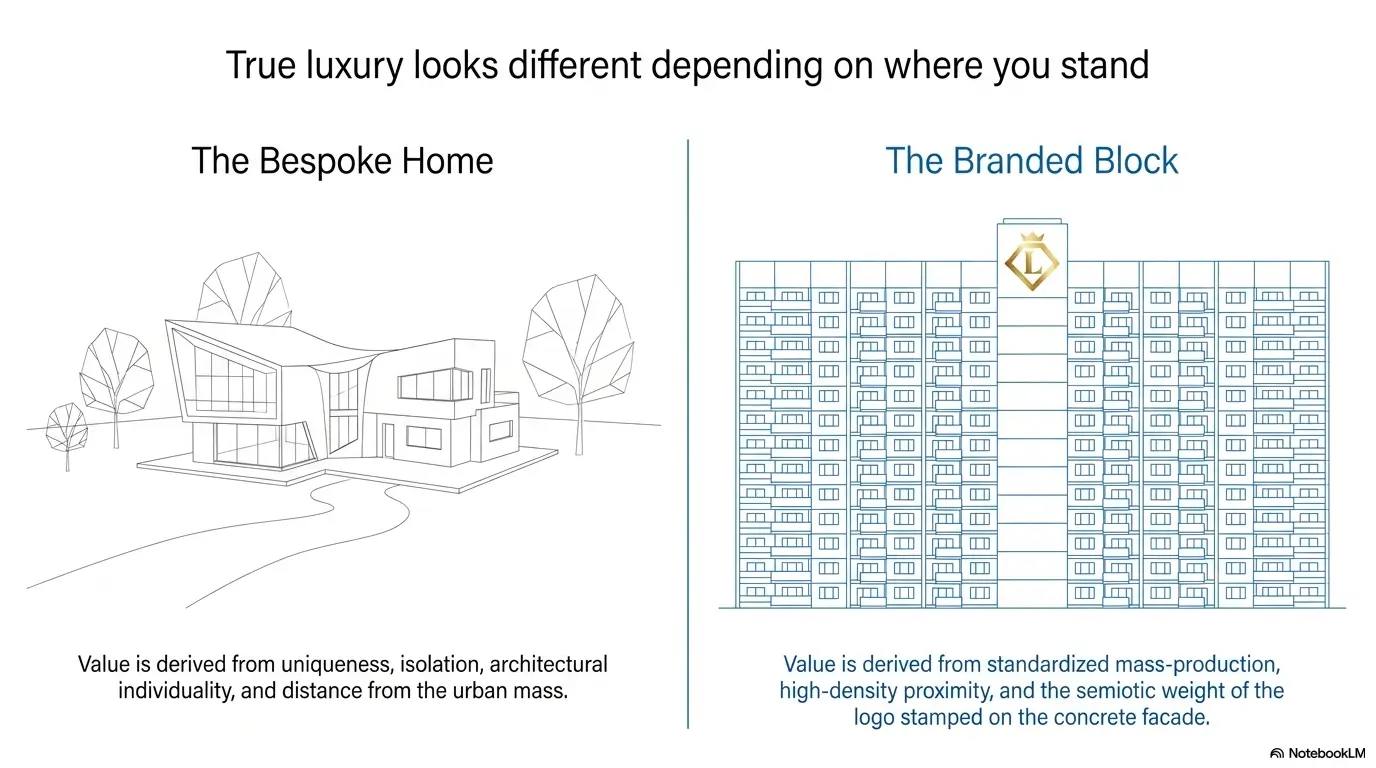
The closest American comparison is not perfect, but useful. Korean apartment brands can function a little like university names, luxury car badges, school districts, and condo tower names blended together. They signal quality, network, aspiration, and social placement.
That does not mean every Korean person is obsessed with status or that every apartment name carries the same weight. Culture is never that flat. But in the housing conversation, apartment names are unusually efficient social tools.
Korea’s Apartment Brands Are Closer to College Names Than Condo Names
A US condo name may be descriptive or decorative. A Korean apartment brand can be closer to saying you went to a recognizable university or drive a known car brand. It may not reveal everything, but it gives people a quick frame.
That frame can be helpful, unfair, aspirational, practical, or all of the above. It can reduce complexity, but it can also create lazy assumptions. The brand tells people where to begin their judgment. It should not tell them where to end it.
The Brand Is Public in a Way US Housing Often Is Not
High-rise complex names are visible from roads, maps, delivery systems, real-estate platforms, and neighborhood conversations. They are not hidden behind private driveways. They are part of the urban text.
This visibility makes the brand socially active. People can recognize it, talk about it, compare it, and attach assumptions to it. The apartment name becomes a public sentence written across the city.
The Deeper Story Is Compression
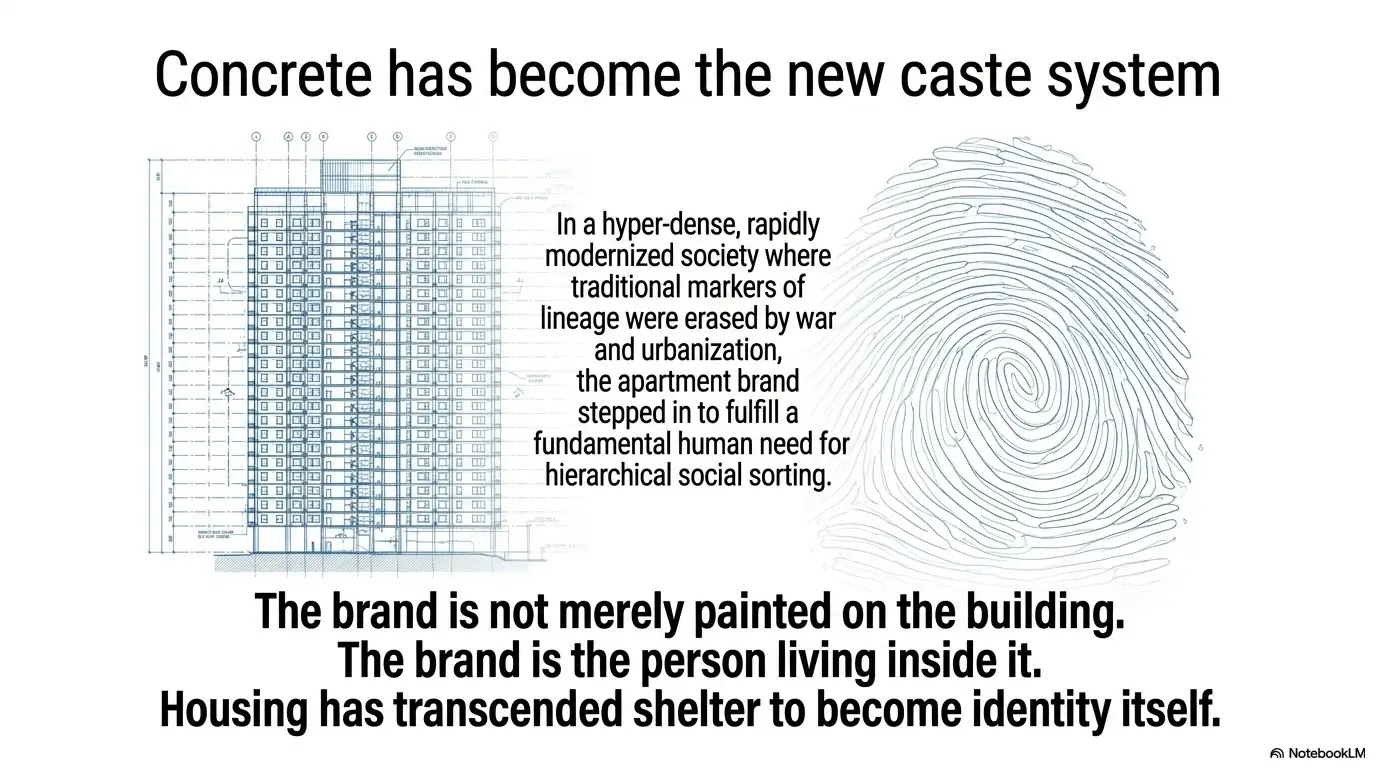
Korea is dense, fast-moving, and intensely attentive to education, career, family reputation, and housing security. In that environment, the apartment name compresses a large amount of social information into a small label.
That compression is the deeper story. A name carries location, builder, class cues, school-zone hints, design promises, and future expectations. It is a tiny suitcase with too many folded shirts inside.
Show me the nerdy details
Apartment brand value works through several overlapping mechanisms. First, it reduces search friction. Buyers and renters use the name to sort many listings quickly. Second, it transfers trust from the builder to the building. Third, it creates social legibility, allowing people to recognize the complex without knowing the exact address. Fourth, it supports price narratives because buyers may believe future demand will also recognize the brand.
The tricky part is that these mechanisms can be both rational and emotional. A trusted builder may truly deliver better facilities or service. A known complex may truly be easier to compare. But the same signals can also inflate assumptions. That is why the best reading method combines cultural awareness with practical verification.
FAQ
Why do Korean apartments have brand names?
Korean apartments have brand names because builders need to differentiate large high-rise complexes that may otherwise look similar. The name can signal builder reputation, lifestyle, quality expectations, neighborhood status, and resale confidence. It turns a physical complex into a recognizable identity.
Are Korean apartment brands linked to big companies?
Many major Korean apartment brands are tied to large construction companies or conglomerate-related builders. That connection matters because people often associate the brand with engineering quality, after-service, design standards, and corporate trust. Still, each individual complex should be checked on its own merits.
Does a famous apartment brand always mean better quality?
No. A famous brand can suggest stronger reputation, but it does not guarantee a better living experience. Building age, maintenance, defects, management quality, fees, sunlight, noise, and location can matter more than the logo on the gate.
Why do so many Korean apartment names use English or foreign-sounding words?
Foreign-language words often create a premium, global, or refined mood. The names may not sound natural to native English speakers, but they are usually designed for atmosphere rather than grammar. The goal is emotional positioning, not textbook English.
Do apartment names affect property prices in Korea?
Apartment names can influence buyer confidence and perceived value, but they are only one factor. Price also depends on location, schools, transit, size, age, market timing, view, floor level, maintenance, and broader economic conditions. Treat brand perception as one clue, not a price formula.
What should foreigners look at besides the brand name?
Foreign renters and buyers should check commute, deposit structure, contract terms, management fees, building age, heating type, parking, elevator access, noise, sunlight, trash rules, management quality, and neighborhood fit. The brand name can guide questions, but the daily routine decides whether the home works.
Is a Korean “villa” the same as a Western villa?
No. In Korea, “villa” usually refers to a low-rise multi-unit residential building, not a luxury countryside home. This difference matters for parking, management, security, trash disposal, heating, and deposit expectations.
How can I read a Korean apartment listing more carefully?
Start with five signals: brand, builder, district, nearest station, and building age. Then compare the name’s promise with evidence from photos, maps, management fees, reviews, commute time, and local context. A strong listing should survive both emotional interest and practical checks.
Key takeaway
- Apartment brands are useful cultural signals, not final evidence.
- Foreign readers should translate the name into questions, not assumptions.
- The best housing judgment combines social meaning with practical checks.
Apply in 60 seconds: Read one listing and separate “brand promise” from “verified facts.”
Next Step: Read One Korean Listing Like a Local
The fastest way to understand Korean apartment brand names is to practice on one real listing. Do not begin with price panic. Begin with translation. What is the name trying to say, and what does the listing prove?
Give yourself fifteen minutes. Choose one Korean apartment listing, whether you are browsing for curiosity, research, relocation, or a future move. Then read it through five signals: brand, builder, district, nearest station, and building age.
The 5-Minute Name Decode
First, write the apartment name at the top of a note. Under it, list the parent builder if you can identify it. Then add the district, nearest subway station, walking time, completion year, and whether the complex is large or small.
Now ask one simple question: does the name’s mood match the facts? If the name feels premium but the station is far, the building is old, and the fees are high, you have found a gap. If the brand, location, age, and daily convenience all support each other, you have found a stronger signal.
Compare the Name Against the Reality
Look beyond the listing photos. Photos are often taken when the sun is behaving politely. Check map distance, road noise, nearby schools, bus routes, local shops, slope, parking, and building reviews if available.
If you are moving to Korea, also study everyday culture around housing and administration. Articles on Korean admin culture, recycling in Korea for foreigners, and Korea resident registration can help you understand the systems around the apartment, not only the apartment itself.
One Practical Action
Create a three-column note: “Brand promise,” “Real-world proof,” and “Questions to ask before trusting it.” This small exercise turns a shiny name into a useful decision tool.
That is the calmest way to read Korean apartment names. Do not laugh them off. Do not kneel before them. Let them speak, then ask for evidence.
15-minute action template
- Pick one listing with a recognizable apartment name.
- Identify the brand, builder, district, station, and building age.
- Write the brand promise in one sentence.
- Find three facts that support or weaken that promise.
- Write two questions you would ask an agent, landlord, or local resident.
Last reviewed: 2026-05