
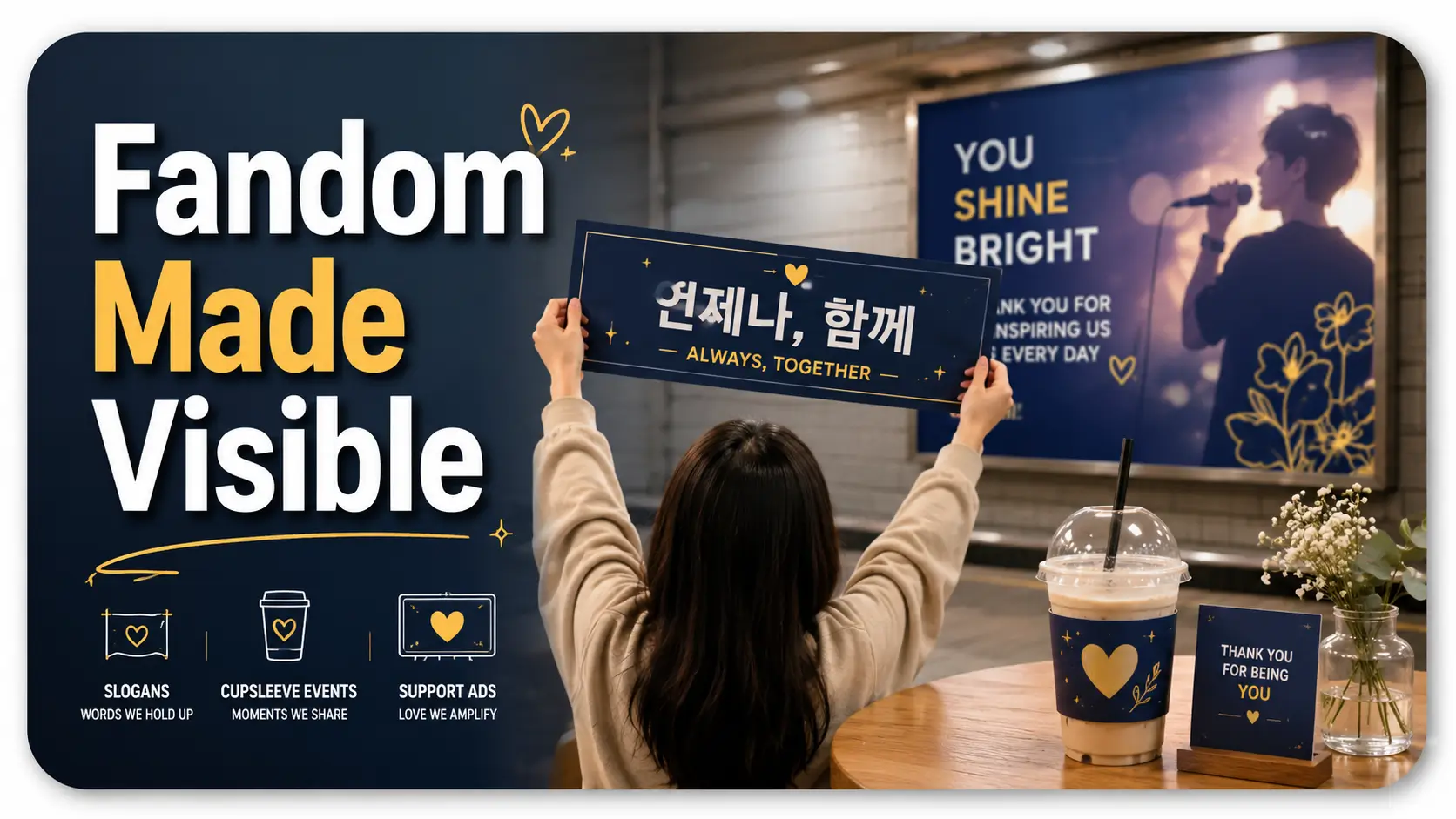
Korean fandom culture, decoded
Why Fan Slogans, Cupsleeves, and Support Ads Matter
in Korean Fandom Culture
At first glance, a printed concert slogan, a paper cupsleeve, or a birthday ad in a subway station can look like charming fan decoration. A small banner. A café sleeve. A screen on the way to work. But in Korean fandom culture, these objects often carry heavier cargo: gratitude, memory, coordination, and the almost architectural need to say, “We were here together.”
For US and UK readers, the scale can feel surprising. Why would fans fund public ads? Why would a café become a temporary shrine to a singer’s birthday? Why would thousands of people raise the same message at the same moment in a concert hall? The answer is not simply “because K-pop fans are intense.” That reading is too thin. It misses the careful labor behind the velvet curtain.
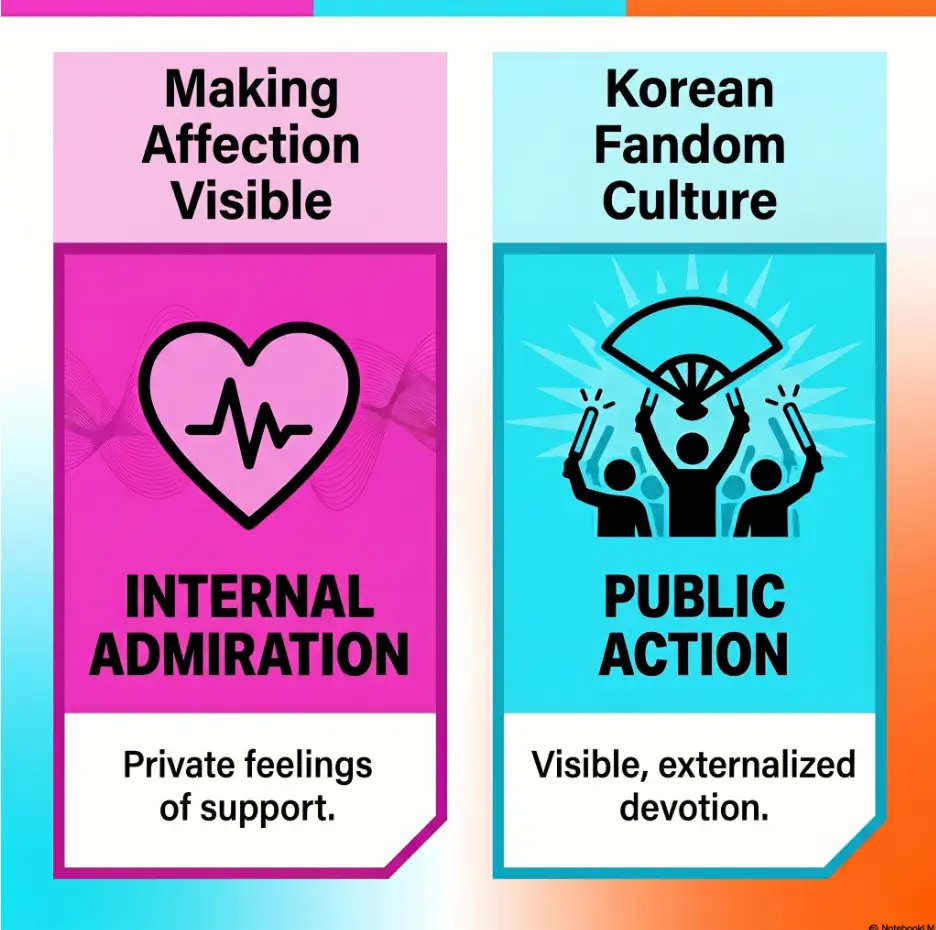
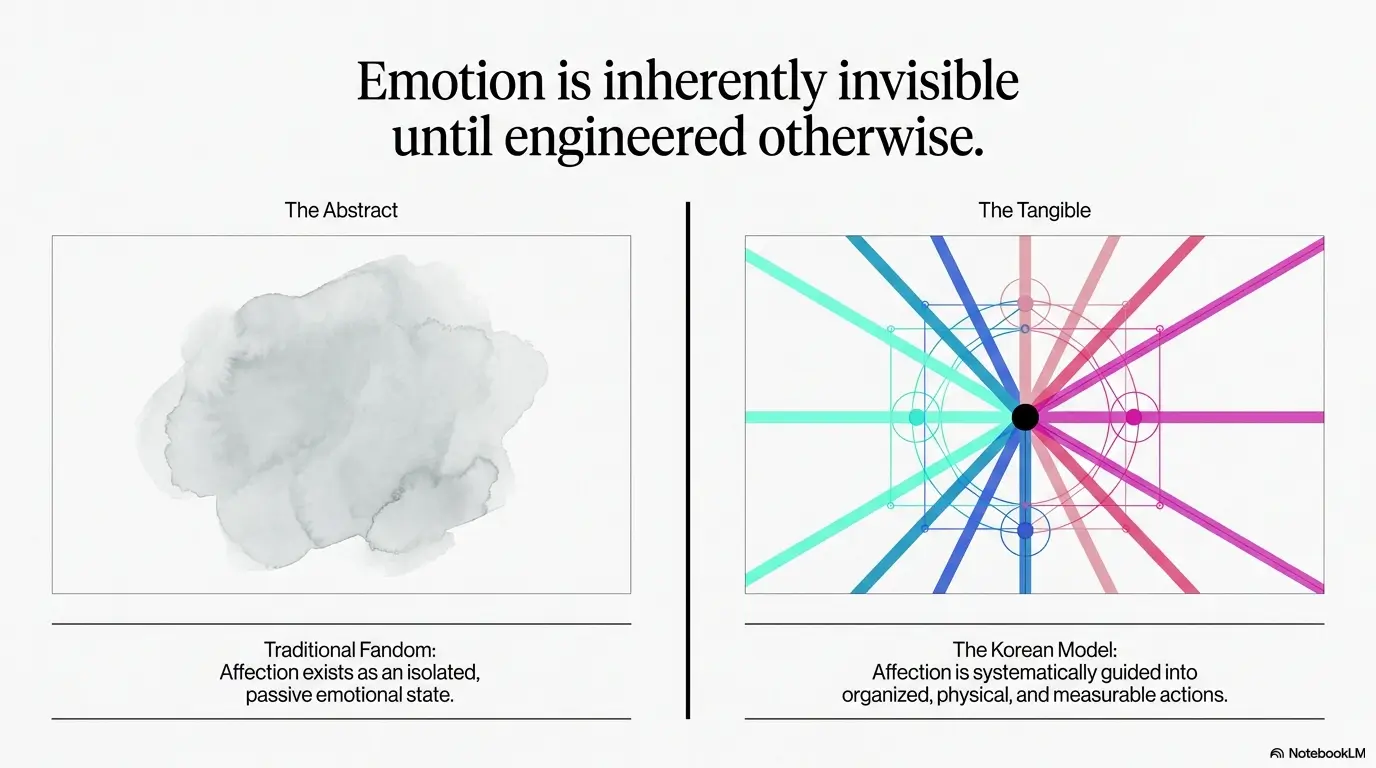
This guide treats fan slogans, cupsleeve events, and support ads as cultural tools. They make emotion visible. They give scattered fans a shared address. They turn affection into something organized enough to be photographed, remembered, and gently passed from one fan to another.
Understand the ritual
See why small fan objects can carry big emotional meaning.
Read the social code
Learn the etiquette, planning, and trust behind fan projects.
Avoid lazy stereotypes
Move beyond “obsessed fans” and notice cultural participation.
✨ The quiet idea: Korean fandom support culture is not just about buying visibility. It is about making affection visible without letting it evaporate.
Snapshot
This article is for K-pop fans, culture writers, travelers, students, and curious newcomers who want to understand why fan slogans, cupsleeve events, and subway support ads feel so public and organized in Korean fandom culture. By the end, you will be able to read these projects as social rituals rather than random fan spending.
Table of Contents
Start Here: These Are Not Just Cute Fan Extras
Fan slogans, cupsleeves, and support ads can look decorative when you meet them out of context. A banner is paper. A cup sleeve is packaging. A subway ad is paid media. The physical object is simple enough to hold in one hand, or pass on your commute, or photograph in a few seconds.
But the object is only the surface. Under it sits the real machinery: planning chats, translated notices, shared spreadsheets, café negotiations, design revisions, fundraising deadlines, queue rules, delivery timing, and hundreds of tiny acts of care that rarely get applause.
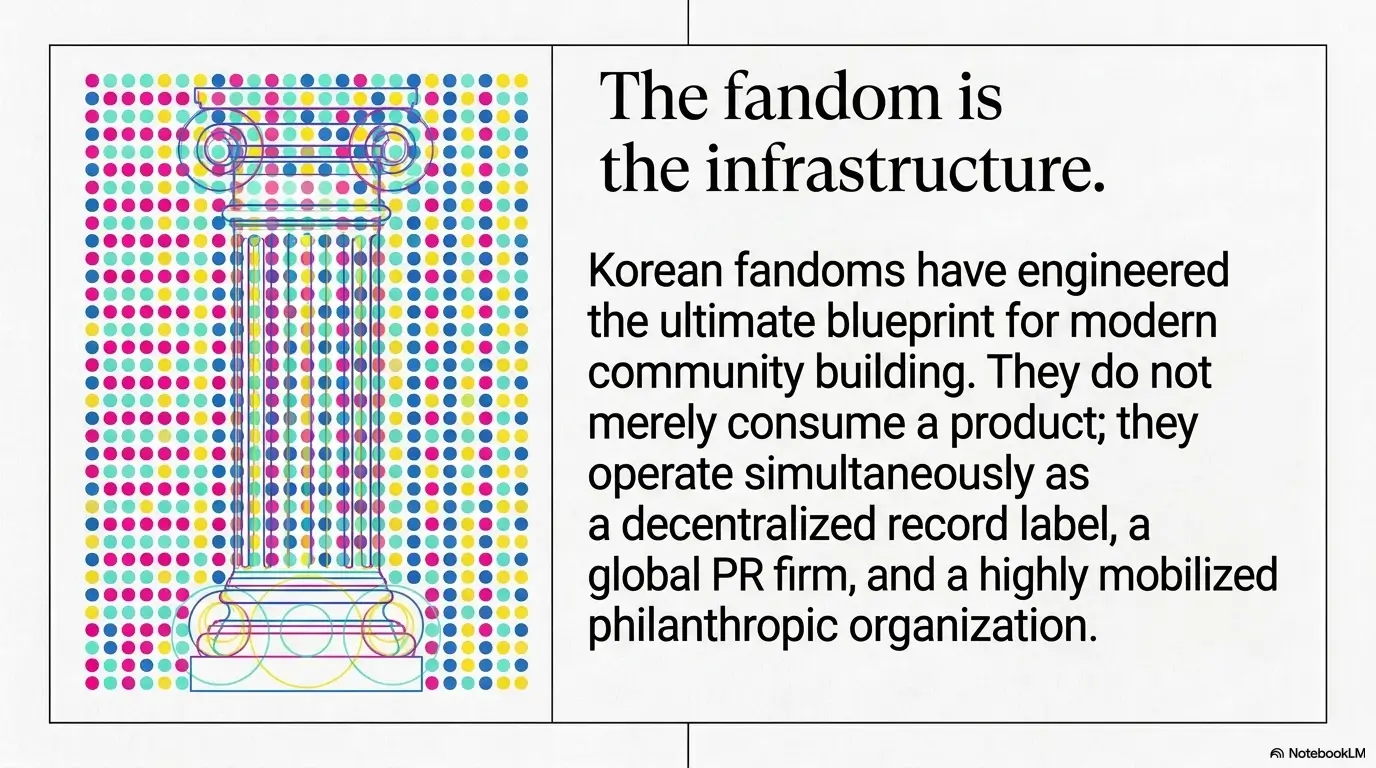
In Korean fandom culture, support projects often work as emotional infrastructure. They help fans gather, remember, thank, and recognize one another. That sounds lofty until you stand in a café full of people who have never met before but all know the same birthday, lyric, inside joke, or concert moment. Then the theory grows legs and orders an iced Americano.
The hidden job behind every slogan, sleeve, and ad
The hidden job is simple: fan support gives emotion a form. Admiration is private until it becomes a message, a meeting point, a visual field, or a shared ritual. A fan may listen alone on a subway ride, stream a comeback at midnight, or save a photocard in a desk drawer. Support culture turns that private feeling outward.
That outward turn matters because fandom is partly about recognition. Fans want the artist to feel supported, yes, but they also want other fans to know they are not alone. A slogan says, “We came prepared.” A cupsleeve says, “There is a place for us today.” A support ad says, “This milestone deserves to occupy public space, even briefly.”
This is why the objects often feel more meaningful than their cost. A slogan may be inexpensive paper, but if thousands of fans lift it at the right moment, it becomes a temporary ceiling of feeling. The object disappears into the coordination.
Why US readers often misread the scale
US and UK readers may read large fan support projects through familiar categories: advertising, influencer culture, merch collecting, or celebrity obsession. Those categories are not useless, but they are incomplete. Korean fandom support culture often sits at the intersection of public ritual, urban media, fan labor, and group etiquette.
In the US, a fan might celebrate a musician’s birthday online, buy merch, attend a concert, or post a tribute. In Korea, fans may also do those things, but the dense urban environment and highly organized fanbase culture make offline gestures especially visible. A subway station can become a birthday route. A café can become a temporary community room. A concert slogan can become a choreography of gratitude.
The surprise comes from scale, not from emotion. Fans everywhere want to remember. Korean fandom culture simply developed public and organized ways to do it.
Key takeaway
- Fan support objects are not only decorative.
- Their meaning comes from shared timing, labor, and recognition.
- The best lens is not “Why spend money?” but “What social work does this object perform?”
Apply in 60 seconds: When you see a fan project, ask what emotion it is trying to organize.
The three-part fandom signal
A useful way to read Korean fandom support culture is through three signals: presence, coordination, and memory.
- Presence: Fans show that they are physically or publicly there, not just quietly consuming content.
- Coordination: Fans prove they can gather resources, follow timing, and act as a group.
- Memory: Fans create artifacts that can be photographed, archived, revisited, and retold.
These three signals explain why support projects can feel emotionally large even when the object itself is small. The point is not the cup sleeve. The point is that the cup sleeve says, “Someone made a place for this feeling.”
| Fan support item | What outsiders may see | What fans often experience |
|---|---|---|
| Concert slogan | A printed sign | A synchronized message between crowd and artist |
| Cupsleeve event | A themed café drink | A small local gathering point for fans |
| Support ad | Paid public media | A visible tribute and proof of organized affection |
| Freebies | Fan-made trinkets | Tokens of recognition and generosity |
Fan Slogans Turn Concert Crowds Into One Voice
A concert crowd is already powerful. It has noise, movement, light, and heat. But a fan slogan adds a different layer. It turns thousands of separate bodies into one readable message. In that moment, the crowd stops being only an audience and becomes a page.
In Korean concert culture, slogans are often printed banners with short messages of support, gratitude, or commemoration. They may be distributed by fan organizers before the show or placed on seats. Sometimes fans are instructed to hold them during a specific song, encore, anniversary moment, or closing speech.
The power comes from timing. One person holding a banner is sweet. Ten thousand people holding the same banner at the same moment can feel like a room learning how to breathe together.
Why slogans feel different in Korean concert culture
In many Western concert settings, fan signs are individual. Someone writes a clever message, hopes the artist sees it, and maybe gets a laugh. Korean fan slogans can be individual too, but the iconic version is collective. The message matters because it belongs to the room.
That collective design changes the emotional geometry of a concert. Instead of one fan trying to be noticed, the fandom creates a single visual gesture. It is not “look at me.” It is “look at us, looking at you with gratitude.” The difference is subtle but important.
This is why slogans can become treasured concert memories. Fans remember the exact song, the lights, the artist’s face, the trembling awkwardness of trying to hold a banner, phone, lightstick, and dignity at the same time. One of those items usually falls. Dignity often goes first.
The secret timing that makes slogans emotional
A slogan project depends on careful timing. Organizers may announce that fans should hide the slogans until a certain song begins. They may include instructions in multiple languages for international concert stops. They may coordinate with venue rules or fan club guidelines so the project does not block views or create safety issues.
The timing is what gives the project its small thunderclap. If the slogan appears too early, the surprise evaporates. If half the arena raises it late, the message breaks apart. If the wording is unclear, the artist may not read it. Behind the tender moment sits a very practical checklist.
That blend of sentiment and logistics is a core feature of Korean fan culture. Emotion is not treated as the opposite of planning. Emotion needs planning so it can arrive on time.
Concert slogan readiness checklist
- Is the slogan allowed by the venue’s size and safety rules?
- Does the message avoid blocking other fans’ views?
- Is the timing clear enough for first-time concertgoers?
- Are instructions available for international fans if needed?
- Is the slogan easy to hold, fold, and dispose of responsibly?
Don’t mistake slogans for simple signs
The slogan’s meaning does not live only in its words. The wording may be simple: “Thank you,” “We’ll always be here,” “You worked hard,” or a lyric the fandom recognizes. But the emotional charge comes from repetition. Thousands of identical messages become a temporary public vow.
For artists, these moments can mark a career stage: a first solo concert, a final show before military enlistment, a comeback after a difficult period, an anniversary, or a goodbye. For fans, the slogan becomes proof that they were part of the room’s memory.
This is also why fans keep slogans after concerts. The paper wrinkles, the corners bend, the print fades, but the object becomes a receipt from an emotional weather system. It says, “I was there when we said this together.”
Cupsleeve Events Make Fandom Feel Local, Even Overseas
A cupsleeve event is one of the most approachable forms of Korean fandom support culture. The basic idea is simple: fans organize a café event, usually around an idol’s birthday, debut anniversary, comeback, drama role, military discharge, or major achievement. Visitors buy a drink and receive a custom paper sleeve, often with fan-made decorations, photocards, stickers, banners, or a photo zone.
The drink is real, of course. It may be good. It may be mostly ice, optimism, and a straw standing at attention. But the drink is not the center. The café becomes a social container for fans who may otherwise only know each other as usernames, profile icons, or familiar handles in group chats.
Cupsleeve events also travel well. They are common in Korea, but they have spread widely across international fandom communities. In Los Angeles, New York, London, Manila, Bangkok, Singapore, and many other cities, a café can become a temporary fan embassy for one weekend.
Why a café becomes a temporary fandom embassy
A good cupsleeve event does something quietly remarkable: it gives a fandom a local address. Online fandom can be intense but scattered. People watch the same teasers, vote in the same polls, or laugh at the same live-stream clips, yet still feel alone in their city. A café event says, “For the next two days, come here.”
That physical address changes the social experience. Fans can meet without the pressure of a formal club. New fans can enter without knowing every inside joke. Parents can bring a teenager to a public space instead of wondering what mysterious fan planet their child has joined. Travelers can add a fan stop to a Seoul itinerary and feel the culture in miniature.
This is why cupsleeve events often matter most to people who do not have many fandom friends nearby. The event lowers the door handle. You do not need VIP tickets or a rare photocard. You need enough curiosity to order a drink and follow the posted rules.
The soft power of freebies, photo zones, and message books
Cupsleeve events often include fan-made freebies: photocards, postcards, stickers, bookmarks, mini banners, keyrings, or small printed goods. These are not only decorative extras. They are tiny gestures of hospitality.
A fan who receives a freebie may remember the organizer’s care long after the event ends. A photo zone helps visitors take a commemorative picture. A message book lets fans write a note that may be delivered, archived, or simply kept as part of the event memory. Even the act of placing a sticker on a table can feel like signing the guestbook of a small republic.
For readers interested in Korean café etiquette more broadly, it helps to understand how seating, ordering, and time expectations can vary by café. A guide to Seoul café etiquette can make fan events easier to navigate, especially if you are visiting Korea and do not want to accidentally become the person blocking the photo zone with a backpack the size of a studio apartment.
Key takeaway
- A cupsleeve event is less about the drink than the gathering.
- Freebies and photo zones work as social glue.
- For new fans, the café can make online fandom feel human and local.
Apply in 60 seconds: Before attending, read the organizer’s notice and check whether a purchase, time slot, or freebie limit applies.
Let’s be honest: the drink is not the point
The café purchase is usually the doorway, not the destination. Fans go because they want to participate in a shared celebration. The drink gives the event a practical structure: order, receive, sit, photograph, talk, move on.
That structure matters. Without it, a fan gathering can feel awkward or too open-ended. With it, even shy visitors have something to do. They can photograph the sleeve, look at the decorations, write a message, trade a card, or simply enjoy being around people who understand why a two-second smile from a concert clip has ruined everyone’s sleep schedule.
For café owners, these events can bring foot traffic and social media visibility. For organizers, they require trust and communication. For fans, they offer a rare middle ground between online fandom and expensive official events.
Short Story: The Little Café With Too Many Stickers
Mina went to her first cupsleeve event alone. She had followed the group for six months, but her fandom life lived entirely on her phone. The café was small, warm, and already full of paper banners, pastel stickers, and quiet laughter.
She ordered the cheapest iced tea because her budget was tight. At the counter, the organizer handed her a sleeve, two photocards, and a tiny sticker sheet. “First time?” the organizer asked. Mina nodded, suddenly embarrassed by how much it meant.
At a corner table, another fan noticed Mina looking for the message book and slid it across with a pen. They talked for twelve minutes about one music show performance, then exchanged usernames.
Mina left with a watered-down drink and a paper bag full of small things. The lesson was clear: the event was not selling a sleeve. It was giving lonely enthusiasm a chair.
Support Ads Put Fandom Love Into Public Space
Support ads are among the most visible signs of Korean fandom culture. You may see them in subway stations, bus stops, shopping malls, digital screens, building displays, or near entertainment company offices. They often celebrate birthdays, debuts, anniversaries, album releases, award wins, drama roles, military returns, or meaningful career milestones.
To outsiders, these ads can look like standard promotions. A face, a message, a date, a fanbase name. But many are fan-funded and fan-organized. That distinction matters. The ad is not always a company telling the public to buy something. Often, it is fans telling each other and the artist, “This mattered.”
The public setting makes the tribute feel different from a social media post. A birthday hashtag rises and falls quickly. A physical ad occupies space. It can be visited, photographed, shared, and remembered. It makes affection stand still long enough for people to gather around it.
Why subway ads became fandom landmarks
Subway stations work especially well because they are part of everyday life in Seoul and other Korean cities. Commuters pass through them. Fans can visit them. Travelers can find them. An ordinary station wall becomes a temporary landmark.
This has a lovely tension. Public transit is practical, repetitive, and slightly impatient. Fandom is emotional, symbolic, and memory-hungry. When a support ad appears in a station, these worlds overlap. Someone rushing to work passes a birthday message for a singer they may not know. A fan travels across town just to stand in front of it. The city briefly becomes a scrapbook with turnstiles.
Support ads also fit Korea’s broader visual culture, where public signs, transit screens, and seasonal commercial displays are part of the urban rhythm. If you are interested in how Korean public visuals carry social messages, the article on Korean election campaign visuals offers a useful comparison from a very different corner of public life.
The ad is part tribute, part proof of organization
A support ad is not just a pretty design. It is a project with deadlines. Fans may need to select a location, check ad specifications, raise funds, hire or create design work, confirm dates, review proofs, schedule installation, and document the finished ad for supporters.
That process creates a second layer of meaning. The finished ad proves that fans could organize. They trusted an organizer. They contributed money or labor. They met a deadline. They created a public result. In fandom, that proof can build pride.
This is why fanbases often share installation photos, receipt-style updates, and progress notices. Transparency is not an administrative extra. It is part of the emotional contract.
The city becomes a scrapbook
Fans often visit support ads and photograph them from multiple angles. They may bring albums, photocards, dolls, flowers, or lightsticks. They may post proof shots online, tag the fanbase, and thank the organizers. The ad becomes both destination and backdrop.
That practice turns public space into an archive. The ad may disappear after a week or a month, but the photos remain. Fans who could not visit in person can still see the project through shared images. A short-lived ad becomes a long-lived memory through documentation.
This is one reason support culture feels so organized: the event is not finished when the object appears. It continues through photos, thank-you posts, archive threads, and stories told later. Korean fandom often understands memory as something you build, not something you hope will survive by accident.
Fan Support Project Flow
💛
Emotion
Fans choose a milestone worth preserving.
🗂️
Planning
Organizers set rules, budget, design, and timing.
🤝
Trust
Fans contribute funds, labor, or attention.
📍
Display
The project appears in a café, venue, or public space.
📸
Memory
Fans photograph, share, thank, and archive it.
The Emotional Math: Why Fans Spend Time and Money
Fan support culture can look expensive from the outside. Sometimes it is. Ads, venue rentals, printing, café partnerships, shipping, and design all cost money. But focusing only on cost is like judging a wedding by the price of napkins. The spending is part of a larger social meaning.
The emotional math is not “object equals value.” It is “participation plus visibility plus memory equals meaning.” Fans are often paying for a way to take part in a milestone that would otherwise pass through their hands too quickly.
This does not mean every project is wise, fair, or financially healthy. Fandom can include pressure, comparison, and overspending. But many fans participate with budgets, limits, and practical judgment. Treating all spending as irrational misses the discipline behind many fan-led projects.
Gratitude needs a visible container
Fans often have limited direct contact with artists. They may never attend a fan sign, receive a reply, or sit close enough to be seen at a concert. Support projects create a visible container for gratitude when direct access is impossible.
A birthday ad says, “Thank you for another year.” A debut anniversary café says, “We remember where this started.” A slogan says, “You were not singing into an empty room.” These messages are simple, but they become powerful when they are organized and shared.
This helps explain why support culture often appears around emotionally charged milestones: first wins, anniversaries, enlistments, discharges, hiatus returns, final concerts, or difficult transitions. The project gives fans a way to metabolize change without sitting alone with a phone screen glowing at 2 a.m.
Support culture turns distance into participation
Not every fan can attend concerts, music shows, fan meetings, pop-ups, or comeback showcases. Many international fans are separated by oceans, time zones, school schedules, work shifts, disability access barriers, family responsibilities, or money. Fan support projects let people participate from a distance.
A fan in Chicago may donate a few dollars to a Seoul subway ad. A fan in London may help translate a café notice. A fan in Manila may design a banner. A fan in Busan may visit the project and post photos for everyone else. The project becomes distributed labor.
This distributed model is central to modern K-pop fandom. It overlaps with streaming teams, voting groups, translation accounts, template makers, and archive accounts. If you want the economic side of this world, the article on the K-pop fan economy gives helpful context for how fan spending, labor, and identity often braid together.
Participation options by budget
| Budget level | Possible participation | Best boundary |
|---|---|---|
| No spend | Share notices, translate, thank organizers, follow event rules | Do not feel less valid as a fan |
| Small spend | Buy a café drink, make a tiny donation, print personal slogans | Set a monthly fandom limit |
| Moderate spend | Support ads, group orders, event goods, travel to local events | Avoid pressure-based giving |
| Organizer spend | Venue deposits, printing, shipping, design, ad placement | Keep transparent records |
Here’s what no one tells you: small gestures count too
The loudest projects get the most attention, but fandom culture is not only built by large budgets. A fan who helps clean up after a café event is participating. A fan who translates rules accurately is participating. A fan who reminds others not to block a station hallway is participating. A fan who says thank you to organizers after the event is participating.
Small gestures protect the culture from becoming only a spending contest. They keep fan support grounded in care rather than display. The healthiest fandom spaces make room for multiple forms of contribution: money, time, design, language skills, local knowledge, patience, and simple kindness.
If you are new, this is the most freeing truth: you do not have to buy your way into belonging. You can begin by learning the etiquette and noticing the labor.
Who This Is For, and Who It Is Not For
This guide is for readers who want to understand Korean fandom support culture without flattening it into a punchline. You might be a K-pop fan trying to explain your world to a friend. You might be a parent whose teenager wants to attend a cupsleeve event. You might be a travel writer planning a Seoul culture piece. You might be a marketer trying to understand why fan communities are so powerful.
It is also for readers who feel both curious and cautious. Fandom culture can be beautiful, but it can also create pressure, exclusion, competition, or confusion for newcomers. A clear lens helps you appreciate the practice without romanticizing every version of it.
This is for curious fans, writers, travelers, and cultural observers
For fans, this article offers language for something you may already feel. You know a slogan is not just a slogan. You know why a café corner can make your chest tighten. You know that an ad photo from Seoul can make an international fan feel included. The challenge is explaining it to people who see only the object.
For writers and travelers, this guide helps prevent lazy framing. Korean fandom culture is not an exotic side dish to sprinkle onto a trend piece. It is a social practice with rules, history, labor, and emotional intelligence. If you write about it, write with the lights on.
For parents or educators, this lens can turn confusion into conversation. Instead of asking, “Why are you wasting money on a cup sleeve?” try asking, “What is being celebrated? Who organized it? What are the event rules?” The second set of questions opens a door. The first one locks it with a dramatic little click.
This is not for mocking “crazy fans” from the balcony
The phrase “crazy fans” is easy and usually lazy. It turns a complex social practice into a cartoon. Yes, fandom can become unhealthy. Yes, boundaries matter. Yes, some projects can become excessive, competitive, or poorly managed. But mockery is not analysis.
A better approach is to ask what problem the practice solves. Many support projects solve the problem of distance. Others solve the problem of memory. Others solve the problem of belonging in a culture where online connection can be constant but oddly lonely.
This does not require you to approve of every project. It simply asks you to look with enough patience to see the people behind the paper.
A useful lens for brands, cafés, and event organizers
Brands and cafés can learn from fan support culture, but they should tread carefully. Fan communities notice when outsiders extract aesthetics without respecting the social code. A café that hosts a cupsleeve event should understand crowd flow, freebie rules, photography expectations, and the emotional purpose of the gathering.
Event organizers should also understand that fan trust is fragile. Clear notices, fair distribution, transparent budgeting, and respectful communication matter more than flashy decorations. Fans can forgive a typo. They are less forgiving when organizers become vague about money or rules.
For broader Korean social context, it can help to compare fandom coordination with everyday practices such as Korean group chat culture, where timing, tone, shared notices, and fast coordination often shape group life.
The Social Code Hidden Inside Fan Support Projects
Every fan support project has a visible layer and an invisible layer. The visible layer is the banner, ad, sleeve, photo wall, or freebie table. The invisible layer is the social code that makes the project feel legitimate.
That code includes reliability, transparency, respect for rules, and care for other fans. When those pieces are missing, even a beautiful project can feel sour. When they are present, even a modest project can feel deeply trustworthy.
Fan projects reward reliability
Reliability is the quiet currency of fandom projects. Fans want to know that organizers will do what they promised. If a fanbase collects money for a birthday ad, supporters expect updates. If a cupsleeve event promises one freebie set per drink, visitors expect fair distribution. If a concert slogan has a planned timing, people need clear instructions.
Reliability turns strangers into a temporary team. Most participants do not know the organizers personally. They trust the process because the process is visible: notices, dates, proofs, receipts, photos, and follow-up messages.
This is why vague communication can damage a fan project quickly. In organized fandom spaces, silence is not neutral. It becomes a small fog machine of suspicion.
Shared labor creates shared identity
Fan projects create many micro-roles. Someone designs the banner. Someone translates the notice. Someone contacts the café. Someone checks ad specifications. Someone handles donations. Someone prints stickers. Someone manages queues. Someone cleans up when everyone else has gone home and the floor looks like a confetti storm lost a legal dispute.
These roles matter because they make fandom participatory. Fans are not only consumers of music, dramas, livestreams, or merch. They become designers, archivists, translators, event staff, logistics coordinators, photographers, and community moderators.
That shared labor builds identity. The fandom becomes something people do, not just something they like.
Key takeaway
- The best fan projects run on trust, not just enthusiasm.
- Transparent updates protect both organizers and supporters.
- Unpaid fan labor is a major part of the culture’s value.
Apply in 60 seconds: Before donating or attending, check whether the organizer has clear dates, rules, and proof of progress.
The quiet etiquette matters
Good fan support culture depends on etiquette. At cafés, this means buying required items if the event asks for it, respecting freebie limits, not occupying seats too long when others are waiting, and cleaning up. At subway ads, it means not blocking commuters, not filming strangers, and not attaching unauthorized items to public property.
At concerts, etiquette means keeping slogans at chest level unless instructed otherwise, not blocking views, following venue rules, and remembering that other fans paid for their seats too. Love for an artist does not grant diplomatic immunity from basic manners. If only it did, some concert aisles would become tiny embassies with glitter passports.
Respect also extends to artists. Support projects should avoid invasive messaging, private information, or pressure disguised as affection. The most thoughtful fan projects celebrate without demanding ownership.
Show me the nerdy details
Fan support culture works because it converts weak ties into coordinated action. A weak tie is a light social connection, such as recognizing usernames, following the same fan account, or sharing a fandom identity without knowing one another personally. Slogans, cupsleeves, and ads give those weak ties a task. The task creates repeated contact, shared language, proof of reliability, and public memory.
This is why a fan project can feel intimate even when thousands of people participate. The intimacy does not come from everyone knowing each other. It comes from everyone recognizing the same milestone and following the same emotional script.
Common Mistakes: Don’t Read Every Project as Marketing
Because support ads and cupsleeve events use visual design, branding, and public display, it is tempting to read them as marketing. Sometimes they do have promotional effects. A comeback ad may raise awareness. A café event may spread images online. A slogan may become part of an artist’s public narrative.
But marketing is not the whole story. In many cases, fan support projects are less about persuading strangers and more about preserving meaning inside the fandom. The audience is often the artist, the fans, and the memory itself.
Mistake 1: assuming fans are only trying to “promote” idols
Promotion can be part of fan support, especially during comebacks or award periods. But a birthday ad for an established artist is not usually trying to introduce that artist to commuters with the subtlety of a toothpaste commercial. It is a tribute.
The same applies to many cupsleeve events. They may attract curious visitors, but their main function is internal. Fans gather to celebrate a shared object of affection. The event says, “This person’s work shaped our year. Let’s mark the date together.”
When you reduce every project to promotion, you miss the emotional economy. Fans are not only trying to increase visibility. They are trying to make gratitude visible.
Mistake 2: treating fan spending as irrational
Some fan spending can be unhealthy. That is true in any hobby with collectibles, events, travel, and status signals. But it is unfair to treat all fan spending as irrational just because the object is unfamiliar.
People spend money on sports jerseys, wedding flowers, birthday cakes, limited sneakers, home décor, gaming setups, holiday decorations, and travel souvenirs. Many of these purchases are not “necessary” in a narrow sense. They are meaningful because they locate identity, memory, and belonging.
Fan support spending belongs in that same family. The healthiest version includes budgeting, consent, transparency, and choice. The unhealthy version includes pressure, shame, secrecy, or debt. The difference matters.
Mistake 3: ignoring unpaid fan labor
Unpaid fan labor is the invisible engine. A support project may look polished because fans donated professional-level skills for free or at reduced cost. Graphic design, copywriting, translation, spreadsheets, vendor communication, photography, event staffing, and social media updates all take time.
That labor deserves recognition. It is not automatically exploited, but it can become exhausting. Fans who organize projects often face pressure from both supporters and critics. They handle delays, complaints, budget questions, venue problems, and last-minute changes. The final ad may glow, but someone probably answered messages at midnight while eating cereal over the sink.
If you benefit from a fan project, thank the organizers. If you critique a project, remember that humans built it.
Mistake checklist for newcomers
- Do not assume every ad is company-funded.
- Do not take freebies without reading the rules.
- Do not treat fans as free content for your travel video.
- Do not judge spending without understanding the milestone.
- Do not ignore the difference between celebration and intrusion.
- Do not treat online rumors as organizer proof.
Why Korean Fandom Support Feels So Organized
Korean fandom support feels organized because it has to be. Public projects require coordination, rules, deadlines, and trust. A subway ad cannot be installed by vibes. A café event cannot run on pure enthusiasm. A concert slogan project cannot succeed if half the crowd never receives the timing instructions.
The organization also reflects broader Korean habits around group coordination, public notices, and event participation. This does not mean every Korean group is magically efficient. Anyone who has ever watched a group chat debate lunch knows human chaos is an international language. But the cultural tools for fast coordination are strong.
Digital coordination meets offline ritual
Online fanbases can move quickly. They post notices, collect donations, share design previews, recruit volunteers, manage translations, and update followers. Social platforms make the planning visible, while offline spaces make the emotion tangible.
This digital-to-offline movement is one of the defining features of K-pop fandom. A project may begin as a tweet, a form, or a group chat message. Then it becomes a printed banner, a café table, a station ad, or a line of fans waiting politely outside a venue.
The magic is not that the internet exists. The magic is that fans use it to build physical rituals. They turn pixels into paper, posts into places, and comments into queues.
Korean urban density helps visibility
Seoul’s density makes fan support especially visible. Transit stations, cafés, entertainment districts, shopping areas, and digital ad screens are close enough to become part of a fan route. A visitor may go from a birthday ad to a café event to an agency building area in one afternoon.
That physical closeness matters. In a sprawling city where fans need a car and two hours to reach each stop, support culture feels different. In a dense transit city, public fan projects can become walkable, photographable, and social.
This is also why support ads become part of travel planning for some fans. They are not only ads. They are coordinates in a temporary emotional map.
The real engine is trust
The most important ingredient is trust. Fans need confidence that money will be used properly, rules will be fair, vendors will be paid, and promised goods will appear. Without trust, projects collapse into suspicion.
Good organizers build trust through clarity. They explain the budget, timeline, donation method, event rules, and final documentation. They respond to problems. They do not overpromise. They make the project feel safe enough for strangers to join.
This is why transparency is not boring paperwork. In fandom, transparency is a form of care.
Key takeaway
- Korean fandom support feels organized because public projects require structure.
- Online fanbases often turn digital coordination into offline ritual.
- Trust is built through clear rules, updates, and proof.
Apply in 60 seconds: When evaluating a fan project, look for clear organizer communication before judging the design.
The Bigger Picture: Fandom as Cultural Participation
Fan support culture is not only about admiration. It is a way of participating in culture. Fans do not simply receive music, performances, dramas, or idol content. They respond, interpret, organize, archive, and create new public meanings around them.
This is why fandom can feel so alive. It is not a quiet row of consumers facing a stage. It is a busy workshop with glitter on the floor, translation tabs open, donation forms checked twice, and someone asking whether the banner font looks too much like a dentist’s office.
Fan support changes who gets to make meaning
Traditional celebrity culture often places meaning-making in the hands of companies, media outlets, and official campaigns. Fan support projects shift some of that power. Fans decide which moments deserve preservation. They choose language, symbols, locations, and rituals.
This does not erase company power. Entertainment agencies still shape schedules, images, access, and official narratives. But fan projects add another layer. They say, “We also remember. We also interpret. We also create public signs.”
That is one reason fan support can be emotionally potent. It gives fans authorship over memory, even when they do not control the industry around the artist.
Public affection becomes collective memory
Fandom support often clusters around dates: birthdays, debuts, anniversaries, comebacks, awards, enlistments, discharges, final concerts, drama premieres, and group milestones. Dates matter because they help fans organize memory. They turn time into a calendar of shared feeling.
A support project says, “This day should not pass unmarked.” It gives fans a ritual for returning to the same emotional address each year. That return can be joyful, bittersweet, proud, funny, or tender. Sometimes it is all of those before breakfast.
For readers interested in the emotional side of idol-fan connection, the article on parasocial relationships in K-pop can help separate healthy affection, imagined closeness, and boundary confusion.
The best projects leave a trace without taking over
The strongest fan support projects balance visibility with respect. They are memorable but not intrusive. They celebrate without blocking public space. They invite participation without pressuring fans to spend. They document the moment without filming strangers as props.
This balance is especially important because fan projects often happen in shared environments: cafés, transit stations, sidewalks, concert venues, and shopping areas. A public tribute still shares space with people who did not consent to join the ritual.
The best projects understand that restraint can make affection more beautiful. A well-run event does not need to shout at everyone. It only needs to be clear enough for the right people to find it and kind enough not to inconvenience everyone else.
Respectful fan project scorecard
| Question | Green flag | Warning sign |
|---|---|---|
| Are rules clear? | Notices explain time, place, limits, and etiquette | Rules change without explanation |
| Is public space respected? | Fans are asked not to block paths or film strangers | Crowding is encouraged for spectacle |
| Is money transparent? | Budgets, proofs, and updates are shared | Donation details are vague |
| Are boundaries healthy? | Messages celebrate work and milestones | Messages demand private access or personal control |
FAQ
What is a fan slogan in K-pop concerts?
A fan slogan is usually a printed banner or message held by fans during a concert. In Korean concert culture, slogans are often coordinated so many fans raise the same message during a planned song, encore, or emotional moment.
What is a cupsleeve event in Korean fandom culture?
A cupsleeve event is a fan-organized café gathering where drinks come with custom sleeves. Events often include decorations, freebies, photo zones, message books, and themed displays for birthdays, anniversaries, comebacks, or other milestones.
Why do K-pop fans buy subway ads?
K-pop fans often buy subway ads to celebrate birthdays, debuts, anniversaries, achievements, or comebacks. The ad becomes a public tribute, a photo spot, and visible proof that fans organized around a shared memory.
Are support ads official company promotions?
Not always. Many support ads are funded and organized by fans rather than entertainment companies. Rules, permissions, and ad locations vary, so each project should be understood by checking the organizer’s notice and the platform rules.
Do idols actually see fan slogans and support ads?
Sometimes they do, especially concert slogans or projects shared widely online. But even when artists do not see every project directly, fans often value the shared experience, documentation, and community memory created by the project.
Are cupsleeve events only popular in Korea?
No. Cupsleeve events are now common in many international fandom communities, including the US, UK, Southeast Asia, and Europe. The format travels well because it is relatively affordable, social, and easy to adapt to local cafés.
Is it expensive to join Korean fandom support culture?
It can be, but it does not have to be. Fans can participate by visiting events, following rules, sharing notices, translating information, helping organizers, taking respectful photos, or making small contributions within a clear budget.
What should new fans avoid at fandom events?
New fans should avoid ignoring event rules, taking too many freebies, filming strangers, blocking public areas, pressuring others to spend, or treating fan spaces as tourist props. Respect is the entrance ticket, even when the event itself is free.
Next Step: Decode One Fan Project Before Judging It
The next time you see a fan slogan, cupsleeve event, or support ad, pause before deciding what it means. Do not stop at “cute,” “extra,” “expensive,” or “weird.” Those are first-glance labels. Better understanding begins with three small questions.
- What milestone is being celebrated? A birthday, debut, comeback, anniversary, enlistment, return, award, or farewell can change the whole meaning.
- Who organized it? A company campaign, local fanbase, international fan group, café host, or individual fan may each carry different intentions.
- What emotion is the project trying to preserve? Gratitude, pride, comfort, grief, excitement, loyalty, relief, or belonging may be sitting underneath the design.
Those questions take less than 15 minutes to answer. Search the organizer’s notice, read the caption, check the date, and look for fan explanations. You may still decide that a project is not your style. That is fine. Taste is personal. But you will be judging with better tools.
The better final lens is this: Korean fandom support culture is not merely about buying visibility. It is about making affection organized enough to be seen. A slogan turns a crowd into one voice. A cupsleeve turns a café into a temporary home. A support ad turns a city corner into a page of shared memory.
Key takeaway
- Decode the milestone before judging the object.
- Look for labor, etiquette, and trust behind the finished project.
- The most respectful fan support leaves a trace without taking over public space.
Apply in 60 seconds: Pick one fan project online and identify its milestone, organizer, and emotional purpose.
If you are planning to visit a cupsleeve event, start small. Read the organizer’s rules, check whether a purchase is required, bring only what you need, and leave the space better than you found it. If you are visiting a support ad, take your photo quickly, avoid blocking commuters, and do not film strangers. If you are writing about the culture, name the labor. The paper objects are easy to see. The people behind them are the real story.
Last reviewed: 2026-05