

If you are pregnant in South Korea and trying to work out what “maternity insurance” means, start with one question: Are you currently covered by Korea’s National Health Insurance Service (NHIS)?
For most foreign residents, that answer matters more than nationality. An eligible foreign resident enrolled in NHIS generally receives the same health-insurance coverage as a Korean citizen, including childbirth benefits. Korea also provides a separate pregnancy and childbirth medical-expense benefit through the National Happiness Card (국민행복카드) for qualifying NHIS subscribers and dependents.
Private insurance is a different layer. Korean fetal insurance, private indemnity medical insurance, and international expat insurance solve different problems. None should automatically be treated as a substitute for NHIS maternity coverage.
The practical rule: verify your NHIS status first, claim the pregnancy benefit if eligible, obtain a hospital estimate that separates covered and non-covered charges, and only then decide whether private insurance fills a real gap.
Table of Contents
Start With Your NHIS Status, Not Your Passport
Foreign nationality by itself does not disqualify you from Korean maternity coverage. The real gate is whether you are an NHIS subscriber or an eligible dependent when the benefit or treatment is used.
The NHIS states that foreigners covered by Korean National Health Insurance receive the same insurance coverage as Korean citizens, including childbirth-related benefits. You can verify the current foreign-resident rules on the NHIS guidance page for foreigners.
| Your situation | What usually matters | What to verify now |
|---|---|---|
| Employee at an NHIS-covered Korean workplace | Foreign employees are generally enrolled through the workplace unless a valid exclusion applies. | Check that your employee-insured status is active. |
| Dependent of an employee-insured spouse | Dependent eligibility has separate relationship, income, property, residence, and documentation rules. | Confirm that NHIS actually shows you as an active dependent. |
| Long-term resident paying NHIS directly | Many foreign residents become regional subscribers after satisfying Korean residence and status requirements. | Confirm the exact acquisition date and whether premiums are current. |
| New arrival | The general six-month residence rule can apply to regional enrollment, but important exceptions and earlier enrollment rules exist for particular statuses. | Ask NHIS for your exact eligibility date rather than counting six months yourself. |
| Tourist or short-term visitor | Being pregnant or receiving treatment in Korea does not by itself create NHIS eligibility. | Check travel, international, employer, or self-pay arrangements before relying on insurance. |
If your NHIS status itself is unclear, resolve that before comparing private maternity policies. This guide to Korea health insurance for foreigners explains the broader enrollment framework, while foreign spouses considering dependent status should also check the NHIS dependent rules.
One trap for foreign families is assuming that a visa category automatically tells you whether NHIS coverage is active. Immigration status affects eligibility, but NHIS enrollment is its own administrative status. A valid residence card is not the same thing as proof that today’s hospital visit will be processed through NHIS.
What NHIS Covers During Pregnancy and Childbirth
NHIS covers medically insured services according to Korea’s national benefit rules. For an insured foreign resident, hospitals do not create a separate maternity-benefit schedule simply because the patient is foreign.
An especially important change took effect on January 1, 2025. The patient copayment for covered inpatient cesarean delivery was reduced from 5% to 0%, placing covered cesarean delivery on the same 0% patient-copayment footing as covered vaginal delivery. The Ministry of Health and Welfare explains the change in its cesarean copayment announcement.
But “0% copayment” does not mean “the entire hospital invoice is zero.” The rule concerns the patient share of qualifying NHIS-covered delivery services. Non-covered services, upgraded accommodation, optional items, and other charges outside the applicable insurance benefit rules can still appear on the bill.
This distinction matters when comparing hospitals. Two hospitals can both apply NHIS correctly while producing different total bills because the non-covered portion is different.
The Pregnancy Benefit Can Be Worth KRW 1 Million or More
Korea’s health-insurance pregnancy and childbirth medical-expense program (임신·출산 진료비 지원) is separate from ordinary claim-by-claim NHIS coverage. It provides an electronic benefit that can be used through the National Happiness Card.
As of September 2026, the Ministry of Health and Welfare lists the standard amount as KRW 1,000,000 per pregnancy for a single fetus. Multiple pregnancies receive a KRW 1.4 million base amount, with additional support structured so qualifying multiple pregnancies can receive KRW 1 million per fetus. An additional KRW 200,000 may apply for qualifying residents of designated underserved childbirth areas.
The decisive eligibility wording is not “Korean citizen.” It is a person with a confirmed pregnancy or childbirth who is an NHIS subscriber or dependent. The current amount, eligibility rules, application routes, and designated underserved areas can be checked on the Ministry of Health and Welfare pregnancy and childbirth benefit page.
| Benefit point | 2026 rule to know |
|---|---|
| Single fetus | KRW 1,000,000 per pregnancy |
| Multiple pregnancy | KRW 1,400,000 base, with qualifying additional support designed to reach KRW 1,000,000 per fetus |
| Underserved childbirth area | KRW 200,000 additional support if the requirements are met |
| What it can pay | Eligible maternal medical care, medicines and treatment materials, including applicable insured and non-insured patient charges |
| Use period | From benefit issuance until two years after the expected delivery date, birth, miscarriage, or stillbirth date under the applicable rule |
If you already have a National Happiness Card, you may not need an entirely new physical card. What matters is whether the pregnancy benefit has actually been approved and loaded for use.
Foreign residents can encounter one extra wrinkle: online identity verification. If an online application route fails because your Korean name, residence information, phone authentication, or financial identity record does not match, that is not necessarily an eligibility denial. An NHIS branch or the relevant card issuer may be the cleaner route.
Private Maternity Insurance Is Not a Substitute for NHIS
The phrase “maternity insurance” creates trouble because four very different products are often folded into one English label.
| Type of cover | What it is mainly for | What not to assume |
|---|---|---|
| NHIS | National coverage for eligible medical services, including childbirth | It does not make every hospital charge free. |
| Pregnancy and childbirth benefit | Government-supported medical-expense balance through the National Happiness Card | It is not a private insurance policy or a cash birth bonus. |
| Private indemnity medical insurance | Reimbursement of eligible medical expenses according to policy terms | Do not assume routine pregnancy, childbirth, cesarean delivery, or postpartum costs are covered. |
| Fetal insurance | Child insurance purchased during pregnancy with pregnancy-stage riders | It is primarily about risks affecting the child, not simply paying the mother’s routine delivery bill. |
| International or expat medical insurance | Coverage defined by an overseas or international contract | Do not assume maternity is included, immediately effective, or payable at any Korean hospital. |
Korean private indemnity insurance commonly contains exclusions relating to pregnancy, childbirth, including cesarean delivery, and the postpartum period, subject to the wording and exceptions of the particular contract. A policy that reimburses a broken wrist does not therefore become a maternity plan simply because it is described as “medical insurance.”
International policies require the same discipline. Look for the actual maternity section, not the words “comprehensive health insurance” on the front page. The contract may distinguish prenatal care, routine delivery, pregnancy complications, emergency cesarean delivery, congenital conditions, and newborn care.
Fetal Insurance Protects a Different Risk
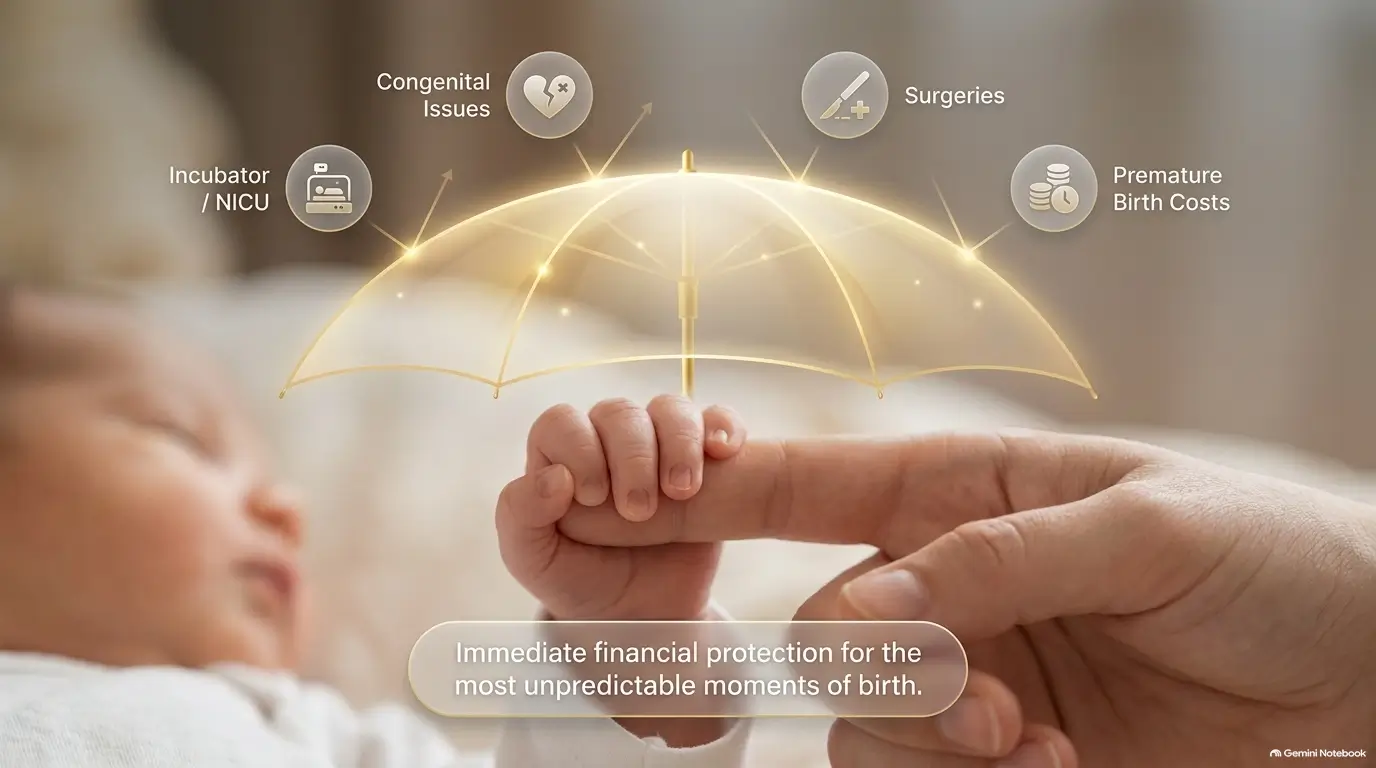
Korean fetal insurance (태아보험) is essentially child insurance that can be arranged before birth with fetal or newborn-related riders. The important insured risks may include specified congenital conditions, low-birth-weight or neonatal care, perinatal conditions, surgery, hospitalization, or later childhood risks depending on the contract.
It should not be mentally filed under “insurance that pays my obstetrician.” The Korean government’s Easy Law service describes fetal insurance as child insurance intended to cover child-related illness and injury risks associated with birth and the neonatal period. Its current fetal insurance guidance is useful when checking the concept and timing.
If You Want Fetal Insurance, Pregnancy Week Matters
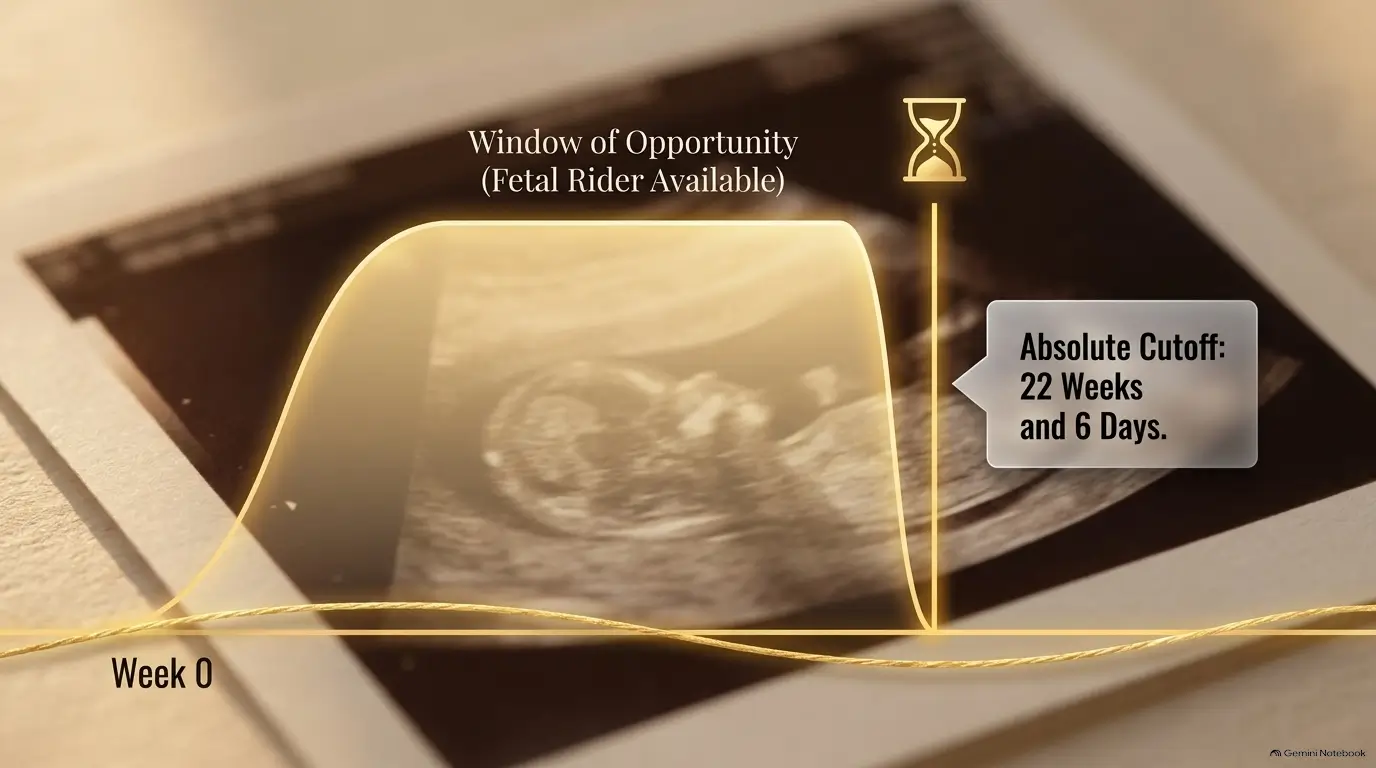
Private underwriting can close doors that NHIS does not. The Korean government’s consumer guidance notes that fetal-related riders are generally time-sensitive and describes common enrollment windows extending to around the 22nd week of pregnancy, although the exact window depends on the insurer and product.
That makes the policy’s own cutoff more important than a blog’s universal week number. A plan may still accept a child-insurance application later while no longer allowing the fetal riders you wanted.
Foreign applicants have another variable: insurer underwriting and administration. A product available to a Korean citizen is not automatically available under identical application procedures to every foreign resident. Insurers may need to verify residence status, identification, Korean contact information, medical history, pregnancy information, and the identity of the policyholder and insured child.
Do not pay or disclose a large medical history simply because an agent says foreigners are “usually fine.” Ask whether your nationality, residence status, pregnancy week, and intended policyholder structure are accepted under that specific product.
Ask These Questions Before Buying Private Cover
A useful insurance comparison begins with exclusions. Benefits make glossy brochures; exclusions decide whether the claim survives contact with reality.
- Is routine prenatal care covered, or only pregnancy complications?
- Is normal delivery covered?
- Is cesarean delivery covered only when medically necessary, or excluded altogether?
- Is there a maternity waiting period, and when did it begin?
- Does an existing pregnancy fall outside coverage because conception occurred before the policy became effective?
- Are congenital conditions, NICU treatment, low birth weight, and neonatal hospitalization covered for the baby?
- What is the maternity or newborn benefit limit, and is it separate from the overall medical limit?
- Will the Korean hospital direct-bill the insurer, or must you pay first and claim reimbursement?
Ask for the relevant policy wording or benefit schedule in writing. A telephone promise that “maternity is covered” is too vague for a bill that may involve prenatal treatment, delivery, complications, and newborn care under different clauses.
A Zero NHIS Delivery Copayment Can Still Produce a Hospital Bill
Before choosing a maternity hospital, ask the billing desk for a quote divided into NHIS-covered charges and non-covered charges. This is far more useful than asking, “How much does childbirth cost?”
The covered delivery portion may have a 0% patient copayment while another line of the invoice remains entirely your responsibility. Accommodation choices, optional services, non-covered examinations or procedures, and institution-specific packages can materially change the final amount.
If a quote arrives as one large number, ask for an itemized estimate. Foreign patients can use the same technique described in this guide to understanding Korean hospital bills: identify what is insured, what is non-covered, and what is optional before comparing hospitals.
Use This Hospital Quote Check Before Paying a Deposit
You do not need to understand Korean medical billing line by line. You need five answers that make two hospitals comparable.
- NHIS status: Is the estimate calculated for an NHIS-insured patient?
- Delivery: Which charges are part of the insured vaginal or cesarean delivery?
- Non-covered items: Which amounts are 비급여 and therefore outside ordinary NHIS reimbursement?
- Room: What room category does the quote assume, and what happens if the room changes?
- Baby: Are newborn examinations or treatment included in the maternity estimate, or billed separately?
If language is the only obstacle, a full medical concierge package may be unnecessary. For a complicated consent form, diagnosis, or claim, however, professional interpretation can be worth paying for. The distinction is explained in the guide to medical translation in Korea.
What If You Are Pregnant but Not Yet Covered by NHIS?
This is the financially vulnerable branch of the decision tree. It can affect newly arrived residents waiting for regional eligibility, short-term visitors, or people relying on overseas coverage instead of Korean NHIS.
Do not assume you can buy Korean private insurance after becoming pregnant and have it retroactively absorb routine maternity expenses. Private insurance underwriting, exclusions, waiting periods, and pre-existing circumstances can make that impossible.
Instead, separate the problem into three questions: When can NHIS coverage legally begin? What does your existing overseas policy already cover? What would the Korean hospital charge if you remain self-pay?
For the hospital, request a self-pay estimate and ask how it would change if NHIS eligibility begins before delivery. For an international insurer, ask whether Korean prenatal care and delivery are covered under your existing effective policy and whether preauthorization is required.
Do not postpone medically necessary prenatal care merely to solve an insurance problem. Cost planning and medical timing are separate decisions; your clinician determines what care should not wait.
Newborn NHIS Coverage Needs Its Own Check
The mother’s insurance status does not make newborn administration something to ignore. Korean rules contain birth-date eligibility routes for certain newborn children of insured foreign or overseas-Korean parents, including qualifying dependents of employee-insured parents and newborns connected to an insured regional parent.
The administrative route depends on the parents’ NHIS status and the baby’s registration circumstances. For foreign families, birth registration, nationality documents, immigration registration, family-relationship evidence, and NHIS processing do not always happen as one seamless event.
Ask NHIS before delivery what must be submitted after birth and from what date the baby’s eligibility can be recorded. That question becomes especially important if NICU treatment or other significant newborn care occurs immediately after delivery.
Your 10-Minute Maternity Insurance Check
Before comparing premiums or hospital packages, build a one-page coverage snapshot.
- Write down whether you are an NHIS employee subscriber, regional subscriber, dependent, or currently uninsured.
- Confirm your active status directly through NHIS rather than inferring it from your visa.
- If insured, check whether the pregnancy and childbirth medical-expense benefit has been applied to your National Happiness Card.
- Ask your maternity hospital for an estimate separating insured and non-covered charges.
- If you already own private or international insurance, open the maternity, pregnancy-exclusion, newborn, waiting-period, and preauthorization sections before buying another policy.
Those five lines usually tell you more about your likely financial exposure than a collection of insurance advertisements.
When Paying for Insurance Help Makes Sense
DIY is usually enough when the only question is NHIS enrollment or the government pregnancy benefit. NHIS controls those rules, so an insurance salesperson cannot improve your statutory eligibility.
One licensed insurance consultation may be useful if you are still within the pregnancy window for fetal insurance and need to compare several Korean products. The useful service is not reassurance. It is a side-by-side explanation of covered events, exclusions, waiting periods, renewal structure, benefit limits, and foreign-resident eligibility.
More specialized help may be justified if a major claim has already been denied, a newborn has substantial medical expenses, an international insurer disputes whether treatment is maternity-related, or two countries’ insurance systems are involved. At that point, the problem is no longer simply choosing maternity insurance.
Frequently Asked Questions
Can a foreign resident receive Korea’s KRW 1 million pregnancy benefit?
Yes, nationality alone does not exclude you. The key requirement is that the pregnant person meets the program’s eligibility as an NHIS subscriber or dependent. Confirm active NHIS status before assuming the benefit applies.
Can a tourist use the National Happiness Card pregnancy benefit?
Pregnancy itself does not create NHIS eligibility. A visitor who is not an NHIS subscriber or dependent should not assume the health-insurance pregnancy benefit is available simply because treatment occurs in Korea.
Does 0% copayment mean cesarean delivery is completely free?
No. Since January 1, 2025, qualifying NHIS-covered cesarean inpatient delivery services have a 0% patient copayment, but non-covered services and other charges outside that benefit can still produce a bill.
Can I buy private insurance after becoming pregnant and have it cover delivery?
Do not assume so. Pregnancy and childbirth may be excluded, maternity benefits may have waiting periods, and an already-existing pregnancy may fall outside the policy’s coverage. The contract effective date and maternity wording must be checked before paying a premium.
Can a foreign newborn receive NHIS coverage from birth?
Korean NHIS rules provide birth-date eligibility routes for certain newborn children when an eligible foreign or overseas-Korean parent was already insured before the birth. The exact procedure differs with employee, dependent, and regional status, so parents should confirm the baby’s registration route with NHIS before delivery.
Your Next 15 Minutes
Do one thing before shopping for another policy: confirm your current NHIS status and pregnancy-benefit status.
If the answer is unclear, contact NHIS with your residence information, insurance status, and expected delivery date. The NHIS English consultation number currently listed for foreign residents is 033-811-2000, and the general NHIS number is 1577-1000.
Once those two facts are confirmed, ask your hospital for an insured-versus-non-covered estimate. Only after that should you decide whether fetal insurance or another private policy is solving an actual gap. In Korea, the expensive mistake is often not having “too little insurance.” It is buying the wrong layer before understanding the one you already have.
Last reviewed: 2026-10