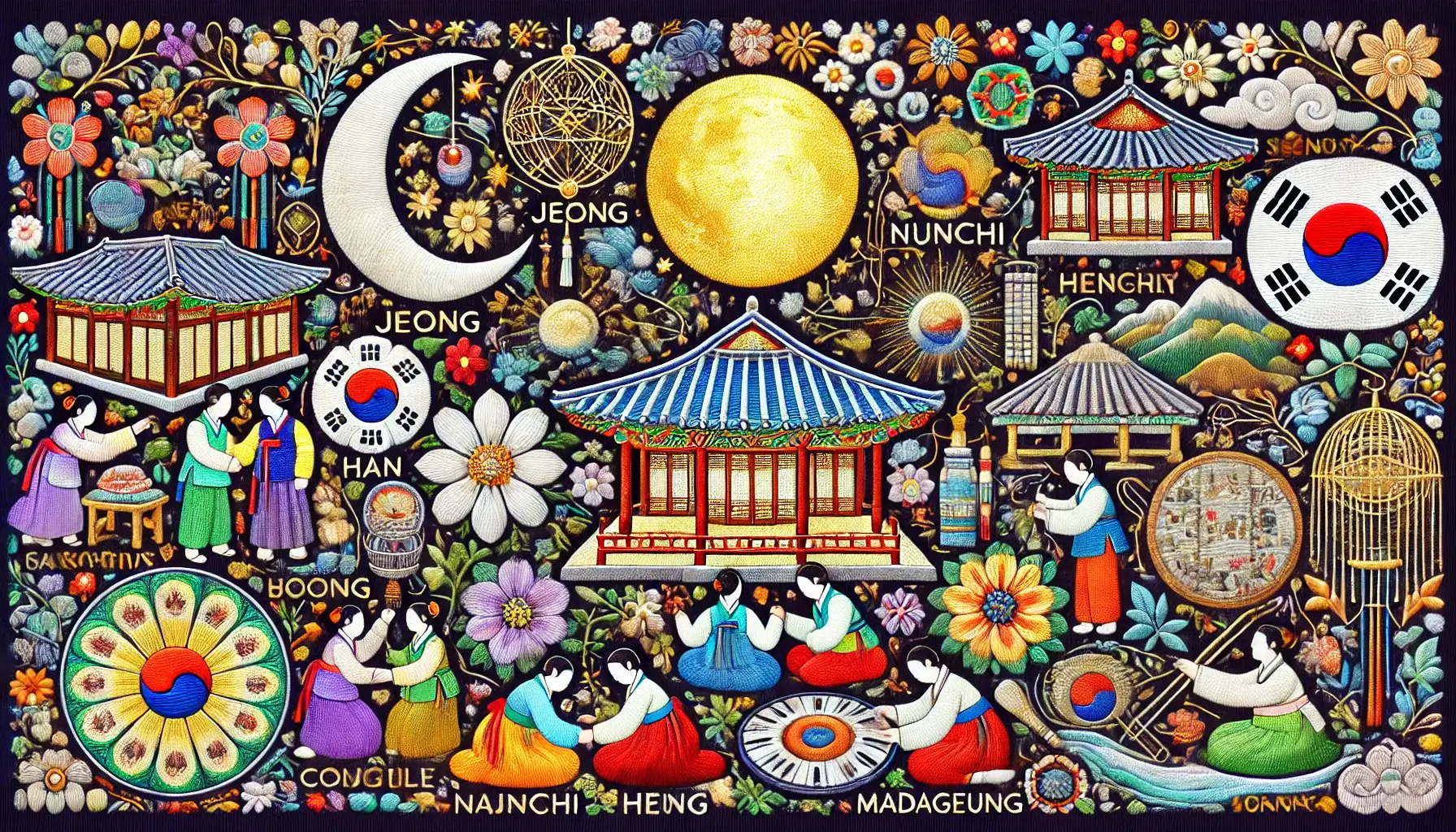
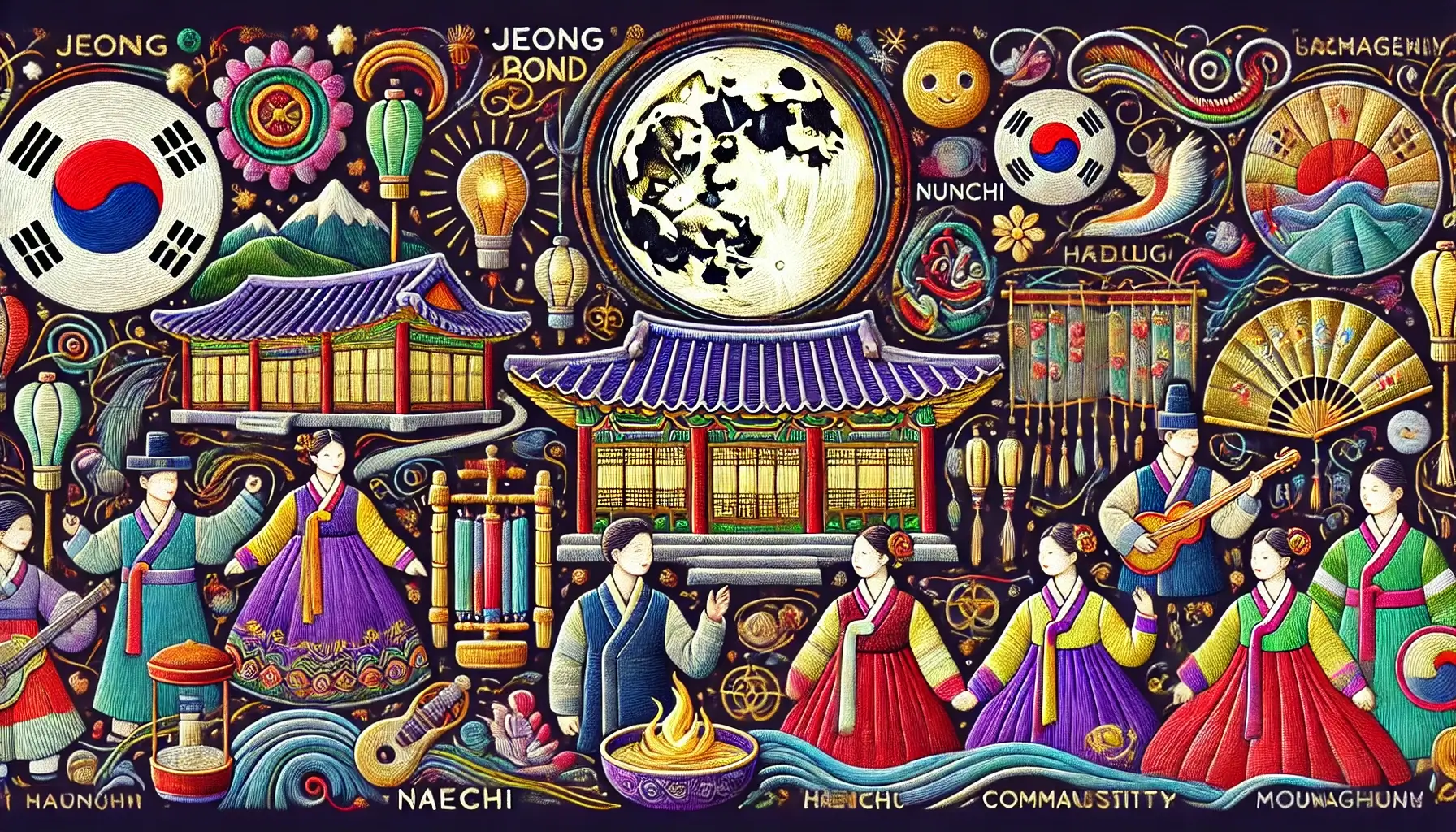
Unlocking 5+ Untranslatable Korean Words: A Cultural Deep Dive You Won’t Believe!

  • 📌 이 글은 2025년 11월 13일에 최신 정보로 수정·보완되었습니다.
Untranslatable Korean Words
Unlocking 5+ Untranslatable Korean Words: A Cultural Deep Dive You Won't Believe! 4

Unlocking 5+ Untranslatable Korean Words: A Cultural Deep Dive You Won’t Believe!

Have you ever tried to explain a feeling or a concept from your own culture to someone from a completely different background, only to find that the words just… don’t exist in their language?

It’s like trying to describe the color blue to someone who’s only ever seen black and white.

Frustrating, right?

Well, get ready, because today we’re diving headfirst into the fascinating world of untranslatable Korean words.

These aren’t just vocabulary quirks; they’re cultural keystones, offering a profound glimpse into the Korean psyche and way of life.

As someone who’s spent years navigating the nuances of Korean culture, I can tell you, understanding these words is like unlocking a secret level in the game of life here.

It’s not just about learning a language; it’s about feeling a culture.

Introduction: Beyond the Dictionary

Every language is a mirror reflecting the soul of its people.

While you can translate “hello” or “thank you” pretty easily, some words carry such a dense load of history, emotion, and social context that they simply defy direct translation.

Korean is a prime example of this linguistic richness.

These untranslatable words aren’t just fancy vocabulary; they are fundamental concepts that shape how Koreans interact, feel, and perceive the world.

They are the invisible threads woven into the fabric of daily life, influencing everything from family dynamics to business negotiations.

Think of it this way: if you’re trying to bake a perfect Korean dish, you can’t just throw in some “spices” – you need the exact ingredients, measured precisely.

These words are those precise, essential ingredients for understanding Korea.

Jeong (정): The Unspoken Bond that Binds Us

What is Jeong?

If there’s one Korean word that people struggle with the most to translate, it’s probably “Jeong” (정).

It’s a feeling, a bond, an unspoken connection that encompasses affection, attachment, sympathy, care, and even a sense of shared responsibility.

It’s deeper than friendship, more complex than love, and broader than loyalty.

Imagine the warmth you feel towards an old friend, the sense of obligation you have to your family, the reluctant fondness you develop for a difficult colleague you’ve spent years with, or even the feeling you have for an object you’ve owned for a long time.

All of that, and more, can be “Jeong.”

It’s the invisible glue that holds Korean society together.

Jeong in Action: Real-Life Scenarios

You experience “Jeong” when an elderly neighbor gives you a bag of freshly picked vegetables from their garden, not because they owe you, but simply because they care.

You see “Jeong” when people linger after a meal, reluctant to leave, enjoying the shared company and connection.

It’s why Koreans might find it difficult to throw away old belongings, even if they’re broken – there’s “Jeong” attached to them.

When you’ve shared a deep experience with someone, whether good or bad, “Jeong” builds between you.

It’s the reason why, even after a heated argument, a family member will still offer you food or check on your well-being – the “Jeong” transcends the momentary conflict.

I once had a Korean colleague who, after working together for a few months, brought me a homemade lunch every single day for a week, just because I mentioned I was too busy to cook.

That was “Jeong” in its purest form – an unsolicited act of care stemming from a growing bond.

Han (한): A Deep-Seated, Collective Grief

What is Han?

“Han” (한) is perhaps the most profound and melancholic of all untranslatable Korean words.

It’s a complex, pervasive emotion, often described as a collective sorrow, a deep-seated resentment, or an unresolved grief that has accumulated over generations.

It’s not just personal sadness; it’s a shared historical grievance, a feeling of injustice, or an unfulfilled longing that runs deep in the Korean national psyche.

It’s often associated with the country’s long history of invasions, colonization, and division, but it can also manifest in personal experiences of unfairness or hardship.

Think of it as a deep, aching lament that doesn’t quite have an outlet, a heavy sigh that echoes through time.

Han’s Manifestations: From History to Heartache

“Han” can be seen in the laments of traditional Korean music (pansori), the themes of historical dramas, and even in the passionate protests against perceived injustices.

It’s the unspoken pain of a grandmother who lived through the Korean War, separated from her family.

It’s the silent suffering of someone who has faced discrimination or unfair treatment throughout their life, with no real avenue for retribution or resolution.

It’s a feeling that can drive intense perseverance and resilience, as individuals and the nation strive to overcome past hardships and prove their worth despite historical suffering.

Sometimes, “Han” can fuel a fierce determination to succeed, to prevent future generations from experiencing the same pain.

Other times, it can be a quiet, lingering sadness that permeates everyday life.

Understanding “Han” is crucial to understanding the deep well of emotion that drives many aspects of Korean culture, from their unwavering work ethic to their passionate expressions of joy and sorrow.

It’s a powerful force, both somber and inspiring.

Untranslatable Korean Words.
Unlocking 5+ Untranslatable Korean Words: A Cultural Deep Dive You Won't Believe! 5

Nunchi (눈치): The Art of Social Savvy

What is Nunchi?

“Nunchi” (눈치) literally translates to “eye-measure” or “eye-sense,” and it refers to the subtle, almost psychic ability to gauge the mood of a situation or the unspoken feelings of others.

It’s about reading between the lines, understanding social cues, and knowing exactly what to do or say (or not say) to maintain harmony and avoid awkwardness.

It’s a crucial skill in Korean society, where group harmony and subtle communication are highly valued.

Someone with good “Nunchi” is perceptive, empathetic, and always knows how to navigate social situations gracefully.

Think of it as having extremely sensitive social radar.

Nunchi in Practice: Navigating Social Landscapes

If you have good “Nunchi,” you’ll know when to speak up and when to stay silent in a meeting.

You’ll sense when someone is uncomfortable even if they don’t say anything, and you’ll adjust your behavior accordingly.

It’s the reason why Koreans might anticipate your needs before you even voice them, whether it’s refilling your glass at dinner or offering a coat if they notice you shiver.

Conversely, lacking “Nunchi” can lead to social blunders, offending people unintentionally, or simply being seen as insensitive.

It’s why you often hear Koreans emphasize “reading the room.”

This isn’t about mind-reading, but about keen observation and thoughtful consideration of others.

As a foreigner, developing “Nunchi” is one of the most effective ways to build strong relationships and truly integrate into Korean society.

It shows respect and understanding, and believe me, Koreans notice!

Aegyo (애교): The Charming Display of Cuteness

What is Aegyo?

“Aegyo” (애교) refers to a cute, charming, and often childlike display of affection or flirtatiousness, commonly used to elicit a positive reaction from others.

It involves specific vocal tones (often higher pitched), cute facial expressions (like pouting or exaggerated smiles), and playful gestures.

While it might seem strange or even annoying to Westerners, “Aegyo” is a widely accepted and often appreciated form of communication in Korea, particularly in romantic relationships, among close friends, and sometimes even in professional settings (though less frequently).

It’s not about being childish or immature, but about expressing a softer, more endearing side.

The Role of Aegyo in Korean Society

You’ll see “Aegyo” everywhere in Korean media, from K-Pop idols performing cute dance moves to characters in K-dramas trying to win someone’s affection.

In real life, it’s a way to lighten the mood, show affection, or even get what you want in a playful manner.

For instance, a girlfriend might use “Aegyo” to convince her boyfriend to buy her something, or a junior colleague might use a bit of “Aegyo” to playfully request a favor from a senior.

It’s often a reciprocal act, fostering a sense of warmth and intimacy.

While it might take some getting used to for non-Koreans, understanding “Aegyo” helps in grasping a significant aspect of Korean social dynamics and expressions of affection.

It’s a cultural quirk that, once understood, adds another layer to the colorful tapestry of Korean interactions.

Heung (흥): The Joyful Spirit of Merriment

What is Heung?

“Heung” (흥) is the innate, bubbling feeling of excitement, enjoyment, and merriment that compels one to sing, dance, or express joy spontaneously.

It’s the spirit of feeling alive and wanting to express that joy through outward actions, often in a communal setting.

It’s not just happiness; it’s a dynamic, infectious energy that makes you want to join in the fun.

Think of it as the opposite of “Han” – while “Han” is a deep, internalized sorrow, “Heung” is an exuberant, externalized joy.

Heung Unleashed: From Noraebang to Festivals

You’ll encounter “Heung” most vividly in places like a “Noraebang” (노래방, karaoke room), where people let loose and sing their hearts out, often with dramatic flair.

It’s the spontaneous dance moves at a festival, the enthusiastic clapping at a concert, or the uninhibited laughter during a gathering with friends.

When Koreans say, “Let’s bring out the Heung!” (흥을 돋우다), they mean to liven up the atmosphere and get everyone feeling joyful and expressive.

It’s a crucial element of Korean social gatherings, making them lively and memorable.

This shared enthusiasm is what makes Korean celebrations so vibrant and inclusive.

It’s that feeling when the music hits just right, and you can’t help but tap your feet or sing along, even if you don’t know the words.

That’s “Heung.”

Gisaeng (기생): More Than Just Entertainers

What is Gisaeng?

While a direct translation might point to “courtesan” or “geisha” (in the Japanese context), the term “Gisaeng” (기생) in Korean carries a much richer and more nuanced historical and cultural weight.

Historically, Gisaeng were highly trained female entertainers who were skilled in various arts, including music, dance, poetry, and conversation.

They were often intellectuals and artists, not simply prostitutes, and played a significant role in Korean aristocratic society, especially during the Goryeo and Joseon dynasties.

They were often considered cultural custodians, preserving and passing down traditional arts.

The Complex Legacy of Gisaeng

The image of the Gisaeng is complex, encompassing both artistic mastery and social marginalization.

They were often from lower social classes but received extensive training that was inaccessible to most women of their time.

Their lives were often filled with both glamour and hardship.

Understanding “Gisaeng” requires moving beyond simplistic labels and appreciating their multifaceted role as artists, intellectuals, and sometimes tragic figures within Korean history.

Their stories are often explored in historical Korean dramas and films, reflecting the fascination and complexity surrounding their legacy.

They represent a unique intersection of art, power, and societal norms that is deeply embedded in Korea’s past.

Hwa-Byeong (화병): The Illness of Accumulated Anger

What is Hwa-Byeong?

“Hwa-Byeong” (화병), sometimes translated as “anger syndrome” or “fire illness,” is a culture-bound syndrome recognized in Korea.

It describes a mental and physical illness caused by the suppression of anger, resentment, and stress over a long period, often due to societal pressures or injustices that cannot be openly expressed.

The symptoms can be both psychological (depression, anxiety, irritability) and physical (headaches, indigestion, heart palpitations).

It’s a manifestation of how deeply emotional suppression can impact one’s health, particularly in a society that historically values harmony and self-restraint.

Hwa-Byeong in a Collectivist Society

“Hwa-Byeong” is particularly prevalent among middle-aged women in Korea, who historically have faced significant societal expectations and limitations.

The concept highlights the importance of emotional expression and the dangers of internalizing negative emotions in a collectivist culture where direct confrontation might be avoided to maintain harmony.

It’s a stark reminder that cultural values can have a tangible impact on individual well-being.

Traditional Korean medicine often addresses “Hwa-Byeong” with therapies aimed at releasing pent-up emotions and restoring balance.

It’s a unique insight into the mental health landscape and the specific ways stress can manifest in Korean individuals.

Madang (마당): The Heart of Community Space

What is Madang?

“Madang” (마당) literally refers to a courtyard or open space within or in front of a traditional Korean house.

However, its cultural meaning extends far beyond a mere physical space.

“Madang” represents a communal area where social interactions, family gatherings, and community events take place.

It’s a place for work, play, celebration, and mourning, embodying the spirit of community and shared life that is central to Korean culture.

Think of it as the village square, but on a more intimate, household level.

The Madang as a Cultural Symbol

In traditional Korean society, the “Madang” was the bustling heart of the home, where kimchi was made, children played, and neighbors gathered to chat and share news.

It symbolized openness, connection, and the intertwined lives of families and communities.

Even in modern, high-rise apartment living, the concept of “Madang” persists in the shared common areas and the strong sense of neighborhood community often found in Korea.

It’s a powerful symbol of shared identity and collective living, emphasizing that life is often lived in concert with others rather than in isolation.

The “Madang” reminds us that even private spaces have a public dimension, reflecting the deeply communal nature of Korean life.

Dal-Ma-Eum (달마음): The Moon’s Heart, A Poetic Emotion

What is Dal-Ma-Eum?

“Dal-Ma-Eum” (달마음) is a beautiful, poetic, and truly untranslatable Korean phrase that literally means “moon heart” or “moon mind.”

It refers to a feeling of gentle, reflective melancholy, often associated with gazing at the moon.

It’s a serene sadness, a quiet longing, or a nostalgic sentiment that is not overtly dramatic but subtly profound.

It speaks to a contemplative state of mind, imbued with a sense of beauty and quiet introspection.

Experiencing Dal-Ma-Eum

You might feel “Dal-Ma-Eum” on a quiet, moonlit night, reflecting on life, love, or the passage of time.

It’s the feeling evoked by a melancholic Korean ballad, or by looking at an old photograph and remembering distant memories with a soft ache.

It’s a testament to the Korean language’s capacity for expressing subtle, complex emotions, often intertwined with natural imagery.

While not a common daily word, “Dal-Ma-Eum” captures a particular emotional nuance that resonates deeply within the poetic and artistic traditions of Korea.

It’s a gentle whisper of the soul, much like the soft glow of the moon itself.

Why Are These Words So Crucial? The Cultural Context

Understanding these untranslatable Korean words isn’t just a linguistic exercise; it’s a deep dive into the very soul of Korean culture.

Each word acts as a lens, revealing the unique values, historical experiences, and social structures that have shaped the Korean people.

They highlight a society that often prioritizes group harmony over individual expression (“Nunchi”), that carries collective historical burdens (“Han”), and that cherishes deep, lasting bonds (“Jeong”).

They show us a culture that finds beauty in subtle emotions (“Dal-Ma-Eum”) and expresses joy with uninhibited enthusiasm (“Heung”).

Without grasping these concepts, a significant part of what makes Korea, well, Korea, remains hidden.

It’s like trying to appreciate a masterpiece painting by only looking at individual brushstrokes instead of the whole composition.

Understanding Korea: A Deeper Look

Jeong (정)

A deep, unspoken bond of affection, attachment, and shared experience. It’s the invisible glue connecting people (and even objects) over time.

Han (한)

A collective, deep-seated sorrow or unresolved grief, often tied to a history of oppression or personal hardship. A mix of sadness, resentment, and longing.

Nunchi (눈치)

The subtle art of “reading the room.” It’s the high-context social radar for gauging others’ moods and unspoken expectations to maintain harmony.

Heung (흥)

An innate, infectious spirit of joy, excitement, and merriment. It’s the spontaneous urge to sing, dance, and celebrate, often in a group setting.

Aegyo (애교)

A charming, playful, or “cute” display of affection used to endear oneself to others. Often seen in K-Pop, K-Dramas, and romantic relationships.

Hwa-Byeong (화병)

A culture-bound “anger syndrome.” A physical and mental illness caused by suppressing anger and resentment over a long period, often to keep the peace.

The Global Rise of ‘Hallyu’ (Korean Wave)

  • K-Drama Global Viewership (Netflix Users) ~60%
  • Korean Language Learners (King Sejong Institute) 148% Growth (2019-2022)
  • Hallyu Economic Impact (Export Value) $12.4 Billion+ (2021)

The Nunchi (눈치) Challenge

An interactive test of your social radar. Can you read the room?

Scenario 1: At a group dinner, your friend quietly stops eating their favorite dish.

(Fast Nunchi): You sense their shift in mood. You might later ask privately if they’re okay, or subtly change the topic if the conversation seems to be a-bothering them.

(Slow Nunchi): You loudly ask, “Why aren’t you eating? I thought you loved this!” drawing all attention to them and making the situation awkward.

Scenario 2: Your team leader presents a new idea, and the room is completely silent.

(Fast Nunchi): You feel the hesitation. To break the ice, you ask a thoughtful, neutral question that allows others to gather their thoughts, like, “What’s the timeline for this?”

(Slow Nunchi): You immediately say, “This is a bad idea,” or “This is a great idea!” without reading if the silence is due to confusion, disagreement, or just processing.

Scenario 3: You’re on a bus, and an elderly person gets on. The person in the priority seat is pretending to be asleep.

(Fast Nunchi): You understand the social code. You stand up and offer your *own* seat to the elderly person, resolving the situation without causing a direct confrontation.

(Slow Nunchi): You loudly scold the person in the priority seat, creating a scene and embarrassing everyone involved (even the elderly person).

Mastering Nuances: Tips for English Speakers

So, how can you, an English speaker, truly grasp these untranslatable Korean words?

My advice, based on years of living and working here, is multifaceted:

First, immerse yourself.

Watch Korean dramas, listen to K-Pop, and engage with Korean friends.

You’ll start to see these concepts play out in real-time, even if the characters aren’t explicitly saying the words.

Second, don’t try to force a one-to-one translation.

Instead, focus on the *feeling* and *context* that the word evokes.

Ask yourself: What situation would call for this word? How does it make people behave?

Third, be patient with yourself.

This isn’t something you learn overnight.

It takes time, observation, and a willingness to step outside your own linguistic framework.

Finally, and this is perhaps the most important, talk to Koreans about these words.

Ask them to explain “Jeong” or “Han” from their perspective.

You’ll be amazed at the depth of understanding and the personal stories they share.

It’s truly a journey of discovery, and a highly rewarding one at that.

Conclusion: A Journey of Understanding

The untranslatable Korean words we’ve explored today – Jeong, Han, Nunchi, Aegyo, Heung, Gisaeng, Hwa-Byeong, Madang, and Dal-Ma-Eum – are more than just linguistic curiosities.

They are windows into the rich, complex, and deeply human heart of Korea.

They offer a profound understanding of what it means to be Korean, how individuals relate to their community, and how history continues to shape the present.

As you continue your journey of understanding Korea, whether through travel, language learning, or simply appreciating its vibrant culture, remember these words.

They are your guides, your secret keys to unlocking a deeper, more meaningful connection with this incredible country.

So go forth, explore, and let the untranslatable words of Korea enrich your world!

Explore Seoul City Read Korean News Discover Korean Culture

Untranslatable Korean, Korean Culture, Jeong, Han, Nunchi