
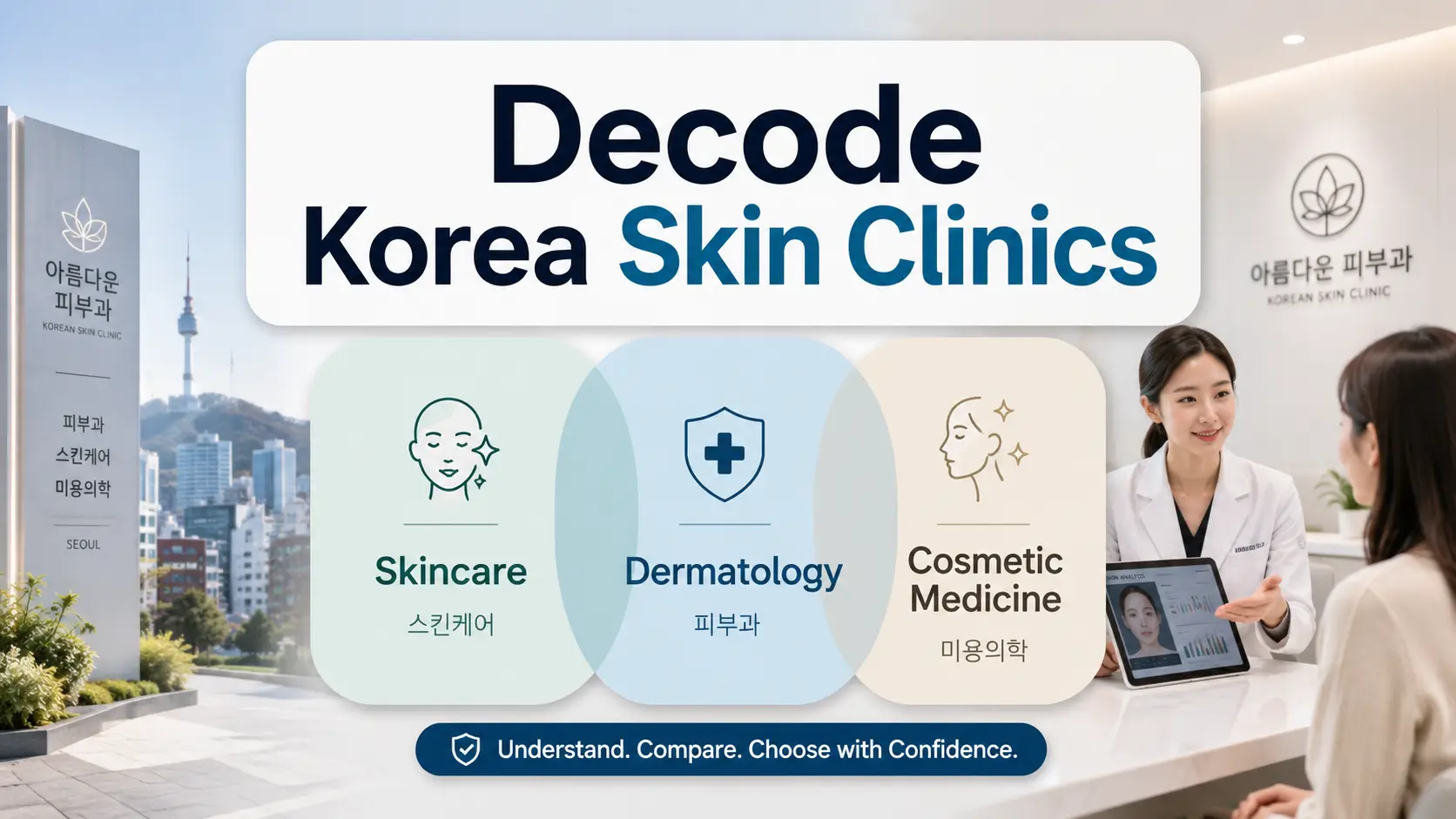
Why Skincare Clinics, Dermatology, and Cosmetic Medicine Blur Together in Korea
A US traveler opens a Korean clinic website at midnight, coffee cooling beside the laptop, and suddenly acne care, laser toning, Botox, mole removal, skin boosters, facials, and “dermatology” all seem to live in the same polished room. That is the friction behind the categories: they are not always presented the way Americans expect.
The stakes are not tiny. A moisturizer recommendation and a laser setting do not carry the same risk. A glowing before-and-after photo can make medical care feel like a beauty errand, which is charming until swelling, burns, pigment changes, infection, or a missed diagnosis enters the chat wearing muddy shoes.
This guide helps you sort the soft language from the medical reality.
You will learn how Korean skin clinics, dermatology offices, cosmetic medicine, medical tourism marketing, and provider credentials fit together so you can compare options faster and ask better questions before booking.
Keep the good curiosity. Add a medical filter. That is the whole game.
Fast Answer: The Blur Is Cultural, Commercial, and Medical
In Korea, skincare clinics, dermatology, and cosmetic medicine often blur because beauty culture, fast clinic access, treatment-heavy menus, and medical aesthetics sit close together. One clinic may offer acne care, lasers, Botox, pigmentation treatment, skin boosters, and cosmetic consultations. For US visitors, the key is knowing what is cosmetic, what is medical, who performs it, and when physician-led care matters.
- Skincare usually means maintenance, texture, hydration, and routine support.
- Dermatology involves diagnosis, disease, prescriptions, and medical judgment.
- Cosmetic medicine uses devices, injections, or procedures to change appearance.
- Medical tourism adds language gaps, package pricing, and travel timing risks.
Table of Contents
Safety First: Beauty Language Can Still Mean Medical Risk
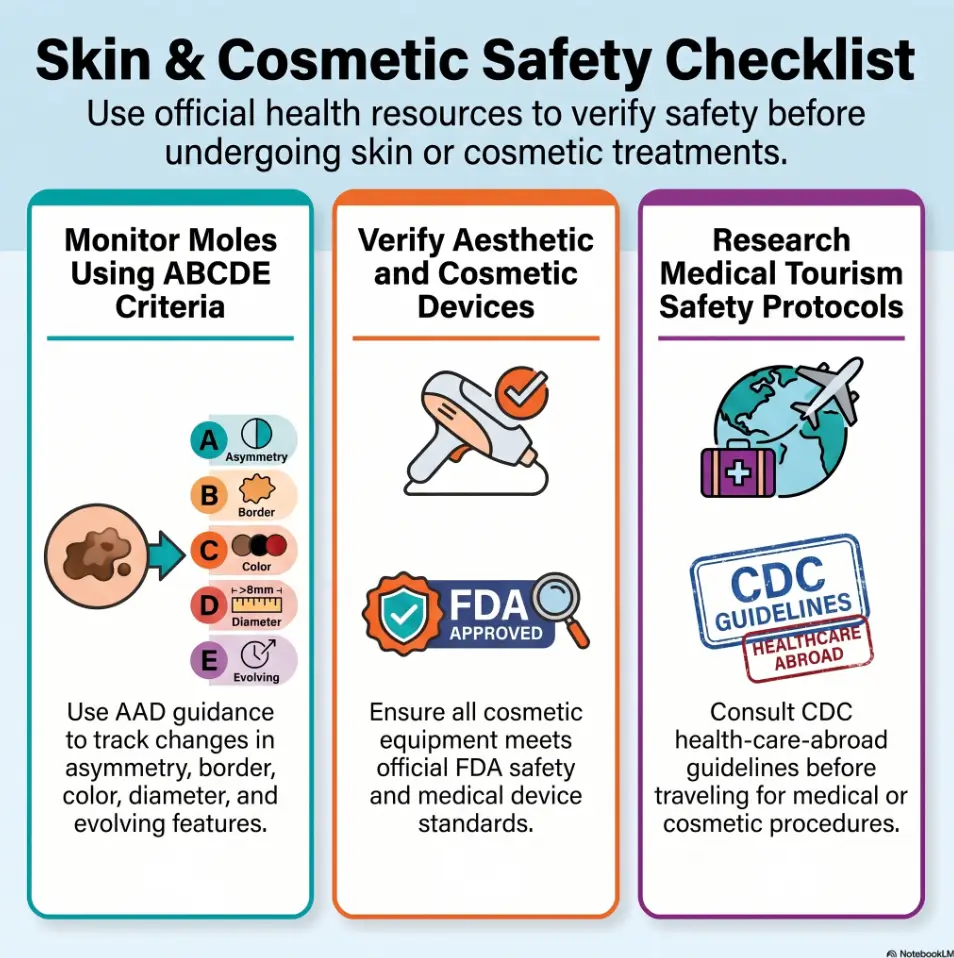
This article is for education only. It does not diagnose skin conditions, recommend a specific procedure, or replace medical advice. If you are considering lasers, injectables, prescription skincare, mole checks, acne medication, scar revision, fillers, thread lifting, peels, or cosmetic surgery, verify provider credentials and ask who evaluates, performs, and follows up on your care.
Seek qualified medical care before treating symptoms that are changing, painful, bleeding, infected, spreading, severe, or unexplained. The American Academy of Dermatology encourages people to watch for changing spots and suspicious lesions, while the FDA regulates drugs and medical devices in the US, including many products and devices used in aesthetic care. Those two facts alone should make any “quick glow-up” page feel a little less like a dessert menu.
- Ask what the procedure actually is, not just what the package is called.
- Ask who performs it and who handles complications.
- Ask whether your concern needs diagnosis before enhancement.
Apply in 60 seconds: Write “diagnosis, performer, complication plan” at the top of your clinic notes.
The Korea Skin Clinic Puzzle: Why One Sign Can Mean Five Things
“Dermatology” may signal medicine, aesthetics, or both
In the US, many readers mentally separate a dermatologist’s office from a med spa, a facial studio, and a cosmetic surgery clinic. In Korea, the front door can feel less divided. A clinic may use medical language, beauty language, and lifestyle language in the same breath.
That does not automatically mean something is shady. It means the category map is different. Korean clinics may be built around convenience, rapid consultation, visible treatment menus, and high patient volume. A place that treats acne may also offer laser toning. A place that evaluates pigmentation may also advertise skin boosters. A place with medical doctors may still market like a beauty brand because patients are often shopping visually.
This is where US readers get tangled. “Dermatology” can imply disease care, cosmetic dermatology, device-based procedures, or a mix. The sign is the doorway. The procedure is the truth.
Why clinic menus often mix acne, lasers, Botox, and brightening care
Skin concerns do not arrive in neat folders. Acne can leave scars. Scars can lead to lasers. Pigmentation can involve diagnosis, sun history, melasma risk, and cosmetic brightening. Wrinkles can be discussed as aging, expression, volume loss, or prevention. A clinic menu reflects that messy overlap.
Korean beauty culture also rewards visible refinement. Smooth texture, even tone, smaller-looking pores, facial balance, and “healthy glow” are treated as normal maintenance goals by many consumers. That creates a market where routine skin management and medical aesthetics sit side by side, sometimes politely, sometimes in a glittery traffic jam.
For cultural context beyond clinics, readers may find it useful to compare this with the broader Korean skincare routine mindset, where prevention, consistency, and visible texture care often begin long before someone books a procedure.
The first confusion point: treatment language feels softer than the procedure
Words such as “booster,” “care,” “management,” “brightening,” and “rejuvenation” can sound gentle. Yet the actual procedure may involve needles, prescription products, heat energy, freezing, ablative resurfacing, numbing cream, wound healing, or post-treatment sun restrictions.
That softening effect matters. A traveler may feel comfortable booking something because it sounds like skincare, then discover it behaves like medicine. The face is not a souvenir shelf. It does not appreciate impulse purchases with unclear return policies.
Money Block: Procedure Reality Check
Before comparing Korean clinic packages, answer yes or no:
- Does it pierce the skin? If yes, ask about infection control and who performs it.
- Does it use energy? If yes, ask for the device name and burn or pigment risk.
- Does it involve medication? If yes, ask about contraindications and interactions.
- Does it change facial structure or volume? If yes, ask about reversibility and complication handling.
- Does it need downtime? If yes, do not schedule it right before a flight or event.
Neutral action: Save one screenshot of the package name and one note describing the actual procedure underneath it.
Beauty Culture Meets Medical Speed: The System Behind the Blur
Korea’s high-service clinic model rewards convenience and visible results
Korea has a dense urban clinic culture, especially in areas where beauty, fashion, work schedules, and public appearance overlap. In neighborhoods with many clinics, the experience may feel faster and more consumer-friendly than a typical US specialist appointment.
That speed can feel wonderful. No one enjoys waiting three months to ask about acne scars while their mirror continues its daily editorial column. But speed changes the emotional temperature. When booking feels easy, the treatment can feel less serious.
That is the system behind much of the blur. High access, polished service, competitive menus, and social proof all compress the distance between “I am curious” and “I have an appointment.”
Why lunch-break procedures changed patient expectations
Some aesthetic treatments are marketed as quick, convenient, and compatible with workdays. The phrase “lunch-break procedure” can be useful, but it can also create a little fog machine around risk.
A short appointment does not mean a minor biological event. Botox may be quick, yet it still involves dose, anatomy, injection technique, side effects, and contraindications. A laser session may be brief, yet skin type, melasma history, recent tanning, medications, and aftercare can change the risk profile.
Fast is a scheduling feature. Safe is a clinical process.
Here’s what no one tells you: efficiency can make risk feel smaller than it is
Efficiency is seductive. A clean lobby, a tablet form, a smooth consultation, and a price list with tidy bundles can make everything feel controlled. But real safety often lives in the boring questions: medical history, medications, allergies, pregnancy status, keloid tendency, immune issues, prior reactions, and follow-up access.
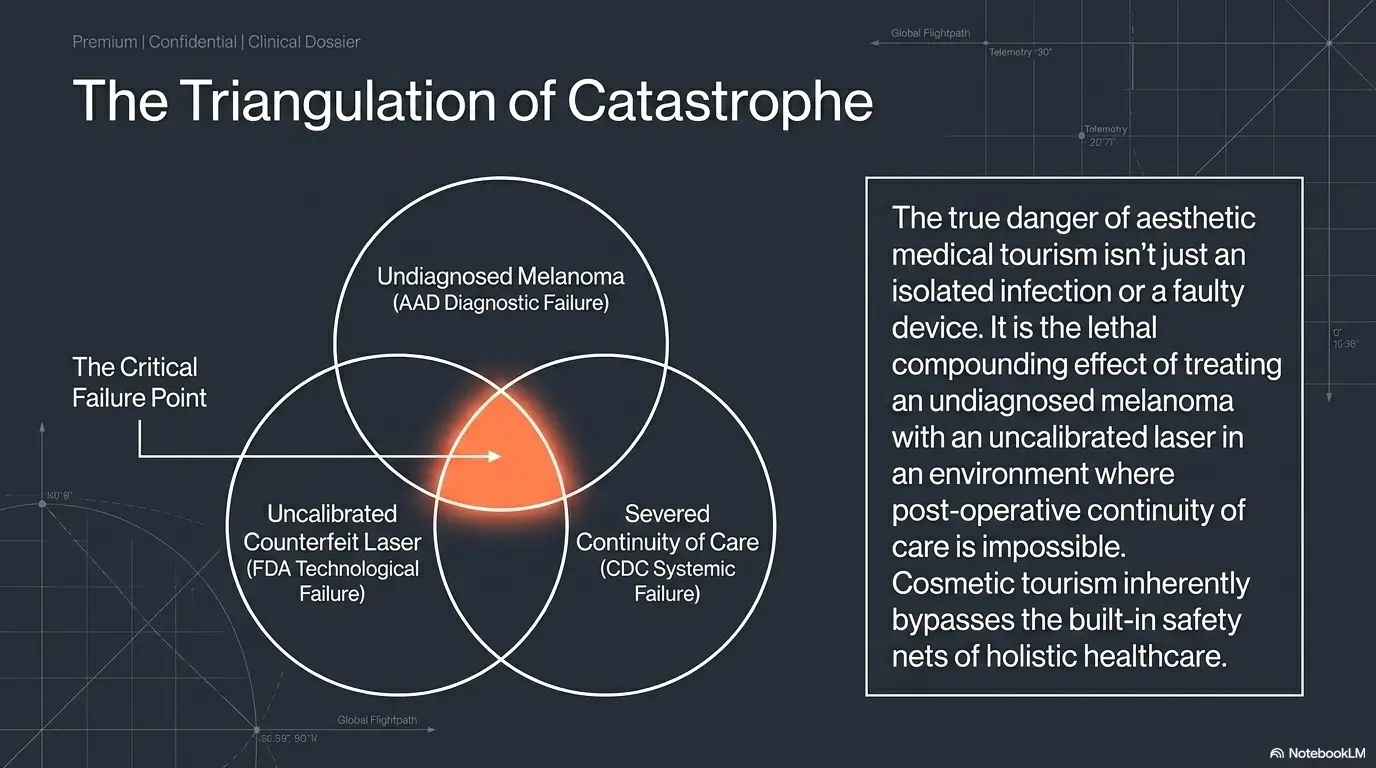
This is especially important for visitors. If you are flying back to Los Angeles, Chicago, New York, or London three days later, your complication plan cannot be “I hope my skin behaves like a well-trained houseplant.”
Show me the nerdy details
Many aesthetic risks come from matching the wrong tool, depth, dose, timing, or patient profile. Heat-based devices can interact with pigmentation risk and recent sun exposure. Needled treatments can raise infection or bruising risk. Injectables depend on anatomy, dilution, dose, placement, and follow-up judgment. A clinic website may group these under friendly terms, but the clinical variables remain separate. For cautious comparison, translate every package into four parts: mechanism, provider, downtime, and rescue plan.
Skincare vs Dermatology vs Cosmetic Medicine: The Cleanest Way to Separate Them
Skincare focuses on maintenance, texture, hydration, and daily routine
Skincare is the daily architecture. Cleanser, moisturizer, sunscreen, retinoids when appropriate, barrier support, gentle exfoliation, and habit consistency belong here. Skincare can improve comfort, appearance, and resilience, but it should not pretend to diagnose disease.
For many readers, the right skincare plan is not dramatic. It is quiet and reliable. Sunscreen. Fewer irritants. Less product hopping. A moisturizer that does not start a tiny civil war on your cheeks.
Skincare can support medical treatment, but it does not replace it. Persistent acne, suspicious moles, infected skin, severe eczema, sudden rashes, and painful lesions need a different lane.
Dermatology handles diagnosis, disease, prescriptions, and medical skin concerns
Dermatology is medical care for the skin, hair, and nails. That includes diagnosis, prescriptions, biopsies, inflammatory conditions, infections, skin cancer screening, acne management, eczema, psoriasis, rosacea, hair loss, and much more.
In Korea, dermatology clinics may also provide cosmetic procedures. That overlap can be useful when the same physician understands both disease and appearance. It can also confuse patients when a medical issue is packaged like a beauty concern.
One useful mental line: if the question begins with “What is this?” or “Why is this happening?” it belongs closer to dermatology. If the question begins with “Can this look smoother, brighter, or more balanced?” it may belong closer to cosmetic medicine, after medical concerns are ruled out.
Cosmetic medicine targets appearance using procedures, devices, or injectables
Cosmetic medicine aims to improve appearance through tools such as injectables, lasers, peels, skin boosters, radiofrequency, ultrasound, threads, and other techniques. It can be subtle, artful, and confidence-supporting. It can also carry real risks.
The most useful distinction is not “beauty versus medicine.” It is non-invasive routine care versus medical intervention. Once a device, needle, prescription, or tissue-changing technique enters the room, the conversation should become more structured.
Routine, barrier care, hydration, texture support, sunscreen habits.
Diagnosis, prescriptions, disease care, moles, acne, rashes, infection.
Lasers, injectables, peels, boosters, facial balancing, scar revision.
Acne scars, pigmentation, melasma, rosacea redness, anti-aging plans.
Use the decoder: category first, procedure second, provider third, risk plan fourth.
The Menu Trap: When Gentle Words Hide Medical Treatments
“Skin booster” may still involve needles, downtime, or complications
“Skin booster” sounds charming, almost like something your moisturizer does after a pep talk. In reality, the term can refer to injected or needled treatments intended to improve hydration, texture, elasticity, or glow. Depending on the product and technique, risks can include bruising, swelling, bumps, infection, allergic reaction, vascular complications, and dissatisfaction with results.
The question is not whether the phrase is popular. The question is what product is used, how it is delivered, who performs it, what training they have, and what happens if your skin reacts badly.
“Brightening laser” can mean pigment risk, burns, or post-inflammatory darkening
Laser language often sounds clean and futuristic. “Brightening” feels cheerful. But pigmentation care is one of the places where the medical and cosmetic lanes overlap heavily.
Melasma, post-inflammatory hyperpigmentation, sun damage, freckles, lentigines, and other pigment concerns can look similar to a casual viewer but require different judgment. Some skin types and histories are more prone to post-inflammatory darkening. Stronger is not always better. More sessions are not always smarter. The skin is not a stubborn carpet stain.
Don’t do this: choosing by package name instead of procedure type
A package name is marketing. A procedure type is medicine. “Glass skin program,” “wedding glow,” “pore detox,” “idol skin,” and “laser toning package” may sound helpful, but they do not tell you enough.
Ask for the actual treatment components. Is it a chemical peel? A pigment laser? Radiofrequency microneedling? A steroid injection? Extraction? Prescription medication? Filler? Botulinum toxin? A soothing mask after a device treatment?
Money Block: Package Name vs Procedure Type
| Menu phrase | What to ask | Why it matters |
|---|---|---|
| Skin booster | Injected, stamped, or topical? | Needles change risk and aftercare. |
| Brightening laser | Which device and setting range? | Pigment care needs careful matching. |
| Pore treatment | Peel, extraction, laser, or RF? | Different tools have different downtime. |
| Acne care | Cosmetic management or medical treatment? | Severe acne may need diagnosis and prescriptions. |
Neutral action: Convert every package into plain procedure language before comparing prices.
Who This Is For / Not For
Good fit: readers comparing Korean skin clinics before booking
This guide is for readers who are browsing Korean clinic pages, watching procedure videos, comparing Gangnam options, or wondering why everything from sunscreen advice to fillers appears under the same umbrella.
It is especially useful if you are not trying to decide whether Korea is “good” or “bad” for skin care. That binary is too small. The better question is: what kind of care are you seeking, and what level of medical judgment does it require?
Good fit: US travelers confused by clinic categories and treatment menus
US travelers often bring American expectations into a Korean system. That is normal. You may expect dermatology to mean one thing, med spa another thing, and beauty salon another thing. Korea may present those categories with more overlap.
This is not only about translation. It is about service design, consumer habits, beauty norms, clinic density, and medical aesthetics. If you have ever stared at a Korean clinic menu and felt like you needed a passport, a dermatologist, and a glossary, you are in the right room.
Not for: anyone with urgent, changing, painful, bleeding, or infected skin symptoms
If you have a changing mole, bleeding spot, rapidly spreading rash, severe infection, painful swelling, fever, unexplained lesion, eye-area swelling, or sudden allergic reaction, do not treat it like a beauty-shopping problem. Get qualified medical care.
Travel planning can wait. A suspicious lesion should not politely stand in line behind your pore package.
Not for: people seeking a diagnosis from beauty content or social media
Social media is useful for vocabulary, expectations, and patient questions. It is terrible at examining your skin under proper conditions, reviewing your medication history, and deciding whether a spot needs biopsy.
Use content to become a better question-asker, not your own underqualified clinic director.
The Medical Tourism Lens: Why Foreign Visitors Feel Extra Confused
English marketing often simplifies clinic identity for easier booking
Medical tourism pages are designed to reduce friction. That can be helpful. English booking forms, WhatsApp or KakaoTalk support, package summaries, and concierge-style guidance can make the process less intimidating.
But simplification can flatten categories. A clinic may describe itself broadly as skincare, dermatology, cosmetic care, or beauty medicine because that helps international visitors understand the menu quickly. The easier the page feels, the more important your follow-up questions become.
If you are planning broader medical or wellness appointments in Korea, compare this with how health checkups in Korea often emphasize speed, package structure, and preventive screening. The service logic can feel similar, even when the medical risk differs.
Before-and-after photos can flatten the difference between beauty and medicine
Photos are persuasive because they bypass the spreadsheet part of the brain. You see smoother skin, brighter tone, a softer jawline, a clearer cheek, and the tiny internal voice says, “I would like that, please.” Understandable. Human faces are powerful weather systems.
Still, before-and-after photos rarely show the full process. They may not show swelling, downtime, complications, lighting differences, makeup, camera settings, patient selection, number of sessions, or failed outcomes. They are evidence of possibility, not a guarantee of suitability.
The hidden question: are you booking care, enhancement, or a sales funnel?
Some clinics provide thoughtful care. Some provide efficient cosmetic service. Some are very good at moving patients through packages. Your job is not to become cynical. It is to identify what you are entering.
Care begins with assessment. Enhancement begins with a goal. A sales funnel begins with urgency, discounts, and quick commitment. Good clinics can still sell. The issue is whether clinical judgment stays in the driver’s seat.
- Do not book a procedure only because English support is smooth.
- Leave room in your trip for downtime and follow-up.
- Know who to contact after you leave Korea.
Apply in 60 seconds: Add “follow-up after I fly home” to your clinic question list.
Credential Checking: The Boring Step That Saves the Pretty Face
Ask whether a licensed physician evaluates you before treatment
The first credential question is simple: will a licensed physician evaluate you before the procedure? For medical concerns, this matters even more. Acne, pigmentation, scarring, redness, hair loss, and lesions can have underlying causes that should not be treated only as surface problems.
A careful consultation should include your concern, history, medications, allergies, prior treatments, skin type, recent sun exposure, pregnancy or breastfeeding status when relevant, and realistic expectations. If the conversation skips straight from “welcome” to “payment,” your caution should sit up straighter.
Ask who performs lasers, injections, extractions, and aftercare
Clinics may have multiple staff roles. The person consulting, the person performing, and the person managing aftercare may not be the same. Ask clearly.
For lasers, ask who operates the device. For injections, ask who injects and what training they have. For extractions, ask about hygiene and skin trauma. For aftercare, ask who checks complications.
Do not be embarrassed. A good clinic should be able to answer without acting like you asked whether the moon is made of invoice paper.
Ask what happens if swelling, burns, infection, or pigment changes occur
The complication plan is where serious clinics separate themselves. Ask what happens if you develop unexpected swelling, burns, infection signs, nodules, severe bruising, pigment darkening, allergic reaction, or pain.
Ask whether follow-up is included. Ask how urgent concerns are handled. Ask what to do after returning home. If they cannot explain the plan calmly, consider that useful information.
Money Block: Clinic Quote-Prep List
Before contacting a Korean clinic, gather:
- Your main concern in one sentence.
- Photos in natural light, without filters.
- Current skincare products and prescriptions.
- Medication list, allergies, and past reactions.
- History of keloids, melasma, eczema, rosacea, or cold sores.
- Travel dates, flight home date, and major events after treatment.
- Previous lasers, fillers, Botox, peels, or acne medications.
Neutral action: Put these details in one note so every clinic receives the same information.
Illustrative Scenario: The Glow Package That Needed a Pause
Maya, a fictional composite based on common traveler situations, had three days in Seoul and a saved folder full of luminous clinic photos. She wanted “just something light” before flying home. The English menu offered a glow package: cleansing, brightening laser, booster, and calming mask. It sounded like skincare with better lighting. During consultation, she mentioned a history of melasma and recent beach sun.
That changed the conversation. The physician explained that aggressive brightening before a long flight and summer sun exposure could increase the chance of pigment trouble. Maya skipped the laser, chose a gentle barrier-focused plan, and booked a proper dermatology visit back home for melasma management. No dramatic makeover. No viral reveal. Just a smarter decision. The lesson is not “avoid Korean clinics.” The lesson is quieter and more useful: the best treatment is sometimes the one a qualified provider talks you out of.
Common Mistakes US Patients Make When Reading Korean Clinic Pages
Mistake 1: assuming “dermatology clinic” always means dermatologist-led care
A clinic name or category label may not tell you everything about who evaluates and performs each service. In some systems, medical doctors may supervise; in others, different staff may deliver parts of care. Details matter.
Ask directly whether a board-certified dermatologist, physician, or other licensed medical professional is involved in your consultation and procedure. Use the clinic’s answer to guide your comfort level.
Mistake 2: comparing prices without comparing device, dose, depth, and provider
Price comparison is useful only when you are comparing the same thing. A laser package can differ by device, setting, number of passes, treatment area, provider skill, included aftercare, and session length. Injectables can differ by brand, dose, dilution, placement, and follow-up.
A cheaper option may be reasonable. It may also be incomplete. A more expensive option may reflect better evaluation, stronger aftercare, or simply a fancier lobby with chairs that look emotionally unavailable. You need the details.
Mistake 3: treating “popular in Korea” as the same thing as “right for me”
Popularity is a signal, not a diagnosis. A procedure can be common and still wrong for your skin, your medical history, your budget, your travel schedule, or your tolerance for downtime.
Korean aesthetic trends can be fascinating. They can also be optimized for local norms, clinic access, follow-up availability, and beauty preferences that may not match yours. Admire the trend. Then interrogate it gently with grown-up questions.
Let’s be honest: a glowing menu can still need a medical filter
Good design can make a clinic look organized and safe. It may be both. But visual polish is not the same as clinical clarity.
When reading a page, look for the unglamorous details: provider roles, risks, contraindications, downtime, aftercare, device names, consultation process, and emergency contact. Beauty copy is the violin. These details are the sheet music.
- Replace “glow” with the actual tool used.
- Replace “care” with the clinical steps involved.
- Replace “popular” with “appropriate for my skin and travel timing.”
Apply in 60 seconds: Choose one clinic package and rewrite it in plain medical language.
Red Flags That Should Slow the Booking Finger
No clear provider credentials or medical supervision
If you cannot tell who evaluates you, who performs the procedure, or who handles complications, slow down. This is especially important for injections, lasers, deeper peels, scar treatments, mole-related concerns, and prescription care.
A clinic does not need to publish every staff biography in novel form. But basic transparency should not require detective work worthy of a rainy noir film.
No explanation of side effects, downtime, contraindications, or aftercare
Every procedure has trade-offs. Even low-downtime options can cause redness, swelling, bruising, irritation, acne flares, pigment changes, or unexpected reactions. A clinic that only talks about benefits is leaving you with half a map.
Ask what could go wrong, who is at higher risk, what to avoid before treatment, and what to do afterward. If answers are vague, consider that a warning sign.
Heavy discounts that push same-day decisions
Discounts are not automatically bad. Clinics are businesses. But pressure tactics are different. Be cautious with offers that require immediate commitment, especially if you have not had a proper medical evaluation.
A good rule: never let a countdown timer make decisions for your blood vessels, pigment cells, or immune system.
Don’t do this: stacking multiple new procedures before a flight home
Stacking treatments can increase uncertainty. If swelling, redness, pigment changes, or irritation appears, you may not know which procedure caused it. Travel adds dryness, sleep loss, sun exposure, stress, and limited follow-up.
If you are visiting Korea, keep timing conservative. Avoid scheduling first-time lasers, injectables, peels, or needled treatments right before departure unless a qualified provider has clearly explained the risks and follow-up plan.
When to Seek Help Before Choosing a Clinic
New or changing moles, bleeding spots, or unexplained lesions
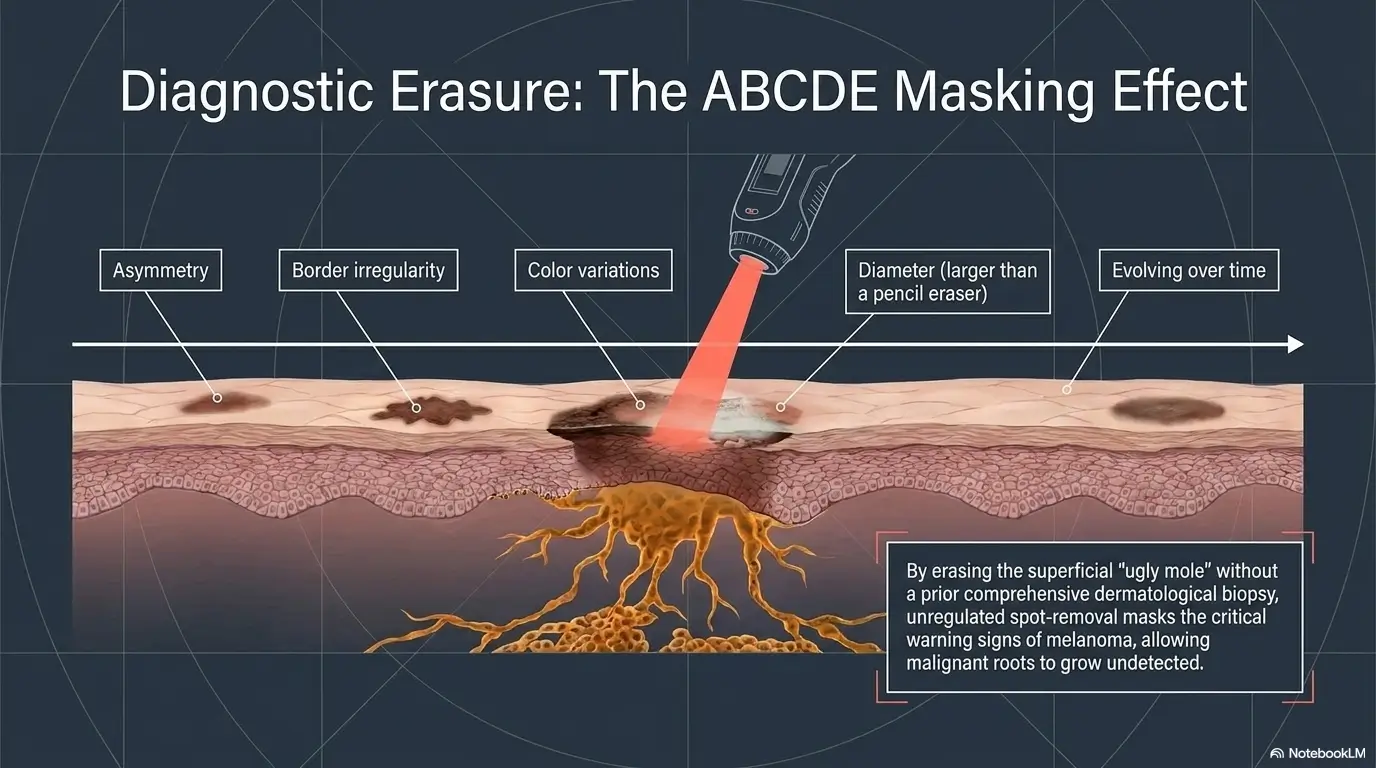
Do not book cosmetic brightening, mole removal, or laser treatment over a spot that has not been medically assessed. New, changing, bleeding, painful, irregular, or unexplained lesions need proper evaluation.
The American Academy of Dermatology’s ABCDE warning signs for melanoma are a useful patient education tool: asymmetry, border irregularity, color variation, diameter, and evolving changes. This does not replace a medical exam, but it helps you know when to stop browsing and start booking qualified care.
Severe acne, cysts, scarring, infection, or painful inflammation
Acne can be cosmetic, medical, hormonal, inflammatory, painful, scarring, or all of the above. Severe acne and cystic lesions deserve medical attention because delayed treatment can increase scarring risk.
Extractions and calming masks may feel satisfying, but they may not address the root problem. If acne is painful, widespread, scarring, or affecting your life, seek dermatology-level care.
History of keloids, melasma, eczema, allergies, immune issues, or medication conflicts
Past skin behavior predicts future risk. Keloid tendency can affect procedures that injure the skin. Melasma can worsen with heat, irritation, or sun exposure. Eczema and allergies can complicate products, numbing creams, adhesives, and aftercare. Immune issues and medications can affect healing or infection risk.
Do not hide these details because you want the procedure. The provider cannot protect you from information you kept in a tiny locked drawer.
Prior bad reaction to lasers, injectables, numbing cream, or fillers
If you have reacted badly before, say so early. Bring product names if you know them. Mention swelling patterns, delayed reactions, infections, nodules, pigment changes, severe bruising, or fainting history.
For travelers, this matters even more because urgent follow-up may be harder once you leave Korea.
How to Read a Korean Clinic Website Like a Careful Adult
Separate the clinic category from the actual procedure
Start by ignoring the category label for a moment. Instead, identify the actual procedure. Is it topical skincare, prescription care, injection, laser, radiofrequency, ultrasound, peeling, extraction, surgery, or follow-up management?
Then ask whether your concern is maintenance, diagnosis, or enhancement. This single move clears much of the fog.
The broader Korean service habit of quick, structured appointments may feel familiar if you have read about why Korean clinics are often so fast. Speed can be efficient, but procedure decisions still deserve careful translation.
Look for consultation process, device names, provider roles, and aftercare policy
A strong clinic page should make it easy to understand what happens before, during, and after treatment. Look for consultation steps, provider qualifications, device or product names, typical downtime, side effects, contraindications, and aftercare instructions.
If the page only shows results and discounts, send questions before booking. If the clinic answers clearly, that is a good sign. If the answers remain vague, your booking finger can take a graceful nap.
Translate the page, then translate the risk: what could go wrong?
Machine translation can help you understand the page, but it will not always explain cultural context or clinical implications. After translating the words, translate the risk.
For example, “laser toning” should become: what device, what target, what skin type considerations, what pigment risks, what downtime, what aftercare, what number of sessions, and who operates it?
Money Block: Five-Tier Clinic Clarity Map
- Tier 1: Vague beauty menu. Pretty names, few details. Proceed slowly.
- Tier 2: Procedure list. Names treatments but gives little risk context. Ask follow-up questions.
- Tier 3: Process clarity. Explains consultation, treatment steps, and aftercare. Better comparison value.
- Tier 4: Provider clarity. Shows who evaluates and performs care. Stronger trust signal.
- Tier 5: Complication clarity. Explains side effects, contraindications, and follow-up. Best pre-booking signal.
Neutral action: Rank each clinic from Tier 1 to Tier 5 before comparing price.
Next Step: Build a Three-Question Clinic Filter
Question 1: Is this concern cosmetic, medical, or both?
Begin with the concern, not the package. Enlarged-looking pores, dullness, and mild texture may be mostly cosmetic. Severe acne, changing lesions, infection, or painful inflammation is medical. Pigmentation, scarring, redness, and hair loss often sit in the overlap zone.
When in doubt, choose the safer category first. A medical evaluation can still lead to cosmetic treatment. A purely cosmetic booking may miss a diagnosis.
Question 2: Who diagnoses, performs, and follows up?
Write these as three separate names or roles. Who diagnoses? Who performs? Who follows up?
If the same qualified physician handles all three, that is one model. If different staff members are involved, ask how supervision works. Clear roles reduce confusion and help you know whom to contact if something changes.
Question 3: What is the complication plan if my skin reacts badly?
This is the question many patients skip because it feels awkward. Ask anyway. You are not predicting disaster. You are checking whether the clinic has a plan.
Ask about urgent contact, follow-up appointments, signs that need medical attention, medication access, and what to do after returning home. A safe plan should be understandable before you pay.
- Is my concern cosmetic, medical, or both?
- Who diagnoses, performs, and follows up?
- What is the complication plan?
Apply in 60 seconds: Paste these three questions into your message before contacting any clinic.
For travel planning, do not forget the boring paperwork around risk. If you are considering procedures abroad, travel insurance for South Korea can be worth reviewing carefully because cosmetic procedures, elective care, complications, and exclusions may be handled differently by policy.
FAQ
Why do Korean skincare clinics offer medical-looking treatments?
Many Korean clinics combine beauty maintenance, cosmetic procedures, and medical skin care because patient demand overlaps. Acne, pigmentation, scars, wrinkles, texture, and facial balance may be discussed in one clinic. The important step is to identify whether the treatment is routine skincare, medical diagnosis, or a procedure that needs licensed clinical judgment.
Is a Korean skin clinic the same as a dermatologist’s office?
Not always. Some Korean skin clinics may be physician-led dermatology clinics, while others may focus more on aesthetic services. The English label can be confusing. Ask whether a dermatologist or licensed physician evaluates patients, who performs procedures, and what aftercare is available.
Are lasers in Korea considered skincare or medical treatment?
Lasers should be treated as medical or medical-adjacent procedures, even when marketed with skincare language. They use energy to affect skin tissue and can cause burns, pigment changes, irritation, or other complications if poorly matched to the patient or concern.
Why are cosmetic procedures so common in Korean dermatology clinics?
Korea has strong demand for visible skin refinement, fast clinic access, and aesthetic treatments. Dermatology and cosmetic medicine often overlap because concerns such as acne scars, pigmentation, redness, wrinkles, and pores can involve both medical evaluation and appearance-focused treatment.
Should US travelers get injectables or lasers while visiting Korea?
Some travelers do, but it should not be an impulse decision. Ask about credentials, product or device details, contraindications, side effects, downtime, and follow-up after you return home. Avoid stacking multiple first-time procedures right before a flight.
How can I tell if a Korean clinic is doctor-led?
Look for physician names, credentials, consultation process, medical supervision details, and clear answers from the clinic. Ask directly who evaluates you, who performs the procedure, and who handles complications. If answers are vague, slow down.
What skin concerns should not be handled like beauty treatments?
Changing moles, bleeding spots, severe acne, cysts, infection, painful inflammation, sudden rashes, unexplained lesions, and reactions involving swelling or fever should be treated as medical concerns. Get qualified care rather than choosing a beauty package.
Is Korean skincare culture the reason clinics blend beauty and medicine?
It is one reason, but not the only one. The blur also comes from clinic density, fast service models, aesthetic technology, competitive marketing, medical tourism, and patient expectations for visible results. Culture sets the music; the clinic system writes the arrangement.
Conclusion: Keep the Glow, Add the Guardrails
The confusion starts with a simple scene: one Korean clinic page, five possible meanings. Skincare, dermatology, and cosmetic medicine blur together in Korea because the culture values visible skin care, clinics compete through convenient treatment menus, and medical aesthetics often sit close to routine beauty maintenance.
That blur is not automatically bad. It can make care accessible, efficient, and sophisticated. But it becomes risky when a reader mistakes soft language for low risk, or a beautiful package name for a medical plan.
Your concrete next step for the next 15 minutes: choose one Korean clinic page you are considering and create a four-line translation underneath it: actual procedure, provider role, downtime, and complication plan. If you cannot fill in those lines, do not book yet.
Good skin decisions are rarely dramatic. They are usually calm, specific, and slightly boring in the best possible way.
Last reviewed: 2026-05.