Korean social cues, decoded carefully
Why Perfume, Hair, and Skin Tone
Signal Status in Some Korean Social Circles
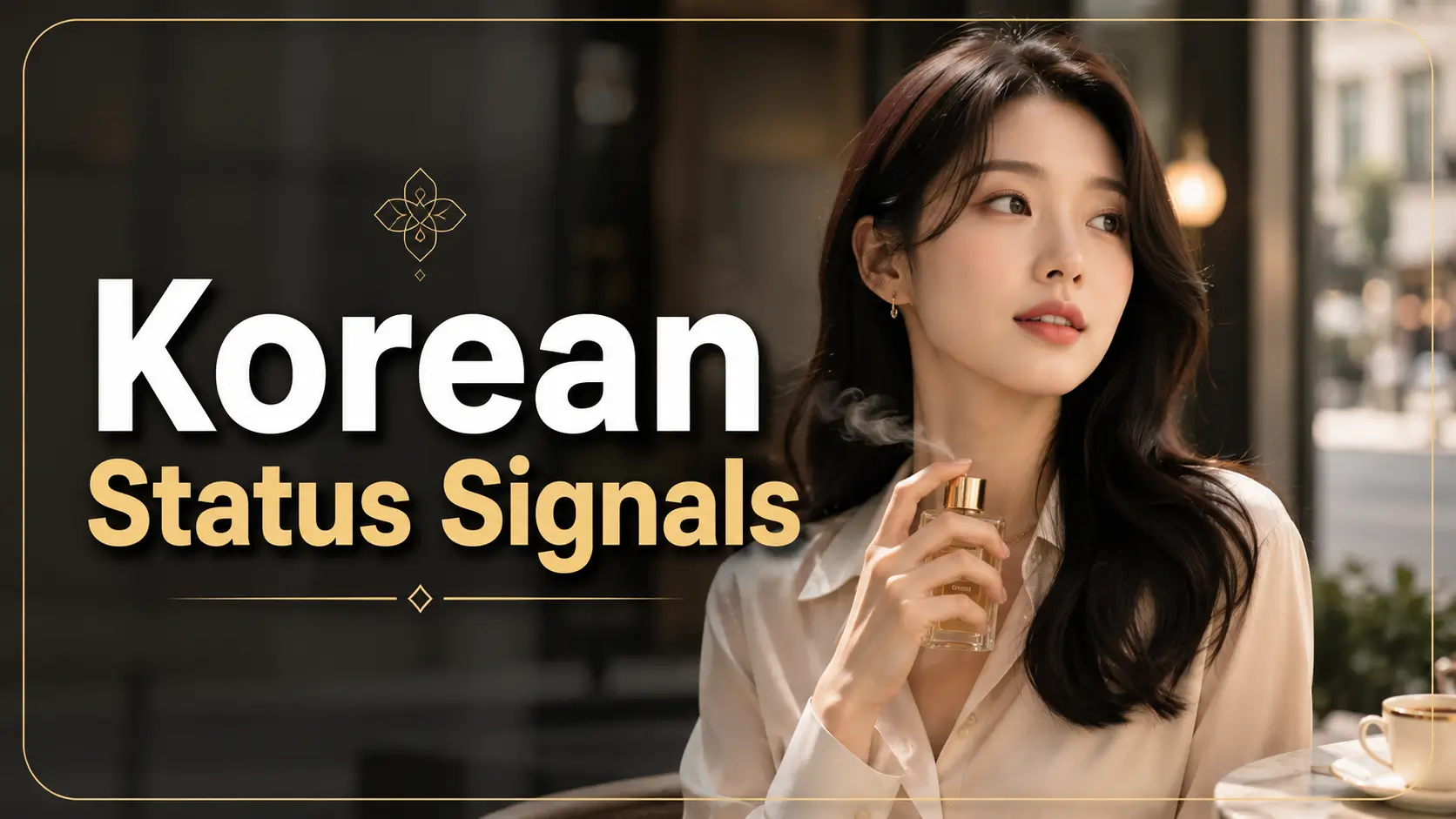
In some Korean rooms, status does not always arrive wearing a logo. It may arrive as a barely-there fragrance, freshly shaped hair, sunscreen-diligent skin, or the quiet confidence of someone who looks prepared before anyone has asked them to perform.
That does not mean every Korean person judges people by perfume, hair, or skin tone. It means certain social settings can read appearance as a kind of social handwriting: taste, discipline, class familiarity, trend awareness, and the ability to understand the room without announcing that you understand it.
This guide is written for readers who want cultural clarity without turning people into stereotypes. Think of it as a field guide for noticing patterns ethically, not a scoreboard for ranking faces, bodies, or bank accounts.
Read the room
Understand why small grooming choices can carry social meaning in offices, cafés, weddings, and dating spaces.
Avoid lazy takes
Separate cultural explanation from endorsement, especially around colorism, gender pressure, and class signals.
Write better
Use more accurate language for blogs, travel notes, K-beauty content, and cultural commentary.
The guiding rule: describe the cue, explain the context, and never let one detail become a verdict on a person. 🕯️
Snapshot
This article is for US and UK readers trying to understand Korean beauty culture, K-drama styling, K-beauty shopping, expat etiquette, or social cues without flattening Korea into one tidy myth. You will learn what perfume, hair, and skin tone can signal in some circles, where those signals become risky or unfair, and how to write or talk about them with more precision.
Table of Contents
Start With the Safety Rail: Signals Are Not Scores
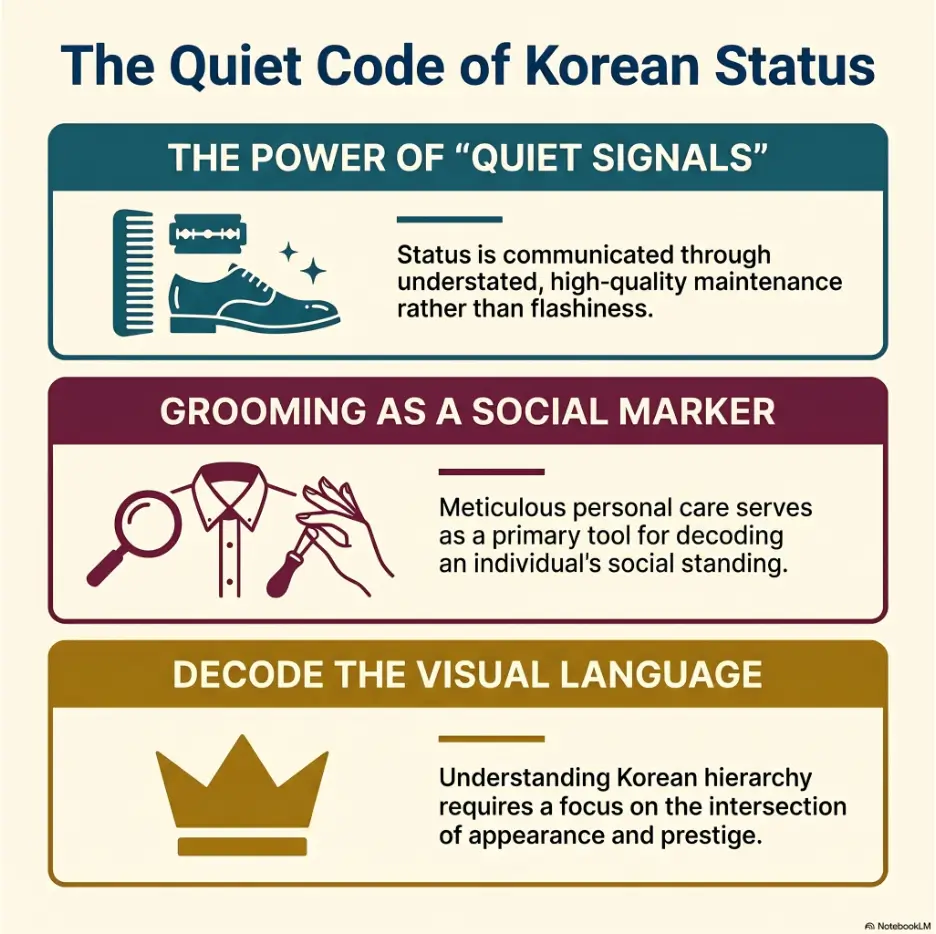
Perfume, hair, and skin tone can function as status signals in some Korean social circles, but they are not universal rules. They are cues, not character evidence. A person’s fragrance does not prove class. A haircut does not prove discipline. Skin tone should never be treated as a moral, social, or aesthetic ranking.
The careful question is not “What do Koreans think?” That question is too large and too blunt. The better question is: “In which settings might these cues be read socially, and why?” That small shift saves the article from becoming a cultural sledgehammer.
What this article can and cannot do
This article can help readers notice patterns in Korean beauty culture, office presentation, K-beauty shopping, social etiquette, and soft luxury signaling. It can help bloggers choose better language and help travelers avoid reading one moment as a national law.
It cannot tell you what any one Korean person believes. It cannot tell you how someone should look. It cannot make colorism, lookism, or class pressure harmless by giving them a tidy explanation.
Key takeaway
Use cultural cues as context, not as conclusions. The moment a signal becomes a score, the analysis has gone from useful to unfair.
A practical safety checklist for readers and writers
- Use “can signal” instead of “means.”
- Say “some Korean social circles” instead of “Koreans.”
- Separate beauty preference from social pressure.
- Name colorism when skin tone is part of the discussion.
- Avoid using “obsessed” when “socially pressured” or “highly appearance-aware” is more accurate.
- Include men and older adults when relevant, not only young women.
- Remember that Seoul is influential, but it is not all of Korea.
The Status Code Is Local, Not National
Korean social life can be intensely context-sensitive. The same person may dress one way for a neighborhood café, another way for a corporate dinner, another way for a wedding, and another way for a Sunday walk near the river. The code changes with the room.
That is why perfume, hair, and skin tone should be read as situational signals. They may matter more in a Gangnam clinic waiting area than at a countryside market. They may matter more at an alumni dinner than in a close family kitchen. They may matter differently in a startup office than in a public-sector workplace.
Why “some circles” does so much ethical work
The phrase “some circles” is not timid. It is accurate. Korean society contains different generations, regions, religions, politics, income levels, subcultures, school ties, workplaces, and family expectations. A polished perfume-and-hair code may be strong in one friend group and almost irrelevant in another.
For a blogger, this matters because broad claims are easy to write and hard to defend. More precise writing feels less viral at first, but it ages better. It also treats readers like adults rather than tourists peering through a department-store window.
The hidden role of nunchi
Many Korean social settings reward reading the air: noticing hierarchy, tone, age, closeness, timing, and what is left unsaid. This is often discussed through nunchi at work in Korea, but the idea reaches beyond offices.
Appearance can become part of that silent reading. A soft fragrance, neat hair, or carefully managed base makeup may suggest, “I understand this room.” The signal is rarely shouted. It is closer to a small folded note passed under the table.
Why social fluency can look like personal taste
A person may genuinely enjoy perfume, hair care, or skincare. At the same time, the choices may also help them move more smoothly through social spaces. Agency and pressure often sit at the same table, drinking the same iced Americano.
That double truth is important. Korean beauty culture is not only oppression, and it is not only self-expression. It can be both pleasure and performance, creativity and risk management, play and social armor.
Perfume: The Quiet Luxury Signal That Stays Close to the Skin
Perfume is a status cue because it works through proximity. It does not need a large logo. It enters the room late, then lingers near the person rather than above them. In certain Korean social circles, that restraint can read as taste.
The signal is not simply “expensive scent.” It can be the choice of a clean, skin-close fragrance, the discipline not to overspray, or the ability to choose a scent that fits the occasion. A perfume that feels elegant at a dinner may feel intrusive in a crowded subway car.
Why scent can signal taste before wealth
Many people think luxury signaling starts with price. Scent often starts with editing. The person who smells faintly fresh, woody, powdery, citrusy, or musky may seem polished because the fragrance does not demand applause.
In a culture where social harmony matters, volume can be risky. A perfume that fills an elevator may read as inconsiderate rather than glamorous. The “right” scent is often the one that seems to know where its own border is.
Niche brands and the small-bottle flex
Niche fragrance can signal cultural literacy because it suggests the wearer has moved beyond the obvious bestseller shelf. The point is not that niche is automatically better. The point is that it may suggest curiosity, disposable income, and a taste identity that feels more personal.
Small bottles, travel sprays, and decants can create their own quiet signal. They suggest someone has tested, compared, and chosen. For K-beauty shoppers and culture writers, this is a useful reminder: fragrance status often lives in selection, not only in spending.
Useful external reading
For readers who want research context around appearance discrimination in South Korea, this study is a strong starting point.
Read the appearance discrimination studyWhen perfume reads wrong
The mistake is assuming fragrance always raises status. In tight public spaces, classrooms, shared offices, hospitals, or formal family settings, too much scent can feel socially clumsy. A luxury perfume can become a liability if it ignores the room.
For budget-conscious shoppers, the practical lesson is merciful: you do not need a large collection. A clean, subtle, occasion-aware fragrance is often more useful than an expensive bottle worn too heavily.
Hair: The Maintenance Calendar People Pretend Not to See
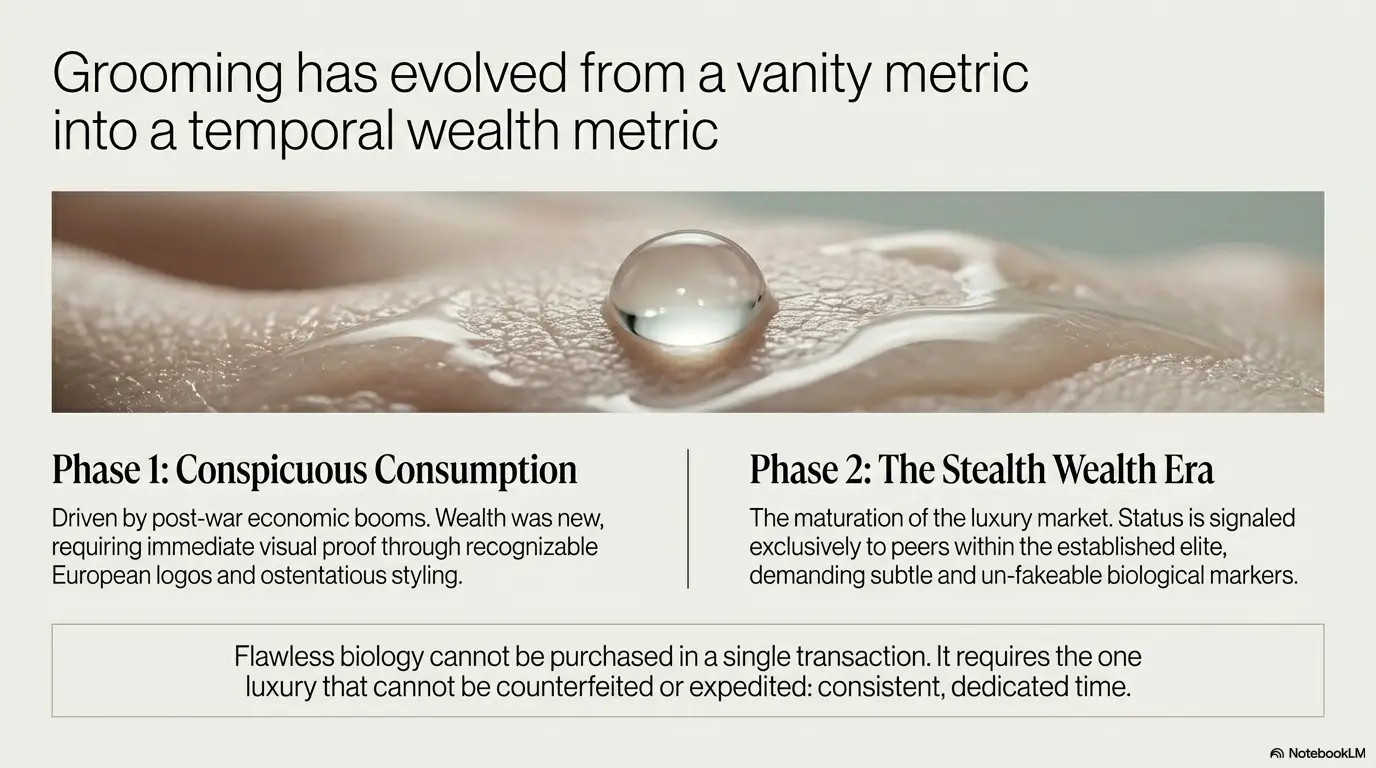
Hair is one of the most visible forms of time management. A glossy cut, softened layers, healthy-looking texture, tidy roots, or controlled volume may look effortless, but it often carries a calendar behind it. Salon visits. Treatments. Scalp care. Morning heat styling. The quiet economics of upkeep.
In some Korean social circles, hair suggests whether a person is prepared for the social moment. It may be read in offices, introductions, weddings, school events, and dating contexts. The hair itself is visible; the discipline behind it is the signal.
The salon schedule behind “effortless” hair
Effortless hair is often not effortless. Soft waves may require a perm, a blowout, or practiced styling. Sleek hair may require treatments or tools. A natural-looking color may require regular root work. This is why hair can signal economic comfort without displaying obvious wealth.
It also signals planning. People who maintain a look through humidity, commute stress, long workdays, and social events are often read as organized. Fair or not, grooming becomes a shorthand for reliability.
Hair as office readiness
In Korean office culture, presentation can be part of professional legibility. A neat haircut may not make someone better at their job, but it can reduce social friction in workplaces where first impressions still carry weight. Readers interested in the broader work setting can pair this topic with Korean office culture.
The danger is obvious: this can slide into unfair appearance judgment. A person with less time, money, health, or hair texture compatibility may be penalized for reasons unrelated to ability. That is why a responsible article should explain the signal without cheering for the pressure.
Short Story: The haircut before the family lunch
Mina had lived abroad for six years and came back to Seoul with one suitcase, two sweaters, and the confidence of someone who had learned to make her own breakfast in five countries.
Before meeting her boyfriend’s parents, she bought a modest dress. Her friend looked at it, nodded, then asked, “Hair appointment?” Mina laughed. The dress had felt like the outfit. The hair, apparently, was the weather report.
At lunch, no one praised her blowout. No one mentioned it at all. That was the lesson. In that room, the signal worked because it disappeared. She looked prepared, and preparation made everyone relax.
The practical takeaway is not “always change yourself.” It is this: in some Korean social settings, grooming is not treated as decoration. It is read as respect for the occasion.
Skin Tone and Brightness: The Most Sensitive Signal in the Room
Skin tone is the most ethically delicate part of this topic. It carries history, class ideas, labor assumptions, beauty marketing, colorism, sun-avoidance habits, and personal pain. It should never be treated as a simple beauty preference.
In some Korean social circles, lighter or more even-looking skin may be associated with care, indoor work, youthfulness, social polish, or access to beauty routines. But that association is not neutral. It can reinforce colorism and make people feel judged for biology, outdoor labor, travel, sports, aging, health, or heritage.
Brightening versus whitening: the language trap
K-beauty often uses language such as brightening, tone-up, radiance, glass skin, clarity, and evenness. These terms may refer to hyperpigmentation care, sunscreen habits, texture, or glow. They may also soften older whitening pressures into more acceptable packaging.
Writers should not treat the language as harmless just because it sounds modern. “Brightening” may be about dullness or dark spots in one context, but it can also sit close to a preference for lighter skin. The difference matters, especially when writing for readers who may not know the cultural weight behind the words.
Sun exposure and class assumptions
In many societies, skin tone has been tied to class assumptions about indoor and outdoor labor. Korea is not alone in this. When fairer skin is read as protected, polished, or refined, darker skin can be unfairly read as neglect, roughness, or lower status.
That is colorism, even when it hides behind compliments about being “clear,” “clean,” or “bright.” A responsible article should make the mechanism visible without implying that every individual who buys sunscreen or uses brightening skincare is participating knowingly in discrimination.
Key takeaway
When writing about Korean skin tone preferences, name both sides: personal skincare agency and the social pressure that can make “brightness” feel compulsory.
How to talk about Korean skin clinics carefully
Korean skin clinics are often part of the conversation because they make maintenance visible, accessible, and socially normalized. Treatments may focus on acne, texture, pigmentation, redness, scars, pores, hydration, or anti-aging. The topic is broader than skin tone alone.
If you write about clinics, avoid implying that clinic culture proves vanity. Many people use clinics because the service system is fast, competitive, and ordinary in certain urban circles. For more context, see this guide to Korean skin clinics.
The Real Message Is Discipline, Not Just Beauty
The deeper signal behind perfume, hair, and skin is often discipline. Not discipline in the moral sense. More like social self-management: showing that you have noticed the expectations of the room and made yourself legible within them.
This is why appearance can matter in job interviews, introductions, weddings, alumni gatherings, and first meetings. The visible detail says, “I came prepared.” Whether that is fair depends on the setting and the pressure attached to it.
Polished does not always mean rich
A polished person may not be wealthy. They may be strategic. They may have learned which small choices create fewer questions: clean shoes, neat hair, subtle scent, sunscreen, pressed clothing, calm makeup, tidy nails, and seasonally appropriate styling.
For readers comparing options before spending money, this is useful. The best way to choose a grooming upgrade is not to chase every trend. Start with the cue that solves the most social friction for your actual life.
The job-interview shadow
Appearance pressure becomes especially sharp around hiring. Resume photos, interviews, and workplace first impressions have long shaped anxieties around grooming in Korea. If this topic interests you, the related guide on the Korean resume photo adds useful context.
The problem is not that people want to look presentable. The problem is when presentation becomes a hidden toll gate, especially for people with less money, less time, disabilities, darker skin, acne, hair loss, nonconforming gender presentation, or unfamiliarity with local codes.
Show me the nerdy details
Status signals often work through costly signaling and social fluency. A costly signal does not have to be outrageously expensive. It may cost time, attention, routine, taste education, or maintenance.
Perfume can signal taste because the wrong amount is socially risky. Hair can signal consistency because maintenance repeats. Skin care can signal routine because results are often gradual. In tightly coded groups, the signal says less about raw beauty and more about whether someone has learned the group’s expectations.
The ethical problem is that these signals can reward people who already have time, money, health, and social access. That is why cultural explanation should always include a caution line.
A simple spending rule
Before paying for a fragrance, hair service, skincare treatment, or style consultation, ask one boring but powerful question: “What social problem am I actually trying to solve?”
If the answer is “I want to feel fresh at work,” you may need a light scent and better laundry habits, not a premium perfume. If the answer is “I want my hair to survive humid mornings,” a practical cut may beat a high-maintenance trend. If the answer is “I feel pressured to change my natural skin tone,” pause before spending at all.
Where the Signals Get Louder: Offices, Cafes, Weddings, and Alumni Circles
Status cues get louder when the room is socially dense. That means the group shares enough expectations to notice small differences. A fragrance, haircut, or base makeup style may matter more when everyone knows the same cafés, neighborhoods, salons, schools, brands, or wedding customs.
In looser spaces, the cue weakens. In tighter spaces, it gains electricity. The same perfume that feels like personal style in one room may feel like a membership badge in another.
Cafes and neighborhood identity
Some Seoul cafés are not just places to drink coffee. They are tiny stages for taste. The table, tote bag, hair clip, scent, phone case, and base makeup may all whisper a social sentence. Readers curious about place-based identity can connect this to Seoul neighborhood identity.
The point is not that everyone is performing. The point is that some environments make performance easier to read. A neighborhood can teach people what “casual” is supposed to look like, then pretend nobody studied.
Weddings and introductions
Weddings, family introductions, and formal meals often raise the stakes. Hair that looked ordinary on Friday may suddenly feel underprepared on Saturday. Fragrance may need to be softer. Skin and makeup may be expected to look “clean” rather than expressive.
For travelers or expats, the safest approach is restraint. Neat, respectful, comfortable, and not too loud will usually travel better than trying to copy the most polished person in the room.
When belonging looks casual
One tricky part of status signaling is that the strongest signals often pretend not to be signals. The person wearing the right scent, hair texture, or makeup finish may look relaxed because the group already recognizes the code.
This is not uniquely Korean. Every society has casual uniforms. Korea’s beauty economy simply makes some of these uniforms especially refined, fast-moving, and visible.
The Cue, Context, Caution Framework
1. Cue
Name the visible detail: subtle perfume, neat hair, bright base makeup, sunscreen habits, or salon-finished texture.
2. Context
Explain where it may matter: office, café, wedding, dating, alumni group, clinic district, or friend circle.
3. Caution
Add the guardrail: no cue defines a person, and skin tone must never become a status ranking.
Men Are Reading and Sending These Signals Too
Korean grooming pressure is often discussed as if it belongs only to women. That misses a large part of the story. Men also read and send signals through hair volume, skin texture, fragrance, shaving, brows, fitness, clothing fit, and the prized idea of looking “clean.”
The male version often has its own constraint: look maintained, but do not always look as if you tried too hard. This is its own little trapdoor. Low maintenance may simply mean the maintenance is better hidden.
Clean masculinity and social ambition
In some circles, a man’s grooming can signal ambition, self-respect, and social awareness. Hair that holds shape, skin that looks cared for, and a quiet scent may read as professional without feeling flashy.
This is especially visible among office workers, students preparing for interviews, men dating seriously, and younger professionals moving through image-aware industries. The signal is not “fashion guy.” It is often closer to “reliable, current, and socially awake.”
The pressure is real, even when the style is minimal
Minimal grooming can still be labor. A simple haircut may require frequent trims. Clear-looking skin may require routines, clinic visits, or careful product testing. A “fresh” scent may require comparing options and knowing what not to wear.
For a deeper companion topic, read this guide to Korean men’s grooming culture. It pairs well with this article because it shows how appearance pressure can be gendered without being limited to women.
Key takeaway
When men’s grooming looks simple, do not assume the pressure is absent. Sometimes the most socially acceptable effort is effort trained to disappear.
How US Writers Can Discuss This Without Flattening Korea
US and UK writers often get Korean appearance culture wrong in two opposite ways. One version exoticizes it: “Koreans are obsessed with beauty.” The other version sanitizes it: “It is just self-care.” Both are too thin.
The better approach is to write with two hands. One hand holds agency: people enjoy beauty, scent, salons, clinics, and style. The other hand holds pressure: appearance discrimination, colorism, class cues, gender expectations, and workplace risk are real.
Words that improve the article immediately
Small wording changes can rescue a whole paragraph. “Can function as” is better than “is.” “Some circles” is better than “Koreans.” “Social pressure” is better than “obsession.” “Lighter skin preference” is clearer than pretending brightening language has no history.
When you are unsure, add a caution sentence. It does not weaken the article. It gives the reader a handrail.
| Risky phrasing | Better phrasing | Why it works |
|---|---|---|
| Koreans judge status by skin. | In some Korean social circles, skin tone and clarity can be read through class and beauty expectations. | It narrows the claim and names the pressure. |
| Koreans are obsessed with looking perfect. | Appearance can carry unusually high social stakes in certain schools, workplaces, and dating settings. | It removes judgment-heavy wording. |
| Pale skin is the Korean ideal. | Lighter and more even-looking skin has been favored in many beauty contexts, but the issue is changing and contested. | It avoids freezing a society in one sentence. |
| Perfume shows wealth. | Perfume can signal taste, restraint, trend literacy, or access to niche beauty culture. | It explains more than price. |
What not to do in K-beauty content
- Do not rank Korean people by “polish.”
- Do not treat skin tone as a personal achievement.
- Do not assume a clinic visit means insecurity.
- Do not write as if Seoul trend districts represent everyone.
- Do not turn social pressure into a shopping list.
- Do not imply that buying premium products buys belonging.
If you write for travelers, pair this with etiquette topics such as Korean meeting etiquette. Appearance cues rarely stand alone. They interact with greetings, speech levels, timing, seating, and the quiet art of not making a room uncomfortable.
Official context for visitors
If you are planning travel rather than writing analysis, official tourism resources are a safer starting point than social media generalizations.
Visit the official Korea travel siteComparison Tables and Practical Checklists for Readers
This topic can easily drift into abstract commentary. The practical value is in better decisions: what to buy, what not to buy, what to observe, what to write, and when to stop turning culture into a cart.
Good, Better, Best: learning the code without wasting money
| Approach | What it looks like | Best for | Watch out for |
|---|---|---|---|
| Good | Observe settings, keep grooming neat, choose subtle scent, avoid harsh claims. | Travelers, beginners, casual K-culture readers. | Copying one person as if they represent everyone. |
| Better | Compare contexts: office, café, wedding, dating, clinic district, family meeting. | Expats, bloggers, students, creators. | Forgetting region, age, gender, and class differences. |
| Best | Use cue, context, caution in every explanation and separate agency from pressure. | Writers, educators, cultural commentators. | Turning ethical nuance into a stiff lecture. |
Budget guide: when a free option is enough
If you are a K-beauty shopper, do not let cultural curiosity become financial panic. You do not need a premium fragrance, a salon membership, or clinic treatments to understand Korean status cues. Often, the free work is the most valuable work: notice context, restraint, and language.
| Reader goal | Free or low-cost option | Paid option to compare | Question before paying |
|---|---|---|---|
| Smell polished | Use less fragrance, test on skin, avoid overspraying. | Discovery set, travel spray, niche sample. | Will I wear this in real rooms, or only in my imagination? |
| Look more prepared | Improve hair shape, lint removal, ironing, shoe care. | Haircut, treatment, styling lesson. | Does this reduce daily friction? |
| Understand skin culture | Learn the difference between sunscreen, tone-up, brightening, and whitening claims. | Consultation, clinic visit, targeted products. | Am I addressing a concern, or obeying pressure? |
| Write better cultural content | Use precise language and compare settings. | Books, courses, expert review, translation help. | Will this make my article more accurate? |
Questions to ask before turning culture into content
- Am I describing a pattern or making a claim about all Koreans?
- Have I separated Seoul trends from broader Korean life?
- Have I included men, older adults, or workplace context where relevant?
- Have I named colorism carefully when discussing skin tone?
- Am I using beauty products as examples, or quietly pushing readers to buy status?
- Does my paragraph leave room for people who reject or reinterpret the norm?
Key takeaway
The most useful cultural writing does not ask readers to buy the right signal. It helps them understand why the signal works, when it fails, and who may be harmed by it.
Human rights context
For broader context on discrimination and human rights in Korea, the National Human Rights Commission of Korea is a useful official reference point.
Visit the National Human Rights Commission of Korea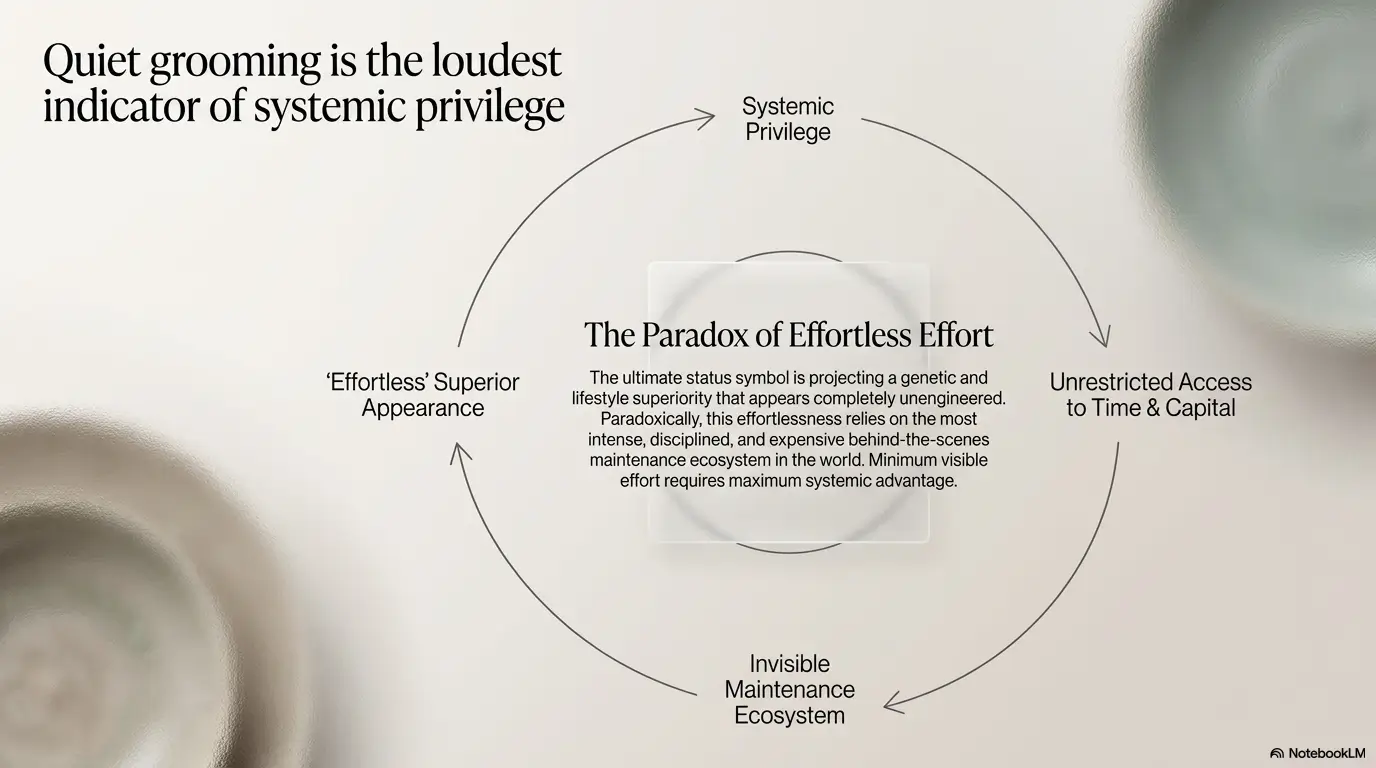
FAQ
Why is appearance so socially important in some Korean circles?
Appearance can act as a shortcut for preparedness, discipline, taste, and social fluency. In settings where first impressions matter, small details may be read quickly. That does not mean the judgment is fair, and it does not mean every Korean person values appearance the same way.
Is perfume considered a luxury signal in Korea?
It can be, especially when the scent feels subtle, personal, and well matched to the setting. In some circles, niche or skin-close fragrance may signal taste more than obvious wealth. Strong perfume in shared spaces can read as inconsiderate, so restraint matters.
Why does hair maintenance matter so much in Korean beauty culture?
Hair is highly visible and often read as a sign of routine. A neat cut, healthy texture, and controlled shape may suggest preparation for work, dating, family introductions, or formal events. The unfair side is that this can penalize people with less time, money, or compatible hair texture.
Is pale skin still seen as desirable in Korea?
Lighter and more even-looking skin has been favored in many Korean beauty contexts, but the reality is not one simple rule. Attitudes vary by age, subculture, media influence, personal values, and global beauty trends. Any discussion of this topic should name colorism carefully.
How should US readers understand Korean brightening products?
Brightening products may target dullness, dark spots, uneven tone, or post-acne marks. They may also sit close to older whitening ideals. The best reading is cautious: look at the claim, the context, and the social pressure around it before assuming it is only skincare or only colorism.
Do Korean men face appearance pressure too?
Yes. Men may face pressure around hair volume, clear-looking skin, neat shaving, fragrance, body shape, and clean styling. The expectation may be less decorative, but it can still be demanding. Minimal-looking grooming can still require time and money.
Are these beauty standards changing among younger Koreans?
Yes, but unevenly. Younger people may experiment more with gender presentation, tanning, tattoos, fragrance identity, street style, natural texture, or anti-standard beauty. At the same time, hiring, dating, social media, and family expectations can keep older pressures alive.
How can writers discuss Korean beauty culture respectfully?
Use precise language. Say “some circles,” “can function as,” and “may be read as.” Avoid turning beauty culture into a national personality. Include both agency and pressure, especially when discussing skin tone, clinics, gender, class, and workplace expectations.
Use the Cue, Context, Caution Method in the Next 15 Minutes
The simplest way to write or think better about this topic is to use one three-part paragraph: cue, context, caution.
Start with the cue: “In some Korean social circles, a subtle fragrance, neat hair, or even-looking base makeup can be noticed quickly.” Add the context: “These details may suggest taste, routine, and awareness of the setting, especially in offices, weddings, café districts, or first meetings.” End with the caution: “But no single cue defines a person, and skin tone should never be treated as a status score.”
That paragraph will not solve every ethical problem, but it will keep your writing from slipping on the wet floor of stereotype. It gives readers clarity without turning culture into a costume rack.
Your next step: choose one sentence from your draft, caption, travel note, or K-beauty post and rewrite it with the cue, context, caution method. Fifteen minutes is enough to make the whole piece wiser.
Last reviewed: 2026-07