K-Beauty Culture Guide
Why Personal Color Analysis Became
Such a Big Beauty Habit in Korea
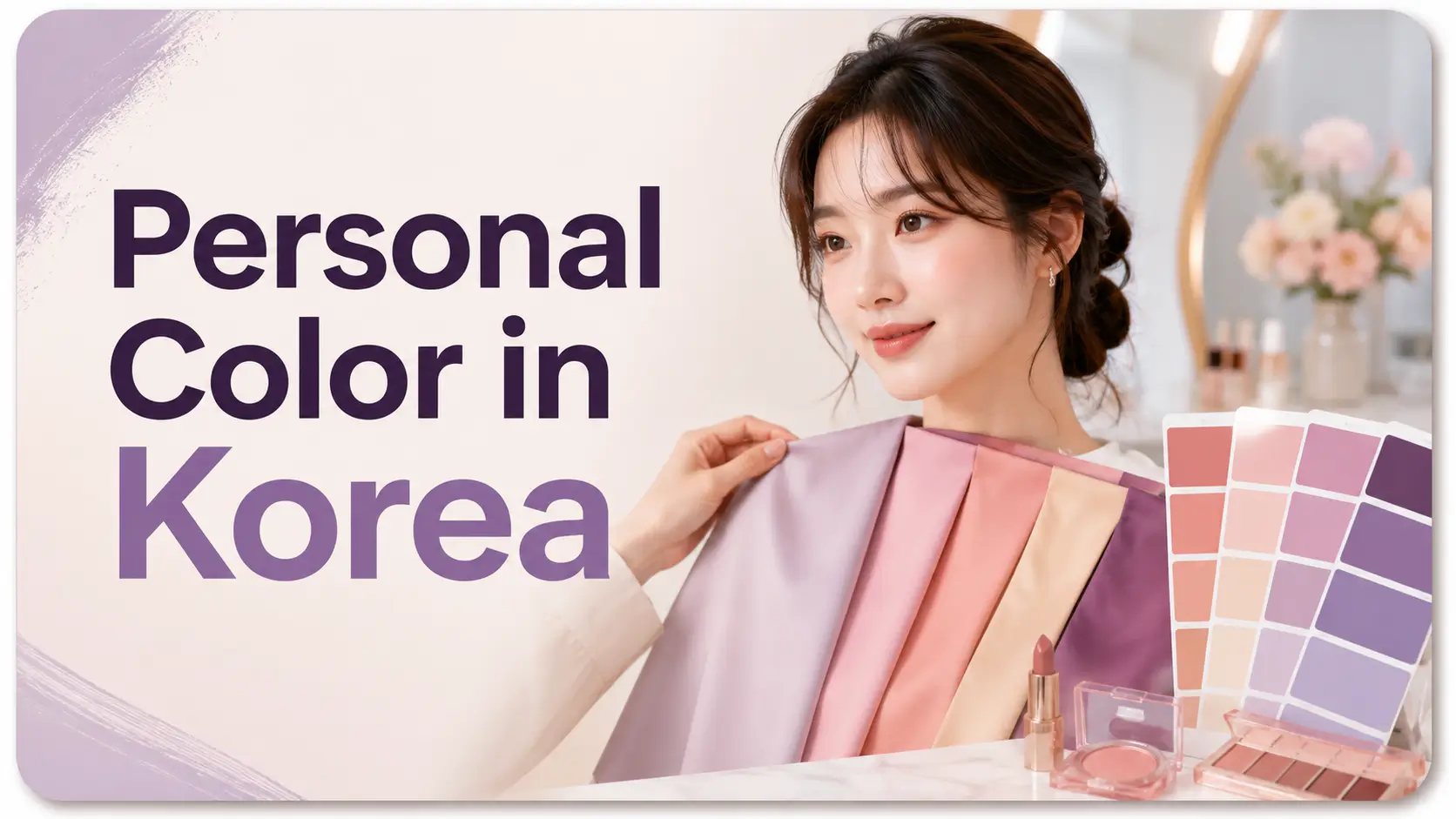
Personal color analysis in Korea did not become popular because everyone suddenly wanted a seasonal label. It became popular because beauty shopping had become too precise, too fast, and too easy to get almost right. One coral lipstick looks fresh on a screen, sleepy in a taxi mirror, and oddly orange under office lighting. That tiny mismatch can feel like a receipt-shaped sigh.
Korean personal color culture offers a cleaner system: warm or cool, muted or clear, soft or high contrast, safe everyday shades versus statement colors. For K-beauty fans, travelers visiting Seoul, and anyone tired of buying makeup that nearly works, the appeal is simple. It turns taste into a map without taking away the pleasure of wandering.
This guide explains why the habit took off, what a Korean-style consultation usually helps with, where the trend gets exaggerated, and how to use the idea without turning your makeup bag into a courtroom.
Shop smarter
Use color categories to avoid buying another “almost right” lipstick.
Decode K-beauty
Understand why Korean brands and influencers talk about tone, clarity, and muted shades.
Stay flexible
Treat your result as a helpful guide, not a tiny velvet prison.
Best first move: audit one lipstick, one blush, and one top before buying anything new. Your face will usually tell the truth faster than a trend chart. 🎨
Snapshot
This article is for K-beauty fans, Korea travelers, makeup shoppers, and professionals who want a polished everyday look without guessing at every product counter. You will learn why personal color analysis became so popular in Korea, how to use it before buying makeup or booking a service, what mistakes waste money, and how to run a simple three-product color audit today.
Table of Contents
Why Personal Color Hit Korea at the Perfect Moment
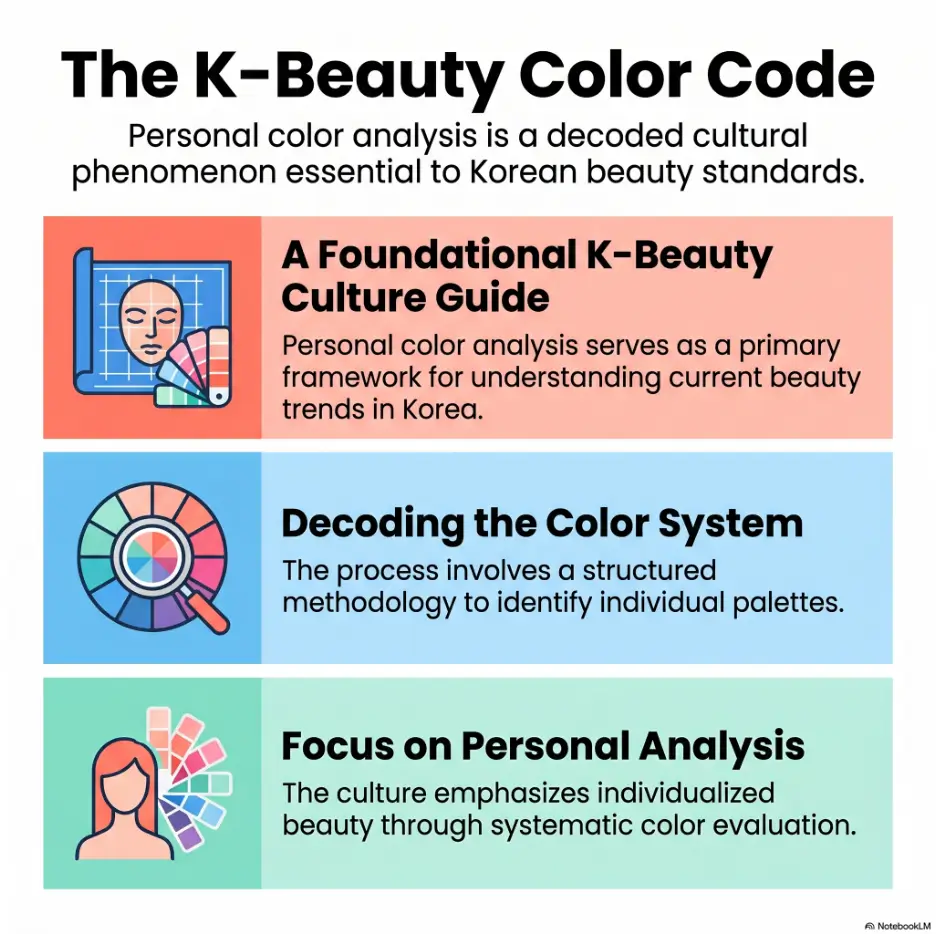
Personal color analysis became a Korean beauty habit because it arrived when the market was already trained to notice small differences. Korean beauty culture has long cared about finish, undertone, texture, lighting, and the quiet power of looking “clean” rather than heavily made up.
That made Korea unusually ready for a system that could explain why one beige makes a face look clear while another beige makes it look tired. The difference may look microscopic in a product photo. On the face, it can be the whole weather report.
The Beauty Market Was Already Hyper-Specific
K-beauty shoppers are used to choosing between dewy, semi-matte, blurred, watery, cushiony, brightening, tone-up, glassy, soft-focus, and barely-there finishes. Once a market teaches people to care about those details, color becomes the next small gate.
Personal color analysis gave shoppers a vocabulary for what they were already sensing. Instead of saying, “This lipstick looks strange on me,” someone could say, “It is too warm, too clear, or too high-contrast for my coloring.” That language matters. It makes the problem easier to fix.
K-Beauty Turned “Flattering” Into a Skill
In many beauty cultures, “flattering” can sound vague, almost mystical. In Korea, it often becomes practical: which brow tone softens your face, which blush looks natural after lunch, which hair color makes skin look clearer, which shirt shade works for a profile photo.
This is why personal color analysis fits Korean beauty so neatly. It does not need to promise transformation. It simply promises fewer wrong turns.
The Real Hook Is Less Random Shopping
The most addictive part of personal color analysis is not the label. It is the relief. Suddenly, the lipstick wall has fewer enemies. The hair dye chart stops looking like a tax form. The closet begins to separate into “works,” “almost,” and “why did I buy this under fluorescent lights?”
Key takeaway
Personal color analysis became big in Korea because it solved a modern shopping problem: too many similar products, too little certainty, and too many small shade mistakes that add up.
The Beauty Habit That Starts Before the Makeup Counter
The best way to understand Korean personal color analysis is to see it as a pre-shopping filter. It does not make every decision for you. It narrows the field so you can choose with less noise.
That is especially useful in K-beauty, where two shades can look almost identical in the tube and completely different on the face. A personal color result gives shoppers a reason to skip half the display before temptation starts humming.
Personal Color as a Pre-Shopping Filter
A shopper who knows they usually look better in soft, cool, muted colors can approach a new blush launch differently. They do not need to test every peach, coral, rose, mauve, and berry. They start with the range most likely to work.
That matters for budget-conscious readers. The best way to avoid wasting money on makeup is not always buying less. Sometimes it is buying with a clearer filter.
Why Lipstick Became the Gateway Product
Lipstick is often where people first notice personal color because lip shades are ruthless little truth-tellers. A color that looks elegant on one person can make another person look gray, orange, washed out, or strangely overdone.
Korean beauty often favors soft gradients, blurred lips, and natural-looking harmony. When the lip color is off, the whole face can look slightly interrupted. The wrong shade does not always scream. Sometimes it just keeps clearing its throat.
Bad Colors Waste More Than Money
A wrong-color product does not only cost the price on the receipt. It costs bathroom counter space, morning confidence, return-window stress, and that small irritation of trying to make something work because it was not cheap.
Personal color analysis appeals because it reduces that friction. It gives people a reason to stop forcing a product to behave.
Mini checklist: before buying a new K-beauty shade
- Check whether the shade reads warm, cool, neutral, muted, or clear.
- Look for swatches in natural light, not only studio lighting.
- Compare the shade to a product you already know works.
- Ask whether you like the color itself or the person wearing it.
- Buy one test product before building a full palette around it.
From Seasonal Theory to Seoul Studio Culture
Seasonal color analysis did not begin in Korea, but Korea gave it a very modern beauty-service format. Instead of sounding like an old style manual, it became something you could book, film, discuss with friends, and use before shopping.
The Korean version often feels less like a lecture and more like a practical studio session: drapes, mirrors, makeup suggestions, hair color notes, and sometimes product recommendations organized by undertone and season.
Warm, Cool, Muted, Clear: The Language People Actually Use
In Korean beauty content, you will often hear ideas such as warm tone, cool tone, muted, clear, light, deep, soft, and bright. These terms help people describe more than skin depth. They describe how colors behave near the face.
For example, a person with a soft muted palette may look better in dusty rose than neon pink. Someone who suits clearer colors may look fresher in crisp berry than beige-pink. The difference is not about being more beautiful. It is about visual harmony.
Why Korean Consultations Feel Practical
Many Korean personal color studios focus on decisions people actually make: daily makeup, office clothing, hair dye, glasses frames, accessories, and photo-ready colors. That gives the session a useful ending. You leave with categories you can apply in a store.
If you are already exploring beauty services in Korea, you may notice a similar practical rhythm in Korean skin clinics and salon culture. The service is not only about the treatment. It is about the aftercare, the plan, and the next decision.
The Draping Moment
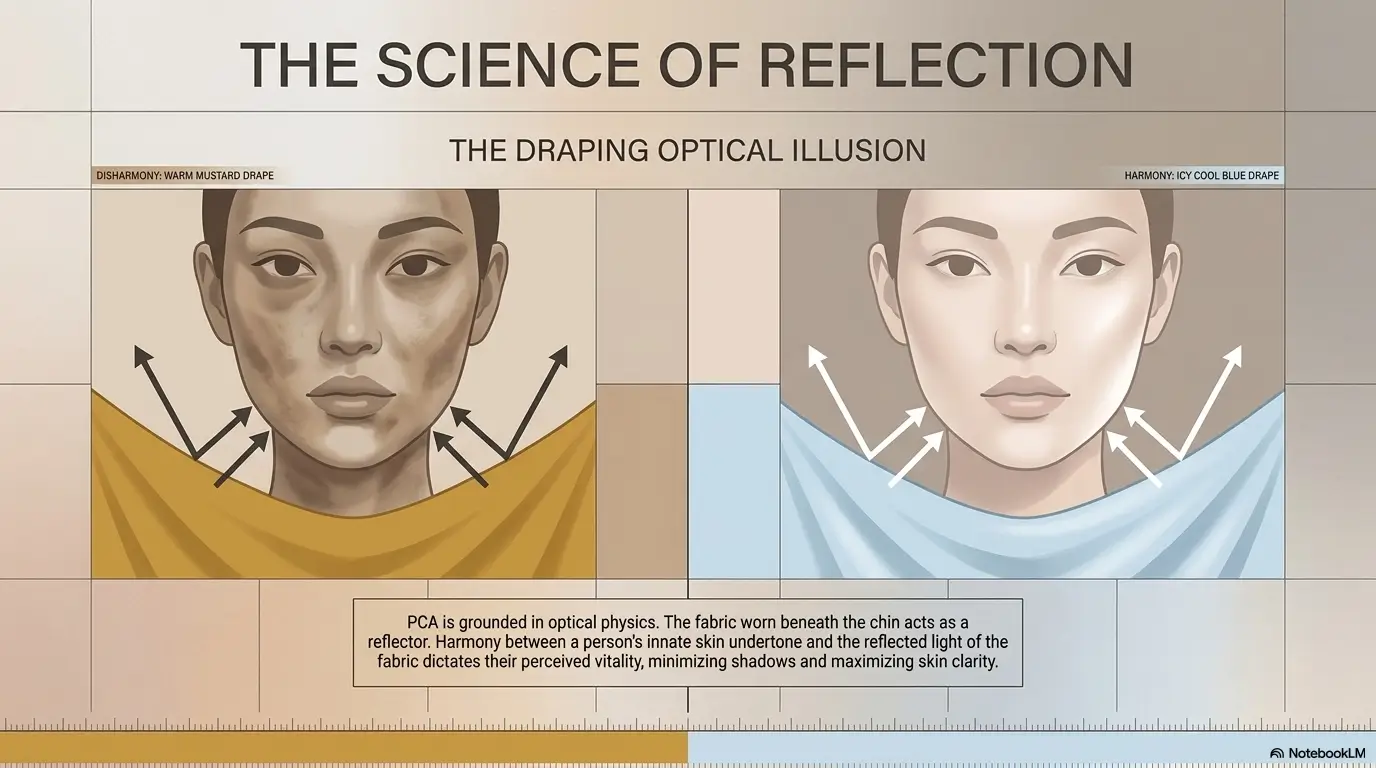
The famous part of a personal color test is draping: placing different colored fabrics near the face to compare how the skin, eyes, lips, and shadows respond. The moment works well on video because the change can feel surprisingly visible.
One fabric makes the face look even and awake. Another makes under-eye shadows step forward with tiny theatrical ambition. That contrast is why the trend travels so well on social platforms.
Personal Color Decision Flow
1
Observe
Notice what makes the face look clearer.
2
Compare
Test warm, cool, muted, and clear colors.
3
Filter
Skip shades least likely to flatter.
4
Test
Try products in daylight before buying more.
5
Refine
Keep the rules that help, soften the rest.
Why Young Koreans Made It Social, Not Private
Personal color analysis spread partly because it became a social activity. A consultation is practical, yes, but it is also a reveal, a conversation, and sometimes a tiny identity plot twist.
That makes it different from simply reading a color theory article alone. A friend can watch the drapes change your face, gasp at the wrong orange, and later stop you from buying it anyway.
The Friend-Date Version of Beauty Consulting
For young Koreans, booking a personal color session can feel like a beauty errand with a social ribbon tied around it. It is useful, but also fun enough to do with a friend before coffee, shopping, or a birthday outing.
This matters because beauty habits spread faster when they are shareable. A private result might stay private. A shared reveal becomes a recommendation.
TikTok, YouTube, and the Reveal Effect
Personal color content works well online because it has a clear before-and-after structure without requiring a dramatic makeover. Viewers can see one drape drain the face and another bring it back. That is a strong visual hook.
The format also gives creators a reason to discuss specific products. “This is good for summer cool tones” is more useful than “this is pretty.” For shoppers, that extra detail can feel like a small lantern in the aisle.
The Drama of the Unexpected Season
Some people go into a session expecting to be warm-toned because their skin looks beige or golden. Others assume they are cool-toned because silver jewelry looks decent. Then the drapes say something else.
That surprise is part of the trend’s charm. The result can feel personal without being too serious. It is identity-lite: interesting enough to share, low-stakes enough to laugh about.
Short Story: The Lip Tint That Finally Retired
Mina bought the same famous coral lip tint three times. The first time, she blamed the lighting. The second time, she blamed her base makeup. The third time, she wore it to brunch and looked, in her own words, “politely unwell.”
At a personal color session in Seoul, the consultant placed a warm coral drape under her chin. Mina’s face looked softer, but duller. Then came a muted rose. Her eyes looked clearer before anyone said a word.
She did not throw away her entire makeup bag. She simply stopped buying coral out of hope.
That is the practical lesson: personal color is most useful when it saves you from repeating the same expensive guess.
Who Personal Color Analysis Is For and Not For
Personal color analysis is not necessary for everyone. Some people have an instinctive eye for color and enjoy experimenting. Others prefer one signature look and feel no need to categorize it. That is perfectly fine.
Where it helps most is with repeated uncertainty: products that look good online but wrong at home, hair colors that feel close but not clean, and closets full of pieces that technically fit but rarely get worn.
For K-Beauty Fans With Too Many “Almost Right” Products
If your drawer contains three lip tints that all looked better on influencers, personal color analysis may help. It gives you a way to compare shade families rather than chasing individual viral products.
This is especially useful when buying online, where product photos, filters, and screen brightness can change how a shade appears. A personal palette will not make online shopping perfect, but it can reduce impulse errors.
For Travelers Considering a Session in Korea
For travelers, a personal color session can be both a practical beauty service and a cultural experience. It fits naturally into a Seoul itinerary, especially if you plan to shop for makeup, skincare, glasses, or clothing afterward.
Before booking, check whether the studio offers English support, written results, makeup product guidance, and enough time for questions. A cheaper session may be enough for curiosity. A more detailed session may be worth it if you want a usable style guide.
For Professionals Who Want a Polished Everyday Look
Personal color can also help professionals who want to look sharp without spending 30 minutes negotiating with a mirror each morning. A reliable lipstick, a flattering blouse, and a hair color that does not fight your face can make daily grooming easier.
If you are interested in how appearance and grooming fit into Korean social life, this guide pairs naturally with the cultural context in Korean men’s grooming culture.
Not For Anyone Expecting One Test to Define Identity
Your personal color result is not a personality diagnosis. It does not know your mood, job, music taste, favorite coat, or the fact that you sometimes want to wear dramatic red because the day deserves a cymbal crash.
Use the system for clarity. Do not let it replace taste.
The Makeup Bag Problem Personal Color Solves
The everyday value of personal color analysis shows up in the makeup bag. Most people do not need more products. They need fewer products that work better together.
A good color filter can make your routine calmer. Foundation, blush, lips, eyeshadow, hair color, and clothing stop competing for attention and begin to speak the same language.
Foundation Undertone Confusion
Foundation is where undertone confusion gets expensive. A base can be the right depth but the wrong undertone, leaving the face looking too pink, too yellow, too gray, or disconnected from the neck.
Personal color analysis does not replace foundation matching. It can, however, make you more alert to undertone language when comparing formulas. You begin to notice whether a shade family tends to clash with you before you buy the full bottle.
Lipstick That Looks Gorgeous Online but Strange in Daylight
Online lipstick shopping is a tiny casino with prettier packaging. Lighting, editing, lip pigmentation, and skin undertone all affect the final result.
A personal color framework gives you a better question: not “Is this shade beautiful?” but “Is this shade likely to be beautiful on me?” That shift can save money fast.
Blush, Hair Dye, and Clothing That Clash
Blush can change the whole face because it sits close to natural redness. Hair dye has even more impact because it frames the face every day. Clothing adds the final layer, especially tops, scarves, jackets, and anything worn near the neck.
This is why a strong consultation should not stop at lipstick. The best personal color analysis result helps you understand the whole visual conversation around your face.
| Beauty decision | Common problem | How personal color helps |
|---|---|---|
| Foundation | Right depth, wrong undertone | Improves undertone awareness before testing |
| Lipstick | Viral shade looks flat or harsh | Filters shades by warm, cool, muted, or clear qualities |
| Blush | Color looks separate from the face | Helps match natural flush and makeup style |
| Hair dye | New color makes skin look dull | Guides warmth, depth, and softness choices |
| Clothing | Nice item rarely gets worn | Identifies colors that brighten the face quickly |
Personal Color Analysis Cost, Options, and What to Compare
Prices for personal color analysis can vary by city, studio reputation, language support, session length, group size, and how detailed the final report is. Instead of chasing the cheapest option, compare what you actually receive.
For a casual K-beauty shopper, a simple group session may be enough. For a traveler planning a major beauty shopping day, a one-on-one session with product guidance may be more useful. For a professional changing hair color, wardrobe, and makeup at once, a deeper consultation can save more than it costs.
DIY vs Studio vs Premium Consultation
A DIY color audit can help you notice patterns, but it is vulnerable to poor lighting and personal bias. A studio session gives you comparison drapes and a trained eye. A premium session may add makeup mapping, wardrobe advice, hair color notes, and a more detailed report.
The right choice depends on your goal. Curiosity does not require a luxury appointment. A full beauty reset might.
| Option | Best for | What to check before paying |
|---|---|---|
| DIY color audit | Beginners testing the idea | Natural light, no heavy makeup, honest comparison photos |
| Budget group session | Friends, travelers, casual K-beauty fans | Group size, time per person, whether results are written |
| Standard one-on-one session | Shoppers who want clear guidance | Drape method, makeup examples, hair and clothing notes |
| Premium consultation | Wardrobe refresh, professional image, major hair change | Report depth, language support, follow-up, product guidance |
Questions to Ask Before Booking
Before booking a personal color analysis in Korea, ask practical questions. A beautiful studio page does not always mean the session will meet your needs.
- Will the session be one-on-one or shared with others?
- Is English support available if you need it?
- Do you receive a written or digital result?
- Does the session include makeup, hair, and clothing guidance?
- Will the consultant explain warm, cool, muted, and clear differences?
- Can you bring your own makeup products for review?
- Are product examples general, or tied to specific items sold nearby?
Good / Better / Best Setup
The smartest setup is not always the most expensive one. Match the level of help to the size of the decision you are making.
| Setup | What it includes | Smart use case |
|---|---|---|
| Good | DIY audit with existing lipstick, blush, and tops | You want to test the idea before spending money |
| Better | Standard studio session with drapes and basic report | You plan to buy makeup or clothing and want fewer mistakes |
| Best | Detailed consultation with makeup, hair, wardrobe, and follow-up notes | You want a practical mini style manual for daily use |
Key takeaway
Pay for clarity, not ceremony. A useful personal color session should help you make better buying decisions after you leave the studio.
Do Not Treat Your Result Like a Beauty Prison
The fastest way to ruin personal color analysis is to treat it as a law book. The point is not to ban joy from your closet. The point is to understand why certain colors are easier to wear.
If your result says muted summer and you love a loud tomato red, the color police will not climb through your window. You can still wear it. You may simply style it differently, keep it away from the face, or choose a version with a softer temperature.
Mistake: Throwing Away Every “Wrong Season” Product
Do not empty your makeup bag the day after a consultation. Some products outside your best palette may still work with certain outfits, finishes, or moods.
Start by separating products into three piles: keep, test again, and probably not. Use natural light and a bare or simple base. Give yourself a week before making dramatic decisions.
Mistake: Copying Someone Else’s Palette
Influencer recommendations can be useful, but only if you understand why the product works for that person. A cool muted rose on one face may become dusty sadness on another.
Use creators with similar coloring as reference points, not as remote-control pilots for your wallet.
Mistake: Forgetting Contrast, Texture, and Style
Color is only one part of visual harmony. Contrast, fabric texture, makeup finish, hair depth, and personal style all matter. A color can be technically flattering and still feel wrong for your life.
Personal color should support your style, not flatten it into a laminated chart.
Use your result like this
- Identify your safest everyday colors.
- Keep a few favorite exceptions.
- Test “wrong” colors in accessories, lower-body clothing, or small accents.
- Choose makeup by color family and finish, not season label alone.
- Review your palette again after major hair color changes.
Why Korea Made Personal Color Feel So Useful
Korea made personal color feel useful because the beauty system around it is already highly visual, service-oriented, and product-rich. The result is not just a label. It becomes a shortcut across makeup counters, hair salons, clothing shops, and social media recommendations.
For US and UK readers, this explains why the trend may feel more integrated in Korea than in many Western contexts. It sits inside a larger habit of careful presentation and quick consumer feedback.
Beauty Services Are Fast, Accessible, and Visual
Many Korean beauty services are designed to be easy to compare and easy to discuss. Personal color fits that rhythm. A client can understand the result, photograph parts of the session, and apply the advice almost immediately.
This service culture also overlaps with neighborhood identity and trend geography. What feels popular in Gangnam, Hongdae, Seongsu, or Hannam may travel differently. For more context, see this guide to Seoul neighborhood identity.
Korean Makeup Depends on Subtle Undertones
Korean makeup often aims for softness, clarity, and believable balance. That means undertone differences can matter more than they would in a bolder, high-contrast makeup style.
A blush that is slightly too warm may pull attention. A lip tint that is too bright may look separate from the rest of the face. Personal color analysis gives people a way to tune those small details.
The Result Becomes a Mini Style Manual
The most useful Korean personal color result is not just “you are spring warm” or “you are summer cool.” It is a working manual: your best neutrals, safer lip colors, riskier shades, hair color cautions, jewelry direction, and clothing families.
That is why people keep referring back to it. A good result keeps paying rent in your daily decisions.
Show me the nerdy details
Personal color analysis works partly because it reduces decision fatigue. A beauty shopper facing 40 lip shades must process hue, depth, brightness, warmth, finish, packaging, price, reviews, and social proof. That is a lot for one tired human holding a tiny tester.
A color category acts like a sorting tool. It removes some options before the emotional part of shopping begins. That does not guarantee a perfect purchase, but it lowers the number of choices your brain must argue with.
The deeper value is pattern recognition. Once you notice that dusty rose works better than orange coral, or soft cocoa works better than black-brown, you stop treating every new product as a mystery.
Key takeaway
The power of personal color is pattern recognition. Once you know the pattern, each new product becomes easier to judge.
Common Mistakes After a Personal Color Test
The test itself is only the beginning. The expensive part often happens afterward, when someone gets excited, buys a full new palette, and discovers that season labels do not replace product testing.
Use your result slowly. Your future self, standing in front of a calmer bathroom shelf, will be grateful.
Buying Everything in One Palette Immediately
It is tempting to buy a full set of recommended shades right away. Resist the cart avalanche. A personal color result narrows the range, but formula and finish still matter.
Start with one lip product and one cheek product. Test them for a full day. Notice whether they still look good under daylight, office light, restaurant light, and evening fatigue.
Ignoring Lighting When Testing Makeup
Lighting can change a shade dramatically. Store lighting may flatter a product. Bathroom lighting may punish it. Daylight usually gives the most honest read.
Take a quick photo near a window, then another outdoors in shade. You are not looking for perfection. You are looking for whether your face looks clearer, healthier, and more harmonious.
Confusing Skin Tone With Undertone
Skin depth and undertone are different. People with light, medium, or deep skin can be warm, cool, neutral, muted, or clear in different ways. Personal color analysis should not reduce anyone to a simplistic skin color category.
A careful consultation looks at how colors affect the whole face, not just whether the skin appears light or dark.
Some “Rules” Are Sales Theater
Not every personal color claim deserves your credit card. Be cautious of anyone who makes the system sound absolute, shames your current style, or pushes a large product purchase immediately after the test.
Good advice gives you options. Sales theater gives you urgency.
Red flag checklist
- The consultant says your entire current wardrobe is wrong.
- The session feels more like a product pitch than an analysis.
- You receive a label but no practical examples.
- The advice ignores your hair color, contrast, lifestyle, or budget.
- You feel pressured to buy a full set immediately.
How Personal Color Changed Korean Beauty Shopping
Personal color analysis changed not only how people describe themselves, but how products are marketed, reviewed, and compared. It turned shade selection into a more searchable, shareable decision.
For brands and creators, seasonal language gives products a built-in audience. For shoppers, it creates a shortcut. That shortcut is not perfect, but it is useful enough to stick.
Brands Organize Products Around Undertone Language
As personal color became mainstream, shoppers began expecting shade descriptions that go beyond “pink,” “red,” or “brown.” They want to know whether a color is warm, cool, muted, milky, bright, soft, or deep.
This helps product pages feel more useful. A shade name alone is decoration. A shade description can guide a purchase.
Influencers Explain Shades by Season
Beauty influencers often explain products using seasonal color terms because viewers are actively searching for them. “Best lip tints for cool summer tone” is more specific than “pretty lip tints.” Specific searches attract readers who are closer to buying.
That is why personal color content has strong commercial intent without needing to feel pushy. The reader already has a problem: choosing a shade that will not betray them in daylight.
Hair Salons and Makeup Studios Use Color Results as Shortcuts
A personal color result can help a stylist understand your direction faster. Instead of saying, “I want brown, but not too orange, not too dark, not too flat,” you can say you usually suit cool muted tones or soft warm tones.
The result is not a substitute for a skilled stylist. It is a shared starting point. In service settings, good shortcuts can prevent awkward detours.
Key takeaway
When reading K-beauty reviews, look for shade descriptions that explain undertone, brightness, softness, and finish. Those details are more useful than praise alone.
FAQ
Why is personal color analysis so popular in Korea?
Personal color analysis is popular in Korea because it makes beauty shopping feel more practical. It helps people choose makeup, hair color, clothing, and accessories with less guessing. In a trend-fast beauty culture with many similar product options, that clarity is valuable.
Is Korean personal color analysis different from Western seasonal color analysis?
The foundations are similar, but Korean personal color analysis often feels more connected to daily beauty decisions. Sessions may focus heavily on makeup shades, hair color, clothing near the face, and practical product guidance.
How much does personal color analysis matter for makeup?
It can matter a lot for lipstick, blush, eyeshadow, and hair color because these sit close to the face. It matters less when the product is sheer, neutral, or used lightly. Finish, contrast, and personal style still matter.
Can your personal color season change over time?
Your underlying coloring may stay fairly stable, but your best-looking choices can shift with hair color, tanning, aging, makeup style, and personal preference. Treat your result as a current guide, not a permanent sentence.
Is personal color analysis worth doing before buying K-beauty products?
It can be worth it if you often buy shades that look wrong at home or if you plan to purchase several makeup products during a Korea trip. If you only buy one or two products occasionally, a DIY color audit may be enough.
What is the difference between warm tone and cool tone in Korean beauty?
Warm tone usually refers to colors with yellow, peach, coral, orange, or golden qualities. Cool tone usually refers to colors with blue, pink, rose, mauve, berry, or ash qualities. The best test is how those colors behave near your face.
Why do Korean influencers talk about muted and clear colors?
Muted and clear describe color intensity. Muted colors are softer, dustier, or grayer. Clear colors are brighter and cleaner. Two people can both be cool-toned but look better in different intensity levels.
Can I use Korean personal color tips without a professional consultation?
Yes. Start by comparing products and clothing you already own in natural light. Notice which colors make your face look clearer and which create shadows, redness, dullness, or harsh contrast. A professional consultation can refine the pattern, but you can learn a lot at home.
Try a Three-Product Color Audit Today
The best next step is simple: choose one lipstick, one blush, and one top you already own. Stand near a window in natural light. Apply the makeup lightly, then hold the top under your face. Take one relaxed photo.
Now repeat with another set that feels different: maybe warmer, cooler, brighter, or softer. Do not ask which product is trendier. Ask which one makes your face look clearer, calmer, and more awake.
Within 15 minutes, you will probably notice a pattern. Maybe coral keeps turning orange. Maybe mauve looks cleaner than beige. Maybe black feels too harsh but charcoal works. That tiny pattern is the beginning of a smarter beauty system.
Your 15-minute audit card
- Pick one lipstick, one blush, and one top.
- Test them in natural light with simple base makeup.
- Take a photo without filters.
- Swap one item for a warmer, cooler, softer, or clearer option.
- Keep the combination that makes your face look most clear, not just most fashionable.
Personal color analysis became a major Korean beauty habit because it offers a rare modern luxury: fewer guesses. Use it that way. Let it save you time, money, and drawer space, while still leaving room for the colors you love for no logical reason at all.
Last reviewed: 2026-07