Why Korean Museums Make More Sense Through Family History and War Memory
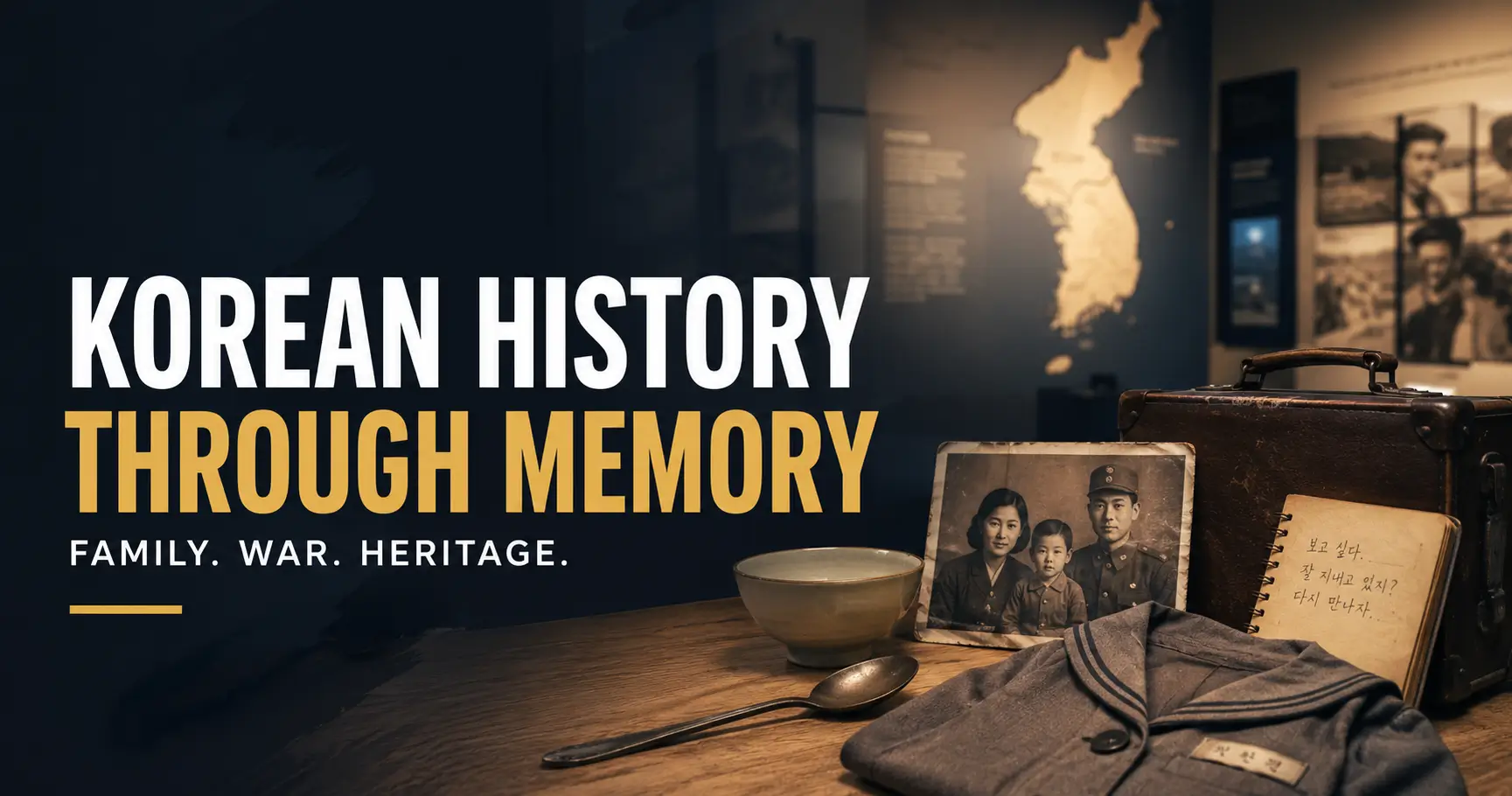
A Korean museum can surprise you with a spoon, a school uniform, a faded family photo, or a map that seems too quiet for the room it occupies. Many US travelers arrive expecting big national history. Then they find a lunchbox, a missing hometown, a grandmother’s handwriting, and a silence that feels heavier than a wall of dates.
This is not only a travel question. It is an interpretation question. If you read these galleries only as timelines, you may miss the human thread: divided families, colonial disruption, refugee movement, military service, education, migration, and the private grief folded into ordinary objects.
Rushing through can turn living memory into décor.
Slowing down can change the whole room.
This guide gives you a more careful way to walk through Korean history museums, war memorials, folk museums, city museums, and diaspora-related exhibits. It uses practical museum-reading habits, cultural context, and emotionally literate questions so you can understand more without pretending to understand everything.
A Better Museum Lens: One Family, One Object, One Silence
The fastest way to understand Korean museum storytelling is to stop asking only, “What happened?” and begin asking, “Whose family had to live after it happened?”
That shift turns maps into memory, uniforms into biography, and domestic objects into evidence of survival. It also keeps the visitor humble, which is useful in any museum and practically mandatory in rooms built from war, separation, and inherited loss.
Table of Contents
Start With Family, Not Just Flags
Many visitors are trained to read museums from the top down: presidents, generals, treaties, borders, wars, flags. That can help, but Korean museums often ask for another direction of attention. Start lower. Start closer to the floor. Start where people ate, slept, studied, fled, waited, bowed, argued, and kept going.
Family history matters because modern Korean history has repeatedly entered the home without knocking. Japanese colonial rule, liberation, the Korean War, division, industrial rebuilding, military governments, democratization, migration, and rapid urban change did not remain abstract events. They affected school names, family registers, surnames, ancestral rites, rice bowls, uniforms, photographs, and the shape of neighborhoods.
That is why a display about a household item may not be “domestic history” in the soft sense. It may be national history wearing house slippers.
Why Korean museums often begin at the kitchen table
The kitchen table is where large history becomes small enough to hold. A rice bowl can suggest scarcity. A child’s notebook can suggest interrupted schooling. A family photograph can suggest who remained, who left, and who was never spoken of again.
If you have read about why Koreans ask if you ate, you already have a clue. Food is not only food. In many Korean contexts, it can signal care, survival, affection, class memory, and the old arithmetic of enough versus not enough.
The hidden weight of names, hometowns, and family registers
Names and hometowns can carry unusual emotional weight in Korea. They can point toward clan origins, migration routes, family status, displacement, or separation. A visitor may see a map and think, “place.” A Korean family may see the same map and feel, “origin,” “loss,” or “a place we cannot visit.”
This is one reason family registers appear in cultural explanation. The older family registry system, often discussed through concepts like hojeok, shaped identity, kinship, and legal belonging. For a deeper companion topic, Korean family registry history helps explain why documents can feel deeply personal, not merely bureaucratic.
What US visitors may miss when they look only for “big history”
US visitors often arrive with a museum habit formed by major-label history: presidents, wars, civil rights, immigration, industry. Those frames are useful. But in Korean museums, you may need to read smaller signals. A handwritten label. A school cap. A village name. A wedding photograph with someone absent from the frame.
- Look for names, hometowns, school records, and family photographs.
- Ask how public events entered private rooms.
- Notice ordinary objects before rushing to dramatic displays.
Apply in 60 seconds: In the first gallery, choose one family-related detail and follow its echo through the museum.
The Museum Object That Isn’t “Just an Object”
A museum object can sit inside glass with perfect manners. It does not raise its voice. It does not explain its grief. The label may be only three sentences. Yet the object may hold more history than the larger panel beside it.
In Korean museums, small things often carry the emotional voltage. A lunchbox may point to school discipline, poverty, care, class, or the dream of education. A uniform may connect to military service, student life, labor, or public duty. A letter may carry distance, censorship, longing, or a last known address.
A lunchbox, a uniform, a letter: why small things carry national memory
Small objects are powerful because they avoid grand speeches. They let visitors imagine the day-by-day cost of history. Someone packed that lunchbox. Someone wore that uniform. Someone folded that letter, perhaps with hands that did not know whether a reply would arrive.
This is not sentimental decoration. It is historical evidence. The domestic object says: history did not only happen at negotiation tables. It happened before breakfast, after roll call, during evacuation, in schoolyards, and at train stations.
How ordinary items become evidence of rupture
An ordinary object becomes evidence of rupture when it shows a break in continuity. A family book ends suddenly. A photograph shows children in one city and later records place them elsewhere. A household item appears in a refugee context. A map marks a hometown that became unreachable.
For visitors interested in Korean customs, even simple etiquette objects can help. Pages about Korean shoe etiquette or Korean metal chopsticks may seem unrelated to museums, but they train the same eye: everyday objects often carry social meaning.
Here’s what no one tells you: the quiet displays may matter most
The loudest display is not always the most important one. Large screens, battle maps, and dramatic lighting can give you the museum’s thunder. Quiet display cases may give you the rain. Both matter, but the quiet case often tells you what life felt like afterward.
Decision Card: Dramatic Display vs. Quiet Object
| If you are looking at… | Ask this… | Why it helps |
|---|---|---|
| A battle map | Which families were moved by this line? | It connects military geography to civilian life. |
| A household item | What changed around this object? | It reveals continuity, loss, or adaptation. |
| A photograph | Who is named, and who is not? | Absence can be part of the record. |
Neutral action: Spend two minutes with one quiet object before moving to the largest installation.
War Memory Changes the Room
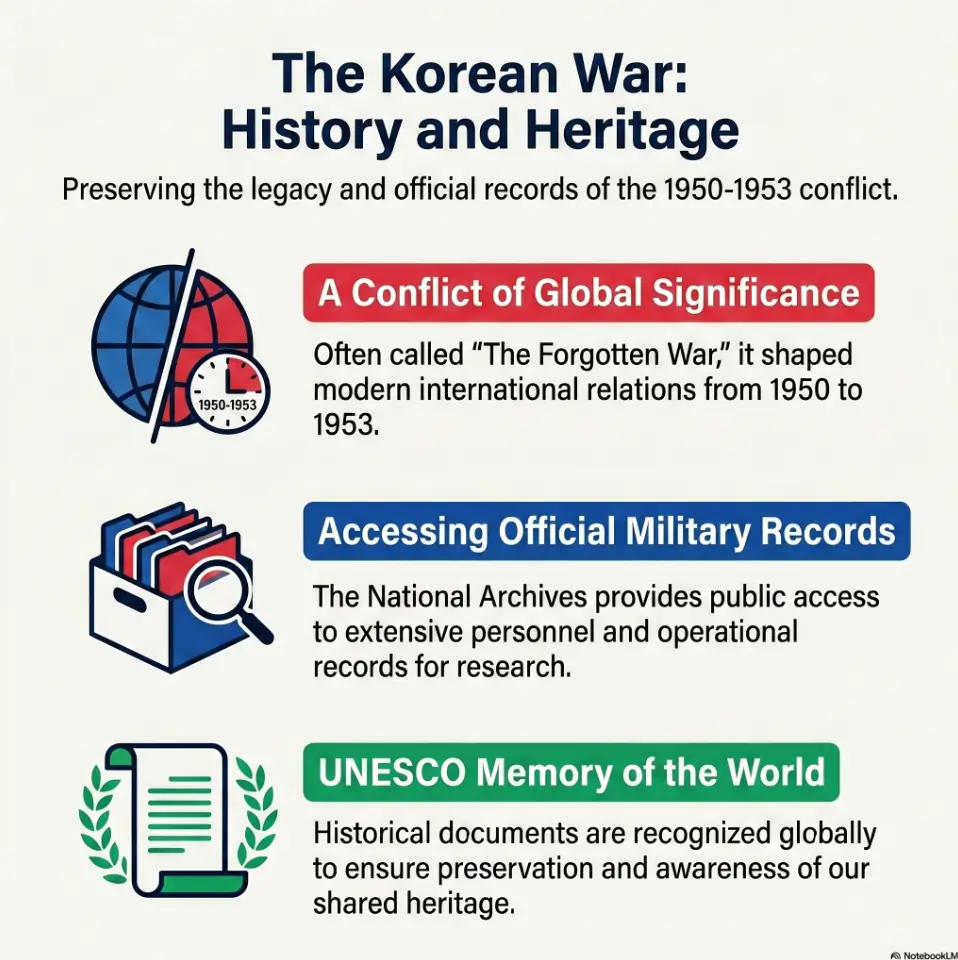
The Korean War is not ancient history in Korea. It sits close to living memory through grandparents, family stories, graves, photographs, military service, separated relatives, school lessons, and national security realities. For many visitors, the war may feel like a chapter from a textbook. For many Korean families, it can feel closer to an unfinished sentence.
The war began in 1950 and the armistice was signed in 1953, but the peninsula remains divided. That means many museums are not only explaining a completed past. They are interpreting a past whose consequences still organize maps, military policy, family memory, and emotional life.
Why Korean War exhibits can feel personal, not distant
Korean War exhibits can feel personal because the scale of civilian disruption was enormous. Families fled, separated, relocated, hid records, changed plans, lost property, and rebuilt lives under pressure. The museum may show weapons, but the emotional center may be a mother’s search, a child’s displacement, or a hometown that became unreachable.
For visitors who know Korea mainly through Seoul cafés, K-pop, or airport transfers, this can be a tonal whiplash. One hour you are comparing seasonal desserts. The next you are standing before a refugee photograph. Korea contains both, and the distance between them is shorter than a tourist map suggests.
The difference between battlefield history and family survival history
Battlefield history asks where forces moved. Family survival history asks where people slept that night. Battlefield history asks who gained territory. Family survival history asks who found rice, medicine, shelter, or news of a missing brother.
Both are legitimate. But if you only read battlefield panels, you may miss why the museum places a blanket, document, school object, or family photo nearby. The museum may be quietly saying: this is what strategy felt like from the ground.
How silence becomes part of the exhibit
Some families did not speak much about war. Silence may come from trauma, political risk, shame, exhaustion, migration, or a desire to protect children. In museums, silence can appear as missing names, vague labels, fragments, empty spaces, or understated captions.
Do not assume silence means lack of information or lack of feeling. Sometimes silence is the archive that survived when speech could not.
Don’t Read Korean Museums Like a Timeline
Timelines are useful. They are also a little too tidy. Memory does not move like a train with obedient stops. It loops. It doubles back. It skips what hurts. It returns when a grandchild asks a question at dinner and everyone suddenly becomes very interested in the soup.
Korean museums often use chronology, but the emotional logic may be circular. A gallery about postwar reconstruction may send you back mentally to family separation. A gallery about education may lead you to poverty, ambition, and parental sacrifice. A gallery about modern identity may carry traces of colonial pressure, war, division, and migration.
Mistake: treating every gallery as a neat beginning-middle-end story
The neat story says: hardship happened, recovery followed, modern Korea arrived. The truer story is more textured. Hardship may continue inside families long after economic recovery. Memory may be inherited by people who did not personally experience the original event.
That is why museums can move from old photographs to contemporary interviews, from maps to school materials, from public commemoration to private testimony. The order may be historical, but the meaning is relational.
Why memory often loops, skips, and returns
Family memory often works through fragments. A grandmother remembers one road but not the date. A father remembers a phrase but not the whole story. A family keeps one document but loses the rest. A museum exhibit may mirror that fragmented quality.
This is especially important for Korean American and diaspora visitors. A family story may have crossed the Pacific in pieces. Some pieces became names, recipes, church communities, holiday rituals, or a feeling that something was missing but unnamed.
The better approach: ask what each room is trying to repair
Some rooms preserve. Some rooms mourn. Some rooms educate. Some rooms accuse. Some rooms try to repair a broken chain between generations. Ask what kind of work the room is doing.
Show me the nerdy details
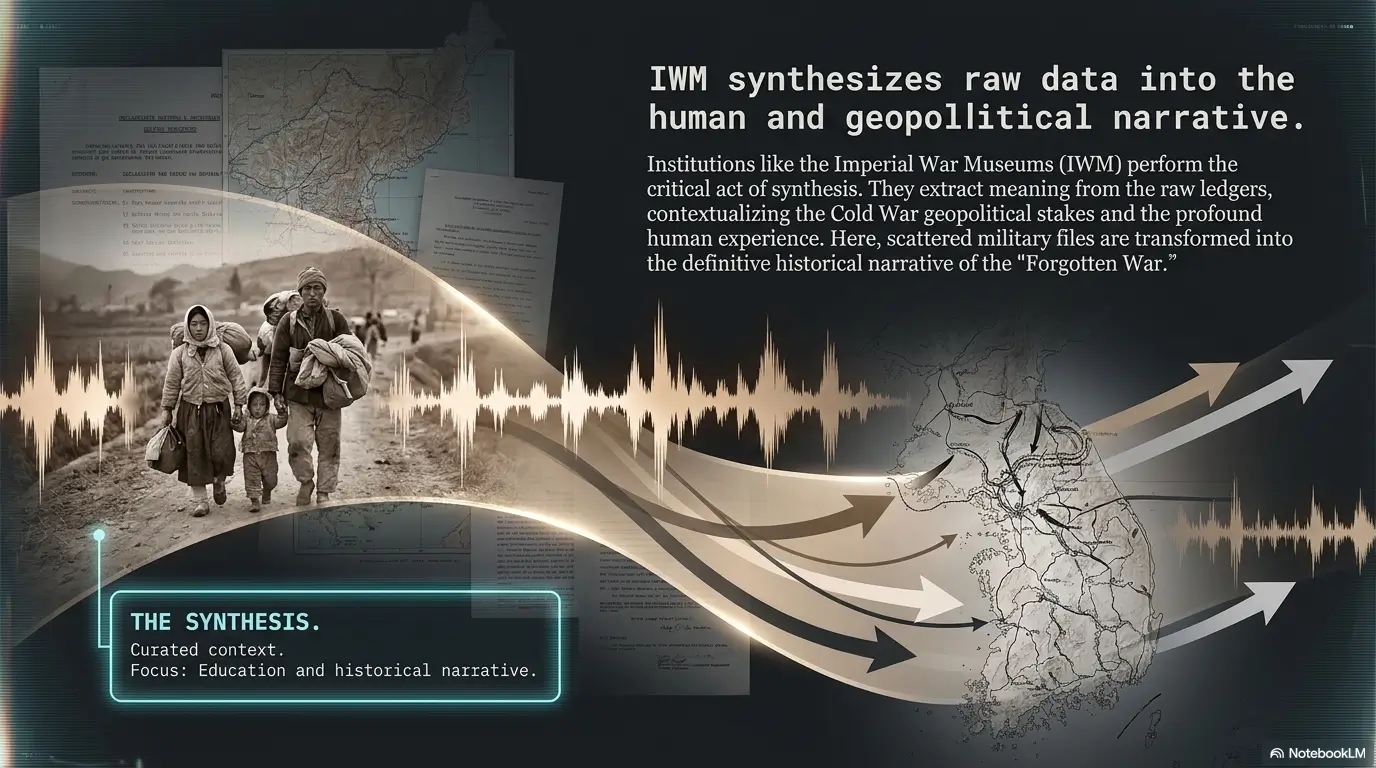
For museum interpretation, a useful method is to separate chronological structure from narrative function. Chronology tells you sequence: before, during, after. Narrative function tells you purpose: mourning, proof, identity formation, public education, reconciliation, or civic warning. In Korean museums shaped by war memory, an object may appear in one time period but function across several generations. A refugee document from the 1950s may also explain a grandchild’s identity question in the 2020s. This is why object labels, room transitions, oral histories, and absences are worth reading together.
Who This Is For, And Who May Need a Different Guide
This guide is for people who want to understand Korean museums with more care than a checklist allows. It is for travelers, Korean diaspora families, study-abroad students, teachers, history readers, and anyone who senses that the quiet parts of a museum may be doing serious work.
It is not designed for visitors who want only fast sightseeing, conflict-free summaries, or a quick “top five photo spots” plan. There is nothing wrong with a light travel day. Everyone needs snacks and a bench. But rooms about war, separation, and family loss deserve a different pace.
For US travelers who want more than photo stops
US travelers may find Korean museums especially rewarding when they connect exhibits to daily culture. A gallery about family roles may clarify why family obligation still appears in modern work, education, and caregiving. For example, Korean grandparents and childcare shows how family support remains a living social structure, not a museum relic.
For Korean Americans reconnecting with layered family history
Korean American visitors may have a different experience. Some galleries may feel familiar without being fully known. A surname, province, dish, school object, military photo, or funeral custom may press on a half-remembered family story.
That can be meaningful. It can also be uncomfortable. You do not need to solve your entire ancestry in one museum visit. Museums are not emotional vending machines. Insert attention, yes. Demand instant closure, no.
Not for visitors looking for quick, conflict-free sightseeing
If you are traveling with children, elders, or mixed-interest groups, plan for emotional range. Pair a heavy museum with a quiet meal, a park, or a low-stimulation activity. Korea’s museum rooms can be beautiful, but beauty does not make grief lightweight.
Eligibility Checklist: Is This the Right Museum Approach Today?
- Yes or no: Do you have at least 60–90 minutes, not just a rushed gap?
- Yes or no: Are you ready to read labels, not only take photos?
- Yes or no: Can your group handle exhibits involving grief, war, or displacement?
- Yes or no: Are you willing to leave with questions rather than a neat summary?
One-line next step: If you answered “no” twice or more, choose a smaller museum or one gallery and give it your full attention.
The Family Tree Behind the Display Case
Family history in Korea is not only about ancestry charts. It is about legal identity, social belonging, hometowns, naming patterns, marriage, mourning, obligation, and memory. A display case may contain one document, but behind that document stands a whole system of kinship.
This helps explain why Korean historical interpretation can feel intensely familial. The nation is not presented only as territory. It is also presented as households, lineages, teachers, children, soldiers, migrants, mothers, fathers, and elders carrying memory forward.
Why genealogy matters in Korean historical interpretation
Genealogy helps museums show continuity and rupture. Continuity appears through names, family lines, rituals, and hometown ties. Rupture appears when records are lost, families are separated, or people cannot return to ancestral places.
For readers interested in older family roles and cultural memory, Korean grandmothers and halmeoni culture offers a softer doorway into how elders often carry stories, labor, discipline, tenderness, and silence at once.
Hometowns, clans, migration, and the ache of “where are you from?”
In many places, “Where are you from?” is small talk. In Korea, it can carry deeper layers. It may refer to birthplace, family origin, regional identity, dialect, class memory, evacuation routes, or a place no longer accessible because of division.
That question can sound simple until a museum map makes it complicated. A hometown may be a geographic fact, a family wound, a political border, and a dinner-table silence all at once. Museums often preserve that complexity without spelling it out in neon lights.
Let’s be honest: some family stories arrive as fragments
Not every family has a clean archive. Some have rumors, half-sentences, missing photographs, changed names, or stories that begin with “I heard…” and end with someone changing the subject.
That does not make the story less real. It makes it more human. Museums can help visitors understand that incomplete records are not failures of memory. They may be the result of war, poverty, migration, political fear, or the practical chaos of survival.
Illustrative Scenario: The Photograph With No Date
At a small city museum, a visitor stopped in front of a black-and-white family photograph. There was no dramatic caption. Just a family standing stiffly in good clothes, the children too serious for their size. The visitor was ready to move on until her aunt whispered, “Your grandfather had a picture like that, but he never said where it was taken.” Suddenly the photograph changed. It was no longer an old image behind glass.
It became a door with a missing key. They spent ten minutes reading the label, then the map beside it, then the next room about migration. They did not find their own family’s answer. But they found better questions. The practical lesson is simple: when an object tugs at a family fragment, slow down. The museum may not complete the story, but it can teach you how to listen for its shape.
Division Is Not Only a Border
The division of the Korean Peninsula is often described through maps, demilitarized zones, security language, and geopolitics. Those matter. But in museums, division is also emotional architecture. It shapes family trees, hometown memory, marriage records, military service, school lessons, and the imagination of belonging.
A border can be drawn on a map. Its consequences can live in a grandmother’s story for seventy years.
How the Korean Peninsula’s division shaped museum storytelling
Museums dealing with division often tell stories through absence. A map shows a region. A label notes separation. A family testimony mentions a relative who remained in the North. A photograph becomes the last image of a person whose later life is unknown.
For visitors, this can be difficult because many museum habits are built around resolution. We expect a beginning, conflict, outcome, lesson. Division resists that tidy package. It is both history and present condition.
Separated families, missing relatives, and inherited uncertainty
Separated-family stories are among the most emotionally complex parts of Korean museum memory. They involve not only loss, but also uncertainty. Is the person alive? Did they marry? Did they have children? Did they remember us? Did they think we forgot?
Inherited uncertainty can pass from one generation to another. A grandchild may feel connected to a place never visited and a relative never met. That is not irrational. It is one way family memory survives blocked geography.
Why maps in Korean museums can feel emotionally charged
Maps in Korean museums are rarely neutral wallpaper. A map can show occupation, liberation, military movement, division, migration, industrial growth, or regional identity. It can also show the place a family left, the road they took, or the hometown that became a word rather than a destination.
Museum Meaning Map: From Public Event to Family Memory
War, colonization, division, migration, reconstruction.
Separation, lost records, new homes, changed work, interrupted school.
Letters, uniforms, maps, bowls, photos, documents.
What was lost, protected, hidden, repeated, or repaired?
- Look for borders, routes, provinces, and hometown labels.
- Ask how a line on a map changed family life.
- Remember that division can be both political and intimate.
Apply in 60 seconds: When you see a map, name one family consequence it may imply.
Common Mistakes US Visitors Make
Most mistakes come from speed, not bad intentions. Visitors move too fast, treat labels as decoration, or assume the museum is making one simple national argument. Korean museums often reward a slower, more layered reading.
Think of it this way: if you skim a museum built from family rupture, you may still get information. But you may miss the moral weather.
Mistake: assuming Korean museums are only about politics
Politics is present, of course. But many exhibits are equally about family survival, education, grief, labor, faith, gender roles, migration, and neighborhood change. Reducing everything to politics flattens the human record.
This is similar to reading modern Korean social life only through hierarchy and missing affection, humor, duty, and improvisation. Cultural pieces such as Korean politeness or Korean indirect communication can help visitors notice meaning that is not shouted.
Mistake: rushing past domestic objects and family photographs
Domestic objects are not filler. They often show how historical pressure entered daily life. If a museum includes a rice container, sewing machine, student bag, or family portrait, assume it has a job.
Mistake: expecting one simple national narrative
Korean museums may present pride, grief, warning, gratitude, anger, resilience, and unresolved questions in the same building. That is not inconsistency. It is adult history. The orchestra has more than one instrument, and not every violin agrees with the trumpet.
Mistake: taking silence as emptiness instead of evidence
Silence can mark trauma, censorship, shame, displacement, or respect. A minimal label may not mean the story is small. It may mean the museum is leaving space for testimony, mourning, or uncertainty.
Quote-Prep List: What to Gather Before Booking a Guided Museum Tour
- Your main interest: war history, family history, colonial period, folk culture, city history, or diaspora identity.
- Your group needs: children, elders, mobility limits, language support, or emotional sensitivity.
- Your time window: one focused gallery, half-day museum visit, or multi-site history route.
- Your preferred tone: academic, personal, family-friendly, or reflective.
- Your language needs: English docent, audio guide, bilingual labels, or private interpreter.
Neutral action: Ask a guide one specific question in advance: “How do you handle family separation and war memory during the tour?”
The Open Loop: What Happened After the War Ended?
One of the most important museum questions is also one of the easiest to miss: what happened after? Visitors often treat war as the climax. Museums often show that aftermath is where family history deepens.
After war came rebuilding, poverty, education pressure, urban migration, military service, industrial labor, overseas migration, family duty, and new forms of ambition. Modern Korea did not emerge from a clean page. It emerged from households making hard choices with limited time, money, space, and certainty.
Why “after” is often the most important part of the story
The “after” tells you how memory was carried. Did families preserve photographs? Did they move to Seoul? Did children become the first in the family to attend university? Did grandparents raise grandchildren while parents worked? Did silence become the family’s protective roof?
Modern family patterns, including intergenerational caregiving and pressure around education, make more sense when viewed through longer history. Pages such as generational conflict in Korea and why Korean parents track height and grades show how family ambition and anxiety can carry older echoes.
Reconstruction, poverty, education, migration, and family duty
Postwar Korea placed enormous weight on education, work, and family sacrifice. Museums may show school uniforms, factory images, neighborhood models, or apartment life to explain how national recovery was built through ordinary labor.
Visitors should avoid the lazy miracle-story version. Korea’s rapid development was real, but it was not magic. It came through policy, labor, sacrifice, inequality, discipline, family expectation, and a very large amount of tired people doing unglamorous things before sunrise.
How postwar memory still shapes modern Korean identity
Postwar memory still appears in ideas about security, family duty, thrift, education, military service, and respect for elders. You may see its outline in museums, then hear its echo in everyday culture.
For example, discussions around Korean military service debate and Korean military discharge culture are not separate from war memory. They sit inside a society where national defense and male adulthood have long been publicly entangled.
How to Walk Through a Korean Museum With Better Questions
A better museum visit does not require a history degree. It requires better questions. The right question slows your eyes. It lets the room breathe. It turns a label from a caption into a conversation.
Use these questions when a display feels important but you cannot yet explain why. They work in war museums, city museums, folk museums, independence museums, memorial halls, and family-history exhibits.
Ask whose family story is being preserved
Look for the person behind the object. Was this from a child, soldier, teacher, mother, refugee, activist, student, laborer, or grandparent? Does the label name them? If not, why might they remain anonymous?
Ask what could not be photographed, written, or safely said
Archives are shaped by what survives. But survival is uneven. Some stories were never photographed. Some documents were destroyed. Some words were too dangerous or painful to say. Ask what the exhibit can only suggest.
Ask how the exhibit connects private grief to public memory
Museums turn private grief into public memory carefully, or at least they should. Notice whether the exhibit honors personal experience, explains context, and avoids turning suffering into spectacle.
- Ask who is present in the object.
- Ask what is missing from the record.
- Ask what responsibility the museum gives the visitor.
Apply in 60 seconds: Before leaving each room, form one question you could not have asked before entering it.
Museum Visit Planning Blocks
Emotional literacy is easier when the practical side is handled. A hungry, rushed, overheated visitor becomes a philosopher only in theory. In real life, they become a person hunting for a bench with the focus of a detective novel.
Use these simple planning blocks to make a Korean museum visit more humane, especially if your group includes children, elders, diaspora family members, or people with personal connections to war memory.
Coverage tier map: choose the right depth for your day
Coverage Tier Map: How Deep Should You Go?
| Tier | Best for | Time | Visitor action |
|---|---|---|---|
| Tier 1 | First-time traveler | 45–60 min | Choose one gallery and one object. |
| Tier 2 | History-curious visitor | 90 min | Follow one theme across rooms. |
| Tier 3 | Diaspora family visitor | 2–3 hours | Take notes on names, places, and family echoes. |
| Tier 4 | Student or researcher | Half day | Compare labels, objects, and room order. |
| Tier 5 | Family-history trip | Full day or more | Pair museum visit with archives, hometowns, or elder conversations. |
Neutral action: Pick the lowest tier that still lets you leave with one meaningful question.
Mini calculator: emotional pacing for a heavy museum day
Museum Pacing Calculator
Use this simple guide for a museum with war, displacement, or family trauma exhibits.
Suggested pause: about 8 minutes after each heavy room.
Object focus: choose 1 object per room, not 12.
Neutral action: Build in quiet time after heavy rooms instead of treating the museum like a subway transfer.
Respect checklist for trauma-related exhibits
- Lower your voice near testimony, memorial, or civilian-loss displays.
- Read labels before taking photos, especially where human remains, grief, or personal documents are involved.
- Do not pressure family members to explain their feelings in the moment.
- Give children simple context without graphic detail they did not ask for.
- Leave space for not knowing. Some exhibits are built around absence.
If your trip includes ceremonies, memorial etiquette, or family mourning customs, Korean funeral etiquette for foreigners and Korean condolence money customs can help you understand the broader culture of respect around loss.
FAQ
Why do Korean museums focus so much on family history?
Korean museums often focus on family history because national events repeatedly reshaped household life. War, colonization, division, migration, education, and economic rebuilding affected names, homes, records, photographs, school paths, military service, and elder memory. Family history helps visitors see how public events became private burdens.
Why is the Korean War still so present in Korean museums?
The Korean War remains present because its consequences did not end neatly in 1953. The peninsula remains divided, many families were separated, and war memory still affects security, identity, military service, and family storytelling. Museums often treat the war as both historical event and continuing inheritance.
Are Korean museums difficult for US visitors to understand?
They can be challenging if visitors expect only a simple timeline or political summary. They become easier to understand when you pay attention to family names, hometowns, maps, domestic objects, oral histories, and silence. Many museums offer English labels, but emotional context still requires slower reading.
What should I know before visiting a Korean history museum?
Know that ordinary objects may carry heavy meaning. A school uniform, rice bowl, letter, or photograph may connect to poverty, war, migration, or family separation. Give yourself enough time, read labels carefully, and avoid treating trauma-related exhibits as quick photo stops.
Why do ordinary household items appear in war-related exhibits?
Household items show how war entered daily life. Weapons explain conflict from one angle. Blankets, bowls, letters, children’s items, and family documents show survival from another. These objects help visitors understand civilian experience, not only military movement.
How should Korean Americans approach museums tied to family memory?
Korean Americans may want to approach these museums with patience and self-permission. Some exhibits may connect to family fragments, while others may not. Take notes on places, names, and objects that stir recognition. You do not need a complete family archive to have a meaningful visit.
What is the respectful way to view exhibits about trauma or displacement?
Move slowly, read labels before photographing, keep your voice low, and remember that displayed objects may come from real families. Avoid dramatic posing near memorial material. If visiting with relatives, let people respond in their own way and do not demand instant explanations.
Are Korean museums more emotional than Western-style history museums?
Some Korean museums may feel more emotionally direct because family separation, war memory, colonization, and rapid social change remain close to living memory. The difference is not simply “East versus West.” It is often about how recent events still sit inside family life.
Next Step: Choose One Exhibit and Trace One Family Thread
The object from the introduction, the spoon, the uniform, the map, the family photograph, was never small. It was only quiet. Korean museums make more sense when you learn how to hear that quiet without rushing to explain it away.
The practical value is simple: you can walk into a Korean museum with more than curiosity. You can bring a method. Start with family, not just flags. Read objects as evidence. Treat maps as emotional documents. Notice silence. Ask what happened after the public event entered private life.
Within the next 15 minutes, choose one Korean museum you might visit or one exhibit you remember. Write down one object, one family question, and one silence. That small thread can lead you through the larger story with more care than any rushed timeline.
For a wider cultural bridge, you may also pair this museum lens with a broader Korean culture guide, especially if you are trying to connect history with everyday manners, family roles, and modern identity.
- Choose one object before leaving.
- Connect it to one family-level consequence.
- Let one unanswered question remain alive.
Apply in 60 seconds: Take one note on your phone titled “One family thread,” then write three words: object, absence, after.
Last reviewed: 2026-05.