
Beyond the Uniform: The Hidden Weight of Service
A Korean military service debate can sound simple from the outside: men serve, women do not. Then you listen for ten more seconds and realize the “simple” version has trapdoors everywhere.
For many Anglo-American readers, the confusion starts when Korean military service appears in celebrity news, dating conversations, workplace debates, or online arguments about gender fairness. One person is talking about national duty. Another is talking about lost time, conscription, gender inequality, family anxiety, or a career gap that never quite disappears.
“Guess wrong, and you may flatten a serious Korean social issue into a lazy ‘men versus women’ shouting match.”
This introduction gives you the steadier lens: why South Korean men and women often hear the same military-service system differently, and how to separate duty, harm, recognition, and reform before making a judgment. It will help you understand the cultural pressure without turning anyone into a villain made of cardboard and bad Wi-Fi.
And it is about what a country asks people to carry, then how loudly it allows them to say it was heavy.
Table of Contents
Safety / Framing Note
Military service in South Korea is not one clean story. It is a national-security system, a rite of passage, a workplace interruption, a family burden, and a gender-politics flashpoint, all stacked inside the same suitcase.
So this article will avoid treating Korean men or Korean women as one emotional bloc. Some men talk about service with pride. Some speak with bitterness. Some barely mention it. Some women feel distant from the institution. Others carry its emotional cost through brothers, partners, sons, friends, and public life.
The goal is not to decide which side is right. The goal is to explain why the same system can sound different depending on where someone stands.
- Men may speak from direct interruption.
- Women may hear it inside a wider gender-inequality map.
- Online arguments often turn both realities into blunt weapons.
Apply in 60 seconds: Before judging a comment about Korean military service, ask what kind of burden the person is describing.
Start Here: Military Service Is Not Just “Going to the Army”
The legal fact Americans need first
South Korea requires most able-bodied men to complete mandatory military service. The exact route and duration can vary by branch, health classification, and service type, but the common public shorthand is roughly 18 to 21 months. Women are not subject to universal conscription under the current system, though they may serve voluntarily in active or reserve roles.
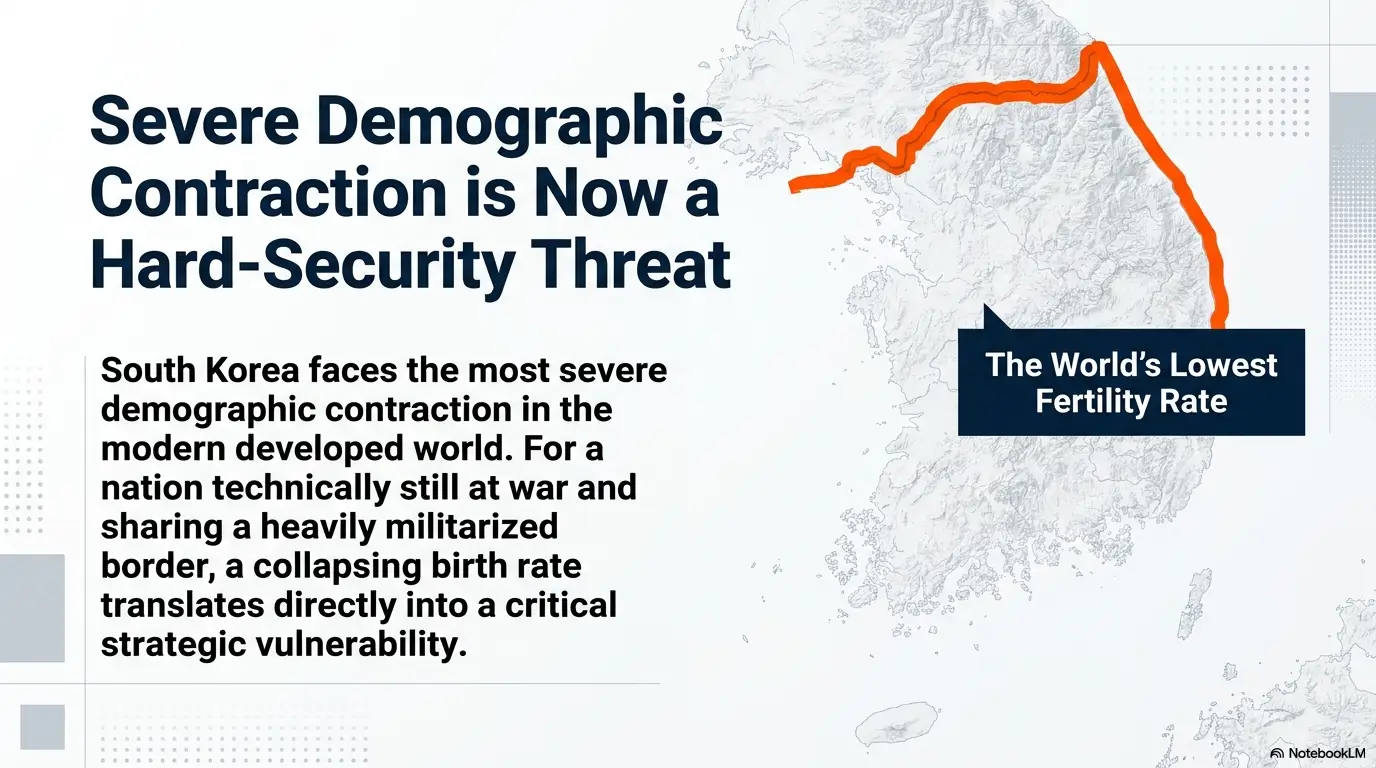
That legal architecture matters. South Korea is still shaped by the unresolved Korean War, the presence of North Korea as a security threat, and a defense system that treats male military duty as part of citizenship. The Military Manpower Administration manages the system, while the Ministry of National Defense sits at the center of the broader security structure.
The hidden emotional fact
Policy language can sound clean, almost sterile. “Mandatory service.” “National defense.” “Eligibility.” But life does not experience policy as a PDF.
For many young Korean men, service arrives just as adulthood is trying to start: college, work, dating, internships, exams, first serious jobs, family expectations, and the fragile project of becoming someone. Then the state taps the shoulder.
I once heard a Korean friend describe enlistment planning with the same tone people use for dental surgery and airport layovers: necessary, annoying, and not improved by dramatic speeches. That tone says a lot. When something is expected by everyone, it can become emotionally under-described.
Here’s what no one tells you…
For many families, enlistment is discussed like weather. It is coming. You adjust around it. You do not always confess how much it changes the room.
That is why foreign readers sometimes miss the depth. They see a legal requirement. Koreans often see a calendar wound, and the afterlife of that wound often becomes easier to understand through Korean military discharge culture.
Who This Is For / Not For
This is for curious outsiders, diaspora readers, and culture-watchers
This guide is for US readers who hear Korean celebrities, friends, students, coworkers, or online commentators mention military service and sense that there is more underneath the sentence.
Maybe you first noticed the issue when a K-pop idol paused a career to enlist. Maybe a Korean classmate made a dry joke about “losing two years.” Maybe you saw an online debate about fairness and wondered why everyone sounded both exhausted and furious.
You are not wrong to be curious. The topic is a cultural pressure cooker with legal bolts.
This is not for stereotype-hunting
This article is not here to reduce Korean men to resentment or Korean women to indifference. That kind of flattening may be convenient online, but it is bad analysis and worse manners.
Think of this as a translation guide, not a courtroom.
The reader promise
By the end, you should understand why the same military system can sound like duty, debt, resentment, pride, absence, fear, or background noise.
Eligibility checklist: Is this the right lens for you?
- Yes if you want cultural context, not a shouting match.
- Yes if you are trying to understand Korean gender debates with more care.
- No if you want one sentence proving that one gender is selfish.
- No if you are looking for legal advice about avoiding service.
Neutral action: Use this article as a conversation primer, not as a verdict.
The Drafted Body: Why Men Often Speak From Lived Interruption
Time is the first wound
When many Korean men talk about military service, they are not only talking about uniforms. They are talking about time taken from the most competitive stretch of youth.
In the United States, a young adult might spend ages 20 to 22 building a resume, changing majors, failing at one internship, succeeding at another, starting a relationship, or quietly learning how to be a person without calling it “personal development.” In Korea, many men must plan around a state obligation that interrupts that arc.
That is why the phrase “lost time” appears so often. It does not mean every man hates service. It means the timing itself hurts.
Hierarchy leaves a language behind
Military life can also shape how men talk after discharge. Age, rank, seniors, juniors, obedience, endurance, toughness, humiliation, discipline: these are not abstract words inside a conscription system.
They become stories. They become jokes. They become silences. They become the odd little habits people carry back into civilian life, like folding socks with suspicious seriousness or flinching at a supervisor’s tone even when the office has free coffee and ergonomic chairs. In civilian settings, those old rank instincts can quietly brush against Korean business etiquette, where hierarchy and timing still shape how people read a room.
The resentment trap
A common frustration is that society publicly praises male duty but offers limited practical repair afterward. The applause is large. The compensation often feels small.
Some men may feel they paid a tax in time, body, and emotional strain, then returned to a labor market that simply said, “Welcome back. Please compete harder.”
- The timing can delay school, work, and relationships.
- Military hierarchy can leave emotional and social aftershocks.
- Public praise does not always feel like meaningful compensation.
Apply in 60 seconds: When you hear frustration, listen for the word underneath it: time.
The Undrafted Listener: Why Women May Hear the Same Story Differently
Distance changes the emotional volume
Korean women are not drafted under the current universal conscription model. That changes their relationship to the institution. For many, military service is near but not inside the body.
They may experience it through a brother’s enlistment, a boyfriend’s absence, a son’s future, a friend’s exhaustion, or a national debate that keeps returning like an unpaid bill. But indirect experience does not create the same emotional vocabulary as direct service.
That distance can make men feel unheard. It can also make women feel unfairly accused of escaping a system they did not design.
Gender inequality does not pause for conscription
Some women hear military-service complaints alongside a different list: workplace discrimination, dating expectations, safety concerns, unequal domestic labor, pregnancy bias, appearance pressure, and public arguments about feminism.
So when a man says, “We lose nearly two years,” a woman may not hear only pain. She may also hear a familiar social move: one male burden being used to minimize every female burden.
That is where empathy often breaks its ankle.
Let’s be honest…
A person can sympathize with someone’s sacrifice and still resist being told that sacrifice cancels out every other inequality.
That sentence is the hinge of the whole debate. Men may want recognition. Women may resist hierarchy. Both responses can be emotionally understandable.
Decision card: What is the speaker actually asking for?
If the frame is recognition
The person may be asking: “Please do not treat my service as nothing.”
If the frame is ranking
The person may be saying: “My burden outranks yours.” That is where conflict sharpens.
Neutral action: Separate recognition from superiority before responding.
The Fairness Question: Why “Men Serve, Women Don’t” Becomes So Explosive
The argument sounds simple, but it isn’t
On the surface, the argument looks almost mathematical: men serve, women do not, therefore the burden is unequal.
But underneath that clean formula lives a messy basement: pay, career delay, national security, patriarchy, citizenship, workplace competition, fertility panic, legal equality, and old assumptions about men as protectors. The basement has poor lighting and everyone is holding a different flashlight.
For some men, fairness means equal service or meaningful compensation. For some women, fairness means not deepening gender inequality through hiring advantages, promotion tracks, or social debt.
Compensation debates keep reopening the wound
South Korea has repeatedly wrestled with whether military service should translate into advantages in school, hiring, pay, or promotion. These debates are not small. They ask whether the state should compensate service through systems that may indirectly exclude women.
A recent Korean court ruling over a military-service-based promotion track showed how alive this debate remains. The legal question was not whether service costs men something. It was whether a workplace benefit tied to that service created gender discrimination.
The word “fair” does too much work
For one person, fair means equal burden. For another, fair means equal opportunity. For another, fair means recognizing forced service without turning it into a permanent gender ranking system.
When one word is asked to carry that much furniture, no wonder it squeaks.
Show me the nerdy details
Military-service compensation debates often involve three separate questions: whether the state owes recognition for compulsory duty, whether employers should be the vehicle for that recognition, and whether gender-specific service experience can justify gender-differentiated workplace outcomes. These questions can produce different answers even among people who agree that military service imposes a real burden.
Celebrity Enlistment: Why K-Pop Makes the Debate Global
Fans see absence; Koreans see obligation
International fans often first encounter Korean military service through celebrity enlistment. A singer disappears from promotions. A drama actor pauses projects. A group reorganizes its schedule. Fan calendars become tiny weather stations for national policy.
For global audiences, enlistment can feel like entertainment interruption. For many Korean audiences, it is also a public test of responsibility and legitimacy.
That is why celebrity cases become so heated. The question is not only “Will my favorite artist be gone?” It is also “Should fame alter the bargain that ordinary men must accept?” Readers who first met the issue through idol hiatuses may also want the wider context of K-pop military service, where fandom, fairness, and national duty keep colliding under bright stage lights.
Exemptions become moral theater
South Korea has made limited exceptions or alternative-service paths for certain elite athletes and classical artists under specific rules. But the public debate around who deserves exception can become moral theater very quickly.
An athlete with a medal, a pianist with international prestige, an idol with global economic impact: each case becomes a symbol in a bigger fight over value. What counts as national contribution? Who decides? Is cultural influence enough? How many album sales equal a border post? That last question sounds absurd because the comparison itself is absurd, yet the debate keeps circling it.
Don’t make this mistake
Do not treat celebrity enlistment as the whole story.
The quieter reality is millions of ordinary men whose service is not romantic, photogenic, or globally discussed. No airport photos. No fan projects. No carefully edited documentary. Just a family calendar, a shaved head, and a stretch of youth that will not be spent elsewhere.
- Fans often experience enlistment as absence.
- Korean audiences may experience it as legitimacy testing.
- Exemption debates reveal what a society considers valuable.
Apply in 60 seconds: When reading celebrity enlistment news, ask what ordinary conscripts would think of the same exception.
-
Military Service Act of South Korea
Official English translation of South Korea’s Military Service Act, useful for grounding the article’s discussion of mandatory service, eligibility, and the legal basis of conscription.
-
Military Manpower Administration: What Is Military Service?
Official English-language overview from South Korea’s Military Manpower Administration explaining the constitutional and administrative framework behind military service.
-
Reuters: South Korea’s Military Has Shrunk as the Male Population Drops
Reuters reporting on South Korea’s shrinking military manpower and demographic pressure, directly relevant to the article’s section on low birth rates and future conscription debates.
Dating, Marriage, and the Quiet Arithmetic of Service
Military time can reshape relationships
Military service does not only interrupt the person who serves. It can rearrange relationships around him.
Long separations, limited communication, emotional immaturity, financial constraints, family worry, and career delay can all affect dating patterns. Some couples survive service with tenderness and better calendars. Others discover that affection is not a power bank. It cannot charge everything.
For young couples, the service period can feel like a strange test nobody formally signed up for. It also sits inside a broader dating landscape where Korean couple culture can make anniversaries, public commitment, texting rhythm, and social expectations feel unusually visible.
Some men want recognition, not advice
A common friction point is painfully ordinary: one side wants acknowledgment, while the other side gives advice.
He says, “It was hard.” She says, “But everyone knows men serve.” He hears dismissal. She hears repetition. The conversation becomes two people standing on opposite platforms while the train leaves with the point.
Sometimes the needed sentence is small: “That must have cost you something.” Not “therefore you win,” not “therefore women owe men,” just recognition without surrender.
Some women inherit the waiting, not the uniform
Women may carry anxiety and support without receiving the social status attached to service. Girlfriends wait. Mothers worry. Sisters adjust family rhythms. Friends listen to stress. Partners absorb distance.
This does not make indirect burden identical to direct service. It does mean the emotional economy is wider than the uniform.
Conversation prep list: What to ask before comparing pain
- Was the person talking about lost time, danger, hierarchy, or recognition?
- Was the listener responding to service itself or to how service was being used in the argument?
- Was anyone turning personal pain into a permanent gender score?
- Was the conversation online, where nuance goes to die wearing tap shoes?
Neutral action: Identify the actual grievance before choosing a response.
Workplace Aftershocks: The Resume Gap Nobody Reads the Same Way
Men may see service as delayed adulthood
When men return from service, peers may have internships, language scores, job experience, graduate-school momentum, travel, or professional networks. Even when employers understand the military gap, the returning person may still feel late.
This is not only about resume lines. It is about rhythm. A young man leaves one version of himself, returns nearly two years later, and finds that everyone else’s life kept moving with rude efficiency.
I have seen Korean men joke about returning to campus as “old freshmen.” It is funny because it is not entirely funny.
Women may see a different workplace penalty
Women may not lose military time, but they may face gendered hiring assumptions, promotion ceilings, pregnancy bias, appearance standards, safety limits, and domestic expectations.
So when men say, “We started late because of service,” women may respond from a different workplace wound: “We started on time and still hit walls.”
The collision point
Both sides can be describing real disadvantage. The public conversation often forces them into a clumsy contest: whose suffering counts more?
That contest is emotionally satisfying for about 11 seconds and socially useless for years.
Infographic: The Four Burdens People Confuse
🪖
DutyThe state’s claim on citizens for national defense.
⏳
HarmTime, stress, danger, lost income, or delayed career progress.
👂
RecognitionThe wish to have a burden seen without mockery.
🛠️
ReformThe practical question of what should change next.
The Demographic Twist: Why the Debate Is Getting Harder, Not Softer
Fewer young men means a tighter system
South Korea’s demographic decline is no longer an abstract graph tucked into a government report. It is moving into schools, neighborhoods, hospitals, labor markets, and the military.
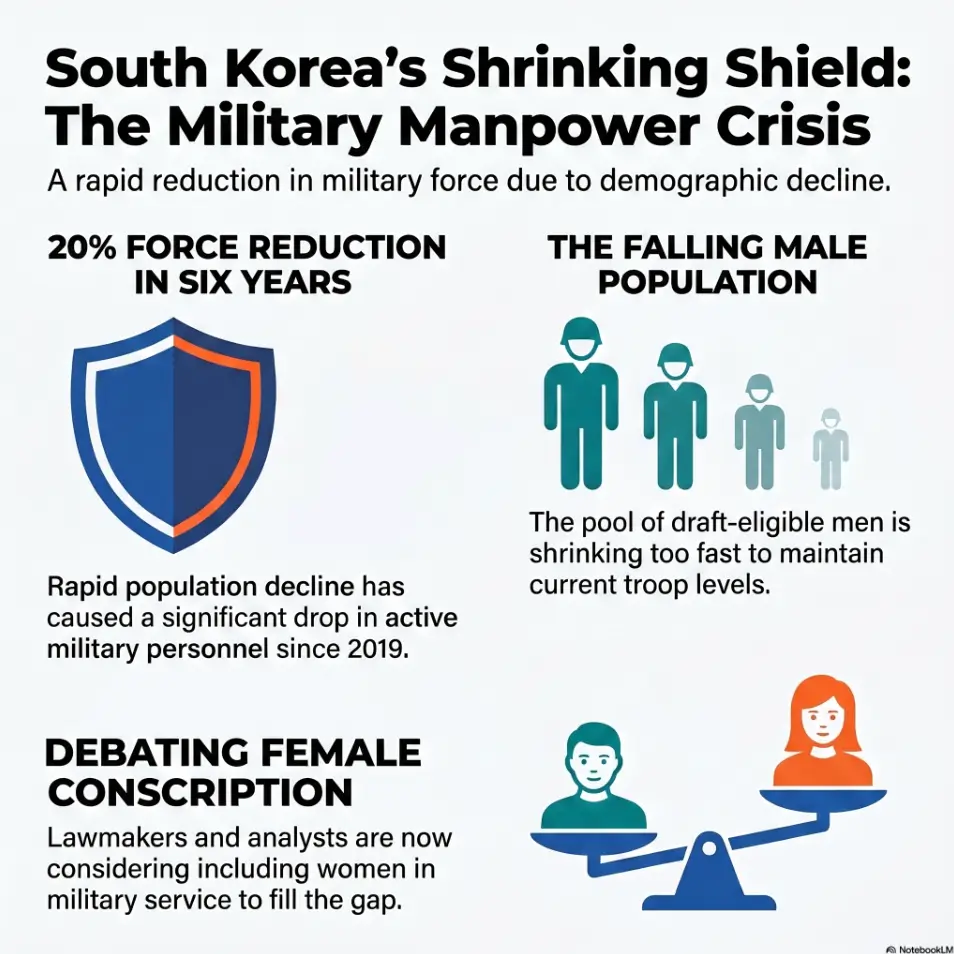
Reuters reported in 2025 that South Korea’s military had shrunk by about 20 percent in six years, with falling numbers of draft-age men putting pressure on manpower. The same demographic squeeze that worries pension planners also worries defense planners.
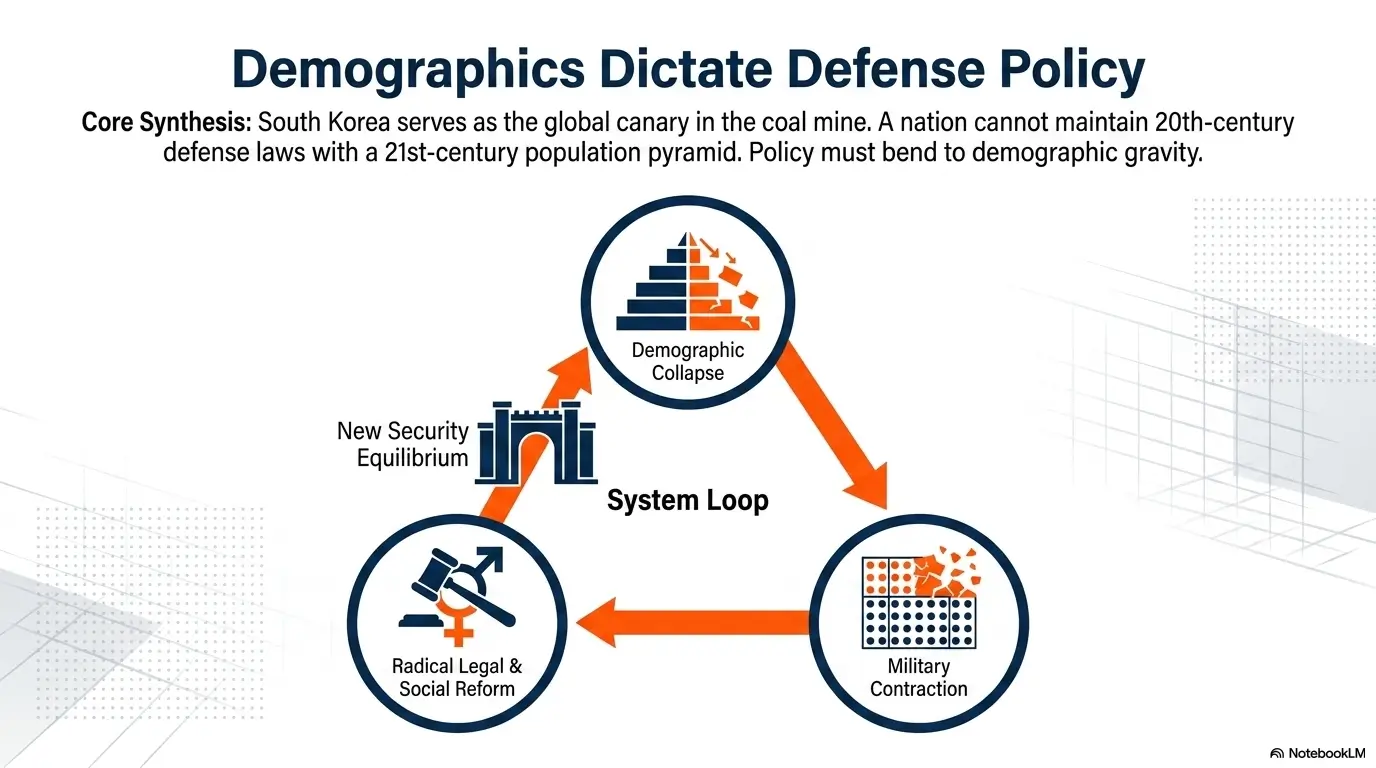
That makes the gender debate harder, not softer. When a system has fewer people to draw from, every question about fairness becomes sharper. For readers trying to connect the military debate to family formation, schools, housing, and work, the larger pattern of Korea’s low birth rate effects helps explain why this pressure no longer stays inside defense policy.
Women in uniform are already part of the future
Women are not drafted, but they are not absent from the military. Their role has grown, especially among officers and professional service members. Reports have noted that women make up a rising share of South Korean military officers, with government goals aimed at increasing representation further.
This matters because the future debate may not be a simple switch labeled “draft women” or “do nothing.” Korea may face a more complicated menu: more women in professional roles, selective conscription, alternative civic service, higher pay, technology-heavy defense, reserve reform, or a smaller but more specialized force.
The unresolved question
If the old manpower model becomes harder to sustain, Korea may need a more serious conversation about what kind of service is necessary, who performs it, and how sacrifice is recognized.
That conversation will not be easy. But the current model already produces strain. Ignoring that strain is not neutrality. It is just postponement with better shoes.
- Fewer draft-age men increase pressure on the current model.
- Women’s professional military participation is already growing.
- Future reform may involve several smaller changes, not one dramatic switch.
Apply in 60 seconds: When you see a debate about women and conscription, ask whether the speaker is discussing equality, manpower, or politics.
Common Mistakes: What US Readers Often Get Wrong
Mistake 1: Calling it “Korea’s version of college”
Military service is not a quirky coming-of-age semester. It is a state obligation tied to security, discipline, risk, and lost time.
Yes, some men make friends. Yes, some learn skills. Yes, some later tell funny stories. But a hard experience can produce funny stories without becoming harmless.
Mistake 2: Assuming all Korean men feel the same
Some feel pride. Some feel bitterness. Some feel numb. Some feel complicated loyalty. Some do not want to talk about it because talking would require opening a cupboard full of old helmets and bad fluorescent lighting.
The silence is also data.
Mistake 3: Assuming Korean women “don’t care”
Many women care deeply. But they may locate the issue inside a wider map of gendered burdens: work, safety, family expectations, online hostility, and social respect.
Care does not always sound like agreement.
Mistake 4: Importing American culture-war templates
US readers should resist forcing Korean military service into a simple American left-right frame. Korea’s history, security threat, labor market, education pressure, gender politics, and demographic crisis are distinct.
Borrowed templates often fit badly. They flap at the sleeves.
The Gender-War Shortcut: Why Online Arguments Flatten Everyone
Algorithms prefer accusation
Online spaces often reward the sharpest version of grievance, not the most accurate one. A careful sentence limps. A furious sentence gets carried around on a throne.
That is especially true for military-service debates, where personal pain can be converted into political identity at frightening speed.
Military service becomes a symbolic weapon
Instead of discussing reform, compensation, mental health, workplace fairness, military culture, or demographic pressure, people may use service as proof of moral superiority.
The argument becomes less “What should Korea do?” and more “Who is allowed to complain?” That is a smaller question, and a meaner one.
Don’t do this
Do not quote one angry forum post as “what Korean men think.” Do not quote one viral feminist slogan as “what Korean women think.” That is analysis by keyhole.
Online conflict can reveal real pressure, but it rarely shows the whole house. Korean digital spaces also have their own rhythms, and Korean group chat culture can make silence, speed, obligation, and public tone feel more socially loaded than outsiders expect.
Coverage tier map: How deep is your understanding?
- Tier 1: “Men serve, women do not.” Basic fact, thin analysis.
- Tier 2: Adds lost time and career delay.
- Tier 3: Adds women’s workplace and safety concerns.
- Tier 4: Adds legal compensation debates and celebrity exemptions.
- Tier 5: Adds demographics, reform options, and emotional recognition.
Neutral action: Aim for Tier 4 or 5 before making public claims.
A Better Lens: Separate Duty, Harm, Recognition, and Reform
Duty is the state’s claim
Military service exists because the state claims a national-defense need. In South Korea, that claim is shaped by geography, history, North Korea, alliance politics, and decades of security planning.
You can debate the system, but you cannot understand it if you treat it as merely cultural habit.
Harm is the individual cost
The cost may include time, mental strain, physical risk, lost income, delayed career progress, family anxiety, and social pressure. These costs differ by person, branch, unit, health, family background, and timing.
One man’s service may be dull and manageable. Another’s may be frightening, humiliating, or deeply disruptive. National systems create average rules. Human beings live individual versions.
Recognition is the social argument
People want their burden to be seen without being mocked, minimized, or converted into a permanent social ranking.
This is where a better conversation can begin. Recognition is not the same as domination. Sympathy is not the same as surrender. Acknowledging one burden does not require erasing another.
Reform is the adult conversation
A serious article should end not with “men vs. women,” but with better questions:
- What burdens are truly necessary for national defense?
- Which parts of the system are outdated?
- Who pays the cost in time, money, safety, and opportunity?
- Who gets recognized, and who gets told to be quiet?
- Which reforms reduce harm without deepening inequality?
That is the grown-up table. It has no viral throne, but it does have better chairs.
Short Story: The Two-Sentence Argument
A Korean man once told a mixed group of friends that military service had “stolen” part of his twenties. The room tightened. A woman across the table answered, not angrily but sharply, “And women lose years in other ways.” For a moment, nobody knew where to put their hands. Then someone asked him, “What part felt stolen?”
He said, “Coming back and feeling behind.” Someone asked her, “What did his sentence sound like to you?” She said, “Like women are not allowed to talk about our own costs.” The argument did not vanish. But it changed shape. It became two injuries instead of one courtroom. Sometimes that is the first honest step: not agreement, but better labeling.
- Duty explains why the system exists.
- Harm explains why people resent it.
- Reform asks what should change next.
Apply in 60 seconds: Label the claim before answering it: duty, harm, recognition, or reform.
FAQ
Why do Korean men have to serve in the military?
South Korea maintains mandatory military service under its national defense system. The system is shaped by the unresolved security situation with North Korea, the history of the Korean War, and the legal structure that places compulsory service obligations on most able-bodied men.
Do Korean women have to serve?
No. Under the current system, Korean women are not subject to universal mandatory conscription. Women may serve voluntarily in active or reserve roles, and women’s participation in the professional military has grown, especially among officers.
Why do some Korean men feel military service is unfair?
Many point to lost time, delayed careers, low pay during service, hierarchy, danger, restricted freedom, and the fact that women are not drafted. The strongest emotional charge often comes from the timing: service usually interrupts early adulthood, when education and careers are beginning to take shape.
Why do some Korean women disagree with male resentment about service?
Some women recognize the burden of service but reject the idea that it outweighs or cancels women’s own disadvantages in work, safety, family expectations, public life, or gender politics. The disagreement is often less about whether military service is hard and more about how that hardship is used socially.
Is military service a major reason for gender conflict in Korea?
It is one important axis, but not the only one. Employment pressure, housing costs, online communities, feminism, anti-feminism, dating norms, demographic anxiety, and political rhetoric also feed the conflict. Military service becomes especially powerful because it offers a concrete, gendered burden that people can point to.
Are women joining the Korean military more than before?
Yes. Women’s participation has grown, especially in officer and professional roles. That is different from universal female conscription, but it matters for the future of military reform, manpower planning, and gender representation inside the armed forces.
Why do Korean celebrities have to enlist?
Most male celebrities remain subject to the same broad conscription framework as other Korean men. Exemptions and alternative-service debates can become highly public because celebrity service sits at the intersection of fairness, national image, cultural export value, and public resentment.
Could South Korea draft women in the future?
It is debated, especially because of demographic decline and military manpower concerns. But it remains politically, legally, and socially sensitive. The current system does not impose mandatory service on women, and future reform could take several forms besides universal female conscription.
Next Step: Ask One Better Question Before Judging
The locked drawer from the opening does not open with one master key. Korean military service sounds different to men and women because it is not one thing. It is law, time, identity, family, gender, hierarchy, celebrity politics, workplace competition, and national defense all wearing the same coat.
So before deciding whether a Korean person’s view on military service is “fair,” ask: Are they talking about national duty, personal harm, gender inequality, lost time, or recognition?
That one question slows the argument down enough for actual thought to enter the room. It also belongs to a larger Korean communication pattern, where what is said directly and what is meant socially may travel in different shoes; for more context, read about Korean indirect communication.
Here is the most useful next step you can take in the next 15 minutes: when discussing Korean military service with a Korean friend, coworker, student, or partner, ask gently, “What part of it feels most important to you: the time, the fairness, the danger, or how people talk about it afterward?”
Then let the answer be specific. Specificity is where the shouting finally starts to lose its shoes.
Last reviewed: 2026-05.