
Top 7 Mistakes English Speakers Make With Korean Numbers — And How To Fix Them Without Crying Over Flashcards
Table of Contents
Warm-Up Hug: The Night I Accidentally Proposed With **Korean Numbers**
I once told a barista at a tiny café near Hongdae that I wanted 열두 개 of espresso shots in my latte, which is technically twelve, because my brain was melting and my soul needed fuel.
She looked at me like I had just challenged physics and quietly asked if I was okay, and I said 네, which also means yes but looks like the number four depending on the sentence, and look, this is how chaos begins.
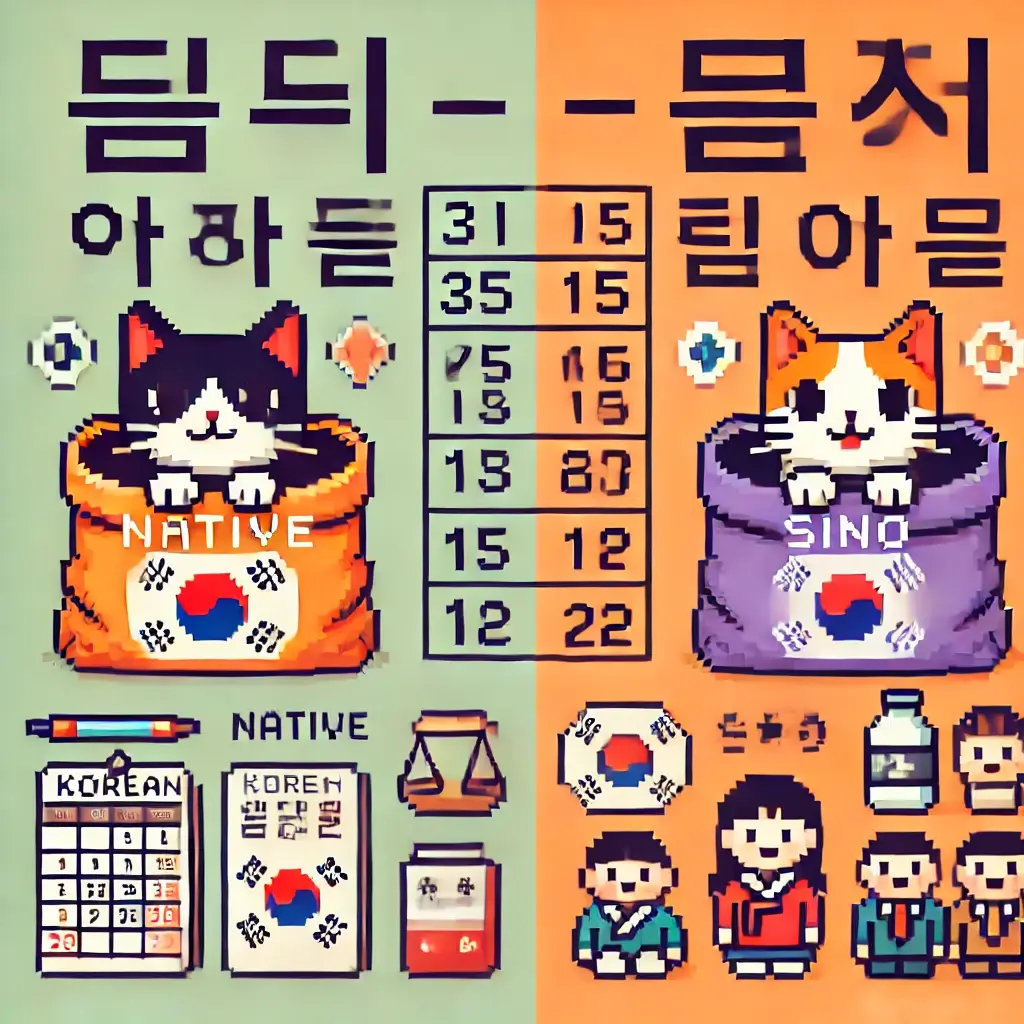
Learning Korean numbers is not hard because you are bad at math or cursed by the language gods, but because the system is actually two systems wearing one trench coat like a cartoon trying to sneak into an R-rated movie.
There is the Sino-Korean system you use for money, minutes, dates, addresses, and the native system you use for hours, counting things with counters, and ages when you want to sound friendly and human at a barbecue.
I promise you, once you see which cat is which, you will not only stop ordering twelve shots at a time, you will feel this tiny superhero cape flutter behind your shoulders whenever a receipt prints and you can read it without crying.
Maybe I am overselling, but honestly, being able to count life in another language feels like stealing back time from the universe.
Why Bother: **Korean Numbers** Are The Hidden Remote Control To Daily Life
When you speak, you control the channel, and Korean numbers are the remote you keep losing in the couch cushions of your brain.
Without them, you cannot book a table, haggle gently, read a sale sign, take a taxi, or avoid ordering twenty coffees unless that is your dream and if so I respect you.
With them, you can flirt politely about meeting at 두 시 십오 분, count your karaoke songs like a tiny accountant of joy, and understand why 150,000 won is 십오만 원 instead of 백오십천 원, which is nonsense and we will fix it together.
Let us walk through the seven biggest, tastiest, most common banana peels English speakers step on, and then do a tiny victory dance with receipts and bus stops.
Here is a quick breather before the real chaos begins, and yes, this is where the internet helps pay for my midnight coffee stains.
Back to class, friend, and yes I saw you try to skip the ad like it was a YouTube pre-roll.
Mistake #1 In **Korean Numbers**: Mixing Native And Sino Like A Smoothie Nobody Asked For
Beginner brain says numbers are numbers, but Korean numbers politely disagree and split into two families that visit different parts of your day.
The native family is 하나, 둘, 셋, 넷, 다섯, 여섯, 일곱, 여덟, 아홉, 열, and then teens like 열하나, twenties like 스물, thirties like 서른, forties like 마흔, fifties like 쉰, sixties 예순, seventies 일흔, eighties 여든, nineties 아흔.
The Sino-Korean family is 일, 이, 삼, 사, 오, 육, 칠, 팔, 구, 십, with building blocks that behave beautifully like Lego, giving you 십일 for eleven, 이십 for twenty, 삼십오 for thirty-five, and so on until the sky breaks into 만, 억, 조 while we sip tea and feel powerful.
If you say 이 시 instead of 두 시 for “2 o’clock,” Koreans will understand, but it lands like you brought a fork to a soup party, technically fine but not the vibe.
Beginner Lens — A Post-It For Your Fridge In **Korean Numbers**
Use native numbers for hours, age in casual settings, and counting things with counters like 개 for items, 명 for people, 마리 for animals, 권 for books, 잔 for cups, and 병 for bottles.
Use Sino numbers for minutes, seconds, months of the year like 3월, days of the month like 15일, money like 5,000원, addresses, floor numbers, and phone numbers where digits are said one by one.
Glue this to your brain: native for human heartbeat moments, Sino for the spreadsheet of life.
Intermediate Lens — Fast Swap Drills In **Korean Numbers**
Try this out loud and forgive yourself if your cat stares at you.
Say the time “2:15” as 두 시 십오 분, where 두 is native, 분 is Sino, and your tongue does a little cha-cha between families.
Order three coffees as 아메리카노 세 잔, not 삼 잔, because 잔 is a counter that invites native numbers to the table like VIPs.
Book the 7th floor as 7층 with Sino 칠 층, not 일곱 층, because floors are building math and therefore Sino land.
Expert Lens — System Thinking In **Korean Numbers**
Conceptually, you can model usage selection as a binary classifier with features like unit type, formality, and lexicalized counter presence, which predicts native vs Sino with high accuracy once trained on enough input.
Even advanced learners benefit from a mental decision tree, and we will give you one later that you can screenshot and send to the group chat like a proud nerd.
When in doubt, ask yourself whether the noun acts like a counter word or a formal measurement unit, and default to Sino for timestamps and money unless a native-friendly counter is hugging the noun tightly.
Mistake #2 In **Korean Numbers**: Ignoring Counters And The Shapeshifters 한/두/세/네/스무
Counters in Korean numbers are like little locks that require the right key, and the key is almost always native numbers with special forms for 1, 2, 3, 4, and 20.
하나 becomes 한, 둘 becomes 두, 셋 becomes 세, 넷 becomes 네, and 스물 becomes 스무 when standing before a counter word like 개 or 명.
So you say 한 개, 두 명, 세 권, 네 마리, 스무 살, and if you do not the sentence still works but sounds like jeans several sizes too big.
Beginner Lens — Friendly Examples In **Korean Numbers**
한 개 means one piece, 두 명 means two people, 세 잔 means three cups, 네 마리 means four animals, 스무 살 means twenty years old, which is a rite of passage in many hearts and also the end of teenage brain fog, allegedly.
Say 한 시 for one o’clock, not 하나 시, because little transformations make your mouth look fluent even when your brain is thinking about snacks.
Intermediate Lens — The Age Trap In **Korean Numbers**
Age is where people fall dramatically because there are two common options and a secret third if you are trying to be fancy.
Casual age takes native plus 살 as in 스무 살 and 스물한 살 where 스물 + 한 morphs to 스물한, but set phrases prefer 스무 살 for exactly twenty.
Formal age often uses Sino plus 세 as in 이십세 and 스물한 살 versus 이십일세 depending on register, and both are valid in context with 세 sounding like a slick suit.
Expert Lens — Corpus Reality In **Korean Numbers**
In contemporary usage, native + 살 dominates casual speech while Sino + 세 dominates official forms, legal documents, and stylized narrative prose, which means your choice should follow audience and setting rather than grammar purity.
When teaching, I label counters as “native magnets,” because the moment you see a counter, you should feel native numbers being pulled toward it like iron filings toward a magnet in a high school science class that smelled like vinegar.
Mistake #3 In **Korean Numbers**: Time And Date Mayhem — Hours, Minutes, Months, Days
Time is the ultimate trust fall, and Korean numbers want you to jump into a very specific net.
Hours take native, minutes and seconds take Sino, months of the year are Sino + 월, days of the month are Sino + 일, days of the week are lexical and do their own jazz routine like 월요일 and 화요일.
Say 두 시 십오 분 삼십 초, and you will sound like a clock with a personality and a side hustle.
Beginner Lens — Daily Situations In **Korean Numbers**
“Let’s meet at 7:30” is 일곱 시 삼십 분 or more naturally 일곱 시 반 where 반 means half, which is the nicest word in time since “five more minutes.”
“See you on March 15” is 3월 15일 with Sino the whole way, and you can write 2025년 3월 15일 if you want to flex your calendar muscles.
Intermediate Lens — Months vs Months In **Korean Numbers**
Two different nouns both translate to “months,” and it is a sitcom down here.
달 is native and works with native numbers for duration like 한 달 and 두 달, while 개월 is Sino and works with Sino durations like 일 개월, 이 개월, 삼 개월, with pronunciation tweaks like 육 개월 becoming 유 개월 in speech.
Both exist happily, but 달 feels warm and conversational, while 개월 puts on a tie and shows up to performance reviews.
Expert Lens — Pronunciation And Register In **Korean Numbers**
Beware of assimilation across morpheme boundaries, such as 십이 월 often surfacing as 시비 월 and 십육 as 심뉵, which is the phonology gremlin dancing in the corner and deserves your respect.
When reading dates on forms, treat each Sino chunk as a crisp syllable for clarity, but in speech let natural sandhi soften edges so you do not sound like a robot reading a warranty card at a poetry slam.
Mistake #4 In **Korean Numbers**: Money, Big Units, And The 만-억-조 Galaxy
Money is where confidence goes to retire, but Korean numbers give you a shortcut that feels like unlocking a boss level.
Korean groups big numbers by ten-thousands, not thousands, which means 만 is 10,000, 억 is 100,000,000, 조 is 1,000,000,000,000, and then 경 if you insist on being unnecessarily impressive at a party.
So 150,000 is 십오만, not 백오십천, and 2,500,000 is 이백오십만, and 120,000,000 is 일억 이천만, and suddenly receipts become tiny novels you can read without your soul leaving your body.
Beginner Lens — Wallet Survival In **Korean Numbers**
At a store, 5,900원 is 오천구백 원, and cashiers will often drop 원 in casual speech because everyone knows what game we are playing.
Round numbers are your friend when your brain is tired, so saying 만 원 is not only accurate but also the sound of relief when your taxi app shows a nice even fare.
Intermediate Lens — Formatting Habits In **Korean Numbers**
Write large prices aligning to the 만 and 억 units so your eyes snap to the big chunk first, which is how native speakers parse figures with speed.
When you see 12,345,678원, you can chunk it as 1234만 5678원 in your mind, then say 천이백삼십사만 오천육백칠십팔 원 out loud like a benevolent wizard of rent receipts.
Expert Lens — Cognitive Load And Cross-Lingual Transfer In **Korean Numbers**
English speakers transfer the thousand-based chunking automatically, which creates chronic errors under time pressure, so proactively rehearse mapping to 만 and 억 using constrained production tasks like timed read-outs and shadowing news clips with stock price updates.
In finance contexts, Sino-heavy numerals dominate even colloquial speech, and register shifts quickly with audience, so track your listener, not your ego.
Mistake #5 In **Korean Numbers**: Phone Numbers, Room Numbers, Buses, And The Zero Wars
Phones, rooms, buses, and IDs use digit-by-digit Sino, and zero can be 영 or 공, with 공 more common in phone numbers and 영 broader in mathy or formal contexts.
If your number is 010-2345-6789, you can say 공일공 이삼사오 육칠팔구 and feel like a secret agent verifying a drop code, except it is just pizza delivery and that is also sacred.
Beginner Lens — Everyday Calls In **Korean Numbers**
Practice reading your own number, your friend’s number, and the customer service number on a receipt out loud while walking, which will make you look strange and therefore brave.
Bus numbers and train lines are Sino and spoken digit by digit or as whole numbers depending on the local habit, so follow the natives, not your grammar book.
Intermediate Lens — Addresses And Floors In **Korean Numbers**
Rooms and floors use Sino like 708호 for room 708 read 칠공팔 호, and 12층 is 십이 층, not 열두 층, because buildings are math and math is Sino territory even when the elevator music plays K-pop ballads.
Postal codes and building numbers follow the same digit vibe, and the more you read real signs the faster your mouth builds muscle memory.
Expert Lens — Error Types In **Korean Numbers**
The most persistent error is switching to native under stress for a phone digit or a bus line, so script micro-drills like whispering your phone number three times while waiting for coffee, which sounds unhinged but builds reliable pathways.
Track your accuracy rate, not just time spent, because the brain loves measurable wins like a game that always gives you a few coins even when you lose.
Mistake #6 In **Korean Numbers**: Ordinals, Particles, Spacing, And Politeness Levels
Ordinals in Korean numbers can be formed with 번째 or 제, and spacing rules can turn angels into gremlins if you ignore them long enough.
제1회 is the first event in formal contexts, while 첫 번째 is friendlier, and 첫 without 번째 is a lexical treasure meaning “first” for special nouns like 첫사랑, which is the love you remember when the subway window fogs.
Particles like 에, 에서, 은/는, 이/가 attach to the noun phrase, not the number itself, so 두 시에 is correct and 두에 시 is what we call jazz, and not the good kind.
Beginner Lens — Friendly Patterns In **Korean Numbers**
Use native + 번째 for rankings like 첫 번째, 두 번째, 세 번째, and watch how Koreans love rhythm even in numbers because language itself is quiet music.
Keep numbers glued to counters, then add particles, so 세 명이 왔어요 and 네 개를 샀어요 are tight little bundles of meaning.
Intermediate Lens — Spacing And Style In **Korean Numbers**
When numbers are written as numerals plus counters, you often leave no space, like 3개, 5명, 2층, but when you write the number in words with the counter separated, you space it like 세 개, 다섯 명, and your teacher smiles internally like a cat that found a sunbeam.
In your notes, pick one style per page to reduce cognitive switching, then practice both styles when copying real-world text so your eyes do not rebel on contact with a menu.
Expert Lens — Register And Politeness In **Korean Numbers**
Use 분 instead of 명 for people when you want to elevate politeness, as in 한 분, 두 분, and notice how honorific grammar cooperates with number choice, not the other way around.
Ordinal with 제 pairs naturally with Sino numerals in official names like 제3장 and 제10조, which appear in legal and technical writing where rigor beats warmth like a stern aunt who still loves you.
Korean Numbers — Quick Decision Tree
Minutes/seconds/month/day → Sino (sip-o bun, sam-wol, sip-o-il).
Formal → Sino + se (e.g., i-sip se = 20).
Time & Date Matrix
Counters — Native vs Sino Usage
| Counter | What it Counts | Preferred System | Example (romanized) | Note |
|---|---|---|---|---|
| gae | items | Native | se gae (3 items) | Use special forms: han/du/se/ne |
| myeong / bun | people | Native / honorific with bun | du myeong; han bun (polite) | Switch to bun for polite counts |
| jan | cups/glasses | Native | se jan (3 cups) | Cafés, bars, quantity of drinks |
| byeong | bottles | Native | du byeong (2 bottles) | Water, soda, soju, etc. |
| gwon | books | Native | ne gwon (4 books) | Libraries, stores, study logs |
| mari | animals | Native | ne mari (4 animals) | Pets, farm animals |
| dae | vehicles/machines | Native | han dae (1 car) | Cars, computers, appliances |
| ho | room numbers | Sino digits | 708-ho → “7-0-8 ho” | Read digits one by one |
| cheung | floors | Sino | 12-cheung (12F) | Buildings use Sino |
| sal / se | age | Native + sal / Sino + se | seumu sal (20); i-sip se (20) | Choose by register (casual vs formal) |
Money & Large Units — Chunk by 10,000
- man = 10,000
- eok = 100,000,000
- jo = 1,000,000,000,000
- Split by 10,000 (four digits from the right).
- Name each chunk with man/eok if needed.
- Finish with the currency (won).
Phone, IDs, and Zero
- gong (0) → phones/IDs
- yeong (0) → math/general counting
Pronunciation Shortcuts
Age — Choose by Register
- Native + sal
- 20 → seumu sal
- 21 → seumul-han sal
- Sino + se
- 20 → i-sip se
- 21 → i-sip-il se
Mini Practice Cards
- 2:15 → du si sip-o bun
- 7:30 → ilgop si ban
- han gae → du gae → se gae → ne gae
- han myeong → du myeong → se myeong
- 150,000 → 15 man
- 2,500,000 → 250 man
One-Page Cheat Sheet
- 1 → han (before counters)
- 2 → du
- 3 → se
- 4 → ne
- 20 → seumu (exact “20”)
- Counters & hours → Native
- Minutes/seconds/dates/money → Sino
- Phones/rooms/floors → Sino digits
Mistake #7 In **Korean Numbers**: Pronunciation Booby Traps — 십육, 육개월, And Friends
Pronunciation is the hallway where your confidence echoes, and Korean numbers have a few corners where the lights flicker.
십육 surfaces as 심뉵 in fast speech, and 육개월 turns to 유개월, and 6월 is 유월 not 육월 because language is a living creature that upgraded itself without sending a memo.
십일월 often relaxes to 시비럴 in conversation, and you should not force the spelling onto your tongue like a square peg if you want to sound natural and not like a GPS in a windstorm.
Beginner Lens — Minimal Pairs In **Korean Numbers**
Practice 6월 유월, 10월 시월, and 16 십육 심뉵 gently until your mouth stops saying sorry.
If it helps, put the sounds into a silly sentence like 유월에는 유자차를 마셔요, and let your lips feel the glide.
Intermediate Lens — Shadowing For **Korean Numbers**
Pick short weather reports or subway announcements and shadow only the numerals, ignoring everything else, which feels like cheating but is glorious training for timing and assimilation.
Record yourself counting receipts and times, and compare to native clips, because feedback is the breakfast of champions and also the snack of Tuesday afternoons.
Expert Lens — Phonological Awareness In **Korean Numbers**
Once you can predict likely assimilation outcomes, you stop panicking when you hear unfamiliar surface forms, and your brain maps them back to underlying Sino sequences like a calm detective who has seen this crime before.
Add deliberate variability in practice by switching speed, pitch, and sentence frames to inoculate against real-world chaos where no one waits for your tongue to find the clutch.
Infographic: The 30-Second Decision Tree For **Korean Numbers**
Print this in your mind like a tiny poster on the fridge of your soul.
It is just HTML boxes pretending to be a flowchart, and it is cute and useful and will not judge you for yawning.
Mini-Drills And Real-Life Scripts For **Korean Numbers**
Let us get your mouth moving with small, kind exercises that respect your dignity and your attention span.
I will give you beginner, intermediate, and expert versions so you can pick your fight like a video game with better snacks.
Beginner Drills For **Korean Numbers**
Say out loud ten times: 한 개, 두 개, 세 개, 네 개, 다섯 개, then switch to people with 한 명, 두 명, 세 명, 네 명, 다섯 명, and listen to the rhythm until your tongue taps along without thinking.
Tell the time for your day using native hours and Sino minutes, like 여섯 시 삼십 분에 일어나요 and 일곱 시 반에 커피를 마셔요 and 여덟 시 오십오 분에 버스를 타요, and yes brag to your mirror.
Intermediate Drills For **Korean Numbers**
Open a receipt or a shopping app and read prices out loud using the 만 and 억 chunks, and if your roommate looks at you, just say it is for science and they cannot argue with that.
Make five date sentences like 2025년 8월 26일에 시작해요 and 3월 1일에 쉬어요 and 10월 9일에 공부해요, and smile because those dates are actually cultural bookmarks you just casually navigated.
Expert Drills For **Korean Numbers**
Shadow a news clip with stock prices or weather temperatures, then read your own mock financial summary like “이번 분기 매출은 일억 이천오백만 원으로 전년 대비 십오 퍼센트 증가했습니다,” and pretend you are the CFO of your laundry.
Practice ordinals in both friendly and formal registers, like 첫 번째 목표는 발음, 제2목표는 리듬, 제3목표는 속도, because register flexibility is power disguised as courtesy.
Story Time: The Bus 273 And The Redemption Arc Of **Korean Numbers**
There is a bus in Seoul called 273, and I once confidently told a friend I was on 이백칠십삼 번 and they paused just long enough to be kind before saying, “아, 이칠삼,” because locals often compress or stylize how they say line and bus numbers depending on context.
Language has a texture, and the only way to feel it is to touch it daily, preferably with a sense of humor and a pocket of candy.
Now I read room numbers as 칠공팔 호 without fear, and I still say things wrong because nobody gave me a trophy for day six, but the wins add up like little coins, and suddenly I am rich in ways my bank app does not track.
Cheat Sheets You Can Tattoo On Your Memory For **Korean Numbers**
Native numbers hug counters, hours, and casual age like best friends at a photo booth.
Sino numbers handle minutes, seconds, months, days of month, money, addresses, floors, and anything that looks like official measurement or data grid.
Special forms before counters: 한, 두, 세, 네, 스무.
Big units: 만 = 10,000, 억 = 100,000,000, 조 = 1,000,000,000,000.
Zero: 공 for phones, 영 for math, and also do not panic because context will save you like a gentle seatbelt.
Edge Cases That Make You Feel Smart In **Korean Numbers**
Half past is 반, quarter past is 십오 분, and quarter to is literally 십오 분 전, which makes sense in a comforting, soup-like way.
For large amounts of time, quantities can mix lexical and numeric forms like 열흘 for ten days, which is a beautiful fossil from older Korean that still walks among us like a friendly dinosaur.
Some nouns are lexical rebels, and the more you read real labels on subway walls and coffee cups, the more your brain will gather little exceptions like seashells that somehow all match your room.
Mindset Reset For **Korean Numbers**
Fluency is not the absence of errors; it is the presence of recovery.
When you mix systems, smile, correct, and move on, because every native speaker does this in their own language daily and nobody turns into a pumpkin.
Your goal is speed plus kindness to yourself, not sterile perfection that only lives on flashcards and dies in reality.
FAQ
Q1. Do I have to memorize all native numbers up to ninety to be functional with Korean numbers?
A1. You will be happy with 1-10 plus the teens pattern and the special decades up to 스무, 서른, 마흔, 쉰, 예순, 일흔, 여든, 아흔, because counters rarely push you past one hundred in daily speech unless you are counting sheep professionally.
Q2. Is it wrong to use Sino for hours like 이 시 instead of native 두 시?
A2. It is not “wrong,” it is just marked, like wearing tuxedo shoes with sweatpants, and while that can be a vibe, most of the time two o’clock wants native 두 시.
Q3. Why is 6월 pronounced 유월, and is my textbook lying?
A3. Your textbook is fine and your ears are fine; Korean has conventional assimilations that became standard, so 6월 is 유월 and 10월 is 시월 because language loves shortcuts like we love escalators.
Q4. Should I say 공 or 영 for zero with Korean numbers?
A4. Prefer 공 for phone numbers and IDs, use 영 in mathematical or general counting contexts, and choose based on what natives around you are doing like a polite chameleon with opinions.
Q5. How do I say 20 years old correctly with Korean numbers?
A5. Casual speech loves 스무 살, while forms and formal bio snippets may prefer 이십세, and both can live in your mouth peacefully like two cats that finally made a truce.
Q6. What about 100,000 won and 1,000,000 won?
A6. 100,000 is 십만 원 and 1,000,000 is 백만 원, and if your heart shrugs at the zeros just chunk by 만 so you do not fall into the thousand trap.
Q7. Is there a polite counter for people beyond 분?
A7. 분 is your gold standard for honorific counts, and you can mix with 시, 분, 초 times respectfully, as in 손님 세 분이 두 시 십 분에 도착하십니다, which is the kind of sentence that bows slightly while walking.
Conclusion: Count Your Courage With **Korean Numbers** And Order The Right Coffee
If you have ever felt small in front of a menu, I want to tell you that bravery is a muscle and you just worked it out for several pages like an athlete of vowels.
Maybe I am too sentimental about counting, but every time you say 두 시 십오 분 without stumbling, you are proving that your brain can grow new maps and your life can expand by streets you used to ignore.
Tonight, pick one drill and do it for three minutes, then treat yourself to something sweet, and tomorrow you will be the person at the counter who orders 세 잔 calmly and pays 오천 원 with a smile because this is your city too now, at least for the length of a receipt.
And if you mess up and ask for 스물한 개 of espresso shots, send me a picture and I will send you a medal shaped like a tiny coffee cup, metaphorically but with deep sincerity.
Big Helpful Buttons: Trusted English Resources For **Korean Numbers**
These are reliable, human-run, deeply useful places, and the buttons are loud because I do not trust tiny links when my hands are shaking before a quiz.
📘 Talk To Me In Korean — Clear Lessons On Numbers And Counters
🧭 How To Study Korean — Native vs Sino Numbers Explained
🌐 Overview Of Korean Numerals — Quick Reference And Cross-Checks
Bonus: Tiny Self-Check For **Korean Numbers** Before You Sleep
Say the following without looking, then peek and fix only what is necessary so your brain trusts you to handle chaos kindly.
“우리 가족은 네 명이에요, 내일 아침 일곱 시 반에 만나서 3월 15일 여행을 예약할 거예요, 예산은 일백오십만 원이에요, 그리고 제 번호는 공일공 이삼사오 육칠팔구예요.”
If you nailed it, sit like a champion and refuse to apologize for your glow.
If you tripped, smile, because you are in the exact right place for growth, which is this sentence, on this screen, in this moment where your life is learning to count itself better.
Appendix: A Friendly Wall Of Examples For **Korean Numbers**
한 잔 주세요.
두 병이 필요해요.
세 시 십 분에 시작해요.
네 마리 고양이가 있어요.
스무 살이 됐어요.
일 곱 개월 동안 공부했어요 → more natural: 일곱 달 동안 or 7개월 동안 공부했어요.
5층으로 가요 → 오 층이라고 읽지 말고 오 층/오층 as a whole phrase with Sino vibe.
오늘은 8월 26일이에요.
가격은 구천구백 원이에요.
제 전화번호는 공일공-이삼사오-육칠팔구예요.
첫 번째 문제, 두 번째 문제, 제3문항, 제10조.
십육은 심뉵처럼 들려요.
Gratitude, Coffee, And Your Next Three Steps With **Korean Numbers**
One, screenshot the infographic decision tree because your future self deserves a break.
Two, pick either the money chunking drill or the hour-minute cha-cha and do it every morning for five days like brushing your teeth with bravery.
Three, when you catch yourself catching a mistake, celebrate, because noticing is the doorway and you just found the handle in the dark.
Micro-Stories From The Field Using **Korean Numbers**
At a bookstore in Daegu, a student whispered 세 권만 살게요 as if asking the universe for permission, and the clerk smiled and added a bookmark because kindness is a currency stronger than 억 sometimes.
On a subway platform, two friends negotiated meeting at 열두 시 십오 분 and then immediately changed to 열두 시 반 because humans are adorable and time is flexible except when your stomach is empty.
In a clinic, someone said 스물한 살이에요 with pride because they had finally switched from counting in English to counting in Korean when it mattered, and the nurse nodded like that was a shared secret, which it is.
Reality Check: What Fluency In **Korean Numbers** Feels Like
It feels like noticing that a sale sign says 이만 오백 원 and calculating 중 quickly without swallowing your tongue.
It feels like standing at a crosswalk and hearing the announcement counting seconds and not needing subtitles in your own life.
It feels like ordering 네 잔 with your whole chest and hearing the barista repeat it back without changing anything, which is honestly a love story.
For Teachers: Pedagogy Notes On **Korean Numbers**
Teach selection before production, production before speed, speed before listening discrimination, and loop through all four like seasons.
Use color-coding for native vs Sino on slides and keep it consistent across units so students’ visual memory becomes an ally instead of a saboteur.
Assess via micro-tasks that mirror real life, like reading elevator panels, receipts, and weather apps, because tests should measure navigation skills, not only spreadsheets.
For Nerds: Cognitive Strategies For **Korean Numbers**
Chunking is king, rehearsal is queen, and retrieval practice is the court jester who actually runs the kingdom.
Spaced repetition on irregular forms like 스무 and assimilation like 심뉵 will save more time than cramming the entire table up to 아흔 at once.
Interleave tasks so your brain must choose the system, not just recite, because choosing is where fluency grows roots.
For The Busy: 90-Second Daily Routine With **Korean Numbers**
Read one price tag out loud, one time expression, one date, one phone digit string, and count one set of objects on your desk with counters, then close your notebook and live your day.
This is not a diet; it is a vitamin, and vitamins work quietly until suddenly you feel different.
For The Anxious: Permission Slip In **Korean Numbers**
You are allowed to pause before minutes when telling time, because even natives pause when the bus is loud and the coffee is too hot.
You are allowed to write numbers as numerals until your hand catches up with words, because scaffolding is not cheating, it is architecture.
For The Overachievers: Stretch Goals In **Korean Numbers**
Try narrating a cooking video with measures in Sino like 이백오십 그램 and 오십 밀리리터 and then switch to plating counts with native like 두 접시 and 세 조각 to feel the gear shift in your throat.
Read one news paragraph with stock figures and whisper the numbers twice as fast as the anchor, which will make you feel like a hummingbird with a calculator.
For The Rest Of Us: A Quiet Promise About **Korean Numbers**
One day you will hear someone say 칠만구천오백 원 and your brain will just nod and your heart will not even flinch, and you will notice that your life is bigger than last year.
Until then, hold my hand metaphorically and miscount boldly and correct gently and keep going because this is not about being perfect; it is about being alive and curious in a language that sings.
Recap — The Seven Bananas In **Korean Numbers** You Now Step Around
One, do not mix systems randomly; choose native or Sino based on counters and measurement vibes.
Two, remember the shapeshifters 한, 두, 세, 네, 스무 before counters because they make your sentence wear its best shoes.
Three, time and date have a custody agreement: hours native, minutes/seconds/month/day Sino, with 반 as the friendly neighbor.
Four, money uses 만 and 억, so chunk like a pro and stop fighting the thousand trap.
Five, phone and room numbers are digit-by-digit Sino, with 공 as the phone zero and 영 as math zero because life loves variety.
Six, ordinals, particles, spacing, and politeness are not decorations; they are the frame that makes the picture look right.
Seven, pronunciation will tilt a few syllables like 심뉵 and 유월, and that is not betrayal but evolution in your mouth.
Final Nudge — Your Tiny Contract With **Korean Numbers**
Repeat after me in your head or out loud if you share walls with merciful neighbors.
“I will choose my system on purpose, breathe before counters, honor 만 and 억, and forgive my mouth as it learns to dance.”
If you whispered it, you already started.
⬆️ Back To Top And Count Again
korean numbers, native korean numbers, sino korean numbers, counting with counters, korean age
🔗 Master Japanese with J-Pop & J-Rock Posted 2025-08-21 08:31 UTC 🔗 Korean Independence Activists Posted 2025-08-22 05:29 UTC 🔗 Korean Honorifics Guide 2025 Posted 2025-08-23 11:08 UTC 🔗 Konglish Words to Avoid 2025 Posted 2025-08-24 09:56 UTC 🔗 Hangeul: The King Who Made an Alphabet Posted —