
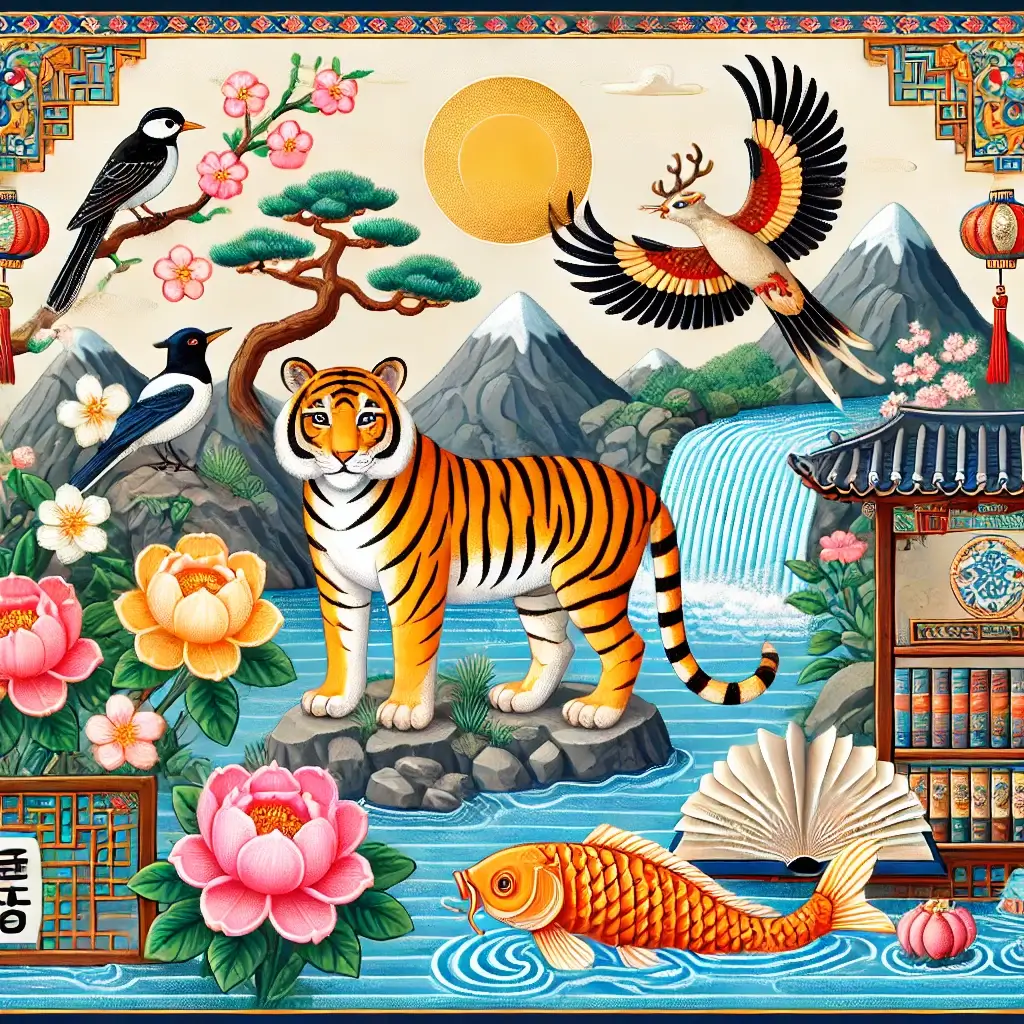
The 5 Most Mesmerizing Symbols in Korean Folk Painting (Minhwa) You Absolutely MUST Know!
Hey there, art lovers and culture enthusiasts!
Have you ever stumbled upon a piece of art that just *speaks* to you?
A painting so vibrant, so full of life, that it almost feels like it’s winking at you from across the room?
Well, let me tell you about something truly special: **Korean folk painting**, or **Minhwa**.
This isn’t your average, stuffy museum art.
Oh no, Minhwa is a riot of color, a tapestry of dreams, and a heartfelt whisper from generations past.
It’s art made by and for the common people, bursting with desires for health, happiness, prosperity, and protection.
And let me be frank, if you haven’t delved into the world of Minhwa yet, you’re missing out on some seriously captivating storytelling.
It’s like uncovering a secret language, one where every brushstroke, every motif, holds a hidden meaning.
Imagine, for a moment, a world where art wasn’t just for the elite, but adorned the homes of everyday folks, bringing hope and good fortune into their lives.
That’s Minhwa for you.
It’s raw, it’s honest, and it’s undeniably charming.
Forget the stiff, academic compositions; Minhwa artists played by their own rules, often with a cheeky disregard for perspective and proportion, making each piece uniquely delightful.
This “folk art” might sound simple, but its depth of symbolism is profound, reflecting the core values and beliefs that have shaped Korean culture for centuries.
So, buckle up!
We’re about to embark on a colorful journey to uncover the **5 most mesmerizing symbols in Korean folk painting (Minhwa)** that are absolutely essential to understanding this incredible art form.
Trust me, by the end of this, you’ll be seeing these paintings with a whole new set of eyes, and maybe even find yourself falling in love with their enchanting magic.
Let’s dive in! —
Table of Contents
—
Introduction to the Irresistible Charm of Minhwa
Before we jump into the juicy bits, let’s set the stage, shall we?
Minhwa, literally meaning “people’s painting” or “folk painting,” is a genre of Korean art that blossomed especially during the late Joseon Dynasty (1392-1910).
Unlike court paintings or scholarly ink wash paintings, which adhered to strict aesthetic conventions and philosophical ideals, Minhwa was free-spirited, vibrant, and incredibly diverse.
Think of it as the popular music of its time – accessible, relatable, and deeply embedded in the everyday lives of ordinary people.
These paintings weren’t created by renowned court artists but by anonymous artisans, often self-taught, who weren’t bound by the rigid rules of academic art.
This freedom gave Minhwa its distinctive charm: bold colors, simplified forms, dynamic compositions, and often a playful, almost mischievous, touch.
It’s like they were saying, “Hey, art can be fun, meaningful, and for everyone!”
The beauty of Minhwa lies in its directness.
It didn’t hide behind complex allegories; its messages were clear, albeit deeply symbolic.
People hung these paintings in their homes, not just for decoration, but as talismans, bringing good fortune, protecting against evil spirits, and expressing their heartfelt wishes for a better life.
Imagine waking up every day to a painting that wishes you longevity, prosperity, or even marital bliss!
That’s the power of Minhwa.
It truly was, and still is, art with a purpose, woven into the fabric of daily existence. —
Unearthing the Historical Roots of Korean Folk Painting
To truly appreciate Minhwa, we need a quick peek into its past.
The Joseon Dynasty was a fascinating time in Korea – a period of immense cultural flourishing, but also strict social hierarchies.
Confucianism was the guiding philosophy, emphasizing order, morality, and respect for tradition.
However, beneath this veneer of strictness, the common people held onto their ancient shamanistic beliefs, animism, and a strong connection to nature.
Minhwa emerged from this rich cultural stew.
While official art served the court and the literati, there was a growing demand for art among the burgeoning merchant class and ordinary citizens who yearned for beauty and good fortune in their homes.
These weren’t your fancy art galleries; these were humble abodes, and the paintings were often created on paper or silk using mineral pigments that resulted in those strikingly vibrant colors we adore today.
What’s truly remarkable is how these anonymous artists managed to distill complex wishes and beliefs into accessible, visually engaging forms.
They borrowed motifs from traditional Buddhist and Daoist art, reinterpreted them, and infused them with their own unique humor and perspective.
It’s like they took grand, philosophical concepts and made them relatable, even a bit cheeky, for the everyday person.
So, while the upper classes might have commissioned intricate landscapes or scholarly depictions, the common folk chose paintings of tigers chasing magpies, pairs of ducks symbolizing marital harmony, or vibrant floral arrangements that practically screamed “good vibes only!”
This historical context is crucial because it shows that Minhwa wasn’t just decorative; it was a living, breathing expression of the hopes, fears, and dreams of a society.
It was their way of influencing their destiny, of inviting prosperity and warding off misfortune, all through the power of imagery.
Pretty cool, right? —
Symbol 1: The Ferocious and Fortunate Tiger – More Than Just Stripes!
Alright, let’s kick things off with arguably the most iconic symbol in Minhwa: the **tiger**.
Now, when you think of a tiger, you probably imagine something majestic, powerful, maybe a little scary.
In Korean folklore, the tiger is all that and more!
It’s not just a wild animal; it’s a mountain spirit, a guardian, and a symbol of immense power.
But here’s the Minhwa twist: these tigers aren’t always depicted as terrifying predators.
Sometimes, they’re comical, almost endearing, with human-like expressions or exaggerated features.
This playful portrayal doesn’t diminish their power; it makes them more approachable, more relatable, transforming them from a fearsome beast into a benevolent protector.
Often, you’ll see the tiger paired with a magpie, creating what’s known as “Kkachi Horangi” (Magpie and Tiger painting).
This dynamic duo is a fantastic example of Minhwa’s clever symbolism.
The magpie, in Korean culture, is a bringer of good news and a symbol of good fortune.
So, when you combine the formidable tiger (warding off evil) with the auspicious magpie (bringing good tidings), you get a painting that’s literally a powerhouse of positive vibes!
It’s like having a superhero and a messenger pigeon rolled into one awesome painting, protecting your home and announcing good news simultaneously.
These tiger paintings were often hung at the entrance of homes, especially during the New Year, to ward off evil spirits and invite good fortune for the coming year.
It’s a belief deeply rooted in shamanism, where the tiger was seen as a divine protector of the mountains and villages.
So, next time you see a Minhwa tiger, don’t just admire its stripes; remember its dual role as a powerful guardian and a harbinger of good luck.
It’s a perfect encapsulation of Minhwa’s blend of the serious and the playful, the sacred and the everyday.
Want to see some incredible examples of Kkachi Horangi? Check out this fascinating resource:
Explore Korean Tiger Paintings at The Met —

Symbol 2: Peonies – The Queen of Flowers and Prosperity’s Promise
From fierce tigers to delicate flowers, Minhwa covers the whole spectrum of life’s desires!
The **peony** is an absolute superstar in Korean folk painting, and for good reason.
It’s not just a pretty face; it’s widely considered the “King of Flowers” (or Queen, depending on who you ask, but definitely royalty!) in East Asian cultures, symbolizing wealth, honor, prosperity, and high social status.
Imagine a lavish garden bursting with enormous, vibrant peonies – that’s the kind of opulence and abundance these flowers represent.
In Minhwa, peonies are often depicted in full bloom, with lush, layered petals and rich, bold colors like red, pink, and yellow.
They’re not shy; they demand attention, just like the wealth and honor they symbolize.
These paintings were commonly hung in the main halls or living rooms of homes, particularly by those who aspired to improve their financial standing or social position.
It was a visual prayer, a vibrant manifestation of their hopes for a prosperous future for their family.
It’s like hanging a giant “manifesting money and success” vision board on your wall, but way more elegant and deeply rooted in tradition!
Sometimes, you’ll see peonies paired with butterflies or birds, further enhancing their symbolism.
Butterflies often represent joy and romance, while birds can symbolize good news or opportunities.
So, a painting of peonies with a pair of graceful birds might signify not just wealth, but also a joyful and harmonious family life blessed with good fortune.
It’s a powerful combination that speaks to the holistic desire for a well-rounded, fulfilling life.
The beauty of the peony in Minhwa isn’t just in its aesthetic appeal; it’s in its powerful aspiration for a better, more abundant life.
It reminds us that even in art, there’s a deep connection to human desires and dreams.
Curious to learn more about the symbolism of flowers in Korean culture? Here’s a great read:
Discover Korean Flower Symbolism —
Symbol 3: Ten Symbols of Longevity (Shipjangsaeng) – A Wish for Eternal Life
Who doesn’t want to live a long, healthy, and fulfilling life?
In Korean culture, the desire for longevity is deeply ingrained, and nowhere is this more beautifully expressed than in the “Shipjangsaeng” (십장생) or **Ten Symbols of Longevity** paintings.
This motif is a personal favorite of mine because it encapsulates a profound wish for enduring health and happiness, not just for oneself, but for one’s entire family.
The ten symbols are: the sun, mountains, water, clouds, pine trees, bamboos, deer, cranes, turtles, and the bulnocho (an imaginary fungus of eternal youth).
Each of these elements, drawn from nature, possesses qualities associated with enduring life and resilience.
Think about it: mountains are steadfast, water flows eternally, pine trees stay green through winter, and turtles live for centuries.
It’s like nature’s ultimate “cheat sheet” for a long life!
These paintings often depict a harmonious landscape where all ten elements coexist peacefully, creating a serene and timeless scene.
They were typically given as gifts for birthdays, weddings, or as a general blessing for a long and healthy life.
Imagine receiving a painting that literally wishes you an eternity of good health and peace – how incredibly thoughtful is that?
What makes Shipjangsaeng paintings particularly fascinating is their blend of realism and idealism.
While the individual elements are recognizable, their arrangement often defies naturalistic perspective, creating a dreamlike quality that emphasizes the symbolic rather than the literal.
It’s a vivid reminder that Minhwa wasn’t about photographic accuracy, but about conveying powerful messages and heartfelt aspirations.
These paintings were a constant, visual affirmation of hope for a future filled with vitality and freedom from illness.
They truly embody the Korean reverence for life and the deep-seated desire for well-being.
For more on the rich symbolism of Shipjangsaeng, take a look at this article:
Symbol 4: Carp – Swimming Upstream to Success!
If you’re looking for a symbol of perseverance, ambition, and ultimate triumph, look no further than the **carp** in Minhwa!
This seemingly humble fish carries an incredible weight of meaning in East Asian cultures, particularly concerning success and advancement.
The symbolism of the carp is rooted in an ancient Chinese legend about a carp that courageously swims upstream against strong currents to leap over the Dragon Gate.
Upon successfully making this monumental leap, the carp transforms into a magnificent dragon.
How cool is that for a transformation story?
This legend made the carp a powerful symbol of overcoming adversity, achieving great success through hard work and determination, and ascending to a higher status.
In Korean Minhwa, carp paintings (often depicting a single carp or a pair, sometimes leaping or swimming vigorously) were extremely popular among families who wished for their children, especially their sons, to pass difficult civil service examinations and achieve high official positions.
These exams were notoriously challenging, often a lifelong endeavor, and passing them was the ultimate pathway to social mobility and family honor.
So, hanging a carp painting was essentially saying, “Go forth, my child, conquer those exams, and become a dragon!”
It’s a bit like having a motivational poster, but one steeped in centuries of cultural significance and profound hope.
Beyond academic success, carp can also symbolize wealth and abundance, as the Chinese word for “fish” (yú) sounds similar to the word for “abundance” or “surplus.”
So, a carp painting could be a double whammy of good fortune: career success AND financial prosperity.
The vibrancy and dynamic movement often depicted in these carp paintings truly capture the spirit of ambition and the thrilling pursuit of one’s dreams.
It’s a beautiful reminder that with perseverance, anything is possible. —
Symbol 5: Books and Scholars’ Accoutrements (Chaekgeori) – The Allure of Knowledge
Last but certainly not least, we come to a genre of Minhwa that’s a personal favorite for its sheer intellectual charm: **Chaekgeori** (책거리), meaning “books and things.”
These paintings are essentially still lifes, but with a twist!
They meticulously depict stacks of books, along with various scholarly objects like brushes, ink stones, scrolls, antique vases, and often fruit or flowers.
At first glance, you might think, “Oh, just a bunch of stuff on a shelf.”
But peel back that initial impression, and you’ll find a profound celebration of knowledge, scholarship, and the pursuit of learning.
In Joseon society, becoming a scholar was the highest ideal.
It was a path to personal enlightenment, social respect, and a means to contribute to society.
Chaekgeori paintings were a visual ode to this reverence for education.
They were typically displayed in the *sarangbang*, the male study or reception room, serving as a constant reminder of the importance of diligent study and intellectual cultivation.
It’s like the ultimate “smart person” decor, designed to inspire scholarly pursuits and demonstrate the owner’s refined taste and intellectual aspirations.
What’s truly captivating about Chaekgeori is the way they play with perspective.
Unlike Western still life, Minhwa artists often employed multiple vanishing points, creating a slightly skewed, almost disorienting yet mesmerizing effect.
It’s as if you’re looking at the objects from several angles at once, adding to their whimsical and dreamlike quality.
The inclusion of luxury items alongside books also speaks to the idea that success, often gained through scholarship, brings prosperity.
These paintings are a testament to the high value placed on education in Korean culture, a value that continues to resonate powerfully today.
They remind us that knowledge isn’t just power; it’s also a source of beauty, order, and aspiration.
Dive deeper into the fascinating world of Chaekgeori with this insightful article:
Discover Chaekgeori at the Smithsonian’s National Museum of Asian Art —
Why Minhwa Still Matters in Our Modern World
So, after exploring these incredible symbols, you might be wondering: why should we care about Korean folk painting in the 21st century?
Well, let me tell you, Minhwa is far from a relic of the past.
It holds a timeless appeal and continues to offer profound insights, even for us navigating the complexities of modern life.
Firstly, Minhwa offers a vibrant window into the collective psyche of the Korean people throughout history.
It’s not just pretty pictures; it’s a living record of their hopes, their fears, their beliefs, and their aspirations.
Understanding Minhwa is understanding a crucial part of Korean identity, beyond the glitz and glam of K-Pop and K-Dramas.
It’s the soul of a nation laid bare on canvas.
Secondly, Minhwa celebrates the human spirit’s enduring optimism.
In a world often filled with cynicism and negativity, these paintings are a refreshing burst of positivity.
They remind us of the universal human desires for happiness, health, prosperity, and protection – desires that transcend time and culture.
They serve as a beautiful reminder to focus on the good, to manifest our desires, and to find joy in everyday life.
Thirdly, the artistry itself is simply captivating.
The boldness of the colors, the uninhibited brushstrokes, the charming irregularities – it’s a breath of fresh air compared to art that sometimes feels too perfect or too distant.
Minhwa invites you to connect with it on an emotional level, to smile at a goofy tiger, or to feel the serene calm of a longevity scene.
It’s art that feels approachable, not intimidating.
Finally, Minhwa reminds us of the power of symbolism in everyday life.
Long before emojis and memes, people used visual symbols to convey complex ideas and emotions.
Minhwa is a master class in this, showing how simple motifs can carry profound meanings and influence the atmosphere of a space.
It encourages us to look deeper, to find meaning beyond the surface, and to appreciate the rich tapestry of cultural expression.
So, Minhwa isn’t just about Korean history; it’s about universal human experiences, expressed with a unique blend of charm, wisdom, and undeniable artistic flair. —
Minhwa Today: A Resurgence of Popularity
You might think that art from centuries ago would stay relegated to dusty museum corners, right?
Well, you’d be delightfully wrong when it comes to Minhwa!
In recent decades, there’s been a fantastic resurgence of interest in Korean folk painting, both within Korea and internationally.
It’s no longer seen as merely “folk art” but as a sophisticated and deeply meaningful genre that speaks volumes about Korean heritage and aesthetics.
Contemporary artists are drawing inspiration from Minhwa, reinterpreting its motifs and styles in modern contexts.
You’ll find Minhwa-inspired designs on everything from fashion accessories to home decor, stationery, and even digital art.
It’s a testament to the enduring appeal and versatility of these traditional symbols.
Workshops teaching Minhwa painting techniques are gaining popularity, allowing people to connect with their cultural roots or simply enjoy the therapeutic process of creating something beautiful and meaningful.
It’s fascinating to see how people, especially younger generations, are embracing Minhwa, finding relevance and beauty in its vibrant imagery and optimistic messages.
This renewed interest is also fueled by a growing global appreciation for Korean culture, thanks to the Hallyu wave.
As more people discover K-dramas, K-pop, and Korean cuisine, they naturally become curious about other aspects of Korean heritage, and Minhwa is a rich vein to explore.
Museums and galleries are dedicating more exhibitions to Minhwa, showcasing its historical significance and artistic merit to a wider audience.
The narrative around Minhwa has shifted from “simple folk art” to “complex cultural narrative,” rightfully giving it the recognition it deserves.
So, if you’re ever in Korea, keep an eye out!
You’ll see Minhwa’s influence everywhere, a beautiful thread connecting the past to the present, constantly reminding us of the power of art to inspire and delight. —
The Last Brushstroke: Embracing the Enduring Legacy of Korean Folk Painting
Well, there you have it – a whirlwind tour through the captivating world of Korean folk painting and its truly mesmerizing symbols.
From the protective growl of the tiger to the prosperous bloom of the peony, the eternal promise of longevity, the ambitious leap of the carp, and the quiet dignity of scholarly pursuits – Minhwa is a vibrant testament to humanity’s timeless desires and aspirations.
What I hope you take away from this isn’t just an appreciation for a beautiful art form, but a deeper understanding of how art can be woven into the very fabric of life, offering comfort, hope, and a touch of magic.
Minhwa isn’t just about the aesthetics; it’s about the spirit, the resilience, and the enduring optimism of a culture.
It’s about universal wishes expressed through uniquely Korean eyes.
Next time you encounter a piece of Minhwa, remember the stories it tells, the wishes it embodies, and the centuries of history it carries within its vibrant colors.
It’s a powerful reminder that sometimes, the simplest art can hold the most profound truths.
So, go forth, explore more, and let the captivating charm of Minhwa brighten your world!
What’s your favorite symbol from Korean folk painting now?
Korean Folk Painting, Minhwa, Symbolism, Korean Art, Cultural Heritage
Explore Korean Dance View Goryeo Celadon Discover Korean Words