

Cross-border real estate guide
Buying property in Seoul can feel simple from a distance. A familiar skyline. A subway station name that still tastes like childhood. A family member who says, “Just send the money and I’ll ask around.” Then the paperwork arrives with its quiet little teeth: buyer status, foreigner permit rules, bank documents, Korean taxes, U.S. reporting, lease deposits, registry checks, and the small matter of getting your money back out later.
For overseas Koreans, the question is no longer just whether Seoul real estate is “good.” The better question is whether a specific buyer, using a specific funding path, buying a specific property in a specific district, can close, hold, rent, report, and exit without turning one apartment into a two-country paperwork opera.
This guide gives you a compliance-first way to think before you tour. It will not tell you which neighborhood will outperform. It will help you avoid the expensive fog that appears when emotion, family advice, foreign exchange, and real estate contracts all walk into the same room wearing nice shoes.
Know your buyer box
Separate nationality, Korean residence status, U.S. tax status, and ownership structure before choosing a unit.
Map the money trail
Plan remittance, proof of funds, bank reporting, exchange-rate exposure, and future sale-proceeds transfer.
Buy the exit too
Model rental, taxes, family use, inheritance, and resale before the deposit leaves your account.
Start with the status sheet, not the house tour. Seoul rewards careful buyers and taxes sentimental shortcuts. 🧭
Snapshot
This article is for Korean Americans, overseas Koreans, U.S. citizens of Korean descent, Korean nationals living abroad, and families comparing Seoul property options in 2026. You will learn how to screen buyer status, permit risk, property type, funding path, taxes, due diligence, and professional help before you sign anything expensive.
Contents — choose a section

Before You Act: What This Guide Can and Cannot Do
Seoul real estate investment for overseas Koreans sits at the intersection of property law, foreign exchange rules, tax residency, family planning, and sometimes immigration history. That makes it a high-consequence decision. A charming apartment near a subway line is still a legal asset with registration, reporting, and tax consequences.
This article is educational. It can help you organize questions, compare options, and avoid common mistakes. It cannot decide your legal status, calculate your exact tax bill, interpret a contract for your facts, or guarantee that a permit, loan, remittance, rental plan, or resale will be approved.
Official guidance from InvestKOREA notes that foreigner real estate acquisition in Korea is governed by several laws, including real estate transaction reporting, foreign investment, and foreign exchange rules. It also explains that, outside certain permission-required land, foreigners generally acquire Korean real estate through reporting rather than a blanket ban.
For U.S. taxpayers, the IRS separately treats foreign bank accounts, foreign financial assets, and foreign real estate differently. The IRS states that foreign real estate itself is generally not a specified foreign financial asset for Form 8938, but related foreign accounts or entities can still create reporting duties.
Key takeaway
Before you sign a Seoul property contract, ask a Korean real estate attorney, a Korean tax accountant, a U.S. tax professional, and a foreign exchange bank to review the same buyer-status facts. One missing assumption can change the whole deal.
A careful buyer does not need to be fearful. The goal is not to bury your Seoul plan under paperwork. The goal is to make the paperwork visible early, before deposit money has already crossed the ocean wearing a tiny backpack.
Why Seoul Looks Simple Until the Paperwork Starts
Seoul property has a special emotional gravity for many overseas Koreans. It is not only square footage. It can be memory, return option, family safety net, currency hedge, retirement dream, or proof that the old map still has your name written somewhere in pencil.
That emotional pull is real. It is also exactly why buyers need a colder, cleaner decision process. The property that feels most meaningful may not be the one with the best compliance profile.
The emotional purchase vs. the investment purchase
An emotional purchase begins with a neighborhood: “I want to be near my parents,” “I grew up around there,” or “I want my children to have a Seoul base.” An investment purchase begins with a test: “Can I legally acquire this property, fund it cleanly, hold it efficiently, rent it lawfully, report it correctly, and sell it without regret?”
Neither approach is wrong. The danger comes when the emotional purchase pretends to be an investment purchase. A family-use apartment can be perfectly reasonable even if the rental yield is modest. A rental unit can be attractive even if it has no sentimental sparkle. Confusing the two is how spreadsheets start wearing hanbok and telling half-truths.
Why “I’m Korean” is not one answer
For a Seoul real estate transaction, “Korean” may describe heritage, citizenship, residence, tax status, family registry connection, visa status, or language comfort. Those are not the same thing.
A Korean national living in Los Angeles may face a different process from a U.S. citizen of Korean descent. A green card holder may have Korean-side questions and U.S.-side tax reporting. A family buying through a Korean parent’s name may create tax, gift, inheritance, and control risks that were never discussed at Sunday dinner.
The first hidden fork: buyer, money, and purpose
Before property search, define three things: who is buying, where the money comes from, and what the property will be used for. Live, rent, hold, family use, future return, redevelopment speculation, and commercial use each raise different questions.
This is why the best Seoul real estate checklist starts before the listing. The listing is dessert. Classification is dinner.
Key takeaway
Do not ask, “Is Seoul a good investment?” first. Ask, “For my status, my money path, my purpose, and this property type, is this deal executable?”
Buyer Status Comes First: Overseas Korean Is Not One Legal Box
Buyer status is the first gate because it affects permits, reporting, tax treatment, banking, inheritance planning, and professional advice. A single word on a passport can matter, but so can residence, ownership vehicle, source of funds, and whether someone else’s name is being used.
Korean national living abroad
A Korean citizen living overseas may still have Korean-law rights and duties that differ from a foreign national. But overseas residence can complicate identity verification, tax residency, bank procedures, contact address, power of attorney, and rental management.
The practical question is not only “Can I buy?” It is also “How will I prove who I am, how will I move funds, who will sign documents, who will receive notices, and how will taxes be handled if I do not live in Korea?”
Foreign national of Korean descent
A U.S. citizen of Korean descent may feel culturally local but legally foreign for certain transaction purposes. Depending on the deal, foreigner acquisition reporting, land transaction permission, banking review, and remittance documentation may matter.
This is where many mistakes begin. A buyer speaks Korean, has family in Korea, and understands the neighborhood, so everyone assumes the legal process will be familiar too. The registry office and the bank may be less sentimental.
U.S. citizen or green card holder with Korean family ties
U.S. citizens and green card holders should think in two columns. Column one is the Korean transaction: acquisition, registration, permits, rental income, local taxes, and eventual sale. Column two is the U.S. side: worldwide income, foreign accounts, foreign entities, gifts, inheritance, and documentation.
The apartment itself may not be a U.S. Form 8938 asset when owned directly, but the foreign bank account used to hold rental income, maintenance funds, or sale proceeds may create reporting questions if thresholds are met. That is a very different animal, and it does not meow politely.
Foreign company, trust, LLC, or family-name structure
Some buyers consider using a company, trust, LLC, parent, sibling, or other family member’s name. Sometimes this is raised for convenience. Sometimes for taxes. Sometimes because the buyer is not physically in Korea. Sometimes because nobody wants to explain the bank forms twice.
Be careful. A structure that looks convenient at closing may create gift tax, beneficial ownership, inheritance, control, divorce, creditor, reporting, or family-dispute risk later. InvestKOREA’s FAQ also notes that certain domestic corporations may be treated as foreigner-related entities when foreign ownership or executive control crosses relevant thresholds.
| Buyer situation | Main risk to check first | Who to ask before touring |
|---|---|---|
| Korean citizen living abroad | Residence status, banking, tax residency, signing authority | Korean tax accountant, bank, attorney |
| U.S. citizen of Korean descent | Foreigner acquisition process, permits, U.S. reporting | Korean attorney, U.S. tax professional, bank |
| Green card holder | U.S. worldwide tax and Korean-side transaction rules | Cross-border tax professional |
| Family member holds title | Gift, inheritance, control, and dispute risk | Korean tax accountant and attorney |
| Foreign LLC or company | Entity classification, reporting, tax, financing friction | Korean attorney, U.S. tax professional, bank |
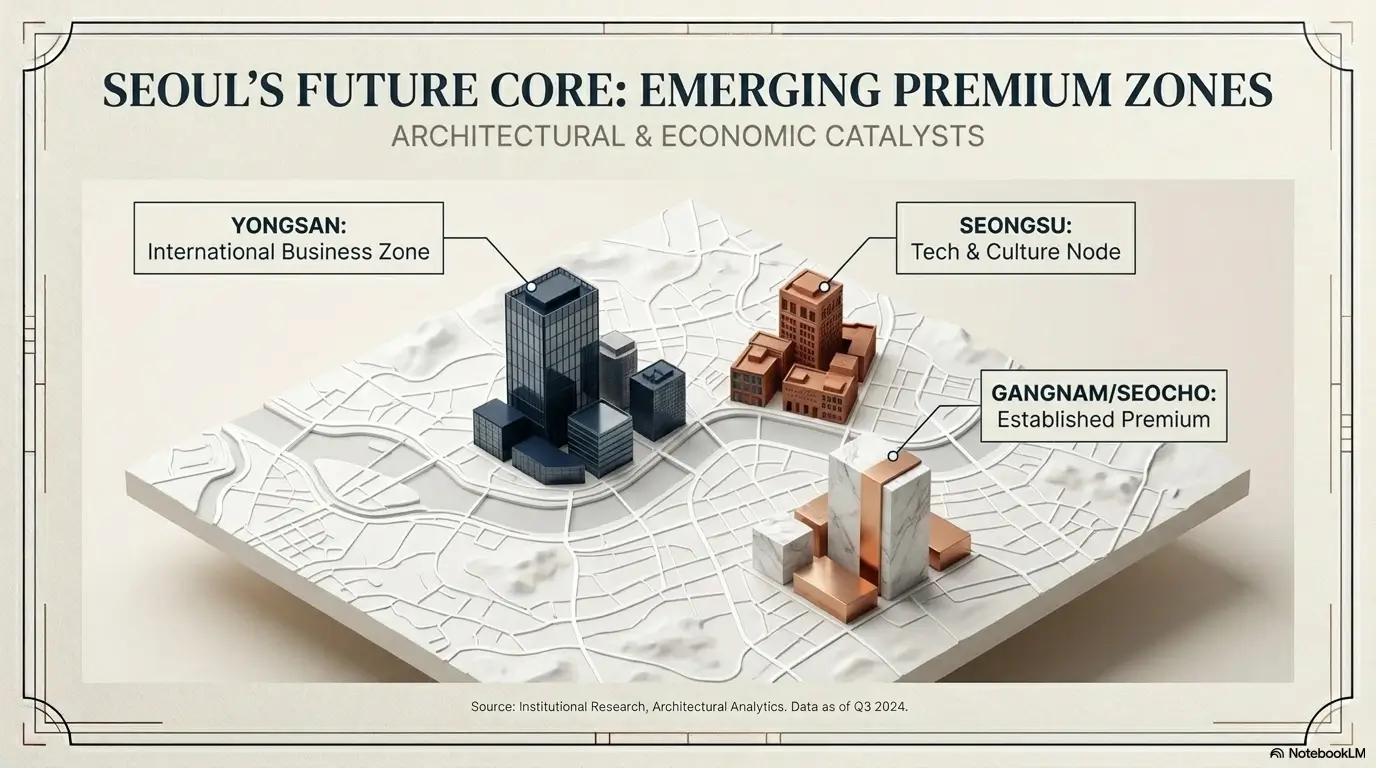
Seoul Property Types: Apartment, Officetel, Villa, Land, or Commercial Unit?
Seoul does not offer one property market. It offers many small rule rooms stacked on top of each other. Apartments, villas, officetels, land, redevelopment plays, and commercial units can differ in demand, financing, lease structure, tax treatment, due diligence burden, and future resale depth.
Apartments: clean demand, heavier scrutiny
Apartments are often the default choice for overseas Koreans because they are easier to understand from abroad. Brand-name complexes, school districts, subway access, maintenance systems, and standardized layouts make comparison easier.
The Ministry of Land, Infrastructure and Transport announced an extension of the foreign-buyer residential land transaction permit-zone designation from August 26, 2026 through August 25, 2027. The designated scope includes all Seoul, with specified areas in Gyeonggi and Incheon. This is a targeted permit regime, not a blanket ban on every foreign purchase. Check the exact address, land area, property category, buyer status and use conditions with the district before signing. Source: MOLIT announcement, published on Korea Policy Briefing, August 21, 2026.
If your plan depends on buying now, renting immediately, or holding without residence-related obligations, confirm the current permit rules before signing. A real estate contract that ignores permit timing can become a very expensive bookmark.
Villas and row houses: lower entry price, messier due diligence
Villas and row houses can offer lower entry prices than large apartment complexes. They may appeal to budget-conscious buyers, family-use buyers, or investors looking for smaller deals.
But the due diligence can be less tidy. Check building age, illegal extensions, parking rights, water leakage, roof issues, management quality, tenant deposits, neighborhood redevelopment rumors, and resale liquidity. A cheap unit with hidden defects is not a bargain. It is a receipt with wallpaper.
Officetels: flexible use, but do not assume exemption
Officetels can be attractive because they may serve residential or office-like uses depending on the building and registration. They are common around business districts, universities, and transport nodes.
Do not assume an officetel is automatically easier. Confirm legal use, tax treatment, building registration, management fees, loan availability, tenant profile, VAT issues where relevant, and whether any foreigner or land transaction rules apply to your exact property type and district.
Land, redevelopment plays, and commercial units
Land and redevelopment stories can sound thrilling. They can also carry restrictions, zoning issues, association politics, long holding periods, funding needs, and uncertain exit timing.
Commercial units can produce rent, but they require tenant quality checks, vacancy modeling, maintenance planning, business-district analysis, and lease review. For overseas buyers, the question is not “Can this earn income?” It is “Who will manage the tenant, documents, repairs, tax filings, and dispute risk while I am abroad?”
| Property type | Best fit | Main caution | Useful professional check |
|---|---|---|---|
| Apartment | Long-term hold, family use, future return | Permit rules, price sensitivity, tax exposure | Attorney and tax accountant |
| Villa or row house | Lower budget, local neighborhood access | Defects, lease deposits, resale liquidity | Building inspector and attorney |
| Officetel | Small-unit exposure, flexible use | Use classification, fees, tenant turnover | Tax accountant and agent |
| Land or redevelopment | Advanced investors | Zoning, permits, long timeline, politics | Attorney and specialist broker |
| Commercial unit | Income-focused buyers | Vacancy, tenant quality, management burden | Tax accountant and property manager |
The Money Trail Must Survive Two Countries
A Seoul purchase is not only a property transaction. It is a money movement story. Banks may want to know where funds came from, why they are moving, who is receiving them, and whether the transaction documents match the payment path.
For overseas buyers, the money trail should be planned before the contract deposit. Waiting until closing day to ask the bank about foreign exchange reporting is the financial version of packing your passport after boarding starts.
Overseas remittance vs. Korean-source funds
Some buyers fund from a U.S. bank account. Others use Korean savings, inheritance, rental proceeds, family gifts, investment liquidation, or a mix. Each source can raise different documentation questions.
Ask your foreign exchange bank what documents it wants before money moves. Typical documents may include identification, contract documents, proof of source of funds, tax documents, remittance purpose, and registration or reporting records. The exact list depends on your status and transaction.
Why direct payment to a seller can create bank friction later
Paying a seller directly from overseas may look efficient. It can also create documentation problems later if the bank, tax accountant, or registry process needs a cleaner trail.
Before wiring, ask whether funds should move through your Korean bank account, escrow-like handling, a designated transaction account, or another documented process. The cleanest path is not always the fastest path, but it may save hours of explanation later.
Exchange-rate movement between deposit and balance
Seoul contracts often involve stages: earnest money, interim payment, and balance. For overseas buyers, the won-dollar exchange rate can move between those dates.
Build a buffer. A property that works at one exchange rate may become uncomfortable if currency moves against you before the final payment. This is not a reason to panic. It is a reason to calculate.
Key takeaway
Ask your bank three questions before contract day: What documents prove my funding source? What reporting applies when funds enter Korea? What documents are needed later if I sell and send proceeds back overseas?
Money trail checklist
- Confirm whether the buyer will use overseas funds, Korean funds, gifts, inheritance, loans, or mixed sources.
- Ask the bank whether funds should move before or after contract signing.
- Save wire records, bank statements, exchange confirmations, contracts, receipts, and registration documents.
- Check whether family transfers could be treated as gifts or loans.
- Ask how sale proceeds can be documented for future outbound remittance.
- Keep all documents in English and Korean where practical, or prepare translations when needed.
Taxes and Reporting: The Quiet Math Behind the Pretty View
The Seoul skyline can make taxes feel small. They are not. Acquisition costs, annual holding taxes, rental income, capital gains, foreign account reporting, currency movements, and inheritance planning can change the real return.
The smartest buyers create a tax spreadsheet before they tour. Not after. Not when the agent says, “This one will go quickly.” Before.
Korean acquisition, holding, rental, and sale taxes
In Korea, buyers may need to consider acquisition tax, annual property-related taxes, rental income reporting, and capital gains tax on sale. Rates, deductions, surcharges, exemptions, and filing duties depend on facts such as owner status, property type, number of homes, location, price, use, and holding period.
The Korean National Tax Service has published guidance that nonresidents transferring Korean real estate may be responsible for capital gains tax filing and payment within the required filing period.
That means exit planning belongs at the beginning. A purchase that looks affordable at acquisition can feel very different after rental tax, vacancy, maintenance, local tax, agent fees, currency movement, and sale tax are included.
U.S.-side reporting for overseas Koreans
U.S. taxpayers generally report worldwide income. If a Seoul property generates rent, sale gain, or income through a foreign entity, U.S. tax questions may arise. Foreign bank accounts used to receive rent, pay expenses, or hold proceeds may also require FBAR analysis when thresholds are met.
The IRS comparison chart for Form 8938 and FBAR highlights that the two regimes have different purposes, thresholds, assets, and filing rules. A buyer should not assume that filing one form means the other is irrelevant.
The spreadsheet that should exist before the house tour
A simple spreadsheet can prevent expensive optimism. It does not need to be beautiful. It needs to be honest.
| Line item | Why it matters | Who can confirm it |
|---|---|---|
| Purchase price and payment schedule | Shows cash timing and exchange-rate exposure | Agent, bank, buyer |
| Acquisition costs | Prevents underbudgeting closing funds | Korean tax accountant |
| Annual holding costs | Tests whether the property is affordable while vacant | Tax accountant, building office |
| Rental income and vacancy | Models real cash flow, not fantasy rent | Agent, property manager |
| U.S. tax and reporting | Flags worldwide income and account reporting | U.S. tax professional |
| Exit tax and sale costs | Shows whether the investment works after selling | Korean and U.S. tax professionals |
Show me the nerdy details
A practical cross-border return model should separate cash return, tax return, and compliance return.
- Cash return: rent minus vacancy, repairs, management, taxes, insurance, loan costs, and exchange-rate changes.
- Tax return: after Korean acquisition, holding, rental, and sale taxes, plus U.S. tax treatment if the buyer is a U.S. taxpayer.
- Compliance return: the value of avoiding penalties, delayed remittances, bad ownership structure, and family-name disputes.
A deal that looks good before compliance costs may be less attractive after professional fees, filings, translations, and delayed liquidity. That does not make the deal bad. It makes the first spreadsheet too polite.
Common Mistakes That Make Seoul Deals Expensive
Most overseas buyers do not make mistakes because they are careless. They make mistakes because they start with the familiar part: neighborhood, price, family advice, and online listings. The expensive part hides in the less romantic rooms.
Mistake 1: choosing the property before confirming buyer classification
A buyer falls in love with an apartment, negotiates price, then learns that permit timing, foreigner reporting, bank documentation, or tax structure is not ready. Now the buyer is negotiating with both the seller and the calendar.
Safer alternative: classify buyer status first, then screen properties that fit that status.
Mistake 2: assuming family in Korea can “handle the name” safely
Using a parent, sibling, cousin, or trusted relative may feel efficient. It can also raise gift tax, beneficial ownership, inheritance, divorce, creditor, and control issues.
Safer alternative: ask a Korean attorney and tax accountant to compare direct ownership, family ownership, and entity ownership before money moves.
Mistake 3: ignoring permit timing before signing
If a residential property requires a foreigner land transaction permit, timing matters. A contract that does not reflect permit risk can create disputes or delays.
Safer alternative: confirm current district and property-type rules before signing, and have contract language reviewed before the deposit is paid.
Mistake 4: forgetting the exit before entering
Buyers often plan acquisition carefully and resale vaguely. But the exit is where taxes, foreign exchange, sale-proceeds remittance, tenant move-out, and family ownership conflicts often appear.
Safer alternative: write an exit plan with three scenarios: sell in five years, hold for family use, and transfer by inheritance or gift.
| Common mistake | Why it costs money | Safer alternative |
|---|---|---|
| Tour first, classify later | Creates permit, tax, and funding surprises | Complete buyer status sheet first |
| Use family name casually | Can create tax and control problems | Get ownership advice in writing |
| Wire funds without bank plan | May complicate reporting and resale remittance | Ask bank for required documents before transfer |
| Ignore tenant deposits | Jeonse or wolse obligations can affect cash needs | Review lease documents before signing |
| Skip exit tax modeling | Overstates investment return | Model sale, tax, and transfer of proceeds early |
Due Diligence: Read the Building Like a Contract
A Seoul property is not only a unit. It is a registry record, a building history, a tenant situation, a management system, a neighborhood economy, and a future resale story. Good due diligence turns invisible risk into a list you can actually discuss.
Registry check: ownership, liens, mortgages, and rights
The registry should confirm the owner, property description, mortgages, liens, provisional registrations, easements, and other recorded rights. Do not rely only on a screenshot or a verbal summary.
Ask a qualified professional to review the registry in relation to the contract. A clean-looking listing can still carry recorded issues that affect closing, financing, resale, or risk allocation.
Tenant check: jeonse, wolse, deposits, and move-out risk
Korean lease structures can be unfamiliar to overseas buyers. Jeonse deposits, monthly rent arrangements, move-out timing, tenant protection rules, and deposit return obligations can affect the buyer’s cash needs and risk.
If a property has a tenant, ask for the lease, deposit amount, move-in date, fixed-date status where relevant, renewal rights, and expected move-out plan. A tenant deposit is not decorative. It is part of the deal’s bloodstream.
For additional context on lease risk, this related guide on jeonse deposit protection in Korea can help overseas readers understand why tenant deposits deserve careful review.
Building check: age, defects, reserves, and redevelopment rumors
For apartments, review maintenance fees, reserve funds, major repairs, elevator condition, parking, heating systems, leakage history, noise complaints, and redevelopment or reconstruction discussions. For villas, be even more cautious about water, roof, structural, and illegal-extension issues.
Overseas buyers should consider a local inspection or trusted professional walkthrough. Family members can help, but love is not a moisture meter.
If you are comparing move-in practicalities, this Korean apartment move-in checklist is a useful companion for the operational side after purchase or lease.
Neighborhood check: transport, schools, flood risk, noise, and politics
Neighborhood due diligence should go beyond “nice area.” Check subway access, bus routes, school zones, flood risk, hill slope, nightlife noise, redevelopment politics, medical access, parking, and nearby construction.
For overseas Koreans planning future return, daily-life details matter. A unit that looks excellent on a map may feel different when carrying groceries uphill in July humidity.
Infographic framework
The Seoul Buyer Safety Loop
1. Status
Nationality, residence, tax home, entity, family role
2. Permit
District, property type, timing, contract condition
3. Money
Source, wire path, bank proof, FX buffer
4. Tax
Korean tax, U.S. reporting, rental and sale
5. Property
Registry, tenant, building, neighborhood
6. Exit
Resale, inheritance, proceeds transfer, records
When Paid Professional Help Is Worth Considering
Some Seoul property research can be done for free. You can compare neighborhoods, read public guides, build a budget, and organize documents yourself. But cross-border real estate is one of those categories where cheap advice can become expensive furniture.
The goal is not to hire everyone for everything. The goal is to use paid help at the moments where a wrong assumption can cost more than the fee.
DIY vs. paid help: where to draw the line
| Task | DIY may be enough when | Paid help is worth considering when |
|---|---|---|
| Neighborhood research | You are comparing lifestyle, transit, and rough budget | You need redevelopment, zoning, or rent-market analysis |
| Buyer status screening | You only need a basic question list | Your nationality, residence, entity, or family-name plan is complicated |
| Contract review | Rarely wise for cross-border buyers to do alone | Before any deposit, permit condition, lease takeover, or unusual clause |
| Tax estimate | You are building a rough first-pass budget | You need acquisition, rental, sale, U.S., gift, or inheritance analysis |
| Bank remittance planning | You are gathering general document ideas | Before wiring funds or planning sale-proceeds transfer |
| Property management | A trusted local person can handle small tasks | You will rent the property while living overseas |
Questions to ask before paying a professional
- Have you handled purchases for overseas Koreans or U.S. taxpayers before?
- Can you review buyer status before property selection?
- Can you identify permit issues by district and property type?
- Will you provide written notes or only verbal guidance?
- What documents do you need from me before reviewing the deal?
- Do you coordinate with banks, tax accountants, agents, or attorneys in the other country?
- What is outside the scope of your service?
Good / Better / Best support stack
| Support level | What it includes | Best for | Main limitation |
|---|---|---|---|
| Good | Free official guides, buyer checklist, bank pre-call, basic spreadsheet | Early research and budget screening | Does not solve fact-specific legal or tax issues |
| Better | Korean agent, Korean tax accountant, bank document review | Buyers narrowing property type and funding path | May miss U.S. reporting and contract-language risks |
| Best | Korean attorney, Korean tax accountant, U.S. tax professional, FX bank, property manager if renting | Serious buyers before contract signing | Costs more, but helps prevent expensive blind spots |
Illustrative example: the family shortcut that was not short
A Korean American buyer wants a small Seoul apartment for future visits and possible retirement. Her aunt in Korea suggests putting the unit under the aunt’s name because it will be “easier.” The buyer plans to wire funds from the U.S. and sort out ownership later.
Before wiring, she asks a Korean tax accountant and attorney. They flag possible gift-tax issues, inheritance risk if the aunt dies, family-dispute risk, and difficulty proving beneficial ownership later. A U.S. tax professional also asks how the transfer will be documented.
The buyer pauses, creates a direct ownership plan, confirms the bank documents, and adds contract review before deposit. The apartment search slows down by two weeks. The future argument that never happens is the quiet return on that delay.
Build a buyer-status and funds sheet before viewing returns
For a constructed purchase inquiry, record citizenship, residence, intended use, funding sources and who will hold title. Ask the responsible professionals which reporting, financing and tax questions apply to that combination. Compare the exact unit and proposed contract rather than relying on an “overseas Korean” label. Keep transaction costs, ongoing charges, repairs and a potential exit separate from a projected price gain.
| Focus | What to check |
|---|---|
| Buyer | Status, ownership structure and intended use. |
| Funds | Source, transfer path and financing conditions. |
| Property | Exact unit, contract, costs and unresolved checks. |
A reader question: Can a property viewing or loan indication establish that the purchase is ready?
No. Confirm the documents, authority, funding conditions and required procedures for the actual transaction. A preliminary indication is not a completed approval or investment outcome.
The 7-Step Buying Workflow for Overseas Koreans
A clean workflow helps you avoid random effort. Instead of jumping from listings to family advice to tax panic, move through the deal in order.
Steps 1 to 3: status, purpose, and property screen
- Classify your status. Write down nationality, Korean residence status, U.S. tax status, current country of residence, and whether an entity or family member is involved.
- Choose the purpose. Decide whether the property is for living, renting, holding, family use, return planning, or commercial income.
- Screen property type and district restrictions. Confirm whether the district, building category, and buyer status create permit or reporting issues.
These first three steps are the guardrail. They stop you from falling in love with a property that does not fit your legal or financial route.
Steps 4 to 6: money, tax, and documents
- Map funds and remittance path. Identify where the money is now, how it will enter Korea, what the bank needs, and how currency movement will be handled.
- Run tax and exit scenarios. Estimate Korean acquisition, holding, rental, and sale taxes, plus U.S. tax reporting if relevant.
- Review registry, lease, and contract documents. Do not treat the listing as the truth. Review the legal records and tenant obligations.
Step 7: close, register, report, insure, and calendar tax dates
After closing, the work is not finished. Save final contracts, registry documents, tax receipts, bank records, insurance records, tenant documents, and management contacts. Calendar tax filings, lease renewal dates, insurance renewal, and reporting reminders.
For a foreign buyer, good recordkeeping is not clerical fussiness. It is future liquidity. When you sell, remit, file taxes, or answer a bank question, today’s folder becomes tomorrow’s bridge.
Key takeaway
A Seoul deal should move in this order: status, purpose, property, money, tax, documents, close. If you reverse the order, the property starts making decisions for you.
FAQ
Can overseas Koreans buy real estate in Seoul?
Often, yes, but the process depends on nationality, residence status, property type, district, funding source, and current permit rules. Foreigners are generally not subject to a blanket ban on Korean real estate acquisition, but reporting and permission rules can apply to certain transactions. Confirm your facts before signing.
Do U.S. citizens of Korean descent need special permission to buy in Seoul?
They may, depending on the property and current rules. During designated foreigner land transaction permit periods, certain residential purchases by foreign buyers in Seoul may require prior approval. A U.S. passport with Korean heritage does not automatically remove foreign-buyer procedures.
Is Seoul real estate still a good investment for overseas Koreans?
It can be, but only after costs, taxes, currency movement, rental rules, permit risk, management burden, and exit planning are included. For some buyers, Seoul property is more of a family-use asset or long-term return option than a pure rental-yield investment.
Can I rent out a Seoul apartment if I live in the U.S.?
Possibly, but confirm rental rules, tax filing duties, tenant deposit obligations, property management, Korean bank handling, and U.S. income reporting. Also check whether any permit conditions or use requirements affect your ability to rent the unit.
Do I need to report a Seoul property to the IRS?
Directly owned foreign real estate is generally not itself a Form 8938 asset according to IRS guidance. However, rental income, sale gains, foreign bank accounts, foreign entities, or ownership through certain structures can create U.S. tax and reporting duties. Ask a U.S. tax professional before assuming nothing is reportable.
What documents do non-residing buyers usually need before registration?
Documents vary by status and transaction, but buyers may need identification, address or residence documents, power of attorney if not present, contract documents, foreigner acquisition reporting documents where relevant, bank records, and tax documents. Confirm the exact list with the registry professional, attorney, bank, and agent.
Can I send sale proceeds from Korea back to the U.S.?
Often this may be possible with proper documentation, but you should plan it before purchase. Banks may ask for records showing how funds entered Korea, ownership, sale contract, tax payment, and compliance with foreign exchange rules. Keep the paper trail from day one.
Should I buy under my name, a parent’s name, or a company?
Do not choose based on convenience alone. Direct ownership, family-name ownership, and entity ownership can create different tax, legal, inheritance, control, reporting, and dispute risks. Compare the structures with qualified Korean and U.S. professionals before wiring funds.
Your 15-Minute Next Step: Build a One-Page Buyer Status Sheet
The safest first move is not calling an agent. It is not browsing listings at midnight. It is building a one-page buyer status sheet that makes your facts impossible to hand-wave.
Open a blank document and write these items: nationality, current residence country, Korean residence status, U.S. tax status, intended buyer name, whether family or an entity is involved, funding source, target property type, target district, intended use, rental plan, expected holding period, and exit plan.
Then send that sheet to the right professionals before touring properties. A Korean attorney can flag ownership and contract issues. A Korean tax accountant can review acquisition, rental, holding, gift, inheritance, and sale questions. A U.S. tax professional can check reporting and income issues. A foreign exchange bank can tell you what documents the money trail needs.
15-minute buyer status sheet
- Who: legal name, nationality, residence, tax status, and signing method
- Why: live, rent, hold, family use, return plan, or commercial income
- What: apartment, villa, officetel, land, or commercial unit
- Where: target Seoul district and any permit concern to confirm
- Money: source of funds, wire path, Korean bank, and exchange-rate buffer
- Tax: Korean acquisition, holding, rental, sale, and U.S. reporting questions
- Exit: resale, inheritance, gift, proceeds transfer, and document storage
If your sheet is easy to complete, you are ready for a more serious property search. If it raises uncomfortable blanks, that is not failure. That is the guide doing its job. Better to find the knot on paper than inside a contract.
Seoul can still be a meaningful real estate market for overseas Koreans. But in 2026, the better buyer is not the one who moves fastest. It is the one who knows which questions must be answered before the view from the balcony starts making promises.
Last reviewed: 2026-07
Practical example and reader question added October 20, 2026. Existing source dates are retained; this addition is not a fresh verification of every earlier claim.