
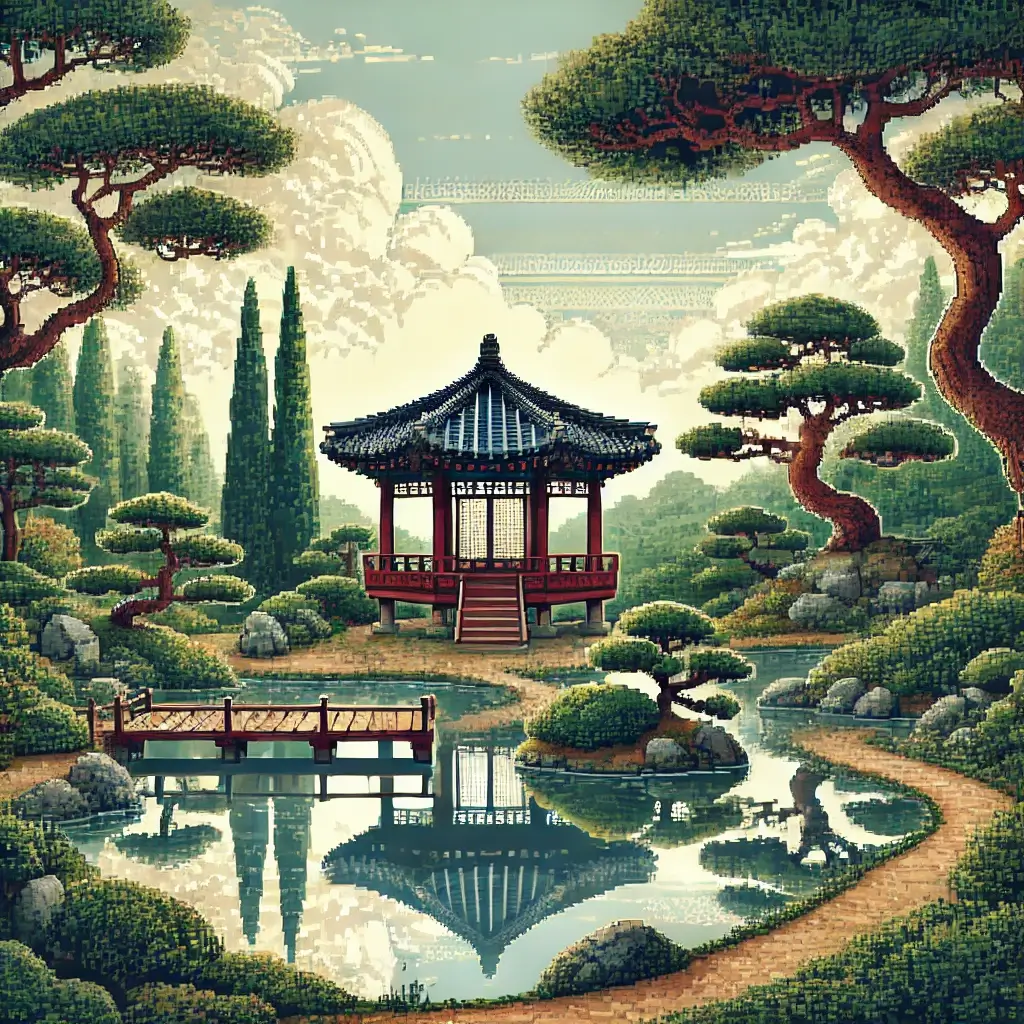
A Korean garden can be connected to a palace, scholarly retreat, residence or temple. These settings have different histories and purposes. Observe a particular place before assigning all gardens a fixed philosophy or five universal design rules.
Identify the site and its changes
Record the garden’s name, period, patron or institution and current official explanation. Restoration and later planting can shape what visitors see. A modern photograph does not necessarily show an unchanged historic landscape.
Look at relationships in the space
Notice paths, water, buildings, rocks, views and the surrounding terrain. Describe how the visitor moves and where a view opens. Keep a visible relationship separate from a claim about the designer’s intention unless a source supports it.
Compare two settings
A palace garden and a private retreat need not serve the same users or activities. Choose one documented feature from each and compare its function. Avoid describing all Korean gardens as unplanned or every asymmetry as deliberate spiritual teaching.
Plan a visit from current information
Use the managing institution for opening, reservations, accessible routes and seasonal restrictions. Leave time for weather and walking conditions. Stay on permitted paths and do not move stones, plants or water features to improve a photograph.
A practical next step
Compare two garden views without inventing a design philosophy
Choose a documented garden plan or two permitted viewpoints at one site. Describe the route between them and how the relationship among buildings, water, planting and surrounding terrain changes. This gives you something specific to compare before assigning a philosophical meaning.
Then read the managing institution’s explanation of the site and its later changes. A restoration note can alter how you understand a familiar photograph. Keep a statement about what visitors see today separate from a claim about an original designer’s intention.
| Compare | What to record |
|---|---|
| Viewpoint | Where are you standing or looking in the documented plan? |
| Relationship | What changes in the arrangement of landscape and buildings? |
| History | What does the site record say about alteration or restoration? |
A reader question: Can a garden’s appearance prove that every feature was deliberately symbolic?
No. A visual impression can prompt interpretation, but evidence is needed for an intended meaning. Describe a spatial relationship clearly and attribute philosophical explanations to the source that makes them.
Further reading: Korea Tourism Organization: VISITKOREA. Check the specific entry, object, edition or current provider notice relevant to your question.
Editorial revision: October 20, 2026. Practice examples are editorial constructions. The discussion distinguishes documented information, interpretation and personal choice.