Unlocking 1000 Years of Fortune: The Secret Power of Korean Geomancy in Architecture!

*Updated on December 4, 2025 with the latest information.

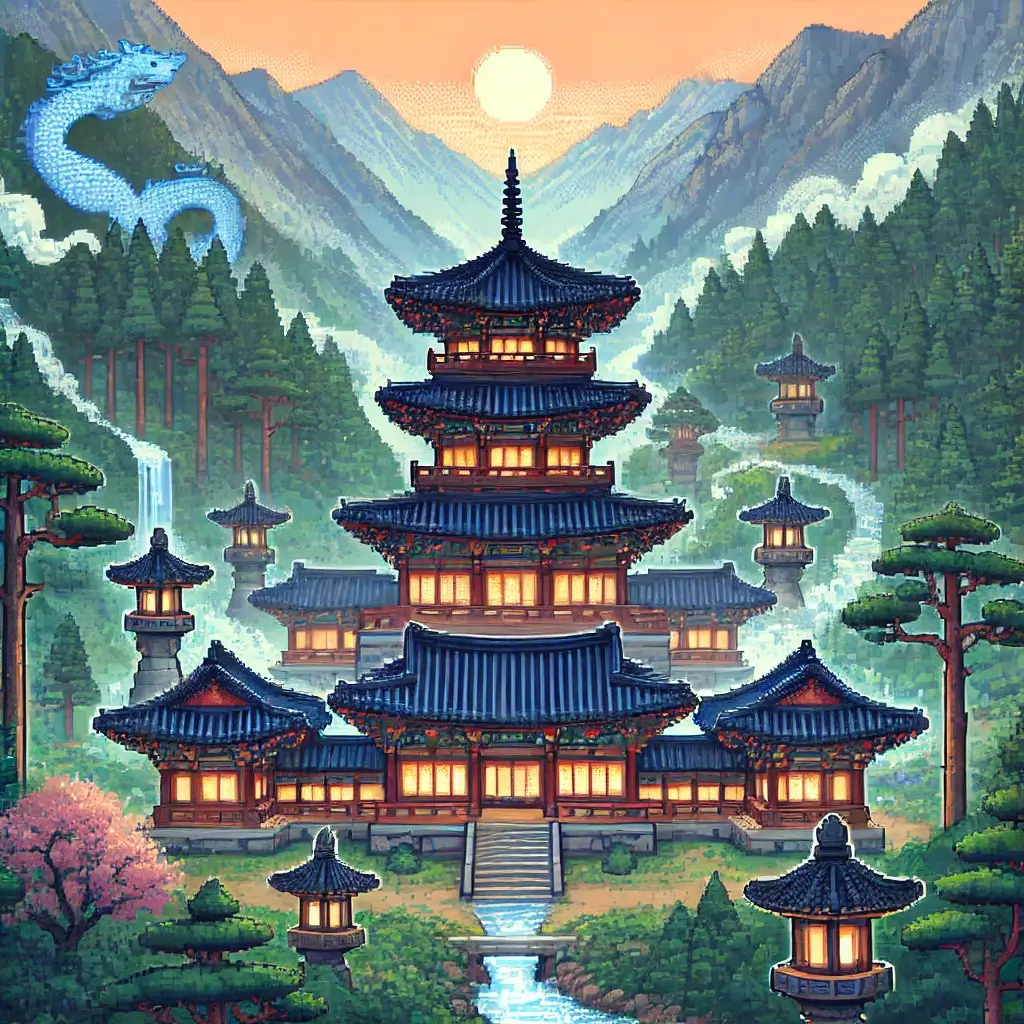
Pixel art of a Korean mountain temple nestled in a forested valley, with glowing blue energy veins (Yongmaek) through the mountains and a gentle stream flowing past cherry blossoms and pagodas.
Unlocking 1000 Years of Fortune: The Secret Power of Korean Geomancy in Architecture! 6

Unlocking 1000 Years of Fortune: The Secret Power of Korean Geomancy in Architecture!

Ever walked into a space and just *felt* it? Like the air was different, the light hit just right, and everything simply clicked?

Well, in Korea, that feeling isn’t just good vibes or a lucky guess. It’s often the deliberate outcome of an ancient and profound philosophy called Geomancy, known locally as Pungsu (풍수).

And let me tell you, it’s not just some quaint old tradition. Pungsu is the beating heart behind centuries of Korean architectural marvels, from humble homes to majestic palaces and serene temples.

Imagine a world where every building isn’t just constructed, but *grown* from the very landscape, harmonizing with the mountains, rivers, and the invisible flow of energy all around us.

That, my friends, is the world of Korean Geomancy.

It’s a concept so deeply woven into the fabric of Korean culture that you can’t truly understand its history, art, or even its modern sensibilities without grasping the basics of Pungsu.

So, grab a cup of your favorite tea, settle in, and let’s embark on a fascinating journey to uncover how this ancient wisdom has shaped, and continues to shape, the very spaces Koreans inhabit.

You’ll be amazed at how practical and insightful these centuries-old principles still are!


What Exactly is Pungsu (Geomancy)?

At its heart, Pungsu, or Korean Geomancy, is the art and science of aligning human dwellings with the natural world to harness auspicious energy, often referred to as ‘qi‘ or ‘chi‘.

Think of it as the ultimate form of environmental psychology, but with a cosmic twist!

It’s about understanding how mountains, water, wind, and the very ground beneath our feet influence our well-being, prosperity, and even our destiny.

It’s not just about aesthetics; it’s about creating a harmonious flow between humanity and nature, ensuring good fortune for generations.

Many people mistakenly think of it as mere superstition, but that’s like saying acupuncture is just poking needles randomly.

There’s a sophisticated system of observation, calculation, and intuitive understanding that goes into Pungsu, honed over thousands of years.

Historical Roots: From Ancient China to the Heart of Korea

While Pungsu has a distinctly Korean flavor, its origins can be traced back to ancient China, where it’s known as Feng Shui.

This practical philosophy made its way to the Korean Peninsula during the Three Kingdoms period (around 4th to 7th centuries CE), quickly taking root and evolving to suit Korea’s unique mountainous terrain and cultural nuances.

It wasn’t just adopted; it was *transformed*.

By the Goryeo Dynasty (918-1392), Pungsu had become a dominant force, influencing everything from the selection of capital cities to the placement of royal tombs and Buddhist temples.

In fact, the very founding of the Goryeo Dynasty itself is deeply intertwined with Pungsu principles, with its founder, King Taejo, heavily relying on the advice of geomancers.

This trend continued and even intensified during the Joseon Dynasty (1392-1910), the last Korean kingdom.

Pungsu wasn’t just a guide; it was often the *supreme determinant* for major national projects, ensuring the longevity and prosperity of the royal family and the nation.

The Core Principles of Pungsu: It’s More Than Just a Feeling!

So, what makes Pungsu tick? It’s built upon several fundamental concepts that, once understood, reveal a surprisingly logical and holistic worldview.

It’s not just about placing a statue here or moving a plant there.

It’s a deep understanding of natural patterns and energy flows.

The Dragon’s Breath (Yongmaek): Tracing the Veins of Energy

One of the most captivating concepts in Pungsu is the ‘Yongmaek (용맥),’ or ‘Dragon’s Vein.’

In Korean Geomancy, mountains are seen as living, breathing entities, and their ridges and valleys are believed to be the pathways through which vital energy (qi) flows, much like blood flows through a dragon’s body—echoing the mythic guardian creatures of Korean folklore.

A powerful Yongmaek signifies a strong flow of auspicious energy.

Geomancers would spend years, sometimes even decades, trekking through mountains to identify these ‘dragon veins’ and locate ‘auspicious spots’ or ‘blood points’ where this energy gathered and accumulated.

Imagine someone painstakingly mapping out invisible energy lines across an entire country!

This is why many of Korea’s most important historical sites – its capital cities, royal palaces, and grand temples – are nestled within dramatic mountainous landscapes.

They weren’t chosen arbitrarily; they were carefully selected based on the perceived strength and positive influence of the surrounding Yongmaek.

It’s like finding the perfect electrical outlet for your super-powered device!

Wind (Pung) and Water (Su): The Dynamic Duo

The very name ‘Pungsu’ literally translates to ‘wind and water.’

These two elements are considered the primary conduits and shapers of qi.

Wind (Pung) is seen as a force that disperses qi. Too much wind, especially harsh, direct wind, can scatter good energy and lead to misfortune.

That’s why you’ll often find buildings nestled and protected from strong winds, often by a ‘back mountain’ or surrounding hills.

Water (Su), on the other hand, is believed to gather and hold qi.

The ideal water flow is gentle and meandering, allowing energy to accumulate rather than rush away.

Think of a lazy river rather than a gushing waterfall.

The presence of clean, flowing water near a site is highly prized in Pungsu, symbolizing wealth, prosperity, and vitality.

So, if you see a Korean building with a gentle stream or pond nearby, it’s likely no accident!

Finding the Perfect Spot: The Back-to-Mountain, Front-to-Water Ideal

This is arguably the most recognizable Pungsu principle when observing Korean architecture.

The ideal site, often called ‘Baesanimsu (배산임수),’ translates to ‘back mountain, front water.’

It describes a location where the main building or settlement is situated with a protective mountain or hill at its back, shielding it from harsh northern winds.

This ‘back mountain’ acts as a stable, supportive guardian, providing a sense of security and anchoring the site.

In front, there should be an open space, often gently sloping downwards, leading to a body of water—a river, stream, or even a pond.

This ‘front water’ is believed to gather positive energy and represent prosperity and openness.

Think of it as a natural armchair, with the mountain as the sturdy backrest and the water as the comfortable footrest.

This configuration optimizes the flow of qi, creating a balanced and auspicious environment.

You’ll see this pattern repeated endlessly, from the grand design of Seoul itself (with Bugaksan to the north and the Han River to the south) to individual hanok homes across the countryside.

The Five Elements (Ohaeng): A Cosmic Balancing Act

Beyond wind and water, Pungsu also incorporates the ancient concept of the Five Elements (Ohaeng, 오행): Wood (목), Fire (화), Earth (토), Metal (금), and Water (수).

These elements are not just materials; they represent different types of energy, directions, seasons, colors, and even human organs.

The interaction of these elements – their cycles of creation and destruction – is crucial for maintaining balance and harmony.

For instance, wood feeds fire, fire creates earth (ash), earth bears metal, metal holds water, and water nourishes wood. This is the ‘generative cycle.’

Conversely, wood controls earth, earth controls water, water controls fire, fire controls metal, and metal controls wood. This is the ‘destructive cycle.’

In Pungsu, a geomancer might analyze the shapes of mountains (which can resemble different elements), the colors used in a building, or the materials to ensure a harmonious elemental balance.

Too much of one element or an imbalance in the cycles could lead to negative outcomes.

It’s a bit like a cosmic recipe, where every ingredient needs to be just right for the dish to be perfect!

Korean Geomancy in Architecture
Unlocking 1000 Years of Fortune: The Secret Power of Korean Geomancy in Architecture! 7

Pungsu’s Grand Blueprint: How It Shaped Korean Architecture

Now, let’s get to the exciting part: seeing these principles in action!

Pungsu wasn’t just a theoretical concept; it was a practical guide that informed every major architectural decision in Korea for centuries.

It’s why these structures don’t just look beautiful; they *feel* right.

Palaces and Fortresses: Built for Dynastic Fortune

When a new dynasty was founded, the very first and most critical task was to choose an auspicious site for the capital city and the royal palace.

This wasn’t a job for politicians; it was a job for the most skilled geomancers in the land!

The Joseon Dynasty’s capital, Hanyang (modern-day Seoul), is a prime example.

It’s a textbook Pungsu site, with Bugaksan Mountain providing the strong, protective ‘back,’ and the Han River flowing gently in front, gathering qi and symbolizing prosperity.

The surrounding inner and outer mountains (Namsan, Inwangsan, Naksan, Gwanaksan, Bukhansan, etc.) formed a natural protective barrier, often referred to as the ‘Four Guardian Animals’ (dragon, tiger, phoenix, turtle) providing ideal energy flow and defense.

Within the palace grounds themselves, every building, every gate, and even every tree was carefully positioned according to Pungsu.

Gyeongbokgung Palace, the main royal palace of the Joseon Dynasty, is a masterclass in this.

Its main throne hall, Geunjeongjeon, faces south, ensuring optimal sunlight and placing it in a dominant position relative to the ‘front water’ (a symbolic stream within the courtyard).

The surrounding mountains provide a strong energetic embrace.

Fortresses, too, were built with Pungsu in mind.

The Hwaseong Fortress in Suwon, a UNESCO World Heritage site, is a fantastic example of a fortress that integrates with the natural terrain, taking advantage of hills and valleys for strategic defense while still aligning with Pungsu principles for the city within its walls.

It was a blend of military strategy and cosmic harmony.

Temples and Monasteries: Sanctuaries of Spiritual Harmony

If there’s one type of architecture where Pungsu is immediately evident, it’s Buddhist temples and monasteries.

Almost without exception, Korean temples are nestled deep within mountains.

This isn’t just for quiet contemplation; it’s a direct application of Pungsu.

The mountains provide powerful dragon energy, and the seclusion helps to contain and concentrate the spiritual qi, making them ideal places for meditation and enlightenment.

Take for example, Bulguksa Temple near Gyeongju, another UNESCO World Heritage site.

Its design is a testament to the seamless integration of human-made structures with the natural environment, strategically built on the slopes of Mount Toham.

The layout of the temple, the placement of its pagodas, and even the direction its main halls face are all meticulously planned to optimize the flow of qi from the surrounding mountains and valleys.

You feel a sense of profound peace and stability there, and that’s no accident.

Many temples also incorporate small streams or ponds, not just for practical purposes, but to gather and hold the auspicious energy.

The path leading up to a temple is often winding and gentle, allowing visitors to gradually absorb the positive energy of the site before entering the main sacred spaces.

The Humble Hanok: Pungsu in Everyday Life

It wasn’t just grand royal structures or spiritual sanctuaries that benefited from Pungsu.

The principles were applied even to the design and placement of traditional Korean homes, or Hanok (한옥).

A well-designed Hanok is a microcosm of Pungsu principles.

They are almost always oriented to face south, maximizing sunlight in winter (for warmth) and minimizing harsh western sun in summer (for coolness).

This south-facing orientation also typically means they have a hill or mountain behind them for protection and a view of open land or water in front, embodying the ‘Baesanimsu’ ideal.

The layout of rooms within a Hanok also reflects Pungsu.

The ‘Anbang (안방)‘ (main room or inner room), typically for the matriarch, is often located in the most auspicious part of the house, receiving good qi.

Courtyards (Madang, 마당) serve not just as functional spaces but also as areas where qi can accumulate and circulate harmoniously.

Even the choice of materials – wood, earth, stone – aligns with the Five Elements theory, creating a breathable, natural, and balanced living environment.

Living in a Hanok is truly experiencing Pungsu in action.

You feel the gentle breeze, the warmth of the sun, and the quiet harmony with nature.

It’s no wonder these homes are making a comeback in modern design, not just for their beauty, but for their inherent comfort and connection to the environment.

Korean Geomancy in Architecture
Unlocking 1000 Years of Fortune: The Secret Power of Korean Geomancy in Architecture! 8
Korean Geomancy in Architecture
Unlocking 1000 Years of Fortune: The Secret Power of Korean Geomancy in Architecture! 9

Is Pungsu Still Alive? Its Enduring Relevance in Modern Korea

You might think that in a hyper-modern, technologically advanced country like South Korea, ancient Geomancy would be a thing of the past.

But you’d be delightfully mistaken!

While its overt influence might not be as pronounced as in the Joseon Dynasty, Pungsu continues to subtly (and sometimes not-so-subtly) shape decisions in contemporary Korea.

Real estate agents often highlight a property’s Pungsu advantages.

Many Koreans still consult geomancers for important life events, such as selecting a new home, an office location, or even a burial site (the ultimate Pungsu decision!).

New apartment complexes are often designed with Pungsu principles in mind, incorporating water features, strategic landscaping, and building orientations to enhance the residents’ well-being.

Even major national projects, like the placement of new airports or government buildings, sometimes spark debates rooted in Pungsu considerations.

It’s not uncommon to hear discussions about the ‘energy’ of a particular area, especially in relation to business success or political fortune.

This enduring relevance speaks to the deep-seated belief in the interconnectedness of humans and their environment, a philosophy that transcends centuries.

It’s a powerful reminder that sometimes, the oldest wisdom is the most resilient.

How Can YOU Experience Pungsu?

Want to feel the energy yourself? Here are a few ways to get a taste of Pungsu in action:


  • Visit a Korean Palace: Stroll through Gyeongbokgung, Changdeokgung, or any of Seoul’s grand palaces. Pay attention to their layout, their relationship to the surrounding mountains, and the water features. You’ll start to see the Pungsu blueprint everywhere.


  • Explore a Mountain Temple: Take a trip to a temple like Bulguksa, Haeinsa, or Beopjusa. Notice how the temple structures are integrated into the mountain slopes, how water flows through the grounds, and the overall sense of tranquility and power.


  • Wander through a Hanok Village: Places like Bukchon Hanok Village in Seoul or Jeonju Hanok Village offer a chance to see traditional homes up close. Observe their south-facing orientation, the courtyards, and their thoughtful placement within the landscape.


  • Just Observe Nature in Korea: Look at how cities are built, how fields are laid out, and how individual houses are situated. You’ll start noticing the subtle (and sometimes not-so-subtle) patterns of ‘back to the mountain, front to the water’ everywhere you go.


Final Thoughts: The Enduring Legacy of Geomancy

Korean Geomancy, or Pungsu, is far more than just an esoteric practice.

It’s a profound philosophy that embodies a deep respect for nature and a desire to live in harmony with the environment.

It’s about understanding that our surroundings profoundly influence our lives, for better or worse.

By observing the enduring legacy of Pungsu in Korean architecture, we gain a unique window into the Korean psyche – one that values balance, harmony, and a deep, almost spiritual, connection to the land.

So next time you marvel at a beautifully preserved Korean palace or temple, remember the invisible forces of Pungsu that helped shape its very existence.

And perhaps, just perhaps, you’ll feel a bit of that auspicious energy for yourself!

It’s a legacy that has brought fortune for over 1000 years, and it’s still fascinating to witness today.


Further Reading and Resources

For those eager to dive deeper into the fascinating world of Korean geomancy and architecture, here are some highly recommended resources:

Explore Pungsu Articles from The Korea Times

Learn About Hanok and Nature from UNESCO

Discover Korean Cultural Heritage Sites

Korean Geomancy, Pungsu, Korean Architecture, Qi, Hanok

🌸 Ultimate Guide to Korean Skincare ✨ K-Beauty’s Star Ingredients Deep Dive