
Korea Claim Denial Playbook
Korea Travel Insurance Claim Denied?
Build an Appeal the Examiner Can Approve
A denial letter can make an already difficult Korea trip feel unfinished. The hospital has been paid, the suitcase is still missing, or the canceled hotel charge remains on your card, yet the insurer has reduced the entire story to a clause number and a quiet “not covered.”
The next move is not to write a longer version of the original claim. It is to identify exactly what the insurer disputes, then place the policy language, Korean records, payment evidence, timeline, and requested outcome into an appeal file that can be reviewed without guesswork.
This guide shows you how to audit the denial, repair common Korea-specific documentation gaps, compare free and paid help, and escalate through the correct U.S. or Korean channel. It cannot promise approval, but it can help you stop arguing with the whole policy when only one hinge is squeaking.
Decode
Separate a true coverage exclusion from a missing-document problem.
Document
Turn Korean receipts and records into a clear, indexed evidence file.
Escalate
Choose the right internal, regulatory, consumer, or professional route.
Your first job is not to prove that the trip was awful. It is to prove that the claimed loss fits the contract. 🧭
Snapshot
Who this is for: U.S. travelers denied medical, cancellation, interruption, delay, baggage, or theft benefits connected to a Korea trip. What it solves: unclear denial language, incomplete Korean paperwork, weak appeal organization, and uncertainty about escalation. What you can do next: complete a denial audit, request the highest-value missing document, and begin a clause-by-clause appeal.
Table of Contents
Before You Appeal: Know What This Guide Can and Cannot Do
Travel insurance disputes sit at the intersection of contract wording, insurance regulation, medical evidence, payment records, and deadlines. Two travelers can experience nearly identical emergencies in Seoul and receive different decisions because they bought different policies, live in different states, or submitted different evidence.
This article offers general educational guidance. It does not interpret your policy as personalized legal advice, determine medical necessity, establish eligibility, or predict whether an insurer, regulator, mediator, or court will agree with you.
Before You Act
Confirm the deadline in your denial notice and policy before spending days collecting more records. Consider qualified professional help when the claim involves a large loss, hospitalization, evacuation, disability, death, alleged fraud, a disputed pre-existing condition, or uncertainty about which country or state’s rules apply.
The place you traveled is not always the place that governs the policy
A medical event may have occurred in South Korea while the travel insurance product was sold, issued, or administered in the United States. In that situation, the policy’s issuing state and contract terms may matter more to the appeal route than the location of the hospital.
A policy issued by a Korean insurer may follow a different complaint process. A credit-card travel benefit may also involve a benefit administrator rather than the company whose logo appears on the card. Travel assistance, meanwhile, may provide coordination without being the party responsible for reimbursement.
Keep the claim dispute separate from the underlying bill
U.S. travelers are generally responsible for arranging payment for medical care received abroad. A claim denial does not erase the hospital, pharmacy, ambulance, or clinic charge, and an appeal does not automatically pause collection activity or credit-card interest.
For trip-planning context, coverage terminology, and the questions worth asking before departure, see this guide to travel insurance for South Korea. Travelers dealing with treatment records may also benefit from the practical overview of Korean hospital admission procedures.
The Denial Sentence That Decides Everything
Many weak appeals begin with the traveler’s experience: the pain, the panic, the canceled reservation, the midnight airport bench. Those details matter, but the most efficient starting point is colder and smaller. Find the exact sentence in which the insurer explains why it will not pay.
Copy that sentence into a separate document. Beneath it, copy every policy provision, definition, exclusion, deadline, and documentation requirement the letter cites. Do not rely on a telephone summary of the reason.
A denial often contains three different disputes
One sentence may dispute the event, the policy interpretation, and the amount at the same time. For example, an insurer might state that treatment was not shown to be medically necessary, the condition appears related to a pre-existing illness, and the records do not establish how much was paid.
| What the insurer disputes | What it usually means | Best first response |
|---|---|---|
| The event | The insurer questions whether the illness, delay, theft, or cancellation happened as described. | Provide independent records, dates, reports, or provider statements. |
| The cause | The event happened, but the insurer says the cause was excluded or not covered. | Map the facts to the covered reason and address the cited exclusion. |
| The amount | The loss may be covered, but the claimed value is unsupported, refundable, duplicated, or above a limit. | Provide itemization, payment evidence, refund records, and calculations. |
| Claim compliance | The insurer says notice, filing, authorization, or documentation requirements were not met. | Prove compliance or explain why compliance was not reasonably possible. |
“Not covered” and “not proven” require different appeals
A missing itemized bill can sometimes be repaired. An explicit exclusion for elective treatment presents a different problem. Sending a thicker stack of receipts will not overcome an exclusion unless the insurer has misunderstood what treatment occurred or why it was necessary.
Look for verbs in the denial letter. “Excluded” suggests a contract interpretation. “Insufficient,” “not received,” or “unable to verify” often signals an evidence gap. “Untimely” points toward a deadline dispute. “Not medically necessary” may require both clinical records and a careful reading of the policy definition.
Key Takeaway
Do not appeal the feeling of being treated unfairly. Appeal the insurer’s stated reason, one clause and one factual issue at a time.
Show me the nerdy details
A useful way to test a denial is to separate the claim into five elements: the coverage trigger, the defined event, any exclusion, the traveler’s compliance obligations, and the payable amount.
Suppose a trip interruption benefit applies when a traveler must leave early because of a covered illness. The insurer may agree that the trip ended early but dispute whether the illness met the definition, whether a physician advised interruption, whether a pre-existing-condition exclusion applies, or whether the expenses were actually nonrefundable.
An effective appeal addresses only the elements in dispute. This avoids burying a strong factual correction beneath twenty pages that prove facts the insurer already accepts.
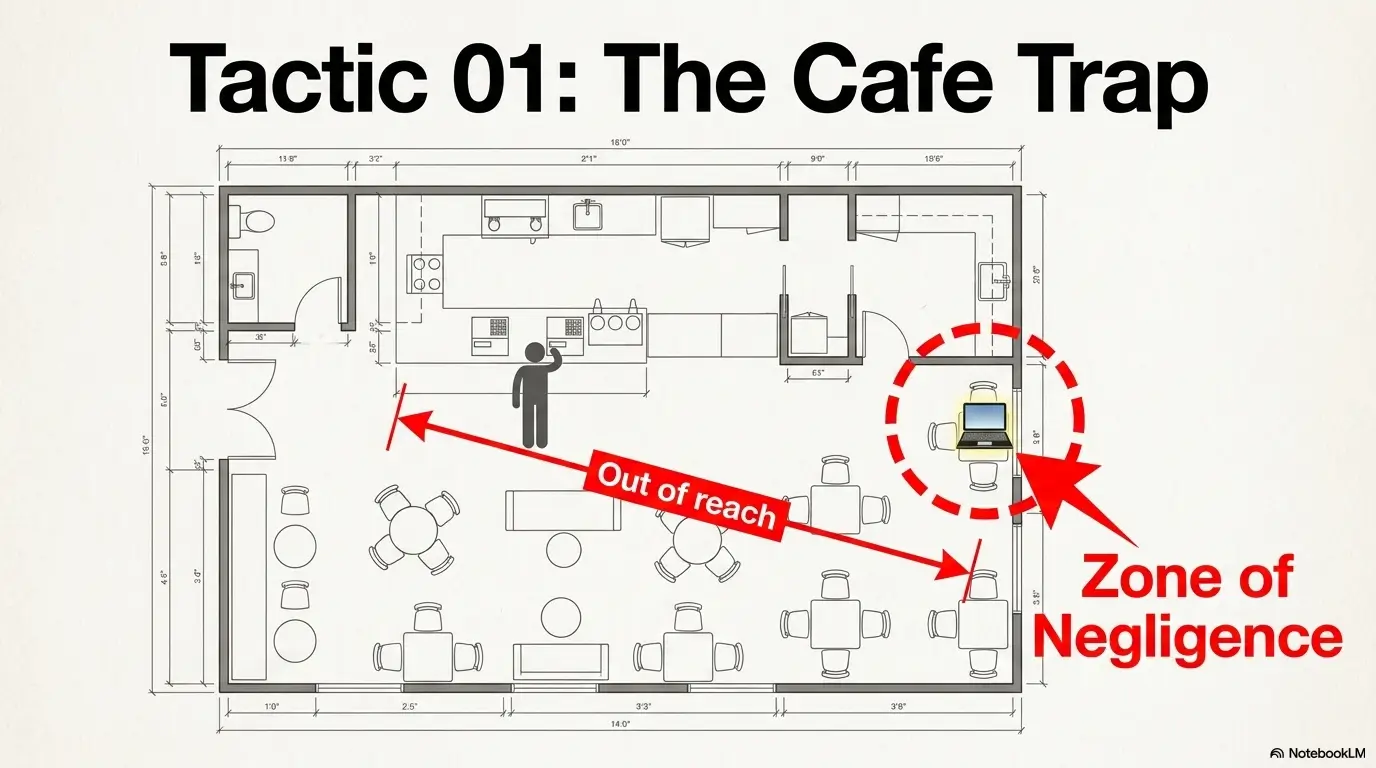
Audit the File Before You Argue
Before drafting an appeal, compare three things side by side: the denial letter, the complete policy or certificate, and the exact documents previously submitted. This small audit prevents the surprisingly common mistake of appealing a reason the insurer never gave.
Confirm that you are reading the contract actually issued
Marketing pages and comparison charts are not always the governing document. Locate the certificate, policy, schedule of benefits, endorsements, state-specific amendments, and any confirmation showing the insured travelers and trip dates.
- Confirm the policy number and claim number.
- Verify the insured traveler’s legal name.
- Check the covered trip dates and destinations.
- Confirm the benefit category and benefit limit.
- Locate definitions for terms used in the denial.
- Check notice, proof-of-loss, and appeal deadlines.
- Look for state-specific amendments that change the standard wording.
Turn the denial into a one-page evidence matrix
Create one row for every denial reason. Then identify the controlling clause, what the insurer appears to believe, the evidence already submitted, and the best new evidence available.
| Denial issue | Policy language | Insurer’s apparent position | Best counter-evidence |
|---|---|---|---|
| Medical necessity | Definition of covered sickness and necessary treatment | Records show treatment but not why it was required | Clinical note, diagnosis record, physician statement, treatment plan |
| Proof of payment | Requirement for incurred or paid expenses | Receipt shows a card charge without itemized services | Itemized bill matched to card statement and payment receipt |
| Pre-existing condition | Exclusion, look-back period, and waiver terms | Current treatment may relate to prior symptoms or care | Relevant dated records and a focused physician explanation |
| Delay duration | Minimum number of covered delay hours | Submitted boarding pass does not prove actual delay length | Carrier statement with scheduled time, actual time, and reason |
Protect the deadline before chasing the perfect document
If an appeal deadline is approaching, consider submitting a timely written appeal with the evidence currently available and a clear note that specific requested records will follow, provided the policy or appeal instructions permit supplements. Ask the insurer in writing whether it will accept additional documents and by what date.
Do not assume that a pending hospital request, translation order, or telephone conversation extends a contractual deadline. Calendar the date with reminders several days in advance.
The Five-Step Appeal Path
Fix the Korea Paperwork Gap
A Korean hospital or clinic may give you enough paperwork to understand that payment occurred, yet not enough for a U.S. claims examiner to identify each service, diagnosis, medication, provider, and date. The result is a file that feels complete to the traveler and incomplete to the insurer.
Request records that prove treatment, cost, and payment separately
Document titles vary by facility, so describe what you need rather than relying on one Korean term. Useful records may include the following:
- An itemized statement showing each service, procedure, supply, medication, and charge
- A medical bill or receipt showing the total amount charged
- Proof that the balance was paid, including card, cash, or bank payment confirmation
- A diagnosis certificate, treatment certificate, or clinical record
- Emergency department, outpatient, inpatient, or discharge records
- Prescription and pharmacy records
- Imaging, laboratory, ambulance, or referral records when relevant
- The provider’s legal name, address, contact details, and treatment date
Common Korean labels may include 진료비 계산서·영수증 for a medical bill or receipt, 진료비 세부산정내역 for an itemized charge statement, 진단서 for a diagnosis certificate, 의무기록사본 for copied medical records, and 처방전 for a prescription. Terminology and document availability can differ, so ask the insurer what it requires and the provider what it can issue.
A credit-card receipt proves payment, not the covered service
A card slip may show that 480,000 Korean won was paid to a hospital. It may not show whether the amount covered an emergency examination, imaging, medication, a private room, elective treatment, or an unrelated charge.
Pair proof of payment with the itemized statement. Add a short cover note identifying the matching date, provider, original won amount, card transaction, and claimed U.S. dollar amount.
Preserve the Korean original and make translations easy to verify
Keep every original-language page. Attach the translation immediately after the corresponding Korean page or use matching labels such as “Exhibit 4A, Korean original” and “Exhibit 4B, English translation.”
Do not translate only the lines that help your position. Selective translation can create credibility problems and may hide information the insurer needs to understand the diagnosis, prior history, or treatment sequence.
For terminology, confidentiality, page matching, and translator-selection questions, review this guide to medical translation in Korea. Prescription-related claims may also require both the hospital prescription and pharmacy record, as explained in this overview of prescription filling in Korea.
Key Takeaway
The strongest Korea medical file usually connects four separate facts: what happened, what was treated, what each service cost, and what you actually paid.
When free translation is enough and when paid help may be worth it
| Approach | Best suited to | Advantages | What to verify |
|---|---|---|---|
| Traveler-prepared explanation | A few simple receipts with clear dates and amounts | No direct cost and fast | Whether the insurer accepts informal translations |
| Provider-issued English record | Hospitals or clinics able to produce English documentation | Directly tied to the medical provider | Whether all diagnoses, charges, and pages are included |
| Professional document translation | Long, technical, or medically complex files | Consistent terminology and page-by-page matching | Confidentiality, certification needs, fee basis, and turnaround |
| Professional claim review | Large or legally complex denials | Help identifying policy and evidence issues | Licensing, scope, conflicts, fees, and relevant experience |
Before paying for translation, ask the insurer whether certification is required, whether selected pages are acceptable, and whether it has its own translation process. A beautiful translation of the wrong document is still the wrong document, only wearing a nicer coat.
Build Evidence for the Claim You Actually Filed
A medical claim, delayed-baggage claim, and trip interruption claim do not speak the same evidentiary language. Build the appeal around the benefit category rather than sending every trip document you possess.
Medical claims: connect necessity, eligibility, treatment, and payment
Medical appeals commonly fail when the records prove treatment but do not explain why it was urgent, medically necessary, or covered under the policy. A diagnosis name alone may not answer the insurer’s question.
- Match the treatment date to the covered travel period.
- Identify whether care was emergency, urgent, follow-up, routine, preventive, dental, cosmetic, or elective.
- Include clinical records supporting the symptoms and treatment decision.
- Pair every itemized charge with payment evidence.
- Document calls to the insurer or assistance line, including unsuccessful attempts.
- Address only the prior medical history relevant to the cited exclusion or definition.
When the insurer raises a pre-existing-condition issue, read the policy’s own definition, look-back period, waiver terms, purchase timing rules, and eligibility requirements. Do not assume that every travel policy uses the same definition.
Cancellation or interruption: prove both the covered cause and the nonrefundable loss
A canceled reservation is not automatically a covered loss. The insurer may need evidence of the triggering event, when it occurred, why it prevented or interrupted travel, and which prepaid costs could not be recovered elsewhere.
- Show the original booking, payment date, and cancellation terms.
- Provide refund, credit, or voucher records.
- Obtain a physician, employer, airline, tour operator, or provider statement when relevant.
- Explain the timing between the covered event and the decision not to travel.
- Separate additional interruption costs from unused prepaid arrangements.
- Update the claim if a supplier later issues a refund.
Delay and missed connection: prove the clock and the carrier’s reason
A photograph of a departure board captures frustration but may not establish the policy’s minimum delay period. Obtain the carrier’s written confirmation showing the scheduled time, actual time, route, and reason for the disruption.
Match meals, lodging, transportation, and other claimed purchases to the covered delay window. A meal bought before the qualifying period or a premium hotel upgrade may receive closer scrutiny, depending on the policy.
Baggage, theft, and property: prove possession, incident, value, and recovery efforts
- File a carrier report or police report as soon as reasonably possible.
- Keep the baggage claim tag and incident reference number.
- Use purchase receipts, photographs, warranty records, or account histories to show ownership.
- Separate delayed-baggage purchases from permanent-loss claims.
- Identify any recovered items, airline payments, or other reimbursements.
- Check depreciation rules, per-item limits, and exclusions for valuables.
Real-world example: the receipt that answered the wrong question
Imagine a traveler who develops severe abdominal pain in Busan and visits an emergency department. She submits a hospital receipt, her credit-card statement, and a photograph of the prescription bag.
The insurer denies the claim because the file does not show the diagnosis, clinical findings, or itemized services. She initially prepares an angry appeal describing the pain and the long wait at the hospital.
Instead, she requests the emergency record, diagnosis certificate, itemized statement, and pharmacy receipt. Her appeal then explains how each new exhibit answers one denial reason. The lesson is not that the claim will necessarily be approved. It is that persuasive evidence must answer the insurer’s question, not merely repeat the traveler’s experience.
Assemble the Appeal File Like a Reviewer
A claim reviewer may be handling many files, several benefit categories, and records from multiple countries. Organization is not decoration. It reduces the number of inferences the reviewer must make.
Start with a one-page chronology
List only the events relevant to coverage. Use exact dates, local Korea time when useful, and a short description of the supporting exhibit.
| Date | Event | Why it matters | Exhibit |
|---|---|---|---|
| April 8 | Symptoms began during the insured trip | Connects the event to the coverage period | Exhibit 2 |
| April 9 | Hospital examination and imaging | Supports diagnosis and medical necessity | Exhibits 3 to 5 |
| April 9 | Hospital and pharmacy balances paid | Shows incurred and paid expenses | Exhibits 6 to 8 |
| April 10 | Insurer assistance line contacted | Documents notice and attempted authorization | Exhibit 9 |
Use an exhibit index and explanatory filenames
Number attachments in the order they are discussed. Avoid filenames such as “IMG_4481,” “scan-final-final2,” or “hospital stuff.” Those names are tiny fog machines.
- 01-Denial-Letter-2026-05-06.pdf
- 02-Claim-Chronology.pdf
- 03-Busan-Hospital-Clinical-Record-Korean.pdf
- 04-Busan-Hospital-Clinical-Record-English.pdf
- 05-Itemized-Hospital-Charges-KRW.pdf
- 06-Hospital-Payment-Receipt.pdf
- 07-Credit-Card-Statement-Matching-Payment.pdf
- 08-Pharmacy-Prescription-and-Receipt.pdf
Show currency conversion without erasing the original won amount
Preserve the original Korean won amount on every document. In a separate calculation sheet, state the conversion source, conversion date, and arithmetic used for the claimed U.S. dollar amount.
Check the policy or administrator’s instructions before choosing an exchange-rate date. Some claims may be calculated using the transaction date, payment processor amount, settlement date, or another specified method.
Key Takeaway
Flag new evidence clearly. The reviewer should be able to see within one minute what changed since the original denial.
Write a Clause-by-Clause Appeal
A useful appeal letter is usually shorter than the evidence file. Its job is to identify the decision being challenged, explain why reconsideration is requested, and guide the reviewer to the controlling language and supporting exhibits.
Open with the identifiers and requested outcome
State the insured traveler’s name, claim number, policy number, denial date, benefit category, and exact outcome requested. For example: “I request reconsideration of the May 6, 2026 denial of emergency medical benefits and review of the enclosed itemized and clinical records.”
Avoid beginning with a threat, a long travel diary, or an accusation that the insurer never intended to pay. Such language consumes attention without answering the denial.
Answer each denial reason in the insurer’s original order
- State the denial reason. Paraphrase accurately or quote a short controlling phrase.
- Identify the relevant policy language. Include only the clause, definition, or exclusion that matters.
- Correct factual errors. State the accurate fact and cite the exhibit.
- Introduce new evidence. Explain exactly what the document proves.
- Request a specific finding. Ask the reviewer to reconsider that issue and address it in writing.
Separate factual corrections from policy interpretations
“The treatment occurred on April 9, not April 19” is a factual correction. “The emergency-sickness definition includes this event” is a policy interpretation. Keeping the two separate makes the appeal easier to analyze.
When discussing policy meaning, avoid quoting half a sentence. Include related definitions, exceptions, endorsements, and exclusions that could change the interpretation. Selective quotation may weaken an otherwise credible appeal.
Final appeal-letter checklist
- The claim and policy numbers appear on the first page.
- The requested outcome is specific.
- Every denial reason receives a separate response.
- Each factual statement points to an exhibit.
- New evidence is clearly identified.
- The letter requests a written clause-by-clause response.
- The submission method creates delivery confirmation.
- A complete copy is saved outside the insurer’s portal.
Key Takeaway
Keep the human story in the appeal, but let the policy clause and evidence carry the weight.
Avoid Mistakes That Turn Fixable Claims Final
Mistake 1: Resending the same documents with a new cover letter
An appeal should change the decision record. Add missing evidence, correct a factual error, identify overlooked policy language, or explain why an exclusion does not apply. Repetition alone rarely resolves the stated problem.
Mistake 2: Relying on phone promises
After important calls, send a dated written summary through the insurer’s portal or approved communication channel. Note the representative’s name, department, time, and any promised follow-up.
A telephone statement may be useful evidence, but it should not replace the written policy, denial notice, or formal appeal instructions.
Mistake 3: Altering the original records
Do not overwrite Korean text, delete pages, modify dates, or place explanatory notes directly over the original document. Keep explanations in a separate cover sheet and preserve clean originals.
Mistake 4: Calling every inconvenience a covered expense
Separate covered losses from emotional distress, inconvenience, unused plans, refundable costs, loyalty points, upgrades, and purchases outside the qualifying period. A focused claim is often more credible than a suitcase stuffed until the zipper protests.
| Common mistake | Safer alternative |
|---|---|
| Sending every travel record | Send records tied to a specific denial issue. |
| Waiting for one perfect document | Protect the deadline and ask about supplemental evidence. |
| Threatening litigation immediately | Complete the internal process and identify the governing jurisdiction. |
| Translating only favorable pages | Provide complete, accurately matched records. |
| Ignoring later refunds | Update the insurer and revise the claimed amount. |
| Assuming the credit card is the insurer | Identify the underwriter, administrator, and benefit terms. |
Escalate Through the Right Door
Escalation is most effective when it follows the structure of the product. Before contacting an outside body, identify who issued the coverage, who administers the claim, which state or country is connected to the contract, and whether the internal appeal process is complete.
Start with internal reconsideration when time permits
- Ask whether the claim can be reopened for missing documents.
- Confirm whether a formal first-level appeal is required.
- Ask whether a second-level or independent internal review exists.
- Request the complete claim file or communication history when available.
- Ask for the name and mailing address of the underwriting insurer.
- Request a written response addressing each disputed provision.
For a U.S.-issued policy, identify the correct state insurance department
State insurance departments may assist with complaints involving claim delays, denials, communication failures, or possible violations of state insurance requirements. The correct state may be connected to the policy’s issuance, sale, insured’s residence, or another contract factor.
A regulatory complaint is not the same as a lawsuit, private legal representation, or an automatic claim approval. Submit a concise chronology, denial letter, appeal, insurer response, policy provisions, and the specific conduct you want reviewed.
For Korean-issued coverage, verify the insurer’s local process first
A policy sold or issued in Korea may have Korean-language complaint terms, local filing requirements, and a different regulator or dispute-resolution route. Confirm the insurer’s formal complaint procedure before assuming that a U.S. state insurance department can review the contract.
Korean consumer processes may include consultation, damage-relief procedures, mediation, or court action, depending on the transaction, business, policy, and governing rules. Consumer mediation is not automatically available or appropriate for every insurance dispute.
DIY, free complaint help, or paid professional review?
| Option | Best suited to | Likely cost pattern | Main limitation |
|---|---|---|---|
| DIY appeal | Clear missing-document or factual-error disputes | Your time, records, postage, and translation | You must interpret the file and deadlines yourself |
| State insurance department complaint | U.S.-issued policy disputes after attempted resolution | Generally no consumer filing fee | The department does not become your private lawyer |
| Professional translation or record service | Large Korean medical files | May be per page, word, hour, or project | Translation does not determine coverage |
| Qualified insurance or legal review | Large losses, complex clauses, serious allegations, or urgent deadlines | May be hourly, fixed-fee, or another permitted arrangement | Fees and scope vary, and no outcome is guaranteed |
Before paying for professional help, ask what documents will be reviewed, whether the person is licensed where required, whether travel insurance disputes are part of their regular work, how fees are calculated, and what deliverable you will receive.
Consider Professional Help Promptly When
The denial involves hospitalization, evacuation, disability, death, alleged fraud or concealment, a large disputed amount, multiple policies, uncertain jurisdiction, or a contractual or legal deadline you cannot confidently calculate.
FAQ: Korea Travel Insurance Claim Denials
Why was my Korea travel insurance medical claim denied?
Common categories include an exclusion, insufficient itemization, lack of proof of payment, disputed medical necessity, pre-existing-condition language, treatment outside the covered dates, late filing, missing authorization, or a benefit limit. The denial letter should identify the insurer’s stated reason and controlling policy provision.
Can I appeal after returning from South Korea?
Returning home does not ordinarily determine whether an appeal is available. Appeal rights, submission methods, and deadlines come from the policy, denial notice, benefit terms, and applicable rules. Check them immediately after receiving the denial.
What Korean hospital documents should I submit?
Depending on the claim, useful documents may include the itemized charge statement, bill or receipt, payment confirmation, diagnosis or treatment record, prescription, pharmacy receipt, emergency or discharge record, and English translation. Ask the insurer for its document requirements and keep the Korean originals.
Does a credit-card receipt prove that I paid the medical bill?
It can help prove that money changed hands, but it may not prove which medical services were purchased. Pair the transaction with an itemized bill and provider receipt showing the treatment date, patient, services, and original won amount.
Will travel insurance cover a pre-existing medical condition in Korea?
Coverage depends on the exact policy. Compare its definition, look-back period, exclusions, waiver requirements, purchase timing, trip-payment rules, and eligibility conditions. A waiver may have conditions, and policies do not all use the same wording.
What happens if my Korean records are not in English?
Ask the insurer whether it requires translation, certification, or a particular format. Preserve the complete original, label translated pages clearly, and ensure each translation can be matched to the corresponding Korean page.
Can I complain to a U.S. insurance regulator?
Potentially, when the dispute involves a U.S.-issued insurance product within a state department’s authority. Identify the relevant state and complete or attempt the insurer’s internal process when appropriate. A regulator can review certain complaint issues but does not guarantee payment or act as your private attorney.
Can I claim an expense that the airline or hotel later refunded?
Travel insurance generally is not intended to produce duplicate recovery for the same loss. Report later refunds, credits, chargebacks, airline payments, or hotel adjustments. The insurer may reduce the payable amount or ask how the remaining loss was calculated.
What if the denied benefit came with my credit card?
Identify the benefit administrator, underwriter, guide to benefits, claim deadline, and appeal or complaint process. The card issuer, payment network, insurer, and administrator may perform different roles, so direct the appeal to the entity named in the denial instructions.
Your 15-Minute Denial Audit
You do not need to solve the entire dispute tonight. You need to identify the next document or decision that will move the file forward.
- Minutes 1 to 3: Copy the insurer’s exact denial sentence onto one page.
- Minutes 4 to 6: Find the cited clause, definition, exclusion, or deadline in the issued policy.
- Minutes 7 to 9: Write whether the dispute concerns the event, cause, compliance, or amount.
- Minutes 10 to 12: Name one document that directly answers the disputed point.
- Minutes 13 to 14: Record the appeal deadline and set two calendar reminders.
- Minute 15: Request the highest-value missing record in writing.
That single page becomes the spine of the appeal. From there, add only what helps the reviewer move from the denial reason to the evidence and from the evidence to the policy language.
The calmest useful question
What, exactly, would the insurer have to believe differently to change this decision? Write the answer in one sentence. Then build the file around that sentence.
Last reviewed: 2026-08