Unveiling a Culinary Dynasty: 12 Dishes That Define Korean Royal Cuisine
Ever wondered what it was like to eat like a king or queen? I’m not talking about a quick feast at your favorite Korean barbecue joint. I’m talking about a full-on, meticulously crafted banquet fit for a ruler of the Joseon Dynasty. It’s a world of incredible flavors, deep-rooted history, and a philosophy that goes way beyond just filling your stomach. It’s an art form, really.
And let’s be honest, we’ve all seen those historical K-dramas, right? The scenes of the royal kitchens bustling with activity, the stunningly arranged dishes, and the king’s look of serene satisfaction. It makes you want to teleport back in time just for a taste. That’s the magic of **Korean Royal Cuisine**.
But here’s a secret I’ve learned from my own journey into this world: it’s not as intimidating as it seems. While it was once reserved for royalty, the recipes and techniques have been passed down, and with a little patience, you can bring a piece of this amazing culinary tradition into your own kitchen. I’ve spent countless hours sifting through historical texts, talking to chefs, and, yes, making a glorious mess in my own kitchen to bring you this guide. So, let’s get started on this delicious adventure together. —
Table of Contents
—
**The History: The Fascinating 600-Year Saga of Korean Royal Cuisine**
The story of **Korean royal cuisine** isn’t just about food; it’s a living history lesson. It’s a tale of a nation’s ingenuity, its values, and its connection to the land. We’re talking about the Joseon Dynasty, a period that spanned over 500 years, from the 14th to the 19th century. During this time, the food consumed by the royal family was the pinnacle of Korean culinary art.
Imagine this: the king wasn’t eating just three meals a day. Oh no. The king was served five times a day! There was an early morning porridge called *juk* (죽), a proper breakfast (*sura*) at 10 a.m., a light midday snack, the main dinner (*sura*) at 5 p.m., and a late-night supper. It sounds like a dream, but each meal was a meticulously planned event, overseen by a highly trained team of court ladies (*gungnyeo*) and male chefs (*suksu*). They were the unsung heroes of the palace, and their skills were nothing short of legendary.
The food itself was a showcase of the entire kingdom. The Joseon court operated on a tribute system, where each of the eight provinces would send their finest local specialties to the palace. Think of it as the ultimate farm-to-table experience, but on a national scale. The king’s table, known as the *surasang* (수라상), was a microcosm of the country’s diverse geography, from the freshest seafood of the coastal regions to the finest grains from the fertile plains.
I read a fascinating anecdote once about how the king could actually gauge the health of his kingdom just by looking at his food. If the quality of the tribute ingredients was poor, it was a clear signal that the people were suffering. In times of famine or hardship, the number of dishes on the royal table would be reduced in a practice known as *gamseon*, a symbolic act of shared austerity. It’s this kind of detail that makes you realize this cuisine was so much more than a simple meal. It was a reflection of the state of the nation. It was a moral compass, a way of staying connected to the people. Honestly, that’s so much cooler than any modern-day food trend.
I’ve also found that many records of this cuisine are concentrated from the mid-Joseon period onwards, which is kind of wild when you think about it. It’s like we have this huge gap in our culinary history, but what we do have is incredibly detailed. The recipes weren’t written down like a cookbook you’d find today. They were passed down orally, from one generation of court ladies to the next, a secret language of flavors and techniques. It’s a true testament to their dedication and skill. It’s a story of preservation and passion.
This historical context is so crucial because it explains why this food is so special. It’s not just “old” food; it’s a carefully preserved cultural artifact. When you’re making a dish from this era, you’re not just cooking; you’re participating in a ritual that has been practiced for hundreds of years. You’re connecting to a history that’s both elegant and profoundly human. You’re a part of the story now, too.
***
**The Philosophy: The 5 Colors and 5 Tastes That Define Korean Royal Cuisine**
If you think about the guiding principles of modern Western cooking, you might think of things like “fat is flavor” or “mise en place.” Korean royal cuisine has its own set of deeply philosophical tenets, and they revolve around balance and harmony. This is where it gets really interesting, and frankly, a bit magical. The whole concept is based on the ancient principles of yin and yang and the **Five Elements** (wood, fire, earth, metal, water).
These principles translated directly to the plate in the form of the **five colors** (*obangsaek*): blue (or green), red, yellow, white, and black. Each color represented a different element and corresponded to specific organs in the body. For example, green represents the liver, red the heart, yellow the stomach, white the lungs, and black the kidneys. A royal meal was a vibrant, edible mosaic, a work of art designed to not only please the eye but to nourish the entire body, creating perfect balance.
It wasn’t just about color, though. It was also about the **five tastes**: sweet, sour, salty, bitter, and spicy. A single meal would be a symphony of these flavors, ensuring that all senses and bodily needs were met. You’d have a subtly seasoned rice, a slightly bitter wild vegetable, a savory, salty stew, and perhaps a sweet, delicate dessert. It was all about creating a harmonious whole, where no single flavor overpowered the others.
This attention to detail extended to the preparation as well. The chefs paid close attention to the texture and temperature of each dish. You would have a combination of hot and cold, soft and crunchy, all served together on the same table. It was a sensory experience designed to delight and invigorate. Think about that for a second. We’re so used to having a hot main dish and a cold salad, but in this cuisine, the entire table was a complex interplay of different sensory experiences. It was a truly holistic approach to dining.
The philosophy also emphasizes using the best ingredients in their prime. Everything was seasonal and local, a practice that we’re only now starting to fully appreciate again. They didn’t have to ship strawberries from halfway across the globe in the middle of winter. Instead, they celebrated what the land and sea provided at that very moment. It’s a beautiful, respectful way of cooking that makes you feel connected to the natural world. It’s a philosophy that teaches you to be present, to appreciate the simple perfection of a perfectly ripe vegetable or a fresh catch.
For me, this philosophical underpinning is what makes **Korean royal cuisine** so much more than just food. It’s a kind of edible meditation. You’re not just eating; you’re engaging with a tradition that values balance, harmony, and a deep respect for nature. And honestly, who couldn’t use a little more of that in their life?
***
**12 Iconic Dishes & Recipes from the Joseon Court**
Okay, let’s get to the good stuff. The main course, if you will. The **surasang** was traditionally served with **12 side dishes** (*banchan*), in addition to the main rice and soup. This was a symbol of the king’s abundance and the culinary richness of the kingdom. While it would be impossible to go through all 12, I’m going to share some of my favorite, most iconic dishes that defined the Joseon court. These are the showstoppers, the ones that tell the best stories. And trust me, once you make them, you’ll feel like royalty yourself.
**1. Gujeolpan (Nine-Section Platter)**
This is probably the most famous dish of all **Korean royal cuisine**. It’s an elegant, colorful platter with nine sections. The center is filled with thin wheat crepes, and the surrounding eight sections hold a variety of finely julienned meat and vegetables. The ingredients usually include things like beef, mushrooms, carrots, cucumbers, and egg yolk and white. It’s a beautiful dish that perfectly represents the five colors and is an absolute showstopper. It’s a work of art you can eat. The process of arranging it is almost as satisfying as eating it.
**2. Sinseollo (Royal Hot Pot)**
Translated as “immortal hermit pot,” this is a stunning hot pot served in a unique, ornate vessel. The pot has a central chimney where hot charcoal is placed to keep the broth simmering. The pot is filled with a variety of beautifully arranged ingredients, from meatballs and seafood to vegetables and ginkgo nuts. The broth is light, flavorful, and incredibly nourishing. This dish is a perfect example of the royal court’s love for both aesthetics and health. It’s a collective dining experience, perfect for a special occasion.
**3. Tangpyeongchae (Mung Bean Jelly Salad)**
Don’t let the name fool you. This isn’t your average salad. *Tangpyeongchae* is a delicate, refreshing dish made from mung bean jelly, stir-fried beef, blanched watercress, and shredded seaweed. It’s dressed with a light, flavorful soy sauce and vinegar dressing. The dish gets its name from King Yeongjo’s Tangpyeong policy, which aimed to promote harmony among warring political factions. The dish’s harmonious blend of ingredients was a symbolic representation of this policy. It’s a light, delicious dish with a powerful political message.
**4. Pyeonyuk (Pressed Beef or Pork)**
This is a dish of thinly sliced, boiled beef or pork, often served with a variety of sauces and vegetables. *Pyeonyuk* was traditionally a byproduct of the large vats of broth made for banquets. The meat would be boiled until tender, pressed to remove excess fat, and then sliced. It’s a simple, yet elegant dish that highlights the pure flavor of the meat. It’s perfect with a bit of seasoned soy sauce and some fresh greens. Simple, rustic, and profoundly delicious. It’s the kind of dish that makes you appreciate the old ways of cooking.
**5. Dubu-jeongol (Stuffed Tofu Hot Pot)**
Another incredible hot pot, *dubu-jeongol* is a feast for the eyes. Tofu is stuffed with a savory filling of ground meat and mushrooms, then arranged in a pot with vegetables and a light broth. The pot is then simmered at the table. The tofu, with its delicate texture, soaks up the flavors of the broth, creating a dish that is both comforting and sophisticated. It’s a testament to how even a simple ingredient like tofu could be elevated to royal status with a little ingenuity and care.
**6. Maekjeok (Grilled Sliced Pork)**
Think of this as a more refined, historical version of pork bulgogi. Slices of pork were marinated in a mix of soy sauce, honey, and seasonings, then grilled over an open flame. The result was a juicy, savory piece of meat with a slight sweetness. This dish was a favorite among the Joseon royalty, and it’s easy to see why. The smoky flavor and tender texture are simply divine. It’s the kind of dish that makes you grateful for whoever came up with the idea of grilling meat.
**7. Yakgwa (Honey Cookies)**
No royal meal would be complete without a sweet finish. *Yakgwa* are beautiful, floral-shaped honey cookies made from wheat flour, honey, and ginger juice. They were a prized delicacy because wheat and honey were considered precious ingredients. The cookies are deep-fried until golden, then soaked in a ginger-honey syrup. They are sweet, dense, and fragrant, and a perfect complement to a cup of traditional Korean tea. They’re like little golden treasures.
**8. Bossam Kimchi (Wrapped Kimchi)**
This is a masterpiece of kimchi-making. Instead of being chopped, this kimchi is wrapped in a large cabbage leaf, creating a beautiful parcel of flavor. Inside, you’ll find a stunning array of ingredients, from persimmons and chestnuts to various kinds of seafood like oysters and shrimp. It’s a beautiful, milder form of kimchi that was a staple on the royal table. It showcases a kind of culinary artistry that is just mind-blowing. It’s a little package of heaven.
**9. Oiseon (Stuffed Cucumber)**
A dish that exemplifies the meticulous attention to detail, *oiseon* is a simple yet elegant dish of blanched cucumbers stuffed with a savory mixture of beef and mushrooms. The dish is then arranged and garnished with a variety of colorful ingredients. It’s light, refreshing, and incredibly delicate. It’s a great example of how a common vegetable could be transformed into a dish fit for a king with a little creativity and a lot of patience.
**10. Miyeok-guk (Seaweed Soup)**
While often associated with birthdays today, this nourishing seaweed soup was a regular part of the royal court’s diet. Made with beef broth and tender seaweed, it’s a simple, comforting, and incredibly healthy soup. It was a staple that provided essential nutrients and was a calming presence among the more complex dishes. It’s the culinary equivalent of a warm hug.
**11. Saengseon-jeon (Pan-fried Fish)**
This dish features delicate, pan-fried fish fillets that have been lightly coated in a mixture of flour and egg. It’s a simple cooking method that highlights the freshness and quality of the fish. The royal court had access to the finest seafood, and this dish was a way of showcasing that quality without masking it with heavy sauces. It’s a testament to the idea that sometimes, less is more.
**12. Yaksik (Sweet Rice with Nuts and Jujubes)**
A sweet, sticky rice cake made with chestnuts, jujubes (Korean dates), pine nuts, and soy sauce, *yaksik* was a celebratory dish served on special occasions. The mixture is steamed until the rice is tender and the flavors have melded together. It’s sweet, nutty, and has a rich, complex flavor from the caramelization of the sugar and soy sauce. It’s a dish that embodies both a festive spirit and a deep connection to the natural bounty of the land.
***
**The Royal Table: A Visual Guide to the Surasang**
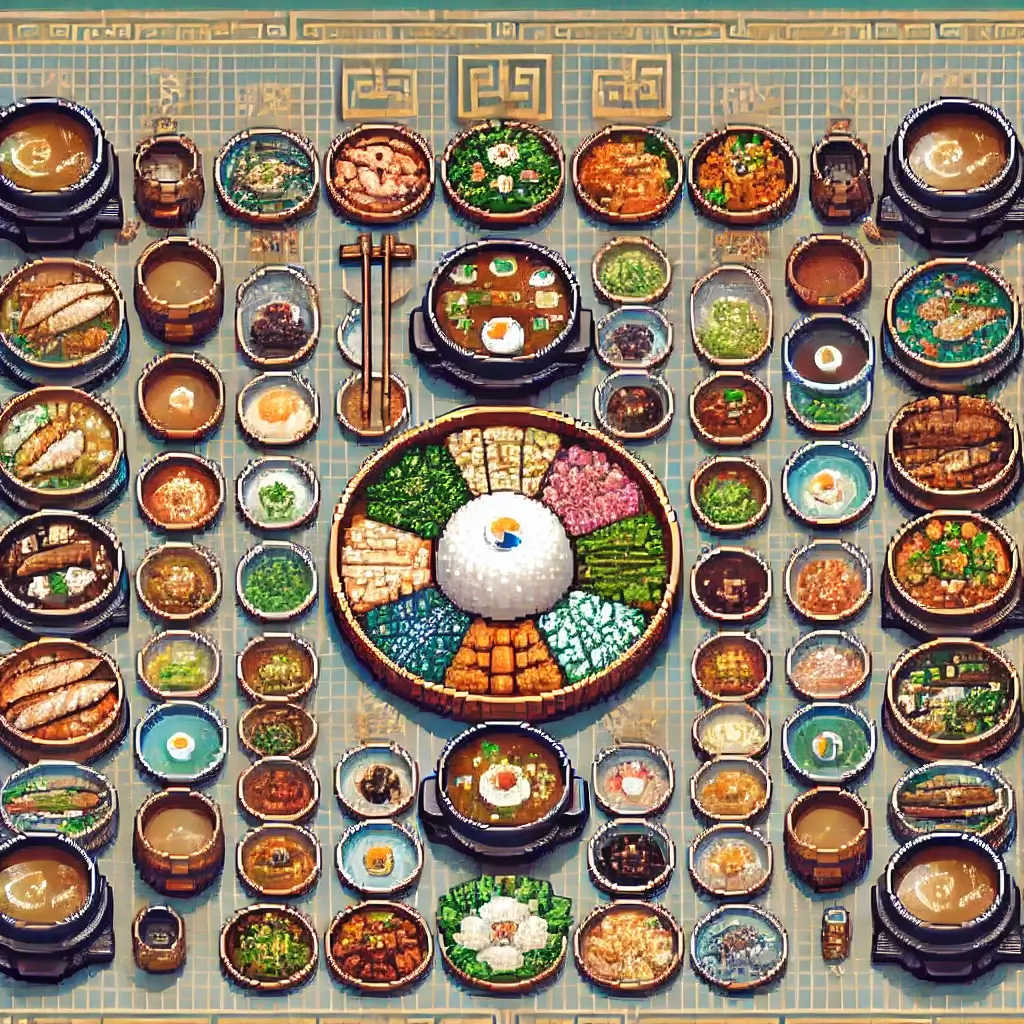
I know, reading about all these dishes is one thing, but picturing them on the table is another. To truly appreciate the complexity and beauty of a royal meal, you need to see it. Below is a simple infographic that will give you a better idea of how the king’s table, the **surasang**, was traditionally laid out. This visual will help you see the meticulous planning and the grand scale of a single royal meal.
**Understanding the Joseon Surasang (수라상)**
**The Core Table**
- 🍚 Two types of rice (white and red)
- 🍲 Two soups (miyeokguk and a seasonal one)
- 🥘 Two stews (jjigae)
- 🍲 One hot pot (jeongol)
- 🥢 Three jang (soy sauce, gochujang, etc.)
**The 12 Banchan (Side Dishes)**
A diverse array of small dishes, representing a variety of cooking methods and ingredients.
- 🌶️ Three types of kimchi
- 🥩 One jjim (steamed dish)
- 🐟 One grilled fish (gui)
- 🥓 One pan-fried dish (jeon)
- 🥒 One raw vegetable dish (saengchae)
- 🌿 Various seasoned vegetables (namul)
- 🥩 Various other dishes (pork, beef, etc.)
**Note:** The total number of dishes was always 12, a symbol of completeness and prosperity.
Isn’t that something? It’s not just a bunch of food thrown on a table. It’s a meticulously planned arrangement, a balance of flavors, colors, and textures. It’s a testament to the sheer amount of work and thought that went into feeding just one person. It really puts your last takeout order into perspective, doesn’t it?
***
**The Legacy: How Korean Royal Cuisine Lives on Today**
You might think that such a complex culinary tradition would have faded into the mists of time, a relic of a bygone era. But you’d be wrong. The legacy of **Korean royal cuisine** is very much alive and well, albeit in a different form. After the end of the Joseon Dynasty, the last remaining court cooks and their families carried on the tradition, passing down their secret recipes and techniques. They are the guardians of this priceless heritage.
Today, you can find restaurants in Korea dedicated to preserving this tradition. They are more than just eateries; they are living museums, places where you can experience a taste of history. Master chefs, often descendants of those original court cooks, have dedicated their lives to recreating these dishes with the same level of care and precision. They are designated as Important Intangible Cultural Properties, a recognition of their invaluable contribution to preserving Korean culture. I find that so incredibly cool.
And it’s not just in fancy restaurants. The influence of **Korean royal cuisine** is subtly woven into modern Korean cooking. Many of the dishes and techniques we see today have their roots in the palace kitchens. The emphasis on using seasonal ingredients, the balance of flavors, and the beautiful presentation are all a part of that legacy. You can see it in a beautifully plated restaurant meal or even in the careful arrangement of a home-cooked dinner. The essence of the surasang is still there.
I also believe that this cuisine has a lot to teach us in our fast-paced, modern lives. It’s a reminder to slow down, to appreciate the process, and to connect with our food on a deeper level. It’s a call to be more mindful of what we’re eating, where it comes from, and who we’re sharing it with. It’s a philosophy that values quality over quantity, and that’s a lesson we can all take to heart. So, the next time you’re in a hurry, maybe take a moment to think about the incredible effort that went into a single royal meal. It might just inspire you to slow down and savor the moment a little more.
***
**Where to Learn More**
This is just a small taste of the vast and beautiful world of **Korean royal cuisine**. If you’re like me and you’re itching to learn more, here are some great resources and places you can check out. These are real places, real sources, and they’ll help you dive even deeper into this incredible culinary tradition.Visit Korea’s Royal Cuisine GuideWikipedia’s Detailed HistoryNational Institute of Korean HistoryKorea Cultural Heritage Foundation
These are just a few of the many wonderful resources available. The journey into this cuisine is a long one, but it’s full of delicious rewards. I hope this guide has inspired you to grab a few new ingredients and try your hand at cooking a piece of history. Happy cooking!
korean royal cuisine, surasang, joseon dynasty, traditional korean food, korean food history
This video provides an excellent visual overview of the Joseon Dynasty’s royal cuisine, including the famous 12 dishes in their beautiful bronzeware, which helps to illustrate the concepts discussed in the article.12 dishes in bronzeware
🔗 Mythical Korean Animals Posted 2025-08-15 04:12 +00:00 🔗 Korean Traditional Games for Your Kids Posted 2025-08-16 07:21 +00:00 🔗 Unlocking 5 Shocking Secrets of Korean Bowing (Jeol) Posted 2025-08-17 03:33 +00:00 🔗 K-Pop Dance Challenges Posted 2025-08-17 08:32 +00:00 🔗 Park Kyong-ni’s Toji Posted date unknown 🔗 The Crazy Evolution of K-Pop Dance Posted date unknown