
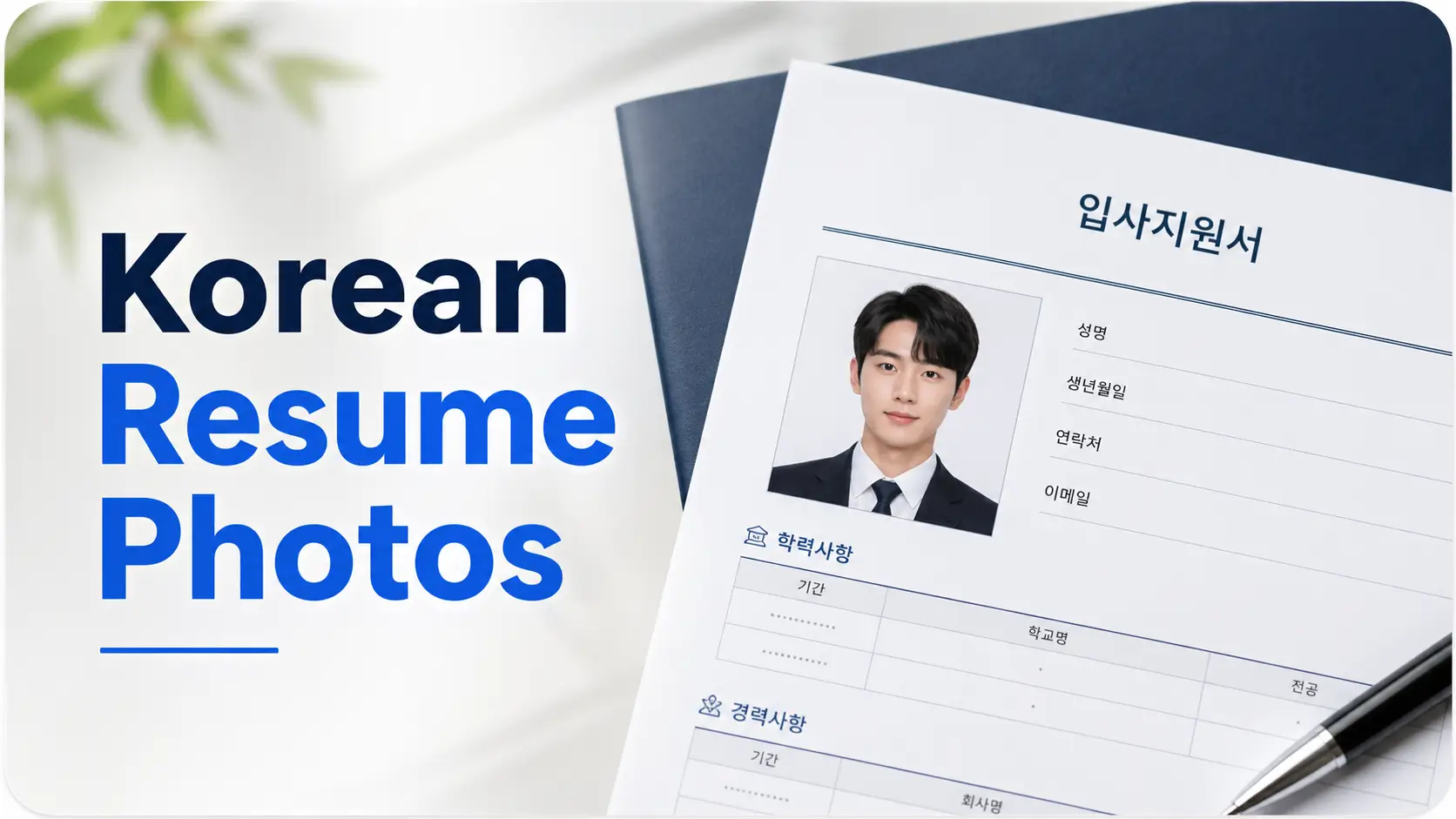
The Resume Photo: Navigating the Cultural Lens of Korean Hiring
You can feel the cultural gap in one tiny square: a Korean job application asks for a formal headshot, while every American resume instinct whispers, “Absolutely not.”
Guess wrong, and you risk looking careless, overexposed, or unfamiliar with the hiring grammar in front of you. Korean resume photos and first-impression rules are not simply about vanity; they are part of a wider hiring culture where professional image, application format, sector norms, and fairness debates still collide.
This guide helps you read that system with more precision: when to include a photo, when to omit it, and how to avoid flattening Korea into a stereotype. Drawing from Korean hiring reforms, US no-photo norms, and public-sector blind recruitment, we provide a practical, comparative lens.
The photo is small. The meaning is not.
The smartest move starts before you upload anything.
Table of Contents
Fast Answer
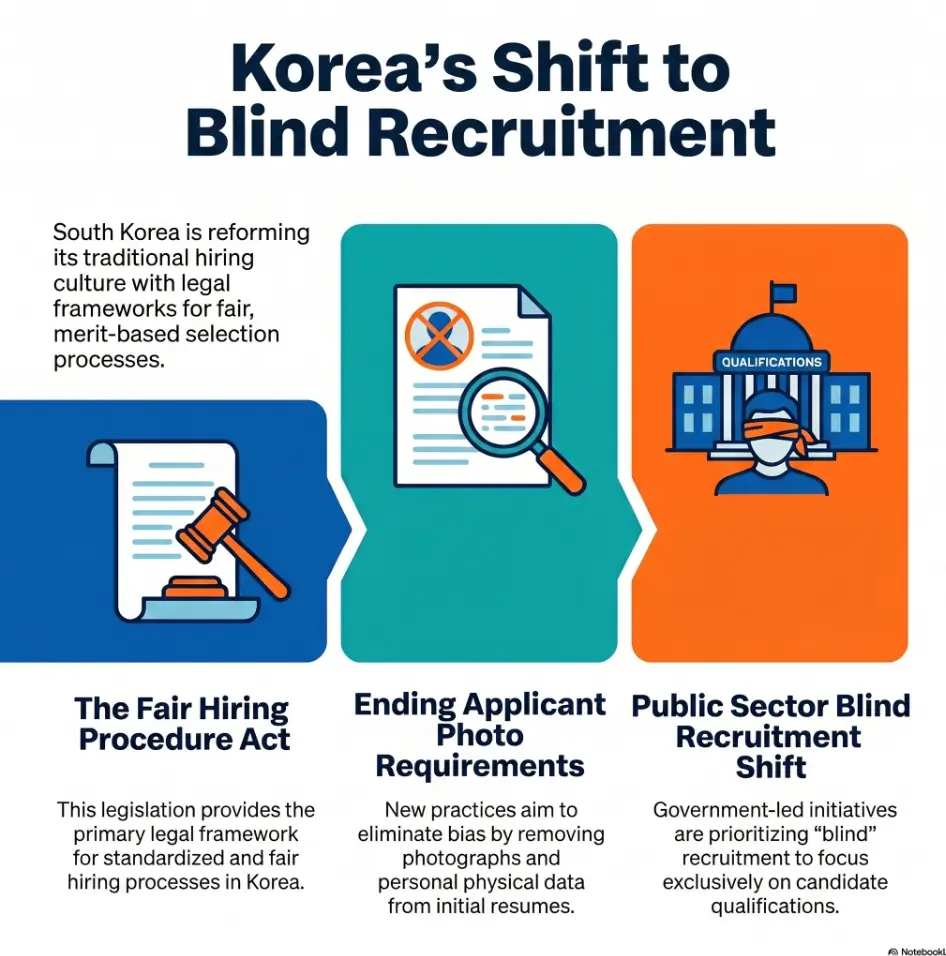
Korean resume photos still shape hiring culture because they sit at the crossroads of identity verification, workplace formality, “professional image,” and older hiring templates. Public institutions largely moved toward blind recruitment, and Korean law restricts certain non-job-related personal information requests, but many private companies still use photo fields or traditional resume formats.
For US readers, the key is not “Korea is vain,” but “Korea reads workplace readiness through visible presentation more openly than the US usually does.” The official Korean Fair Hiring Procedure Act restricts employers from demanding certain non-job-related personal details, including appearance-related physical conditions, while US Equal Employment Opportunity Commission guidance says employers should not ask applicants for photographs before an offer if the photo is needed only for identification.
- US-style resumes usually avoid photos because of discrimination concerns.
- Korean-style applications may still include a photo field, especially in private-sector forms.
- The smartest move is to read the exact application format, not the whole country.
Apply in 60 seconds: Before preparing a photo, check whether the employer is asking for a Korean-style application form or an English/global resume.
Who This Is For, and Who It Is Not For
For US Readers Trying to Decode a Different Hiring Grammar
This guide is for the American reader who has been taught, very firmly, that a resume should not include a photo. In the US, the resume is usually treated as a skills document. It says what you did, where you worked, how much impact you made, and whether you can explain that impact without turning every bullet into fog machine poetry.
Korea can feel different. Some applicants still encounter resume templates with photo boxes, personal profile sections, and a stronger emphasis on formal presentation. A Korean-language application may ask for a headshot that looks closer to an ID-style studio portrait than a casual LinkedIn image. Korea JoongAng Daily has reported that some private Korean companies still request professional headshots and frame them partly around identification and presentation, while some large companies and public-sector processes have moved away from photo fields.
That difference creates the first jolt. To a US reader, the photo can feel invasive before the job conversation has even begun. To a Korean applicant trained inside older hiring customs, the photo may feel like a normal piece of the packet, as routine as choosing the right paper size used to feel in an office supply store.
I have watched people react to this mismatch with two opposite errors. One side says, “This is obviously backward.” The other says, “This is just culture, so do not question it.” Neither answer is sturdy enough. The useful question is quieter: what does the photo do inside the hiring system?
For Job Seekers, Culture Writers, and HR-Minded Readers
This article is also for job seekers applying in Korea, culture writers explaining workplace norms, recruiters comparing regional expectations, and HR observers trying to understand why old forms survive long after new values arrive. Hiring systems rarely change all at once. They molt. A new law appears. A public institution changes its form. A large company updates its portal. A small company keeps the same document template because someone saved it as “resume_form_final_REAL_final.docx” in 2014, and now it has become an office fossil with a password.
So yes, resume photos can involve appearance pressure. But the full story also includes bureaucracy, identity verification, employer habit, industry formality, applicant anxiety, and the enduring Korean belief that first presentation matters before the first sentence is spoken.
Not For Legal Advice or Guaranteed Hiring Strategy
This is not legal advice. It cannot tell you whether a specific employer’s request is lawful, whether your particular application should include a photo, or how a court or labor authority would treat a disputed hiring practice.
It also cannot guarantee a hiring outcome. A perfect photo cannot rescue a weak application. A missing photo may not hurt at all in a global company that uses English resumes. A traditional headshot might be expected in one context and unnecessary in another.
Use this guide as a cultural reading lamp. It will not build the room for you, but it should help you stop bumping into the furniture.
Start Here: The Photo Box Is Not Just a Photo Box
Why a Tiny Headshot Carries So Much Cultural Weight
A Korean resume photo looks small on the page, but it can carry an absurd amount of symbolic weight. It is identity proof. It is a professionalism signal. It is a clue that the applicant understands local formality. It is also, uncomfortably, a possible doorway for bias.
That is why the photo box should not be read as “Korea cares only about looks.” That explanation is fast, spicy, and incomplete. The better reading is that the photo box became part of a larger application ritual. In some hiring contexts, the employer wants to know that the person who arrives at the interview is the same person who submitted the documents. In others, the photo becomes a fast visual cue for whether the applicant understands office presentation.
Think of it as a small square where identity, etiquette, hierarchy, trust, and office-readiness all crowd together like commuters at Gangnam Station at 8:35 a.m. Everyone is trying to move, but nobody has much elbow room.
The First-Impression Rule Beneath the Template
The deeper issue is not the photo by itself. It is the first-impression rule beneath the template.
In Korean professional life, readiness often begins before the interview. The document format, honorific language, punctuality, suit choice, email tone, and photo style can all become part of one larger signal: Does this person understand the room?
In the US, a resume often performs a more aggressively achievement-based role. “Here are my results. Here are my metrics. Here is the problem I solved.” Korean applications may still include achievement, of course, but the package can also communicate discipline, order, and awareness of shared expectations. The applicant is not only presenting what they have done. They are also showing whether they can enter a formal system without knocking over the teacups.
I once saw a Korean-style application packet prepared with the seriousness of a wedding invitation. The photo, the wording, the spacing, the file name, the order of attachments, even the email subject line had been checked twice. To an American eye, this can seem excessive. To the applicant, it felt like respect.
Here’s What No One Tells You…
A Korean resume photo often says less about beauty and more about whether the applicant understands the expected ritual. That does not make the ritual harmless. It does make the ritual more complicated than a single insult.
In traditional settings, a casual selfie may not simply look casual. It may read as “I did not know what this form meant.” A vacation crop may not say “friendly.” It may say “unprepared.” A heavily edited image may not say “polished.” It may say “risky mismatch.”
The painful part is that these readings are rarely written down. The form asks for a photo. The culture supplies the footnotes in invisible ink.
- It may function as identity confirmation.
- It may signal familiarity with formal hiring expectations.
- It can also create bias risk, which is why reform efforts matter.
Apply in 60 seconds: Ask whether the photo is being requested for identification, professional format, or old-template inertia.
The US Shock: Why Americans Feel the Rule Immediately
“Do Not Include a Photo” Meets “Please Attach One”
For many US readers, the shock is immediate because American career advice has been unusually consistent on this point: do not put a photo on your resume in most ordinary job searches. The reason is not that Americans dislike faces. It is that photos can expose employers to information connected to race, age, sex, disability, national origin, religion, and other protected characteristics before job-related qualifications are evaluated.
The EEOC states that employers should not ask for an applicant photograph, and if a photograph is needed for identification, it should be obtained after an employment offer is accepted. That guidance reflects the US emphasis on reducing discrimination risk in hiring processes.
So when an American applicant sees a Korean form requesting a photo, the reaction can be physical. Shoulders tighten. The cursor hovers. A small courtroom appears in the imagination wearing reading glasses.
That reaction is not silly. It comes from a real hiring philosophy. The US system tries, at least in principle, to delay irrelevant personal judgments. It does not always succeed. Bias still exists without photos. Names, addresses, schools, employment gaps, accents, and networks can all carry signals. But the anti-photo norm is part of a broader attempt to make the first screening round more qualification-centered.
The Awkward Moment: Is This Professional or Invasive?
The Korean photo request lands in a gray zone for US readers because it can be both ordinary in one system and uncomfortable in another. A Korean HR form may treat the photo as a standard attachment. A US applicant may experience the same request as a private boundary being crossed.
Both reactions can be sincere.
This is where cultural writing has to resist the cheap laugh. It is easy to mock the photo box. It is also easy to romanticize it as “just tradition.” Neither response helps the person trying to apply for a job at 11:43 p.m. while wondering whether their headshot should have a white background, light gray background, or the emotional atmosphere of a passport office.
A better approach is to separate three questions:
- Legal question: What does the relevant law or guidance allow or restrict?
- Cultural question: What does the hiring ritual expect?
- Practical question: What should an applicant do for this exact company and role?
Those questions overlap, but they are not identical. Confusing them is where people get into trouble.
A Better Question Than “Is Korea Behind?”
The least useful question is “Is Korea behind?” It turns a complex hiring system into a scoreboard, and nobody learns anything except how to sound smug at brunch.
A better question is: what does each hiring culture try to protect, and what does each one accidentally preserve?
The US anti-photo norm tries to protect applicants from early visual bias. But US hiring can still preserve hidden class signals through schools, unpaid internships, referral networks, polished LinkedIn profiles, and resume-writing conventions that reward people who already know the game.
Korean photo norms may try to preserve identification, formality, and a shared presentation standard. But they can also preserve appearance pressure, class-coded grooming expectations, and subjective judgments that have little to do with job performance.
Every hiring culture has a front door and a trapdoor. The trick is learning where both are.
Blind Recruitment Changed the Room, But Not Every Door
Public Sector Reform Drew a Clearer Line
Korea’s blind recruitment reforms changed a major part of the hiring conversation. In public institutions and state-owned companies, blind recruitment was designed to reduce bias by removing unnecessary personal information from applications. Reporting from Korea Herald at the time described the public-sector move as prohibiting photos and stripping details such as school names, family background, and regional origin from application forms.
This matters because it shows that Korea is not frozen in one old hiring model. The country has been actively debating fairness, credentials, family background, appearance, and the uneven power of first impressions. The photo box did not escape scrutiny. It became part of the debate.
For US readers, this is the part that often gets missed. Korea is not simply “photo resume country.” It is a country where older photo-based application habits coexist with public-sector blind recruitment, legal restrictions on certain personal data requests, multinational hiring norms, and younger applicants who are more aware of bias than their parents may have been.
In other words, the room changed. Not every door changed with it.
Private Companies Still Vary Widely
Private-sector practice is more varied. Some large companies, especially global-facing firms or employers with modern recruitment platforms, may not request photos at all. Others may continue to use forms that include photo fields. Smaller firms may rely on older templates because nobody has been assigned the glamorous task of cleaning up HR paperwork from the previous geological era.
That variation is why sweeping advice fails. “Always include a photo in Korea” is too blunt. “Never include a photo because it is outdated” is also too blunt. The better rule is boring and therefore useful: read the employer’s actual instructions.
If a Korean-language application page explicitly requires a photo, ignoring that field may look like failure to follow instructions. If a global company asks for an English CV and does not request a photo, adding one may make the applicant seem unfamiliar with international hiring norms. Context decides.
The Old Template Problem
Some photo requests survive not because the employer has a grand theory of appearance but because the template survived. Office forms are surprisingly durable creatures. They sit in shared drives, copied from company to company, mutating slowly, like bureaucratic houseplants.
An outdated form may ask for a photo, family details, physical traits, or other personal information that feels misaligned with modern hiring standards. That does not always mean the employer is intentionally trying to discriminate. It may mean nobody has audited the form against current expectations. But the effect on applicants can still be real.
Show me the nerdy details
When reading Korean hiring materials, separate “current legal requirement,” “company instruction,” “industry custom,” and “legacy form design.” These often appear together on one page, but they come from different sources. A modern applicant portal may reflect compliance updates, while an old downloadable resume template may preserve older fields. This is why the exact application channel matters more than general cultural assumptions.
The Law Gap: What Changed, What Still Feels Unclear
Job-Related Information Became the Official Standard
Korea’s Fair Hiring Procedure Act is important because it moves the conversation toward job-related information. The Korean Law Translation Center’s English version of the act lists prohibited requests for certain non-job-related personal information, including physical conditions such as appearance, height, and weight, as well as birthplace, marital status, property, and family-related academic or occupational background.
This is not a small shift. It signals that fairness in hiring is not only a Western HR slogan imported in a cardboard box. It is part of Korea’s own legal and social debate. The law speaks to a real concern: hiring should not become a scavenger hunt through someone’s body, family, hometown, and social background.
For job seekers, though, law and lived experience do not always arrive holding hands. An applicant may still see photo fields. A recruiter may still mention “image.” A small employer may still use an old form. The official principle may be job relevance, while the practical ritual remains messier.
Why Photos Can Still Appear
One reason photos can still appear is that they may be framed as identification rather than evaluation. Some employment-law commentary on Korea’s 2019 hiring-law changes has noted that ID-style photographs may still be requested for identification purposes, even while other personal information requests are restricted.
That distinction matters, but it also creates tension. A photo used for identification can still influence perception. Humans are not document scanners. We do not look at a face and then politely seal off every irrelevant impression in a little mental envelope marked “do not open until after offer.”
This is the uncomfortable gap: purpose and effect can differ. An employer may say the photo is for identification. An applicant may reasonably worry that the photo affects judgment. Both can be part of the same hiring moment.
Don’t Oversimplify This
Do not claim that resume photos are universally illegal in Korea. That is too sweeping. Do not claim that they are universally required. Also wrong. Do not claim they are harmless because “everyone knows it is just a formality.” That is the kind of sentence that looks neat until real people start living underneath it.
The more accurate answer has paperwork dust on it. Korea has legal restrictions on non-job-related personal information requests. Public-sector blind recruitment reduced photo use in many contexts. Private-sector practices vary. Photo requests may remain where employers frame them as identification, where old templates persist, or where formal presentation norms remain strong.
- Public-sector blind recruitment pushed strongly against unnecessary personal details.
- Korean law restricts requests for several non-job-related personal details.
- Photos may still appear in some private-sector or identification-framed processes.
Apply in 60 seconds: If a form feels intrusive, check whether it is public-sector, private-sector, Korean-style, global-style, or simply outdated.
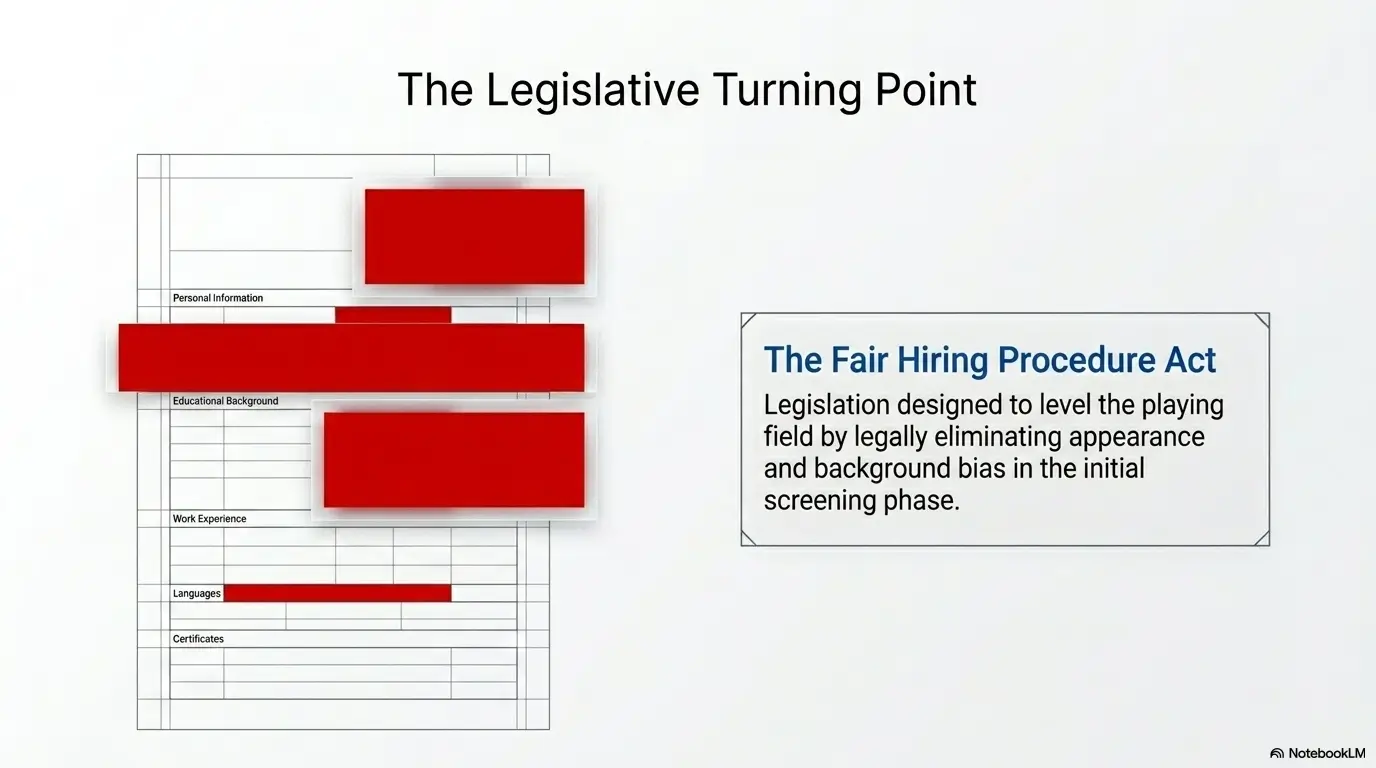
Photo Studios: The Hidden Industry Behind “Professional Image”
The Resume Photo as a Mini-Ceremony
A Korean resume photo is often not a quick phone picture. It can be a mini-ceremony. The applicant goes to a photo studio, wears a suit or borrows a jacket, sits against a neutral background, adjusts hair, softens expression, and receives a polished image sized for application forms.
The whole process has a particular atmosphere. Bright lights. A mirror. A photographer giving tiny instructions. Chin slightly down. Shoulders even. Smile, but not too much. Professional, but not cold. Approachable, but not unserious. It is amazing how many contradictory social instructions can fit inside one face.
For US readers, this may seem theatrical. But in Korea, the studio headshot can be part of making the application feel complete. It tells the employer, “I know the expected format. I prepared properly. I am not sending a random image cropped from a birthday dinner where someone else’s elbow is still visible.”
Editing, But Not Too Much
Retouching is common in many Korean photo studios. Skin may be smoothed. Lighting may be adjusted. Hair may be tidied. Clothing may even be digitally corrected. The goal is usually not to create an entirely different person, but to produce a neat, formal, recognizable version of the applicant.
That last word matters: recognizable.
If the photo becomes too edited, it can backfire. The interview room is not a movie premiere with forgiving lighting and a loyal fan base. If the interviewer quietly wonders whether the person sitting across from them matches the application photo, the photo has failed its most basic function. It has moved from “professional presentation” into “identity confusion,” which is not where anyone wants their hiring story to go.
The Smile Question
The smile is its own little workplace opera. Too serious, and the photo may feel stiff. Too cheerful, and it may feel casual. Too edited, and it may feel unreal. The sweet spot is usually a calm, approachable expression that looks like someone who can join a meeting, read the room, and not start a spreadsheet war before lunch.
In traditional fields, the safest photo often uses:
- neutral background
- business jacket or conservative top
- clear face visibility
- tidy grooming
- minimal accessories
None of this means applicants should erase personality. It means the photo’s job is narrow. It is not there to show your travel taste, artistic soul, weekend hiking stamina, or cat’s emotional support role. It is there to make the application look locally fluent.
Industry Codes: Conservative Fields Read Photos Differently
Finance, Manufacturing, Law, and Pharma Prefer the Formal Script
Industry matters. A Korean applicant applying to finance, manufacturing, law, pharmaceuticals, insurance, government-adjacent organizations, or conservative corporate roles may face a more traditional presentation standard. A dark suit, neutral background, understated grooming, and formal posture are less likely to feel out of place.
This does not mean every conservative employer judges appearance in the same way. It means the visual code tends to be safer and narrower. The applicant is signaling stability, seriousness, and respect for hierarchy. In these spaces, a photo that looks too casual may read as a failure to understand the workplace tone.
I once heard someone describe this kind of photo as “not trying to be memorable.” That sounds strange until you understand the logic. The goal is not to win attention. The goal is to avoid creating friction before the qualifications are read. A good traditional resume photo says, “Nothing distracting here. Please proceed to the actual application.”
IT, Design, Media, and Global Firms May Loosen the Frame
Other industries may be more flexible. IT, startups, design, media, gaming, content, and global firms may tolerate more variation, especially if the application process resembles international hiring. Some companies may not ask for a photo at all. Others may care far more about a portfolio, GitHub, case study, language ability, or project evidence.
Even here, “flexible” does not mean “anything goes.” A creative company may welcome individuality, but a blurry selfie still says you did not prepare. A global firm may not want a photo, but it may expect a clean one-page resume or a LinkedIn profile that does not look abandoned in 2019.
The code changes. The need for judgment does not.
Same Country, Different Hiring Weather
“Korean hiring culture” is not one weather report. It is closer to a peninsula of microclimates.
A chaebol affiliate, small local firm, public institution, Seoul startup, foreign-owned company, school, hospital, entertainment agency, and manufacturing supplier may all read application materials differently. The photo field may matter a lot in one place, barely at all in another, and be completely absent in a third.
So the applicant’s question should not be, “What does Korea want?” Korea is not a single hiring manager sitting behind a walnut desk. The better question is: What does this employer, this sector, this application language, and this form appear to expect?
Infographic: Resume Photo Expectation Spectrum
🏛️
Public institutions
Photo often removed under blind recruitment norms.
🏢
Traditional private firms
Photo field may still appear on Korean-style forms.
🌐
Global companies
English resumes may follow no-photo norms.
🎨
Creative/startup roles
Portfolio and fit may matter more than formal photo style.
Use this: Match the photo decision to the form, company type, language, and role, not to one broad national stereotype.
Common Mistakes: What US Readers Often Get Wrong
Mistake 1: Calling It Only “Lookism”
Appearance pressure matters. It would be dishonest to pretend otherwise. Photos can invite judgments about beauty, age, grooming, gender presentation, race, ethnicity, disability, and class. That is one reason blind recruitment and anti-bias reforms exist.
But calling the entire practice “lookism” can hide other forces that keep the photo box alive. Employers may cite identity verification. HR teams may use inherited templates. Conservative sectors may value standardized presentation. Applicants may follow the format because they believe not following it looks careless.
When US readers reduce the topic to vanity, they miss the bureaucracy. And in hiring culture, bureaucracy is often where the dragon sleeps.
Mistake 2: Assuming Every Korean Employer Requires a Photo
Every Korean employer does not require a photo. Public institutions and many modern or global companies may avoid photo fields. Some private companies still include them. Some job portals or downloadable forms may preserve older habits. Some roles may request a Korean-style resume, while others may accept an English CV without a photo.
This is why the application page matters more than stereotypes. If the form has a required photo upload box, that is one signal. If the company asks for a PDF English resume and makes no mention of photos, that is another. If the portal was clearly designed in the era of dial-up internet and office clip art, proceed with caution and maybe a cup of tea.
Mistake 3: Sending a Casual LinkedIn-Style Photo
A casual LinkedIn image may work beautifully in a US tech or creative context. It may feel too informal for a traditional Korean resume photo. The problem is not that the image is “bad.” The problem is that it may speak the wrong professional dialect.
Common weak choices include:
- cropped vacation photos
- visible selfie angles
- busy backgrounds
- uneven lighting
- heavy filters
For a traditional Korean-style application, the photo should usually look intentional, formal, and recognizable. It should not look like it escaped from a brunch album.
Mistake 4: Over-Editing Until Recognition Breaks
Over-editing is the opposite mistake. The applicant tries so hard to look polished that the result becomes artificial. Smooth skin, altered jawline, changed hairline, brightened eyes, softened everything. At some point, the photo stops saying “professional” and starts saying “witness protection program, corporate edition.”
A good resume photo should reduce distractions, not create a second applicant.
- Do not treat all Korean employers as identical.
- Do not send a casual image where a formal headshot is expected.
- Do not edit the photo so much that it weakens trust.
Apply in 60 seconds: Compare your photo against the employer’s application tone: public, traditional, global, startup, or creative.
Don’t Do This: The First-Impression Traps That Age Poorly
Don’t Treat the Photo as a Personality Contest
The safest interpretation of a Korean resume photo is “professional clarity,” not “win the beauty pageant of spreadsheets.” The photo is not supposed to carry your full personality. That is what interviews, portfolios, references, and work samples are for.
Trying to make the photo too expressive can create noise. This is especially true in conservative industries where the photo’s job is to stay almost invisible. Not invisible as in absent, but invisible as in frictionless. It should confirm readiness and then politely get out of the way.
In practice, that usually means simple clothing, direct angle, calm expression, and a clean background. The photo should say, “I can be trusted with a meeting room and a PDF,” not “I have a fascinating inner life and several lighting presets.”
Don’t Copy One Rule Across Every Company
A startup, a public institution, a chaebol affiliate, a foreign company, and a small local firm may all expect different levels of formality. A photo that works for one may look odd for another. A missing photo may be normal in one system and incomplete in another.
The worst advice is universal advice delivered with confidence. Hiring culture is too context-sensitive for that. The company’s form, industry, language, location, and recruitment channel all matter.
If you are applying in English to a multinational employer, you may not need a photo. If you are filling out a Korean-language form for a traditional private company and the form asks for one, you probably need to provide a suitable headshot unless you have a specific reason not to.
Let’s Be Honest…
The hardest part for US readers is that the Korean system can feel both highly standardized and quietly subjective at the same time. The form looks rigid. The expectations feel unwritten. The photo size may be specified, but the social meaning is not.
That combination can make applicants anxious. They are not just asking, “Do I have the right document?” They are asking, “Am I accidentally revealing that I do not understand the room?”
That is the real first-impression trap. Not the photo itself, but the invisible test around it.
The Deeper Culture: Why First Impressions Still Have Administrative Power
Korean Professionalism Often Begins Before the Interview
In many Korean professional contexts, the interview does not begin when the applicant sits down. It begins in the email subject line. It begins in whether the attachment is named clearly. It begins in whether the applicant arrives early, dresses appropriately, uses the right speech level, and understands the formal rhythm of the room.
The resume photo fits into that larger choreography. It is one part of a presentation system that values readiness before performance. The applicant is not only saying, “I can do the job.” They are also saying, “I understand how to show up.”
For Americans used to a more individual achievement-focused hiring style, this can feel like extra theater. But in Korea, where workplace life often places strong emphasis on hierarchy, group awareness, and situational sensitivity, the “how” of presentation can become part of the “what” of competence.
The Resume as a Social Document, Not Just a Skills Document
In the US, a resume often sells achievements. It compresses work into action verbs and numbers: increased, reduced, managed, built, launched. If the resume had a favorite animal, it would be a caffeinated border collie with a quarterly target.
In Korea, the application package may also operate as a social document. It can signal fit, discipline, attention to form, and sensitivity to expectations. This does not mean skills are irrelevant. It means skills may be presented within a stronger formal container.
That container can help employers compare applications quickly. It can also make applicants feel trapped inside a narrow performance of professionalism. Both things can be true.
The Quiet Question Behind the Headshot
The quiet question behind the headshot is not always “Is this person attractive?” Sometimes it is, and that is where bias becomes serious. But often the quieter question is: Will this person understand the room before speaking too loudly in it?
That question can be unfair when it rewards cultural insiders and punishes outsiders. It can also explain why formal presentation carries weight. Employers are not only hiring a set of skills. They are imagining a person inside meetings, client visits, team dinners, reporting lines, and everyday workplace rituals.
The problem is that “fit” can be useful language or dangerous fog. When fit means role readiness, communication, and professionalism, it can matter. When fit becomes a disguise for bias, it becomes a filter with polished shoes.
The Fairness Problem: When Presentation Becomes a Filter
The Bias Risk Is Real
A photo can invite judgments that have nothing to do with job performance. Age, gender presentation, disability, race, ethnicity, attractiveness, weight, grooming norms, skin tone, hairstyle, class markers, and perceived nationality can all enter the room before the applicant does.
Even when employers describe the purpose as identification or professional image, the risk remains. People do not process faces neutrally. We bring assumptions, habits, preferences, fears, and stereotypes. Some are conscious. Many are not.
This is why US hiring guidance tends to avoid applicant photographs, and why Korean blind recruitment reforms mattered. The concern is not abstract. It is about whether an applicant gets screened for ability or filtered through irrelevant social signals.
Blind Hiring Was a Response to That Risk
Blind recruitment in Korea was designed to reduce the influence of background factors that could create unfair advantage or prejudice. Public-sector reforms targeted details such as photos, family background, school names, and regional origin. The stated goal was to focus more heavily on ability and job-relevant qualifications rather than inherited or visible signals.
For applicants, blind hiring can feel like someone finally turned down the volume on the wrong instruments. Skills become easier to hear. Experience gets more space. The family name, hometown, or photo has less administrative power.
But blind hiring is not a cure-all. Bias can move to later stages. Interviews still reveal identity. Networks still matter. Test design can favor some groups. The point is not that blind recruitment solves every problem. The point is that it recognizes the problem clearly enough to redesign part of the process.
The Tension That Remains
Employers may want signals of professionalism. Applicants may want protection from irrelevant judgment. The photo sits exactly where those interests collide.
That collision is not easy to resolve because both sides can make reasonable claims. Employers want to confirm identity and evaluate whether someone understands formal presentation. Applicants want to be judged on qualifications, not face, age, grooming, or cultural fluency with unwritten rules.
The best hiring systems reduce unnecessary personal exposure while still giving employers job-relevant evidence. Work samples, structured interviews, skills tests, clear criteria, and standardized evaluation rubrics can help. A photo is rarely the strongest tool for predicting performance. It is simply one of the oldest and most visually persuasive.
- Photos can create early bias risk.
- Blind recruitment tries to delay or reduce irrelevant personal signals.
- Structured, job-related evaluation is stronger than visual guesswork.
Apply in 60 seconds: When evaluating any hiring practice, ask: “Does this predict job performance, or just comfort with a social code?”
Practical Reading: How to Interpret a Korean Job Application
If the Company Explicitly Requests a Photo
If a Korean company explicitly requests a photo on a Korean-style application form, applicants commonly follow the requested local format. This is especially true for traditional private companies, Korean-language forms, and roles where formal presentation is part of the hiring packet.
The photo should usually be recent, clear, formal, and recognizable. It should not be an old image from five years ago, a social media crop, or a heavily edited portrait that looks like it has been negotiated by three beauty apps and a committee.
For a standard Korean-style photo, think:
- business clothing
- neutral background
- clear face
- tidy hair
- calm expression
The goal is not glamour. The goal is low-friction professionalism.
If the Company Is Global or Uses an English Resume
If the company is global, foreign-owned, or using an English-language application process, a photo may be unnecessary or even unwanted. Many multinational-style applications follow no-photo norms closer to US or EU compliance expectations.
In that context, a photo may make the resume feel less locally appropriate for the company’s hiring system. The applicant may think they are adapting to Korea, while the employer is actually operating a global process. This is the hiring equivalent of wearing hiking boots to a piano recital: sturdy, but not the point.
For English resumes, prioritize role-relevant evidence: achievements, tools, languages, certifications, portfolio links, measurable impact, and clean formatting. If the application does not ask for a photo, do not assume Korea automatically requires one.
If the Application Looks Outdated
If an application asks for family background, physical traits, assets, marital status, or other highly personal details, pause. It may be an outdated form. It may also raise legal or ethical concerns depending on the context.
That discomfort also overlaps with a wider etiquette issue: in Korea, personal questions can carry different social meanings depending on setting, relationship, age, and hierarchy, but a job application is not the same thing as friendly curiosity.
Applicants should check current company instructions, use official application portals when available, and seek professional guidance if a request seems improper. Foreign applicants may also want to speak with a qualified immigration, labor, or employment professional when the stakes are high.
The main point is simple: do not let an old form convince you that every intrusive question is normal, current, or required.
Resume Photo Decision Card
Use this decision card when you are not sure whether to include a photo. It will not replace legal advice, but it can prevent the two most common mistakes: adding a photo where it looks strange, or omitting one where the form explicitly expects it.
Decision Card: When to Include a Korean Resume Photo
| Situation | Likely Move | Why It Matters |
|---|---|---|
| Korean-language form has a required photo box | Prepare a formal, recent headshot | The employer may treat it as part of the standard packet. |
| English resume for multinational company | Usually omit the photo unless requested | The process may follow global no-photo norms. |
| Public institution or blind recruitment process | Follow the official portal exactly | Photos and personal details may be removed by design. |
| Old downloadable form asks many personal questions | Verify current instructions before submitting | The template may be outdated or risky. |
Neutral action line: Match your resume format to the employer’s current instructions, not to generic internet advice.
One good habit: save two versions of your resume packet. Keep one US/global-style resume without a photo. Keep one Korean-style application version with a formal headshot only for contexts that request it. This small file-management step can save you from midnight panic, duplicate editing, and the emotional collapse caused by naming a file “resume_final_7_actualfinal.pdf.”
Quote-Prep List for Korean Job Applications
Before comparing photo studios, resume services, translators, or career coaches, gather the basics. This turns a vague purchase into a specific task. It also keeps you from paying for a service that solves the wrong problem beautifully.
Quote-Prep List: What to Gather Before Paying for Help
- Target company type: public institution, private Korean firm, startup, or multinational.
- Application language: Korean, English, or bilingual.
- Required format: portal form, downloadable Korean resume, PDF resume, portfolio, or cover letter.
- Photo requirement: required, optional, absent, or unclear.
- Deadline: same day, this week, or flexible.
Neutral action line: Ask service providers to quote based on the actual employer form, not a generic “Korean resume package.”
For photo studios, ask whether they provide Korean resume photo sizing, light retouching, digital files, and same-day delivery. For translators or resume editors, ask whether they understand Korean corporate application conventions and global resume norms. Those are different skills. A person can be brilliant at English LinkedIn profiles and still not know what a Korean 자기소개서 expects.
Mini Calculator: How Formal Should Your Photo Be?
This tiny calculator is not scientific. It is a practical sorting tool for applicants who feel stuck between “formal studio portrait” and “surely this LinkedIn photo is fine.” Answer the three inputs honestly.
Mini Calculator: Photo Formality Score
Neutral action line: Use the score as a prompt to inspect the actual application, not as a rule that overrides employer instructions.
The calculator’s hidden lesson is that formality rises when three things line up: Korean-language process, traditional employer, conservative field. If only one of those is true, the answer becomes less obvious. If none are true, do not force a photo into a process that does not want one.
FAQ
Do Koreans still put photos on resumes?
Many still do, especially for private-company applications that request a Korean-style resume photo, but the practice is not universal. Public institutions, blind recruitment processes, and some global companies may not request photos. The safest answer is to check the exact application form.
Are resume photos required in Korea?
Not always. Some Korean-style private-sector forms still include photo fields, while public-sector and multinational-style processes may avoid them. A photo is not a universal requirement across all Korean employers.
Why do Korean companies ask for resume photos?
Common explanations include identity verification, professional presentation, role fit, tradition, and old application templates. Some employers may frame the photo as an identification tool, while applicants may experience it as part of a broader first-impression system.
Is a resume photo legal in Korea?
The legal picture depends on context. Korean law restricts employers from requesting certain non-job-related personal information, including appearance-related physical conditions. However, photo fields may still appear in some processes, especially where framed as identification or preserved in private-sector templates. For a specific legal question, consult a qualified professional.
Should Americans include a photo when applying in Korea?
Americans should follow the specific employer’s instructions. For US-style resumes or global-company applications, photos are often omitted. For Korean-style applications that explicitly request one, applicants often provide a formal headshot that matches local expectations.
What should a Korean resume photo look like?
Traditional photos usually use formal business clothing, a neutral background, tidy grooming, clear lighting, and a recognizable face. The goal is professional clarity, not glamour or heavy editing.
Do Korean companies judge appearance?
Some appearance-based bias can exist, and that risk should not be minimized. But resume photos also operate through broader ideas of identification, formality, local application fluency, and professional presentation. Both realities can exist at the same time.
Are blind resumes common in Korea?
Blind recruitment is especially associated with public institutions and state-owned companies. Private-sector practices vary. Some companies have modernized their forms, while others still use traditional application formats.
Can I use my LinkedIn photo for a Korean resume?
Sometimes, but be careful. If your LinkedIn photo is formal, clear, and neutral, it may work. If it is casual, cropped, outdoors, heavily filtered, or too personality-driven, it may not match a traditional Korean-style application.
What if the Korean application asks for personal details that feel outdated?
Pause and verify current instructions. Use the official employer portal if available. If the request involves family background, physical traits, marital status, assets, or other sensitive information, consider seeking professional guidance before submitting.
Differentiation Map
| What competitors usually do | How this article avoids it |
|---|---|
| Reduce the topic to “Korea cares about looks.” | Explains photos through identity, HR inertia, formality, legal reform, and workplace presentation. |
| Treat Korea as one hiring culture. | Separates public sector, private firms, small companies, conglomerates, global firms, and industry differences. |
| Write only for expats applying for jobs. | Serves US readers, culture writers, HR observers, HR teams, and job seekers. |
| Ignore legal nuance. | Mentions blind recruitment and Fair Hiring Procedure Act limits without turning the article into legal advice. |
| Give generic resume-photo tips. | Connects photo style to first-impression rules, industry codes, recognition risk, and application format. |
| Moralize the issue from a US lens. | Compares cultural logics without flattening Korea into a caricature. |
| End with vague “be professional” advice. | Gives a concrete next step based on the actual application format. |
Next Step: Check the Application Before You Judge the Culture
One Concrete Action
Before deciding whether to include a photo, open the exact company application page and answer one question: Is this a Korean-style form explicitly asking for a photo, or a global/English-style resume process that does not?
That single distinction prevents most mistakes: overcomplying, undercomplying, or reading an old HR template as the whole country speaking.
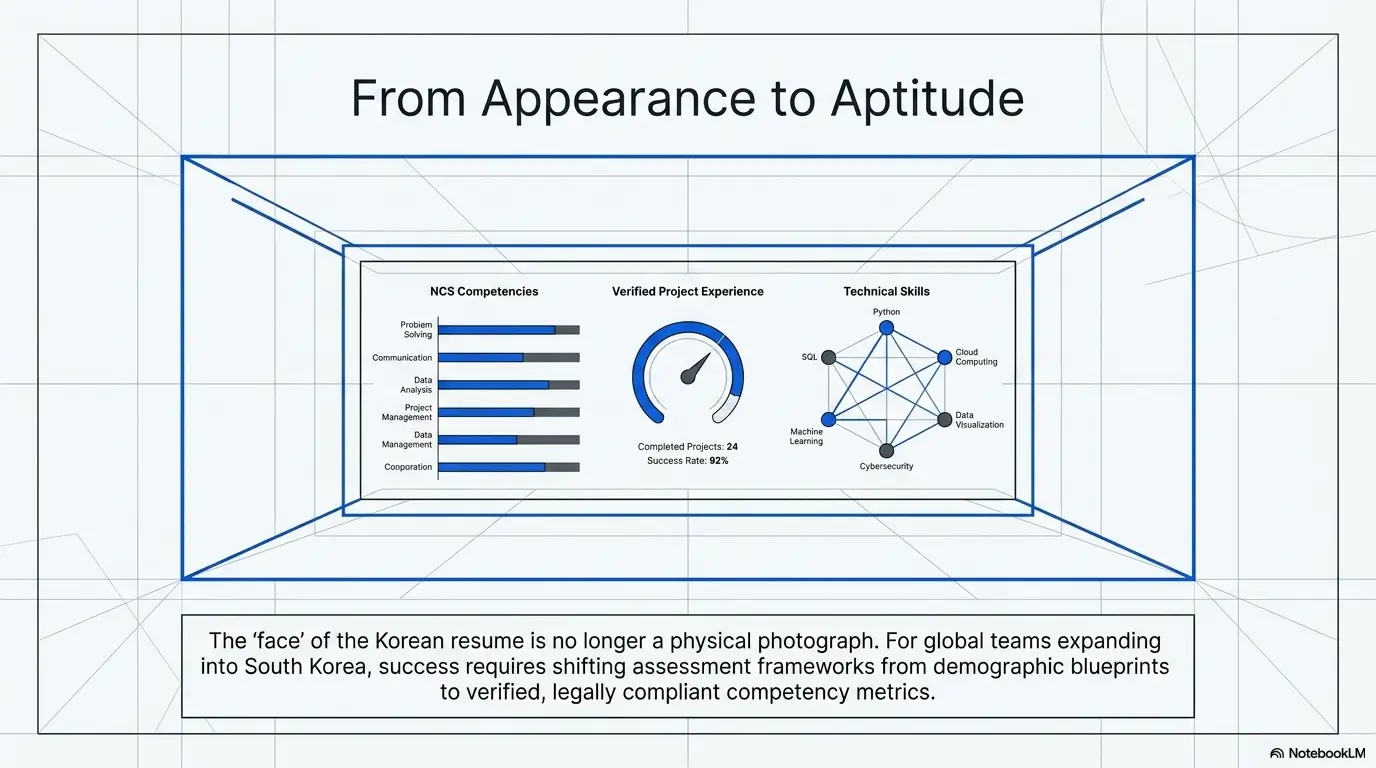
The curiosity loop from the beginning closes here: the photo box is not just a photo box because it is not only about the face. It is about what a hiring system asks applicants to reveal before it decides what counts as merit. In Korea, that system has been changing, but unevenly. Public institutions moved toward blind recruitment. Law restricted certain personal information requests. Some private employers modernized. Others kept the old square on the form.
For US readers, the most useful posture is neither outrage nor obedience. It is careful reading. Read the sector. Read the form. Read the language. Read the company’s hiring style. Then decide whether the photo is required, irrelevant, or a warning sign.
And because hiring culture is never isolated from everyday social grammar, it helps to understand the surrounding etiquette too: how Koreans use titles instead of first names, why texting formality can shift by relationship, and how office lunch culture quietly teaches workplace belonging. The resume photo is one tile in a larger mosaic.
If you are applying within the next 15 minutes, do this now: save the job posting, screenshot the application instructions, identify whether a photo is explicitly required, and choose either a no-photo global resume or a formal Korean-style headshot packet. That small act turns cultural confusion into a practical next step.
Last reviewed: 2026-04.