
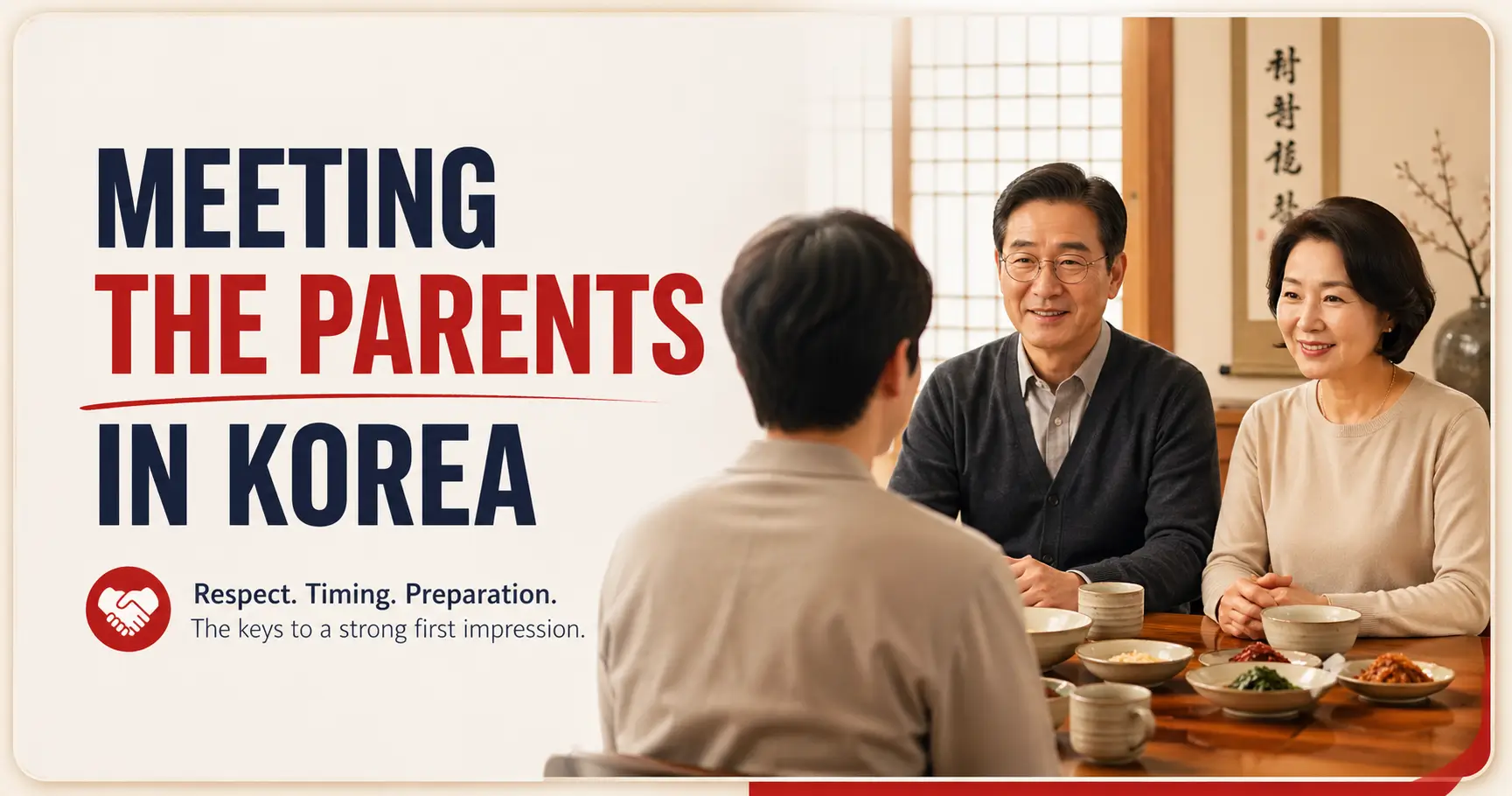
Beyond the Dinner Table:
Meeting the Parents in Korea
You can date someone for months in Korea and still feel the relationship change shape the moment one sentence appears: “My parents want to meet you.”
For many Anglo-American readers, meeting a partner’s parents may sound like a warm, slightly awkward dinner. But in Korea, it carries extra weight—signaling seriousness, family awareness, and a quiet “future-check” all at once. It is the delicate balance between a casual hello and a soft audition for long-term trust.
The advice here is pattern-aware, not stereotype-driven. Korean families vary widely, but respect, timing, and thoughtful preparation remain the universal currency of a good first impression.
Table of Contents
Fast Answer
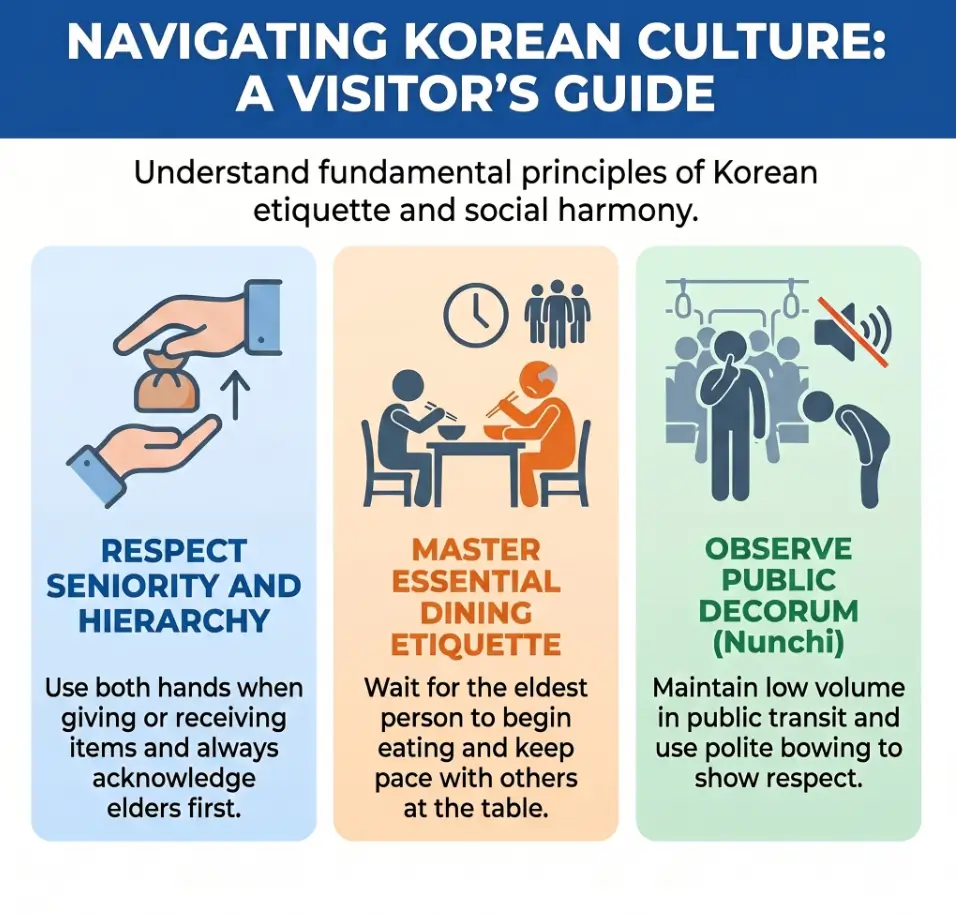
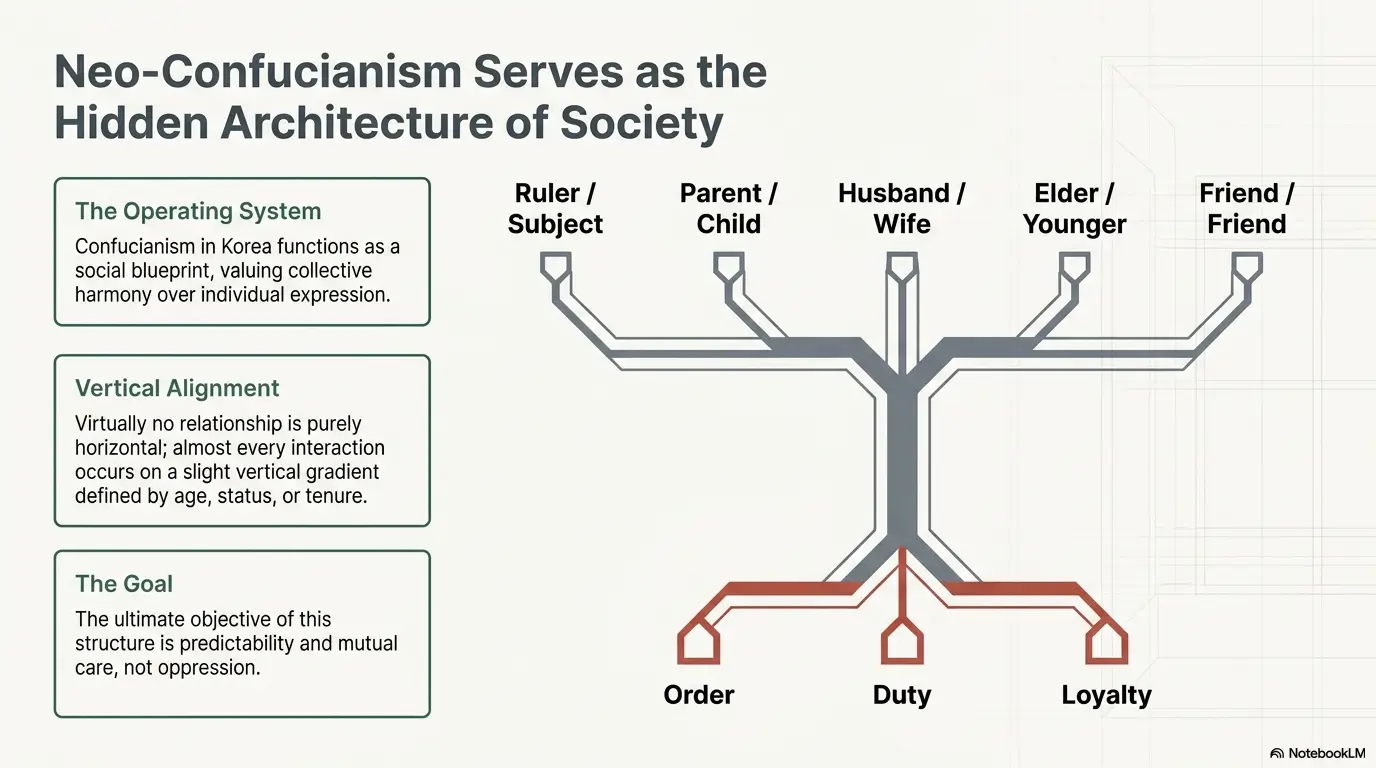
Meeting the parents in Korea can feel like a major relationship milestone because it often suggests the relationship is becoming serious, not merely social. Korean family culture has long placed value on hierarchy, respect, and family involvement, although modern families vary widely. The goal is not perfect performance. It is to read the room, follow your partner’s guidance, and show steady respect.
- Ask what the meeting means in your partner’s family.
- Prepare for quiet evaluation, not instant warmth.
- Respect beats cultural showmanship every time.
Apply in 60 seconds: Text your partner one question: “What should I understand before meeting your parents?”
Why Meeting Parents Feels Bigger in Korea Than in the US
It Is Not Always a Casual “Drop By”
In many US families, meeting parents can happen early and casually. You stop by, shake hands, eat something grilled, survive one joke about high school photos, and leave with a paper plate wrapped in foil.
In many Korean families, the same moment may carry a different emotional charge. It can suggest that the relationship has crossed from private affection into family awareness. That does not mean marriage is already scheduled. It does mean the room may treat your presence as meaningful. If you are trying to understand the wider dating landscape, this fits naturally beside Korean couple culture, where private affection and public signals do not always move at the same speed.
Asia Society’s education material on Korean family life describes how family ties and mutual dependency have historically carried deep social importance in Korea. That background helps explain why an introduction can feel less like a cameo and more like the opening scene of a longer film.
The Room May Be Reading the Future
Parents may listen for more than your answers. They may notice whether you arrive on time, how you greet elders, whether you let your partner carry every awkward pause, and whether your plans sound steady or suspiciously made of fog.
This can feel unfair if you are used to a lower-pressure first meeting. But from the family’s side, the question may be simple: “Can this person be trusted with someone we love?”
Not Every Korean Couple Follows This Script
Here is the necessary nuance. Korea is not one frozen rulebook wearing a hanbok and guarding the door. Younger couples, urban families, international couples, divorced parents, queer partners, overseas Koreans, and less traditional households may handle introductions differently.
The safest mindset is pattern-aware, not stereotype-driven. You prepare for formality, then adapt to the family in front of you.
Decision Card: Casual Visit vs Serious Introduction
Decision Card: What Kind of Meeting Is This?
More Casual
- Your partner says it is just a quick hello.
- The setting is flexible or informal.
- Marriage is not being discussed.
Next step: Be warm, tidy, and grateful without overperforming.
More Serious
- Your partner seems nervous about timing.
- The family meal is planned in advance.
- Questions about job, future, or family are likely.
Next step: Prepare answers and ask your partner what the family expects.
Who This Is For, and Who It Is Not For
For Cross-Cultural Couples Feeling the Pressure
This guide is for US readers dating a Korean partner, Korean Americans navigating family expectations, expats in Korea, and culture-focused writers trying to explain the emotional mechanics behind Korean relationship etiquette.
It is especially for the person who wants to do well but feels caught between two bad options: pretending the meeting is no big deal, or treating it like a royal audition with socks.
For Partners Who Want to Avoid Accidental Disrespect
Most mistakes do not come from bad intentions. They come from mismatched assumptions. One person thinks, “I’m being friendly.” The other person thinks, “Why are you acting like this is brunch with roommates?”
The point is not to become flawless. The point is to reduce avoidable friction so your real character has a chance to arrive before your nerves kick the furniture. Understanding Korean politeness can help because respect is often expressed through timing, tone, posture, and restraint rather than one dramatic gesture.
Not For Stereotyping Every Korean Family
This is not a “Korean parents are all strict” article. Some parents are warm immediately. Some are shy. Some are practical. Some are cosmopolitan. Some have watched enough international dramas to have their own theories about Americans, which can be charming or mildly dangerous depending on the drama.
Think of this as a preparation map, not a prophecy.
Eligibility Checklist: Do You Need Formal Preparation?
Answer yes or no:
- Has your partner said the meeting is important?
- Will you meet at a parent’s home or a formal restaurant?
- Will older relatives or extended family be present?
- Are you unsure what questions may be asked?
- Is there a language or cultural gap?
If you said yes to 2 or more: Prepare lightly but intentionally. Ask your partner for family-specific guidance, not just general Korean etiquette tips.
The Hidden Meaning: “Are You Serious About My Child?”
Parents May Hear Commitment Before You Say It
In cross-cultural dating, the loudest misunderstanding often comes from invisible meaning. You may think, “I’m meeting nice people who raised someone I love.” They may hear, “This person may become part of our family story.”
That gap matters. If you behave too casually, it can look like you do not understand the emotional stakes. If you behave too intensely, it can look like you are auditioning for a wedding hall by Thursday. Neither is ideal.
The middle path is steady seriousness. You can be kind, relaxed, and respectful without acting like you have already chosen baby names and a refrigerator brand. For readers curious about how older and newer systems of introduction still echo today, modern Korean matchmaking offers another useful lens on why family awareness can enter romance earlier than outsiders expect.
Your Partner May Be Managing Two Worlds
Your Korean partner may be translating more than words. They may be translating tone, family hierarchy, parental concerns, your sense of humor, your job situation, and your future plans. That is a lot of invisible labor before anyone even lifts a spoon.
I once watched a bilingual couple spend 10 minutes negotiating how to translate “freelancer.” The English word sounded flexible and modern. The Korean explanation risked sounding unstable. Everyone smiled. Under the table, the partner’s knee was performing a tiny earthquake.
That is the emotional terrain. Your job is not to make your partner perform cultural rescue all night.
The Question Under the Question
Questions about age, job, housing, education, parents, siblings, future residence, or long-term plans may sound blunt to US readers. In some Korean family contexts, those questions can function as care, evaluation, and future-risk scanning at the same time. This is why a separate guide to Korean personal questions etiquette can be helpful before assuming that every direct question is meant as criticism.
Try not to answer defensively. You do not need to reveal private details beyond what feels appropriate, but you should be ready to answer with calm clarity.
Show me the nerdy details
In high-context family settings, meaning often travels through timing, formality, indirect questions, and who speaks first. A parent may not say, “Are you financially stable enough for marriage?” Instead, they may ask about work, housing, family background, or plans for the next few years. The practical move is to prepare short answers that are truthful, respectful, and not overly intimate.
- Prepare calm answers about work and future plans.
- Do not joke your way around every serious question.
- Help your partner by being clear, not vague.
Apply in 60 seconds: Write a two-sentence answer to “What are your plans for the next year?”
Timing Mistakes: Don’t Ask to Meet Too Early
Early Can Feel Pushy, Not Romantic
In a US dating context, “I’d love to meet your parents sometime” can sound affectionate and open. In a Korean family context, said too early, it may land like you are pulling a serious lever before your partner is ready.
Timing has social meaning. If the meeting implies seriousness in your partner’s family, asking too early can create pressure. Your partner may now have to explain why you asked, why the family should or should not know, and whether the relationship is moving toward marriage.
That is a lot to place on one sentence, especially if you said it between fries.
Let Your Partner Lead the Timing
Your partner knows the family weather better than you do. They know whether their parents are relaxed, cautious, traditional, blunt, anxious, excited, or quietly building a spreadsheet in their heads.
Instead of asking, “When do I get to meet them?” ask, “In your family, when does meeting parents usually happen?” That gives your partner room to explain meaning before logistics.
Let’s Be Honest: Curiosity Is Not a Plan
Curiosity is good. It keeps people humble. But curiosity without listening becomes cultural tourism in a nice shirt.
You can read 20 articles about Korean etiquette and still miss the main point if your partner says, “My family is different,” and you march forward with generic advice anyway. The actual family beats the internet every time.
Mini Calculator: Meeting Readiness Score
Mini Calculator: Are You Ready for the First Parent Meeting?
Rate each item from 0 to 2. Use 0 for “not yet,” 1 for “somewhat,” and 2 for “yes.”
Output: Add your score to see the next step.
First Impressions Count Because Respect Is Often Read Quietly
Clothing Speaks Before You Do
Clothing does not need to be expensive. It needs to say, “I understood the occasion.” Clean, neat, modest, and situationally appropriate usually beats fashionable but confusing.
If you are meeting at a parent’s home, think polished casual. If you are going to a formal restaurant, raise the level. If you are unsure, ask your partner. Guessing is romantic in movies and expensive in real life.
Greetings Carry More Weight Than Small Talk
A polite greeting, a slight bow, calm tone, and respectful body language can do more than a perfectly memorized speech. Visit Seoul’s etiquette guidance notes common customs such as removing shoes indoors and showing courtesy in greetings, which are small details that can carry large meaning when you are a guest.
You do not need to perform a dramatic bow worthy of a historical palace scene. A simple respectful greeting usually works better than theatrical precision. If you are unsure how names and forms of address work, reviewing Korean titles vs first names can prevent a surprisingly common first-meeting stumble.
Shoes, Socks, and the Tiny Details
Here is where real life gets humble. If you visit a Korean home, you may remove your shoes. Suddenly your socks become part of diplomacy. This is not the moment for the pair with the mysterious heel window.
Bring clean socks. Make sure your shoes are tidy. Arrive prepared. These tiny details say you understand that home is not public space. They also prevent the private horror of realizing your left sock has chosen betrayal. For more practical home-entry context, read the guide to Korean shoe etiquette before the visit.
Infographic: The Quiet Respect Stack
The Quiet Respect Stack
Let your partner guide when the meeting happens.
Be punctual and prepared.
Use calm, respectful body language.
Watch before you move.
Ask your partner what the family heard.
Gift Etiquette: Small, Thoughtful, and Not Too Loud
A Gift Should Say “Thank You,” Not “Please Approve Me”
A modest gift is often a wise move for a first visit. Fruit, dessert, flowers, or a tasteful item from your home region can work well, depending on the family. The message should be gratitude, not negotiation.
Think “I appreciate being welcomed,” not “Here is a luxury item, please consider my application.” Gifts have emotional volume. Keep yours audible but not shouting from a balcony.
Avoid Overly Expensive Theater
An expensive gift can create awkwardness. It may feel too heavy, too transactional, or too eager. The family may wonder whether they are now required to respond in kind.
Small and well-chosen usually beats grand and confusing. If you bring a premium fruit box, nice bakery item, or local specialty, make sure it fits the setting and your relationship stage. The same basic principle applies to many formal exchanges in Korea, so a guide on how to hand money, gifts, and business cards politely can help you understand why presentation matters as much as the object itself.
Ask Your Partner Before Buying Anything
Your partner knows allergies, dislikes, religious preferences, family habits, and whether flowers are welcome or oddly impractical. Ask before buying. This is not laziness. This is field research.
I have seen someone bring wine to a family that did not drink and expensive sweets to a parent managing blood sugar. The gift was kind. The silence afterward had its own weather system.
Quote-Prep List: What to Gather Before Choosing a Gift
Before comparing gift options, ask your partner:
- Will we meet at home, a restaurant, or a cafe?
- Should the gift be shared by the family?
- Are there foods, flowers, or colors to avoid?
- Would something from my hometown feel thoughtful?
- What price range would feel comfortable?
Neutral action line: Choose the gift only after you know the setting and family preference.
Conversation Rules: Respect Beats Cleverness
Safe Topics Usually Win the First Round
First meetings are not the ideal place to prove you are fascinating in 11 directions. Safer topics often work better: food, travel, work in a general sense, hobbies, your appreciation for the meal, and sincere interest in the family.
You can be interesting later. The first task is to be trustworthy. There is a difference.
Don’t Lead With Marriage Pressure
Do not joke about weddings, babies, money, family conflict, politics, or moving countries too quickly. Even if everyone laughs, your partner may feel the floor tilt under the table.
Marriage jokes can be especially risky because the meeting may already carry marriage-adjacent meaning. A joke that feels light to you may feel like a public flare to your partner. If the conversation does drift toward weddings, it helps to know that Korean wedding customs can involve family expectations that are bigger than the couple alone.
Here’s What No One Tells You: Silence May Not Mean Failure
US readers often rush to fill quiet. In some family meetings, silence may be observation, thoughtfulness, language processing, or simple personality. Do not decode every pause like a weather satellite.
Let the room breathe. Smile gently. Answer clearly. Ask a respectful question. If the silence continues, allow your partner to guide the rhythm. A deeper look at Korean silence in conversation can help you avoid mistaking quiet for rejection too quickly.
Short Story: The Question That Wasn’t About Hiking
Short Story: A friend once met his Korean girlfriend’s parents at a small restaurant where the side dishes arrived with military precision. Her father asked, through the daughter, whether he liked hiking. My friend gave an enthusiastic answer about national parks, boots, and a tragic blister in Colorado.
Later, his girlfriend explained that the question was not only about hiking. Her father was quietly asking whether he had patience, stamina, and a willingness to join family outings without complaining. The answer had gone well, mostly because he sounded sincere and not performative. But the lesson stayed with him: in that room, small questions had long shadows. He stopped trying to “win” the conversation and started listening for what the question might be carrying.
- Choose safe, warm topics first.
- Do not use jokes to escape serious moments.
- Let silence exist without panicking.
Apply in 60 seconds: Prepare 3 safe questions about food, family hobbies, or local places.
Food, Table Manners, and the Soft Test of Adaptability
Eating Well Can Become Social Glue
Food often carries warmth in Korean family settings. Accepting food, trying dishes, and showing appreciation can build connection even when language is limited.
You do not need to love everything. You do need to be gracious. “Thank you, this is delicious” may do more for the room than a long speech about your cultural openness.
Don’t Perform Korean-ness
A few Korean phrases can be lovely. Overdoing it can become strange. Do not turn the meal into a talent show called “Foreigner Has Watched Three Videos.”
Use what you know naturally. If you are unsure about a phrase, ask your partner privately before the visit. Respectful effort matters. Cultural cosplay does not. For language boundaries, Korean honorifics for foreigners is a good companion because it explains why effort should be careful, not theatrical.
Watch Before You Move
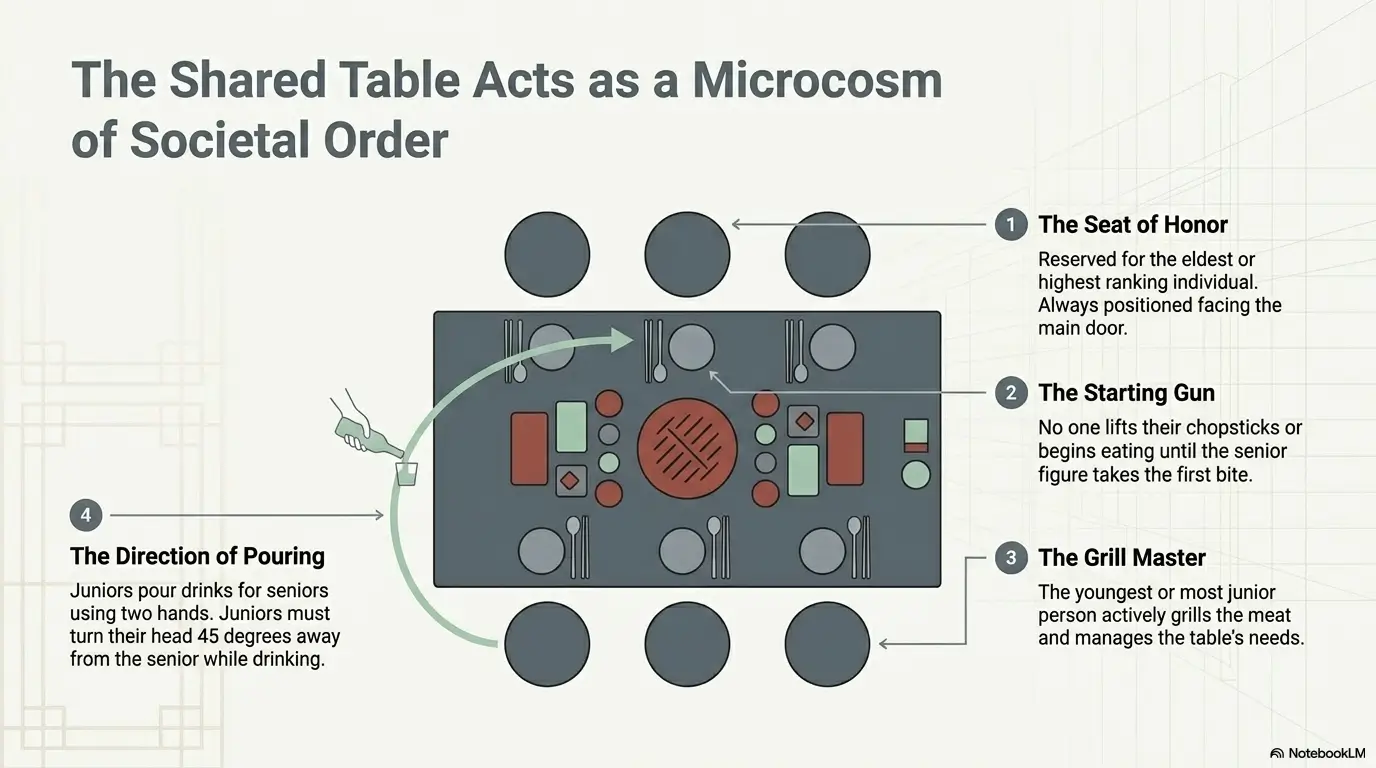
At the table, observe first. Notice seating, serving, drinking, chopstick placement, who starts eating, and whether older people are served first. Visit Seoul’s etiquette guidance notes that starting after the eldest begins eating is a common table custom.
If alcohol is present, follow your partner’s cues. Drinking rituals can carry their own rules around pouring, receiving, and turning slightly away from elders when drinking. If you do not drink, say so calmly and politely. You can prepare that sentence ahead of time with a practical guide on how to refuse alcohol in Korea.
Table Manners Map: What to Notice First
Wait for cues on seating and when to begin.
Accept food graciously and avoid dramatic reactions.
Thank the host clearly and do not rush away.
Common Mistakes That Make the Meeting Harder Than It Needs to Be
Mistake 1: Treating It Like a US Family BBQ
The tone may become warm later, but the first meeting may begin with more formality. Do not arrive as if you are dropping by a cousin’s backyard with a soda in hand and a joke already loaded.
Warmth can grow. Formality is not automatically coldness. Sometimes it is simply the doorway through which trust enters.
Mistake 2: Assuming Approval Is Immediate or Obvious
Parents may be polite while still processing. They may not announce approval. They may not show every feeling. This can confuse US readers who are used to quick feedback.
Do not force a verdict. Let your partner interpret the family’s reaction afterward.
Mistake 3: Using Humor to Escape Nervousness
Humor is wonderful when it travels. Unfortunately, some jokes pack badly. Sarcasm, self-deprecation, political humor, dating jokes, and jokes about family authority can land in pieces.
When nervous, choose sincerity over performance. Sincerity has fewer moving parts.
Mistake 4: Letting Your Partner Do All the Emotional Labor
Your partner should not have to brief you, translate you, soften your jokes, explain your job, defend your clothes, manage the parents, and then comfort you afterward. That is not romance. That is unpaid event production.
Prepare enough that you can participate as an adult. Ask questions before the visit. Reflect afterward. Notice when your partner looks tense. This is where understanding Korean indirect communication can reduce the number of moments your partner has to quietly rescue.
- Respect the formality without freezing.
- Do not demand instant approval.
- Share the preparation burden with your partner.
Apply in 60 seconds: Ask your partner, “What is one thing I should definitely not do?”
If You Are Not Korean: The Foreigner Factor Without Panic
Difference May Be Noticed Before Personality
If you are not Korean, the family may notice nationality, language, visa status, distance from your own family, future residence plans, and whether long-term life in Korea or the US is realistic. That does not mean you are doomed. It means practical questions may arrive early.
Parents may wonder how holidays will work, where the couple will live, how communication with in-laws will happen, and whether cultural differences will become daily stress. In serious international relationships, practical topics can eventually include immigration, so the broader context of a Korea F-6 visa may come up much later if marriage becomes realistic.
Effort Matters More Than Fluency
You do not need polished Korean. Basic greetings and thanks can help: “안녕하세요” for hello, “감사합니다” for thank you, and perhaps a simple “잘 먹겠습니다” before eating if your partner says it fits the setting.
But do not turn language into a stage performance. A little humility travels better than a memorized paragraph delivered with the energy of a hostage video.
Your Calmness Helps Your Partner
The meeting is not only about impressing parents. It is also about showing your partner that you can handle complexity with grace.
If you become defensive, panicked, or overly needy, your partner may have to manage you and the family at the same time. Calmness is a gift. Not flashy, but deeply useful.
Coverage Tier Map: How Much Preparation Do You Need?
Preparation Tier Map
- Tier 1: Casual hello. Confirm greeting and dress.
- Tier 2: Home visit. Add shoes, socks, gift, and table cues.
- Tier 3: Formal meal. Prepare basic questions and respectful phrases.
- Tier 4: Marriage-adjacent meeting. Discuss future plans privately first.
- Tier 5: High family pressure. Agree with your partner on boundaries and follow-up.
Neutral action line: Match your preparation level to the seriousness of the meeting, not your anxiety level.
After the Visit: The Real Milestone May Come Later
Debrief Before You Decide What It Meant
After the visit, resist the urge to interpret everything alone. Ask your partner what they noticed. What went well? What felt tense? Did any question mean more than it seemed? Was there anything you missed?
This debrief matters because cross-cultural meetings often have delayed translation. The meaning may not be obvious in the room. If your partner prefers to process later over message instead of immediately talking, Korean texting formality can also help you understand why tone and timing still matter after the meal ends.
Approval Can Be Gradual
Acceptance may unfold through repeated meals, practical gestures, small updates, and time. A parent may not melt at the first meeting. That does not mean the door is closed.
Some trust grows like broth, not instant coffee. It needs heat, time, and fewer dramatic assumptions.
One Meeting Is Not the Whole Story
The first meeting matters, but it is not always a final verdict. It may be the beginning of a longer process in which your behavior, consistency, and care become more important than one perfect evening.
The original curiosity loop was this: why does meeting the parents in Korea feel like a milestone with rules? Because the rules are really signals. They help a family read seriousness, respect, adaptability, and future fit.
- Debrief privately before judging the outcome.
- Expect gradual trust, not instant certainty.
- Use the visit to become a better team.
Apply in 60 seconds: Ask, “What did your parents probably notice that I may have missed?”
FAQ
Is meeting the parents in Korea usually a sign of marriage?
Often, it can signal a serious relationship, especially in more traditional families or when the couple is old enough for marriage to be a realistic topic. It does not automatically mean marriage is decided. It does mean the meeting may carry more weight than a casual US-style introduction.
How soon do Korean couples usually meet each other’s parents?
There is no single timeline. Some couples wait until the relationship is clearly serious. Others meet sooner because of family closeness, age, distance, living arrangements, or practical circumstances. The better question is not “How soon?” but “What does this meeting mean in this family?”
What should I bring when meeting Korean parents for the first time?
A modest, thoughtful gift is usually safer than something flashy. Fruit, dessert, flowers, or a tasteful item from your home region can work. Ask your partner first because family tastes, health needs, and setting matter.
What should I wear to meet Korean parents?
Choose clean, neat, modest clothing that fits the setting. For a home visit, polished casual is often enough. For a formal restaurant, dress a little more carefully. The goal is not luxury. The goal is respect.
What should I avoid saying at the first meeting?
Avoid intense topics such as politics, family criticism, money pressure, private relationship conflict, marriage jokes, baby jokes, or anything that puts your partner on the spot. First meetings reward steadiness more than spicy conversation.
Do I need to speak Korean?
No, but basic greetings and thanks can help. Respectful effort matters more than fluency. If you know only a few phrases, use them naturally and let your partner guide you.
What if the parents seem quiet or hard to read?
Do not assume quiet means dislike. In some families, observation comes before warmth. Ask your partner afterward instead of decoding every eyebrow like a weather satellite.
What if my Korean partner does not want me to meet their parents yet?
Take that seriously. The delay may reflect timing, family pressure, seriousness, privacy, or protection. It does not automatically mean embarrassment or lack of love. Ask gently what the timing means and what would make the meeting feel appropriate.
Conclusion
Meeting the parents in Korea can feel like a relationship milestone with rules because the visit may carry layered meaning: respect for elders, family awareness, future planning, and the quiet question of whether you are serious enough to be welcomed into a wider circle.
The best preparation is not memorizing 37 tiny rules until your personality leaves the building. It is asking your partner what the meeting means, arriving with modest respect, bringing a thoughtful gift if appropriate, watching before you move, and debriefing afterward with care.
Within the next 15 minutes, do one practical thing: ask your partner, “In your family, what does meeting the parents usually mean?” That single question turns the visit from a guessing game into a shared map.
Last reviewed: 2026-04.