

Planning a Korean wedding means coordinating a ceremony, a contract, guests and several families’ expectations. There is no single Seoul wedding format, fixed duration or guest contribution that makes every event work.
Start with the decisions that create commitments: the couple’s priorities, the number of guests, the venue terms and which ceremonies people actually want. A clear written plan is more useful than an unverified story about a first wedding.
Choose the ceremony before assuming a sequence
Ask the venue and officiant how the actual event runs: arrival, dressing, rehearsal, ceremony, photographs, meal and any family ritual. Confirm which activities are optional and who coordinates each transition.
Religious, civil and family elements can differ. Do not assume that attending a ceremony creates a legally registered marriage or grants anyone immigration status. Verify the separate administrative route for the relevant countries and circumstances.
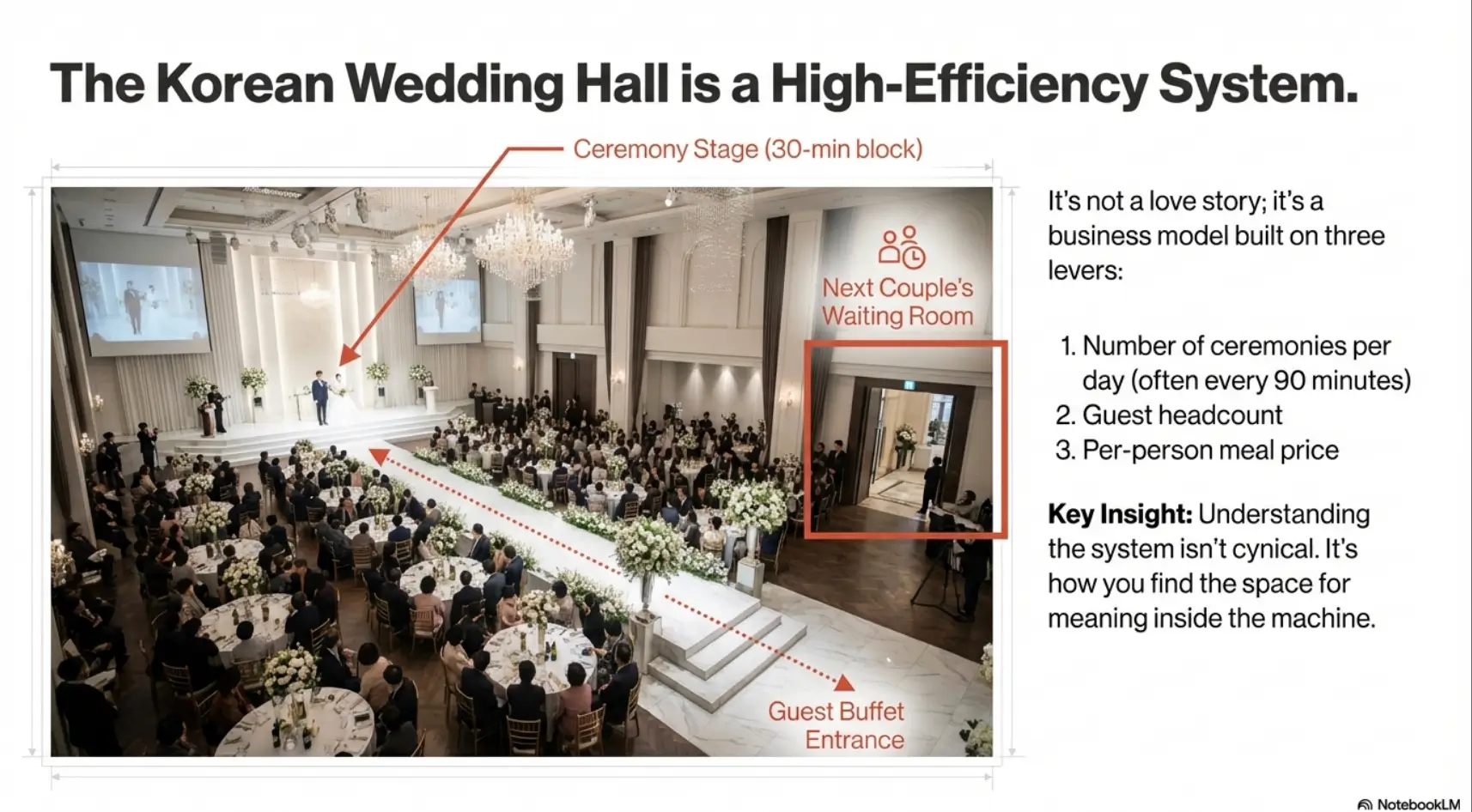
Read the venue commitment line by line
Request an itemized quote covering room use, food, minimum headcount, equipment, flowers, clothing or makeup packages, taxes and extra time. Ask which services are mandatory and whether outside suppliers are permitted.
Confirm payment dates, cancellation, postponement, headcount changes, no-shows, substitutions and what happens if the venue changes the arrangement. A verbal assurance should not replace a contract you understand; get suitable professional help if the commitment is unclear.

Build a guest plan with actual access needs
Separate invited guests, confirmed attendees, children, vendors and people who only attend part of the day. Ask about seating, dietary needs, mobility access, language support and transport without circulating private details widely.
For travelers, share the exact venue and arrival instructions. Do not buy a guest’s ticket, promise reimbursement or assume someone can take leave without agreeing on the scope and cost.
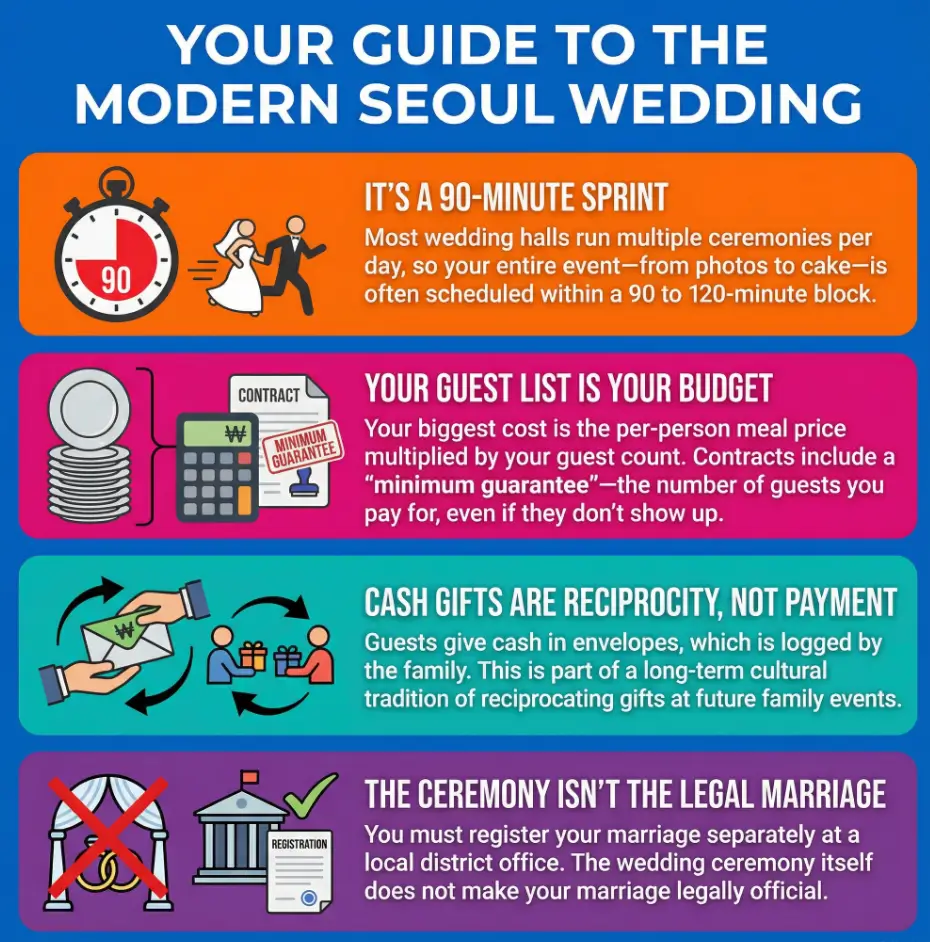
Cash gifts are not a guaranteed funding plan
Choose a budget that does not depend on guests covering a meal price or repaying a past gift. If a group collection is proposed, confirm who manages it, whether participation is voluntary and how records stay private.
Ask the family how envelopes or transfers should be handled and verify any account through a known contact. A venue’s price, an expensive decoration or a guest’s job title does not establish an obligatory amount.
Family decisions and boundaries
Discuss clothing, greetings, alcohol, bowing, photographs and any ancestral or family ritual before the day. Offer a standing alternative when kneeling is difficult and respect a person who declines an activity.
Assign a trusted contact to handle practical questions so the couple is not solving every problem during the ceremony. Ask before publishing identifiable guests or children, and do not turn the event into a public test of cultural fluency.
Budget with complete costs
Constructed example: 60 guests at an invented KRW 80,000 food price gives KRW 4,800,000 for food. Adding an invented KRW 2,000,000 venue and setup charge gives KRW 6,800,000 before clothing, photography, transport and other exclusions. These are arithmetic inputs, not current market quotes.
Compare like-for-like proposals and write a contingency you can afford. A cheaper headline package may cost more once minimums and exclusions are included.
Turn a wedding plan into an agreed responsibility sheet
Before comparing venue packages, write down who decides each item, who pays, and which guest-facing details must be confirmed. In a constructed bilingual wedding, one person might coordinate the ceremony script while another confirms meal access and directions. Send guests the final agreed information rather than separate family assumptions. A practical responsibility sheet helps identify gaps without assuming every Korean wedding follows one ceremony order or division of costs.
A reader question: What should overseas guests receive first?
The confirmed venue address, date and time, RSVP contact, meal arrangements and any accessibility information they need. Clarify optional traditions separately so guests can participate comfortably.
The next planning conversation
Agree on the guest range, spending limit, required activities and decision owner. Then request the written scope and cancellation terms before paying a deposit. Review legal registration and visa questions through their own official channels rather than the wedding venue.
Editorial revision: October 18, 2026. Official links and dated examples are identified where used. Verify current terms with the responsible provider or authority before acting. This guide makes no personal-testing, approval, safety or outcome guarantee.
Practical example and reader question added October 20, 2026. Existing source dates are retained; this addition is not a fresh verification of every earlier claim.