

Pungsu, often discussed alongside feng shui, is a cultural way of interpreting places and their relationships to land, water and settlement. It can be an interesting lens for architecture. It is not a building inspection, a medical explanation or evidence that a floor plan causes bad luck.
Use the distinction to ask better questions about a home. A concern expressed through a traditional idea may overlap with a practical issue such as glare, noise or drainage, but that issue needs its own evidence.
Cultural interpretation and measurable conditions
Ask whether a statement is describing a traditional belief, a design preference or a measurable condition. “This doorway feels exposed” is a preference; traffic noise at a stated time is an observation; “this alignment will harm your career” is a prediction this guide cannot establish.
Do not use a building’s reputation to judge its occupants or a family’s beliefs. People may value the symbolism, disregard it or find selected design ideas useful without accepting supernatural claims.
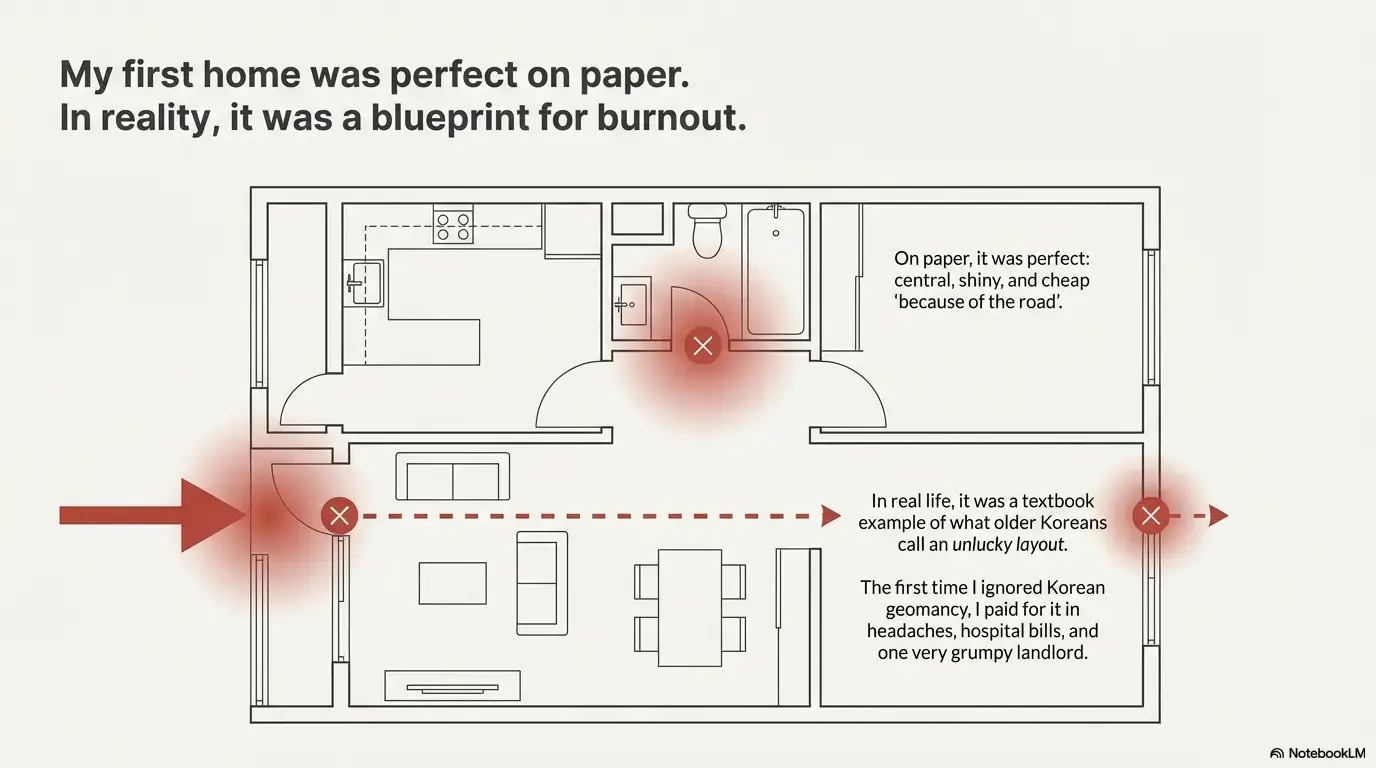
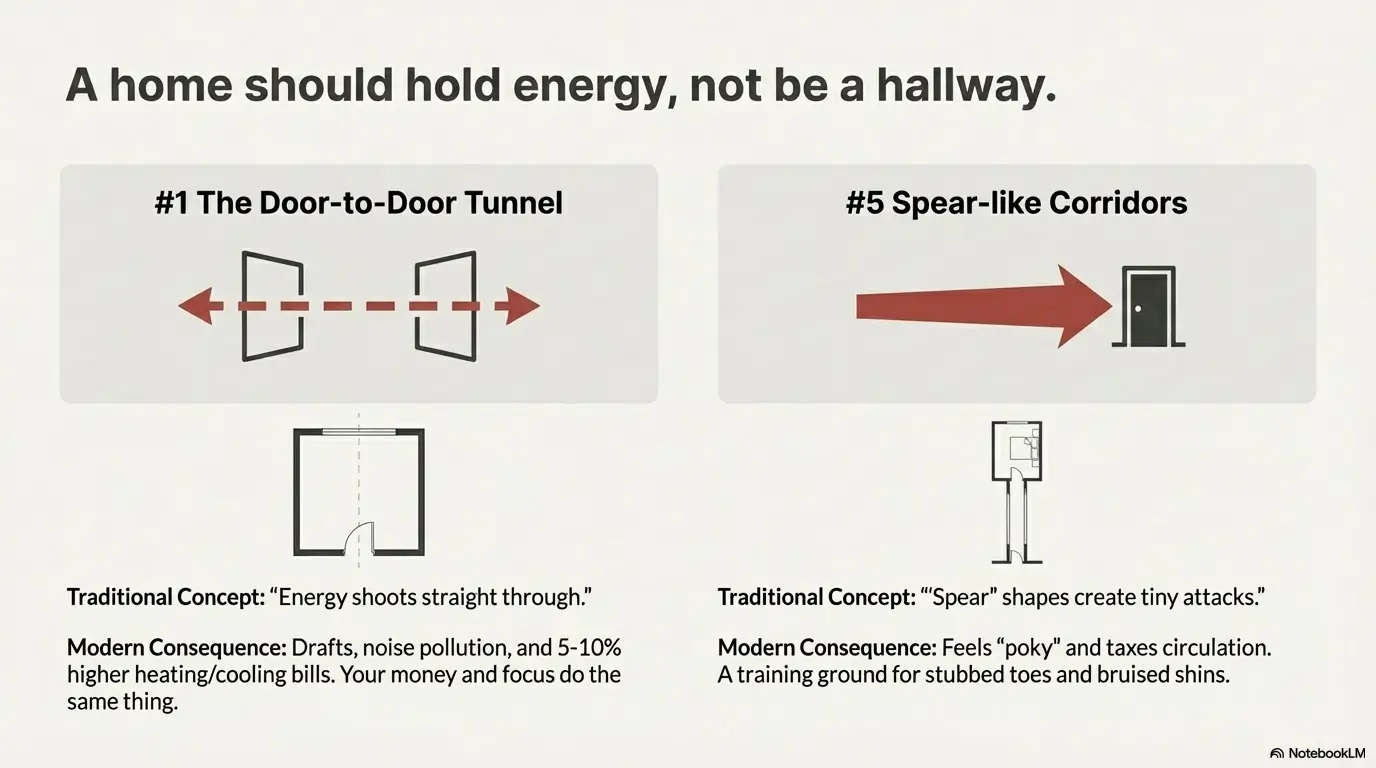
Door alignments, roads and corridors
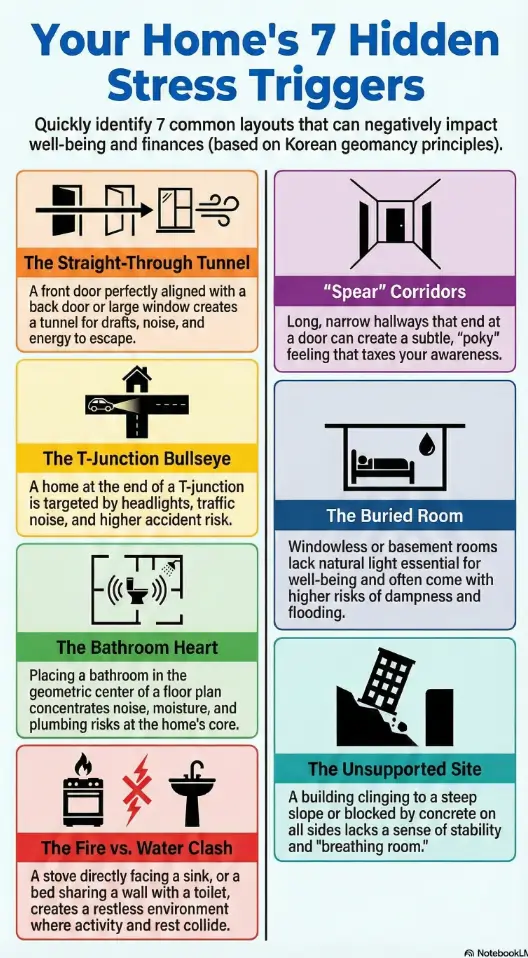
Instead of assuming a straight sightline loses good fortune, check privacy, glare, drafts, noise and ease of movement. A screen or furniture change may help one concern while worsening an exit route or daylight.
At a junction, assess actual traffic, crossings, headlights and noise at relevant times. A road shape alone cannot diagnose danger or determine an insurance premium. Check site-specific evidence and official records where appropriate.
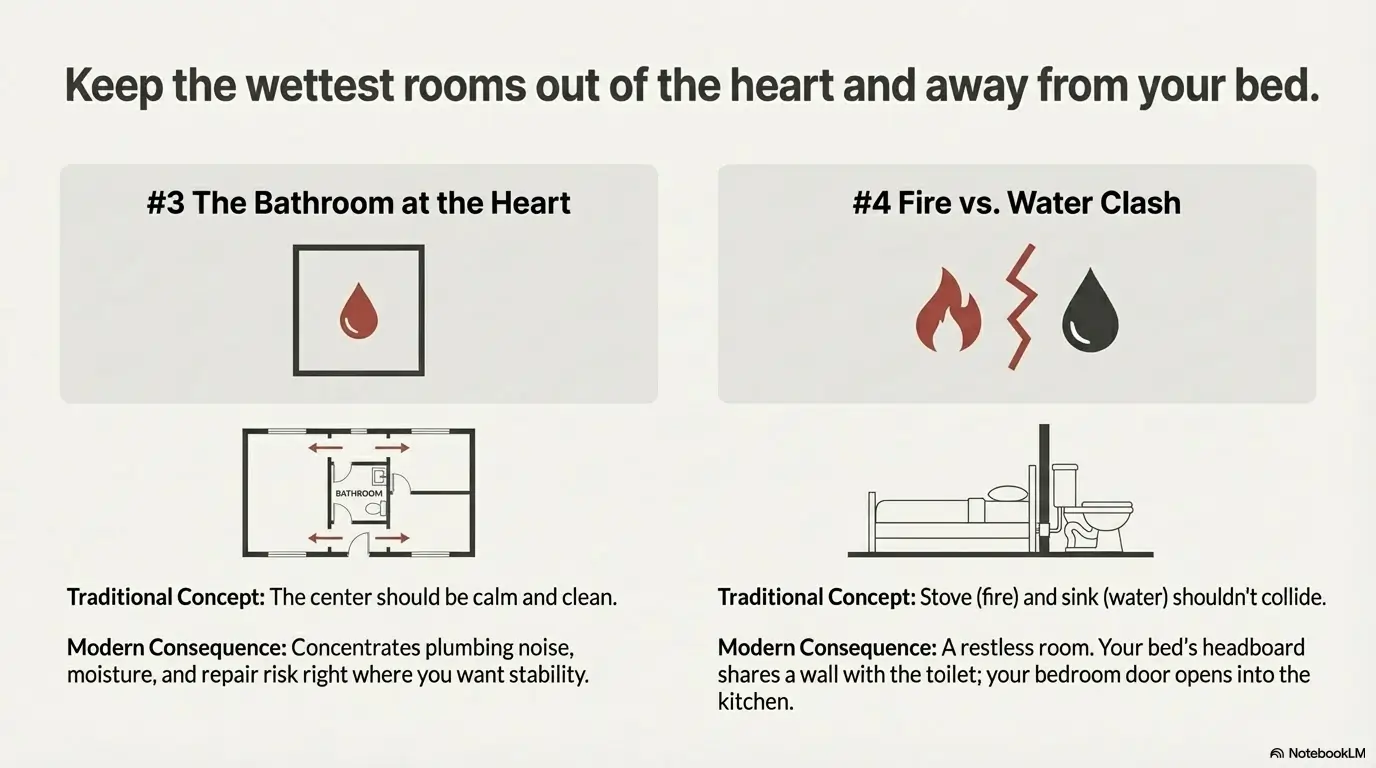
Bathrooms, kitchens and ventilation
Water, heat and ventilation need ordinary technical checks. Look for moisture, odors and visible damage, then obtain qualified assessment where necessary. A symbolic concern about a bathroom’s position does not establish a leak.
Do not relocate plumbing, cut a wall or alter electrical equipment based on a luck diagram. Structural, fire, water and permit issues belong in a professional survey and a written scope of work.
Basements, light and access
For a lower-ground or windowless space, examine legal use, safe exits, moisture, ventilation, flood exposure and the actual lease terms. A decorative improvement cannot remedy an unsafe or unauthorized use.
Visit at a time that shows the conditions you care about, and ask for documentary answers. If you cannot establish suitability, pause rather than substituting a reassuring story or a visual checklist for evidence.
Comparing a change with moving
Compare itemized options: no work, a reversible furnishing change, professional repairs, a larger renovation or a different home. Include fees, temporary accommodation, maintenance and the practical disruption.
There is no universal percentage of property value at which moving becomes the correct choice. Do not refinance or borrow because a generic calculator labels a layout unlucky. Any financing decision needs the actual terms and household circumstances.
Questions for a viewing
- Which concern is observed, and which is symbolic?
- What evidence supports the building condition and permitted use?
- Who will assess structure, moisture, services and access?
- What is the full scope and cost of each proposed change?
A dated record of a concern can help a discussion, but it cannot certify condition or predict resale value.
Separate a pungsu preference from a home inspection
Imagine a household prefers a particular orientation for cultural reasons, but a room also has visible damp marks. Record the orientation preference and the dampness as different questions. A pungsu interpretation can explain what a layout means to the household; it cannot diagnose the source of moisture or establish structural condition. Ask for inspection evidence and repair information for physical concerns. This allows cultural preferences to remain part of a choice without replacing measurable checks.
A reader question: Can a favorable layout prove that a property is healthy or valuable?
No. Evaluate ventilation, moisture, maintenance and other physical conditions on their own evidence. Cultural interpretation is not a building report or a valuation.
A practical next step
Choose one concern and write it as a question that can be answered: “Is this room legally approved for this use?” or “What is causing this moisture?” Keep the cultural interpretation separate from the technical answer.
Editorial revision: October 18, 2026. Official links and dated examples are identified where used. Verify current terms with the responsible provider or authority before acting. This guide makes no personal-testing, approval, safety or outcome guarantee.
Practical example and reader question added October 20, 2026. Existing source dates are retained; this addition is not a fresh verification of every earlier claim.