Decoding the Layers of Korean Digital Etiquette
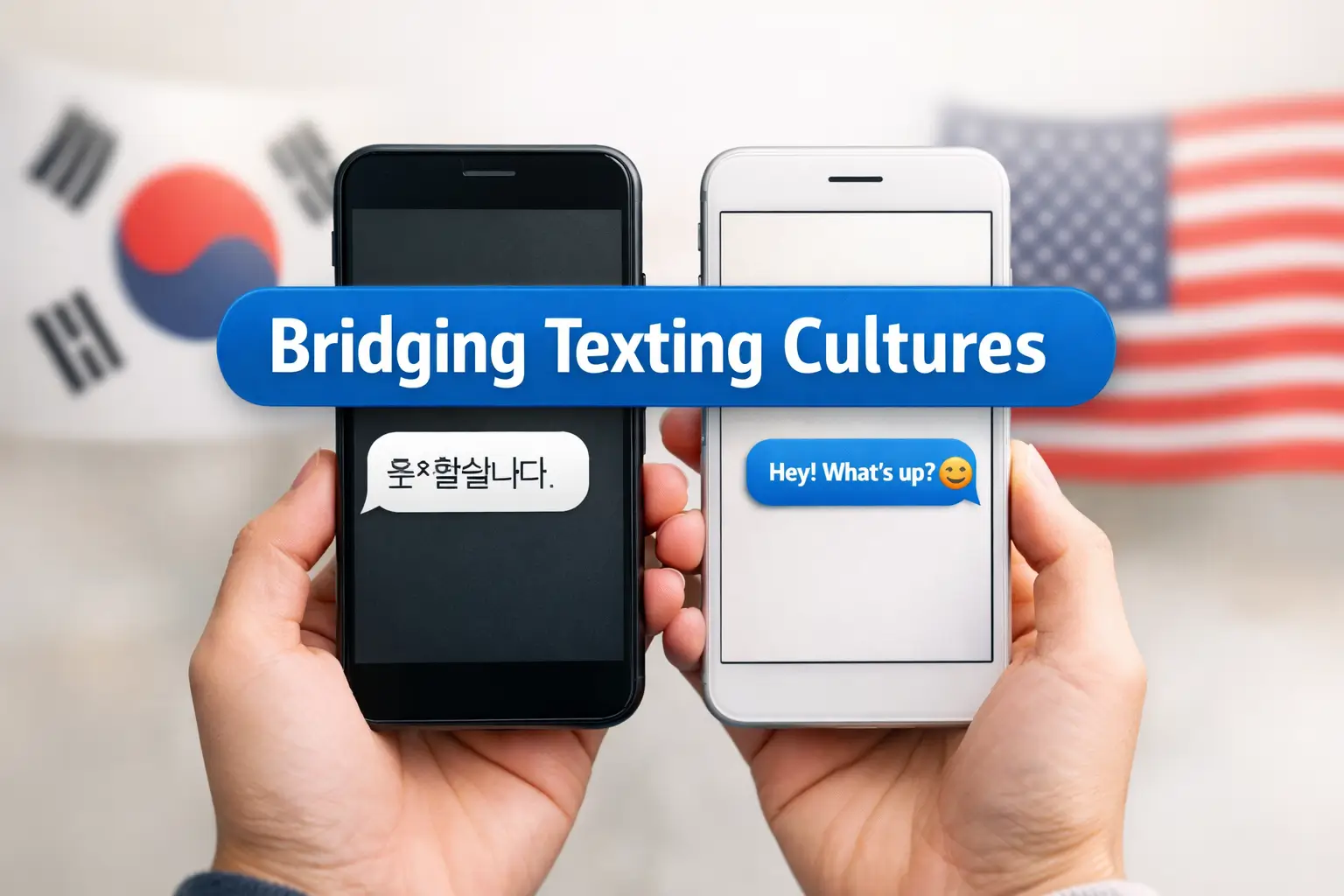
Korean texting can feel strangely overdressed to Anglo-American readers. A simple message that would pass as friendly and efficient in the West can arrive in Korean with a greeting, a softener, a careful ending, and just enough restraint to make someone wonder whether they are being welcomed or quietly kept at arm’s length.
That friction is real, especially if you are dating, working with, or befriending Koreans and trying to read tone through a screen. What sounds warm in one culture can sound formal in another; what feels neutral in English can feel abrupt in Korean. This gap often leads to misreading politeness as distance or structured wording as emotional coldness.
The goal is to help you tell the difference between stiffness and care, distance and respect, and casualness and genuine closeness.
Fast Answer: Why texting in Korea can feel more formal than texting in the West often comes down to relationship awareness, not coldness. Korean messages frequently carry subtle signals about age, status, closeness, timing, and politeness, so even casual texts can sound more structured to Western readers. What feels stiff at first is often a way of showing respect, reducing ambiguity, and protecting social harmony.
Table of Contents
Why “Formal” Is the First Feeling, but Not the Full Story
Why Western readers often mistake social precision for emotional distance
If you grew up in a texting culture that values speed, directness, and “just get to the point,” Korean messaging can feel like someone put a blazer on a casual conversation. There may be an opener. There may be a softener. There may be a sentence ending that sounds more polished than the situation seems to require. To a Western reader, that can register as distance.
But social precision is not the same thing as emotional distance. In Korea, a careful tone often means, “I see the relationship clearly, and I want to handle it well.” That is not chilly. It is attentive. It is the linguistic equivalent of setting a cup down gently instead of dropping it on the table and calling that efficiency.
Why Korean texting can sound careful even when the sender is being warm
I have seen plenty of foreign readers misread a polite Korean text as a rejection letter in a cardigan. Then, minutes later, the same sender shows up with real help, real loyalty, real consistency. That contrast matters. Warmth is not always packaged as exuberance. Sometimes it arrives dressed as steadiness, good timing, and low drama.
Korean language and etiquette traditions also give speakers more built-in tools for signaling respect. Korea.net notes that Korean uses an extensive system of honorifics and speech levels that reflect relationships and social context. That broader cultural logic bleeds into texting too, even when the exchange itself is casual by local standards.
The hidden logic: respect first, spontaneity second
Many Western texters assume spontaneity equals sincerity. Korea often works with a different instinct. Respect comes first. Spontaneity can arrive later, once the relationship can safely hold it.
That is the hidden logic behind the “formal” feeling. The text is not trying to be grand. It is trying not to be careless. And once you see that, the whole thing becomes less like a wall and more like a handrail.
- Careful wording does not automatically mean distance
- Politeness often carries warmth, not stiffness
- Precision is part of social respect
Apply in 60 seconds: When a Korean message feels overly polished, ask what relationship it is protecting before deciding what emotion it expresses.
The Real Difference: Korean Texting Tracks Relationship More Closely
How age, hierarchy, and social role quietly shape wording choices
The deepest difference is not grammar. It is tracking. Korean texting tracks the relationship more closely and more continuously than many Western texting cultures do. Age matters. Workplace seniority matters. In-group and out-group status matter. Even the reason for the conversation matters. The language is not simply carrying information. It is measuring distance.
That is why two messages with the same content can feel completely different. “Can we talk later?” to a close friend and “Can we talk later?” to an older coworker are not just two uses of the same sentence. In Korean context, they may require different levels of cushioning, timing, or humility.
Why the same message changes depending on who receives it
In many American texting environments, the default assumption is portable casualness. Once you have a style, you carry it around. You text your cousin, your manager, and your dentist with minor edits and a respectable amount of emotional gambling.
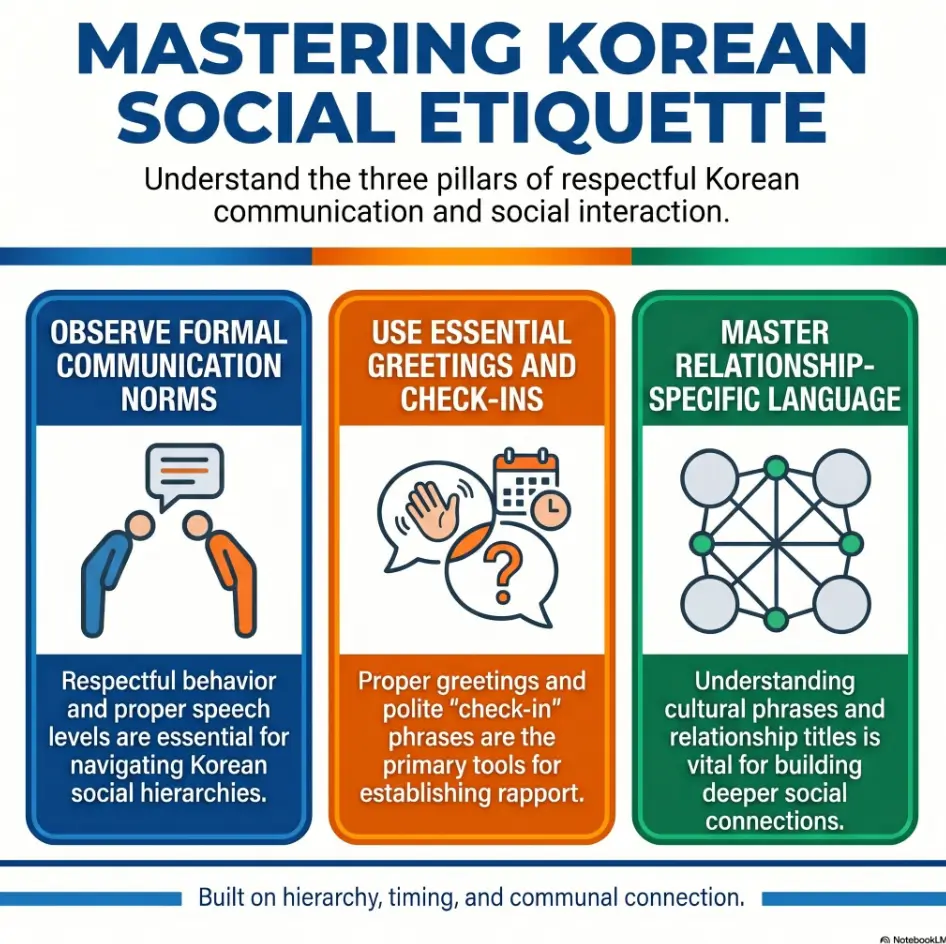
Korean messaging does not travel that lightly. The same request may gain a greeting, a reason, a softening phrase, and a deferential ending depending on the recipient. That is not theatrical overkill. It is relationship-specific calibration, the same social logic behind why Korean titles often matter more than first names.
How relationship distance affects greetings, closings, and response style
Distance often shows up in small places. A greeting. A check-in. A thank-you that seems “extra.” A closing line that signals the sender is not barging in and walking out. To Western readers, these may look ornamental. In practice, they often do important emotional labor.
Once, a friend showed me two almost identical Korean messages inviting someone to lunch. One version was for a peer. The other was for a slightly senior colleague. The difference was tiny on the page and huge in social texture. That is Korean texting in miniature: less obvious than outsiders expect, and more exact.
Decision Card: When should you assume higher formality?
- A: Older person, supervisor, teacher, client, or new acquaintance → start more carefully
- B: Same-age close friend with established casual rhythm → lighter tone is usually safer
Neutral action: when unsure, begin slightly more polite and relax only after the other person does.
It Starts With Tone: Politeness Lives Inside the Sentence
Why endings and phrasing can make a text feel more official
English speakers often look for politeness in extra words like “please,” “thanks,” or “sorry.” Korean frequently builds politeness deeper into the sentence itself, especially through endings and phrasing choices. That means the social mood of the message can change even when the basic meaning stays the same.
This is one reason foreigners feel slightly haunted by Korean texts. The content seems simple. The tone feels loaded. They can sense the pressure of the relationship without always knowing where it is coming from. The answer is often: the sentence ending is doing more work than your English-trained ear expects. If you want the wider framework, it helps to understand how Korean honorifics work for foreigners in everyday situations.
How indirect wording softens requests, refusals, and corrections
Korean texting often prefers a softer approach to requests and refusals, particularly when there is distance, uncertainty, or hierarchy involved. A direct no can be possible, of course, but people often buffer it. A request may arrive with a reason. A correction may arrive with gentleness. A refusal may arrive wearing three layers and carrying tea.
Western readers sometimes call this vague. That is understandable. But vague is not always the right word. A lot of the time, it is tact. The message is trying to keep the information clear enough while lowering the relational friction around it, much like broader patterns of Korean indirect communication.
Here’s what no one tells you… the “extra” politeness is often doing emotional work
It is easy to assume politeness is decorative. It is not. It reduces embarrassment. It protects dignity. It creates room for the other person to respond without losing face. In a culture that often values social smoothness and situational awareness, this matters.
I once rewrote a blunt English message into a Korean-friendly style for a friend. The facts barely changed. The reaction changed immediately. Same destination, softer road. Sometimes that is all politeness is: better road design.
Show me the nerdy details
In Korean, differences in speech level and honorific framing can signal stance, distance, and social position without changing the core informational content. That is why outsiders often feel a mismatch between “what the message says” and “how much social weight it seems to carry.”

Small Openings, Big Signals: Why Greetings Matter More Than Many Americans Expect
Why a simple opener can signal care, respect, and situational awareness
American texting often treats openers as optional. Korean texting is more likely to treat them as relational signals. A greeting can tell the other person, “I am aware of your place, your time, and the fact that I am entering your attention.” That is a lot of meaning for a small verbal bow.
To a busy Westerner, skipping that part can feel efficient. To a Korean recipient in the wrong context, it can feel abrupt, or just oddly flat. Not always offensive. Not always serious. But enough to change the emotional weather of the exchange.
How “Did you eat?” and other check-in phrases work socially, not literally
This is one of the sweetest small traps in Korean culture. A phrase that sounds literal may function socially. Korea.net explains that asking whether someone has eaten can work much like “How are you?” and can help maintain the relationship, not merely check food intake. That matters because many foreign readers hear the sentence and miss the emotional layer entirely.
The text is often not conducting a nutrition audit. It is acknowledging care, everyday life, and human presence. It is a check-in dressed as a meal question. And if you answer it like an IRS deposition, the moment can get unintentionally funny. For a deeper read, see why Koreans ask if you ate.
Why jumping straight to the point can feel efficient in the US, but abrupt in Korea
In the United States, directness often signals respect for time. In Korea, directness without relational framing can sometimes signal insufficient attention to the relationship itself. Neither instinct is inherently better. They simply optimize for different risks.
American style often fears wasted time. Korean style often fears unnecessary roughness. Once you notice that difference, a lot of texting friction stops looking personal.
Infographic: How one Korean text can carry three layers at once
Layer 1: Information
What the sender literally wants or says.
Layer 2: Relationship
How close you are, who is older, who has authority, what role each person has.
Layer 3: Situation
Whether the context is casual, work-related, delicate, urgent, or socially uncertain.
Read it this way: If a message feels formal, the sender may be managing Layer 2 or Layer 3, not expressing emotional distance.
Fast Replies, Delayed Replies, and the Meaning People Read Into Silence
Why response timing can carry more social meaning than Western texters expect
Text timing means something almost everywhere. But in Korean contexts, response speed can pick up extra relational charge, especially when there is hierarchy, uncertainty, or dating ambiguity involved. A quick reply can signal attentiveness. A slow reply can signal busyness, caution, discomfort, or simply a different expectation set.
The key is not that every delay means something dramatic. It is that delay is less likely to feel socially blank. Many Westerners want silence to be neutral until proven otherwise. Korean texting often leaves more room for silence to be interpreted through the relationship.
How delay is not always rude, but is rarely meaningless
That does not mean you should write a doctoral thesis every time someone takes four hours to answer. Please spare yourself. It means timing can become one more signal among many. If the wording is warm, the greeting is intact, and the follow-up is thoughtful, the delay may simply be life happening. If the tone is clipped, the rhythm changes abruptly, and the social softness disappears, then the silence may be part of the meaning.
Let’s be honest… many cross-cultural texting problems start with timing, not vocabulary
Foreigners often focus on the wrong problem. They study phrases and miss rhythm. But rhythm is part of the message. I have watched people get every word right and still sound off because they replied too abruptly upward, too casually downward, or too late in a context where speed itself carried care. In app-specific settings, that often overlaps with the unwritten rules of KakaoTalk etiquette.
Mini calculator: How much social caution should you use?
Add 1 point for each: the other person is older; the exchange is work-related; the relationship is new.
0 to 1 points: relaxed timing is usually fine. 2 to 3 points: respond more intentionally and soften your tone.
Neutral action: check context before interpreting silence as either rejection or intimacy.
Emojis, Laughter, and Softening Devices Are Not Always “Casual”
Why cute or soft expressions can coexist with formality
This is where many outsiders get gloriously confused. They receive a message that looks polite, carefully phrased, and structurally formal, and then it ends with a smiling emoji or a soft laugh marker. Their brain throws a tiny chair.
In Korean texting, softness and formality are not enemies. A cute or gentle expression can help manage tone, reduce harshness, or make a polite message feel less chilly. In other words, the emoji may not be there to make the message casual. It may be there to keep the message humane.
How emojis, repeated vowels, and laughter markers manage tone, not just personality
Western texters often think emojis reveal personality first. Korean texters often use them to regulate tone. The same goes for little stretches of laughter, softened phrasing, and playful typography. These can lower the temperature of a request, signal friendliness after a correction, or prevent a short answer from feeling too blunt.
That is why a message can look playful on the surface and still obey fairly strict social logic underneath. One layer says, “I am respecting you.” Another says, “I am not trying to sound robotic.” Both can be true at once.
Why a message can look playful on the surface and still follow strict social logic
I once saw someone describe Korean texting as “formal in a cardigan with stickers on it.” Slightly ridiculous. Weirdly accurate. Surface softness does not always mean social equality. Sometimes it just means the sender is skilled.
Do not confuse softness with intimacy. Sometimes it is simply good relational housekeeping.
Workplace Texts Hit Different: This Is Where the Formality Feels Sharpest
Why colleagues, seniors, and supervisors often trigger a more careful texting register
If Korean texting feels noticeably more formal to foreign readers, the workplace is usually where that feeling hardens into something unmistakable. This is where hierarchy is less abstract. Roles are clearer. Consequences are closer. Small tone errors feel less charming and more expensive.
So yes, work texts often become miniature etiquette performances. Not because everyone is trying to act important, but because the social stakes are simply higher. A too-direct ask can feel pushy. A too-casual opener can feel presumptuous. A missing acknowledgment can feel dismissive.
How Korean work messaging blends efficiency with deference
From the outside, this can look inefficient. Why all the wording? Why the greeting? Why the thank-you at both ends like the message is wearing cufflinks? Because the goal is often dual: move the task forward and keep the relationship clean.
American workplace culture often praises brevity. Korean workplace culture often prizes respect without chaos. Those are not identical goals. Once you understand that, even a seemingly elaborate message starts to make practical sense. The same principle appears offline too in things like how to hand money gifts and business cards politely.
Why “just sending a quick text” can become a miniature etiquette performance
I have known foreigners who sent beautifully efficient work texts in Korea and accidentally came across as abrupt. Not rude exactly. Just oddly underdressed for the occasion. And that is the danger. The message can be technically fine and socially off.
The good news is that small adjustments usually go a long way. A greeting. A reason. A soft close. The messaging equivalent of wiping your shoes before entering.
- Respect and efficiency are expected to coexist
- Upward messages usually need more cushioning
- Tiny tone choices can shape trust
Apply in 60 seconds: Before sending a work text, add one greeting and one soft closing line, then reread the message for abruptness.
Don’t Misread This: Formality Is Not the Same as Coldness
Why warmth in Korean texting often appears through consistency, not exuberance
Some cultures perform warmth loudly. Others perform it faithfully. Korean texting often leans toward the second type. Instead of expressive overflow, you may see regular check-ins, situational awareness, remembered details, and a tone that stays considerate across time.
That can look understated to someone trained to read enthusiasm as proof of sincerity. But consistency is its own form of warmth. It says, “I am here in a stable way.” That matters more than a confetti cannon of exclamation marks.
How restraint can signal sincerity rather than distance
Restraint is easy to misread when you do not share the code. But in many Korean contexts, it can signal seriousness, self-control, and respect for the other person’s comfort. It says, “I am not going to impose my mood on you without permission.” That is not emotionally empty. It is socially disciplined.
The cultural trade-off: fewer loose edges, more social legibility
Every texting culture makes trade-offs. American texting gives you speed, flexibility, and casual mobility. Korean texting often gives you clearer relational signaling. The cost is that the messages can feel more structured. The benefit is that people can often read the social situation with fewer loose edges.
Neither system is perfect. One risks roughness. The other risks overinterpretation. Welcome to humanity, where every communication style is somehow both helpful and slightly exhausting.
Short Story: A foreign student once told me she thought her Korean classmate disliked her because the texts were so polite and brief. No jokes. No “haha.” No dramatic warmth. Then exam week arrived. That same classmate checked in every morning, shared the lecture notes she had missed, reminded her about a room change, and sent one final message the night before: “Please sleep early.” The student laughed when she told me. “I thought she was cold,” she said.
“Apparently she was just being Korean and kind at the same time.” That little misunderstanding says a lot. Warmth does not always arrive with verbal fireworks. Sometimes it arrives with continuity, memory, and an almost invisible steadiness that only becomes obvious when you need it. That same understated rhythm also helps explain how silence works differently in Korean conversation.
Who This Is For, and Who May Be Reading Too Much Into It
Best for: Americans dating, working with, studying with, or befriending Koreans
This framework is especially useful if you are an American or Western reader trying to decode everyday Korean messages without spiraling. Maybe you are dating someone Korean and wondering why the tone shifts across contexts. Maybe you work with Korean colleagues and feel every message requires a minor emotional weather report. Maybe you have Korean friends and want to stop misreading neutral politeness as distance.
Not for: readers looking for one fixed rule that explains every message
This is not a decoder ring with one magic answer. Korean texting is shaped by age, region, profession, app culture, personality, generation, and relationship history. The point is not to flatten it into a law. The point is to understand the pressures that often shape it.
Why region, age, app culture, and personal style still change the picture
A twenty-year-old friend group can text very differently from a manager-and-team group. A couple in a long relationship can sound wildly different from two new acquaintances. Some people are naturally dry. Some people are affectionate. Some people send seven stickers and a weather update before breakfast. No national rulebook can compete with actual humans for variation.
Eligibility checklist: Is this article the right lens for your situation?
- Yes: you are comparing Korean and Western texting styles
- Yes: you keep misreading politeness as emotional distance
- Yes: the relationship context changes the tone
- No: you want one fixed rule that explains every Korean message ever sent
Neutral action: use this as a pattern guide, not a courtroom exhibit.
Common Mistakes Americans Make When Texting Koreans
Mistake: assuming shorter or more neutral replies mean dislike
This is probably the most common mistake. A message can be brief because the person is busy, cautious, respectful, tired, or simply not using texting as a stage performance. Neutral does not automatically mean negative.
Especially in Korean contexts, neutral language can still be perfectly relational. It may be doing the opposite of dislike. It may be avoiding overfamiliarity.
Mistake: treating all casual language as universally friendly
Foreigners often race toward “natural” Korean and accidentally overshoot into tone-deaf territory. Casual language is not simply friendlier language. It is relationship-marked language. Used too early or in the wrong direction, it can sound presumptuous rather than warm. That is especially true with address terms like oppa, unni, hyung, and noona, which carry social texture far beyond dictionary meaning.
Mistake: copying Korean texting habits without understanding the relationship context
This one deserves a small warning label. Mimicking phrases, softeners, or texting rhythms without understanding why they are being used can backfire. You may sound awkwardly stiff in one context and too familiar in another. A copied surface is not the same thing as social fluency.
Here’s what no one tells you… sounding “natural” too early can sound socially tone-deaf
People often chase naturalness when what they really need is proportion. Do not aim to sound like a lifelong insider by Tuesday. Aim to sound considerate, readable, and appropriately matched to the relationship. That gets better results and saves everyone a tiny, preventable headache. A similar trap appears in phrases that sound vague to English speakers, such as the social softening behind what “maybe” can mean in Korean.
Show me the nerdy details
Cross-cultural communication often breaks not on vocabulary, but on pragmatic misalignment: the speaker and recipient assign different social meanings to brevity, timing, directness, or speech level. Texting magnifies this because context is thinner and projection is cheaper.
Don’t Do This: Western Shortcuts That Can Backfire in Korean Contexts
Don’t skip greeting or softening language when the relationship is not clearly casual
If the relationship is new, uneven, professional, or age-marked, a bare request can land harder than you intend. The greeting is not wasted space. It is context. The softener is not fluff. It is friction control.
Don’t force instant familiarity through jokes, slang, or abrupt requests
One of the more American instincts is to speed-run rapport. It can work beautifully in the right culture and fail with elegance elsewhere. In Korean texting, instant intimacy can feel less like friendliness and more like skipped steps.
Don’t read every polite phrase as emotional distance or performative stiffness
Sometimes a polite phrase is just good social hygiene. Sometimes it is real warmth in a local form. Sometimes it is both. The temptation to read every respectful sentence as frosty theater will distort your understanding faster than any grammar mistake. If you need the bigger frame, it helps to revisit the logic of Korean politeness itself.
- Do not skip the relational framing too early
- Do not confuse copied style with genuine fit
- Do not force intimacy through tone alone
Apply in 60 seconds: Rewrite one blunt message with a greeting, a reason, and a gentler closing, then compare how it feels.
The Gray Zone: When Korean Texting Becomes Casual, and Why That Shift Matters
How intimacy changes the message texture over time
This is the part many foreigners eventually love. Once the relationship deepens, Korean texting can relax in ways that feel unmistakably meaningful. The shift is not just stylistic. It often signals trust. More direct teasing. Less formal phrasing. Faster play. Shorter emotional distance. The room changes shape.
Why dropping formality is often a relationship milestone, not a style preference
In many Western settings, becoming casual is almost automatic. In Korean contexts, it can feel more earned. That is why the transition matters. It is not merely a linguistic convenience. It can reflect real relational movement.
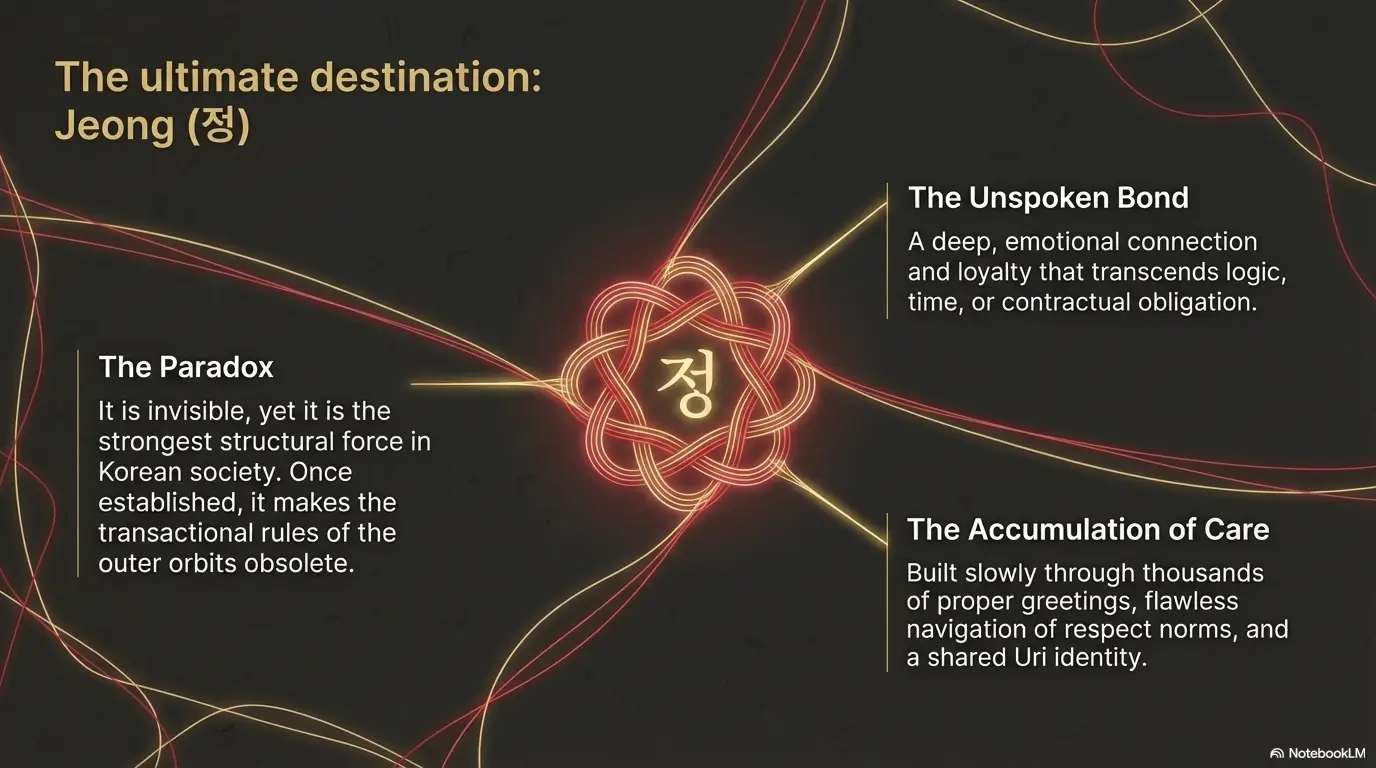
And that is part of what makes Korean texting beautiful once you understand it. Formality is not a prison. It is often a phase of careful handling. When the relationship becomes sturdy, the language can loosen because the connection can carry more weight.
What the transition from careful to relaxed texting can reveal
When someone who used to text you with consistent formality begins to sound more relaxed, that shift may reveal comfort, affection, trust, or simple familiarity. Not always romance. Not always some giant emotional revelation. But often something real.
Korea.net’s recent Hallyu culture explainer notes that expressions like “bap hanbeon meokja” can function not only as literal invitations but as ways to maintain relationships and convey subtle relational intent. That layered quality is exactly why small tonal changes in texting can matter so much.
Coverage tier map: How Korean texting often changes by closeness
- Tier 1: New, hierarchical, or uncertain relationship → more greeting, more softening, more careful endings
- Tier 2: Familiar but still respectful → warm politeness, lighter rhythm, selective casualness
- Tier 3: Close relationship → more relaxed wording, more teasing, less formal cushioning
Neutral action: notice whether the tone shift happened gradually. Gradual change often means real comfort.
FAQ
Why do Korean texts sometimes sound more polite than face-to-face speech?
Text strips away voice, facial expression, and immediate repair. Many people compensate by making the wording itself clearer, softer, or more respectful. The result can sound more polished on screen than in spontaneous speech.
Is Korean texting always formal?
No. It can be playful, intimate, dry, affectionate, or chaotic like any other texting culture. The difference is that relationship and context often shape tone more strongly, especially early on or in unequal relationships.
Why do Korean people use greetings and check-ins before the main point?
Because the opener is often doing relational work. It shows awareness, softens the entry into the conversation, and helps the message feel considerate rather than abrupt.
Does a delayed reply mean someone is upset in Korea?
Not necessarily. Delay can mean many things, including busyness or caution. But timing can carry more social meaning than some Western texters expect, so it is best read alongside tone, context, and the broader pattern.
Why do work messages in Korea feel especially structured?
Because work communication often has clearer hierarchy and higher social stakes. The message is expected to move the task forward while also preserving respect and group smoothness.
Are emojis and cute expressions signs of closeness or just normal texting style?
Sometimes closeness. Sometimes normal tone management. Sometimes both. In Korean texting, soft expressions often help keep a message from sounding too cold or too hard-edged.
Is it rude to text too directly in Korean?
It can be, depending on the relationship and context. Directness is not automatically wrong, but unsoftened directness can feel abrupt when the relationship is not clearly casual or equal.
How can Americans text Koreans without sounding either cold or overfamiliar?
Start slightly more polite than your instinct suggests, especially in new or unequal relationships. Add a greeting when needed, soften requests, and let the other person’s tone show you how much casualness the relationship can hold.
Next Step: Read the Relationship Before You Read the Tone
Before judging a Korean text as stiff, ask three questions: Who is texting whom, how close are they, and what situation are they in?
That is the core habit. Not “What would this sentence mean in English?” but “What relationship is this sentence trying to handle?” Once you ask that, Korean texting becomes much easier to read. The mystery begins to thin out.
Use one practical rule: match the level of care in the message before trying to sound casual
Matching care is safer than forcing intimacy. If the message arrives with respect, reply with respect. If it relaxes over time, relax with it. Let the relationship earn the tone, rather than trying to skip ahead to the ending.
What to do today: review one Korean text exchange and identify where respect, distance, or warmth is being signaled indirectly
Do this once and you will start seeing the system everywhere. The greeting. The timing. The gentle refusal. The emoji that softens a formal line. The short reply that is not cold, merely measured. The care that looks plain until you learn how to read it.
That closes the loop from the opening. Korean texting can feel more formal than texting in the West, yes. But the deeper truth is more generous: what feels formal is often a way of carrying the relationship carefully. If you want to keep widening that lens, pair this with Korean phone call culture and Korean personal questions etiquette to see how the same relational logic travels across other everyday interactions.
Last reviewed: 2026-04.