
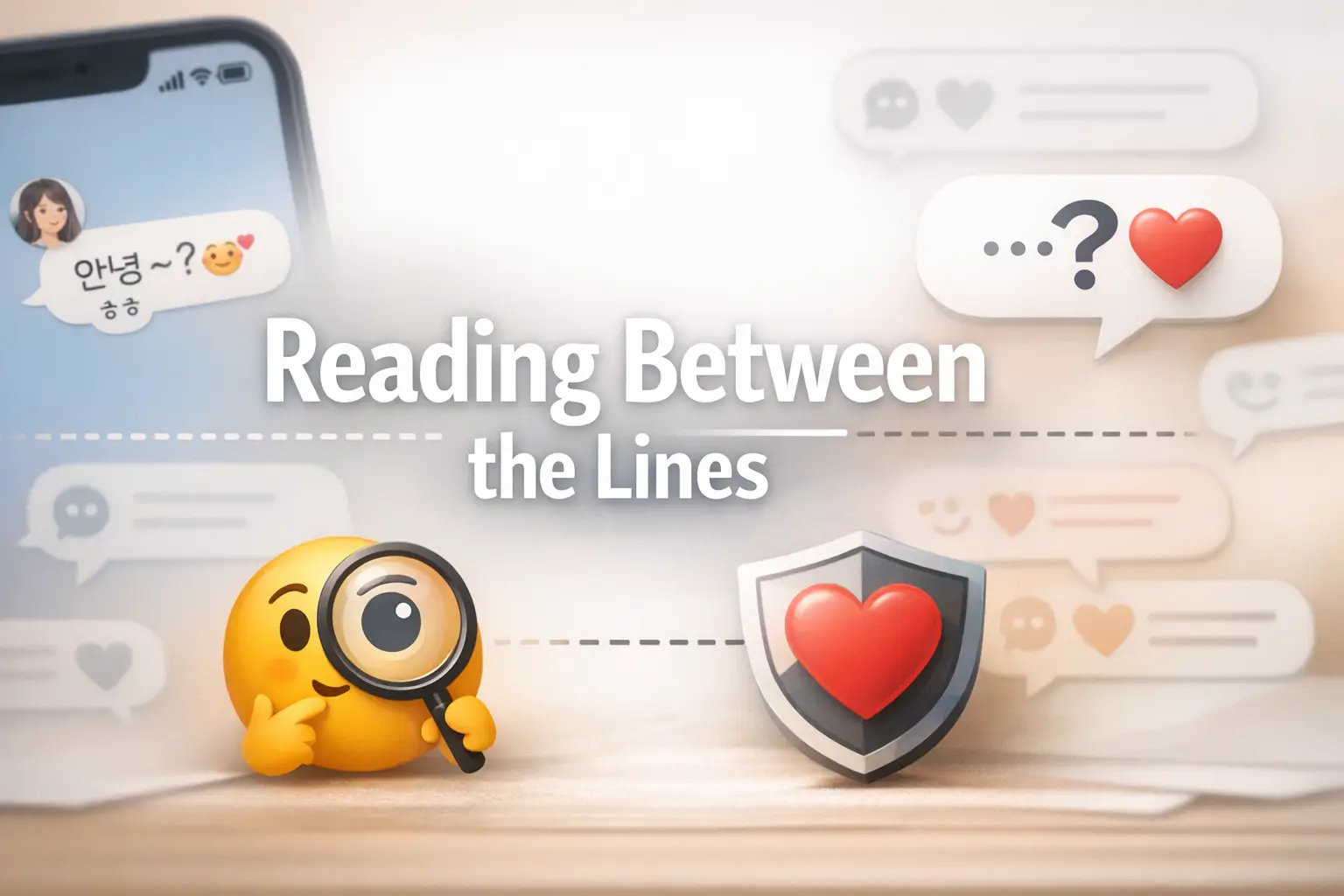
Beyond the Literal: Decoding the Social Power of Korean Digital Endings
A single cute Korean ending can do the work of a paragraph. It can soften a refusal, signal closeness, hide awkwardness, or turn an otherwise flat message into something warm, teasing, or carefully padded.
For the uninitiated, these endings are easy to misread. While the literal meaning may look thin, the social meaning does the heavy lifting. What reads like harmless sparkle in translation is often sophisticated tone management, relationship calibration, or quiet self-protection.
This guide moves beyond grammar charts to offer a context-first reading of Korean pragmatics. Learn to navigate the nuances of texting, fandom, and social media by understanding the emotional labor behind the language.
Don’t just ask what an ending means. Ask: What is it doing here?
Contents — choose a section
Table of Contents
Fast Answer: Cute Korean language endings online are not just “baby talk” or random internet sparkle. They often signal softness, affection, lowered pressure, playfulness, persona styling, or in-group ease. The meaning changes with relationship, age, platform, and mood. In practice, the best question is not “What does this ending literally mean?” but “What emotional job is this ending doing right here?”

Cute Endings First, Meaning Second: Why Foreign Readers Misread Them
They look small, but they carry social weight
Foreign readers often notice the surface before the function. A rounded ending, a playful syllable, a softened tone marker, and the immediate reaction is usually, “That looks cute.” True, sometimes. But that first impression can be a trap. In Korean, small endings often do the quiet labor that facial expression, timing, and vocal tone would do in speech. They are compact, but they are not decorative dust.
Constructed illustration, not a reported event: a fictional narrator once watched a learner treat one playful ending as a simple sign of friendliness. The chat looked light enough. Then the replies came back cool, almost flat. What went wrong was not vocabulary. It was social calibration. The learner had copied the frosting without knowing whose birthday cake it was.
The signal is often emotional, not grammatical
This is where English-first interpretation tends to wobble. English speakers are trained to chase content. Korean readers often track content and relational temperature at the same time. A sentence can be semantically ordinary and still feel emotionally very different depending on its ending. That ending may lower the pressure, invite softness, create a childlike flavor, signal teasing, or soften the edges of a request that might otherwise sound too bare.
The Standard Curriculum for Korean Language published by the National Institute of Korean Language centers communication competence and intercultural competence together. That pairing matters. You are not merely learning what a form means in the dictionary. You are learning what it does among people.
What feels “cute” in English can feel strategic in Korean
English internet culture often treats cuteness as either ironic performance or overt affection. Korean online tone is more layered. A cute ending may be sincere. It may also be strategic. It can reduce friction, make a statement less hard-edged, cushion a refusal, or make a chat feel less transactional. Sometimes it is warmth. Sometimes it is velvet wrapped around awkwardness.
That distinction matters because misreading softness as simple sweetness leaves you socially underdressed.
- They can change the mood without changing the core message.
- They often carry relationship signals, not just grammar signals.
- They are easiest to misread when you focus only on translation.
Apply in 60 seconds: The next time you see a cute ending, ask what tension it is lowering rather than what word it replaces.
What They Actually Signal: Softness, Affection, Distance, or Performance?
Some endings lower the temperature of a message
One of the most common functions is thermal, not grammatical. A message may need to sound less abrupt, less official, less cold. A softened ending can do exactly that. Think of it as turning overhead light into lamplight. The furniture stays the same. The room changes anyway.
This is especially visible in everyday online chat. A plain statement can feel efficient but hard. A slightly softened one can feel more cooperative. Not weak. Not childish. Just less likely to clang.
Some create closeness without saying anything explicit
Korean online culture is rich in indirect relational work. People do not always announce closeness. They often build it in tiny tone choices. Cute endings can create that effect. They may say, in essence, “I am speaking from a more relaxed corner of myself.” That can invite comfort without forcing intimacy.
Still, this is where many non-Korean readers step into a puddle and call it a swimming pool. Warmth is not always romance. Playfulness is not always flirtation. A cozy ending may simply reflect familiarity, shared age, fandom culture, or a group norm. Nothing more cinematic is guaranteed.
Some are playful masks, not proof of real intimacy
Online Korean is full of performance, just like every other online world. Some people cultivate a soft, cute, rounded style as part of their persona. It can be habitual. It can be audience-aware. It can even be professional branding in creator spaces. An ending that sounds intimate may reflect style consistency more than personal closeness.
That is why the safest reading is layered. Ask three questions:
- What is the relationship?
- What is the platform?
- What is the speaker usually like?
Decision Card: When a cute ending means warmth versus when it only means style
More likely warmth
- Private chat
- Established familiarity
- Back-and-forth rhythm feels mutual
More likely style performance
- Public-facing account
- Used with almost everyone
- Persona stays sweet across contexts
Neutral next step: compare three messages from the same person before deciding what the tone means.
Not Just “Cute”: The Tone Work These Endings Perform Online
They can make blunt statements feel lighter
Digital text has a problem. It strips away voice, timing, expression, and all the little cushions humans rely on. Korean cute endings often step in to restore some of that missing softness. A sentence can remain direct while sounding less like a memo from a disappointed manager.
Constructed illustration, not a reported event: a fictional narrator has seen learners translate these endings out entirely and then wonder why the English result feels sharper. The answer is simple and annoying: tone got lost in transit. The sentence survived. The mood did not.
They can soften requests, refusals, and small corrections
This is one of their most practical roles. Korean speakers often use small tone devices to make social movement smoother. A request becomes less imposing. A refusal becomes less abrupt. A correction lands with less sting. Not because the speaker is being fake, but because social life runs better when every small bump does not become a collision.
That is particularly true in cultures where hierarchy, familiarity, and face-saving still matter in daily interaction, even online. Digital space does not dissolve social structure. It merely dresses it in brighter pixels.
They can turn ordinary chat into relationship management
That phrase sounds clinical, but the reality is very human. We are all adjusting distance when we text. Korean online endings make that work more visible once you know what to notice. A cute ending can say, “I am not angry.” It can say, “Please do not read this too harshly.” It can even say, “Let’s keep this interaction light so neither of us has to deal with emotional paperwork.”
In other words, these endings are not fluff. They are social steering wheels.
Show me the nerdy details
Korean sentence endings participate in a broader system where speech level, stance, and interpersonal alignment interact. In digital writing, small particles, repetition, vowel stretching, and softened endings can partly substitute for prosody and facial cues that would normally shape interpretation in speech.

Platform Changes Everything: Why the Same Ending Lands Differently on Kakao, X, and Instagram
Private chats reward warmth and shorthand intimacy
On KakaoTalk and similar private messaging spaces, cute endings often function like cushions between people who already know each other. They can feel natural, efficient, and relationally smart. In these spaces, the message is not being performed for a crowd. It is being delivered inside a hallway rather than from a stage.
That means context grows heavy fast. The same ending from a close friend may feel tender or teasing. From a loose acquaintance, it may feel slightly too eager. From someone older or socially higher in a specific setting, it may feel charming, patronizing, or unexpectedly warm, depending on tone and relationship history.
Public posts often use cuteness as persona styling
Instagram captions, public comments, and creator accounts often use cute endings as image design. This is not shallow. It is branding through tone. Some people build a recognizable online self through repeated softness, playful language, and sweetened sentence endings. It is voice work, just in smaller clothing.
That is why public cute language is often less diagnostic than private cute language. A person may use it broadly because it suits the feed, the audience, or the niche. In public-facing Korean, style can be a costume that becomes a second skin.
Fan spaces and niche communities develop their own tone rules
This is where things get spicy in a very non-dramatic way. Fandom, gaming, beauty communities, and tightly networked online groups often cultivate local tone norms. A cute ending that feels normal in one community can feel stale, try-hard, or awkward in another. The dictionary will not save you here. Observation will.
In fan spaces especially, playfulness often overlaps with exaggeration, irony, and affection-performance. People may sound sweeter, louder, or more theatrical than they do offline. That does not make the tone fake. It means community style shapes expression.
Coverage Tier Map: How much context you need before reading a cute ending correctly
- Tier 1: Single screenshot only. Risk of misreading is very high.
- Tier 2: You know the platform. Better, but still shaky.
- Tier 3: You know the relationship. Interpretation improves a lot.
- Tier 4: You have several examples from the same speaker. Patterns emerge.
- Tier 5: You know platform, relationship, age dynamic, and community norm. Now you are actually reading tone.
Neutral next step: do not draw conclusions before you reach at least Tier 3.
The Relationship Filter: Who Can Use Them Without Sounding Strange?
Friend-to-friend use feels different from stranger-to-stranger use
Many learners assume the internet levels everyone into casual sameness. It does not. Korean still carries relationship awareness online. Cute endings between friends can sound organic and easy. Between strangers, they can sound charming, overly familiar, or faintly theatrical. The difference is not the ending alone. It is the social distance surrounding it.
I remember reading a public comment thread where one stranger used a soft, playful ending to sound approachable. Another person copied it back immediately. Same form, different effect. The first felt relaxed. The second felt like someone borrowing a house key after two minutes on the porch.
Age, hierarchy, and familiarity still matter online
Even in digital settings, Korean communication does not become hierarchy-free confetti. Age, seniority, role, and familiarity still shape what feels acceptable. Younger speakers may deploy cute endings upward in some contexts to sound light or endearing, but the exact form and frequency matter. Used badly, the result can feel unserious or misjudged.
The old mistake is thinking that because a platform is casual, all language on it becomes socially flat. It does not. Online Korean often looks relaxed while still obeying a hidden architecture of respect, distance, and role awareness. If you want the broader backdrop behind that architecture, it helps to understand how Korean politeness works in everyday life and why titles often matter more than first names in social positioning.
Closeness can license playfulness, but not always
Closeness gives permission, but not unlimited permission. Two close friends may use cute endings freely. Another pair may prefer dry, clipped banter because that is what intimacy looks like for them. One sibling pair may sound sugary online. Another may text like mildly disappointed detectives.
That is the key point: cute is not the default endpoint of closeness. It is one register among several.
- Friendship can make cute endings natural, but not mandatory.
- Strangers can use them, though the tone may read as stylized rather than intimate.
- Hierarchy still shapes what sounds easy versus what sounds off.
Apply in 60 seconds: Before copying an ending, identify whether the speaker is using it with everyone or only with specific people.
Let’s Be Honest… Sometimes Cute Endings Are Social Armor
They can hide embarrassment, awkwardness, or mild irritation
This is one of the most useful insights for non-Korean readers. Cute endings are not always transparent windows into sweetness. Sometimes they are curtains. A speaker may be embarrassed, uncomfortable, or slightly annoyed, and a cute ending helps keep the interaction from becoming stiff or confrontational. It is a smile drawn in text, but smiles themselves can mean many things.
Anyone who has spent time online knows this feeling. You want to correct someone, but not start a fire. You want to decline, but not sound harsh. You want to acknowledge awkwardness without kneeling under a spotlight. Cute endings can help do that.
They can keep the mood light when the speaker does not want conflict
Conflict avoidance is not always cowardice. Sometimes it is simple social economy. Korean online discourse, like many discourse cultures, often rewards the ability to keep things moving without making every friction point dramatic. A softened ending can help a speaker preserve flow, face, and plausible gentleness all at once.
They can signal “I know this is delicate, so I’m padding it”
This may be the most practical reading of all. Sometimes the ending is not the message. It is the packing material around the message. If the content is potentially delicate, the cute register can say, “I know this could land hard. I am trying to place it carefully.”
That does not make the content less real. It changes the landing angle.
Eligibility Checklist: Are you ready to interpret a cute ending correctly?
- Yes / No: Do you know whether the message is private or public?
- Yes / No: Do you know whether the speakers are close?
- Yes / No: Do you know whether the speaker uses this register habitually?
- Yes / No: Can you tell whether the content itself is delicate?
Neutral next step: if you answered “No” to two or more, treat your interpretation as provisional.
Don’t Translate Literally: Why Direct English Equivalents Usually Fail
“Aegyo” is not a full translation strategy
Many explanations aimed at foreigners collapse all cute Korean tone into one shiny basket labeled aegyo. That is tidy, memorable, and often too blunt to be useful. Some cute endings do overlap with a broader culture of playfulness or sweetness. But many are doing smaller, more practical work. They are softening. Cushioning. Delicately nudging. Styling. Distancing through sweetness. The one-word explanation leaks all over the floor.
Literal translation strips away tone and social texture
If you translate only the content, the emotional shape often disappears. English can recreate some tone with punctuation, adverbs, emojis, or phrasing, but there is rarely a neat one-to-one equivalent. That is why literal English translations of Korean chat so often sound either flatter or stranger than the original. The body arrives. The pulse does not.
Constructed illustration, not a reported event: a fictional narrator has seen messages translated in ways that made a warm, lightly padded Korean sentence sound like an office notification from a stressed refrigerator. Technically alive. Socially chilly.
The better question is “What mood is this doing here?”
This single question will improve your reading faster than memorizing dozens of endings in isolation. Instead of trying to match form to form, match function to function. Is the speaker softening a request? Playing cute for group tone? Avoiding bluntness? Building ease? Performing a persona? Hiding irritation under sugar glaze? Once you answer that, translation becomes less theatrical and more honest.
Show me the nerdy details
Cross-linguistic translation often fails most around stance and interpersonal nuance, because these live partly in grammar, partly in pragmatics, and partly in shared cultural expectation. Korean endings can encode interpersonal softness more routinely than natural English equivalents do.
Illustrative Scenario: The message that looked sweeter than it was
A learner once sent me two translations of the same Korean chat line. The first was literal, clean, and dead on arrival. The second tried too hard to sound adorable and wandered into cartoon territory. The original message was neither cold nor cutesy. It was careful.
The speaker was declining a small invitation from a friend group without wanting to sound distant. In Korean, the ending did that work almost invisibly. In English, the right solution was not “cuter words.” It was a slightly warmer sentence with gentler pacing. That moment clarified something important. Cute Korean endings are often not asking to be translated into “cute English.” They are asking to be translated into the right social temperature. Once you see that, a lot of confusion evaporates.
Common Mistakes: The Fastest Ways Non-Koreans Get This Wrong
Mistaking softness for flirtation
This is probably the most common error, and it causes a remarkable amount of unnecessary drama. A soft or cute ending can be affectionate without being romantic. It can be warm without being intimate. It can be playful because the community norm is playful. Reading every sweetened tone marker as flirtation is like hearing every laugh as a confession. Life would certainly be more dramatic that way. It would also be much less accurate.
Assuming cuteness means childishness
Another mistake is treating cute endings as inherently immature. In Korean online life, softness and playfulness are not confined to children. Adults use them too, though the forms, settings, and frequencies vary. Sometimes the tone is youthful. Sometimes it is simply socially smooth. Sometimes it is so normal in context that calling it childish says more about the observer than the message.
Treating one ending as universal across age groups and contexts
One form does not travel cleanly everywhere. An ending used among close peers in their twenties may feel odd in a mixed-age work context. A creator’s public style may not transfer neatly into one-to-one conversation. A fandom shorthand may sound theatrical outside its native habitat. This is why tone learning requires pattern recognition, not just memorization.
Quote-Prep List: What to gather before you decide what a cute ending means
- At least 3 messages from the same speaker
- The platform where it appeared
- Whether the exchange is private or public
- The likely age or role distance between speakers
- Whether the content is neutral, awkward, corrective, or affectionate
Neutral next step: gather context first, then interpret.
Don’t Copy Too Fast: When Using Cute Endings Yourself Can Backfire
Borrowing the form without reading the relationship
Language learners often do something very human. They notice a form that seems socially powerful, then try it immediately. Sometimes that works. Sometimes it produces the social equivalent of wearing indoor slippers to a formal dinner. Cute endings are especially risky because they can sound effortless only when the surrounding relationship already supports them.
If you use them too early, you may sound overly familiar. If you use them too heavily, you may sound performative. If you use them in the wrong hierarchy, you may sound unserious. None of this is catastrophic. It is simply a reminder that tone is borrowed more carefully than vocabulary.
Sounding overly performative in the wrong setting
There is also the risk of leaning so hard into internet Korean that you sound like a collage rather than a person. Native speakers shift registers naturally. Learners sometimes collect visible markers and stack them all at once. The result can feel copied, dated, or exaggerated. Less is often better.
Confusing internet mimicry with real conversational belonging
Belonging comes from repeated interaction, listening, and timing. Mimicry can help you learn, but mimicry alone does not create social fit. A cute ending used by someone deep inside a community may sound native. The same ending used by an outsider who has not yet learned the rhythm may sound like a costume zipper showing in the back.
Recognition usually needs to come before production. That is not boring advice. It is efficient advice. The same logic appears in guides about Korean texting formality and the subtler mechanics of how Korean group chat culture shapes tone, where copying surface markers too fast can make you sound more borrowed than natural.
- Recognition is safer than imitation in early stages.
- Context beats confidence.
- Using fewer tone markers usually sounds better than using too many.
Apply in 60 seconds: Pick one creator or friend group and observe which endings repeat, with whom, and in what mood.
Here’s What No One Tells You… Even Native Speakers Shift Their “Cute” Register
People code-switch between casual, polite, dry, and playful modes
No one uses one fixed voice all day unless they are a cartoon duck or a customer-service chatbot having a very committed week. Korean speakers shift registers constantly. They may sound dry in a work chat, playful in a friend thread, soft in a fandom space, and politely restrained with someone older. Cute endings are part of that broader code-switching behavior.
The important lesson for learners is liberating: inconsistency is not failure. It is competence. People adjust because social life demands adjustment.
Online identity can be sweeter than offline personality
Some people simply write softer than they speak. Text lets them smooth rough edges, extend warmth, or build a recognizable digital presence. Others do the opposite and sound much drier online than in real life. This is why interpreting a single message as a full personality profile is risky business. Text is a room. Not the whole house.
Repeated endings can become a signature style, not a universal norm
Once a speaker uses certain endings often enough, they become part of that person’s texture. At that point, the ending may signal personal style more than situational meaning. You still need context, but you also need speaker history. What sounds affectionate from one person may simply mean “this is how I write” from another.
Mini Calculator: How confident should you be in your interpretation?
Start with 0 points. Add 1 point for each of the following:
- You know the platform.
- You know the relationship.
- You have at least 3 examples from the same speaker.
0–1 points: treat your reading as a guess. 2 points: cautious interpretation. 3 points: much stronger reading.
Neutral next step: raise your score before making a bold conclusion.
Who This Is For / Not For
This is for readers decoding Korean texting, fandom, or social media tone
If you read Korean messages and feel that the literal meaning is only half the story, this guide is for you. If you watch fan interactions, creator captions, or Kakao chats and suspect tone is doing more than grammar, you are exactly the intended reader.
This is for language learners who want social meaning, not just grammar
Many learners are good at forms and still feel uncertain in live communication. That gap is normal. Grammar tells you what can be said. Pragmatics tells you what it feels like when it is said. Cute endings sit right in that gap, smiling politely while chaos unfolds.
This is not for readers seeking one-to-one translation shortcuts
If what you want is a single chart that says “this Korean ending equals this English phrase,” I should save you some time and mild disappointment. That chart will always underperform. Tone does not live neatly in a spreadsheet. It lives in people, settings, rhythms, expectations, and the little negotiations humans make all day long.
Infographic: Read the Room Before the Ending
1. Platform
Private chat or public persona?
2. Relationship
Close, distant, senior, peer?
3. Mood
Softening, teasing, padding, styling?
4. Pattern
Used once or used all the time?
Best reading rule: if you cannot answer the first three boxes, do not over-interpret the ending.
Common Mistakes Non-Korean Readers Make When Interpreting Tone Online
Reading every cute ending as romance bait
This deserves repetition because it causes so much noise. Warmth is not always a coded invitation. In many Korean online contexts, a cute ending is simply part of the local tone economy. It helps things feel lighter, gentler, or more socially well-shaped. Turning every instance into flirtation flattens the language and overdramatizes the people using it.
Ignoring age and hierarchy because the setting is digital
Digital does not mean context-free. A message on a screen is still sent by a person located in relationship. Korean readers often register age, role, and distance even when the interface looks casual. Ignore that, and your interpretation starts skating on thin ice in fashionable shoes.
Overgeneralizing from K-dramas, fan edits, or meme accounts
Media can introduce you to tone, but it can also exaggerate it. Dramas heighten emotion. Meme accounts stylize speech. Fan edits remix language through a performance lens. Real everyday messaging is often subtler. If your understanding comes mostly from heightened media, you may expect too much sweetness, too much drama, or too much clarity from real-life cues.
Show me the nerdy details
Media language is often optimized for legibility and emotional effect, while daily digital language is optimized for speed, relationship maintenance, and low-friction exchange. This difference explains why real chat can feel harder to decode than scripted dialogue.
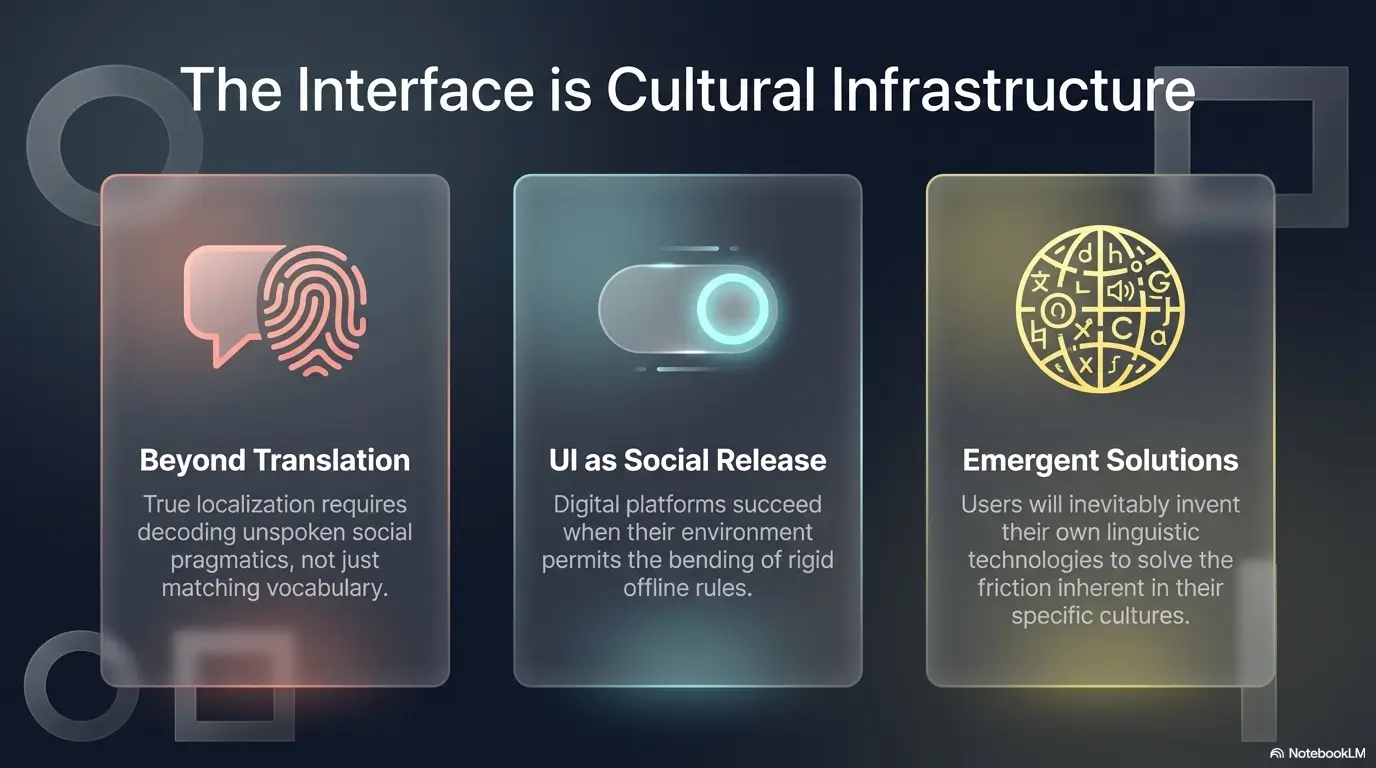
Next Step: Learn to Read the Room Before You Read the Ending
Pick five real examples and identify relationship, platform, and tone
The fastest way to improve is not to memorize more isolated forms. It is to study five real examples and label the context around them. Who is speaking? Where? To whom? About what? Is the tone playful, padded, affectionate, mildly embarrassed, performative, or just habitually soft? This method trains judgment, not just memory.
Ask what emotional job the ending is doing in each message
This question changes everything. Once you start asking what the ending is doing, the message becomes easier to read. You stop chasing tiny literal equivalents and start noticing social function. That is how real comprehension grows. Not in one giant leap, but in dozens of tiny corrections to your own assumptions. Readers who want to widen that lens may also find it useful to explore Korean indirect communication, the role of silence in Korean conversation, and why even a simple Korean “maybe” can carry more social ambiguity than it first appears.
Build a “tone notebook” instead of a flat translation list
Make a simple note with four columns: ending, platform, relationship, likely function. Over two weeks, patterns will start to show. A form you thought meant affection may turn out to be general softness. One you assumed was childish may prove widely normal in specific communities. Another may show up mostly when speakers are dodging awkwardness with grace.
This closes the loop we opened at the start. The reason a tiny ending can change the whole message is not magic. It is because Korean online communication often stores emotional temperature in places English speakers are not trained to look first. Once you start looking there, the language becomes less mysterious and more beautifully precise.
- Track platform, relationship, and repeated usage.
- Read endings as tone cues, not isolated vocabulary.
- Start by recognizing before producing.
Apply in 60 seconds: Save one Korean chat screenshot and annotate what social job the ending seems to be doing.
FAQ
Are cute Korean endings always flirtatious?
No. They can signal softness, playfulness, group familiarity, or persona styling without any romantic intent. Flirtation is only one possible reading, and often not the best first one.
Do men and women use them differently online?
Patterns can differ by age, community, persona, and platform, but there is no single hard rule that cleanly divides usage by gender. In practice, community style often matters more than outsiders expect.
Are these endings considered childish or socially normal?
Some can sound youthful or deliberately cute, but many are socially normal within the right context. The same form may feel ordinary in one space and too performative in another.
Can strangers use them with each other on social media?
Yes, but the effect depends on tone and setting. Between strangers, cute endings often read more as friendliness or stylized approachability than genuine intimacy.
Why do some endings feel warm while others feel cringey?
Because tone is never just the ending itself. Repetition, age dynamic, platform, relationship, and speaker habit all shape whether a form feels natural, forced, or awkward.
Do these endings appear more in texting than in speech?
Many are especially visible in texting and online writing because text lacks vocal tone and facial cues. Digital language often uses these small markers to replace what speech would naturally carry. That broader landscape also overlaps with Korean phone call culture and KakaoTalk etiquette, where medium itself changes how warmth, urgency, and politeness get signaled.
How do I know whether an ending is affectionate or sarcastic?
Look at the surrounding message, relationship, and pattern of use. Sarcasm usually depends on broader context, contrast, or repetition. One ending alone is rarely enough evidence.
Should Korean learners try using them, or just recognize them first?
Recognition first is usually the wiser path. Once you understand who uses them, when, and why, your own use will sound much more natural and much less copied. For learners who want the longer runway, guides to polite versus casual Korean and Korean honorifics for foreigners can make that judgment much steadier.
The quiet trick of cute Korean endings is that they are small enough to look optional and important enough to reshape the entire message. That is why so many non-Korean readers misread them at first. They search for meaning where English usually stores meaning, then miss the place where Korean has tucked the emotional temperature. The good news is that this gets easier fast once you stop asking only, “What does this mean?” and start asking, “What is this doing between these people right now?”
Use the next 15 minutes well. Pick five examples. Label the platform, the relationship, and the likely tone function. Build that tiny notebook. The pattern will begin to hum. And once it does, Korean online language stops feeling like a bag of cute mysteries and starts reading like what it really is: a beautifully efficient system for carrying social nuance in very small packets.
Last reviewed: 2026-04.