

The Hidden Blueprint of Korean Campus Clubs
Korean campus clubs matter more than many foreign students expect because they often do far more than organize hobbies. On many Korean campuses, a club can shape friendship, social rhythm, senior-junior connections, and even your basic sense of where you belong.
That is the part newcomers often miss. They read a club as an extracurricular; the campus reads it as a relationship space. Students often arrive expecting flexible, low-stakes participation, only to find themselves confused by the weight of mandatory attendance, late-night dinners, active group chats, and unspoken expectations.
To keep guessing is to risk more than just an awkward meeting. It is misreading how Korean university life actually functions.
This guide helps you see Korean campus clubs with sharper eyes:
- • Less Brochure: More lived texture.
- • Less Stereotype: More social mechanics.
- • Practical Focus: Decoding belonging, hierarchy, and culture.
Once you understand why these clubs matter, the rest of Korean campus life starts making sense all at once. And that is where the real reading begins.
Fast Answer: Korean campus clubs matter more than some foreign students assume because they often shape belonging, reputation, routine, and access to social life in ways that go beyond hobbies. A club can become a gateway to friendship, senior-junior networks, event culture, and unspoken campus norms. Students who treat clubs as optional entertainment may miss how central they can be to everyday university life in Korea.
Table of Contents

Why This Gets Misread So Easily
Why many foreign students assume a club is just a casual extracurricular
Many foreign students arrive with a mental model built from home. In that model, a campus club is often a side lane. You join if you have extra time, drift away if midterms hit, and nobody writes poetry about your absence. That expectation is not irrational. It is simply incomplete for many Korean campuses.
Part of the confusion comes from translation. The word “club” in English often sounds light. It can suggest hobby energy, flexible attendance, and a low-stakes social pocket. But on many Korean campuses, the reality is thicker. Clubs may still be fun, yes, but they often operate as recurring relationship spaces with memory, hierarchy, and rhythm. That changes everything.
An invitation such as “come by if you want” may refer to a visitor session or to regular participation. Ask which it is, whether there are fees and what attendance is expected before accepting a recurring commitment.
This is the first trap: taking the soft language literally while missing the social temperature underneath it.
How Korean campus clubs often function as social structure, not just shared interest
On many campuses, clubs do not merely gather students who like the same thing. They help organize who spends time together, who gets introduced to whom, who learns informal norms fastest, and who becomes visible in a familiar way. A dance club, volunteer club, academic club, band, Christian fellowship, debate group, or language exchange circle can all become part of the university’s social infrastructure.
That phrase may sound grand, but it fits. Social infrastructure is what quietly helps people meet, trust, return, and stay. Classrooms can do some of that, but classes often end after one semester. Clubs repeat. They create a beat. Weekly meetings, dinners, performances, preparation, trips, messaging, inside jokes, and senior-junior ties all build continuity. Continuity is the real engine here.
When students underestimate this, they can misread their own loneliness. They think, “Why does everyone else seem plugged in so quickly?” Often the answer is not charisma. It is structure. Some students found it through a club before they found it anywhere else.
The first misunderstanding: hobby space versus relationship space
If you remember only one distinction, let it be this one: many Korean campus clubs are not just hobby spaces. They are relationship spaces that happen to be organized around an activity. The activity matters, but it may not be the deepest thing happening there.
That is why a music club can be partly about music and also about senior mentorship, belonging, regular dinners, and shared identity. A hiking club can be partly about mountains and partly about who calls whom, who plans the next outing, who is included in late-night food, and who learns how the group speaks when it is tired or joyful or annoyed.
- The biggest mistake is assuming Korean campus clubs are mainly about the official activity.
- The activity may be the front door, not the whole house.
- Repeated presence often matters more than flashy first impressions.
- Belonging is frequently built through rhythm, not speeches.
Apply in 60 seconds: Replace the question “Do I like this hobby?” with “Do I understand this group’s relationship style?”
Who This Is For and Who It Is Not For
This is for foreign students, exchange students, and US readers trying to decode Korean campus life
This guide is for readers who have noticed that Korean university social life can feel warm, structured, indirect, and a little hard to read at first. It is especially for foreign students and exchange students who want a better lens, not a pile of stereotypes. It is also for US readers who keep hearing that Korean clubs are “important” but are not yet sure what that means in practice.
You do not need to be socially anxious, confused, or brand new to Korea to find this useful. Plenty of capable students misread clubs because the surface is polite and the real meaning sits one layer lower. That does not make anyone foolish. It makes campus culture exactly what it has always been: a theater of signals, timing, and repeated contact.
This is for people deciding whether to join, avoid, or better understand a club
You may be standing at one of three thresholds. First, you may be thinking about joining a club and want to know what you are walking into. Second, you may already have joined one and feel oddly uncertain about the mood, the expectations, or your own place in it. Third, you may have no interest in joining but still want to understand why clubs seem to matter so much to the students around you.
All three positions are valid. Understanding is not the same as obedience. You can learn the shape of a custom without kneeling to it. That alone often reduces friction.
This is not for students looking for a universal rule that fits every university and every club
There is no single rule that explains every Korean campus club. Universities differ. Departments differ. Urban campuses and rural campuses can feel different. Performance clubs often differ from service clubs. Some groups are soft and open. Others carry enough internal structure to make you wonder whether you accidentally joined a minor kingdom.
So this article is not offering a cartoon version of “Korean culture.” It is offering a more practical frame: clubs often matter because they are one of the places where social life becomes legible. Once you see that, details start making more sense.
Eligibility checklist:
- Yes: You want regular contact, not just a one-off event.
- Yes: You can handle some ambiguity before the group feels clear.
- Yes: You are willing to ask about attendance, dues, and dinners early.
- No: You want zero follow-up and total invisibility after joining.
Next step: Attend one meeting as an observer and pay more attention to the group rhythm than the promotional poster.
More Than a Hobby: Why Clubs Often Carry Real Social Weight
How clubs can influence friendship formation faster than classes do
Friendship on campus rarely grows from ideology. It grows from repeated proximity. Clubs provide that in a way many classes do not. In a lecture hall, you can sit next to someone for 14 weeks and still know only the back of their laptop. In a club, you may rehearse together, eat together, plan together, clean up together, and message one another between meetings. That is a different machine.
Foreign students sometimes assume friendship will happen naturally through dorm life or classes alone. Sometimes it does. But clubs often accelerate the process because they place students inside recurring small-group interactions. Repetition lowers the social cost of familiarity. You stop being “that exchange student from my economics class” and become “the person who stayed after practice and helped carry equipment.” That shift matters.
Constructed example: A student who finds lectures socially anonymous meets classmates repeatedly through a performance group. Repeated contact can create opportunities for friendship, but it does not guarantee inclusion or make clubs necessary for every student.
Why recurring meetings create trust, familiarity, and informal belonging
Trust is rarely born from one perfect conversation. It tends to arrive in small installments. A weekly meeting. A shared meal after. A group chat reply. A tiny favor. An awkward joke that becomes less awkward the next time. Korean campus clubs often create these installments in a steady stream.
This is why clubs can feel disproportionately important. They are not important only because they are fun or prestigious. They are important because they produce repeated contact in a culture where social texture often deepens through accumulated familiarity, not immediate emotional display.
That can feel comforting. It can also feel heavy. Both reactions are real. Warmth and weight sometimes share the same coat.
How club life can quietly shape a student’s sense of campus identity
For many students, especially those living away from home, club life becomes part of their answer to a private question: Who am I here? Not in an abstract philosophical sense, though campus has always loved that costume. In a practical sense. Where do I go on Thursday evening? Who greets me by name? Which room feels familiar? Who notices if I do not show up?
That is campus identity at ground level. It is less glamorous than brochures and more powerful. A club can give a student a social address. Once that happens, the university stops feeling like a collection of buildings and starts feeling inhabited.
Show me the nerdy details
Social belonging usually strengthens through repeated low-stakes interaction rather than one dramatic bonding moment. Clubs are efficient because they combine frequency, shared tasks, and visible membership cues. That makes them powerful settings for norm learning and trust formation.
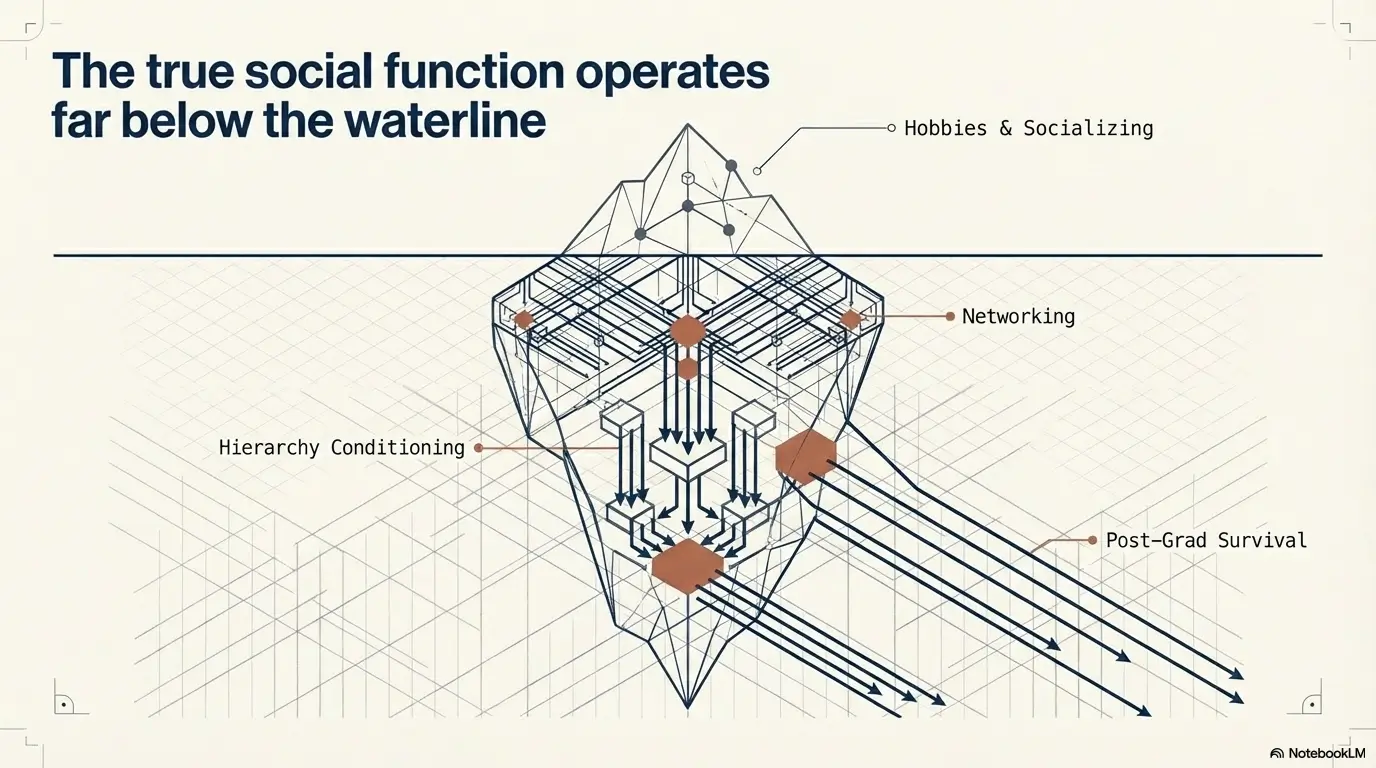
The Real Surprise: Clubs Often Teach Campus Culture Before Anyone Explains It
How students learn tone, hierarchy, timing, and group expectations inside club culture
One reason Korean campus clubs matter is simple: they teach campus culture by immersion. Not through official orientation slides. Not through a PDF nobody reads. Through repeated live contact. You learn how casually or carefully people speak. You learn when replies are expected. You learn whether lateness is brushed off or quietly remembered. You learn which jokes travel well and which land like a dropped tray.
That is why foreign students often come away from clubs saying they “learned so much” even when they cannot neatly explain what they learned. Much of it was procedural. Tone. Timing. Deference. Initiative. Group reading. The invisible grammar of interaction.
Why senior-junior dynamics may feel stronger in clubs than in the classroom
In classrooms, relationships can remain formal and thin. In clubs, they often grow more layered. Seniors may give practical advice, introduce traditions, explain how past events were handled, and act as bridges into broader social networks. This can feel supportive, confusing, or intense depending on the club and the personalities involved.
For foreign students from cultures where student organizations are flatter, this may stand out. Senior-junior dynamics are not always oppressive and not always cozy. Often they are simply more visible. The club becomes one place where hierarchy feels social rather than purely institutional.
That matters because students do not just learn how to belong to a club. They learn how people on that campus handle age, experience, initiative, politeness, and responsibility.
Here’s what no one tells you: many rules are felt long before they are spoken
This is the part that unsettles newcomers. Many club expectations are not announced like airport instructions. They are sensed. You notice how people respond when someone arrives late, disappears for two weeks, turns down a dinner, or speaks too casually with a senior. No one may scold you. Nobody may send an official memo. Yet the atmosphere shifts a little, and that shift teaches.
That does not mean Korean clubs are secretive labyrinths built by social goblins. It simply means norms are often absorbed relationally. If you expect every important rule to be verbalized, you may miss the lesson until after the quiz.
- Tone is learned through interaction, not lectures.
- Hierarchy may appear more social and relational than formal.
- Atmosphere often teaches before words do.
Apply in 60 seconds: After any club event, write down three things the group seemed to value, even if nobody said them out loud.
Why Foreign Students Sometimes Underestimate the Entry Cost
Why “just show up once” may not feel as casual as it sounds
Many clubs use warm, flexible invitation language. That is not fake. But it can still coexist with real expectations. Foreign students may hear “just come once and see” and assume the social stakes are nearly zero. Then they arrive and realize attendance itself already communicates interest, openness, and possible future commitment.
The entry cost is not always money. Sometimes it is emotional energy, time, language effort, or willingness to tolerate ambiguity. Sometimes it is the risk of being remembered. That last one sounds dramatic until you have been on a campus where groups are relationally attentive. Being seen is lovely right up until you wanted to vanish quietly.
How attendance, participation, and responsiveness can carry social meaning
In some clubs, missing one meeting is simply missing one meeting. In others, repeated absence signals uncertainty, distance, or low sincerity. The same goes for participation and messaging. A short reply may be enough in one group and feel strangely flat in another. There is no universal metric, which is exactly why foreign students can stumble. They are using the wrong ruler.
It helps to remember that a club is not only watching whether you enjoy the activity. It may also be reading whether you are investing in the relationship space. That does not make the group manipulative. It means the group is relationally literate in a way newcomers may not be yet.
When light commitment is seen as uncertainty, distance, or lack of sincerity
Many foreign students try to stay politely noncommittal at first. That can be wise. But in some Korean club settings, very light commitment may be interpreted as hesitation or low emotional buy-in. Again, not always. But often enough to matter.
I think of this as the velvet trap. The invitation feels soft, but the meaning of response may be firmer than expected. That is why asking practical questions early is not rude. It is merciful. It helps you avoid the common path where everyone is friendly, nobody is explicit, and confusion blooms like a houseplant nobody meant to adopt.
Decision card: When to try one meeting vs commit for a semester
Try one meeting first if you are unsure about attendance pressure, language comfort, or the group’s after-meeting culture.
Commit more clearly if the club centers on repeated practice, performance, service, or close team coordination.
Time trade-off: A cautious first visit saves future awkward exits. A clear early commitment builds trust faster.
Neutral next action: Ask how often members are expected to attend and whether social events are optional in practice.
Not All Clubs Work the Same Way, and That Is the Point
Why hobby clubs, service clubs, performance clubs, and academic clubs can feel radically different
One of the worst shortcuts is to talk about “Korean campus clubs” as though they are all one creature wearing different hats. They are not. A volunteer club may emphasize planning, reliability, and teamwork. A performance club may revolve around rehearsals, standards, and strong social cohesion. An academic club may look quieter but still carry significant senior-junior influence. A casual hobby club may genuinely be loose, warm, and low-pressure.
The point is not that every club is serious. The point is that the category “club” hides huge variation. If you approach all of them with the same expectations, you will either overestimate the pressure or underestimate it.
How some clubs are loose and friendly while others feel almost semi-formal
Some clubs feel like an easy living room with snacks and uneven chairs. Others feel one degree away from a ceremonial order, minus capes and secret passwords. Both can exist on the same campus. Public descriptions rarely capture this difference well. Promotional posts tend to emphasize friendliness, activity highlights, and recruitment energy. They do not always explain the internal mood.
That is why one observation visit can be worth more than ten polished recruitment flyers. Flyers show aspiration. Meetings show structure.
Why the club’s internal culture matters more than its public description
Foreign students often compare clubs by topic first. Music versus volunteer work. Debate versus photography. But the more important comparison may be cultural: formal versus loose, emotionally close versus task-focused, hierarchy-heavy versus relaxed, attendance-sensitive versus flexible.
A student can love the official activity and still feel exhausted by the internal culture. Another can be only mildly interested in the activity yet thrive because the group rhythm fits. This is where social fit beats brochure fit.
The practical lesson: evaluate clubs twice. First by activity. Then by internal culture. The second filter is often the one that saves you.
The Belonging Question: Why Clubs Can Feel Warm or Heavy
How clubs can become emotional anchors for students living away from home
For students away from home, especially first-years and international students, clubs can become emotional anchors. They provide repetition, shared meals, familiar faces, and the comfort of expected presence. That can be deeply stabilizing. University life often looks exciting from the outside and quietly disorienting from the inside. A club can soften that disorientation.
This is one reason club culture can feel more emotionally loaded than foreign students expect. The club is not just about the thing it does. It may also be one of the places where loneliness gets interrupted on schedule.
Why group dinners, trips, and after-meeting rituals may matter as much as official activities
Foreign students sometimes focus on the official event and treat everything around it as optional decoration. But the unofficial layer may be where much of the real bonding happens. Group dinners, post-meeting walks, club trips, casual practice-room chats, shared rides, and late-night snacks can all carry social weight.
If the official activity is the stage, the informal rituals are often where trust ripens. This can feel lovely. It can also create pressure for students who are tired, busy, introverted, or financially constrained. A warm group can still be a demanding one.
Let’s be honest: sometimes students join for connection first and interest second
Many students join clubs because they care about the activity. Many others join because they want connection, structure, or a place to belong. Usually it is both. And honestly, that is not cynical. It is human.
I think this is where foreign observers sometimes get the tone wrong. They assume joining “for social reasons” is less authentic. But on a campus, social reasons are often the reasons that make the activity sustainable. People return because they like the club. They stay because the club starts to feel like a small home with specific furniture.
- Belonging is part of the appeal, not an accidental side effect.
- Unofficial rituals may matter as much as official meetings.
- A club can support you and still ask something from you.
Apply in 60 seconds: Before joining, ask yourself whether you want the activity, the people, or the rhythm. The honest answer helps.
Common Mistakes Foreign Students Make Around Korean Campus Clubs
Mistake one: assuming low-pressure language means low-pressure expectations
This mistake deserves to be first because it is so common. A friendly invitation is sometimes exactly that: friendly and flexible. But sometimes it is friendly language wrapped around stronger group expectations. Students from more direct cultures may wait for explicit rules that never arrive. Then they are surprised when their behavior has already been interpreted.
It is not malicious. It is cultural timing. One side expects meaning to be spoken. The other expects some meaning to be inferred. That same gap shows up in how “maybe” can mean something softer and less literal in Korean conversation than many English speakers first assume.
Mistake two: reading formality as coldness instead of group structure
Some foreign students see a more careful tone, visible seniority, or structured meeting style and assume the group is cold. Sometimes it is cold. But often it is simply organized. Structure and warmth are not enemies. In many Korean settings, they are roommates.
A club can feel formal at first and become deeply affectionate over time. Early reserve may be a way of locating everyone safely before intimacy grows. If you mistake that reserve for rejection too quickly, you may leave just before the group would have opened.
Mistake three: treating membership as symbolic when others treat it as relational
Some students join a club the way they might subscribe to a newsletter. They like the idea of affiliation and assume actual participation can stay loose. In groups where membership is read relationally, this causes friction. Your presence is not just a checkbox. It is part of how the group interprets sincerity and connection.
Mistake four: disappearing quietly and assuming nobody will notice
This is the classic exit fantasy. A student attends a few times, feels uncertain, then fades away without explanation because they assume the group is too busy to care. Sometimes that works. Sometimes it lands poorly. Not because the club is dramatic, but because repeated presence created recognition faster than the student realized.
The better move is often simple and polite: thank the group, explain that your schedule or fit is not right, and step back clearly. Clean exits save everyone from unnecessary static.
Show me the nerdy details
Cross-cultural friction often comes from mismatched assumptions about how much meaning is carried by silence, attendance, and informal language. In relationally dense groups, these cues are processed faster and more seriously than in looser organizations.
What to gather before comparing clubs:
- Expected attendance frequency
- Dues or trip costs
- Language comfort level during meetings and dinners
- Whether after-meeting gatherings are optional in practice
- How easy it is to step back later without drama
Neutral next action: Ask two current members the same three questions and compare their answers.
Do Not Do This: The Fastest Ways to Misread Club Culture
Do not compare every club to US-style student organizations too literally
Comparison is useful until it becomes a prison. Many foreign students, especially from the US, arrive with an understandable template for what student organizations are supposed to feel like. But if you press that template too hard onto Korean clubs, you may misread everything from recruitment language to hierarchy to post-meeting socializing.
The point is not that Korea is mysterious and America is shallow. The point is that organizational culture grows inside broader social habits. If you expect one-to-one equivalence, you will keep translating meaning too quickly and too flatly.
Do not mistake invitation language for total flexibility
Warm language is not always a legal contract for limitless casualness. “Come when you can” may be genuinely flexible, or it may be a polite surface over a hope for consistency. This is why observation matters more than wording alone. Watch what happens. Who attends regularly? How are absences treated? What kind of follow-up appears in group chats? Those details are often more honest than the recruitment copy. If you want to read that layer better, it helps to understand both Korean indirect communication and the basic rhythm of KakaoTalk etiquette.
Do not assume your personal comfort level is the group’s default norm
This may be the most adult lesson in the whole article. Your comfort level is real, but it is not automatically the group standard. Maybe you prefer low-pressure drop-ins, no after-hours socializing, and minimal messaging. Fine. But the club may be organized around a different rhythm. That does not make either side wrong. It just means fit matters.
The fastest way to misread a club is to assume your preferred pace is universal. The second fastest is to ignore your own discomfort because everyone else looks fine. Both routes end badly, just with different lighting.
What Clubs Offer That Classrooms Often Do Not
Why clubs can create inter-year relationships that classes rarely sustain
One of the clearest differences between classes and clubs is continuity across age and year level. Classes are often temporary and same-level. Clubs frequently connect first-years with seniors, return members with new recruits, and current students with alumni traditions. That creates a thicker social timeline.
For foreign students, this can be especially important. It means a club may provide access not only to friends but also to practical guidance, campus memory, and a more layered sense of how things are done. You are not just meeting peers. You are entering a small institution within the institution.
How students gain practical social fluency through repeated shared rituals
Social fluency is rarely taught directly. It is practiced through repeated situations. Clubs provide many of those situations: introductions, planning, joking, apologizing, offering help, declining invitations, thanking seniors, participating in group meals, and reading a room without narrating your panic internally like a documentary voice-over.
That repeated practice can help foreign students become more confident in Korean campus life generally. Not perfect, not magically native, but more legible and less lost. The same kind of adjustment appears in everyday habits such as why texting in Korea can feel more formal than many foreigners expect and how silence in Korean conversation often means something different from awkwardness.
Why club spaces often reveal the university’s hidden social map
Classrooms show the formal university. Clubs often reveal the hidden one. Which groups are influential. Which traditions matter. Which events are central. Which styles of participation earn trust. Which buildings feel alive after sunset. Which relationships stretch across departments.
This hidden social map is one reason clubs matter more than some foreign students assume. They are not just places where students spend spare time. They are places where campus life becomes visible in motion.
Infographic: Why Korean Campus Clubs Matter
Activity
Music, service, sports, study, faith, arts
Hidden Layer
Belonging, hierarchy, routine, reputation
What Foreign Students Miss
Clubs can be relationship spaces, not just hobby spaces
Best First Move
Observe one meeting and ask about real expectations
But Wait, Does This Mean Every Student Must Join One?
Why some students thrive in clubs and others do better through classes, labs, work, or smaller circles
No. Understanding the importance of clubs is not the same as worshipping them. Some students thrive in club culture. Others build meaningful campus lives through labs, classes, part-time work, dorm communities, religious communities, language exchange circles, or a few close friends. A club is a route, not a commandment.
This distinction matters because some foreign students hear “clubs are important” and translate it into “I must force myself into one or I will fail socially.” That is not true. The more accurate message is that clubs are often a powerful channel for belonging, not the only one.
How to tell whether a club is opening your world or draining your energy
Ask a very practical question after two or three encounters: do you feel clearer, warmer, and more connected afterward, or mainly tense and depleted? Some initial discomfort is normal. Cross-cultural learning is not a spa. But there is a difference between growth discomfort and persistent mismatch.
If the club expands your campus life, you will usually notice small signs. You start recognizing faces. Messages feel less intimidating. You understand the jokes slightly sooner. You look forward to at least part of the routine. If all you feel is dread and performative politeness, that is data too.
Why understanding club importance is different from forcing participation
This article is not a recruitment poster. It is a translation aid. The goal is not to pressure you into joining something that does not fit. The goal is to help you understand why clubs can carry so much meaning for others, and why casual assumptions sometimes fail.
Understanding gives you freedom. Once you see the social logic more clearly, you can choose wisely. Join with intention. Decline without contempt. Leave with courtesy. Observe without confusion. That is already a very good outcome.
Illustrative scenario, not a reported event: A student tries a film-club screening after confirming that visitors can attend once without dues or further commitment. The student then decides whether the activity, language and schedule fit. A trial offers information; it creates no debt to join.
What surprised her was not the movie discussion. It was the dinner afterward, the easy explanations from older students, and the way her name was remembered the next week. She did not become a club evangelist. She still skipped some events and guarded her energy carefully. But she stopped seeing clubs as decorative campus furniture. She realized they were one of the ways a university teaches people how to belong.
- Clubs are a powerful route to belonging, not the only route.
- Fit matters more than social pressure.
- Observation can save you from both avoidance and overcommitment.
Apply in 60 seconds: List your real social energy budget before joining anything. Clarity beats guilt.
FAQ
Are Korean campus clubs more serious than American college clubs?
Sometimes yes, but not always. The better answer is that many Korean campus clubs can carry more visible relational meaning than some American students expect. They may shape friendship, hierarchy, and belonging more directly. Still, club culture varies widely by university and by group type.
Do you need to join a club to make friends at a Korean university?
No. You can build friendships through classes, labs, dorms, work, religious groups, language exchange, and smaller social circles. But clubs are often one of the fastest and most structured ways to build repeated contact, which is why they matter so much.
Why do some Korean clubs seem more formal than expected?
Because clubs can reflect broader social habits around role, seniority, and group rhythm. Formality does not always mean coldness. Sometimes it is simply the structure that lets trust develop over time.
Is it rude to leave a Korean campus club after joining?
Not necessarily. It is usually less awkward if you leave clearly and politely rather than disappearing without explanation. A short, respectful message can preserve goodwill and reduce confusion.
Are all Korean university clubs hierarchical?
No. Some are strongly structured, some are mildly structured, and some are quite relaxed. Performance, service, and long-standing clubs may show more senior-junior dynamics, but there is no single rule that applies everywhere.
Can foreign students join most campus clubs comfortably?
Often yes, especially when the club is open, patient, and curious about international members. But comfort depends on language ability, club culture, time demands, and whether expectations are explained clearly. Visiting once before committing is usually smart.
Why do club dinners and trips seem so important in Korea?
Because informal rituals often carry a large share of the bonding. Official meetings show what the club does. Shared meals and trips often reveal how the group becomes a social unit.
What should you ask before joining a Korean campus club?
Ask about attendance, dues, language use, after-meeting gatherings, and how easy it is to step back later. These questions tell you more about the real culture than the recruitment poster usually does.

Next Step: Try One Club With Better Eyes, Not Bigger Expectations
Observe one meeting for structure, tone, and participation before you judge the whole culture
If you want the quickest useful next step, do not leap into a semester-long commitment out of fear that you are “missing out.” Instead, observe one meeting carefully. Watch who leads, who speaks, how seniors interact with juniors, what happens after the official activity, and whether people explain things generously. One meeting will not tell you everything, but it will tell you much more than abstract assumptions.
Ask one practical question about attendance, dues, and social expectations
You do not need a grand speech. One practical question can reveal a surprising amount. Ask how often members usually attend. Ask whether dinners are optional in reality or only on paper. Ask about dues, trips, or language use. These are not rude questions. They are adult questions.
Choose one club that matches both your interest and your energy budget
The best club for you is not automatically the most famous, the most welcoming on Instagram, or the one your classmate insists changed their life. It is the one whose activity and internal culture fit your actual energy budget. This matters more than people admit. Campus life already demands adaptation. Do not volunteer for unnecessary depletion.
Practical check: Use the specific questions and next steps below. A point score cannot establish someone’s intentions, your rights, or whether a social setting fits your needs.
Differentiation Map
What competitors usually do
- Explain Korean campus clubs as simple extracurricular activities
- Lean on surface-level summaries about collectivism and stop there
- Focus only on fun, friendship, or events
- Treat all clubs as culturally identical
- Miss the tension between belonging, obligation, and social reading
How this article avoids it
- Frames clubs as social infrastructure, not just pastime
- Shows how clubs shape access, reputation, and relationship rhythm
- Distinguishes between club types and internal cultures
- Includes mistake-framing that helps readers avoid social missteps
- Balances warmth and pressure instead of romanticizing or criticizing blindly
The hook from the beginning was simple: some parts of campus life look optional until you realize they quietly run the map. Korean campus clubs are often exactly that kind of thing. They are not always central for every student, and they are certainly not all the same. But they matter because they often sit at the intersection of belonging, routine, relationship, and social fluency. That is why foreign students who dismiss them too quickly can misread much more than club culture. They can misread the campus itself. That is also why articles on Korean university orientation only tell part of the story. Orientation introduces the campus. Clubs often translate how it actually feels to live inside it.
Your next step does not need to be dramatic. In the next 15 minutes, make a short list of one or two clubs that genuinely interest you, then prepare three questions: attendance, after-meeting culture, and ease of leaving later. That small act will already move you from vague curiosity to useful clarity. And clarity, on any campus, is worth more than bravado. As you read group dynamics, titles, and tone, it may also help to understand why Koreans often use titles instead of first names, since that same instinct can quietly shape club life too.
Last reviewed: 2026-04.