
Beyond the Room:
The Reality of Sanhujoriwon
“You can learn a lot about a country by watching what it protects when life gets fragile.”
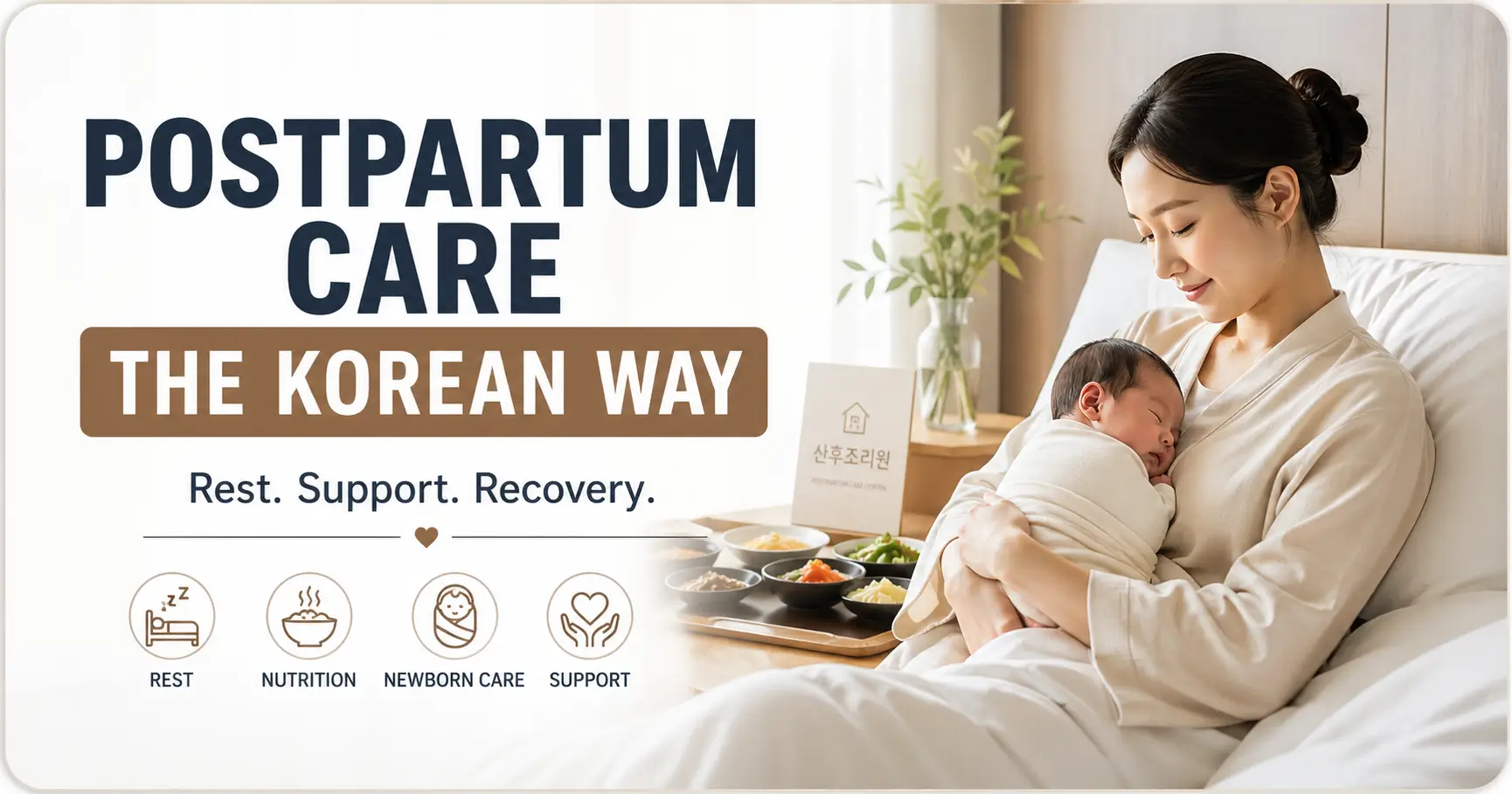
In Korea, that protection has a physical address: the Sanhujoriwon. Neither a hospital nor a mere luxury hotel, these postpartum care centers serve as a bridge between birth and the reality of home life.
For those used to the “private endurance test” of Western postpartum care, the Sanhujoriwon offers a striking contrast of structured rest, nursery support, and specialized nutrition.
The Practical Lens
- 📊 National Survey Data: Moving beyond the anecdotes.
- 🍱 Recovery Routines: More than just the seaweed soup.
- 👶 The Nursery: Navigating the questions of early bonding.
- ⚖️ The Access Gap: Addressing the question of cost.
Table of Contents
Fast Answer
Birth recovery centers in Korea, often called sanhujoriwon, are postpartum care facilities where many new mothers stay after hospital discharge, commonly for about two weeks, to rest while receiving meals, newborn care support, lactation help, and recovery-focused services. Foreigners find them fascinating because they reveal a very different idea of postpartum care: not “go home and cope,” but “recover inside a structured support system.” Korea’s 2024 postpartum care survey reported an average sanhujoriwon stay of 12.6 days and an average center cost of 2.865 million won.
- It usually sits between hospital care and home recovery.
- It combines rest, meals, nursery help, education, and paid support.
- It can be comforting, expensive, practical, and socially complicated at the same time.
Apply in 60 seconds: When comparing birth cultures, ask what support is built in before asking which country “does it better.”
Safety and Disclaimer
This article explains Korean birth recovery centers as a cultural and care-system topic. It is not medical advice. Postpartum people should follow guidance from their OB-GYN, midwife, pediatrician, lactation consultant, or local health provider.
A sanhujoriwon can offer rest and structure, but it does not replace emergency care, individualized treatment, or mental health support. A calm room does not make a fever less serious. A tray of warm soup does not rule out infection. A kind nursery nurse cannot replace urgent medical evaluation when warning signs appear.
That sounds severe, but it matters. Postpartum recovery is tender territory: bleeding, feeding, sleep deprivation, healing incisions, mood shifts, blood pressure issues, infection risk, and newborn concerns can all arrive in the same small hour. A recovery center can make that hour less lonely. It should never make it easier to ignore danger.
Start Here: Korea Treats Postpartum Recovery Like a Real Season
The Fourth Trimester Has Walls, Meals, and Quiet Hours
In many American homes, the fourth trimester happens in fragments: a bassinet beside the bed, a half-washed pump part near the sink, a partner answering work emails at midnight, and someone whispering, “Is this normal?” into the blue light of a phone.
In Korea, sanhujoriwon gives that same fragile period a physical address. It says, in effect, recovery is not just a mood. It is a schedule. It is a room. It is a meal arriving without someone opening a delivery app with one eye closed.
This is the first reason foreigners stop and stare. Not because the idea is magically perfect. Because the assumption is different. The mother has just given birth, so the system pauses around her body instead of asking her body to sprint back into the system.
Why Foreigners Pause at the Concept
Many US readers are used to postpartum care feeling like a patchwork quilt sewn during a thunderstorm. Hospital discharge may come quickly. Family leave may be short or unpaid. Lactation support can be uneven. A night nurse, postpartum doula, meal train, pelvic floor therapy, and mental health care may exist, but families often have to assemble them like furniture with missing screws.
A sanhujoriwon feels fascinating because it bundles several needs in one place. The bundle is not free. It is not equally available to everyone. But the idea itself can feel quietly radical: someone expected the first two weeks to be hard and designed around that fact.
The Fascination Is Not Just Luxury
Yes, some centers look hotel-like. There may be private rooms, prepared meals, laundry help, massage options, lactation classes, nursery windows, and a polished lobby that seems allergic to chaos.
But calling sanhujoriwon “a postpartum hotel” misses the small engine inside the machine. The fascination is not only softness. It is permission. Permission to rest. Permission to learn. Permission to be fed. Permission to not host every relative who wants to hold the baby while the person who gave birth quietly disappears into the kitchen.
Small cultural hinge: Sanhujoriwon makes maternal recovery visible. That visibility is what many foreigners notice before they can name it.
Sanhujoriwon Basics: What Actually Happens Inside
Mother Rests While the Baby Is Monitored
The typical sanhujoriwon model begins after hospital discharge. A new mother transfers to the center with her baby and settles into a private or semi-private room, depending on the facility and price. The baby may spend substantial time in a newborn nursery, where staff help with monitoring, feeding routines, diapering, and basic care.
For exhausted parents, this can feel like someone opened a window in a room without air. Sleep becomes possible in longer blocks. Meals arrive. The baby is nearby but not always solely in the mother’s arms. Parents can visit the nursery, receive the baby for feeding, or follow the center’s rooming-in rules.
Centers vary. Some are more parent-led. Some are more nursery-centered. Some support breastfeeding intensely. Others may feel more schedule-driven. That variation matters, especially for foreign parents who may arrive with expectations shaped by US hospital rooming-in norms.
Meals Are Part of the System
Food is not decoration here. Korean postpartum recovery, or sanhujori, has long emphasized warmth, rest, and nourishing meals. Seaweed soup, called miyeok-guk, is strongly associated with postpartum care in Korea. It is familiar, symbolic, and practical in the way certain foods become family language.
Still, food customs should be handled with respect and restraint. Warm meals can comfort. Regular meals can stabilize a chaotic day. But no article should claim that seaweed soup or warmth prevents postpartum disease unless medical evidence supports that specific claim.
The more grounded point is simple: someone else plans the meals. That alone can change the weather of the week. It is also part of a broader Korean food logic, where soup is not a side character but often the center of the table, a point explored in why soup is a full meal in Korea.
Education Happens in Small Windows
Many centers offer parent education: breastfeeding instruction, bottle-feeding guidance, infant bathing practice, burping, diapering, postpartum body care, and what to prepare before going home.
These are not always grand classroom moments. Often they are small windows of learning. A nurse shows how to hold a slippery newborn during a bath. A lactation staff member adjusts positioning. A new father learns that a baby can sound like a tiny haunted kettle and still be breathing normally. Everyone laughs nervously, then listens harder.
Here’s What No One Tells You…
A sanhujoriwon is not just a baby hotel. It is also a place where a new parent’s confidence, anxiety, sleep debt, family expectations, and class position quietly meet in the hallway.
One mother may feel relieved because she can sleep. Another may feel watched. One family may feel proud to have booked a respected center. Another may feel financially squeezed. One foreign parent may feel grateful for structured support but isolated by language gaps. The same hallway can hold gratitude, comparison, tenderness, and a little panic in slippers.
- Sleep support reduces the feeling of being on duty every second.
- Meals remove one daily decision from an already overloaded brain.
- Newborn education turns fear into repeatable skills.
Apply in 60 seconds: List the three postpartum tasks that would exhaust your household fastest: feeding, meals, sleep, cleaning, appointments, or emotional support.
Why Korea Built This Model: From Family Care to Paid Care
Grandmother Care Became Harder to Assume
Sanhujoriwon did not appear from nowhere wearing a robe and carrying a tray. It grew in a society where postpartum care already mattered, but the household structure changed.
Traditional postpartum support often depended on family, especially mothers and mothers-in-law. But modern Korean life made that harder to assume. Families became smaller. Couples moved into apartments away from extended relatives. Older women worked, aged, or had their own health limits. Dual-income pressure made daytime care harder to provide informally.
When care remains culturally expected but family labor becomes less available, a market often appears. Sanhujoriwon is one answer to that gap. That same gap also shows up in other corners of Korean family life, from Korean adults living with parents to the practical compromises behind modern housing, caregiving, and marriage timing.
Tradition Moved Into a Business
Sanhujoriwon commercialized pieces of sanhujori: warmth, quiet, food, rest, body recovery, newborn care, and protection from too much household demand. In one sense, that is efficient. In another, it raises an uncomfortable question: what happens when care that used to be family labor becomes a paid package?
The answer is mixed. Paid centers can reduce conflict. A mother may not have to negotiate with relatives about feeding, chores, visitors, or “the way we did it in my day.” But paid care can also create pressure. If many peers book centers, not booking one may feel like falling behind before the baby can even focus its eyes.
The System Solves One Problem and Creates Another
The problem it solves is real: postpartum care is labor. Emotional labor, feeding labor, household labor, recovery labor, scheduling labor. Sanhujoriwon gathers much of that labor into one place.
The problem it creates is also real: once recovery support becomes a private purchase, quality and access can vary. Families with more money may buy calmer rooms, more services, better locations, and more language support. Families with less money may choose shorter stays, lower-cost centers, home recovery, or family help.
That is why the honest version of this article cannot be a postcard. It has to be a map.
Infographic: What Sanhujoriwon Usually Bundles
Rest blocks, meals, body care, quiet routines.
Nursery care, feeding help, diapering, monitoring.
Bathing, feeding, soothing, home transition skills.
Visitor rules, reduced chores, fewer household negotiations.
Plain-English version: the center turns scattered postpartum needs into a temporary operating system.
The Two-Week Rhythm: Why the Stay Feels So Structured
Hospital First, Recovery Center Next
A common sequence looks like this: birth at a hospital or clinic, a short inpatient stay, transfer to sanhujoriwon, then home recovery. The exact timing depends on birth type, health status, facility rules, family preference, and medical advice.
For a vaginal birth, the hospital stay may be shorter than after a C-section. A C-section recovery may involve more pain management, incision care, mobility limits, and follow-up needs. Premature birth, newborn health concerns, maternal blood pressure issues, infection risk, or feeding complications can change the plan entirely.
The important point is that sanhujoriwon is usually not the birth site. It is the bridge after discharge.
Twelve Days Can Change the Mood of a House
Korea’s 2024 postpartum care survey reported an average sanhujoriwon stay of 12.6 days. That number matters because two weeks can be just long enough to change the early rhythm of a household.
In roughly that span, parents may get several nights of protected sleep, repeat feeding routines, practice bathing, ask questions, observe newborn patterns, and recover from the initial shock of birth. It does not make anyone “ready” in the superhero sense. It can, however, make home feel less like stepping off a dock in the dark.
I once watched a new parent learn to swaddle after three failed attempts and one small sock launched across the room. The fourth attempt was not elegant. But it was enough. That is often how confidence arrives: not as a trumpet, but as a slightly crooked burrito.
Not a Vacation. Not Quite a Clinic.
This is the category that confuses foreigners. Sanhujoriwon is not a vacation, because recovering from birth is not leisure. It is not quite a clinic, because it does not replace a hospital or doctor. It is not ordinary childcare, because the mother’s recovery is central. It is not pure hospitality, though some centers borrow hotel language.
A better description is this: sanhujoriwon sits between healthcare, hospitality, family support, and newborn training.
Show me the nerdy details
When comparing sanhujoriwon with US postpartum services, avoid one-to-one category errors. A US postpartum doula, lactation consultant, night nurse, meal delivery service, pelvic floor therapist, and family caregiver may each cover one piece of the puzzle. A Korean recovery center often bundles several pieces, but the quality, medical boundaries, staff credentials, and parent autonomy vary by facility.
Why Foreigners Find It Fascinating: The Hidden Comparison With the US
The US Question: “Why Don’t We Have This?”
When Americans discover sanhujoriwon, the first reaction is often wonder. The second is sometimes grief. Not dramatic grief, necessarily. More like the small, practical grief of realizing something difficult could have been designed differently.
The US has excellent clinicians, advanced neonatal care, lactation professionals, doulas, therapists, and postpartum educators. But access is fragmented. Insurance coverage varies. Paid leave is inconsistent. Family support depends heavily on geography, money, relationships, and luck. Many parents leave the hospital with a packet of instructions and a car seat, then enter a house where the laundry has staged a coup.
So the question “Why don’t we have this?” is not just about Korea. It is about what American families are expected to absorb privately.
Recovery Looks Public, Not Private
Sanhujoriwon makes recovery public in a socially legible way. Everyone knows where the mother is. Everyone understands she is resting. The center becomes a polite shield against too much hosting, too many visitors, and too many opinions arriving with fruit baskets.
In the US, postpartum recovery often happens behind closed doors. That privacy can be comforting, but it can also hide suffering. A parent may be bleeding, crying, pumping, scrolling, Googling, and trying to remember the pediatrician’s instructions while also writing thank-you texts.
A System That Names Exhaustion
The deepest fascination may be this: sanhujoriwon treats exhaustion as predictable. Not embarrassing. Not a personal failure. Not a lack of maternal instinct. Predictable.
That shift in language matters. When exhaustion is expected, support can be planned. When exhaustion is treated as weakness, families improvise until someone breaks.
- Korea makes postpartum recovery easier to see.
- The US often leaves support to personal networks and purchasing power.
- Neither system is simple, but the contrast is revealing.
Apply in 60 seconds: Replace “Who will help?” with “Which exact task will each helper cover?”
Who This Is For, and Who It Is Not For
For Curious Readers Comparing Birth Cultures
This guide is for readers who want to understand Korean daily life beyond tourist glass: family expectations, maternity systems, paid care, urban pressure, and the way tradition adapts when apartments get smaller and calendars get meaner.
It is also for people who have seen short videos of Korean postpartum centers and wondered, “Is this real? Is it common? Is it medical? Is it a luxury? Why does everyone look so calm?” The answer is: yes, sometimes, partly, not always, and because the camera is not filming the billing conversation.
For Expecting Parents Researching Korea
Foreign parents living in Korea may use this article as a starting point before asking local hospitals, clinics, or centers more specific questions. The real work happens in those details: language support, emergency transfer procedures, feeding philosophy, visitor rules, rooming-in options, staff qualifications, and refund policies.
Do not assume one center represents all centers. Korea is not one lobby with one policy. A premium Seoul facility and a modest regional center may feel like two different planets that happen to serve seaweed soup. The same caution applies to daily-life systems generally: a foreign family comparing clinics, schools, housing, and childcare will see Korea more clearly by reading across many practical settings, including Korean hagwons for foreign families and other family-facing institutions.
Not for Medical Decision-Making Alone
This article should not decide whether a center is safe for a specific pregnancy, birth complication, preterm baby, C-section recovery, infection concern, blood pressure issue, feeding challenge, or mental health condition.
Those decisions belong with qualified clinicians and the family’s actual medical situation. A beautifully organized center is still the wrong fit if it cannot support the care needs in front of it.
Not for Romanticizing One Country
The easy version says, “Korea does postpartum care better.” The adult version says something more useful: Korea reveals what postpartum care can look like when recovery is designed into daily life, while also showing what happens when support becomes expensive and socially expected.
Eligibility Checklist: Is a Sanhujoriwon Article Useful for You?
- Yes if you are comparing Korean and US postpartum systems.
- Yes if you are a foreign resident in Korea preparing questions for clinics or centers.
- Yes if you are writing about maternity culture and want nuance instead of sparkle dust.
- No if you need medical clearance after a complicated birth. Ask your clinician first.
Neutral next step: Write down your medical must-haves before comparing comfort features.
Cost Shock: The Part That Complicates the Admiration
Average Cost Is Only the Middle of the Story
Korea’s 2024 postpartum care survey reported an average sanhujoriwon cost of 2.865 million won during the postpartum care period. That figure gives readers a useful anchor, but it is not the whole story.
Actual cost can shift by region, room size, center reputation, length of stay, included services, premium add-ons, massage packages, lactation support, private care options, and whether the facility markets itself as practical, luxury, or somewhere between “calm recovery” and “boutique cloud.”
Average numbers are helpful. They are also slippery. A family does not pay an average. A family pays a bill.
Seoul Can Feel Like Another Market
Seoul pricing can run higher than national averages, especially in popular districts, premium private centers, and facilities linked closely to well-known maternity hospitals. Competition for booking can also create pressure to reserve early.
This is where foreigners may misunderstand the system. Seeing glossy rooms online can make sanhujoriwon look universally luxurious. In reality, the market includes a range: modest centers, mid-range centers, premium centers, and public or subsidized options in some areas.
The Luxury Trap
The luxury trap is not only that outsiders call every center a spa. It is that families inside Korea may feel pushed toward paid recovery because it has become a social expectation. A mother may want the support but dread the cost. A partner may see the price and quietly calculate how many months of groceries just vanished into the bassinet fog.
That tension is part of the story. Support is good. Support as a status race is harder. It belongs to the same wider pressure system visible in Korea’s low birth rate effects, where family formation, housing, education, work, and childcare all crowd around one intimate decision.
Fee Table: What Can Change the Price?
| Cost Driver | Why It Matters | What to Ask |
|---|---|---|
| Region | Seoul and high-demand areas may cost more. | Is this price typical for the area? |
| Room type | Private, larger, or premium rooms can raise fees. | What is included in the base room? |
| Services | Massage, lactation sessions, and extras may be separate. | Which services cost extra? |
| Length of stay | A few extra days can change the total sharply. | Is there a refund or change policy? |
Neutral next step: Compare total out-the-door cost, not the prettiest brochure price.
Don’t Misread It: Common Mistakes Foreigners Make
Mistake 1: Calling It a Postpartum Spa
Some centers offer massage, skin care, polished rooms, and quiet service. So yes, the spa comparison is understandable. It is also incomplete.
Sanhujoriwon is built around postpartum recovery and newborn care support. The comfort features matter, but they are not the skeleton. Calling it a spa is like calling a library “a chair building” because chairs are present and occasionally excellent.
Mistake 2: Assuming Every Korean Mother Gets the Same Care
Not every Korean mother uses a sanhujoriwon. Not every center provides the same experience. Region, income, family support, medical needs, personal preference, and availability all matter.
Some mothers recover at home. Some use family help. Some choose shorter stays. Some want more rooming-in. Some want more nursery support. Some feel comforted. Some feel pressured. The real story is a spectrum, not a national costume.
Mistake 3: Confusing Rest With Separation
Foreign readers sometimes see newborn nursery care and worry that rest means separation. That concern is worth taking seriously. Parent-baby bonding, breastfeeding goals, skin-to-skin time, and confidence-building all matter.
But the equation is not simple. For some mothers, nursery care protects recovery and makes bonding more sustainable because they are not shattered by nonstop exhaustion. For others, a nursery-heavy model may feel uncomfortable or misaligned with feeding goals.
The right question is not “Is nursery care good or bad?” It is “How does this center support rest, bonding, feeding, and parent choice at the same time?”
Mistake 4: Treating Tradition as Medical Proof
Sanhujori traditions deserve respect. Warmth, rest, gentle care, and certain foods carry cultural meaning. But culture and clinical proof are not the same thing.
A good article can honor tradition without turning it into a medical guarantee. That balance protects readers and respects Korea more, not less. Culture becomes richer when we stop forcing it to wear a lab coat for every claim.
- It is a structured response to a real postpartum support gap.
- It can help families while also reflecting inequality.
- Its traditions should be respected without overstating medical claims.
Apply in 60 seconds: When reading about another culture’s care system, separate comfort, custom, clinical care, and cost.
The Newborn Nursery Question: Comfort, Concern, and Cultural Surprise
Why 24-Hour Baby Care Amazes Foreigners
The newborn nursery is one of the most surprising parts of sanhujoriwon for many foreigners. The idea that trained staff may care for the baby while the mother sleeps can sound miraculous, especially to parents who remember waking every 47 minutes and negotiating with a swaddle like it was a legal contract.
The appeal is obvious. Birth is physically intense. Feeding can be confusing. Nighttime can feel endless. A nursery can give parents a protected block of rest while the baby is nearby and monitored according to the center’s routines.
The Bonding Question Is Real
At the same time, bonding questions are valid. Some parents want frequent rooming-in, skin-to-skin contact, cue-based feeding, or a strong breastfeeding plan. Others may feel more secure with nursery help, especially after a difficult delivery or severe sleep loss.
The best centers explain their approach clearly. They do not make parents guess. They describe how feeding is handled, how parents can request the baby, whether rooming-in is encouraged, how staff support breastfeeding, and what happens if the baby shows concerning symptoms.
Let’s Be Honest…
The same nursery that feels like salvation at 3 a.m. can also raise questions about autonomy, bonding, and whether rest is being designed with the mother or around the institution.
This is not a contradiction to solve with a slogan. It is a tension to manage with clear policies, honest questions, and parent-centered care. The goal is not maximum separation or maximum exhaustion. The goal is safe recovery with informed choice.
Decision Card: Nursery-Heavy vs Rooming-In Friendly
May support longer sleep blocks and staff-led routines. Ask how feeding, bonding, and parent access are handled.
May better fit parents who want more direct care practice. Ask what rest support still exists.
Neutral next step: Choose the model that matches health needs, feeding goals, and emotional comfort, not just the prettiest room.
When to Seek Help: What a Recovery Center Should Not Normalize
Warning Signs Need Medical Care, Not Better Room Service
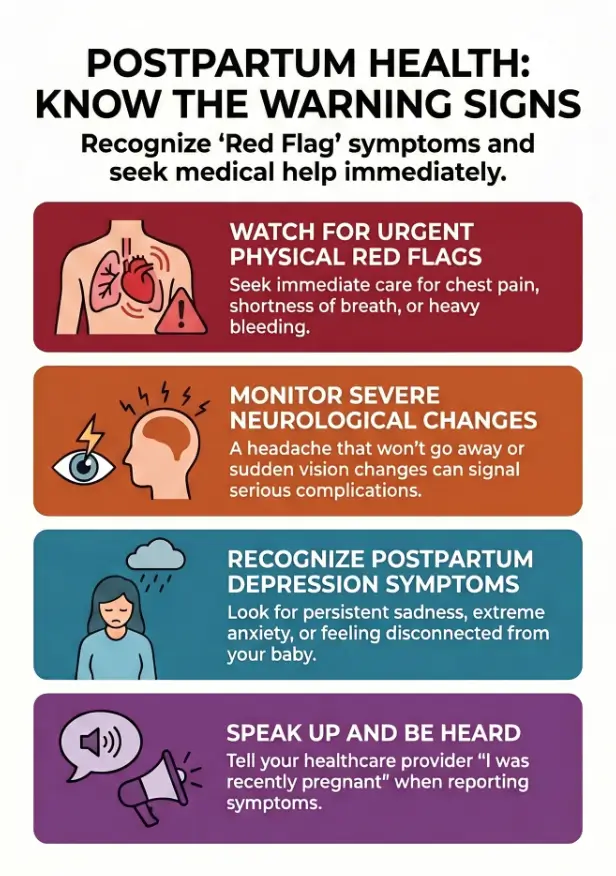
A recovery center should make it easier to notice problems, not easier to minimize them. The US Centers for Disease Control and Prevention advises getting medical care immediately for urgent maternal warning signs during pregnancy and within a year after delivery.
Important warning signs can include severe headache, dizziness or fainting, vision changes, fever of 100.4°F or higher, trouble breathing, chest pain, severe belly pain, heavy bleeding, or thoughts of self-harm. Other symptoms can also be serious depending on the situation. When in doubt, contact a qualified medical professional promptly.
Here is the plain version: if the body is waving a red flag, do not admire the curtains.
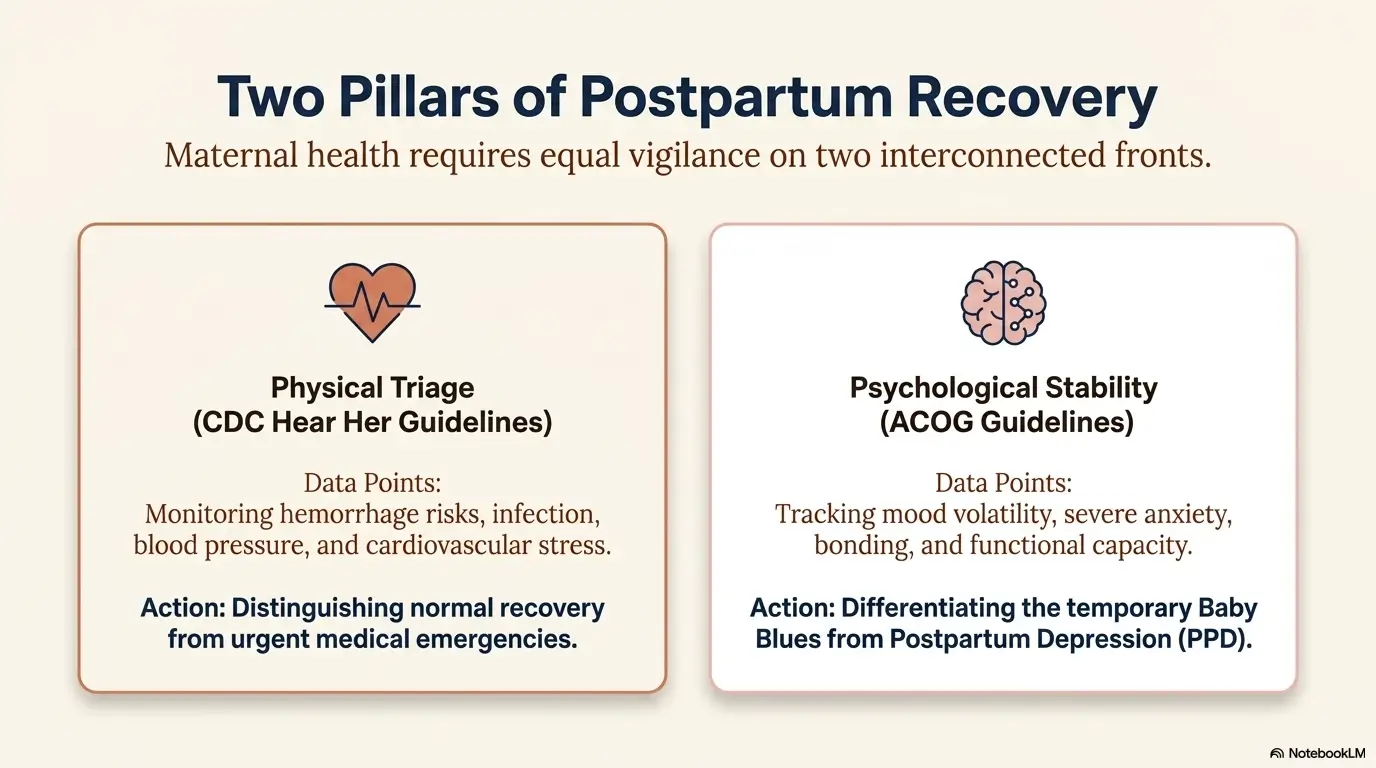
Mental Health Is Not a Side Note
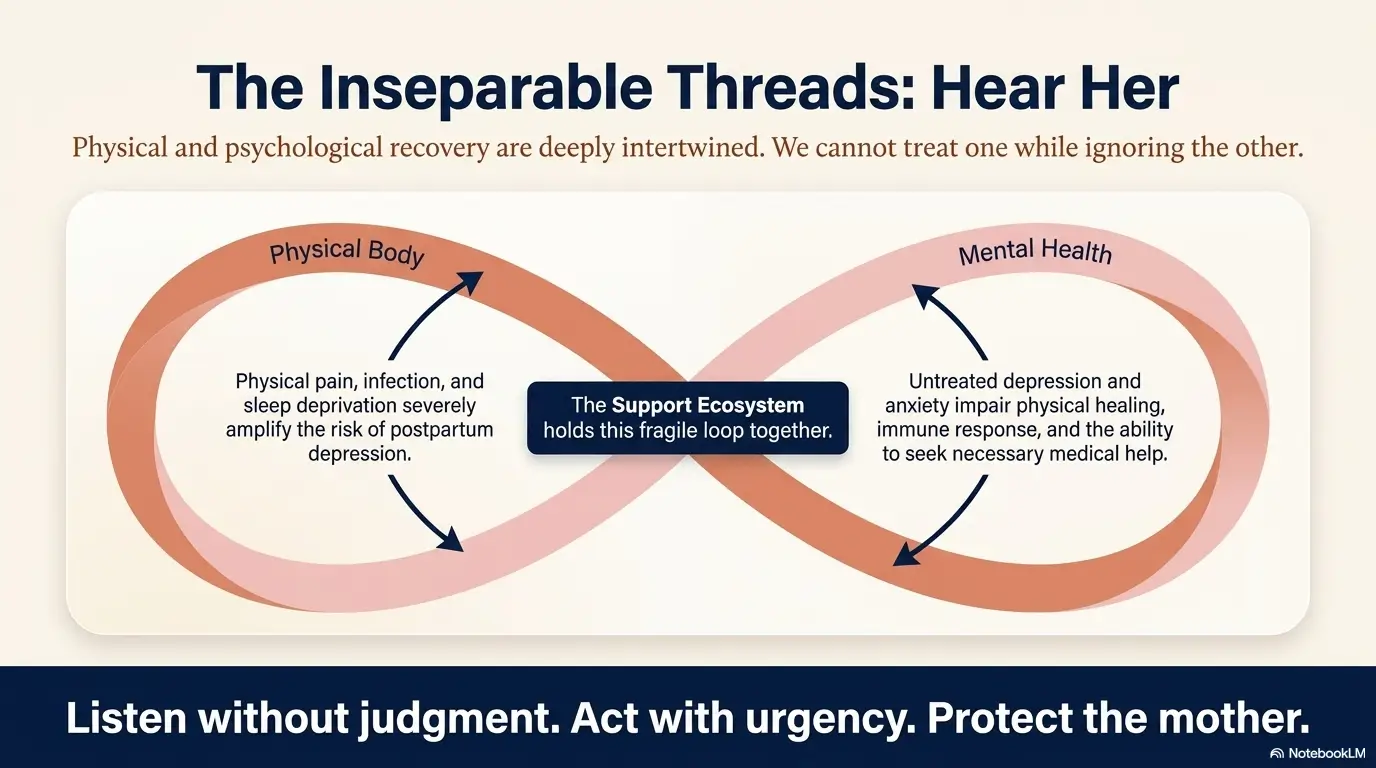
Postpartum mental health deserves the same seriousness as physical recovery. Sadness, anxiety, panic, intrusive thoughts, numbness, rage, hopelessness, or exhaustion that makes basic care difficult should not be brushed aside as “just hormones.”
A quiet room can help a tired person rest. It cannot replace evaluation for postpartum depression, anxiety, psychosis, trauma symptoms, or self-harm risk. Families should know who to contact before the situation becomes frightening.
Newborn Concerns Need Pediatric Guidance
Newborn issues need careful attention. Fever, poor feeding, unusual sleepiness, breathing difficulty, jaundice concerns, dehydration signs, fewer wet diapers than expected, or sudden behavior changes should be handled through pediatric medical advice.
Parents should ask a center how newborn concerns are escalated. Who checks the baby? When is a pediatrician contacted? Which hospital would be used in an emergency? What documentation follows the baby home?
- Urgent warning signs need medical care.
- Mental health symptoms deserve prompt support.
- Newborn concerns should be escalated clearly and quickly.
Apply in 60 seconds: Save your OB-GYN, pediatrician, local emergency number, and nearest hospital in one shared family note.
What US Readers Can Learn Without Copying Korea Exactly
Support Should Be Designed Before Birth
The most useful lesson from sanhujoriwon is not that every US family needs a Korean-style recovery center. It is that support should be designed before birth, not invented at 2:17 a.m. while someone is crying and the bottle warmer is blinking like a tiny spaceship.
Families can plan meals, sleep blocks, lactation help, pediatric follow-up, postpartum appointments, household chores, visitor rules, medication questions, pet care, sibling care, and emotional check-ins before the baby arrives. This planning is especially important in Korea’s time-pressed family ecosystem, where Korean childcare pickup culture can reveal how tightly work, school, grandparents, and after-school schedules are braided together.
Recovery Is Not Laziness
This is the philosophical hinge. Sanhujoriwon can help US readers see postpartum rest as infrastructure, not indulgence.
Rest is not a moral failure. Asking for help is not a personality defect. Needing meals, sleep, guidance, and protection from too many visitors does not mean someone is weak. It means birth is real. The body is not a motivational poster.
The Better Question Is Not “Can We Afford a Retreat?”
Most families will not recreate a sanhujoriwon at home. That is fine. The better question is smaller and more powerful: what would make the first two weeks safer, calmer, and less lonely?
Maybe the answer is a meal train. Maybe it is a postpartum doula for two nights. Maybe it is a lactation appointment booked before discharge. Maybe it is telling visitors they can come for 30 minutes if they bring dinner and leave before the baby’s next feed. Revolutionary? No. Effective? Often.
Mini Calculator: First 14 Days Support Gap
Neutral next step: Fill the biggest gap first: sleep, meals, feeding help, or medical follow-up.
Next Step: Build a Two-Week Recovery Map
One Concrete Action
Create a simple “first 14 days after birth” map with five columns: sleep support, meals, newborn care, medical follow-up, and emotional check-ins. Then compare what a sanhujoriwon provides with what a US family would need to arrange at home.
This is where the fascination becomes useful. Not envy. Not fantasy. A map.
I like this exercise because it turns a vague wish, “We’ll need help,” into something a family can actually discuss before everyone is tired enough to put the phone in the refrigerator. It also exposes the hidden work. If no one is assigned to meals, meals still exist. If no one is assigned to sleep protection, sleep still disappears. If no one checks mood, silence can become the family’s worst habit.
Quote-Prep List: What to Gather Before Comparing Postpartum Support
- Birth plan basics and likely recovery needs, including C-section possibility.
- Feeding goals and lactation support preferences.
- Household help available during the first 14 days.
- Emergency contacts and medical follow-up schedule.
- Budget range for paid support, if any.
Neutral next step: Compare services by task coverage, not by vague comfort promises.
Short Story: The Soup Was Not the Point
Short Story: A foreign friend once told me she understood sanhujoriwon only after visiting a Korean coworker who had just given birth. She expected to hear about the room, the meals, the nursery, maybe the famous seaweed soup. Instead, the coworker said, “For two weeks, nobody asked me what was for dinner.” That sentence landed harder than any brochure. The soup mattered, of course.
Food always carries more than calories when a body is healing. But the deeper gift was the absence of a question. No meal planning. No apologizing for resting. No pretending that bleeding, feeding, aching, learning, and smiling for visitors were just another Tuesday. That is the part foreigners often miss at first. The center is not fascinating because someone brings soup. It is fascinating because, for a short while, the mother is not required to be the household’s invisible engine.
FAQ
What is a Korean birth recovery center called?
It is commonly called a sanhujoriwon in Korean. The word refers to a postpartum care center where new mothers and babies receive structured support after childbirth.
How long do mothers usually stay in a sanhujoriwon?
Many stays are around two weeks. Korea’s 2024 postpartum care survey reported an average sanhujoriwon stay of 12.6 days, though actual stays vary by family, center, health needs, and budget.
Are Korean postpartum centers hospitals?
No. They are not the same as hospitals. They may provide recovery support, newborn care assistance, meals, lactation help, and education, but medical problems still require appropriate clinical care.
Why do foreigners compare sanhujoriwon to hotels?
Some centers offer private rooms, prepared meals, cleaning, nursery care, and comfort-focused services. But the hotel comparison can be misleading because the core purpose is postpartum recovery support, not leisure.
Do all Korean mothers use birth recovery centers?
Not all. Many do, but some recover at home, with family, or through other support options. Cost, location, personal preference, medical needs, and family situation all matter.
How much does a Korean postpartum care center cost?
The 2024 government survey reported an average sanhujoriwon cost of 2.865 million won during the postpartum care period, but actual prices vary widely by region, room type, and service level.
Can foreigners use sanhujoriwon in Korea?
Some foreign residents and expat parents do use them, but availability, language support, policies, reservation timing, medical coordination, and payment details vary by center.
What should parents ask before booking one?
Ask about staff qualifications, emergency procedures, infection control, feeding support, rooming-in options, visitor rules, pediatric coordination, maternal recovery support, refund policies, and language support.
Conclusion
The reason foreigners find sanhujoriwon so fascinating is not just the quiet room, the nursery window, the meals, or the polished promise of rest. Those details catch the eye, but they are not the deepest story.
The deeper story is that Korea gives postpartum recovery a structure. Imperfect, unequal, sometimes expensive, sometimes deeply helpful, sometimes complicated. But visible. That visibility unsettles readers from countries where new parents are often expected to recover in private while performing competence in public.
Sanhujoriwon is not a model to copy blindly. It is a mirror. It asks a sharper question than “Wouldn’t a postpartum retreat be nice?” It asks: what kind of support should exist when a body has just given life and a family is learning its new shape?
Within the next 15 minutes, make your own two-week recovery map. Put five headings on a page: sleep, meals, newborn care, medical follow-up, and emotional check-ins. Under each one, write who is responsible. If a box is empty, that is not a failure. It is information. And information, handled early, can become care.
Last reviewed: 2026-04.