5 Thrilling Korean Traditional Games That Will Blow Your Mind!
Hey there, fellow culture enthusiasts and adventure seekers! Ever wondered what kind of fun folks in Korea had before smartphones and Netflix? Well, let me tell you, it was far from boring! Korean traditional games, or 놀이 (nori), are more than just simple pastimes; they’re vibrant windows into the soul of a nation, packed with history, strategy, and often, a whole lot of laughter. Forget your video games for a moment and prepare to be genuinely captivated by these ancient forms of entertainment.
As someone who’s spent countless hours diving deep into the fascinating world of Korean culture, I can tell you firsthand that these games are absolutely mesmerizing. They tell stories of community, resilience, and ingenious ways to have a blast with just a few simple tools – or sometimes, no tools at all! So, buckle up, because we’re about to embark on an incredible journey through five of the most electrifying and culturally rich Korean traditional games.
Ready to discover the hidden gems of Korean playtime? Let’s go! —
Table of Contents
—
Yutnori: The Ultimate Family Showdown!
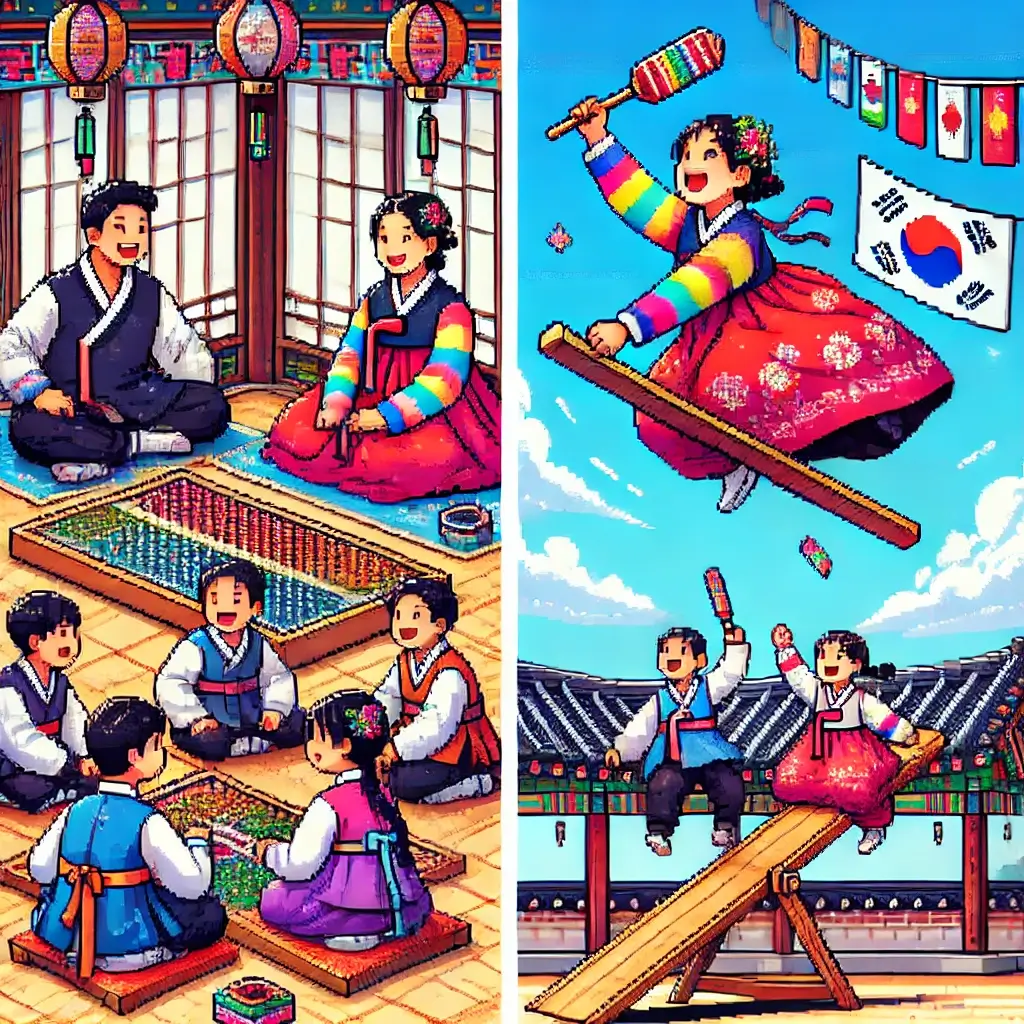
Alright, let’s kick things off with one of the absolute giants of Korean traditional games: Yutnori (윷놀이). If you’ve ever spent Lunar New Year or Chuseok (Korean Thanksgiving) with a Korean family, chances are you’ve either played or at least witnessed the thrilling chaos of a Yutnori match. It’s truly the quintessential holiday game, bringing generations together in a mix of strategic planning, raw luck, and often, boisterous cheering.
So, what exactly is Yutnori? Imagine a board game, but instead of dice, you use four specially crafted wooden sticks (called ‘yut’ sticks). These sticks are flat on one side and round on the other. When you throw them, the combination of flat and round sides facing up determines how many spaces your markers can move on the game board. It’s a bit like a simplified version of “Ludo” or “Pachisi,” but with its own unique flavor and rules that make it incredibly engaging.
The Thrilling Mechanics of Yutnori
Each team (or individual) has four markers, and the goal is to get all your markers from the starting point, around the board, and back home. The beauty of Yutnori lies in its simplicity yet surprising depth. You can often move multiple markers with a single throw, capture opponents’ markers (sending them back to the start!), and even take shortcuts across the board if you land on specific strategic points.
The “throws” in Yutnori have unique names, and they’re pretty catchy:
- Do (도): One stick flat up, three round up (moves 1 space)
- Gae (개): Two sticks flat up, two round up (moves 2 spaces)
- Geol (걸): Three sticks flat up, one round up (moves 3 spaces)
- Yut (윷): All four sticks flat up (moves 4 spaces, and you get another turn!)
- Mo (모): All four sticks round up (moves 5 spaces, and you get another turn!)
- Back-Do (빽도): One specific stick (often marked) is flat up while the others are round up (moves 1 space backward – this one can be a real game-changer, trust me!).
That “get another turn” rule for Yut and Mo throws? That’s where the excitement really builds! You could be trailing far behind, then suddenly hit a streak of Yuts and Mos, zipping your markers around the board and leaving your opponents in the dust. I’ve seen families erupt in cheers (and sometimes good-natured groans) when a critical Yut or Mo comes up at just the right moment.
A Game Steeped in History
The origins of Yutnori are incredibly ancient, tracing back to the Three Kingdoms period (around 57 BCE to 668 CE) or even earlier! It’s believed that the game evolved from a method of divination used by farmers to predict the success of their harvests or the outcome of livestock breeding. The four sticks might have represented different types of livestock or agricultural processes, and the movement around the board symbolized the cycle of life and seasons.
Over centuries, it transitioned from a predictive tool to a beloved folk game, becoming deeply ingrained in the fabric of Korean culture. Its enduring popularity is a testament to its perfect blend of chance and strategy, making it accessible to all ages while still offering competitive depth.
If you ever get the chance, gather some friends, grab some yut sticks (or even improvise with household items!), and give Yutnori a try. It’s an unforgettable experience that embodies the spirit of communal fun. —
Jegichagi: Kicking Your Way to Victory
Next up, we have Jegichagi (제기차기), a game that looks simple on the surface but demands incredible agility, balance, and a surprising amount of coordination. If you’ve ever seen someone effortlessly kicking a small, shuttlecock-like object into the air repeatedly without it touching the ground, you’ve probably witnessed Jegichagi in action. It’s a fantastic way to develop your foot-eye coordination and impress your friends!
The ‘jegi’ itself is a humble yet ingenious little object. Traditionally, it’s made by wrapping a coin (often with a hole in the middle) in paper or cloth, then fanning out the ends to create a feather-like tail. Think of it as a low-tech shuttlecock, but instead of hitting it with a racket, you’re using your feet!
The Art of the Kick
The basic premise of Jegichagi is to kick the jegi into the air as many times as possible without letting it fall to the ground. Sounds easy? Try it! The most common technique involves kicking the jegi with the inside of your foot, trying to keep it hovering just above you. There are various kicking styles, from single-foot kicks to alternating feet, and advanced players can pull off incredible tricks.
When I first tried Jegichagi, I probably lasted about three kicks before the jegi went rogue and bounced off into the distance. It takes practice, rhythm, and a delicate touch. But once you start getting the hang of it, there’s a truly satisfying rhythm to the continuous kicks, almost like a dance.
Competitions can be individual (most consecutive kicks) or team-based, where players pass the jegi to each other. It’s not just about brute force; it’s about control and finesse.
From Ancient Pastime to Modern Fun
Jegichagi’s roots go way back, possibly inspired by an ancient form of football or a military training exercise involving kicking a weighted object. Some historians suggest it evolved from a game called ‘Chukguk’ (축국), a form of football played in ancient China and Korea. The ‘jegi’ itself could have been developed as a lighter, more accessible version of a training tool, eventually becoming a popular folk game.
It was traditionally played by children and adults alike, especially during festivals and holidays. You’d often see groups gathered in village squares, enjoying lively Jegichagi contests. Today, it’s still a popular activity, especially in parks, schools, and cultural events, serving as a reminder of simpler times and the joy of active play.
If you’re looking for a fun, active challenge that connects you to Korean history, grabbing or making a jegi is a fantastic start. You’ll be surprised how addictive (and good for your coordination!) it can be. —
Ssireum: The Ancient Art of Korean Wrestling
Now, let’s talk about something a bit more… physical! Ssireum (씨름) is the traditional Korean wrestling sport, and it’s absolutely captivating to watch. Imagine two powerful individuals, locked in a tight embrace, each trying to use leverage, strength, and cunning to throw their opponent to the ground. It’s raw, it’s intense, and it’s deeply rooted in Korean heritage.
Unlike Western wrestling, Ssireum has a unique setup. Competitors wear a ‘satba’ (샅바), a long fabric belt wrapped around their waist and one thigh. The match begins with both wrestlers gripping each other’s satba, making it a test of grip strength and positioning from the get-go. The goal is simple: force any part of your opponent’s body above the knee to touch the sand ring.
More Than Just Brute Force
While strength is definitely important, Ssireum is far from just a brute-force contest. It’s a dance of balance, technique, and strategic thinking. Wrestlers employ a variety of throws, trips, and pushes, constantly looking for an opening. A smaller, more agile wrestler can often outmaneuver a larger, stronger opponent by using precise timing and leverage.
I’ve watched Ssireum matches where the crowd was on the edge of their seats, erupting with every feint and every powerful throw. There’s a certain elegance to the movements, even in the midst of intense competition. The silence of anticipation, broken only by the grunts of the wrestlers and the soft scuff of their feet on the sand, is truly something to experience.
A Tradition of Community and Strength
Ssireum is one of the oldest and most beloved traditional sports in Korea, with origins stretching back to antiquity, possibly as far as the Three Kingdoms period. Historical records and murals depict Ssireum contests being held during festivals and gatherings, often as a way to determine the strongest man in the village. The winner would often receive a bull, a highly prized commodity in agrarian societies, as a prize – talk about high stakes!
Beyond being a sport, Ssireum played a crucial role in fostering community spirit and healthy competition. It was a spectacle that brought people together, cheering for their local champions and celebrating displays of strength and skill. Today, professional Ssireum competitions are still held, maintaining this ancient tradition and showcasing the incredible athleticism of the competitors.
If you’re ever in Korea during a traditional festival, keep an eye out for a Ssireum match. It’s an electrifying display of strength, technique, and cultural heritage that will leave you absolutely enthralled. You can learn more about its history and watch some incredible matches on the official Korean Ssireum Association website. —
Neolttwigi: Soaring High on a See-Saw
Get ready to defy gravity (at least for a moment!) with Neolttwigi (널뛰기), the traditional Korean see-saw game. This isn’t your average playground see-saw, though. Imagine a long, thick plank of wood balanced on a fulcrum (often a rolled-up straw mat). Two people stand on opposite ends of the plank, and instead of sitting, they jump! The goal is to propel each other high into the air, almost like a human catapult.
It’s a truly exhilarating experience, full of laughter, shouts, and sometimes, a little bit of graceful (or not-so-graceful) landing! It’s also surprisingly athletic, requiring good timing and a strong core to maintain balance.
The Thrill of the Leap
The beauty of Neolttwigi lies in its cooperative nature. You need to synchronize your jumps with your partner to achieve maximum height. One person jumps down, propelling the other up, who then lands with force, sending the first person soaring. It’s a continuous rhythm of ascent and descent, often accompanied by playful screams and cheers.
While it looks like pure fun (and it largely is!), there’s also a subtle element of skill. Good Neolttwigi players can achieve impressive heights, sometimes even performing acrobatic flips or tricks in the air. It’s a fantastic way to bond with friends or family, sharing in the joy of shared elevation.
A Window to the Past: Why Women Soared
The history of Neolttwigi is particularly fascinating, especially concerning its role for women in traditional Korean society. During the Joseon Dynasty (1392-1897), women of noble families were often confined to their homes and had limited opportunities to venture outside. However, Neolttwigi provided a unique loophole. By standing on the see-saw and jumping, they could catch glimpses of the outside world over high walls, allowing them a rare moment of freedom and a peek at what was happening beyond their compounds.
This adds a poignant layer to the game, transforming it from a simple pastime into a symbol of resilience and a subtle act of rebellion. It was a way for women to literally (and figuratively) rise above their societal constraints, even for a few precious moments. This historical context makes playing Neolttwigi even more meaningful.
Today, Neolttwigi is primarily a festive game, often enjoyed during holidays like Lunar New Year and Chuseok. It’s a fantastic way to experience a piece of history and literally get a lift from traditional Korean fun! —
Gonggi Nori: The Timeless Five Stones Game
Finally, let’s talk about a game that almost every Korean child has played at some point: Gonggi Nori (공기놀이), often simply called “Gonggi” or “Five Stones.” This seemingly simple game played with small stones or plastic pieces is surprisingly addictive, requiring dexterity, quick reflexes, and a keen eye. It’s the kind of game you can pick up in minutes but spend hours trying to master.
The basic set of Gonggi consists of five small, smooth stones or specialized plastic pieces. The game progresses through several stages, each building on the last and increasing in difficulty.
Mastering the Stages of Gonggi
Here’s a simplified breakdown of how Gonggi usually works:
- First Stage (“One-Stone Pick-up”): You scatter all five stones on the ground. Pick one up, toss it into the air, and while it’s airborne, quickly pick up another stone from the ground with the same hand. Then, catch the tossed stone before it lands. Continue until all stones are picked up one by one.
- Second Stage (“Two-Stone Pick-up”): Same as above, but this time you pick up two stones at a time while your tossed stone is in the air.
- Third Stage (“Three-Stone Pick-up”): You pick up three stones, then one.
- Fourth Stage (“Four-Stone Pick-up”): You pick up all four stones at once.
- Fifth Stage (“Gonggi Catch”): This is where it gets really fun! You toss all five stones into the air. As they fall, you quickly turn your hand over to catch as many as possible on the back of your hand. Then, you toss them up again from the back of your hand and try to catch them all in your palm. The number of stones you successfully catch on your palm determines your score.
Players take turns, and if you fail at any stage (e.g., dropping a stone, touching too many, or missing a catch), your turn ends, and the next player goes. The beauty is that you pick up exactly where you left off on your next turn, so consistency is key!
A Pocketful of History and Fun
The origins of Gonggi Nori are a bit hazy, but similar games involving small stones or pebbles can be found across many cultures worldwide, suggesting an ancient and universal appeal. It’s likely that Gonggi evolved from a simple pastime using readily available materials – stones! – making it accessible to everyone, regardless of social status.
It’s a fantastic game for developing fine motor skills, hand-eye coordination, and strategic thinking (deciding which stones to pick up first, how to scatter them effectively). More importantly, it’s a social game, often played in groups, fostering friendly competition and plenty of joyful interaction.
Even today, you’ll find Gonggi sets sold everywhere in Korea, and it’s still common to see children (and sometimes even adults!) engrossed in a game. It’s a timeless classic that truly stands the test of time, proving that sometimes, the simplest games are the most enduring. If you’re looking for a delightful and challenging traditional Korean game that requires minimal equipment, Gonggi Nori is an absolute winner. Check out this article from Korea.net for more insights into Korean folk games, including Gonggi! —
Why These Games Still Matter Today
You might be thinking, “These are old games, why should I care?” And that’s a fair question! But the truth is, these Korean traditional games are far more than just relics of the past. They’re living traditions that offer invaluable insights into Korean culture and hold significant relevance even in our modern, tech-driven world.
Connecting with Heritage
For Koreans, these games are a direct link to their ancestors and cultural heritage. Playing them evokes a sense of nostalgia, community, and national pride. They’re a way to pass down traditions, stories, and values from one generation to the next, ensuring that the unique spirit of Korea endures.
Fostering Community and Social Skills
Unlike many modern solo digital activities, most traditional Korean games are inherently social. They encourage interaction, cooperation, friendly competition, and communication. Think about Yutnori, where families huddle around the board, strategizing and cheering together. Or Neolttwigi, where synchronized effort is key. These games build bonds and strengthen community ties.
Promoting Physical and Mental Well-being
Let’s not forget the physical benefits! From the agile kicks of Jegichagi to the full-body exertion of Ssireum, these games get you moving. They improve coordination, balance, strength, and reflexes. And mentally? Games like Yutnori require strategic thinking, while Gonggi Nori sharpens focus and dexterity. They’re a holistic approach to play, engaging both body and mind.
Timeless Fun and Learning
At their core, these games are simply fun! They offer a refreshing break from screens and a chance to engage in hands-on, interactive play. They also teach valuable life lessons – patience, perseverance, sportsmanship, and the joy of shared experience. They remind us that entertainment doesn’t always need complex technology; sometimes, a few simple sticks, stones, or a wooden plank are all you need for an unforgettable time.
Understanding and appreciating these games isn’t just about history; it’s about recognizing the enduring human need for play, connection, and cultural expression. They offer a refreshing alternative to our digital lives and a genuine peek into the heart of a fascinating culture. —
How You Can Experience Korean Traditional Games
Feeling inspired to try these incredible games yourself? Excellent! You don’t have to fly to Korea (though I highly recommend it!). There are plenty of ways to get a taste of these traditional pastimes wherever you are:
1. Look for Local Korean Cultural Centers
Many cities around the world have Korean cultural centers or community organizations. These places often host events, workshops, or festivals where you can learn about and participate in traditional Korean games. It’s a fantastic way to get hands-on experience and meet people who share an interest in Korean culture.
2. Explore Online Resources and Videos
The internet is a treasure trove! YouTube has countless videos demonstrating how to play these games, often with English explanations. You can learn the rules, watch techniques, and even get ideas for improvising equipment. Search for “Korean traditional games tutorial” or the specific game names.
3. Purchase Game Sets Online
You can easily find Yutnori sets, Gonggi stones, and sometimes even Jegichagi pieces on online marketplaces. Having your own set makes it easy to practice and introduce the games to your friends and family. They also make unique and thoughtful gifts!
4. Visit Korea!
If you’re planning a trip to South Korea, you’re in for a treat! Many traditional villages (like Jeonju Hanok Village or Bukchon Hanok Village in Seoul), folk museums, and cultural experience centers offer opportunities to play these games. During major holidays like Lunar New Year and Chuseok, you’ll often find special events and demonstrations where locals are happy to teach you.
5. Improvise and Get Creative!
Remember, many of these games originated from simple, readily available materials. You can improvise a Jegichagi with a coin and some paper, or use pebbles for Gonggi. The spirit of the game is more important than having authentic, fancy equipment. Get creative and have fun!
No matter how you choose to engage with them, exploring Korean traditional games is a truly enriching experience. It’s a journey into a vibrant culture, a chance to have some good old-fashioned fun, and a reminder of the enduring power of play.
Ready to jump in and experience the thrill? I hope this dive into 5 fantastic Korean traditional games has sparked your curiosity and maybe even inspired your next game night! What’s stopping you from trying one out?
For more fantastic insights into Korean culture, including traditional activities, check out the Cultural Heritage Administration of Korea website and the Korean Culture and Information Service (KOCIS) website. Happy gaming!
Korean traditional games, Yutnori, Jegichagi, Ssireum, Neolttwigi, Gonggi Nori