
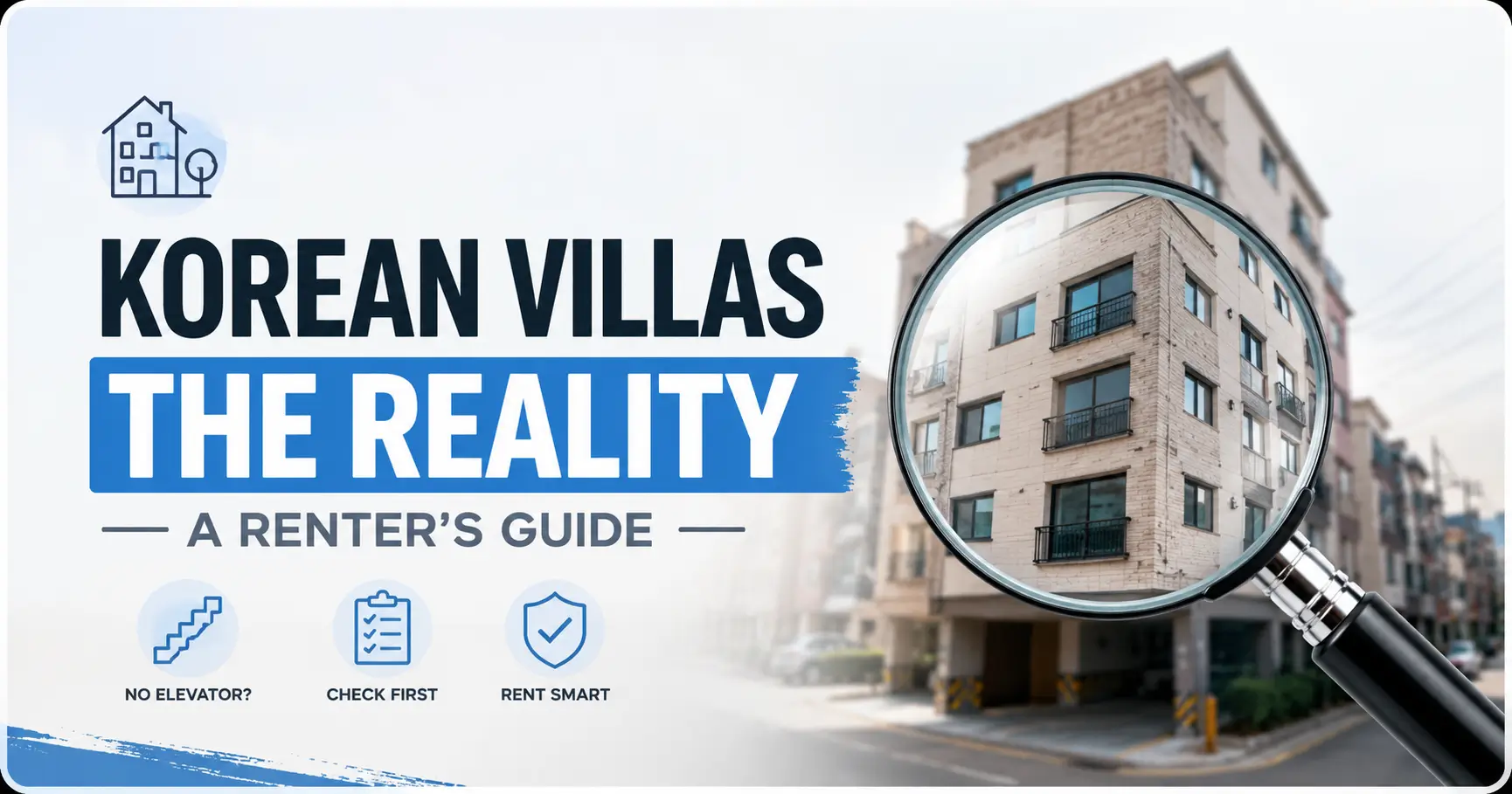
A foreign renter sees the word villa in a Korean housing listing and the mind does a little cinematic flourish: stone driveway, leafy gate, sunlight over a private terrace, perhaps a pool quietly minding its own turquoise business.
Then the viewing appointment begins. The “villa” is a four-story low-rise building on a narrow neighborhood street, the entrance smells faintly of rain, there may be no elevator, and the recycling corner is doing unpaid theater near the front door.
That is the first lesson. Villas in Korea usually do not mean luxury detached homes. They often mean smaller multi-unit residential buildings, commonly lower than major apartment towers and with fewer shared services. For renters, expats, exchange students, and digital nomads, this translation gap can cost real money, comfort, and patience.
Keep reading with one hand on your expectations and the other on your inspection checklist.
In Korea, a “villa” usually refers to a low-rise multi-unit residential building, not a Western-style luxury estate. It may offer neighborhood charm, practical space, and lower rent than some alternatives, but it may also come with stairs, older systems, limited parking, and more inspection responsibility.
What You Will Learn:
- Decode what Korean listings really mean by “villa.”
- Compare villas with apartments and officetels without fantasy fog.
- Spot the contract, deposit, maintenance, and safety details that matter.
- Use a 15-minute viewing checklist before money changes hands.
The Korean Villa Reality Check
A Korean villa can be a smart home base, but the name is wearing imported perfume. Judge the building by stairs, moisture, heating, locks, fees, deposit terms, and night-time street feel, not by the English word on the listing.
Best mindset: pleasant curiosity, ruthless checklist.
Contents — choose a section
Table of Contents
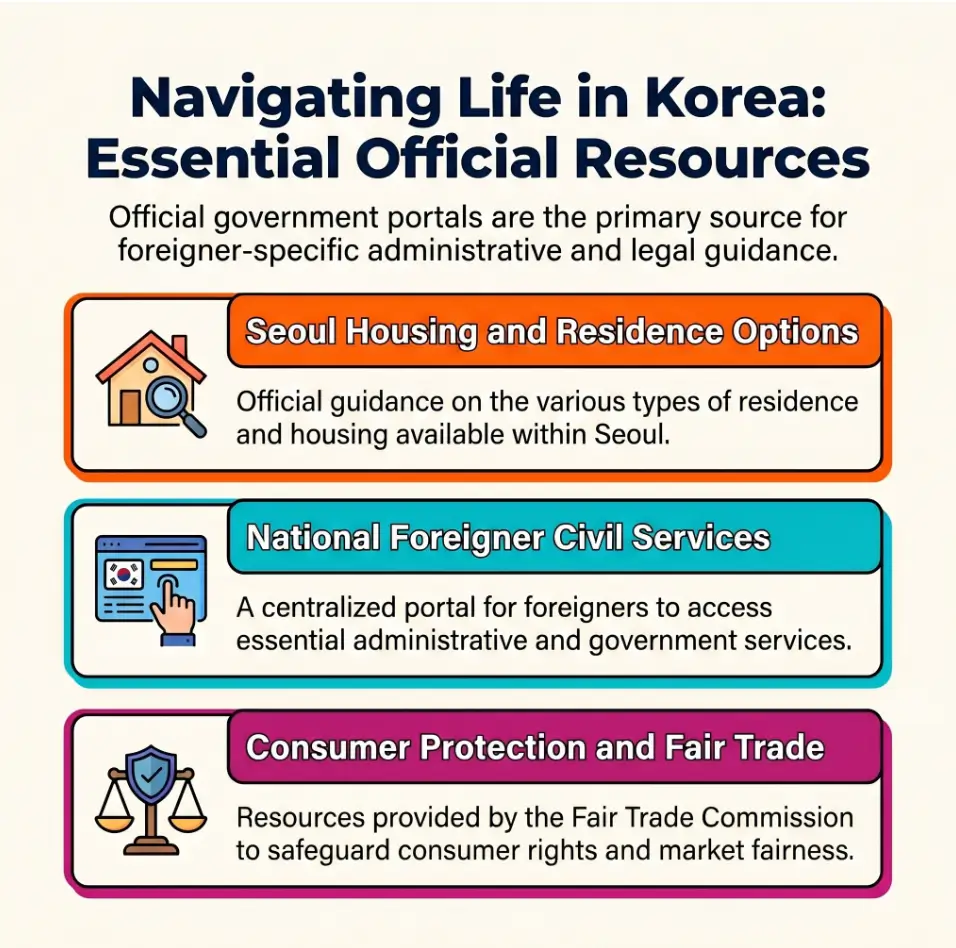
Safety / Disclaimer
This guide is for general housing education only. It is not legal, immigration, financial, or real estate advice. Korean rental terms can vary by city, district, landlord, agent, visa status, building type, deposit amount, and contract structure.
Before signing a lease or transferring a deposit, verify the building, landlord identity, agent license, contract terms, deposit protection options, maintenance obligations, move-out rules, and address registration requirements with qualified local help.
If the contract is in Korean and you do not fully understand it, do not treat “looks normal” as a translation. A contract is not a decorative scroll. It bites with tiny teeth.
- Confirm the building type before comparing prices.
- Put verbal promises into written messages or the contract.
- Get local help when a large deposit or visa paperwork is involved.
Apply in 60 seconds: Create one phone note titled “Villa proof needed” and list deposit, fees, repairs, floor, elevator, and registration.
The Word “Villa” Is the First Trap
In English, it whispers luxury. In Korea, it says low-rise housing.
For Anglo-American readers, “villa” often carries a sun-washed Mediterranean mood. It suggests privacy, money, a garden, a private gate, and the faint possibility that someone named Lorenzo owns linen shirts.
In Korea, the word usually works differently. A villa is commonly a smaller low-rise residential building with multiple households. It is closer to a compact apartment-style building than a private estate.
That does not mean villas are bad. Some are comfortable, affordable, and quietly lovely. It means the English word is a costume, not a guarantee.
Why translation makes the room feel bigger than it is
Korean housing vocabulary uses several familiar-looking terms in locally specific ways. “Apartment,” “officetel,” “one-room,” “villa,” and “house” can all appear in listings, but each carries assumptions that may not match American, British, Canadian, or Australian ears.
This is common in Korean life. A borrowed English word can settle into Korean usage and grow a new personality. If you have ever wondered why certain Konglish words sound familiar but behave differently, housing terms are a serious version of the same language puzzle.
The result is emotional math gone wrong. The renter hears “villa,” imagines comfort, and then compares the price against a fantasy building that never existed.
Pattern interrupt: The name is wearing a tuxedo, but the building may be in sneakers
This is not a joke at the expense of Korean villas. It is a rescue operation for your expectations.
Many villas are ordinary housing. Some are tidy and practical. Some are old, damp, and held together by fresh wallpaper and landlord optimism. A few are genuinely upscale, but that depends on location, age, build quality, elevator, parking, security, and maintenance, not the word “villa.”
The tuxedo-name problem matters because housing decisions are expensive. If you misunderstand the category, you may overpay, ignore better options, or sign for a lifestyle the building cannot deliver.
What a Korean Villa Actually Is
Low-rise, multi-unit, neighborhood-based housing
A Korean villa is usually a low-rise residential building with several separate units. Think four or five floors, a shared entrance, individual doors, and fewer shared amenities than a large apartment complex.
Unlike a luxury detached villa in English-speaking real estate, a Korean villa is not defined by gardens, privacy, or resort-style features. It is defined more by building scale, neighborhood location, and residential use.
Some villas are newer and polished. Some are older and modest. Many sit in residential side streets near convenience stores, small restaurants, laundries, schools, and bus stops. They belong to daily life, not postcard life.
Why they can feel more “local” than apartment complexes
One reason foreigners like villas is texture. The street may have a fruit truck, a sleepy cat guarding a scooter, a grandmother sorting recyclables with the precision of a museum curator, and a corner shop where the owner learns your usual drink by week two.
This can feel warmer than a high-rise complex. You see the neighborhood breathing. You hear delivery scooters, school bells, and the soft percussion of apartment slippers in the stairwell.
For renters who want a more everyday Korean rhythm, villas can be attractive. They may place you closer to older residential districts than towers designed around parking gates and management offices.
The trade-off: more character, less infrastructure
The same charm can come with friction. A villa may have limited parking, no elevator, older plumbing, thinner walls, less formal management, or a slower repair process.
The building may not have a full-time management office. Snow, trash, lighting, entrance repairs, and hallway issues may depend on the landlord, residents, or a small maintenance arrangement.
This is the central bargain: villas can give you space and neighborhood feeling, but they ask you to inspect like a grown-up with a flashlight and a mildly suspicious heart.
More neighborhood feel, possible space value, higher inspection burden.
Watch: stairs, mold, fees, landlord.
Convenient location, compact layout, often built-in features.
Watch: fees, size, noise, rules.
Larger complexes, stronger management, more social proof.
Watch: cost, deposit, availability.
Apartments vs Villas: The Status Gap Foreigners Miss
Korean apartments are often the “main stage”
In Korea, large apartment complexes often carry strong social and practical weight. Many are branded high-rise communities with management offices, parking, security systems, playgrounds, shops, landscaping, parcel systems, and resident services.
For many Korean households, the word “apartment” may suggest structure, convenience, resale value, and social proof. That does not mean every apartment is glamorous. It means the housing hierarchy is not the same as the English-speaking imagination.
A foreigner may hear “apartment” and picture ordinary rental housing, while hearing “villa” and picturing luxury. In Korea, the emotional order often flips.
Villas often live in the side streets
Villas are commonly tucked into smaller residential streets. The building may be beside a stair road, behind a market lane, or near a cluster of similar low-rise homes.
This can be wonderful if you like neighborhoods that feel lived-in. It can be inconvenient if you need wide roads, easy taxi access, predictable parking, or smooth furniture delivery.
The side street is not just scenery. It affects noise, light, safety, trash collection, winter ice, delivery access, and the feeling of coming home after a long workday.
The hidden hierarchy: brand, age, elevator, parking, subway distance
When comparing Korean housing, do not compare by label alone. Compare by friction.
A newer villa near a subway station with good light, secure entry, clean stairs, and a responsive landlord may beat an older apartment in daily comfort. A cheaper villa on a steep hill with moisture stains and no elevator may become an expensive lesson in leg day.
Look at these signals:
- Building age: older buildings may have insulation, plumbing, or drainage issues.
- Elevator: no elevator changes moving, groceries, guests, injuries, and heat fatigue.
- Parking: tight streets can turn one car into a nightly chess match.
- Subway distance: ten flat minutes and ten uphill minutes are not the same animal.
- Natural light: low floors near neighboring walls can feel cave-adjacent.
- Security: entrance locks, CCTV, lighting, and intercoms matter.
| Choose this | When it makes sense | Main trade-off |
|---|---|---|
| Villa | You want neighborhood feel, possible space value, and can inspect carefully. | Less predictable maintenance and fewer services. |
| Apartment | You want management, amenities, security, parking, and social proof. | Higher cost or tougher availability. |
Neutral action: Compare the two options by daily friction, not by which name sounds prettier in English.
The No-Elevator Surprise
“Fourth floor” can become a daily workout plan
Many low-rise villas, especially older or smaller ones, may not have elevators. This is not a charming footnote. It becomes part of your rent.
Fourth floor sounds manageable during a sunny viewing. Then summer humidity arrives with groceries, luggage, a fan, two parcels, and a laundry rack that refuses to fold like a civilized object.
No elevator matters if you have heavy suitcases, a stroller, mobility limits, furniture delivery, knee pain, or a work schedule that already drains your bones by 8 p.m.
Don’t trust floor numbers until you visit
Always confirm the exact floor, stair width, lighting, handrails, entrance steps, and hallway condition. Check whether the building has a semi-basement, raised first floor, or numbering that makes the lived climb different from the listing’s emotional tone.
Ask the agent directly: “Is there an elevator?” Then ask again while standing in the building. This is not paranoia. It is adulting with a passport.
If the answer is “No, but it is okay,” remember that the person saying this may not be carrying your mattress.
Tiny detail, big life: moving day
Moving day is where villa romance meets logistics. Bed frames, washing machines, desks, suitcases, and delivery boxes all must pass through the stairwell.
Some delivery services may charge extra for stairs. Some furniture may not fit. Some friends may suddenly become philosophers with “bad backs.”
Before signing, stand in the stairwell and imagine carrying a 20-kilogram suitcase after a long flight. If your soul leaves your body on the second landing, listen to it.
- Check the exact floor in person.
- Measure stair width if bringing furniture.
- Ask about delivery fees before ordering heavy items.
Apply in 60 seconds: During the viewing, walk from the street to the unit twice without rushing.
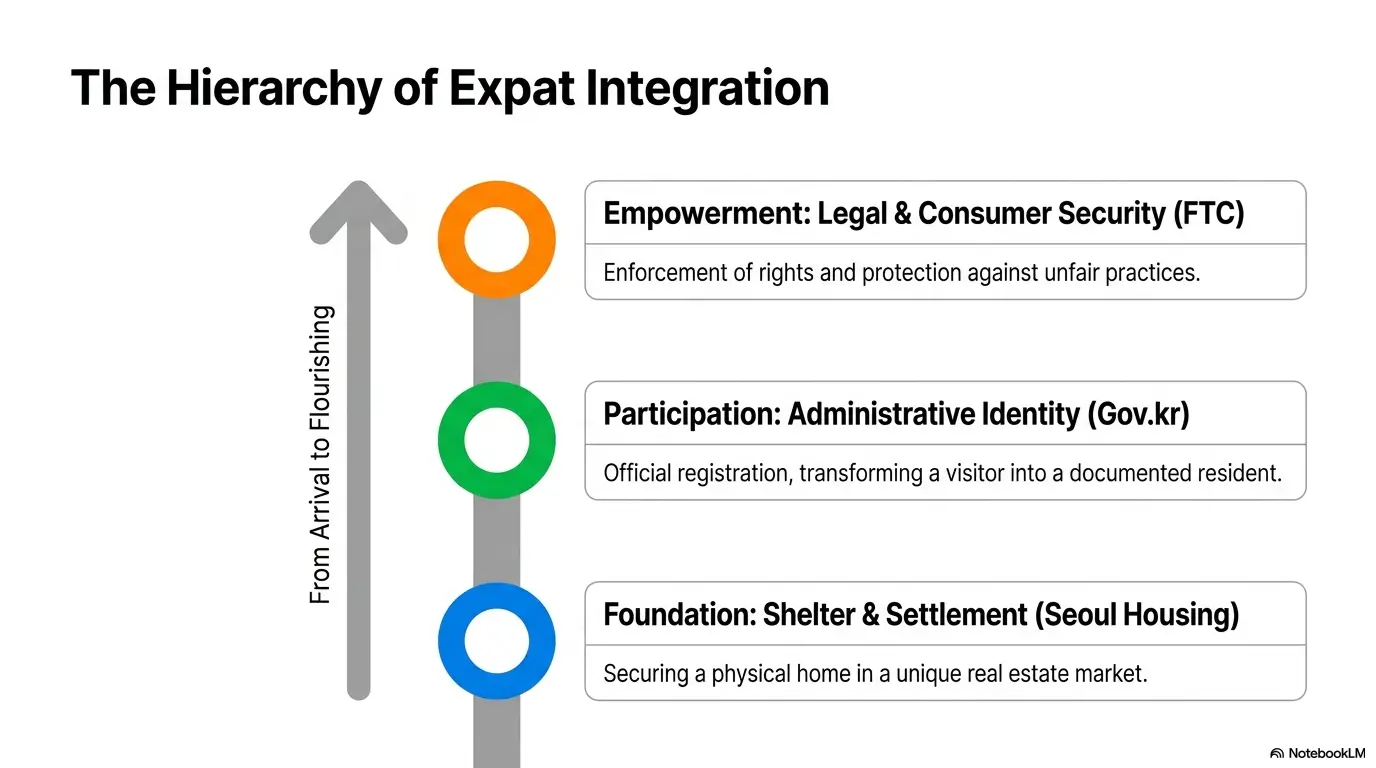
Who This Is For / Not For
Good fit: budget-conscious renters who want local texture
A villa can work well for exchange students, English teachers, long-stay travelers, couples, remote workers, and budget-conscious renters who want a residential neighborhood rather than a business-district box.
It may also suit people who like Korean daily culture up close. If you enjoy convenience stores, small bakeries, local laundries, quiet alleys, and the subtle social choreography of neighborhood life, a villa can feel human.
It pairs especially well with renters who are patient, observant, and willing to inspect the boring parts of a building.
Good fit: renters who value space over services
Some villas offer more usable space than compact officetels or one-room studios at a similar price point. This varies heavily by area, age, deposit, and market conditions, but the possibility is real.
A villa may give you a separate kitchen, larger room, better storage, or a more residential feel. For a remote worker, one extra corner can mean the difference between “home office” and “laptop on bed, spine in revolt.”
Still, do not buy space with your eyes closed. Space plus dampness, noise, or bad heating is not a bargain. It is a roomy inconvenience.
Not for: anyone expecting serviced-apartment convenience
If you want a front desk, English-speaking management, reliable elevator access, built-in furniture, neat parcel systems, modern security, underground parking, and predictable maintenance, a villa may frustrate you.
You may prefer an officetel, serviced residence, or newer apartment complex. You will likely pay more, but you may buy back time and certainty.
That is not weakness. It is a design choice. Some people want a neighborhood novel. Some people want a manual with tabs.
| Question | Yes | No |
|---|---|---|
| Can you handle stairs if there is no elevator? | Villa remains possible. | Prioritize elevator buildings. |
| Can you inspect for mold, drainage, locks, and heating? | Good. | Bring local help. |
| Do you need English-speaking building management? | Consider officetel or serviced housing. | Villa may work. |
| Is your deposit large enough to require extra verification? | Seek qualified help. | Still verify the basics. |
Neutral action: If two or more answers make you uneasy, compare at least one officetel or apartment before choosing.
Common Mistakes Foreigners Make With Korean Villas
Mistake 1: Assuming “villa” means upscale
The core error is importing the English meaning into a Korean listing. That one assumption can distort the whole search.
You may think a villa with average finishes is disappointing, when it is simply normal. Or worse, you may overpay because the word makes an ordinary unit feel special.
Ask yourself: would I still like this place if the listing called it “low-rise multi-unit housing”? If yes, keep looking seriously. If no, the word was doing too much makeup.
Mistake 2: Judging the unit but ignoring the building
A unit can be freshly wallpapered, clean, and photogenic while the building is whispering warnings in the hallway.
Inspect the entrance lock, CCTV, stair lighting, mail area, recycling zone, exterior cracks, drainage, smell, roofline, and neighbor noise. The building tells the older story. The unit may be wearing a new shirt for picture day.
This is especially important for renters used to professionally managed buildings. In a smaller villa, the shared areas can reveal how repairs and resident behavior are handled.
Mistake 3: Skipping the neighborhood at night
A street can feel peaceful at 2 p.m. and entirely different at 10 p.m. Visit at least once after dark if possible.
Look for lighting, foot traffic, bar noise, steep hills, parking congestion, delivery scooter routes, and the walk from the nearest subway or bus stop. If you are arriving late after work or class, that is your real commute.
For foreigners learning Korea’s social rhythms, housing is part of culture. The same observation skills that help with Korean meeting etiquette also help in housing: watch what is not loudly announced.
Illustrative Scenario: The Fourth-Floor Suitcase
Maya, an exchange student from Chicago, found a villa listing that looked almost poetic: white walls, soft light, a little kitchen window facing rooftops. The agent said the fourth floor was “not difficult.” On viewing day, she agreed. Her backpack was light, the weather was gentle, and the stairs seemed harmless. Two weeks later, she arrived from Incheon with two suitcases, one swollen backpack, a rice cooker from a friend, and August humidity sitting on her shoulders like a wet blanket.
By the third landing, the apartment had become less romantic and more instructional. Nothing was wrong with the villa. The mistake was not testing the building as she would actually live in it. After that, she kept a rule: view the unit, then rehearse the routine. Commute, stairs, trash, groceries, night walk, rain. A home is not only a room. It is the repeated path to the room.
Don’t Sign Until You Check These Villa Details
Deposit, rent, maintenance fees, and what is actually included
Korean rentals can involve different combinations of deposit, monthly rent, and maintenance fees. For foreigners, the danger is not only the amount. It is vagueness.
Ask what is included in the monthly maintenance fee. Internet, water, building cleaning, elevator service if any, security, common electricity, and waste handling may be separate or bundled differently.
Confirm gas, electricity, water, internet, appliance repairs, lock changes, and cleaning fees. Do not rely on “probably included.” Probably is not a contract term. It is a fog machine.
Heating, hot water, mold, windows, and drainage
Korean housing comfort often depends on systems that do not photograph well. Heating type, boiler condition, bathroom drainage, ventilation, window insulation, and moisture history matter deeply.
Open cabinets. Look behind curtains. Check corners near the floor. Smell the bathroom. Run water if allowed. Ask about the boiler. Look for condensation marks near windows.
Mold deserves special attention. A freshly papered wall can hide a moisture problem for a while. If the room smells damp or the corners look suspiciously new, ask direct questions.
“Looks renovated” is not the same as “well maintained”
A renovation may mean new wallpaper, new flooring, and brighter lighting. Those are nice. They do not automatically mean the plumbing, wiring, insulation, locks, windows, or drainage are sound.
Think of renovation as makeup and maintenance as dental records. Both matter, but only one tells you what has been happening for years.
Ask what was actually repaired. Was the boiler replaced? Were windows upgraded? Was mold treated at the source? Were drains fixed or just cleaned?
Show me the nerdy details
During a villa inspection, separate cosmetic freshness from performance evidence. Cosmetic freshness includes wallpaper, floor covering, cabinet fronts, lighting color, and staged furniture. Performance evidence includes window seals, boiler age, water pressure, drain speed, visible caulking quality, electrical outlet condition, door alignment, entrance-lock function, hallway lighting, and signs of repeated moisture. A useful method is to inspect from outside to inside: street, building entrance, stairwell, shared areas, unit door, wet areas, windows, heating equipment, then contract terms. This reduces the chance that a pretty room hijacks your judgment before the practical checks begin.
- Ask what fees are separate.
- Inspect moisture, heating, drains, and windows.
- Get repair promises in writing before signing.
Apply in 60 seconds: Take one photo of each “boring” item during the viewing: boiler, drain, window, lock, stairwell, and trash area.
The Landlord Factor Is Bigger Than You Think
Smaller buildings can mean more personal landlord contact
In some villa situations, the landlord may be more directly involved than in a large managed apartment complex. They may live nearby, own multiple units, or handle repairs through familiar contractors.
This can be excellent. A responsive landlord can fix a boiler quickly, answer questions clearly, and return deposits without drama.
It can also be stressful if expectations are vague, communication is inconsistent, or boundaries are loose. The building may be small, but the emotional square footage of a difficult landlord is enormous.
Here’s what no one tells you: management style becomes part of the rent
Management style is an invisible amenity. Fast repairs, clear receipts, polite communication, and predictable procedures add real value.
Poor management becomes an invisible cost. You pay with time, stress, translation favors, and messages that begin politely and end with your soul staring out the window.
Foreigners should pay special attention because language barriers can magnify small issues. If you are already learning Korean texting formality, landlord messages are where tone, timing, and clarity suddenly matter.
Ask before trouble arrives
Before signing, ask who handles repairs, how fast urgent issues are addressed, whether appliance repair is tenant or landlord responsibility, and how move-out cleaning is judged.
Ask whether you can change locks, how to report leaks, what to do if the boiler fails, and how deposit return will be handled.
Good landlords do not mind reasonable questions. They may not answer with perfect English, but they should not punish clarity.
| Gather this | Why it matters |
|---|---|
| Deposit and monthly rent | Lets you compare true housing cost, not listing sparkle. |
| Maintenance fee breakdown | Prevents surprise monthly costs. |
| Repair responsibility | Clarifies who pays when appliances, locks, or plumbing fail. |
| Move-out terms | Reduces deposit-return conflict. |
| Address registration support | Important for long-stay foreigners, students, and workers. |
Neutral action: Send the same five questions for every unit so you can compare answers side by side.
Villa vs Officetel vs Apartment: Pick by Friction, Not Fantasy
Officetel: convenience with compact living
An officetel is a mixed-use building type that often combines office-style and residential functions. Many are near stations, business districts, universities, and transit corridors.
For foreigners, officetels can feel easier. They may include built-in appliances, elevators, parcel systems, security, and compact layouts designed for single-person living.
The trade-off is that monthly fees can be higher, layouts can be small, and the building may feel more functional than homey. Convenient, yes. Spacious and soulful, not always.
Apartment: structure, amenities, and social proof
Large apartment complexes often provide stronger infrastructure: management offices, elevators, parking systems, security, maintenance processes, playgrounds, and shared spaces.
They may be easier for families, longer stays, or renters who need predictability. They can also be more expensive, harder to access for short-term foreigners, or require larger deposits.
If you are comparing housing before moving, combine this guide with a practical Korean apartment move-in checklist so your decision is based on daily use, not photos.
Villa: space, neighborhood feel, and inspection burden
A villa is the “check carefully” option. It can be practical, charming, and cost-effective. It can also be inconvenient, damp, noisy, or difficult to manage if you miss warning signs.
Pick a villa when you value neighborhood life, can tolerate fewer services, and are willing to inspect the building as seriously as the unit.
Do not pick a villa because the English word sounds elegant. Pick it because the stairs, fees, landlord, heating, commute, light, and contract all pass the test.
Mini Calculator: Your Villa Friction Score
Rate each item from 0 to 5. Use 0 for no problem and 5 for major friction.
How to read it: 0–4 means low visible friction, 5–9 means inspect harder, and 10–15 means compare alternatives before signing.
Neutral action: Use the score after each viewing, not before, so photos do not bias you.
When to Seek Help Before Renting
Get help if the deposit is large or the contract is unclear
Korean housing deposits can be financially serious. If the amount would hurt to lose, treat the contract as a high-stakes document.
Seek help before transferring a major deposit, signing a Korean-only contract you do not understand, or accepting unusual payment terms. A licensed real estate agent, trusted Korean speaker, legal clinic, university office, employer housing coordinator, or local support center may be appropriate depending on your situation.
If you are considering jeonse or a large deposit structure, review jeonse deposit protection basics and do not assume every deposit is equally safe.
Get help if the landlord avoids written answers
Be careful with vague replies, pressure to decide quickly, refusal to provide documents, unclear maintenance fees, or unwillingness to confirm deposit return terms.
Written clarity protects both sides. It reduces confusion and gives everyone a shared reference when memory becomes conveniently artistic.
If the agent or landlord resists reasonable written confirmation, pause. The room may still be nice, but the process is giving you useful information.
Get help if visa, address registration, or employer housing is involved
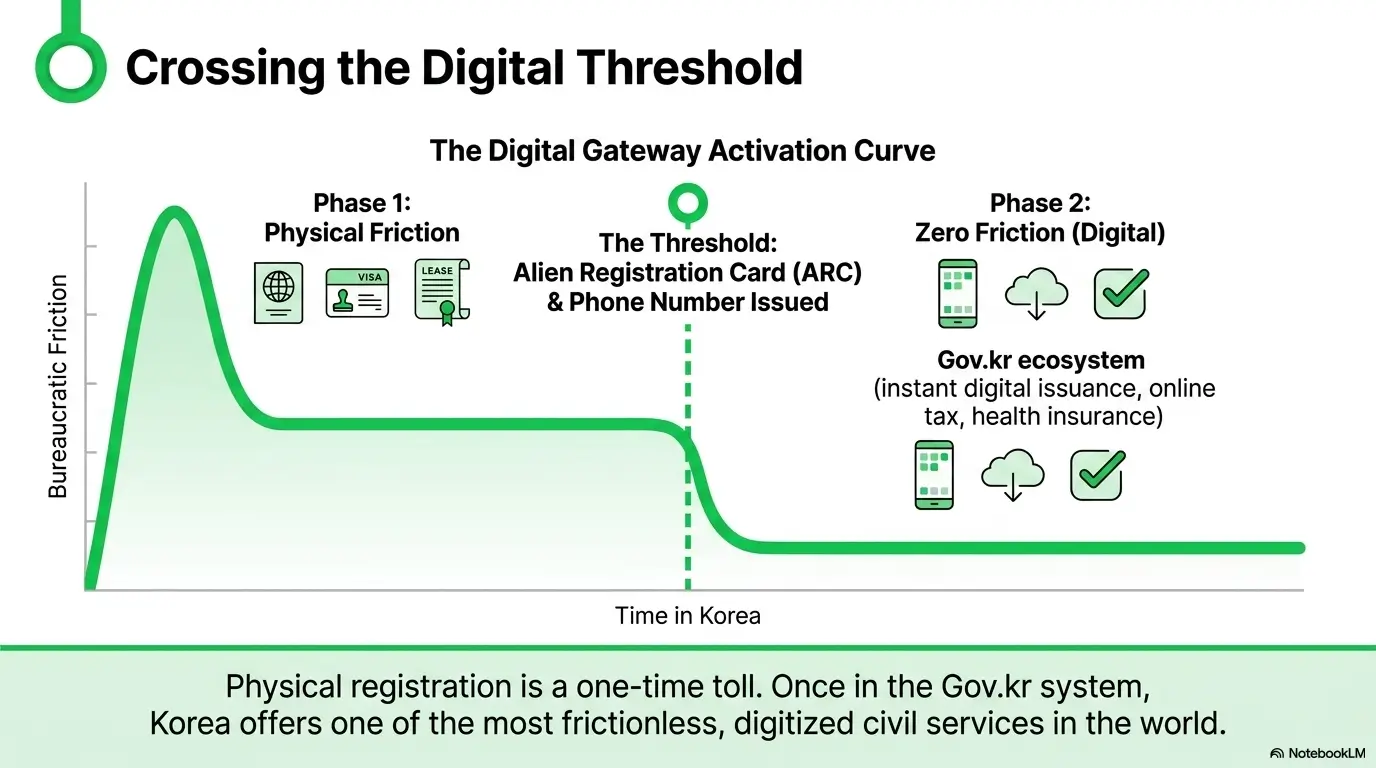
Housing can affect address registration, school paperwork, employment arrangements, and immigration-related obligations. Long-stay foreigners should confirm whether the address can be used for required registration.
Korea’s resident registration system and foreigner address reporting rules are not the same thing, but the wider culture of address documentation matters. For context, it helps to understand why Korea’s resident registration culture is so central to everyday administration.
Students should ask their university. Employees should ask their employer in writing. Digital nomads and long-stay visitors should confirm visa-specific requirements through official channels or qualified local support.
Inspect a villa listing as an exact dwelling
Ask for the precise address and unit, permitted use, ownership and payment authority, then inspect access, ventilation, dampness and repairs. Compare management arrangements and recurring charges with the proposed contract. The word villa in a listing does not establish luxury, legal status or a particular construction standard. A bright photograph cannot show how noise, stairs or maintenance will affect your routine; visit the exact unit and investigate unresolved document questions before paying.
| Focus | What to check |
|---|---|
| Identity | Exact unit, use and authority to contract. |
| Condition | Access, moisture, noise and repair information. |
| Commitment | Full charges, deposit terms and unresolved checks. |
A reader question: Can the building label tell me whether the deposit is protected?
No. Protection depends on the actual transaction, status and applicable requirements. Check those separately with the responsible provider or qualified adviser.
Next Step: Tour One Villa With a 15-Minute Reality Checklist
Take photos of the boring things
When viewing a villa, photograph the entrance, locks, stairs, windows, bathroom ceiling, floor corners, outlets, boiler, intercom, trash area, mailbox zone, and exterior.
These photos are not for nostalgia. They are your memory insurance. After three viewings, every white wall begins to merge into one large rental cloud.
Also photograph the street in both directions. The building’s surroundings often explain future frustrations before the unit does.
Ask five questions before discussing price
Before negotiating, ask these five questions:
- What fees are separate from rent and deposit?
- Who fixes appliances, plumbing, boiler issues, and locks?
- Is there elevator access, parking, or delivery restrictions?
- How is the deposit protected and returned?
- What happens at move-out, including cleaning and repairs?
If the answers are clear, continue. If every answer turns into a cloud of “later,” “usually,” or “don’t worry,” let your eyebrows do the paperwork.
The final test: would you still like it on a rainy Tuesday night?
This is the best emotional test for a Korean villa. Imagine arriving home in rain, carrying groceries, phone at 12%, shoes wet, stomach tired, and a message from work still humming in your pocket.
Would the stairs, street, lighting, door, hallway, smell, and room still feel workable?
The best housing choice is not the one that sounds elegant in English. It is the one that functions when weather, bills, maintenance, and daily routine arrive together.
- Inspect the street, building, and unit as one system.
- Ask key questions before discussing price.
- Use photos to compare units after the emotional glow fades.
Apply in 60 seconds: Save the five questions above as a reusable viewing note on your phone.
FAQ
Does “villa” mean luxury home in Korea?
No. In Korea, “villa” usually refers to a smaller low-rise multi-unit residential building, not a luxury detached home or resort-style property. Some villas are modern or expensive, but the word itself does not guarantee luxury.
Are Korean villas cheaper than apartments?
Often, they can be cheaper than major apartment complexes, depending on location, age, size, deposit, and condition. Villas usually have fewer amenities and less centralized management, which can lower costs but increase inspection responsibility.
Do Korean villas usually have elevators?
Many older or smaller villas do not have elevators. Always verify before signing, especially if the unit is above the second floor or you have heavy luggage, mobility concerns, furniture, or frequent deliveries.
Are Korean villas safe for foreigners?
They can be safe, but safety varies by building and neighborhood. Check entrance security, lighting, locks, CCTV, hallway condition, street access, and repair responsiveness. Visit during both daytime and evening if possible.
What is the difference between a villa and an officetel in Korea?
A villa is usually a low-rise residential building with multiple units. An officetel is a mixed-use office-residential building, often located near transit or business areas and commonly equipped with built-in features and elevators.
Should exchange students rent a villa in Korea?
It depends. A villa may offer more space or lower rent, but students should check campus distance, stairs, maintenance, safety, furniture, internet, contract terms, and whether the address works for school or visa needs.
Why do Korean listings use English words differently?
Some Korean housing terms are borrowed or adapted from English, but their local meanings changed over time. “Villa,” “officetel,” and “apartment” can carry meanings that differ from US or UK usage.
What should I check first when viewing a Korean villa?
Start with the building, not the room. Check stairs, entrance lock, hallway smell, lighting, moisture signs, trash area, windows, boiler, bathroom drainage, and the walk from transit. Then review rent, deposit, fees, and repair terms.
Conclusion
The word “villa” is the little trapdoor in Korea’s housing vocabulary. It sounds grand in English, but in Korean rental life it often means a low-rise multi-unit building with its own mix of charm, stairs, bargains, compromises, and inspection homework.
That does not make villas bad. It makes them specific. A good Korean villa can be practical, local, and comfortable. A poor fit can become a daily negotiation with damp corners, steep stairs, vague fees, and slow repairs.
Your concrete next step: before your next viewing, spend 15 minutes making a phone checklist with six headings: floor, elevator, moisture, heating, fees, and deposit. Then photograph each one during the tour. The name may be wearing a tuxedo, but your checklist should bring a flashlight.
Last reviewed: 2026-05.
Practical example and reader question added October 20, 2026. Existing source dates are retained; this addition is not a fresh verification of every earlier claim.