
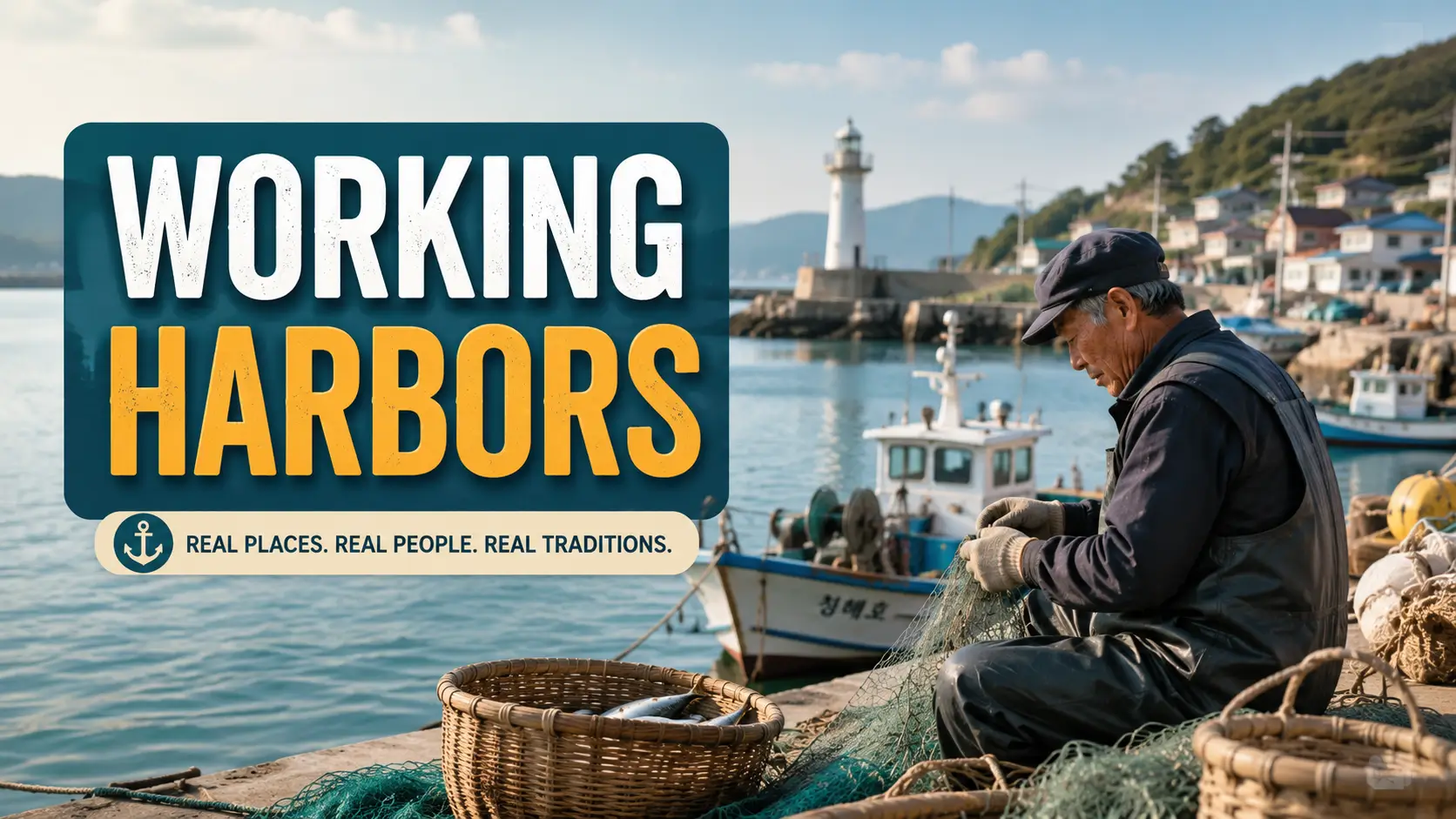
Korea slow travel guide
How Fishing Villages in Korea Balance Tourism, Aging,
and Local Tradition
A Korean fishing village is not a seaside stage set. It is a workplace, a memory bank, a food system, a retirement map, and sometimes a quiet argument between what visitors want to see and what residents need to keep living well.
For travelers, bloggers, and Korea-curious readers, the coast can look beautifully simple at first: blue nets, red lighthouses, drying squid, grandmother-run seafood stalls, a boat coughing awake before sunrise. But underneath that postcard is a harder question. How does a village welcome tourism without becoming a museum of itself?
This guide explains the balance: how aging communities use local food, small experiences, public support, and cultural pride to stay economically alive while protecting the ordinary rhythms that made visitors curious in the first place.
Travel smarter
Know what to book, where to stand, and what not to turn into content.
Read culture better
See aging, rituals, seafood work, and village pride as connected systems.
Write with care
Avoid lazy “hidden gem” language and ask who benefits after tourists leave.
A working harbor is not quiet because nothing is happening. It is quiet because you have not learned how to listen yet. 🌊
Snapshot
This article is for slow travelers, expats, Korea culture readers, and bloggers who want to understand Korean fishing villages beyond scenery. You will learn how tourism, aging, work rhythms, public revitalization, seafood culture, and visitor behavior fit together, then leave with a practical checklist for choosing and visiting one village respectfully.
Contents — choose a section
Table of Contents
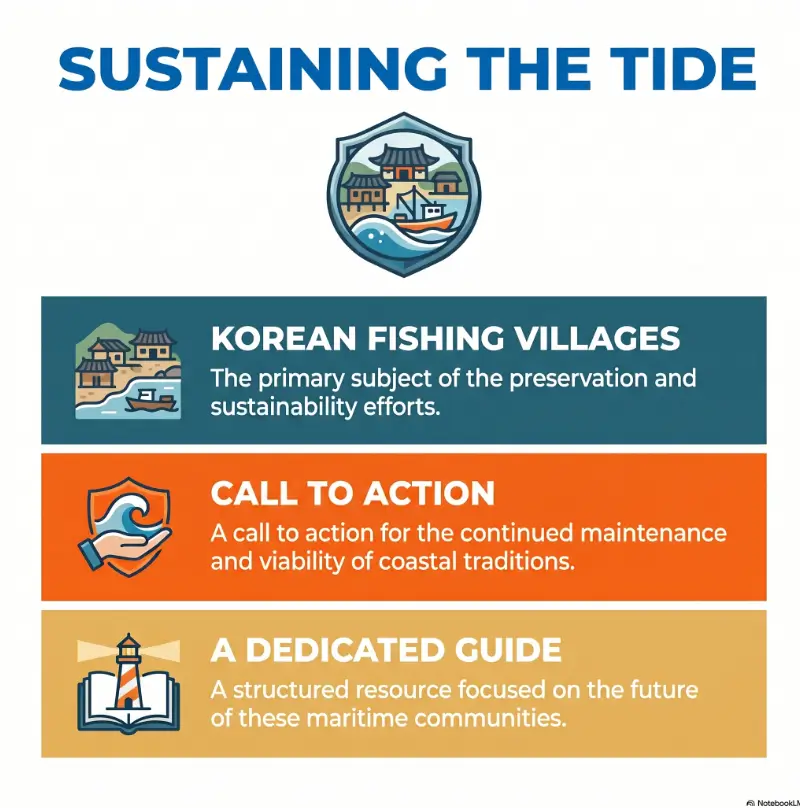
Who This Is For, and Who Should Pause
Korean fishing villages sit in a delicate place in modern travel. They are attractive because they feel local, slow, practical, and textured. They are also vulnerable because those same qualities are easy to package, photograph, and oversell.
This guide is for readers who want more than a seafood lunch with a lighthouse in the background. It is for travelers who want to understand what they are entering, expats trying to read Korea beyond Seoul, and bloggers who want their writing to respect the people who keep coastal communities alive.
For slow travelers who want the real coastline
Slow travelers usually notice things that fast tourists miss: the timing of a market, the way a dock clears after an auction, the difference between a scenic harbor and a working harbor, the sound of carts before breakfast.
If that sounds like your style, fishing villages can be deeply rewarding. The best moments often come from patience: eating what is in season, accepting a weather change, or choosing a modest guesthouse over a rushed day trip.
For Korea culture readers beyond Seoul
Korea is often explained through speed: fast trains, fast clinics, fast delivery, fast internet, fast Seoul. Fishing villages remind us that Korea also runs on tides, family labor, old tools, informal trust, and the stubborn dignity of repeated work.
That slower rhythm does not mean these villages are frozen in the past. Many are negotiating modern pressures with surprising creativity: weekend visitors, small seafood businesses, festival programs, homestays, local branding, and public renewal projects.
Not for theme-park expectations
A fishing village is not designed around your convenience. English may be limited. Seafood prices may depend on season and catch. Weather may cancel boat trips. A dock may be closed because work is happening, not because anyone forgot to welcome tourists.
If you need polished schedules, predictable menus, air-conditioned waiting rooms, and constant staff attention, a coastal resort or city market may be a better fit. There is no shame in that. Good travel begins when expectations wear the right shoes.
Key takeaway
The best Korean fishing village visit is not about finding the “most untouched” place. It is about choosing a community where visitors are welcomed without interrupting the work that keeps the village alive.
Before You Visit or Write About a Working Harbor
This is a travel and culture guide, not a local authority notice. Rules, access, prices, boat schedules, and village programs can change by season, weather, staffing, and local policy.
Before booking, check the official village page, local tourism office, ferry operator, or tour provider. If you are writing about a specific village, verify names, dates, and program details before publishing. A beautiful sentence cannot repair a wrong bus time.
What this guide can help you do
This guide helps you ask better questions. It explains why tourism matters, how aging changes village life, what traditions do beyond looking charming, and how to behave in places where residents are working while visitors are looking.
It can also help bloggers build a more ethical article. Instead of writing “quaint fishing village near Busan,” you can write about labor, seasonality, women’s work, elder knowledge, public support, and the money trail behind tourism.
What to confirm locally
- Whether the harbor is open to visitors or partly restricted.
- Whether tours, seafood meals, or homestays require advance booking.
- Whether activities depend on tide, ferry schedules, weather, or fishing season.
- Whether photography is allowed in markets, auction spaces, or work areas.
- Whether prices are posted clearly or should be confirmed before ordering.
Before you act
Use this article as a decision guide, not as a guarantee. For transportation, bookings, seafood pricing, ferry safety, accessibility, and local rules, confirm details with official tourism pages, operators, or local staff before you pay or travel.
The Quiet Tradeoff: Tourism Money Without Losing Village Life
Fishing villages need income. That part is not romantic. Boats cost money. Docks need repair. Fuel, ice, storage, safety systems, market facilities, and community halls do not maintain themselves because visitors find the sunset moving.
Tourism can help. A seafood meal, a guided walk, a homestay, a small boat experience, or a seasonal festival can bring money into a place where traditional fishing alone may no longer support enough households.
But tourism also has teeth. If a village becomes too dependent on visitors, daily life can bend toward performance. The harbor becomes a backdrop. Residents become characters. Old traditions become scheduled entertainment. The village may still look alive, while its real center quietly thins.
Tourism brings cash, but can hollow out daily life
The healthiest tourism model usually keeps the working harbor intact. Visitors can eat, learn, and participate in limited ways, but they do not control the calendar. Fishing, processing, auctions, rituals, and local errands still come first.
When tourism takes over, the village may begin to optimize for weekend traffic instead of residents. Parking expands. Souvenir menus multiply. Rents rise. Younger locals may find work serving visitors, but not always work that allows them to build a stable life there.
The real balance: income without turning elders into props
Many Korean fishing villages are aging, which makes tourism especially sensitive. Older residents often carry skills that are difficult to replace: reading weather, handling seafood, preparing local dishes, repairing nets, organizing rituals, and remembering which family did what before the road was widened.
Respectful tourism pays for that knowledge without treating elders as props. A guided explanation, a paid local meal, or a structured experience can honor expertise. A stranger pointing a camera at someone cleaning fish without asking does not.
Why “hidden gems” do not stay hidden
The phrase “hidden gem” is one of travel writing’s small velvet traps. It sounds affectionate, but it often means “a place I want to enjoy before everyone else finds it.” Once enough people write that sentence, the gem is no longer hidden.
A better question is not “Is this village undiscovered?” It is “Can this village receive visitors in a way that supports local people and protects the parts of life that should not be consumed?”
Aging at the Harbor: When the Crew Gets Smaller
Aging is often described as a problem, but in fishing villages it is also a library. Older residents know where the work is dangerous, which winds change a day’s plan, which seafood tastes best before it becomes famous, and why a ritual matters even when younger people are tired.
Still, knowledge alone cannot unload boats, run markets, maintain guest programs, cook for visitors, organize festivals, and answer booking calls. When the crew gets smaller, the whole village calendar changes.
Older residents carry skills guidebooks cannot explain
Some coastal knowledge is not written down because it has always lived in bodies. A certain knot. A certain silence before rain. The way fish are sorted without drama. The way a market auntie knows which customer needs a warning and which one needs a joke.
For visitors, this is part of the attraction. For the village, it is a succession challenge. If younger people leave for urban education and stable jobs, the village may keep its scenery but lose its operating memory.
Fewer young workers means fewer hands for everything
Fishing work is not only what happens on boats. It includes processing seafood, transporting goods, maintaining spaces, preparing food, caring for elders, managing reservations, cleaning after visitors, and keeping local associations functioning.
When young workers are scarce, tourism can become both help and burden. It brings income, but it also creates work that somebody must do. A village may need tourists, yet not have enough people to host them comfortably.
Why revitalization often means ordinary life
To outsiders, “revitalization” can sound grand: new branding, new facilities, new programs. At village level, it often means something more modest and more important. Can the dock be safe? Can older residents reach services? Can toilets, signage, paths, and market spaces work for both locals and visitors?
The best revitalization does not make a fishing village look more like a theme park. It makes ordinary life easier to continue.
Aging is not only a demographic statistic
- It affects who can fish, cook, clean, guide, repair, host, and organize.
- It changes how much tourism a village can handle without exhaustion.
- It makes elder knowledge more valuable, but also more fragile.
- It turns small infrastructure decisions into quality-of-life decisions.
Tradition as Infrastructure: The Work That Holds the Village Together
Tradition is often treated as decoration: costumes, festivals, old songs, quaint signs, local legends. In a fishing village, tradition can be closer to infrastructure. It organizes trust, timing, identity, and shared responsibility.
A market is not only a place to buy fish. A ritual is not only an event. A seasonal food is not only a menu item. These are systems that help people remember who they are, what they owe one another, and how to face uncertainty together.
Seafood auctions are local memory in motion
To visitors, a seafood auction may look chaotic: boxes, calls, quick gestures, wet floors, rapid decisions. To insiders, it is a language of trust and speed.
Who gets what, what is fresh, what price is fair, which buyer is reliable, which catch tells a story about the season: this knowledge moves quickly through the harbor. A visitor can watch from the right place and learn a lot. A visitor standing in the wrong place can become a human traffic cone.
Seasonal work teaches why timing matters
Many travelers want “the best seafood,” but fishing villages think in seasons, weather, and supply. The best choice may not be the famous dish you saw online. It may be what came in that morning, what the village is known for in that month, or what locals are quietly ordering.
This is where local food tourism becomes more than consumption. It teaches visitors that taste has a calendar. The sea is not a supermarket with waves painted on the wall.
Harbor rituals preserve identity, not just nostalgia
Coastal rituals can be easy to misunderstand. Visitors may see them as colorful culture. Residents may see them as respect, memory, protection, and continuity.
When a village keeps a ritual alive, it may be doing more than entertaining outsiders. It may be renewing bonds among households, honoring those lost at sea, asking for safety, and teaching younger residents that the village has a story worth carrying.
Key takeaway
In Korean fishing villages, tradition is not just what visitors see. It is often the operating system behind trust, timing, food, family labor, and local identity.
Show me the nerdy details
A fishing village is best understood as a layered system, not a single attraction. Four layers usually matter:
- Economic layer: fishing income, seafood sales, lodging, tours, restaurants, public investment.
- Demographic layer: aging residents, outmigration, family succession, seasonal labor gaps.
- Cultural layer: rituals, food knowledge, market etiquette, elder memory, local identity.
- Visitor layer: access, signage, booking systems, photography behavior, crowd management.
When one layer is strengthened while the others are ignored, the village can become unbalanced. A new visitor center without local staffing becomes a shell. A famous food street without fair local benefit becomes extraction with chopsticks.
Tourism That Pays Locals, Not Just Platforms
The most useful question in fishing village tourism is not “What can I do there?” It is “Who gets paid because I came?”
Money can slip away from small communities quickly. A visitor might book through a distant platform, arrive by private car, take photos, buy coffee from a chain, and leave without spending much with residents. The village absorbs traffic and cleanup while the real value travels elsewhere.
Better tourism keeps money close to shore. It pays local guides, local cooks, local fishers, local guesthouses, local shops, and community-run programs.
Homestays, seafood meals, and boat tours can keep value local
A simple overnight stay can matter more than a quick photo stop. When visitors sleep in or near a village, they often buy dinner, breakfast, snacks, transport, and small services nearby.
Local seafood meals can also support households directly, especially when the menu reflects seasonal catch rather than imported expectations. Boat tours, when safe and properly run, can help fishers diversify income without abandoning maritime knowledge.
Small experiences often beat giant attractions
A giant attraction can bring numbers. A small experience can build understanding. For aging villages, the second may be more sustainable.
A short guided harbor walk, a seafood-prep lesson, a tide-flat experience, a local market explanation, or a seasonal meal can be easier to manage than a large festival that overwhelms parking, bathrooms, and residents.
Food tourism works best when it respects supply, season, and price
Some visitors arrive with a fixed dish in mind because they saw it in a video. That can be fun, but it can also create pressure. Seafood is not always available in the same quality, quantity, or price.
A respectful traveler asks what is good today, confirms the price before ordering, and understands that local value does not always mean cheap. Sometimes the fair price is the lesson.
Respectful Fishing Village Visit Flow
1
Choose
Pick a village with official visitor information or local programs.
2
Confirm
Check tides, weather, access, booking rules, and seafood pricing.
3
Pay local
Choose resident-run meals, guides, lodging, or small experiences.
4
Stay out of work
Do not block docks, auctions, drying areas, or boat paths.
5
Share carefully
Write names, context, rules, and local benefit clearly.
Treat the harbor as a workplace before a backdrop
Check which areas are open to visitors and where boats, vehicles and equipment need access. Ask before photographing work or entering a landing area, and follow local instructions about paths and parking. A restaurant or visitor experience may present one part of village life without representing all households. If you buy a tour or activity, confirm the operator, what is included and how cancellations work instead of assuming every resident participates in tourism.
| Focus | What to check |
|---|---|
| Harbor | Keep working routes and access clear. |
| People | Ask before close-up photos or entering private areas. |
| Service | Confirm operator, scope and booking conditions. |
A reader question: How can I support a visit without disrupting work?
Use permitted routes, respect private space and choose clearly described local services. Accept that some activities and areas are working operations rather than attractions.
How to Choose a Fishing Village Experience Without Wasting Money
A good fishing village experience does not have to be expensive. It does need to be honest about what it offers. The goal is not to buy the most polished package. The goal is to choose the right level of structure for your comfort, language ability, budget, and ethics.
For US and UK travelers, the main decision is usually between wandering independently, booking a local experience, or hiring a guide. Each can be right. Each can go wrong.
Good, Better, Best options for visitors
Questions to ask before booking
- Is this a working harbor, a tourism village, or a mixed-use community?
- Does the experience use local guides, local food providers, or resident-run lodging?
- Are activities seasonal, tide-dependent, or weather-dependent?
- Are seafood prices fixed, market-based, or confirmed on arrival?
- Is photography allowed during the activity?
- Will English support be available, or should you prepare translation tools?
- What happens if weather changes the plan?
When free DIY is enough
A free or low-cost visit can be enough if you are mainly interested in coastal walking, seafood markets, bus-and-ferry travel, and quiet observation. Pair it with a local meal and a respectful attitude, and you may have a better day than someone who overbooks every hour.
DIY is less ideal if you are traveling with children, working on a serious blog article, filming content, managing mobility needs, or trying to understand rituals and local rules. In those cases, a guide or structured program can prevent both confusion and accidental rudeness.
For transportation planning, your next likely question may be how to move between smaller cities and coastal areas without renting a car. A related guide on Korea intercity bus travel can help you understand the bus side of a slower coastal itinerary.
The Visitor Trap: Don’t Turn a Living Port Into a Backdrop
The easiest mistake in a fishing village is confusing public-looking space with public space. A dock may look open. A net may look decorative. A pile of crates may look like texture for a photo. To residents, these are tools, routes, and work zones.
Good visitor behavior is often invisible. You stand aside before someone asks. You lower your camera before discomfort appears. You buy something instead of only extracting atmosphere. You let the village remain larger than your post.
Photography rules are respect rules
Harbors are photogenic because people are working. That creates an ethical pinch. The more interesting the image, the more likely it involves someone’s labor, face, tools, or private routine.
Ask before close-up photos. Avoid photographing older residents in a way that turns poverty, age, or labor into atmosphere. Do not film market negotiations without consent. If someone looks away, waves you off, or stiffens, the answer is already no.
Workspaces are not walking paths
Do not block auction spaces, boat paths, drying areas, fish tanks, forklift routes, or narrow alleys used by residents. The safest rule is simple: if people are carrying, sorting, loading, cleaning, driving, or shouting instructions, you are probably in a workplace.
Watch where locals stand. If you are unsure, step back. The sea has enough hazards without adding a tourist with a tote bag and heroic confidence.
Don’t haggle tradition into a cheap souvenir
Price sensitivity is normal. Nobody wants to be surprised by a seafood bill. But there is a difference between confirming prices and treating local labor as something to beat down for sport.
Ask clearly before ordering. Compare menus if needed. Choose a simpler meal if your budget is limited. Respectfully walking away is better than turning a family-run stall into a negotiation theater.
Key takeaway
In a working harbor, the most respectful visitor is not the one who sees everything. It is the one who notices when not to enter, not to photograph, and not to interrupt.
Illustrative Scenario: The Photo That Wasn’t Worth Taking
A traveler arrived at a small southern harbor just as the morning market was thinning. The light was perfect: silver fish, blue tubs, an older woman rinsing a knife beside a red plastic chair.
He lifted his camera. She did not speak. She simply turned her face away and placed one hand over the fish, as if protecting both the catch and the hour.
He lowered the camera, bought a modest bowl of soup nearby, and asked the owner where visitors should stand during the next auction. The owner pointed to a corner by the wall and smiled.
The best thing he took home was not a photograph. It was a rule: when a place feels alive, ask how to belong at the edge of it.
For broader everyday etiquette while moving through Korea, the guide to Korea subway etiquette is a useful companion, especially for travelers connecting coastal trips through major cities.
Common Writing Mistakes That Flatten Korean Fishing Villages
If you are a blogger, travel writer, or culture essayist, Korean fishing villages offer rich material. They also punish lazy language. A village can become flattened in one careless paragraph: quaint elders, fresh seafood, hidden gem, untouched charm, must-visit spot. The words arrive wearing comfortable shoes, and the truth quietly leaves the room.
Better writing does not need to be academic. It needs to be accurate, generous, and alert to power. Who works? Who profits? Who is photographed? Who is missing from the story?
Mistake one: calling every quiet coastal town “untouched”
Few places are untouched. Roads, migration, public policy, seafood distribution, tourism marketing, climate pressure, and family decisions all touch villages constantly.
Instead of “untouched,” try more precise language: low-traffic, working, seasonal, resident-led, less commercial, mixed-use, locally managed, or still shaped by fishing life.
Mistake two: treating aging only as sadness
Aging can bring loneliness, labor shortages, and service gaps. It can also bring authority, humor, skill, continuity, and deep local memory. Writing only the sadness turns elders into symbols. Writing only the charm turns hardship into decoration.
A stronger article holds both truths. The older fish seller is not merely picturesque. She may be a business owner, caregiver, negotiator, cook, historian, and exhausted person who would like the delivery truck to stop blocking her stall.
Mistake three: ignoring women’s labor
Fishing village stories often focus on boats and men, then treat markets and kitchens as background. That misses a large part of coastal life.
Women’s labor often appears in seafood selling, processing, cooking, lodging, family business management, informal care, and community coordination. If your article only describes boats, you may be writing about the village with one eye closed.
Mistake four: writing about authenticity without benefit
“Authentic” is not a magic word. It can hide a selfish question: did this place feel emotionally useful to me?
Replace it with practical questions. Did local residents lead the experience? Were rules clear? Did the money stay nearby? Did visitors learn how not to interrupt? Did the village retain privacy?
The Policy Layer: Why Public Support Matters
It is tempting to talk about fishing villages only through culture. But policy is part of the shoreline too. Docks, roads, safety facilities, tourism centers, waste systems, market improvements, and village renewal programs can shape whether communities can welcome visitors without making residents absorb every burden.
Korea has used public investment and marine tourism policy to support fishing village renewal, including large-scale efforts to improve hundreds of fishing communities. The useful lesson for readers is not the exact budget line. It is that village survival is rarely solved by “more tourists” alone.
Public investment can repair the boring things that matter
The boring things are often the beautiful things in disguise: safe docks, clean bathrooms, clear signs, accessible paths, better market facilities, waste handling, emergency systems, and transport connections.
Visitors may remember the seafood. Residents remember whether the drainage works, whether elders can move safely, whether traffic blocks the harbor, and whether a festival leaves the village cleaner or worse.
Tourism policy works best when residents come first
A village can receive new facilities and still feel unheard. Infrastructure without local voice risks creating spaces that look good in announcements but do not fit daily life.
Strong planning asks residents practical questions: Where do visitors block work? Which facilities do elders need? What can locals realistically staff? Which traditions should be shared, and which should remain private?
Official sources worth checking
If you are researching a specific trip or writing a factual article, use official sources as your first layer, then compare them with local information. Official pages can help with broad policy, tourism categories, safety notices, and regional programs. Local operators can tell you what is actually happening this week.
Key takeaway
Government support can help fishing villages, but the best projects do not simply build for visitors. They make resident life safer, easier, and more economically realistic.
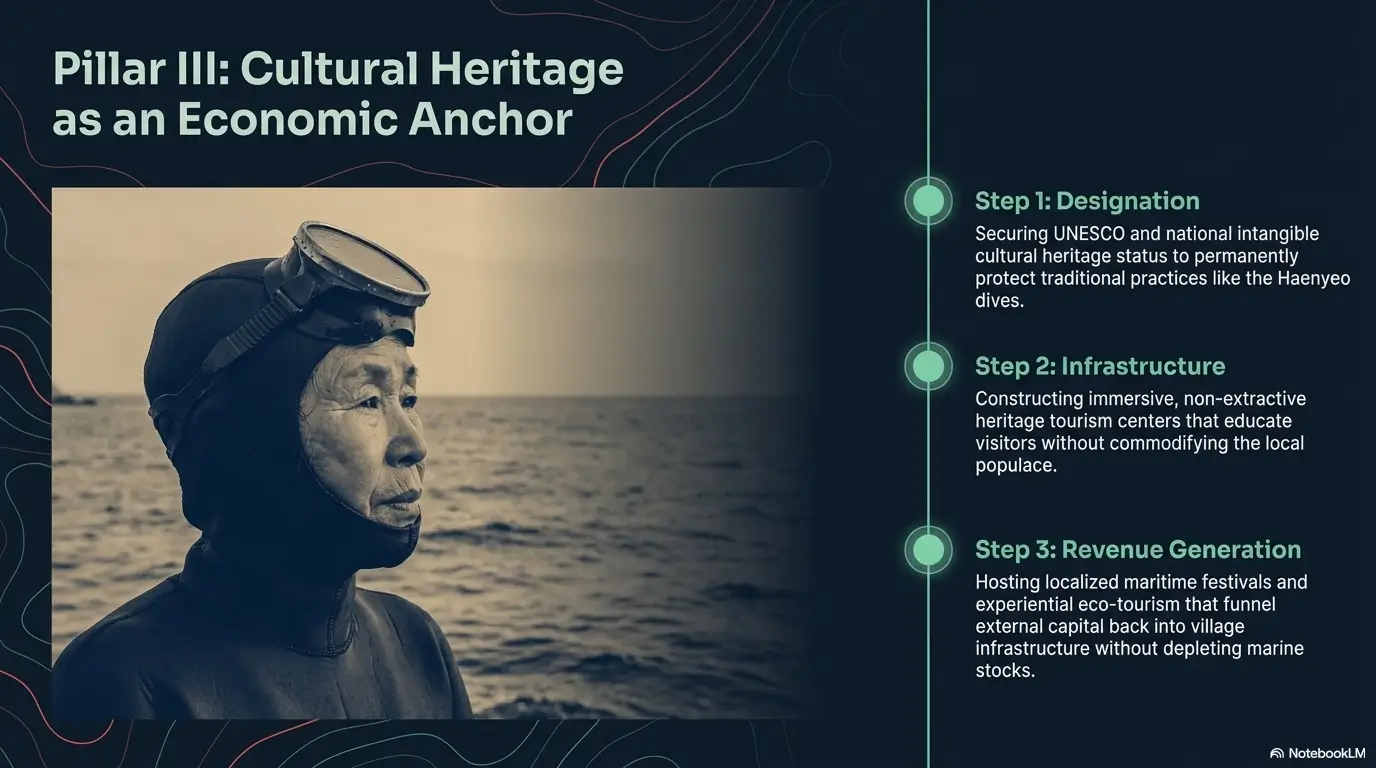
FAQ
Are Korean fishing villages good places for foreign travelers to visit?
Yes, especially for travelers who enjoy seafood, coastal walks, markets, island routes, slower itineraries, and local culture. The experience is usually better when visitors use official village programs, local guides, or small guesthouses rather than wandering into working spaces uninvited.
What is the best way to experience a Korean fishing village respectfully?
Book a local meal, stay overnight if available, follow posted harbor rules, ask before taking close-up photos, and remember that boats, nets, docks, markets, and drying areas are workplaces first.
Why are many Korean fishing villages aging?
Many young people leave small coastal communities for education, urban jobs, and more stable income. That leaves older residents carrying both practical work and cultural memory, while villages try to create enough opportunity for younger households to stay or return.
How does tourism help aging fishing communities?
Tourism can create side income through meals, tours, lodging, local products, markets, and cultural programs. It does not solve every demographic problem, but it can make staying in the village more economically realistic when managed carefully.
Can tourism harm Korean fishing villages?
Yes. Overcrowding, careless photography, rising prices, waste, noise, traffic, and shallow photo tourism can weaken the daily life visitors came to experience. Tourism helps most when residents keep control over access, rules, and benefit.
What should US and UK visitors avoid doing?
Avoid entering private work areas, touching nets or equipment, photographing residents without consent, assuming English will be available everywhere, blocking narrow harbor paths, or expecting every village to operate like a resort.
Are fishing village experiences available near major Korean cities?
Yes. Coastal areas near Busan, Geoje, Tongyeong, Yeosu, and parts of Korea’s west and south coasts offer village-style experiences, seafood markets, scenic ports, and island routes. Always confirm current access and schedules before traveling.
What makes Korean fishing villages different from beach towns?
Fishing villages are built around work, tides, seafood distribution, family labor, seasonal risk, and community memory. A beach town may sell leisure. A fishing village is still negotiating survival.
Your 15-Minute Next Step: Read the Rules Before the Reviews
The best next step is small. Choose one Korean fishing village, coastal market, island route, or seafood experience that interests you. Before reading reviews, look for the local rules.
Check whether it is a working harbor, tourism village, or mixed-use community. Look for access notes, photography guidance, seasonal limits, booking requirements, ferry or bus connections, and seafood price information. Then write down three questions: where should I stand, what should I not photograph, and how are local residents paid?
That 15-minute habit changes the whole visit. You stop arriving as a collector of scenes and start arriving as a temporary guest in someone else’s working day. The harbor does not become less beautiful. It becomes more real.
Final practical checklist
- Pick one village or coastal route, not five rushed stops.
- Confirm transport, weather, tides, and booking rules.
- Choose at least one local meal, guide, lodging, or resident-run program.
- Ask before close-up photography.
- Stay clear of docks, auctions, drying areas, and boat paths.
- Write about the village as a living community, not a decorative pause between cities.
Last reviewed: 2026-07
Practical example and reader question added October 20, 2026. Existing source dates are retained; this addition is not a fresh verification of every earlier claim.