
South Korea health insurance guide for remote workers
Private Health Insurance for Digital Nomads in South Korea:
The Coverage Gap Most Travelers Miss
South Korea is wonderfully efficient until a hospital cashier asks how you plan to pay. The clinic may be fast, the subway may glide in like clockwork, and the pharmacy may hand over medication in a neat paper packet, but insurance is where the calm surface can wrinkle.
For US and UK remote workers, freelancers, and expat-style travelers, the real question is not simply “Can I get medical care in Korea?” Usually, yes. The sharper question is whether your private health insurance will satisfy your visa paperwork, protect your cash flow, cover outpatient care, handle prescriptions, and still make sense if your stay stretches beyond six months.
This guide walks through the practical middle ground between tourist travel insurance and full resident-style coverage. No sales fog. No cheerful brochure jazz. Just the decision points that keep a one-year Korea stay from turning into an expensive paperwork scavenger hunt.
Visa-ready thinking
Check whether your policy can produce documentation that matches Korea-specific requirements.
Hospital cash-flow clarity
Know the difference between direct billing, reimbursement, deductibles, and paying first.
Long-stay protection
Plan for private coverage, possible NHIS enrollment, and the awkward overlap between the two.
A good Korea insurance setup is not the cheapest policy. It is the one that still works on a rainy Tuesday when you actually need care. 🧭
Snapshot
This article is for remote workers, freelancers, and longer-stay travelers comparing private health insurance for a 1 to 24 month stay in South Korea. You will learn what to compare before buying, how Korea’s National Health Insurance rules may affect longer stays, what documents to save, and how to run a one-page coverage audit before paying for a policy.
Table of Contents
Before You Buy: What This Guide Can And Cannot Do
Health insurance is one of those topics that looks boring until it suddenly becomes the whole room. For digital nomads in South Korea, the biggest risk is not usually access to decent hospitals. It is assuming that “coverage abroad” means your policy will behave nicely when a clinic asks for payment, a visa officer asks for proof, or an insurer asks whether your condition was pre-existing.
This guide is educational. It can help you compare private health insurance options, understand common exclusions, prepare better questions, and avoid obvious buying mistakes. It cannot tell you which policy is best for your medical history, guarantee visa approval, replace a licensed broker, or interpret Korean immigration and health insurance rules for your exact case.
Before you rely on any plan, confirm the policy wording with the insurer, check visa requirements with the relevant Korean consulate or visa center, and review longer-stay health insurance obligations with official Korean resources. A tidy spreadsheet cannot rescue a messy assumption.
Key takeaway
Do not buy private health insurance for Korea based only on the monthly price. Compare documentation, reimbursement rules, outpatient benefits, emergency return home language, exclusions, and what happens if your stay crosses the six-month line.
Why this topic is high risk
Insurance mistakes can affect medical bills, visa paperwork, emergency evacuation, prescription continuity, and the timing of care. A weak policy may look fine when nothing happens. It only reveals its tiny teeth when you need a specialist appointment, a reimbursement claim, or proof that your coverage includes emergency return home.
The goal is not to scare you into overbuying. It is to help you buy the right level of protection without paying for shiny extras that do not solve your actual Korea problem.
Who should get professional help first
Consider speaking with a licensed insurance broker, physician, immigration professional, or benefits specialist before choosing a plan if you have a chronic condition, recent surgery, ongoing medication, mental health care needs, maternity-related needs, dependents, or a stay that may become resident-style.
The same applies if you cannot comfortably pay a large bill first and wait for reimbursement. A reimbursement-only plan can be perfectly reasonable for one traveler and financially brutal for another.
The Korea Coverage Puzzle: Private Insurance, NHIS, Or Both?
South Korea can be unusually smooth for everyday medical care. Clinics are common, pharmacies are easy to find, and larger hospitals often have systems for international patients. Still, that does not mean every private insurance plan will work gracefully there.
For digital nomads, the puzzle has three pieces: private international coverage, Korean National Health Insurance for longer-stay foreigners, and whatever limited protection you may already have through a credit card or home-country plan. The expensive part is assuming those pieces overlap neatly. They often do not.
Private insurance handles the arrival gap
Private health insurance is often most useful at the beginning of a Korea stay. You may need proof of coverage for a visa application, help with urgent care before you understand the local system, or protection if you are not yet enrolled in any resident-style program.
For a three-month workation, a private plan may be the main safety net. For a year-long stay, it may still matter, but it should be compared against possible Korean National Health Insurance obligations and benefits.
NHIS may matter after longer residence
Korea’s National Health Insurance Service explains that many foreigners and overseas Koreans who stay in Korea for more than six months may be subject to mandatory health insurance subscription. Details can depend on visa status, registration, exceptions, and timing, so treat the six-month mark as a planning checkpoint rather than a vague rumor.
Private insurance and NHIS do not necessarily cancel each other out. You may use one for visa documentation, emergency return home, broader international protection, or care outside Korea, while NHIS may affect domestic medical access and cost-sharing once you qualify or are required to enroll.
The awkward overlap: paying for two systems
The awkward zone appears when a traveler pays for a private international policy and later becomes subject to Korean health insurance rules. That can feel unfair, especially if the private plan was expensive.
The answer is not always to avoid private coverage. Instead, ask whether the private plan adds value that NHIS does not, such as evacuation, repatriation, care in other countries, English-language claim support, or coverage before local enrollment starts.
| Coverage source | What it may help with | What to verify before relying on it |
|---|---|---|
| Private international health insurance | Visa proof, inpatient care, outpatient care, emergency evacuation, repatriation, care outside Korea | Korea is included, remote work is not excluded, documentation is available, pre-existing condition rules are clear |
| Travel insurance | Short-trip emergencies, trip interruption, lost baggage, limited medical events | Long-stay limits, remote work rules, medical maximums, exclusions for routine or ongoing care |
| Korean National Health Insurance | Resident-style access to covered medical care in Korea | Eligibility, mandatory enrollment timing, premiums, dependent rules, benefits, exceptions |
| Home-country health insurance | Sometimes emergency abroad coverage or reimbursement | International network, prior approval rules, claim process, exclusions, maximums |
Key takeaway
“Covered in Korea” can mean three different things: the insurer accepts Korea as a destination, the policy pays for the type of care you need, and the documentation satisfies the institution asking for proof. You want all three.
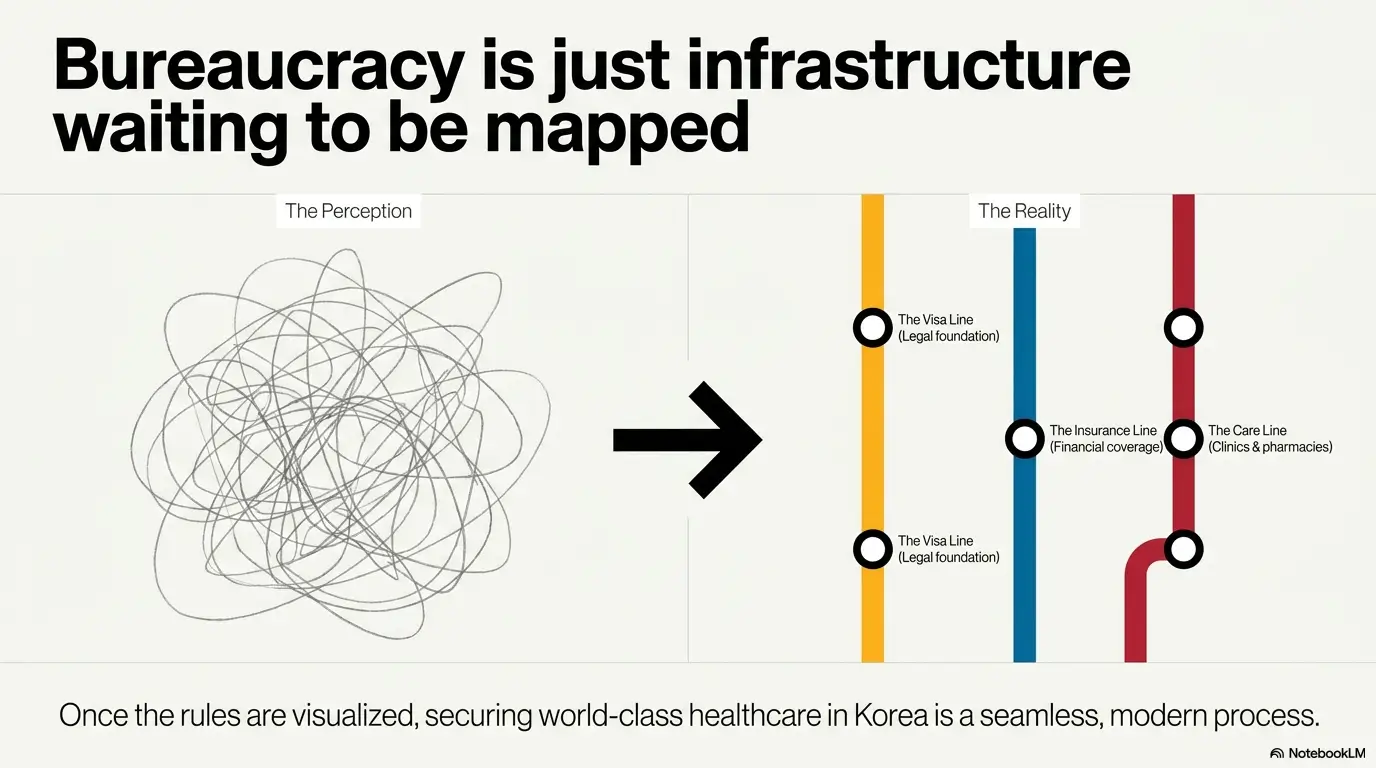
The Visa-Ready Policy Test Before You Pay
Korea’s workation or digital nomad visa materials have included medical insurance requirements that refer to medical treatment and repatriation or emergency return home. Requirements may vary by consulate and may be updated, so the safest move is to check the official page for the location where you apply before purchasing.
Here is the practical rule: do not buy a policy first and hope the certificate will look right later. Insurance paperwork is not a souvenir. It must say the right things, cover the right dates, and be easy to submit.
Does the plan show medical treatment coverage clearly?
A visa reviewer does not want to decode a cheerful benefits brochure. You should be able to produce a certificate or policy document that clearly lists medical treatment coverage, coverage amount, insured person, policy period, and destination or worldwide coverage language.
If the quote page says “international coverage” but the certificate is vague, ask the insurer for a sample document before paying. This one email can save a week of paperwork soup.
Does it include repatriation or emergency return home?
Medical evacuation and repatriation are not the same as routine hospital care. Repatriation usually refers to returning you to your home country after a serious medical event or death. Emergency return home language may be required or helpful for visa documentation, depending on the specific instructions you are following.
Ask the insurer to identify the exact policy section that covers repatriation, emergency medical evacuation, or emergency return home. If the support agent answers with fog and confetti, keep asking until you have the wording in writing.
Can you get an acceptable certificate?
Many digital nomad insurance mistakes are not medical mistakes. They are document mistakes. The dates do not match the planned stay. The name does not match the passport. The benefit maximum is hidden. The destination is unclear. The repatriation clause is buried in a separate booklet.
Before you buy, ask whether the insurer can provide a certificate of insurance that includes your full legal name, coverage dates, geographic coverage, medical maximum, emergency evacuation or repatriation wording, and insurer contact details.
Visa paperwork checklist
- Full name matches passport exactly.
- Coverage dates match or exceed intended stay.
- South Korea or worldwide coverage is clearly stated.
- Medical treatment coverage is visible.
- Emergency evacuation, repatriation, or return-home wording is included when required.
- Benefit maximums are shown in a way a reviewer can understand.
- Certificate is available as a clean PDF, not only a web dashboard screenshot.
Hospital Billing Reality: Seoul Is Convenient, But Cash Flow Still Matters
South Korea’s medical system can feel astonishingly efficient to visitors from the US or UK. A small clinic visit may be fast. A pharmacy pickup may take minutes. Even so, convenience does not erase billing risk.
The key question is whether your insurer pays the hospital directly or expects you to pay first and file a claim later. That distinction can determine whether a medical event is annoying, manageable, or financially ugly.
English-speaking clinics are helpful, not magical
English-speaking clinics and international centers can reduce friction, especially in Seoul. They may help with appointment booking, translations, medical records, and receipts. But they are not a guarantee that your insurer will approve direct billing or waive payment at the counter.
Think of English-language support as a bridge, not a payment system. You still need to understand how the claim is handled.
Direct billing vs reimbursement: the cash-flow trap
Direct billing means the provider and insurer may coordinate payment, usually after approval. Reimbursement means you pay first, collect the correct documents, submit a claim, and wait.
For small clinic visits, reimbursement may be fine. For hospital admission, imaging, surgery, or specialist treatment, paying first can be a very different kettle of kimchi. Ask the insurer whether direct billing is available in Korea and whether it requires prior authorization.
| Billing model | Best for | Main risk | Question to ask |
|---|---|---|---|
| Pay first, claim later | Minor outpatient visits, travelers with cash reserves | Reimbursement delays or denied claims | What documents are required from a Korean clinic? |
| Direct billing with approval | Higher-cost care, hospital admission, planned specialist care | Provider may not participate or approval may take time | Do you have direct billing arrangements in South Korea? |
| Emergency guarantee of payment | Serious emergencies or admission | May require hotline contact before or soon after treatment | What is the 24/7 emergency process in Korea? |
Real-world example: hospital receipt friction
Imagine a freelancer in Seoul with a reimbursement-only policy. She gets a stomach infection, visits a clinic, pays at the counter, and receives a receipt in Korean. The visit is not a disaster. The problem starts when the insurer asks for diagnosis codes, proof of payment, an itemized statement, and a translated explanation.
Now imagine the same traveler has saved a claim checklist before the visit. She asks the clinic for the receipt, treatment confirmation, prescription record, and itemized bill while still there. Same illness. Very different paperwork ending.
The lesson is small but mighty: do not leave the building until you have the documents your insurer usually requires.
The Pre-Existing Condition Clause That Deserves A Magnifying Glass
Pre-existing condition wording is where many otherwise smart travelers suddenly become optimistic poets. They skim, assume, and click buy. Please do not do that.
If you take medication, have a diagnosed condition, recently changed treatment, or expect follow-up care, this section may matter more than the headline premium. A lower monthly price is not a bargain if the condition you actually need help with is excluded.
Stable condition coverage vs total exclusion
Some policies exclude all pre-existing conditions. Others may cover a condition if it has been stable for a defined period. Some may cover only emergency flare-ups, not routine care. The definitions matter.
Ask how the plan defines “pre-existing,” “stable,” “acute onset,” “routine care,” and “maintenance medication.” If the answer affects a condition you have, get the response in writing before buying.
Medication continuity is not a side quest
Remote workers often think about laptop chargers before medication continuity. That is understandable, but risky. ADHD medication, anxiety medication, diabetes supplies, asthma inhalers, thyroid medication, and other ongoing prescriptions may require advance planning.
Private insurance may not cover routine refills, imported medications, or consultations needed only to continue an existing prescription. Korea also has its own prescribing rules, pharmacy practices, and controlled-substance restrictions.
If prescriptions are central to your daily life, talk to your prescribing physician and insurer before departure. Build a written plan for what you will bring, what you can refill locally, and what documentation you need.
Routine care and emergency flare-ups are different
A policy may cover an emergency asthma attack but not routine asthma management. It may cover urgent abdominal pain but not ongoing gastroenterology care for a known condition. It may cover a new injury but not physical therapy related to an old one.
That difference can feel unfair when you are the patient, but insurers usually follow contract wording. Read the benefits table and exclusions together. The exclusions are where the little trapdoors live.
Key takeaway
If you have ongoing medical needs, compare policies by what they exclude first. Premiums are visible. Exclusions are where the expensive surprises often hide.
What To Compare On The Quote Page, Not The Homepage
Insurance homepages are designed to make you feel safe. Quote pages are where you begin to find out whether you actually are.
When comparing private health insurance for digital nomads in South Korea, do not stop at the monthly premium. The best plan for a healthy three-month visitor may be a poor fit for a freelancer staying 18 months with medication, dependents, and no appetite for reimbursement delays.
Annual maximum and deductible details
The annual maximum is the upper limit the insurer may pay, but the useful number depends on exclusions, sub-limits, and whether the maximum applies globally or by benefit type. A big headline number can shrink quickly if outpatient care, prescriptions, or evacuation have separate caps.
Deductibles can be per year, per claim, per condition, or per policy period. A deductible that looks low may behave differently if every separate problem triggers a new cost.
Outpatient care is the daily-life benefit
Inpatient coverage is essential for serious events, but outpatient care is what many nomads actually use. Think clinic visits, specialist consultations, diagnostic tests, follow-ups, and physical therapy.
If a cheaper plan excludes outpatient care, it may still protect against a catastrophe, but it may not help with the normal medical friction of living abroad. That can be fine if you knowingly choose it. It is not fine if you discover it while holding a clinic receipt.
Prescriptions, dental, vision, and mental health
Many policies treat these categories separately. Some include them only on higher tiers. Others exclude routine care entirely or apply waiting periods.
For a short stay, you may be comfortable paying out of pocket for dental cleanings or basic vision care. For a longer stay, especially with family members, those gaps deserve a line in your budget.
Claims support and the email labyrinth
A plan with a 24/7 hotline, clear claim forms, and experience handling international documents may be worth more than a cheaper plan that routes everything through slow email support.
Ask how claims from Korean hospitals should be submitted, whether documents need translation, how long reimbursement usually takes, and whether urgent cases have a separate emergency assistance line.
| Plan level | May be enough for | What it should include | Watch out for |
|---|---|---|---|
| Good | Short stays, healthy travelers, strong cash reserves | Emergency medical care, clear Korea coverage, repatriation if required | Low outpatient benefits, reimbursement-only claims, strict exclusions |
| Better | Remote workers staying several months | Outpatient care, prescriptions, reasonable deductible, emergency hotline | Pre-existing condition limits, document problems, sub-limits |
| Best | Longer stays, families, chronic care needs, low tolerance for cash-flow risk | Higher medical maximum, direct billing options, broader outpatient benefits, evacuation, strong support | Higher premium, overlap with NHIS, waiting periods |
Show me the nerdy details
When comparing quotes, build a simple “expected use” model. Estimate how many clinic visits, prescriptions, specialist appointments, and urgent-care events you might reasonably face during your stay. Then compare that against premium, deductible, co-insurance, outpatient caps, and reimbursement timing.
A lower-premium plan can win if you are mainly protecting against rare emergencies and can pay routine care out of pocket. A higher-premium plan can make more sense if you need medication continuity, mental health support, family coverage, or direct billing options.
The quiet variable is cash flow. A policy that reimburses 90% later can still hurt if you must pay 100% today and wait weeks for approval.
The 3-Bucket Decision Framework For 1 To 24 Month Stays
The simplest way to choose insurance for South Korea is to sort yourself by stay length and administrative complexity. A one-month traveler, a 10-month F-1-D applicant, and a family planning two school terms in Seoul are not buying the same kind of protection.
Use the buckets below as a starting point. Then adjust for health history, dependents, cash reserves, and visa path.
Korea Nomad Insurance Decision Flow
Bucket 1
Under 6 months
Focus on emergency medical care, outpatient basics, repatriation if needed, and reimbursement rules.
Bucket 2
Visa paperwork stay
Prioritize certificate wording, coverage dates, medical maximums, and emergency return home language.
Bucket 3
Beyond 6 months
Plan for possible NHIS enrollment, private policy overlap, local care access, and long-term medication needs.
Hidden fourth bucket: families. Add dependents, school schedules, pediatric care, dental, prescriptions, and emergency travel planning.
Bucket 1: short stay under six months
If your stay is under six months and you are not entering a resident-style setup, private international insurance or robust travel medical coverage may be enough. The best way to choose is to match the plan to your likely use.
A healthy solo freelancer may prioritize emergency care, outpatient visits, and repatriation. A cautious buyer may pay more for lower deductibles and stronger claim support. A traveler with ongoing medication should move more carefully and verify prescription rules before departure.
Bucket 2: long stay with visa paperwork
If you are applying for a workation or digital nomad-style visa, documentation becomes part of the product. A policy that is medically decent but administratively vague may still create trouble.
Ask for the certificate before buying when possible. If that is not possible, ask for a sample. Confirm that the policy period covers your intended stay, especially if your arrival date could shift by a few days.
Bucket 3: resident-style stay where NHIS may matter
For stays beyond six months, review Korean National Health Insurance guidance before assuming private coverage is the whole answer. Depending on your status, you may face enrollment rules, premium obligations, or domestic coverage considerations.
Private insurance may still be useful if it covers care outside Korea, evacuation, repatriation, or benefits not handled the way you want locally. But you should know why you are paying for each layer.
Families are the hidden fourth bucket
Families need a more careful comparison. Children may need pediatric visits, vaccines, urgent care, dental treatment, prescriptions, or school-related documents. A spouse or dependent parent may have separate medication or chronic care needs.
Do not simply multiply a solo traveler plan by three people and call it a strategy. Ask about family deductibles, dependent eligibility, maternity exclusions, pediatric benefits, dental and vision, and whether each person receives separate visa-ready documentation.
Common Mistakes That Make Good Plans Fail
Some plans fail because they were weak from the start. Others fail because the buyer used them in the wrong situation. The difference matters. A perfectly respectable short-trip policy can be a poor choice for a remote worker living in Korea for a year.
Here are the mistakes that deserve a bright sticky note before you click pay.
Mistake 1: buying travel insurance for expat-style needs
Travel insurance is often built around trips. It may focus on emergencies, cancellations, baggage, and short-term disruption. Expat-style private medical insurance is more likely to address ongoing medical access, outpatient care, longer stays, and broader health coverage.
Neither category is automatically better. The issue is fit. A short-stay traveler may not need an expensive global medical plan. A 12-month remote worker may quickly outgrow a basic travel policy.
Mistake 2: ignoring evacuation because Korea has excellent hospitals
Korea’s medical quality is not the only issue. Evacuation and repatriation coverage may matter for severe cases, family logistics, end-of-life situations, or visa documentation. It is not an insult to Korean hospitals. It is a contingency plan.
Ask who decides whether evacuation is medically necessary, which hotline must be called, and whether the insurer pays directly or reimburses later.
Mistake 3: choosing the cheapest premium without checking cash reserves
A high deductible can make sense if you have savings and mainly want catastrophic protection. It can be painful if you need regular care or cannot comfortably pay upfront.
The practical comparison is not “cheap versus expensive.” It is premium plus likely out-of-pocket costs plus claim friction plus your ability to handle a surprise bill.
Mistake 4: assuming US insurance works abroad
Some US health plans provide limited emergency coverage abroad. Others may offer reimbursement under narrow conditions. Many are not designed to function as everyday international medical coverage.
Before relying on a home-country plan, ask about South Korea specifically, direct billing, emergency versus routine care, prior authorization, claim documents, and whether foreign-language receipts are accepted.
Do not do this
- Do not rely only on credit card travel benefits for a long stay.
- Do not use a plan that excludes remote work or longer stays.
- Do not hide pre-existing conditions to lower the quote.
- Do not let your policy lapse during visa renewal season.
- Do not assume a PDF insurance card means the hospital will bill your insurer directly.
Documents, Claims, And Korea-Specific Proof To Save
The best insurance plan can still become a paper chase if you do not save the right documents. Korea’s medical receipts may be efficient, but your insurer may need specific proof before approving reimbursement.
Create a small digital folder before you travel. It should be boring, clear, and ready. Future-you will be grateful in the quiet, unglamorous way that matters.
What to save before you leave
Before departure, save your policy certificate, full policy wording, insurer hotline, claim form, pre-authorization instructions, emergency assistance number, and any visa-related insurance certificate. Keep copies in cloud storage and offline on your phone.
If you take medication, save a physician letter, prescription details, generic drug names, dosage, and relevant medical history. Do not rely only on brand names from your home country.
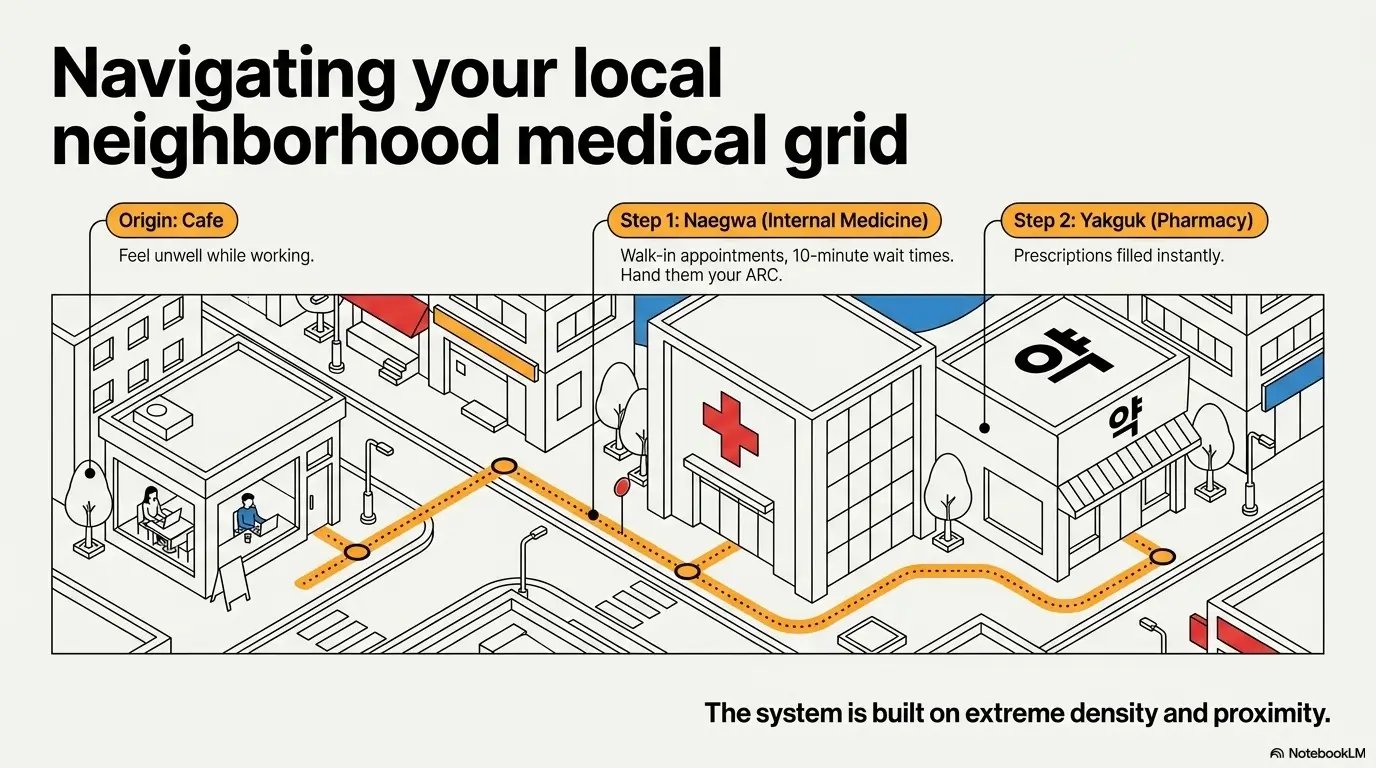
What to ask for at a Korean clinic
At a clinic or hospital, ask for documents before you leave the counter. You may need an itemized receipt, payment confirmation, diagnosis or treatment confirmation, prescription record, and any test results related to the claim.
If the insurer requires English documents, ask whether the hospital can provide English versions or whether translation is your responsibility. International clinics may be easier here, but do not assume.
Claim folder template
Korea insurance claim folder
- Policy certificate and full policy wording
- Emergency hotline and claim email
- Passport and visa copy, if relevant
- Clinic or hospital receipt
- Itemized bill or treatment statement
- Diagnosis or visit confirmation
- Prescription record and pharmacy receipt
- Photos of medication labels, if relevant
- Claim form and date submitted
- Follow-up emails from insurer
For longer stays, also save NHIS-related notices, premium documents, registration paperwork, and any proof of enrollment or exemption that applies to your situation.
If you are still learning how Korean medical visits work, related practical guides on Korean hospital admission, prescription filling in Korea, medical translation in Korea, and Korean pharmacies for foreigners can help you understand the on-the-ground process before your insurance card is tested.
FAQ
Can digital nomads use private health insurance in South Korea?
Yes, many digital nomads use private international health insurance or travel medical coverage while staying in South Korea. The important part is confirming that South Korea is covered, the policy fits your stay length and visa path, and the claim process works for Korean medical documents.
Is travel insurance enough for a remote worker in Korea?
Sometimes. Travel insurance may be enough for a short stay if you mainly want emergency protection and trip-related benefits. For longer stays, ongoing care, prescriptions, visa documentation, or family coverage, expat-style private medical insurance may be a better fit.
Do US health insurance plans cover medical care in South Korea?
Some US plans offer limited international emergency coverage, but many are not built for routine medical care abroad. Ask your insurer about South Korea specifically, including emergency versus non-emergency care, prior approval, reimbursement, direct billing, and required documents.
What insurance proof might Korea’s digital nomad visa require?
Korea’s digital nomad or workation visa materials have included proof of medical insurance with medical treatment and repatriation or emergency return home coverage. Requirements can change and may vary by application location, so check the current official instructions before buying a policy.
Do foreigners have to join Korean National Health Insurance?
Many foreigners who stay in Korea for more than six months may be subject to National Health Insurance enrollment rules. Eligibility, exceptions, and timing can depend on visa status and registration details, so check NHIS guidance or ask the relevant office before assuming private insurance is enough.
What should private insurance cover for Korea?
At minimum, compare inpatient care, outpatient visits, emergency treatment, prescriptions, medical evacuation, repatriation, pre-existing condition rules, deductible structure, claim support, and Korea-specific documentation. For longer stays, also compare how private coverage interacts with possible NHIS enrollment.
Is medical evacuation coverage necessary in South Korea?
It may still be worth considering, even though South Korea has strong medical facilities. Evacuation and repatriation coverage can matter for severe medical events, family logistics, home-country treatment decisions, or visa documentation requirements.
Can I use private insurance and Korean NHIS at the same time?
In some situations, yes, but the roles may differ. NHIS may help with covered care in Korea, while private insurance may help with evacuation, repatriation, international care, or benefits outside the local system. Review both sets of rules so you do not pay twice for protection you do not need.
Run The One-Page Coverage Audit In 15 Minutes
The final move is simple: turn the whole decision into one page. Not a novel. Not a 14-tab spreadsheet with the emotional energy of a tax cave. One page that shows your stay, your risks, your documents, and your next question.
Set a timer for 15 minutes and write down the following. If you cannot answer a line, that is not failure. That is the exact place to email the insurer, contact a broker, check NHIS, or review the visa page before buying.
15-minute Korea coverage audit
- Write your exact planned arrival and departure dates.
- Write your visa path, including whether you may apply for the F-1-D workation visa.
- Mark whether your stay may pass six months.
- List your non-negotiable medical needs: medication, chronic care, mental health, maternity, pediatric care, dental, or specialist visits.
- Ask the insurer for Korea-specific proof of coverage before buying.
- Compare direct billing, reimbursement, deductible, outpatient care, prescriptions, exclusions, evacuation, and repatriation.
- Create a digital folder for policy documents, claim forms, hotline details, and Korean medical receipts.
For a short, healthy stay, the audit may show that a modest plan is enough. For a visa-based or longer stay, it may reveal that documentation, NHIS timing, outpatient care, and claim support matter more than shaving a few dollars off the monthly premium.
That is the quiet promise of good insurance planning. It does not make travel risk disappear. It simply keeps a medical problem from becoming a financial riddle written in three languages.
Last reviewed: 2026-08