

Employment rights in South Korea
Korea Labor Board Claims for Foreign Employees:File in the Right Place Before the Clock Runs Out
Being dismissed in another country can make an ordinary employment dispute feel strangely weightless. The company has your laptop, your visa may be connected to the job, and the documents that matter are written in a language you may not read confidently. Meanwhile, a legal deadline may already be moving.
The first challenge is not proving that the employer behaved badly. It is identifying the exact employment action, the remedy you want, and the government body allowed to provide it. An unfair-dismissal case, an unpaid-wage complaint, a discrimination issue, and an immigration problem can arise from the same termination, yet travel through different doors.
This guide helps foreign employees, overseas HR teams, and advisers turn a tangled workplace story into a practical claim map. You will learn how to identify the correct forum, protect the three-month filing period, test worker eligibility, organize evidence, compare free and paid help, and prepare for the Regional Labor Relations Commission process.
Choose the forum
Separate commission claims, Labor Office petitions, court remedies, and immigration issues.
Protect the deadline
Identify the challenged action and the date from which the filing clock may run.
Build the record
Turn contracts, messages, payroll files, and timelines into evidence an investigator can follow.
Your strongest first move is not a long accusation. It is a one-page map of the action, date, forum, evidence, and remedy. 🧭
Snapshot
This article is for foreign employees working in South Korea and overseas HR teams responding to Korean employment disputes. It explains how to distinguish an unfair-dismissal remedy request from an unpaid-wage petition, check the three-month deadline and five-worker threshold, prepare evidence, and decide whether free guidance, translation support, a certified public labor attorney, or a lawyer may be appropriate.
Table of Contents
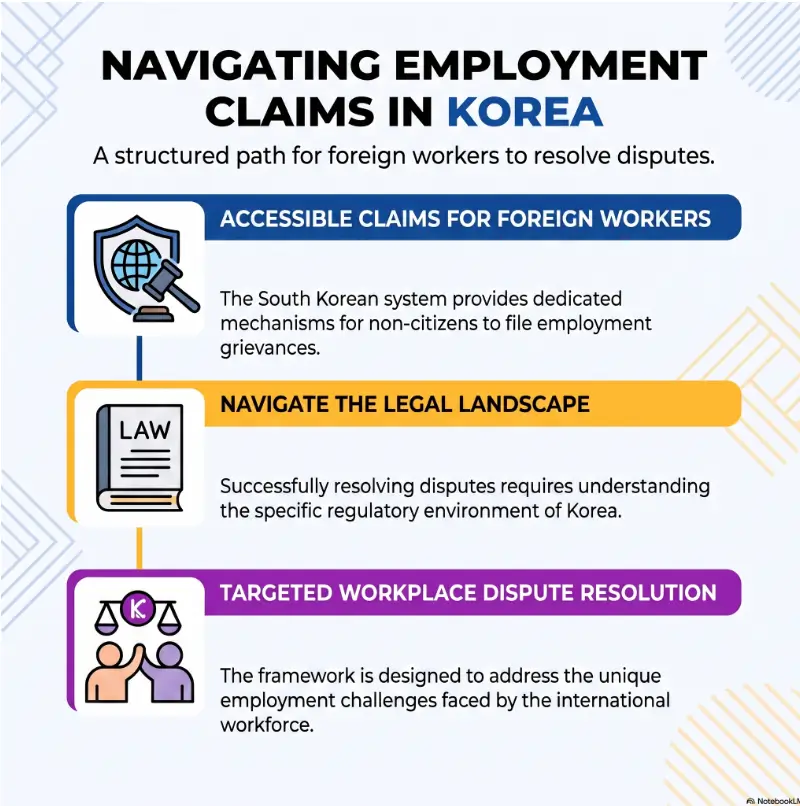
Labor Board or Labor Office? Choose the Remedy Before the Building
A foreign employee can have several valid complaints arising from one workplace event. The dangerous assumption is that all of them belong in a single “labor board claim.” In South Korea, the forum usually depends on the legal remedy being requested.
A dismissal may support an unfair-dismissal remedy request before a Regional Labor Relations Commission. The same departure may also create an unpaid-salary, overtime, severance, or statutory-allowance complaint handled by a local Employment and Labor Office. A visa issue may require immigration guidance, while contractual damages may require negotiation or civil proceedings.
Commission claims focus on the employer’s personnel action
The Labor Relations Commission system handles requests concerning unfair dismissal and certain other adverse personnel measures, including suspension, transfer, wage reduction, forced leave, and disciplinary punishment. It also handles specified labor-union and non-regular-worker discrimination matters.
The central question is usually not whether the workplace felt unpleasant. It is whether an identifiable employer action was legally unjustified or procedurally defective and whether the commission has authority to order a remedy.
Labor Office petitions focus on statutory violations
Unpaid wages, delayed salary, overtime, statutory allowances, and many Labor Standards Act violations are normally raised through the competent local Employment and Labor Office. A labor inspector may investigate records, question the parties, seek corrective payment, and consider further enforcement steps where appropriate.
This means a dismissed employee might need two parallel tracks: one challenging the dismissal and another seeking money already earned. Filing the first does not automatically file the second.
| Primary issue | Usual starting forum | Typical objective | Immediate question |
|---|---|---|---|
| Unfair dismissal, suspension, transfer, or disciplinary action | Regional Labor Relations Commission | Reinstatement-related relief, correction, back-pay-related relief, or qualifying monetary compensation | Was the request filed within three months? |
| Unpaid salary, overtime, severance, or statutory allowance | Local Employment and Labor Office | Investigation and payment of legally due amounts | Which workplace office has jurisdiction? |
| Contract damages or losses outside commission authority | Civil negotiation or court | Damages, debt recovery, attachment, or enforcement | What contract, limitation period, and evidence apply? |
| Visa sponsorship or work-status problem | Immigration authority or qualified immigration adviser | Maintain lawful status, report a change, or assess work permission | Does termination trigger a separate immigration deadline? |
| Assault, threats, urgent safety risk, or serious criminal conduct | Police, emergency, safety, or other specialized authority | Immediate protection, investigation, or safety enforcement | Is urgent intervention needed now? |
Key takeaway
Do not file by emotion or by agency name. Write down the remedy you want first. The requested remedy usually points toward the correct forum.
Real-world example: one termination, two forums
Imagine an English-speaking software employee receives a written dismissal notice effective Friday. The final month’s salary and unused expense reimbursement are not paid.
The employee believes the performance explanation is false and has records showing positive reviews. The employee may consider an unfair-dismissal remedy request before the appropriate Regional Labor Relations Commission. The unpaid salary may require a separate petition to the local Employment and Labor Office.
Combining both complaints into one emotional letter and sending it to the nearest government office can waste valuable days. A simple two-row issue map is usually more useful than a twenty-page narrative.
Before You Act: What This Guide Cannot Decide for You
Legal information, not case-specific advice
This article explains general Korean employment-law procedures. It cannot determine whether you are legally an employee, whether a dismissal was justified, which date starts your filing period, or what remedy will be ordered in your case.
Korean statutes and administrative practices may change. English translations are useful reading aids, but the Korean-language law and current official procedure should be confirmed before an important filing. When a deadline is close, seek current guidance promptly rather than relying on continued HR discussions.
The official Korean Law Information Center provides English-language legal materials, while the National Labor Relations Commission and Ministry of Employment and Labor publish procedural information. Check the date, language, and scope of every page you use.
Foreign employees should also separate employment advice from immigration advice. A favorable labor position does not automatically extend a visa, authorize a workplace change, delay a departure requirement, or resolve sponsorship questions.
Confirm these five facts before debating the merits
- The exact personnel action being challenged
- The date it took effect or was implemented
- The workplace and legal employer involved
- The number of workers ordinarily employed at the relevant workplace
- The remedy the employee wants the government body to provide
These facts may look less dramatic than discriminatory comments or an unfair performance review. They are also the facts that determine whether the case can enter the correct procedural doorway.
The Three-Month Clock: Find the Date That Actually Matters
An unfair-dismissal or similar remedy request generally must be filed within three months from the challenged action. Missing that period can remove the commission remedy even when the underlying facts appear strong.
The difficult part is often identifying the action and its operative date. A warning letter, dismissal notice, final working day, payroll date, internal appeal decision, and visa notification may all occur on different days.
Notice date and effective date are not automatically the same
Suppose an employee receives a dismissal notice on March 3 stating that employment will end on March 31. The employee should not casually assume that March 3, March 31, or the date of the final paycheck must control every issue.
The relevant date depends on the legal action being challenged and the current rules applied to the facts. Record every candidate date, retain the written notice, and confirm the filing deadline early.
An internal appeal may not stop the external clock
Employees often wait because HR says the matter is “under review.” Others expect a settlement meeting, final executive approval, or headquarters response to restart the limitation period.
Do not assume that negotiation, mediation inside the company, or a request for reconsideration preserves an external administrative deadline. Continue gathering documents and confirming the filing route while the internal process runs.
Later review periods are even shorter
A party challenging a Regional Labor Relations Commission decision generally has a short period, commonly ten days from service of the written decision, to request review by the National Labor Relations Commission. A further challenge to the central decision generally carries another short period, commonly fifteen days for administrative litigation.
Service dates matter. Keep the envelope, electronic notice, receipt record, and the full written decision. Confirm current appeal requirements rather than calculating from memory.
1. Name the action
Dismissal, suspension, transfer, wage reduction, non-renewal, or another measure.
2. Record every date
Notice, effective date, last working day, internal appeal, and decision service.
3. Verify the clock
Ask the competent commission or a qualified Korean professional which date controls.
4. File protectively
Do not let an informal HR process consume the remaining filing period.
Key takeaway
Treat three months as a maximum legal window, not a comfortable planning period. Translation, jurisdiction checks, document retrieval, and holidays can consume time quickly.
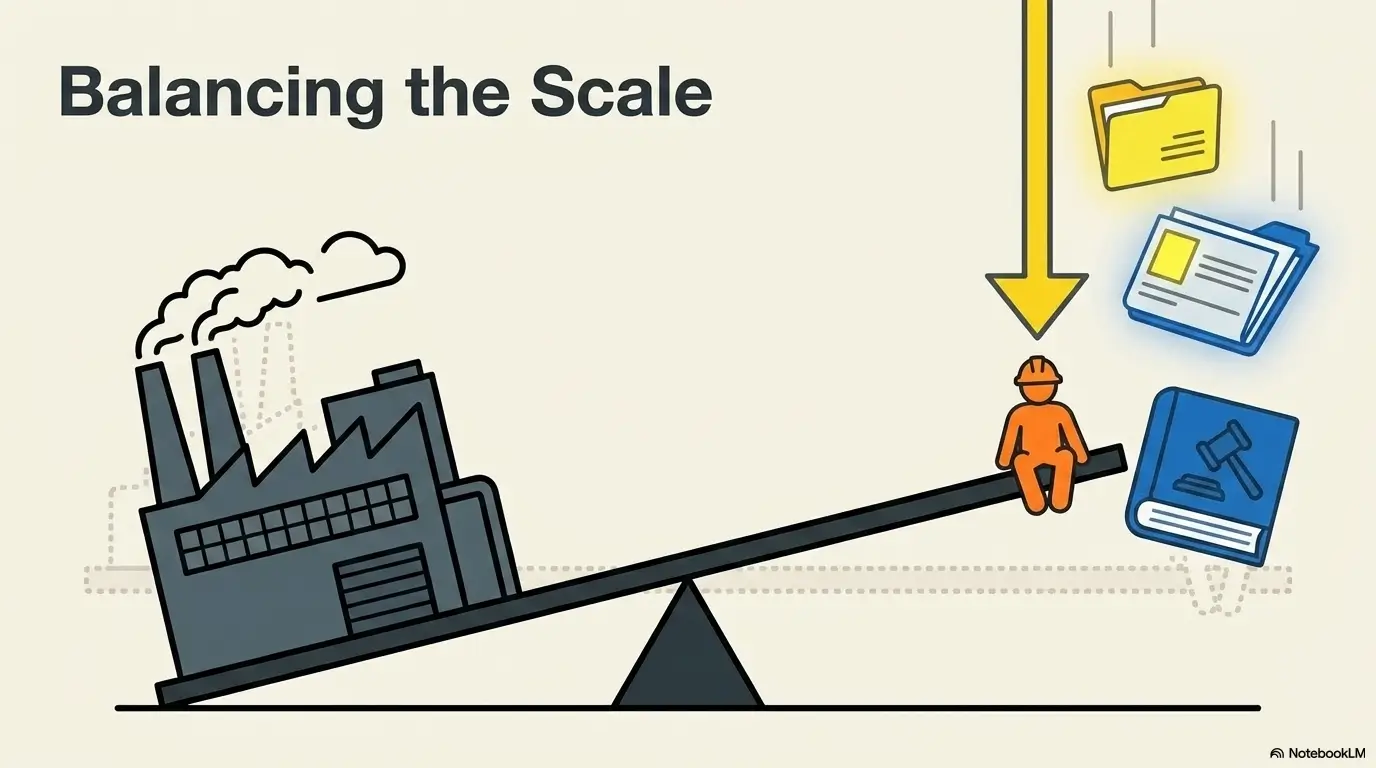
Eligibility Gatekeepers: Five Workers and Genuine Employee Status
Before the commission examines whether a dismissal was fair, it may need to decide whether the statutory remedy applies to the workplace and whether the claimant is legally a worker covered by the relevant law.
Two cases can contain nearly identical dismissal facts yet reach different procedural results because one business ordinarily employs five or more workers and the other does not, or because one claimant is legally an employee while the other is found to be an independent business operator.
The five-worker threshold is not a photograph of dismissal day
The unfair-dismissal remedy under the Labor Standards Act generally applies to businesses or workplaces that ordinarily employ at least five workers. “Ordinarily” involves an average and the actual operating structure, not merely the number of people physically present when the employee was dismissed.
Daily workers, temporary staffing patterns, connected departments, shared management, and the period used for counting may matter. A company may have fewer than five people in one room but operate a larger integrated workplace. Conversely, a familiar brand name does not automatically prove that every branch is one workplace for counting purposes.
Fewer than five workers does not mean “no rights”
If the commission’s unfair-dismissal remedy is unavailable because of workplace size, other protections may still apply. Depending on the facts and statute, these can include wage payment, minimum-wage rules, rest breaks, weekly paid holiday requirements, advance notice of dismissal, and retirement benefits.
The correct response is not “small company, no case.” It is “which rights apply, which do not, and which forum can enforce each one?”
The contract title is only one clue to employee status
A contract may say “consultant,” “freelancer,” “director,” or “independent contractor.” Korean worker-status analysis generally looks beyond the label to the practical relationship.
- Who decided when, where, and how the work was performed?
- Was the person integrated into the employer’s organization?
- Who supplied equipment, accounts, workspace, and business expenses?
- Was payment based on labor provided rather than entrepreneurial profit?
- Could the person hire substitutes or freely work for competitors?
- Were attendance, leave, reporting, and performance closely controlled?
- Did the person bear meaningful commercial risk?
- How dependent was the person on this relationship for income?
No single factor decides every case. A work visa does not automatically prove employee status, and a contractor label does not automatically defeat it.
A fixed-term non-renewal may require a separate question
The natural end of a genuine fixed-term contract is not always treated as a dismissal. However, a non-renewal may be challengeable when the employee had a legally recognized right or legitimate expectation that the contract would be renewed.
Renewal history, promises, evaluation procedures, written policies, past practice, continued business need, and the treatment of comparable employees may become important. Preserve documents from before the final contract period, not just the last month.
Show me the nerdy details
Workplace size and worker status are jurisdictional pressure points because they determine whether the commission can reach the merits. Employers may argue that separate legal entities, branches, or contracts must be assessed independently. Employees may argue that operations were economically and managerially integrated.
For worker status, decision-makers usually examine the whole relationship. Formal tax treatment, business registration, or a consulting agreement can be relevant without being conclusive. The evidence should show how work was actually assigned, supervised, measured, paid, and integrated into the organization.
Evidence Before Emotion: Build a Record the Commission Can Use
A labor dispute is experienced as a story, but it is decided through issues, dates, legal tests, and evidence. Your job is not to preserve every unhappy moment. It is to connect the challenged action to the facts that make it unlawful or unjustified.
Begin with the termination file, not the backstory
Collect the written dismissal notice, stated grounds, effective date, disciplinary notice, meeting invitation, investigation report, employee response, internal appeal, and final company decision.
Korean law generally requires written notice of the grounds and timing of dismissal. The legal effect of a missing, vague, or late notice depends on the facts, so preserve exactly what was delivered and how it was delivered.
Create a contract-to-reality comparison
Put the employment contract beside the real working arrangement. Compare job title, responsibilities, working hours, reporting line, location, compensation, leave approval, performance standards, and disciplinary rules.
This comparison is especially useful when the employer claims the employee was a contractor, executive, probationary worker, or member of a different legal entity. Readers unfamiliar with local workplace norms may also find it useful to review how Korean office culture and Korean business communication can influence the way instructions and criticism are expressed. Cultural context can explain communication, but it does not replace legal analysis.
Comparator evidence must compare like with like
Foreign employees sometimes discover that Korean colleagues were warned, coached, transferred, or retained for conduct that allegedly justified the foreign employee’s dismissal. That can matter, particularly when nationality discrimination is alleged.
A useful comparator should be genuinely comparable. Review job duties, seniority, decision-makers, performance history, misconduct, prior warnings, contract status, and the period in which the events occurred.
Preserve complete conversations, not courtroom-shaped screenshots
Save full email threads, messenger exports, attachments, calendar invitations, payroll records, attendance data, expense claims, policies, and original-language documents. Keep filenames, dates, participants, and metadata where possible.
A screenshot showing one favorable sentence can lose force when the employer produces the messages before and after it. Complete evidence is usually less cinematic and more credible.
Board-ready evidence checklist
- Written dismissal or disciplinary notice
- Employment contract and amendments
- Rules of employment and disciplinary policy
- Performance reviews, warnings, and employee responses
- Payroll, attendance, leave, and overtime records
- Complete email and messenger exports
- Organizational charts and reporting evidence
- Documents showing ordinary workplace headcount
- Comparable employee records lawfully available to you
- A dated chronology with exhibit references
Do not unlawfully access systems, take confidential records you have no right to possess, alter files, secretly impersonate another user, or destroy employer data. Ask a qualified professional how to preserve necessary evidence without creating a second legal problem.
Key takeaway
A persuasive file usually follows a simple chain: protected employment right, employer action, stated reason, contradictory evidence, resulting harm, and requested remedy.
From Filing to Hearing: What the Commission Process May Look Like
Choose the commission connected to the workplace
South Korea has Regional Labor Relations Commissions with geographic jurisdictions. The correct commission is generally connected to the relevant workplace, not simply the employee’s home, preferred city, or current location after leaving the job.
Remote work, multiple offices, dispatch arrangements, and cross-border reporting lines can complicate the answer. Confirm jurisdiction before the deadline becomes uncomfortable.
Draft a request the investigator can map
A practical filing should identify the parties, workplace, challenged action, exact date, requested remedy, legal and factual grounds, and supporting exhibits. It should also anticipate the employer’s likely defense.
For example, if the employer claims poor performance, organize evidence around performance standards, prior evaluations, warnings, improvement opportunities, treatment of comparable employees, and whether the stated reason changed over time.
Expect investigation before adjudication
After filing, the commission may check jurisdiction and eligibility, request written submissions, obtain an employer response, seek additional evidence, and schedule a hearing. The parties may exchange arguments and supporting records before a decision is issued and served.
Deadlines for written submissions can be short. Create one folder for official notices, one for submissions, and one for exhibits. Name each file consistently, such as “Exhibit 03, Performance Review, 2026-02-14.”
Plan translation and interpretation before the hearing week
The working language of the proceeding is Korean. Confirm which forms, written submissions, contracts, messages, and witness materials require Korean translation. Ask the commission what interpretation support may be available and what must be arranged privately.
Translation quality matters most for dates, job titles, quoted instructions, performance terminology, and the exact wording of the requested remedy. A polished but inaccurate translation is still inaccurate.
| Preparation level | What it includes | When it may be enough | Main limitation |
|---|---|---|---|
| Good | Official guidance, self-prepared chronology, organized evidence, basic translation | Simple facts, clear employee status, clear headcount, comfortable Korean support | Legal theory or translation gaps may remain |
| Better | Professional document translation, paid consultation, reviewed filing, hearing preparation | Disputed dismissal reason or moderate financial exposure | Limited-scope help may not cover later review or enforcement |
| Best suited to complex cases | Full representation by a qualified Korean labor professional or lawyer, plus immigration coordination if needed | Executive status, contractor disputes, high compensation, retaliation, discrimination, or appeal risk | Higher cost and the need to define the engagement carefully |
Remedies, Costs, and Help: Match the Service to the Stakes
Ask for a remedy the commission can actually order
A request that merely asks the commission to declare that the company was unfair is too vague. The filing should identify the personnel action and the practical correction sought.
Depending on the claim and facts, relief may involve reinstatement, cancellation or correction of a disciplinary action, wage-related relief for the affected period, or monetary compensation in qualifying situations. The requested remedy should match the commission’s statutory authority.
Some losses remain outside the commission case
Unpaid wages may require a Labor Office petition. Contract damages, unpaid equity, relocation losses, reputational harm, or enforcement against assets may require separate negotiation or civil proceedings.
Visa sponsorship, departure planning, and permission to change workplaces belong in a separate immigration workstream. Treating all losses as “back pay” can conceal important claims and deadlines.
Free guidance may be enough, until complexity becomes expensive
Official counseling, commission forms, and self-prepared evidence may be sufficient for a straightforward case. Paid assistance becomes more valuable when the employer disputes worker status, workplace size, the effective date, the identity of the legal employer, or the reason for dismissal.
Before paying for help, ask for a written scope. Does the quoted fee cover an initial assessment only, preparation of the filing, translation, all written submissions, hearing attendance, settlement review, National Labor Relations Commission review, or later court proceedings?
| Type of help | Useful for | Questions to ask before paying |
|---|---|---|
| Document translator | Contracts, messages, policies, notices, and exhibit consistency | Is the translator experienced with Korean employment terminology? Is certification needed? |
| One-time legal consultation | Forum, deadline, employee status, headcount, and claim triage | Will you receive written advice or only a call? Are document reviews included? |
| Certified public labor attorney | Labor Commission strategy, filings, submissions, and representation | Which stages are covered? Who personally handles the case? |
| Lawyer | Complex labor issues, civil claims, injunctions, damages, and court proceedings | Does the fee include commission work, civil litigation, settlement, or appeals? |
| Immigration professional | Visa status, workplace changes, sponsorship, and departure deadlines | How will immigration advice be coordinated with the labor strategy? |
The Ministry of Employment and Labor provides an online route for petitions involving matters such as unpaid wages and statutory allowances. Check the current filing instructions and confirm the competent local office.
Settlement is a design problem, not a white flag
A settlement may address payment, departure date, reference language, confidentiality, return of property, tax treatment, visa cooperation, withdrawal of claims, and enforcement if payment is late.
Do not evaluate an offer by headline amount alone. A higher amount payable months later with broad releases and weak enforcement can be less valuable than a smaller prompt payment with clear terms.
Key takeaway
Before signing, map every known claim against the release language. Confirm payment dates, taxes, references, immigration cooperation, confidentiality, and what happens if the employer does not pay.
Common Mistakes That Quietly Weaken Strong Claims
Using “Labor Board” and “Labor Office” interchangeably
The names sound similar in English, but the bodies perform different functions. Confirm whether you are requesting reversal of a personnel action, payment of statutory wages, investigation of a violation, civil damages, or immigration relief.
Counting three months from the most convenient event
The final paycheck, internal appeal, HR negotiation, document translation, or visa notice may not restart the commission filing period. Write down every event and obtain current advice about the controlling date.
Submitting screenshots without context
A screenshot may omit the sender, date, attachment, preceding instruction, or following correction. Preserve the full thread and produce a clear translation rather than a cropped collection of favorable fragments.
Making absolute accusations before organizing the facts
“They fired me because I am foreign” may be the employee’s honest belief, but the legal file needs dated facts. Identify discriminatory comments, different disciplinary standards, Korean comparators, changing explanations, replacement decisions, and who participated in the dismissal.
Korean labor law prohibits discrimination based on nationality, among other protected grounds. Nationality can be central to the merits without determining which agency has authority over every remedy.
Treating a work visa as proof of employee status
Immigration classification and labor-law worker status answer different questions. Preserve the visa and sponsorship documents, but also gather the evidence showing supervision, integration, compensation, and practical dependence.
Publishing accusations while the evidence is still forming
Public posts, group-chat messages, and reviews can create confidentiality, privacy, strategy, or defamation risks. Before naming individuals or publishing allegations, consider professional advice and review the potential consequences under Korean law.
This is especially important in South Korea, where online statements may create legal exposure even when the author believes the underlying events are true. Read a separate overview of defamation law in Korea before turning an employment dispute into public content.
Signing a release before mapping every claim
A settlement labeled “severance agreement” may release dismissal, wage, bonus, discrimination, equity, confidentiality, and civil claims. Translate the whole document and examine the practical enforcement terms before signing.
Key takeaway
The costliest mistakes are often procedural rather than dramatic: wrong forum, wrong date, incomplete translation, missing context, or a release signed before all claims were identified.
When Professional Help May Be Worth the Cost
Not every claim requires full representation. A narrow consultation may be enough to confirm the forum and deadline. Other cases contain enough legal and financial complexity that early professional work can prevent expensive corrections later.
The filing deadline is close, disputed, or unclear
Seek prompt help when several dates could start the clock, when an internal review is unfinished, or when the employer delivered notices in stages. Waiting for perfect documents can be riskier than filing a timely, organized request and supplementing it as permitted.
The employer disputes worker status or workplace size
These issues can prevent the commission from reaching the dismissal merits. Professional analysis may be valuable when the worker is called a consultant, executive, partner, outsourced worker, dispatched worker, or employee of another group company.
Employment and immigration risks collide
Coordinated advice may be needed when dismissal affects sponsorship, lawful stay, permission to change workplaces, departure planning, or the ability to accept a new job. Do not assume that filing a labor claim pauses an immigration requirement.
The employer threatens retaliation, immigration reporting, or reputational harm
Preserve the exact message, sender, date, and surrounding conversation. Avoid an unrecorded confrontation undertaken only to “get them to admit it.” Ask how to protect evidence, personal safety, visa status, and legal strategy.
The financial exposure is substantial
Representation may be more economical when the dispute involves significant back pay, bonuses, stock compensation, relocation expenses, executive benefits, severance, intellectual property, confidentiality duties, or civil damages.
Ask each prospective professional to identify the issues they handle, the stages included, likely translation expenses, hearing costs, appeal costs, and whether immigration or civil claims require separate advisers.
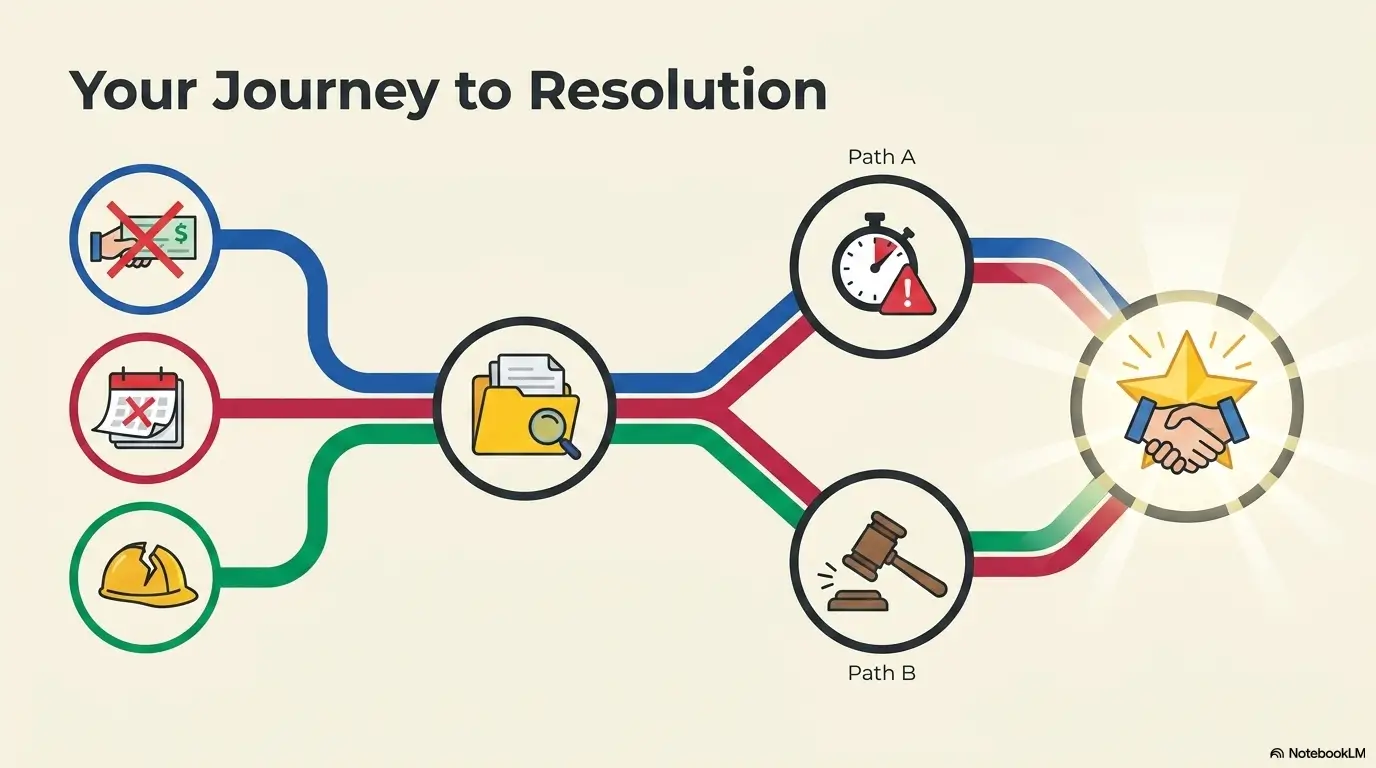
FAQ About Korea Labor Board Claims
Can a foreign employee file without Korean citizenship?
Foreign nationality does not by itself prevent an employee from using Korean labor remedies. The important questions are whether Korean labor law applies, whether the claimant qualifies as a worker, whether the workplace falls within the relevant statutory scope, and whether the request is timely.
Is unpaid salary filed with the Labor Relations Commission?
Unpaid salary and statutory allowances are generally raised with the competent local Employment and Labor Office. An unfair-dismissal request before the commission does not automatically recover every unpaid amount, so parallel filings may be necessary.
Does the three-month period begin on the notice date or final working day?
The answer depends on the challenged action, the notice, and when it took legal effect. Record both dates and confirm the calculation promptly. Do not wait for the final paycheck or internal appeal unless qualified advice confirms that waiting is safe.
Can the employer defeat the case by calling the worker a contractor?
No label automatically decides worker status. The commission may examine control, integration, working arrangements, payment structure, commercial independence, equipment, reporting, and other practical facts.
What happens if the company ordinarily employs fewer than five workers?
The Labor Standards Act unfair-dismissal remedy may be unavailable, but other wage, notice, holiday, break, minimum-wage, retirement-benefit, contractual, or civil protections may still apply. Confirm each right separately.
Can a former employee pursue a claim after leaving South Korea?
Leaving Korea does not necessarily extinguish a timely claim. Practical issues can include service of documents, Korean-language submissions, attendance, representation, settlement payment, taxes, and enforcement. Arrange reliable contact and professional support before departure where possible.
Must English contracts and messages be translated?
The proceeding operates in Korean, so important foreign-language evidence will commonly need Korean translation. Confirm the commission’s requirements and translate full relevant passages rather than only favorable sentences.
Can a foreign employee have professional representation?
A claimant may obtain assistance or representation from a qualified Korean professional where permitted. Confirm credentials, scope, hearing attendance, translation arrangements, and whether later review proceedings are included.
What if the employer ignores a final remedy order?
Korean law provides enforcement mechanisms for noncompliance with final commission orders, and further legal consequences may apply. The correct step depends on whether review or litigation remains pending, what the order requires, and whether separate wage or civil enforcement is needed.
Your Next 15 Minutes: Build a One-Page Claim Map
Do not begin by writing your life story to a government agency. Open a blank page and create five rows. This small document will help a counselor, translator, labor professional, HR team, or commission officer understand the case faster.
- Action: Write the exact decision being challenged, such as dismissal effective July 10.
- Dates: List notice, effective date, last working day, internal appeal, and decision-service dates.
- Eligibility: Record ordinary workplace headcount and facts showing employee status.
- Evidence: List the five strongest documents and where the originals are stored.
- Remedy and forum: Create separate rows for the Regional Labor Relations Commission, Employment and Labor Office, civil court, immigration authority, and any safety or criminal channel.
One-page claim map template
Challenged action: __________________________________
Effective date: _____________________________________
Ordinary workplace headcount: ________________________
Employee-status evidence: _____________________________
Primary remedy requested: _____________________________
Likely forum: _______________________________________
Five strongest exhibits: ______________________________
Deadline to verify today: ______________________________
With that page in front of you, contact the appropriate official body and verify the route. The Ministry of Employment and Labor lists labor-law counseling through 1350, extension 5, for domestic callers and an overseas number for people calling from outside Korea.
The calmest path through a Korean employment dispute is also the most concrete: name the action, protect the date, choose the forum, preserve the record, and ask for a remedy that the chosen body can provide. Once those pieces are on one page, the case stops being a cloud and becomes a route.
Last reviewed: 2026-08