5 ASTOUNDING KOREAN MYTHOLOGICAL CREATURES & LEGENDS THAT WILL BLOW YOUR MIND!
Hey there, fellow wanderers and folklore fanatics! Ever had that strange little tug in your chest—like something ancient is calling your name? Not spooky, exactly… more like a soft whisper from another realm. Yeah, that’s the pull of Korean mythology. And once it gets its hooks in you, there’s no turning back.
Forget your usual dragons and goblins. Korea’s got its own lineup of otherworldly beings that are equal parts eerie, charming, and straight-up mind-blowing. These aren’t your average fairy tales—they’re soul-deep, centuries-old stories that echo with the laughter of tricksters, the roar of heavenly beasts, and the quiet weeping of spirits caught between worlds. And I mean, once you hear about a goblin who carries a magical club and throws epic parties? Yeah, you’re not going back to your regular bedtime stories.
Now, I’m not saying I’ve ever officially seen a Dokkaebi lurking around a mountain trail… but let’s just say I’ve heard twigs snap when they shouldn’t have, and I’ve felt that curious tingle at the back of my neck while hiking through the fog. Coincidence? Maybe. Or maybe someone was watching. With a mischievous grin and a glowing club.
What makes these myths truly unforgettable isn’t just the supernatural flair—it’s the raw human emotion baked into them. Love, betrayal, revenge, hope… it’s all there, wrapped in poetic symbolism and seasoned with a very Korean sense of humor (which, in case you didn’t know, can be delightfully savage).
So grab a hot drink—or maybe something stronger if you’re the type to get goosebumps easily—and settle in. We’re about to step into a world where tigers talk, foxes might steal your soul, and ancient mountain gods are still very much in charge. Ready? Let’s open the gate.
Table of Contents
Introduction: Why Korean Mythology Rocks!
You might be thinking, “Aren’t all mythologies kind of the same?” And to that, I’d gently, but firmly, say: “Not quite!” While many cultures share archetypal figures, Korean mythology stands out with its unique blend of influences from shamanism, Buddhism, and Confucianism, creating a tapestry of stories that are both familiar and wonderfully exotic.
Imagine a world where spirits roam freely, interacting with humans, sometimes helping, sometimes hindering. A world where animals can transform into humans, where mountains whisper ancient secrets, and where even a mundane object can gain a soul. That’s the vibrant, dynamic landscape of Korean folklore! It’s less about distant, aloof gods and more about a spirited coexistence between the natural, the human, and the supernatural.
What I find truly captivating is how these legends aren’t just relegated to dusty old books. They’re alive! They inspire K-dramas, webtoons, movies, and even modern art. You’ll see Dokkaebi figurines in souvenir shops, hear tales of the Gumiho in popular series, and feel the presence of these ancient stories woven into the very fabric of daily life. It’s a living, breathing mythology, and that, my friends, is why it’s so utterly fascinating!
1. The Mischievous Dokkaebi: Korea’s Goblins with a Twist
Let’s kick things off with arguably the most famous Korean mythological creature: the Dokkaebi. Now, if you’re thinking of tiny, green, ugly goblins from Western fairy tales, you need to hit the reset button! Korean Dokkaebi are far more complex, intriguing, and dare I say, sometimes even charming.
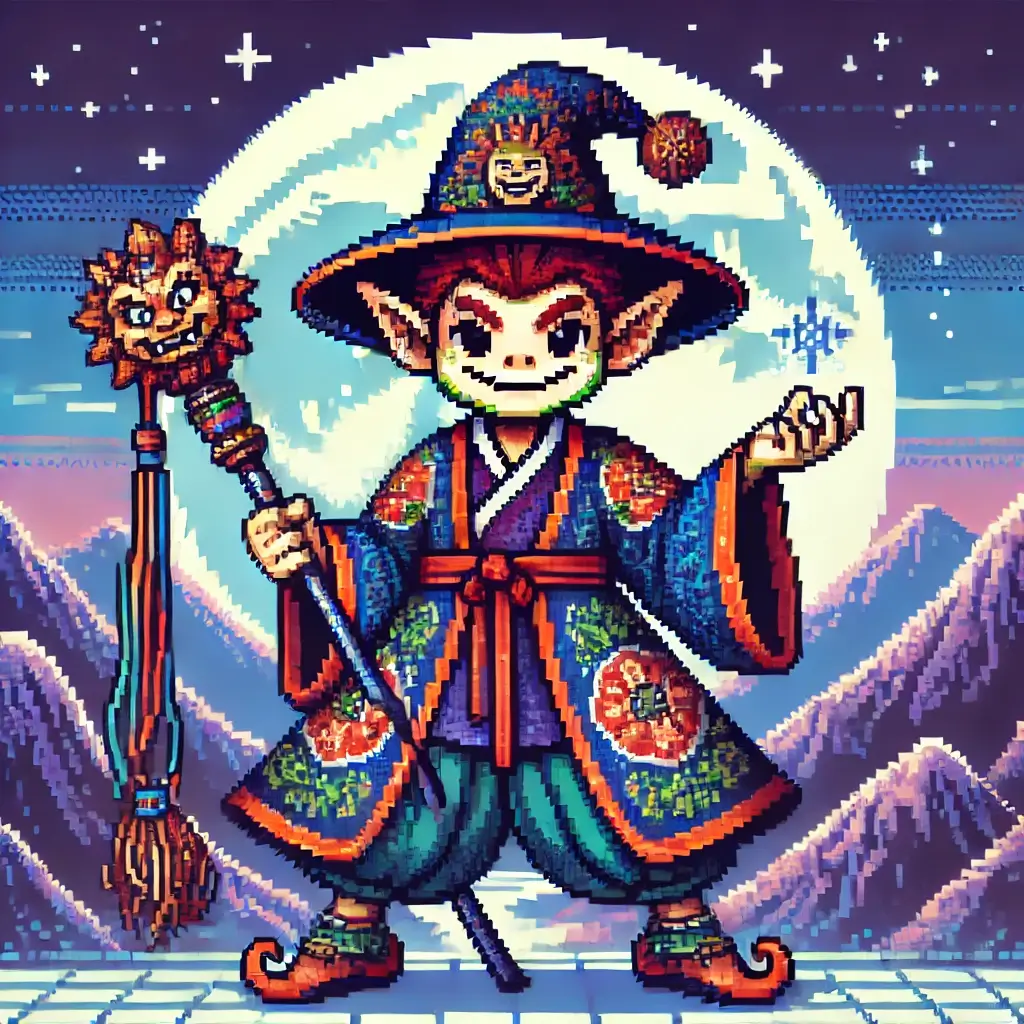
They’re not inherently evil, though they can be quite mischievous. Think of them as supernatural beings born from inanimate objects that have been stained with human blood or old, abandoned household items. A broom, an old piece of furniture, a worn-out sieve – if it’s old enough and has some human connection, it might just sprout legs, a horned head, and a playful, often unpredictable, personality!
Dokkaebi are known for their love of pranks, their powerful magical abilities, and their magical clubs (the Dokkaebi Gamtu, or “goblin hat,” and Bangmangi, a magical club). They can conjure riches, summon storms, or even grant wishes. But beware! They are also tricksters who love to challenge humans with riddles or tests of wit. If you outsmart a Dokkaebi, you might be rewarded handsomely. If you fail, well, let’s just say you might find yourself in a sticky situation, like having your rice wine vanish into thin air or waking up with your hair tied to your bedpost!
One of the most famous stories involves a Dokkaebi who kept challenging a poor old man to wrestling matches. The man, desperate to win, discovered the Dokkaebi’s weakness: horses. By tying horses’ hair around his body, the man made himself untouchable to the Dokkaebi, who loathed horses. The Dokkaebi, bewildered and defeated, eventually rewarded the man with treasures to be rid of him. It’s a classic example of their whimsical yet powerful nature!
They often interact with humans, sometimes playing tricks, sometimes offering help, particularly to those with good hearts. They might even engage in wrestling matches or play ssireum (Korean traditional wrestling). They also have a fondness for buckwheat jelly, a detail that always makes me chuckle. Imagine a powerful spirit being swayed by a simple snack! It just goes to show you that even mythological beings have their quirks.
In modern Korean culture, Dokkaebi are often portrayed in a much more romantic or heroic light, thanks in large part to popular dramas. This evolution reflects how adaptable and beloved these figures are. They’re a constant reminder that the ordinary can become extraordinary, and that a little bit of mischief can make life a lot more interesting.
Want to learn more about these fascinating creatures? Check out this resource!
2. The Seductive Gumiho: Nine-Tailed Fox of Charm and Treachery
Next up, we have a creature that’s both beautiful and terrifying: the Gumiho, or nine-tailed fox. This is a classic across East Asian folklore, but Korea’s version has its own distinct flavor. The Gumiho is typically a fox spirit that has lived for a thousand years and gained the ability to transform into a human, most commonly a stunningly beautiful woman.
But here’s the chilling part: their beauty is a trap. Gumihos are notorious for preying on humans, often consuming their livers or hearts to fully become human themselves. The legends vary; some say they need to consume a hundred human livers, while others say they need to refrain from killing humans for a thousand days, or even marry a human and live with them for a certain period without revealing their true identity.
There’s an inherent tragedy to the Gumiho’s existence. They yearn to become fully human, to escape their animalistic nature, but the path to humanity is often paved with deceit and sorrow. This struggle makes them incredibly compelling figures, inspiring both fear and a degree of pity.
One common tale involves a Gumiho who falls in love with a human, attempting to live a normal life. However, their true nature is eventually discovered, often leading to heartbreak and violence. These stories highlight the tension between desire and inherent nature, and the often-destructive consequences of trying to defy one’s destiny.
You’ll find Gumihos everywhere in K-dramas, often depicted with ethereal beauty and a haunting sadness. Sometimes they’re truly villainous, sometimes they’re victims of circumstance, trying to navigate a world that doesn’t understand them. It’s this multifaceted portrayal that keeps them relevant and intriguing to modern audiences. If you’re a fan of fantasy and a touch of gothic romance, the Gumiho is definitely your jam!
Fascinated by the Gumiho’s elusive charm? Find out more here!
3. The Ascending Imugi: Dragons in Waiting
When you think of dragons, you might picture fierce, fire-breathing beasts guarding hoards of gold. But in Korea, dragons, or yong (용), are benevolent, water-dwelling beings associated with rain, clouds, and good fortune. And before they become full-fledged dragons, many of them start their lives as Imugi.
An Imugi is essentially a proto-dragon, a giant serpent that has not yet attained its full draconic form. Imagine a creature destined for greatness, constantly striving to fulfill its potential. That’s the Imugi. They often reside in deep pools, caves, or beneath mountains, waiting for the opportune moment, usually a thousand years, to transform into a true dragon.
The transformation isn’t guaranteed. It often requires a celestial pearl (a yeouiju), divine intervention, or a specific act of courage or benevolence. Some legends say an Imugi must catch a falling heavenly pearl or be blessed by a powerful deity. The struggle and yearning of the Imugi resonate deeply with the human experience of striving for a goal, overcoming obstacles, and finally achieving one’s true potential.
There are tales of Imugi who act as benevolent protectors, silently guarding sacred places or helping humans in need, hoping their good deeds will aid in their ascension. Sometimes, they are seen as symbols of ambition and perseverance. It’s a reminder that even the grandest destinies require patience and effort.
I remember reading a story about an Imugi who had waited for millennia, only to have its pearl stolen by a mischievous spirit at the very last moment. The sheer heartbreak! But even in defeat, there’s a certain nobility to these creatures, a testament to their enduring hope. They represent the journey, not just the destination, and the powerful idea that even when something isn’t quite what it’s meant to be, it still holds immense power and dignity.
Curious about the majestic Imugi? Learn about their fascinating journey!
4. The Guardian Haetae: Protector Against Fire and Injustice
Ever walked through Seoul and noticed a statue of a lion-like creature with a horn on its head? That’s likely a Haetae! These majestic beasts are not just decorative; they are powerful mythological guardians, revered for their ability to protect against fire and distinguish between right and wrong.
The Haetae, also known as Haechi, is often depicted with a lion’s body, a horn, a bell on its neck, and scales. They are water creatures, which is why they are traditionally believed to protect against fire, a natural counter to their element. In a country that historically relied heavily on wooden structures, the Haetae’s role as a fire deterrent was incredibly significant.
But their powers go beyond simple fire protection. Haetae are also symbols of justice and fairness. Legend has it that they possess the ability to discern truth from falsehood and good from evil. They would often appear in ancient courts, nudging those who were guilty and protecting the innocent. Imagine having a mythical lie detector on your side!
That’s why you’ll often find their statues placed outside significant buildings, like government offices, palaces, and even the National Assembly Building in Seoul. They stand as a silent promise of integrity and a warning against corruption. They embody the ideal of justice and the hope for a society where truth prevails.
I find them particularly inspiring. In a world that often feels chaotic and unjust, the idea of a creature that inherently knows right from wrong and actively seeks to uphold justice is incredibly comforting. They’re not just figures of folklore; they’re symbols of a profound societal aspiration. They remind us that standing for what’s right is a timeless virtue, and sometimes, a little mythical beast can be our best moral compass.
Discover the Haetae’s unwavering commitment to justice and protection!
5. The Majestic Samjoko: Three-Legged Crow of Power and Providence
Last but certainly not least on our list of incredible Korean mythological creatures is the Samjoko, the three-legged crow. This powerful avian deity is one of the most ancient and potent symbols in Korean mythology, dating back to the Goguryeo Kingdom.
Unlike common crows, the Samjoko is a creature of immense power, often associated with the sun and divine authority. It typically has three legs, symbolizing the sun, earth, and sky, or perhaps the past, present, and future. In ancient times, it was considered a symbol of power, prosperity, and a harbinger of good luck, especially for rulers.
The Samjoko was so important that it was often depicted on royal banners, artifacts, and even tombs, signifying the king’s divine right to rule and the prosperity of the kingdom. It’s more than just a bird; it’s a celestial omen, a bearer of light and fortune.
While not as frequently depicted in modern media as the Dokkaebi or Gumiho, the Samjoko’s historical significance is immense. It reminds us of a time when the heavens were believed to directly influence human affairs, and symbols held profound spiritual meaning. It embodies the essence of ancient Korean cosmology, where the sun was a powerful, life-giving force, and its celestial inhabitants were figures of awe and reverence.
I sometimes imagine looking up at the sun and seeing the silhouette of the Samjoko, its three legs poised, radiating power. It’s a symbol of unwavering strength and the eternal cycle of life and renewal. It serves as a majestic counterpoint to some of the more mischievous or tragic creatures, representing the grand, cosmic forces that govern the universe.
Uncover the powerful symbolism of the ancient Samjoko!
Beyond the Myths: Enduring Legacy and Our Fascinating Journey
And there you have it, five truly astonishing Korean mythological creatures and the captivating legends that swirl around them! From the playful antics of the Dokkaebi to the ambitious journey of the Imugi, the seductive mystery of the Gumiho, the steadfast justice of the Haetae, and the cosmic power of the Samjoko, these beings offer a vivid window into the heart of Korean culture.
What I hope you take away from this journey is not just a list of cool monsters, but an appreciation for the depth and diversity of human imagination. These myths aren’t just stories; they’re echoes of ancient beliefs, moral lessons, and the timeless human desire to understand the world around us. They teach us about resilience, the consequences of our actions, and the enduring hope for a better future.
Next time you watch a K-drama or read a webtoon, keep an eye out. You might just spot a subtle nod to a Gumiho, a mischievous Dokkaebi, or even the grand ascent of an Imugi. Because in Korea, these legends are not just relics of the past; they are living, breathing parts of the present, constantly inspiring new forms of art and storytelling.
So, which of these legendary creatures captured your imagination the most? Is it the trickster Dokkaebi, the alluring Gumiho, or perhaps the majestic Samjoko? Let these tales ignite your own imagination, and maybe, just maybe, you’ll start seeing a little more magic in the world around you too. Stay curious, stay adventurous, and keep exploring the incredible tapestry of world folklore!
Korean mythology, Dokkaebi, Gumiho, Imugi, Haetae, Samjoko