10 Profound Secrets: Korean Dreams and Your Destiny!
Have you ever woken up from a dream feeling like it was more than just a random jumble of images?
Like it was a message, a premonition, or perhaps even a glimpse into your future?
If you have, you’re not alone, especially if you delve into the fascinating world of Korean culture.
For centuries, Koreans have held dreams in incredibly high regard, seeing them not as mere nocturnal wanderings, but as vital conduits to understanding destiny, foretelling events, and even shaping their lives.
It’s not just some quaint old belief; the significance of dreams in Korean culture is deeply woven into the very fabric of their history, folklore, and even their modern-day lives.
From ancient kings seeking guidance to everyday people interpreting vivid dreamscapes, the power of a good (or bad) dream can truly shake things up!
Join me as we dive deep into this captivating aspect of Korean tradition. —
Table of Contents
—
Unraveling the Mystical Tapestry of Korean Dreams
Let’s face it, we all dream.
Some of us remember them vividly, some barely at all.
But in Korea, dreams aren’t just random brain activity.
They’re seen as profound messages, sometimes from ancestors, sometimes from the cosmos itself, guiding individuals through life’s intricate dance.
It’s a world where a dream about a pig can mean wealth, and a dream about a fire can signify unexpected success.
Sounds pretty wild, right?
But this isn’t just superstition; it’s a deep-seated cultural belief that has shaped decisions for millennia.
Think about it: imagine having a tool that could give you a sneak peek into the future, helping you navigate life’s twists and turns.
That’s essentially how many Koreans view their dreams.
They believe these nightly visions hold clues to everything from career success to family matters, even whether you’ll pass that really tough exam.
It’s like having a personal oracle, accessible every single night!
This deep connection to the dream world creates a unique cultural perspective, where the line between the conscious and subconscious is wonderfully blurred. —
Tracing the Ancient Roots of Dream Interpretation in Korea
To truly grasp the importance of dreams in Korean culture, we need to take a step back in time.
Way back.
The practice of dream interpretation, or ‘haemong’ (해몽), has roots stretching back to the Three Kingdoms period (57 BCE – 668 CE).
Back then, dreams weren’t just personal curiosities; they were matters of state!
Kings and powerful figures would employ official dream interpreters, much like we have economists or political analysts today.
These interpreters were highly respected, their skills crucial for guiding national decisions, predicting wars, and even selecting future leaders.
Imagine the pressure!
One of the most famous examples is the dream of King Taejo, the founder of the Joseon Dynasty.
He reportedly dreamt of ascending a ladder to the sky, symbolizing his rise to power.
Such stories are not just historical anecdotes; they are foundational narratives that reinforce the belief in dreams as potent omens.
Buddhism, Taoism, and Shamanism, all influential philosophies in Korea, further deepened the belief in the spiritual significance of dreams.
Buddhist teachings often speak of dreams as reflections of one’s karma or as messages from the spiritual realm.
Shamanism, with its focus on connecting with spirits and the unseen world, naturally embraced dreams as a primary means of communication with these entities.
It’s a rich tapestry of beliefs that has evolved over centuries, but the core idea—that dreams are meaningful—has remained unwavering. —
From Prophecy to Potholes: The 5 Key Types of Korean Dreams
Not all dreams are created equal, at least not in Korea.
Just like not every cloud brings rain, not every dream holds profound meaning.
Koreans typically categorize dreams into several key types, each with its own level of significance.
1. Taemong (태몽) – Conception Dreams: The Ultimate Prophecy!
If you’re talking about dreams in Korea, ‘taemong’ is probably the first thing that comes to mind for many.
These are dreams believed to foretell the conception or birth of a child, and they are absolutely, unequivocally, a big deal.
Think about it: a dream that predicts a baby’s future character, talent, or even gender!
These aren’t just dreams for the expectant mother; sometimes, family members or even close friends can have a taemong for the upcoming child.
The imagery in a taemong is incredibly important.
Dreams of dragons, tigers, or large snakes often signify a strong, influential son.
Peacocks, colorful birds, or beautiful flowers might indicate a graceful and beautiful daughter.
Fruits, especially ripe ones, are common symbols, with the type and quantity often reflecting the number and prosperity of children.
I once heard a story from an elder who said her grandmother dreamt of a huge, glistening pearl just before her mother was born.
And guess what? Her mother grew up to be an absolute gem, beloved by everyone!
It’s these personal anecdotes that truly bring the concept of taemong to life.
It’s not just a dream; it’s a narrative, a hopeful prediction for a new life.
2. Gilmong (길몽) – Auspicious Dreams: Your Lucky Ticket!
These are the dreams we all hope for!
Gilmong are considered good omens, promising fortune, success, or positive life changes.
They’re like cosmic green lights, telling you to go full steam ahead.
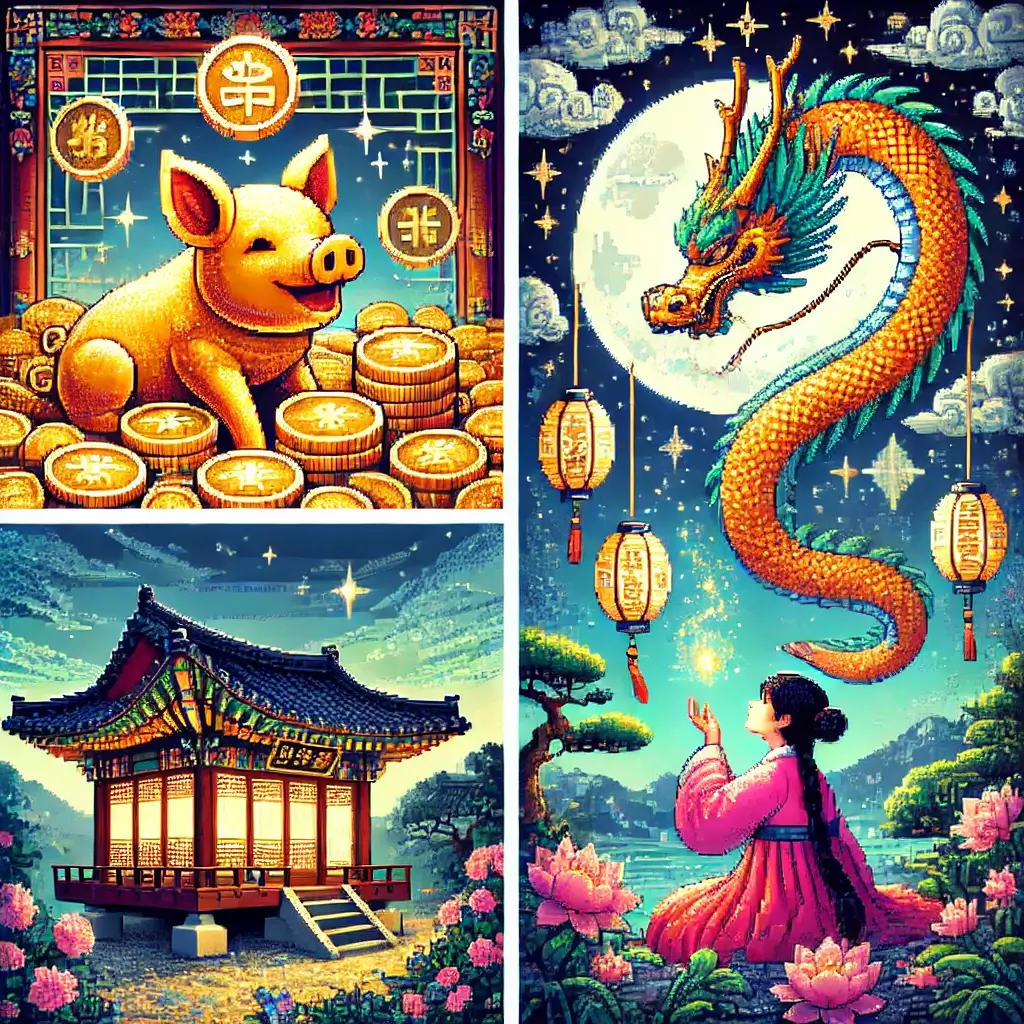
Common themes include dreams of pigs (signifying wealth – seriously, a pig dream is like hitting the jackpot!), fire (symbolizing prosperity and success), or even excrement (yes, you read that right – it’s a sign of good fortune!).
If you dream of catching a fish, it might mean financial gain.
If you dream of flying high, it could signify career advancement.
People who have gilmong often feel a sense of relief and optimism.
They might even act on these dreams, making important decisions or buying lottery tickets!
It’s a fun, hopeful aspect of dream interpretation, and it certainly adds a little sparkle to everyday life.
3. Hyungmong (흉몽) – Inauspicious Dreams: A Warning Sign!
On the flip side, we have hyungmong – the inauspicious or bad dreams.
These dreams are often interpreted as warnings of impending misfortune, illness, or setbacks.
They’re the universe’s way of saying, “Hey, maybe pump the brakes a bit!”
Dreams of teeth falling out (signifying illness or death in the family), losing possessions (financial loss), or being chased by ghosts (bad luck) are common examples.
But here’s the crucial part: a hyungmong isn’t necessarily a sealed fate.
Instead, it’s seen as an opportunity to take precautions, to be more careful, or to seek solutions before problems escalate.
It’s less about despair and more about proactive avoidance.
Sometimes, simply telling someone about a bad dream is believed to lessen its negative impact.
It’s like releasing the bad energy out into the open.
4. Gaemong (개몽) – Enlightenment Dreams: A Path to Wisdom!
These dreams are less about fortune and more about personal growth or gaining insight.
Gaemong can provide solutions to problems, offer new perspectives, or even reveal hidden talents.
They’re like little nuggets of wisdom delivered while you sleep.
Perhaps you’ve been struggling with a difficult decision, and then you have a dream that clearly shows you the path forward.
Or you might dream of a wise old figure who offers cryptic advice that suddenly makes perfect sense upon waking.
These dreams are often cherished for their transformative power, helping individuals achieve clarity and make profound personal discoveries.
5. Mongsa (몽사) – Common Dreams: Just Your Everyday ZZZs!
And finally, we have mongsa – the common, everyday dreams that don’t carry any particular prophetic or significant meaning.
These are your typical “I forgot to wear pants to school” or “I can fly” dreams.
They’re usually reflections of your daily life, thoughts, and feelings, and while they might be interesting, they aren’t typically analyzed for deeper meaning in the Korean context.
It’s a practical recognition that not every dream is a divine message, which is quite refreshing, actually!
Knowing the difference between these types of dreams is the first step to truly understanding their place in Korean society. —
The Art of Dream-Telling: Sharing Your Nightly Visions
In many cultures, dreams are intensely personal experiences, maybe something you share with a therapist or a very close friend.
But in Korea, sharing your dream can be a powerful act, almost a ritual.
This practice, known as ‘haemonggwangoe’ (해몽관), literally means “dream interpretation and commerce.”
Yes, commerce! Because dreams, especially good ones, can be “bought” and “sold.”
Let me explain.
If you have a particularly auspicious dream (a gilmong), you might share it with a friend or family member, and in return, they might “buy” the dream from you with a small gift or even just a meal.
This isn’t about literal monetary exchange for the dream itself, but rather a symbolic gesture to transfer the good fortune associated with it.
It’s a delightful way to spread good vibes and ensure the dream’s positive energy is activated.
On the flip side, if you have a bad dream (hyungmong), it’s often advised to tell it to the flowing water, or to someone who doesn’t believe in dreams, or even just to yourself and then “forget” it.
The idea is that by vocalizing a bad dream, you release its negative energy, dissipating its power.
It’s like talking out your fears, but with a cultural twist!
This social aspect of dream-telling underscores how deeply integrated dreams are into daily social interactions in Korea.
It’s a common topic of conversation, often a lighthearted way to share hopes and worries, and sometimes, a serious way to seek guidance. —
Catching a Dragon: The Pursuit of “Good” Dreams
So, what makes a dream a “good” dream in Korea?
Beyond the general concept of gilmong, there are specific themes and symbols that consistently appear in highly valued dreams.
And yes, people actively want to have these dreams!
It’s not uncommon to hear someone say, “I wish I had a pig dream!” especially if they’re looking for a financial boost.
Pigs: Number one on the list for prosperity. A dream involving pigs, especially many fat ones, is a surefire sign of impending wealth or good fortune. It’s believed to bring money, business success, or even a lottery win.
Fire: Dreaming of a fire, especially a large, uncontrolled one that doesn’t cause harm, is a powerful symbol of prosperity, growth, and rapid success. It signifies a rise in status or significant achievements.
Water: Clear, flowing water often symbolizes good fortune, purity, and life’s blessings. Dreaming of collecting water or swimming in clear water can indicate a smooth path ahead and increasing wealth.
Excrement: Believe it or not, dreams involving human or animal waste, especially if you touch it or get covered in it, are considered incredibly auspicious for financial gain. It’s a classic example of an “ugly” image signifying something beautiful (money!).
Animals (Dragon, Tiger, Phoenix): These powerful, mythical creatures are especially significant in taemong (conception dreams) but also generally denote great power, influence, and success. A dream of riding a dragon is practically a guarantee of a bright future!
Fruits: Ripe, abundant fruits signify fertility, prosperity, and successful outcomes, especially in taemong or for personal projects.
Death: Counterintuitively, dreaming of your own death or the death of someone else (without distress) is often seen as a highly positive omen, signifying a rebirth, a fresh start, or the end of old troubles and the beginning of new opportunities.
People will often recount these dreams with excitement, sharing them widely in hopes of manifesting the good fortune.
And sometimes, they actually work out!
It reinforces the belief and keeps the tradition alive.
If you’re ever visiting Korea and someone excitedly tells you they dreamt of a pig, you might just want to ask for their lottery numbers! —
Escaping the Nightmare: Dealing with “Bad” Dreams
Just as there are dreams you want, there are definitely dreams you want to avoid.
Hyungmong, or inauspicious dreams, can be unsettling, but remember, they’re typically seen as warnings, not inescapable fates.
The goal isn’t to panic, but to take action.
Teeth Falling Out: This is perhaps one of the most common bad dreams and usually portends illness or death within the family or close circle. The specific tooth (front, back, upper, lower) can even indicate which family member might be affected.
Losing Something Important: Dreams of losing money, precious items, or even your way can signify financial loss, setbacks, or a period of difficulty.
Falling: Often interpreted as a sign of loss of control, failure, or a decline in status.
Being Chased or Attacked: Can indicate hidden anxieties, stress, or a feeling of being overwhelmed by external pressures or enemies.
Darkness or Being Trapped: Often symbolizes despair, hopelessness, or feeling stuck in a difficult situation.
So, what do you do if you have a hyungmong?
The traditional advice is to not dwell on it, or better yet, to “sell” it or “lose” it.
One common practice is to tell the dream to someone who doesn’t believe in dreams, or even to a domestic animal, as a way to nullify its power.
Another is to simply brush it off, say “it was just a dream,” and then make an effort to be extra cautious in your daily life, perhaps avoiding risky situations or paying closer attention to your health.
It’s about psychological resilience, transforming potential fear into proactive caution.
It’s a way of saying, “Okay, universe, message received. Now I’m going to take steps to avoid that outcome.” —
Dreams in the Digital Age: How Koreans Interpret Dreams Today
You might be thinking, “This all sounds ancient. Do people still believe this stuff in modern, high-tech Korea?”
And the answer is a resounding, “YES!”
While perhaps not everyone consults a shaman for every dream, the cultural significance remains incredibly strong.
In fact, the internet and mobile technology have made dream interpretation more accessible than ever before.
There are countless websites and apps dedicated to dream interpretation, where you can type in keywords from your dream (e.g., “pig,” “fire,” “teeth”) and instantly get potential meanings.
These online platforms often include forums where people share their dreams and interpretations, creating a vibrant, modern community around an ancient practice.
It’s fascinating to see how a centuries-old tradition adapts to the digital age!
Many people still discuss their dreams with family and friends, especially taemong dreams, which remain a source of much excitement and speculation during pregnancies.
Even young, tech-savvy Koreans will often jokingly (or sometimes, seriously!) check dream interpretation sites after a particularly vivid or unusual dream.
It’s a testament to the enduring power of these beliefs that they’ve managed to transcend generations and technological advancements.
It’s not just about blind faith; it’s a cultural shorthand, a shared understanding, and often, a fun way to engage with the unknown. —
Dream Weavers: Famous Korean Dream Stories and Legends
Korean history and folklore are rich with tales of dreams shaping destinies, often with dramatic and profound consequences.
These stories aren’t just entertainment; they serve as cultural reinforcement, illustrating the belief system surrounding dreams.
The Dream of Queen Munmyeong and General Kim Yu-sin: One of the most famous taemong stories involves Queen Munmyeong, mother of King Munmu of Silla, and General Kim Yu-sin.
It’s said that Kim Yu-sin’s younger sister, Jisa, had a taemong of a golden armor and weapons descending from the heavens and entering her body.
She told this dream to her sister, who was then married to Kim Yu-sin, and she bought the dream from her.
Later, the sister gave birth to a son who became a great general, embodying the strength and power foreseen in the dream.
This story beautifully illustrates the concept of “buying” dreams and the prophetic nature of taemong.
The Scholar and the Tiger Dream: There’s a lesser-known folk tale about a scholar who dreamt he was being chased by a fierce tiger.
Terrified, he sought out a dream interpreter who told him that the tiger symbolized a great honor or success that was aggressively pursuing him.
Initially skeptical, the scholar soon received an offer for a highly prestigious government position, fulfilling the “tiger” dream in an unexpected, positive way.
These stories, passed down through generations, solidify the notion that dreams are not mere fantasies but significant harbingers of events to come. —
Your Dream, Your Destiny: How Dreams Shape Korean Lives
The impact of dreams on Korean lives goes beyond mere curiosity or entertainment.
For many, dreams truly inform their decisions and perceptions of their destiny.
Decision Making: Having a gilmong (auspicious dream) before a major decision, like starting a new business, buying property, or even getting married, can provide a significant psychological boost and confidence.
Conversely, a hyungmong might prompt someone to delay a decision, be extra cautious, or even change their plans entirely.
It’s like having an extra layer of intuition, a spiritual compass guiding your path.
Personal Identity: Especially with taemong, the dream associated with one’s birth can become a part of their personal narrative.
Children might grow up hearing stories about their taemong, which can subtly influence their self-perception and even their life choices.
If your taemong involved a dragon, you might feel a natural inclination towards leadership or ambition!
Emotional Well-being: The belief that dreams are meaningful can also provide comfort and a sense of control in an unpredictable world.
A good dream offers hope and reassurance, while a bad dream, when interpreted as a warning, empowers individuals to take preventative measures.
It’s a way of making sense of life’s complexities, finding patterns and meaning where others might only see chaos.
This enduring belief system is a beautiful reminder of how deeply connected humans are to their inner worlds and the universal desire to understand what lies ahead. —
My Own Journey: A Personal Encounter with Korean Dream Lore
I remember a few years ago, I was particularly stressed about a major career decision.
It was one of those crossroads moments where you feel like every choice is equally daunting.
One night, I had an incredibly vivid dream.
I dreamt I was walking through a lush, green field, and suddenly, a massive, golden pig appeared right in front of me.
It wasn’t scary; it was just… there, looking at me serenely.
I remembered hearing about pig dreams in Korea, so the next morning, still feeling the lingering presence of that golden pig, I decided to look it up.
Sure enough, every source pointed to immense wealth and good fortune.
Now, I’m not saying I immediately bought a lottery ticket or quit my job!
But that dream gave me an undeniable sense of calm and optimism that I desperately needed.
It felt like a nudge, a little cosmic wink, telling me that things would work out.
And you know what? They did.
I made my decision, and while it wasn’t an instant lottery win, it definitely led to significant positive changes in my career and financial situation.
Was it the dream? Or was it the confidence and positive outlook the dream instilled in me?
Perhaps a bit of both.
But that experience, for me, solidified the idea that whether literally prophetic or psychologically empowering, dreams in Korean culture hold a unique and powerful significance.
It’s a beautiful blend of ancient wisdom and personal experience, creating a rich tapestry of meaning. —
Embracing the Wisdom of the Night: The Enduring Power of Korean Dreams
As we wrap up our journey into the fascinating world of dreams in Korean culture, it’s clear that these nightly visions are far more than just random neural firings.
They are revered as messengers, guides, and profound insights into an individual’s destiny and the collective human experience.
From the ancient royal courts to modern-day smartphone apps, the belief in the power of dreams has not only endured but thrived, adapting to new eras while retaining its core essence.
It’s a testament to the human desire to seek meaning, to understand the unknown, and to find a sense of guidance in life’s unpredictable journey.
So, the next time you wake up from a particularly vivid dream, perhaps you’ll pause for a moment.
Instead of dismissing it, you might just find yourself wondering: could this be my own Korean-style message, a hint about what destiny has in store?
It’s a beautiful thought, isn’t it? —
Dive Deeper into Korean Culture:
Korean Culture, Dream Interpretation, Taemong, Gilmong, Hyungmong