
📅 Updated: November 30
This post was updated on November 30 to include fresh insights, real-life lessons, and even more practical tips from our recent planning experience. Whether you’re just starting out or knee-deep in wedding logistics, we’ve fine-tuned this guide to make it even more relevant (and hopefully a little more sanity-saving). Thanks for reading—and congrats in advance!
Modern vs Traditional Korean Wedding — 11 Surprising Lessons I Learned While Planning Both Style
When we first told our families we were planning both a sleek modern hotel wedding and a traditional Korean ceremony, everyone smiled in that way people do when they’re trying really hard not to panic. Then came the questions—so many questions.
“Wait… which one’s the real wedding?”
“Who’s paying for what again?”
“Do I need to bow? Like, all the way to the floor, or just respectfully low?”
If you’re currently bouncing between dreamy Pinterest boards and a family group chat on the verge of combustion, hi—this guide is for you.
Planning two weddings at once (in two totally different cultural universes) means everything shifts: the budget math changes, what vendors cover gets murky, and let’s not even start on the family dynamics. Housing becomes Tetris. Visas suddenly matter. Everyone has opinions.
But here’s the good news: we figured out how to quietly save 10–20% without cutting meaning or making our parents cry. We managed to keep the elders proud and sneak in the playlist we actually wanted (yes, including that one Lizzo song). And we learned how to make the big, exhausting decisions fast—with tiny checklists that saved us hours and a few arguments.
Look, you’re tired. Your inbox is full of RSVP drama. And if you have to compare one more flower arrangement, you might actually elope out of spite. So we’re keeping this guide brutally practical, occasionally funny, and totally usable today. Let’s get into it.
Table of Contents
How This Guide Works (And Who It’s For)
This guide was written for three kinds of people: international couples with at least one Korean partner, second-generation Koreans trying to honor tradition without drowning in it, and non-Korean partners who just want to avoid offending someone’s very determined auntie.
When we planned our own modern-plus-traditional setup, we spent dozens of hours trying to answer simple questions that no venue brochure explained. Things like, “Do we need a separate photographer for the pyebaek? Is this hanok actually wheelchair accessible? Does this district office appointment count as ‘being married’ back home?”
You shouldn’t need a law degree and a spreadsheet habit to get married, so I’ve boiled everything down into 11 lessons, a few money blocks, and one mini calculator you can use in under a minute.
- Decide your shared “why” before you book anything.
- Use simple checklists instead of endless group chats.
- Protect your time and energy as carefully as your budget.
Apply in 60 seconds: Write one sentence that finishes this phrase: “We’re doing both styles because…” and share it with your partner tonight.
Money Block #1 – 60-Second Eligibility Check: Is a Modern and Traditional Wedding Right for You?
- You have close family who care deeply about traditional rituals (for example, Korean traditional wedding rituals).
- You or your partner want a modern ceremony for friends, photos, and vows in your own language.
- You can handle at least two big event days or one long combined schedule without burning out.
- Your budget can stretch to “Tier 2” or higher venues without sinking your housing plans.
- You’re okay explaining “Yes, we’re already legally married, but this is the family ceremony” more than once.
If you answered “yes” to at least three: a blended plan is worth exploring. If not, consider a single main ceremony plus a smaller symbolic ritual instead.
Save this list and revisit it before you sign any venue or photography contracts.
Lesson 1 – Your “Why” Needs to Serve Two Weddings, Not One
The first time someone asked us, “So which wedding is the important one?” I laughed. Then I realized they were serious. If you don’t define your own answer early, everyone else will try to define it for you.
We sat at a tiny café table, half-finished Americanos between us, and wrote two columns: “For our families” and “For us.” The traditional ceremony went firmly in the first column; the modern ceremony, in the second. But as we talked, we realized something softer: both were actually about weaving two histories into one future.
This matters because your “why” becomes your decision filter when you’re exhausted and someone wants to add another ritual, another photo shoot, another expensive centerpiece.
- If the request honors your shared “why,” it’s a yes or a “yes, but smaller.”
- If it only serves someone’s ego, it’s a polite no or “maybe at the rehearsal.”
- If it conflicts with your values, it’s a firm no—even if you feel guilty.
One quiet but powerful moment: we told our parents, “The traditional part is for you; the modern part is for us; both are for our future kids when they look at these photos.” You could feel the tension drop. They stopped trying to turn the hotel ceremony into a second pyebaek and started helping us protect both days instead.
- Write separate goals for “family” and “us.”
- Share that split with both sides early.
- Use it as a script when you have to say no.
Apply in 60 seconds: Text your partner: “Top 3 reasons we’re doing a modern + traditional wedding—go.” Compare lists tonight.
Lesson 2 – Budget “Coverage Tiers”: Where Modern vs Traditional Really Costs Different
Talking about wedding budgets in Korea can feel like asking about someone’s salary at the dinner table—lots of side-eye, not many numbers. But if you’re doing both styles, you need to think in terms of coverage tiers, not one giant mysterious total.
When we priced things out, we realized something counter-intuitive: the traditional ceremony wasn’t always cheaper. A simple hotel ceremony for 120 guests with buffet can be more affordable than a fully produced hanok wedding with rental hanbok, live musicians, and extended family meals.
What helped was grouping costs into tiers instead of obsessing over every line item. Think like this:
- Tier 1: City hall/legal only + small family pyebaek.
- Tier 2: One modest hotel wedding or hanok ceremony with limited guests.
- Tier 3: Hotel + traditional add-on, professional photo + video.
- Tier 4: Full-scale hotel + hanok + extra shoots + separate friend party.
Money Block #2 – Sample Fee Table (Seoul, 2025-style estimates)
| Tier | Modern hotel focus | Traditional focus |
|---|---|---|
| Tier 1 | ₩0.5–5M (legal + small meal) | ₩1–6M (home or small hall pyebaek) |
| Tier 2 | ₩15–30M (120–150 guests) | ₩12–25M (hanok rental + catering) |
| Tier 3–4 | ₩30–60M+ (hotel + friend party) | ₩25–60M+ (hanbok, musicians, extra family feasts) |
These are broad ranges to help you think in tiers, not exact quotes. Save this table and confirm the current fee schedule with each venue’s official page before you decide.
Infographic – Modern vs Traditional vs Blended (At a Glance)
Modern-first
- Hotel or hall ceremony
- Friends-heavy guest list
- One main reception
- Lower ritual complexity
Traditional-first
- Hanok or home pyebaek
- Elder-heavy guest list
- Focus on bowing & offerings
- Stronger cultural symbolism
Blended
- Hotel + traditional add-on
- Two photo styles in one story
- Higher planning load
- Best for multi-cultural families
Think of it like insurance coverage tiers: you’re choosing what you want “fully covered” (venue, food, photography) and what can be symbolic or small. That mindset alone can save you 10–20% of your total spend.
Show me the nerdy details
For our own plan, we made a simple spreadsheet with four columns: item, modern cost range, traditional cost range, and “must have vs nice to have.” Seeing that the hanok rental plus catering consumed the same budget as a hotel upgrade helped us choose a mid-range hotel and a smaller, carefully curated traditional ceremony instead of going big on both.
- Think in tiers, not one scary total.
- Let one style lead; let the other be focused.
- Protect housing and savings before décor upgrades.
Apply in 60 seconds: Circle one tier (1–4) with your partner and promise not to “accidentally” creep into the next one without talking.
Lesson 3 – Families, Family Registry, and the Invisible Guest List
Your guest list is not just names on a spreadsheet; in Korea it’s quietly linked to family history and the family registry system (hojeok). That’s why relatives you’ve never met might insist they “must” be invited—they’re thinking in terms of lineage, not closeness.
I learned this when an elderly uncle I’d never heard of appeared on our draft list with a red circle around his name. “He carried your father when he was a baby,” my aunt said, as if that explained everything. In her mind, the baby carrier from 40 years ago had automatically earned a hotel buffet plate today.
Here’s the invisible math many Korean parents are doing:
- Who attended whose weddings in the last 10–20 years.
- Which side of the family “owes” the other a courtesy invite.
- Who would lose face if left out of a large, public event.
What helped was separating guest lists by function instead of by emotion. Our modern ceremony leaned toward friends, colleagues, and bilingual relatives. The traditional ceremony leaned toward older relatives, including those who care more about rites than playlists.
If you want to understand the deeper emotional weight behind all this, reading about concepts like jeong and the role of Korean grandmothers (halmeoni) can make your in-laws’ requests feel less like control and more like a clumsy love language.
- Ask why each must-invite is important.
- Split lists by function: modern vs traditional.
- Offer the traditional ceremony as the “family seat.”
Apply in 60 seconds: Ask each parent to mark five “truly cannot miss” guests and promise to prioritize those names first.
Lesson 4 – Hanbok vs White Dress: What Photos Won’t Tell You
Instagram will not tell you that your gorgeous hanbok can feel like a weighted blanket if the air-conditioning breaks. Or that the most elegant mermaid dress might make it almost impossible to kneel during jeol.
We learned this the sweaty way. My hanbok was perfect in photos—soft mint and blush tones that would make any hanbok historian proud, the kind you might see in a piece on Korean hanbok’s 1,000-year glow-up. But halfway through group pictures at the hotel, I started fantasizing about those convenience-store fans they sell in July.
A few practical truths:
- Hanbok shines in movement. Staircases, courtyards, and traditional gardens make the fabric float.
- Western dresses shine in framing. A hotel aisle, long veil, and structured lighting show every detail.
- Mixing both is heavy. Literally. Plan breaks or a second, lighter outfit.
If your heart is set on the traditional aesthetic, consider a venue with architectural details to match—hanok courtyards, traditional gardens, or spaces like those in hanok design guides. For more ceremonial outfits (for example, hwarot or wonsam), resources like Korean ritual costumes can help you understand what each piece symbolizes.
And yes, your mother-in-law may have Firm Opinions about sleeves. That’s okay. Build one small win for her into the outfit plan—a color she loves, a hairpiece she chose, or a second hanbok look for the traditional ceremony.
- Test how easy it is to kneel and stand.
- Plan outfit changes by temperature and ritual.
- Give parents one visible “win” to calm outfit debates.
Apply in 60 seconds: Try sitting, kneeling, and raising your arms in your top outfit choice. If it’s a struggle now, it’ll be worse with cameras on you.
Lesson 5 – Rituals, Jeol, and What You’re Really Promising
The first time we practiced jeol (formal bowing), I almost toppled forward onto a plate of carefully arranged jujubes. The photographer caught my wobble; my future in-laws laughed until they cried. That’s when I realized: this ceremony isn’t about performing perfectly—it’s about showing willingness.
Traditional Korean weddings use movement to express things you might normally say in vows. Multiple bows signal respect between you and your parents. Offering dates and chestnuts hints at hopes for children. Passing cups of rice wine acknowledges two families becoming one.
If you want to understand what each action means, reading a breakdown like the secrets of Korean bowing (jeol) or broader guides to traditional wedding rituals can turn a confusing script into something moving.
Here’s the quiet lesson: rituals are meaningful when you compress them. Doing every possible element can exhaust everyone and blur the emotional impact. Choosing a few key actions and doing them with full attention hits harder than a marathon of symbolic gestures.
Short Story: In one family we met, the couple chose just three rituals: shared cups of rice wine, a single deep bow to each set of parents, and a joint reading of a short promise they’d written themselves. The grandparents were skeptical at first—“Only three?”—but during the bow, everyone cried anyway. Afterward, the grandfather said, “I remember this more clearly than any wedding photo from the last decade.” It wasn’t the number of rituals that mattered; it was that the couple understood what each one meant and did it slowly, without rushing to the next photo pose.
- Learn the meaning behind each ritual.
- Pick 3–5 that resonate deeply.
- Slow down those moments; shorten others.
Apply in 60 seconds: Ask your parents or planner to list every planned ritual; put a star next to the three that make your chest ache in a good way.
Lesson 6 – Venues, Insurance, and Guests Flying In
If your guest list looks like a mini UN meeting, your wedding is also a travel operation. You’re not just choosing a venue—you’re managing flights, jet lag, hotel blocks, and “Wait, what if there’s a typhoon?” anxiety.
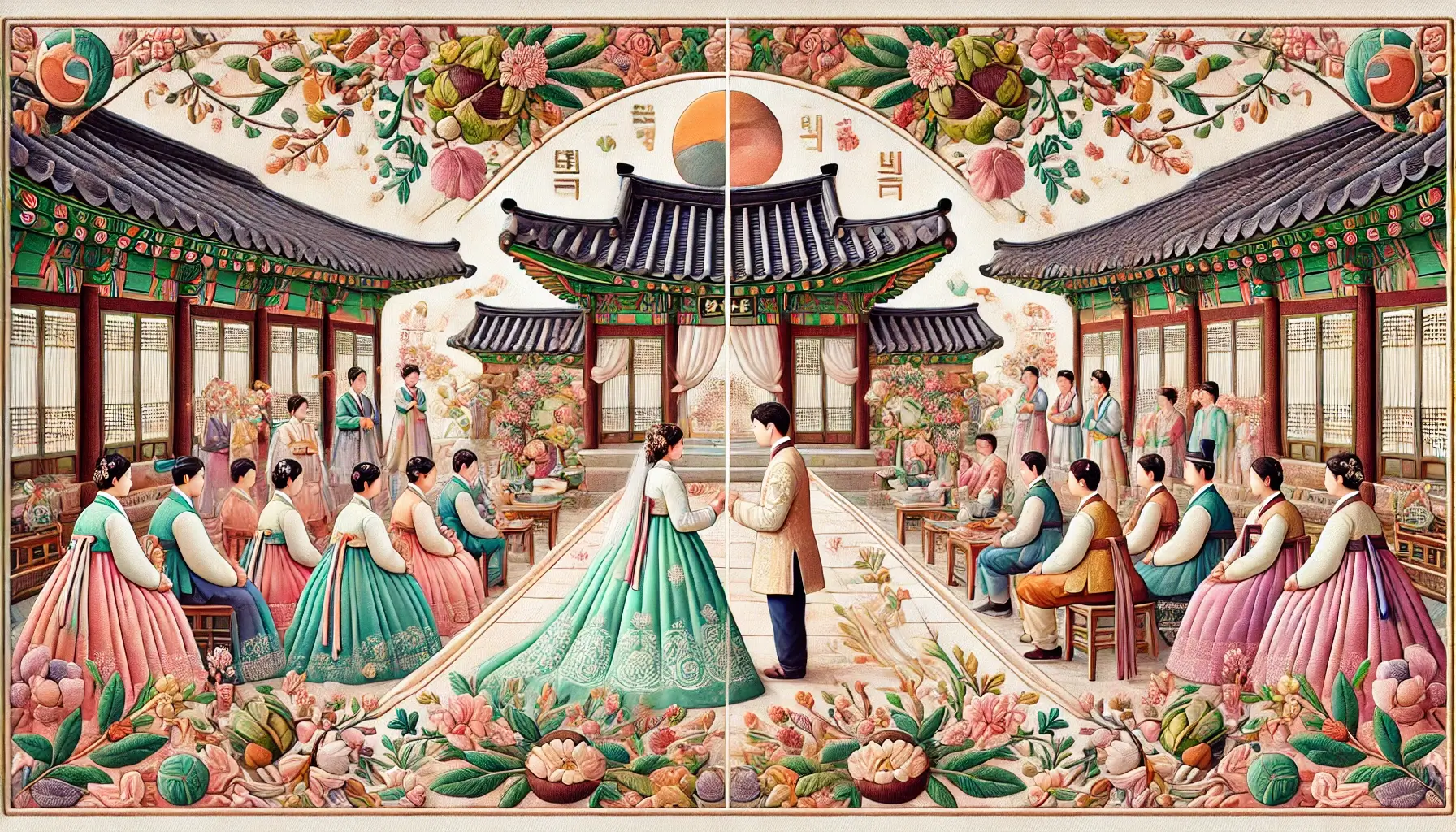
Our modern ceremony was in a central Seoul hotel; the traditional ceremony, in a quieter hanok space. International guests loved the contrast, but it added moving pieces: transport between venues, backup rain plans, and what would happen if someone’s flight got delayed.
Three things to think through early:
- Travel insurance and wedding insurance quotes. Especially if multiple relatives are flying in or you’re booking outdoor venues.
- Accessibility. Some hanok venues and older buildings have steep stairs; check this for older guests.
- Weather patterns. Korean summers are humid; late summer and early autumn can bring heavy rain.
If you’re inviting guests from abroad and want to give them a deeper experience, pairing your ceremony plans with destinations from guides like untapped Korean regional destinations can help them turn your wedding into a once-in-a-lifetime trip, not just a three-day blur.
Money Block #3 – Decision Card: One Venue, Two Venues, or Two Days?
- One venue, same day: Lower logistics risk, lower transport cost, fewer photos in different settings.
- Two venues, same day: High photo variety and “wow” factor, but more stress and higher out-of-pocket transport expenses.
- Two days: Easier on elders and kids, gives space for both styles, but extra venue fees and possibly more hotel nights.
Circle the option that protects your energy and your emergency fund. Save this card and confirm cancellation and change policies with each provider’s official documents.
If you’re planning from the US or Europe, build one “buffer day” into the schedule so jet-lagged guests can arrive, recover, and understand basic etiquette before the main events. A short email linking to resources like Korean traditional games for kids or simple etiquette guides can turn cultural confusion into curiosity instead of panic.
- Check accessibility and weather before aesthetics.
- Review cancellation and refund policies in detail.
- Give international guests at least one buffer day.
Apply in 60 seconds: Open your venue contracts and highlight every line about refunds, rescheduling, and weather. Take a photo and keep it in your phone.
Lesson 7 – Paperwork: Hojeok, Visas, and the “Real” Legal Wedding
Here’s the unromantic truth: your legal wedding and your emotional wedding may not be the same day. Many international couples sign at the district office months before or after the big ceremonies, especially if visas or immigration timelines are involved.
In Korea, your marriage eventually needs to show up properly in the family registry (hojeok). If one partner is foreign, you may also be looking at forms connected to visas like those discussed in guides to the Korea F-6 visa. None of this is complicated in a cosmic sense, but it can feel like a maze when you’re also choosing flower colors.
What saved our sanity was treating paperwork like a separate mini-project:
- One timeline for ceremonies and family events.
- One timeline for documents, apostilles, and consulate appointments.
- One quiet day for the legal signing, with maybe a simple lunch afterward.
In one couple’s case, they signed at the district office six months before the big day to secure spousal health insurance and simplify visa paperwork. The parents were confused at first—“So you’re already married?”—but they accepted it when the couple explained that the ceremony was still the public start, even if the paperwork was earlier.
- Ask which day matters for benefits and visas.
- Choose a calm day for the legal signing.
- Explain the split clearly to both families.
Apply in 60 seconds: Write down three dates: “legal signing,” “family ceremony,” and “modern ceremony.” Even if they end up the same, seeing the options helps.
Lesson 8 – Media, Playlists, and K-pop Expectations
The modern Korean wedding is half ceremony, half curated show. Somewhere between the walk-in song and the first dance (if you have one), someone will suggest a K-pop performance. Sometimes it’s adorable; sometimes it feels like an unpaid music video shoot.
We watched one friend’s wedding where the couple slipped in a subtle playlist of drama soundtracks and ballads from artists you might find in pieces like K-pop lyrics explained or K-drama OST royalties. The grandparents recognized melodies; the younger cousins hummed along; the whole room felt like one long, gentle nod to Korean pop culture.
But we also saw weddings where the entire timeline was thrown off by a complicated choreography set from a group of friends who had rehearsed more than the couple had slept. Great for TikTok; less great for your stress levels.
Ask yourself:
- Do we want live performances, or just a great playlist?
- Is there one song that captures both cultures (for example, a K-drama OST plus an English-language track)?
- Will this performance add connection—or just length?
Remember: the soundtrack is one of the most portable parts of your wedding. You can relive it on the subway, at your new kitchen table, or ten years later at 2 a.m. when you can’t sleep. It’s worth one evening of thoughtful planning, but not weeks of fight choreography.
- Pick a “we” song for the entry or exit.
- Limit live performances to what you can rehearse calmly.
- Use OSTs and K-pop subtly to bridge generations.
Apply in 60 seconds: Open your music app and make a three-track playlist: one for you, one for your partner, one for your families.
Lesson 9 – Housing, Jeonse, and Life After the Confetti
There’s a very Korean twist to wedding budgeting: the “real” financial shock often isn’t the ceremony; it’s housing. Many couples are juggling wedding costs alongside jeonse deposits, monthly rent, or even a first mortgage.
One friend put it perfectly: “We didn’t have a wedding budget; we had a ‘wedding + deposit’ budget.” They decided on a modest Tier-2 hotel wedding because they were also staring down a huge jeonse deposit for a small place like those described in apartments for rent in Seoul. Another couple looked into jeonse insurance before signing anything, because they realized their biggest financial risk wasn’t the cake—it was their deposit.
Money Block #4 – 60-Second Housing vs Wedding Mini Calculator
Use this tiny calculator to see if your wedding plan is eating too much of your housing future.
Save this quick calculation and, before upgrading any package, confirm whether that money would protect your housing more effectively.
Think like a cautious financial planner: ask whether upgrading from Tier 2 to Tier 3 is worth the extra percentage of your combined “wedding + housing” pot. Many couples later say they wish they’d cut 10–15% from the wedding and added it to their emergency fund instead.
- Calculate wedding spend as a % of wedding + housing.
- Prioritize stable housing over cosmetic upgrades.
- Explore jeonse insurance or renter protection options.
Apply in 60 seconds: Run the mini calculator above with rough numbers—then ask, “Am I okay with that percentage a year from now?”
Lesson 10 – Managing Expectations Without Starting a Family War
Modern vs traditional isn’t just about venues; it’s about expectations. One side may imagine a fairy-light-filled hotel ballroom. The other may be picturing a courtyard straight out of a historical drama.
We made three mistakes early:
- We shared half-baked ideas too soon, which everyone treated as promises.
- We let conversations happen separately instead of together.
- We assumed “They’ll understand” without checking.
Things improved dramatically when we started using what I call the “preview and print” method. First, we privately made a draft plan we could both live with. Then we shared that with parents as a nearly complete picture, not an open brainstorm. Finally, we printed a one-page summary with key decisions so everyone literally had the same document.
One couple we know went even further: they held a small “wedding strategy meeting” with both sets of parents, complete with tea and snacks. They walked through each part—modern ceremony, traditional ceremony, housing, paperwork—and asked parents to rank what mattered most to them. That simple ranking turned three potential arguments into calm trade-offs.
Money Block #5 – Quote-Prep List for Peaceful Family Talks
Before you “request quotes” from your parents’ opinions, prepare this list:
- Top 3 non-negotiables for you and your partner.
- One thing you’re willing to sacrifice to fund something else.
- Clear wording for what you’re asking from each side (money, help, or just presence).
- A polite script for saying, “We hear you, but we’re choosing X.”
Save this list and bring it to any family meeting where wedding decisions will be discussed.
- Draft privately, then present.
- Ask parents to rank what matters most.
- Use one-page summaries instead of endless chats.
Apply in 60 seconds: Open a blank document and title it “Our Wedding One-Pager.” List: modern ceremony, traditional ceremony, housing, paperwork, budget.
Lesson 11 – How to Blend Styles So It Feels Like “You”
By the time you reach this stage, it’s tempting to just survive the plan rather than enjoy it. But this is where blending modern and traditional can become something more than a compromise—it can become a surprisingly accurate portrait of who you are as a couple.
We borrowed small details from across Korean culture and our own daily lives. A hanbok-inspired color palette from articles like Korean hair and style history. A dessert table based on our favorite Korean street foods in miniature. A quiet reading of a poem we loved from Korean literary gems, half in Korean, half in English.
The modern ceremony carried our shared future—personal vows, inside jokes, a song from the year we met. The traditional ceremony carried our past—family lines, ritual gestures, the sound of fabric brushing floorboards during jeol. Together, they told a story no single style could have managed alone.
One tiny, very human moment: after everything, my mother admitted she’d secretly wanted a traditional ceremony for herself when she was young but didn’t get one. Watching us bow in hanbok, then dance in modern clothes later, made her feel like that younger version of herself had finally been seen.
- Choose 2–3 cultural elements that feel like “home.”
- Mirror them across both ceremonies in small ways.
- Let your vows and rituals talk to each other.
Apply in 60 seconds: Write down one detail for “past,” one for “present,” and one for “future” you want represented somewhere in your weddings.
FAQ
1. Which should come first: the modern hotel wedding or the traditional ceremony?
There’s no single correct order. Many couples hold the traditional ceremony first to honor elders and treat it as the “foundation,” then move into the modern ceremony as a celebration with friends. Others do a small traditional pyebaek after the main hotel event. Choose the order that works best for your guests’ schedules and your own energy. 60-second action: Sketch two possible timelines and quickly mark which one feels calmer when you imagine living it.
2. How far in advance should we book venues in Korea?
Popular Seoul venues can book out 9–12 months in advance for prime weekend slots, especially in spring and autumn. Smaller hanok spaces or regional venues may have more flexibility, but traditional dates and holidays fill quickly. 60-second action: Decide your preferred month and weekday/weekend preference, then email or message three venues today to ask about availability ranges.
3. Do we need separate photographers for modern and traditional parts?
Not always, but you do need someone who understands both styles. Modern ceremonies favor crisp, staged shots and cinematic video; traditional ceremonies require sensitivity to rituals and low-light indoor spaces. Some couples hire one team with clear instructions; others hire a traditional specialist just for the hanok or pyebaek. 60-second action: Ask your photographer, “Can you show us one modern and one traditional Korean wedding you’ve shot before?”
4. How can we manage costs without offending family?
Frame decisions as trade-offs: “If we choose the bigger hotel package, we’ll need to simplify the traditional ceremony,” or “If we keep the guest list under 120, we can afford better photography for everyone.” Most reasonable relatives accept constraints when they see that you’re balancing housing, savings, and long-term stability. 60-second action: Prepare one sentence that explains a major trade-off, then practice saying it out loud together.
5. What about guests who don’t speak Korean—will they feel lost?
They don’t have to. Short bilingual programs, a few on-screen captions, and a brief explanation before key rituals work wonders. Even a simple line like, “Now they will bow to their parents to thank them for raising them” turns a mysterious movement into something touching. 60-second action: Pick one person (friend, emcee, or cousin) to be your “bridge” and ask them to narrate small parts for non-Korean speakers.
6. Is it okay to keep the legal signing private and only invite people to the ceremonies?
Absolutely. Many couples treat the legal signing as paperwork, then reserve the ceremonies for the emotional “we’re married!” moment. If you think someone might be hurt by not being invited to the signing, explain that the office is tiny and the real celebration will be where they’re already invited. 60-second action: Decide who, if anyone, you want present for the legal signing and note it in your one-pager.
7. How do we handle last-minute changes, like illness or travel delays?
Think of your plan in layers: what can be postponed, what can be simplified, and what absolutely must happen. A smaller version of the traditional ceremony at home, or a streamed modern ceremony for sick relatives, is better than forcing everything to go ahead under stress. 60-second action: Identify one “Plan B” for each major part: venue, ceremony, and key guests who might not make it.
Summary and Next Steps
If you’ve read this far, you’re probably either very serious about a blended modern/traditional Korean wedding—or very procrastinate-y about other life tasks. Either way, you now know the quiet truth I wish someone had told us: you’re not really planning two weddings. You’re designing one long story told in two different visual languages.
The modern ceremony carries your everyday life—the music you already share, the jokes that only make sense in your group chats, the way you look at each other when you think no one’s watching. The traditional ceremony carries your inherited memory—the bows, the garments, the way rice wine passes from one generation to the next.
What matters most is not perfection; it’s coherence. A clear “why,” honest money blocks, realistic coverage tiers, and a little bit of nerdy planning around paperwork and housing will carry you much further than the most expensive flower wall.
Here’s a simple 15-minute next step you can take today:
- 5 minutes – Write your shared sentence: “We’re doing both styles because…”
- 5 minutes – Circle a budget tier (1–4) and run the mini calculator once.
- 5 minutes – Start your one-page plan (modern, traditional, housing, paperwork, budget).
Then close the tabs, put your phone down, and imagine one quiet moment from each ceremony—the bow, the walk down the aisle, the first shared meal in your new apartment. If your choices today move you closer to those moments feeling peaceful and real, you’re on the right track.
Last reviewed: 2025-11; based on lived planning experience and conversations with couples, planners, and families in and around Seoul. Modern vs Traditional Korean Wedding, Korean wedding planning, Korean traditional wedding rituals, modern Korean wedding cost, Korean marriage paperwork