*Updated on November 13, 2025 with the latest information.
The Astonishing Art of Korean Pojagi: 3 Surprising Revelations!
Prepare to be absolutely captivated, because today we’re diving deep into an art form that’s not just ancient and beautiful, but shockingly relevant in our modern world: **Pojagi**, the traditional Korean wrapping cloth.
Forget everything you thought you knew about packaging; this isn’t just about wrapping a gift. It’s about artistry, sustainability, and a philosophy that has lessons for us all.
If you’ve ever felt a pang of guilt tossing out wrapping paper after a single use, or if you simply appreciate intricate craftsmanship, then you’re in for an absolute treat.
Pojagi isn’t merely fabric stitched together; it’s a vibrant tapestry of history, culture, and ingenuity. It’s a testament to the Korean spirit of making beauty from necessity, often with leftover scraps of fabric that might otherwise have been discarded. Sounds pretty eco-friendly, even before “eco-friendly” was a buzzword, right?
For centuries, Koreans have used Pojagi for everything from wrapping gifts and carrying goods to covering food and even adorning homes. Each piece tells a story, stitched with care and imbued with meaning.
And let me tell you, once you see the vibrant colors, the ingenious patchwork, and the sheer elegance of Pojagi, you’ll never look at wrapping the same way again.
So, buckle up! We’re about to unravel the threads of this incredible art form and discover why **Pojagi** is not just a relic of the past, but a living, breathing inspiration for today. —
Table of Contents
—
What Exactly is Pojagi? More Than Just a Cloth!
Let’s start with the basics, shall we?
At its heart, **Pojagi** (보자기) is a traditional Korean wrapping cloth. But saying it’s “just a wrapping cloth” is like saying the Mona Lisa is “just a painting.” It utterly misses the point!
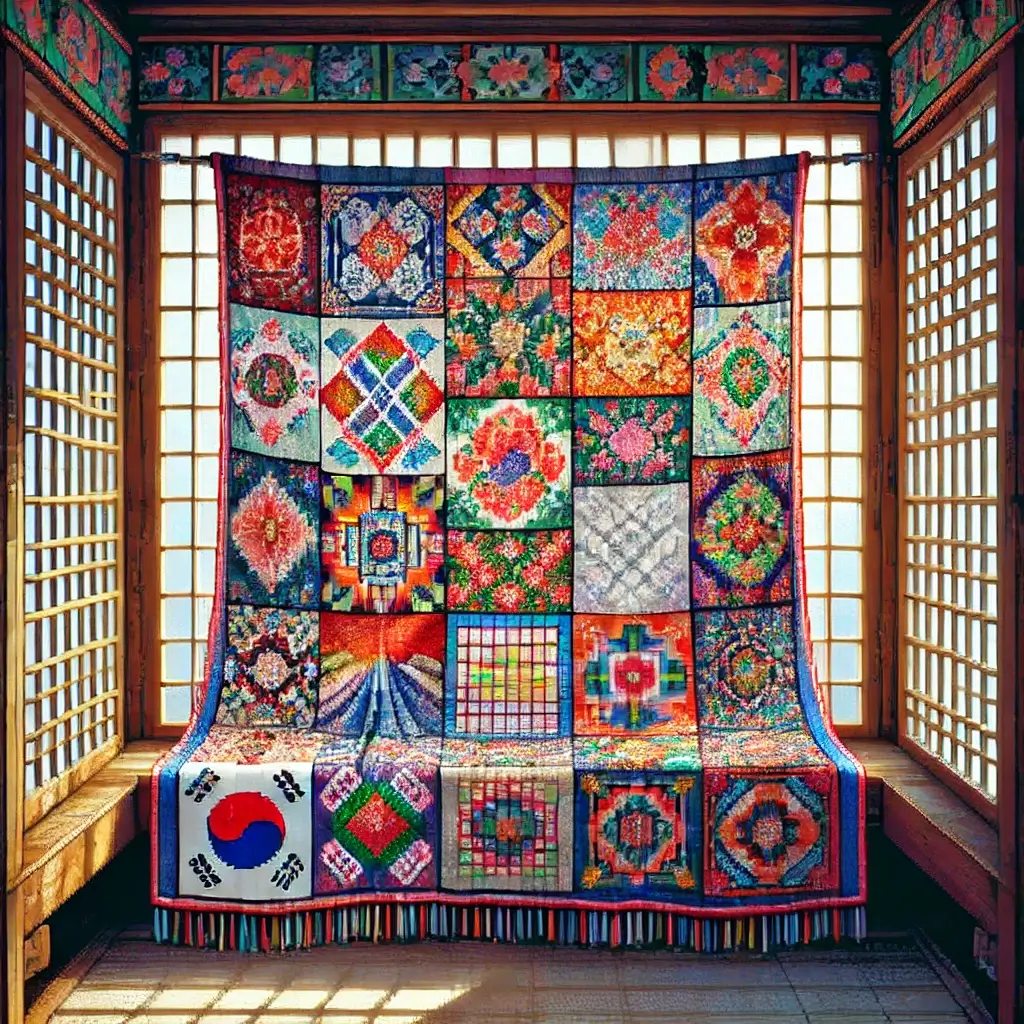
Pojagi are typically square, often made from silk, ramie, cotton, or hemp, and are characterized by their patchwork construction. Imagine taking beautiful scraps of fabric – sometimes leftover pieces, sometimes specially chosen – and stitching them together with meticulous precision to create a larger, harmonious design.
The beauty of Pojagi lies in its incredible versatility and the philosophy behind its creation. Unlike Western wrapping paper, which is often discarded after one use, Pojagi is meant to be reused again and again. It’s the ultimate sustainable solution, centuries ahead of its time!
From the humblest kitchen item to the most precious wedding gift, Pojagi elevated the act of wrapping into an art form, imbuing it with respect, care, and a sense of occasion.
There are generally two main types of Pojagi:
1. Chogak Bo (조각보): This is the most recognizable type, made from small scraps (chogak) of fabric sewn together. Think of it as the ultimate upcycling project, resulting in stunning, often geometric patterns. These were traditionally made by commoners, showcasing their ingenuity and artistic flair with limited resources.
2. Kungjoong Bo (궁중보): These were royal wrapping cloths, often featuring intricate embroidery and made from a single, high-quality fabric, typically silk. They were used in the palace for wrapping important documents, gifts, and ceremonial items, reflecting the status and grandeur of the royal court.
Regardless of its origin or purpose, every Pojagi carries a silent message of good fortune and respect. It’s more than just a cover; it’s a blessing, a gesture of intention, and a piece of art that bridges utility and aesthetics. —
A Stitch in Time: The Rich History of Pojagi
To truly appreciate **Pojagi**, we need to take a little trip back in time.
The origins of Pojagi can be traced back centuries, with evidence suggesting its use during the Three Kingdoms period (57 BCE – 668 CE).
However, it was during the Joseon Dynasty (1392-1910) that Pojagi truly flourished and became an integral part of Korean daily life and culture.
During this period, Korean society was highly stratified, and sumptuary laws often dictated what materials and colors people could use for clothing and other items. However, Pojagi offered a unique loophole.
Because they were considered “wrapping cloths” rather than garments, they were often exempt from these strict regulations. This meant that ordinary women, who might not have had access to luxurious fabrics for their clothes, could unleash their creativity and artistic talent in crafting exquisite Pojagi from leftover scraps of silk, cotton, or ramie.
It was a truly democratic art form, empowering women from all walks of life to express themselves, their hopes, and their prayers through needle and thread.
Imagine a commoner’s humble abode, where every scrap of fabric was precious. A small piece of silk leftover from a special garment, a discarded piece of cotton from a blanket – nothing went to waste.
These pieces, each carrying its own memory and story, were meticulously joined together, often with a technique called “ssam-sol” (a flat-felled seam), which creates a beautiful, clean finish on both sides, making the Pojagi reversible and even more versatile.
Pojagi wasn’t just practical; it was deeply symbolic. The act of wrapping something in Pojagi was seen as a way to protect its contents from bad luck and to ensure good fortune. It conveyed respect, care, and good wishes to the recipient.
In a time before mass production and disposable goods, Pojagi was a testament to a culture that valued resourcefulness, beauty, and the profound meaning behind everyday objects.
It reminds me of my grandmother who used to mend every tear and darn every sock. There was a respect for materials, a thoughtfulness that we sometimes lose in our fast-paced world. Pojagi embodies that beautifully. —
The Magic of Pojagi: Techniques That Will Amaze You
So, what makes a **Pojagi** piece so mesmerizing?
It’s all in the details, the patient, precise techniques that turn simple fabric scraps into works of art.
The core of most Pojagi, especially the striking Chogak Bo, lies in its patchwork construction. But it’s not just any patchwork. Korean Pojagi employs specific seams and methods that give it its distinctive aesthetic and durability.
The most iconic technique is the **ssam-sol (쌈솔)** or “wrapped seam.” Instead of simply sewing two pieces of fabric together and leaving a raw edge, the ssam-sol involves folding the raw edges inward, encasing them within the seam itself. This creates a flat, clean finish on both sides of the fabric, making the Pojagi reversible and incredibly strong.
Think about it: no frayed edges, no loose threads. Just pure, clean lines, almost as if the fabric pieces were always meant to be together. It’s a testament to the meticulousness and foresight of the artisans.
This technique is not just about aesthetics; it also adds strength and longevity to the fabric. Given that Pojagi were meant to be used repeatedly, this robust construction was essential.
The visual impact of a Chogak Bo often comes from the interplay of different fabric types and colors. Imagine vibrant silks next to sheer ramie, or textured cotton alongside smooth linen. The contrast in textures and the harmony of colors create a dynamic visual experience.
Sometimes, Pojagi designs incorporate specific symbols or patterns. For example, a motif of butterflies might symbolize a happy marriage, or a lotus flower might represent purity and enlightenment. Every stitch, every choice of fabric and color, contributes to a deeper narrative.
The design process often began with the available scraps. It wasn’t about perfectly symmetrical patterns every time. Sometimes, the inherent shapes of the scraps would dictate the final design, leading to wonderfully organic and unique creations.
This “make-do-and-mend” approach, elevated to an art form, is what makes Pojagi so compelling. It speaks to resourcefulness, creativity under constraint, and the ability to find beauty in everyday materials.
If you’re anything like me, you’re probably already thinking, “How can I try this?” Good news, there are plenty of resources out there to learn these fascinating techniques! But more on that later. —
Revelation 1: Pojagi – The Original Sustainable Fashion!
Let me tell you a little story.
Last Christmas, I spent an entire evening—yes, evening—wrapping gifts with shiny paper, curling ribbons like I was in some sort of Hallmark commercial, and carefully placing bows that I knew, deep down, would be violently torn apart in under 10 seconds. By morning, the living room looked like a glitter bomb exploded. Wrapping paper everywhere. None of it recyclable. And all I could think was: “Well… that was festive and wasteful.”
Now imagine this: What if there was a way to wrap gifts that didn’t involve paper cuts, tape stuck to your elbow, and an overwhelming sense of eco-guilt?
Enter Pojagi—a traditional Korean textile art that’s basically the OG of sustainable wrapping and slow fashion. Long before zero-waste Instagram influencers were teaching us how to wrap a sandwich in beeswax cloth, Koreans were elegantly folding and stitching scraps of leftover fabric into something stunning, practical, and endlessly reusable.
It’s like your stylish grandma who lived sustainably before it was cool.
Let’s break it down:
1. Waste? Never heard of her.
Pojagi (and especially the patchwork kind called Chogak Bo) was born from thrift and wisdom. Instead of tossing leftover bits of fabric, people carefully stitched them into new cloths. Each piece is a mosaic of memory and resourcefulness. Imagine turning your old jeans and your favorite worn-out T-shirt into something not just functional, but beautiful. That’s the vibe.
2. Wrap, Reuse, Repeat.
You know that awkward moment when someone unwraps your beautifully wrapped gift and then just… crumples the paper into a sad ball? Yeah. Pojagi avoids all that heartbreak. Once unwrapped, the cloth isn’t garbage—it’s a gift in itself. It can be reused to wrap something else, cover food, decorate your space, or even serve as a scarf in a pinch (yes, I’ve done it, and no, I’m not ashamed).
3. Built to Last (Unlike That Tape Dispenser).
Pojagi is stitched using a method called ssam-sol—a technique so strong and refined, these cloths often lasted generations. They weren’t just passed down; they were lived in. And every wrinkle, every faded corner told a story. Kind of like the wearable version of a vintage vinyl record.
So, no—it’s not just about saving money (although, let’s be honest, fabric doesn’t rip like paper, and bows aren’t cheap). It’s about rethinking how we use what we have. Pojagi reflects a philosophy: that nothing is too small to matter, and everything has potential for renewal.
In a world where fast fashion and fast everything is overwhelming our closets, oceans, and landfills, Pojagi whispers (softly but confidently),
“Hey… slow down. You already have enough. Let’s make it beautiful again.”
It’s proof that sustainability doesn’t have to be beige and boring. It can be vibrant, handmade, full of story—and actually fun.
So next time you’re tempted to buy that glittery roll of wrapping paper (which cannot be recycled, by the way), consider this: what if the wrapping could be just as meaningful as the gift itself?
Turns out, the most forward-thinking way to wrap your life in intention and care… is a 200-year-old Korean cloth.
Revelation 2: Pojagi in Modern Art – From Wrapping to Masterpiece!
Prepare to have your mind blown by how **Pojagi** has transcended its traditional utilitarian role and exploded onto the global art scene!
What started as humble wrapping cloths has been reimagined and elevated into breathtaking contemporary art, inspiring artists, designers, and architects worldwide.
You see, the intrinsic qualities of Pojagi – its geometric patterns, the interplay of light and shadow through sheer fabrics, and its profound cultural significance – make it incredibly appealing to modern artistic expression.
Contemporary artists are taking the fundamental principles of Pojagi – patchwork, translucency, and the concept of joining disparate elements – and pushing them into exciting new realms.
Walk into a gallery today, and you might see massive Pojagi-inspired installations cascading from ceilings, creating ethereal light effects as sunlight filters through layers of gossamer fabrics. You might encounter textile art that uses Pojagi techniques to explore themes of identity, memory, and connection.
One of the most striking aspects is the use of translucency. Traditional Pojagi, especially those made from ramie or silk, often allowed light to pass through, creating beautiful overlays of color and shadow. Modern artists exploit this quality to create dynamic, ever-changing visual experiences.
Imagine a large-scale Pojagi artwork hanging in a sunlit room. As the light shifts throughout the day, the colors deepen, fade, and interact in mesmerizing ways. It’s a living piece of art, constantly transforming.
Beyond fine art, Pojagi principles are influencing fashion designers who incorporate patchwork and sustainable practices into their collections, giving a nod to the zero-waste philosophy inherent in Pojagi.
Architects are even drawing inspiration from Pojagi’s modularity and layering, applying these concepts to building facades and interior spaces to create dynamic, visually rich environments.
Artists like Lee Chun-hee and Kim Sook-jin have been instrumental in popularizing Pojagi as a contemporary art form, showcasing its versatility and profound aesthetic appeal in major exhibitions around the world.
It’s truly a testament to the timeless appeal of this ancient craft. Who knew that humble scraps of fabric could inspire such grand, thought-provoking works? It just goes to show you, creativity knows no bounds, and true beauty always finds a way to shine, no matter the medium or the era. —
Revelation 3: Pojagi for Mindfulness – A Path to Inner Peace!
Now, this might sound a little unexpected, but **Pojagi** offers something profoundly valuable in our hectic, screen-dominated lives: a pathway to mindfulness and inner peace.
In an age of instant gratification and constant digital noise, the slow, deliberate art of creating Pojagi can be an incredibly meditative and calming practice. It’s a wonderful antidote to modern stress.
Think about it: the rhythmic motion of needle and thread, the focused attention on matching edges and creating precise stitches, the quiet concentration required to transform disparate pieces into a harmonious whole. It’s an exercise in patience, precision, and presence.
When you’re deeply engrossed in sewing a Pojagi, your mind naturally quiets. Worries about the past or anxieties about the future tend to fade away, replaced by the simple, satisfying reality of the present moment.
It’s similar to other traditional crafts like knitting or pottery, where the repetitive actions and the tangible creation process provide a sense of groundedness and flow.
For many, the act of making a Pojagi becomes a form of active meditation. Each stitch is a breath, each seam a moment of quiet reflection. It’s a chance to disconnect from the digital world and reconnect with something tactile and real.
And the beauty of it is that you don’t need to be a master seamstress to start. Even simple patchwork designs can be incredibly rewarding. The focus isn’t on perfection, but on the process, on the journey of creation.
The gentle rustle of fabric, the glint of the needle, the gradual emergence of a pattern – these sensory experiences contribute to a sense of calm and accomplishment.
In a world that often demands speed and efficiency, Pojagi invites us to slow down, to savor the details, and to appreciate the beauty that emerges from careful, deliberate work. It’s a powerful reminder that true value often lies in the time and care we invest.
So, if you’re looking for a creative outlet that also doubles as a stress-reliever, something that nourishes your soul while producing something beautiful, then picking up a needle and some fabric scraps for a Pojagi project might just be your next great adventure. Your mind (and your hands!) will thank you. —
Bringing Pojagi Home: How You Can Embrace This Ancient Art
Feeling inspired by the incredible world of **Pojagi**?
Good! Because this isn’t just an art form to admire from afar. It’s something you can absolutely bring into your own life, whether you’re a seasoned crafter or a complete beginner.
Here are a few ways you can embrace the spirit of Pojagi:
1. Start with the Basics: Learn to Sew Your Own!
The best way to appreciate Pojagi is to try making one yourself! There are numerous resources available:
Online Tutorials: YouTube is brimming with excellent step-by-step videos. Search for “Pojagi tutorial” or “Korean patchwork” to find visual guides.
Workshops and Classes: Many textile arts centers or Korean cultural centers around the world offer Pojagi workshops. This is a fantastic way to learn from an experienced instructor and connect with other enthusiasts.
Books and Patterns: Several books delve into the history and techniques of Pojagi, often including patterns for you to follow. Look for titles on Korean traditional crafts.
You don’t need fancy equipment, just some fabric scraps (silk, ramie, or cotton are traditional choices, but start with what you have!), a needle, thread, and a pair of scissors. Remember, it’s about the process and the respect for materials.
2. Incorporate Pojagi into Your Home Decor
Even if you don’t sew, you can introduce the aesthetic of Pojagi into your living space:
Wall Hangings: A beautiful Pojagi can serve as a stunning piece of textile art, adding color and texture to any wall.
Table Runners or Placemats: Use a smaller Pojagi as a unique table runner or even as an artistic placemat for a special occasion.
Cushion Covers: If you’re feeling adventurous, try making or buying a cushion cover with a Pojagi design. It instantly adds a touch of cultural elegance.
Gift Wrapping: Ditch the disposable paper! Use a beautiful fabric square (perhaps a simple, store-bought one if you haven’t made your own yet) as a reusable and eco-friendly gift wrap. The recipient gets two gifts in one!
3. Explore and Appreciate Pojagi Art
Seek out exhibitions or galleries that feature contemporary Pojagi art. Seeing these intricate works in person can be truly awe-inspiring and deepen your appreciation for the craft.
Supporting artists who are keeping this tradition alive also helps ensure that this beautiful art form continues to thrive.
Pojagi is more than just a technique; it’s a mindset. It encourages us to look at scraps not as waste, but as potential. It teaches us patience, celebrates imperfection, and reminds us of the beauty that can arise from careful, intentional creation.
So, whether you pick up a needle or simply admire from afar, let the spirit of Pojagi inspire you to find beauty in everyday things and to embrace a little more sustainability and mindfulness in your life. It’s a journey worth taking! —
Final Thoughts: The Enduring Charm of Pojagi
As we wrap up our journey through the astonishing world of **Pojagi**, I hope you’re as utterly mesmerized as I am by its enduring beauty and profound relevance.
From its humble beginnings as a practical wrapping cloth, born from necessity and resourcefulness, Pojagi has blossomed into a powerful symbol of Korean culture, artistic innovation, and a remarkably prescient philosophy of sustainability.
We’ve seen how this seemingly simple art form embodies centuries of history, showcasing the ingenuity of Korean women from all walks of life. We’ve marveled at the meticulous techniques, like the ssam-sol seam, which transform ordinary fabric scraps into durable, reversible masterpieces.
And those three astonishing revelations? They truly highlight Pojagi’s timeless appeal:
It was the **original sustainable solution**, championing reuse and waste reduction long before environmentalism became a global concern.
It has made a spectacular leap into the **world of modern art**, inspiring breathtaking installations and influencing contemporary design with its unique aesthetics.
And perhaps most surprisingly, the very act of creating Pojagi offers a path to **mindfulness and inner peace**, a much-needed respite in our fast-paced lives.
Pojagi isn’t just a relic to be preserved in museums; it’s a living, breathing art form that continues to evolve, inspire, and teach us valuable lessons about creativity, resourcefulness, and the interconnectedness of beauty and utility.
It reminds us that there’s profound beauty in imperfection, immense value in the seemingly insignificant, and incredible power in thoughtful creation. Every stitch, every piece of fabric, every pattern tells a story – a story of human ingenuity, cultural heritage, and a timeless quest for harmony.
So, the next time you see a piece of Pojagi, whether in a gallery, a book, or perhaps even in your own home, take a moment to truly appreciate it. It’s more than just a piece of fabric; it’s a vibrant thread connecting us to a rich past, a sustainable present, and an endlessly inspiring future.
Thank you for joining me on this delightful exploration. May your own life be filled with as much beauty and purpose as a finely crafted Pojagi. —
Explore Pojagi at The Met Museum Learn More from Smithsonian Asia Pojagi in the News
Pojagi, Korean art, Sustainable packaging, Textile art, Mindfulness