
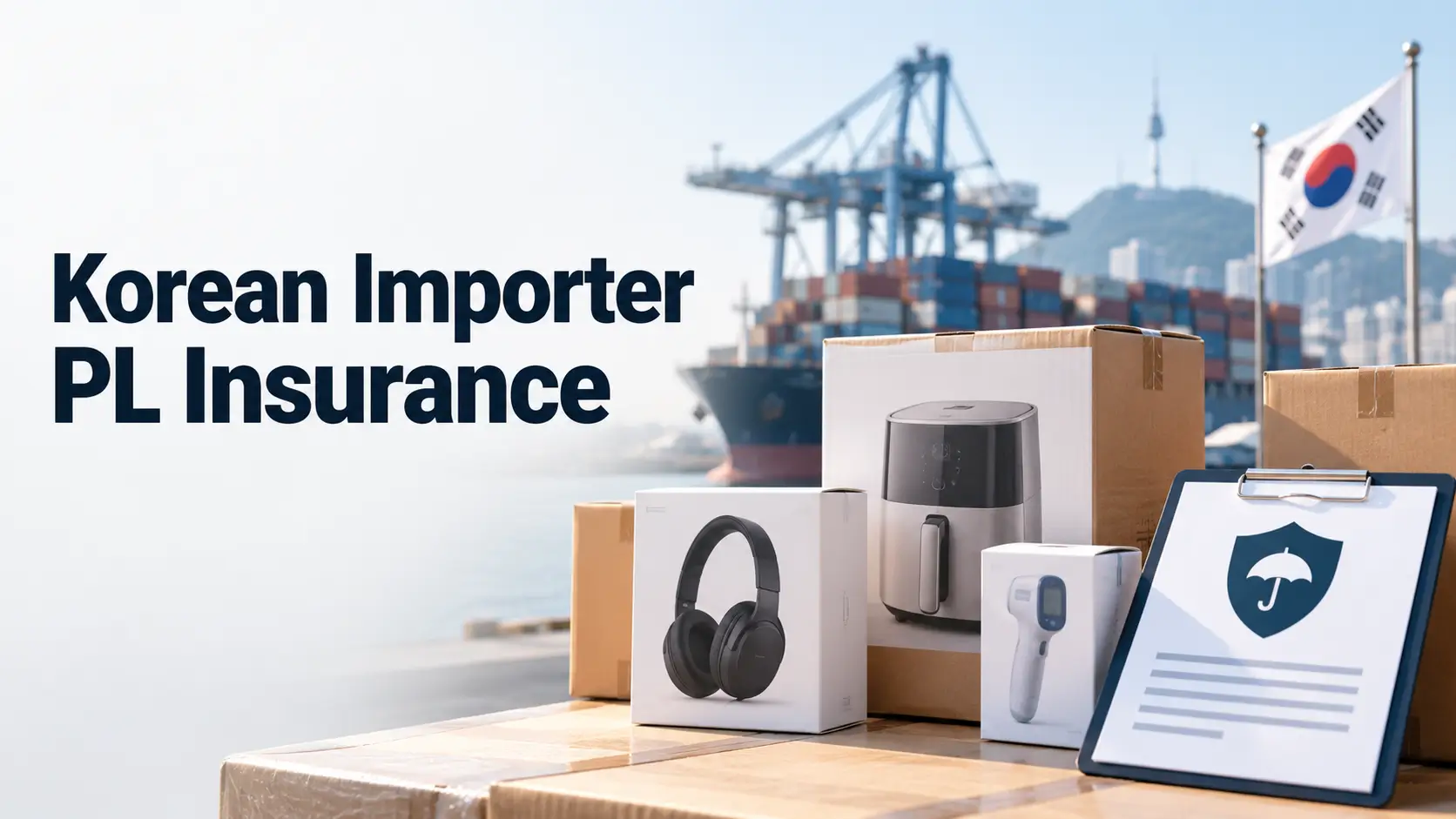
If you import products into South Korea for commercial sale, Korean product liability law can treat you as a manufacturer even when the goods were physically made overseas. That makes product liability insurance, commonly called PL insurance or 생산물배상책임보험 in Korea, an important risk-management tool for many importers.
The crucial point is that insurance and compliance are two different layers. PL insurance can help respond to covered claims for bodily injury or property damage caused by a defective product, but it does not replace Korean certification, labeling, product-safety, recall, or incident-reporting obligations.
The appropriate policy also depends on what you import. A distributor bringing in ordinary household goods, a private-label electronics seller, and an importer of implantable medical devices may face very different legal and insurance requirements.
This guide reflects Korean legal and insurance sources reviewed on September 26, 2026. It provides general information rather than a coverage determination or legal opinion for a particular product.
Table of Contents
Why Korean Importers Have Direct Product Liability Exposure
The first surprise for some foreign suppliers is that Korean law does not reserve product liability for the factory that actually assembled the product.
Under Korea’s Product Liability Act, the definition of a manufacturer includes a person engaged in the business of manufacturing, processing, or importing products. The Act also covers a person who places a name, business name, trademark, or another identifying mark on a product in a way that identifies that person as the manufacturer or can cause consumers to believe so. You can review the Product Liability Act through Korea’s National Law Information Center.
For an importer, this means the sentence “the defect came from the overseas factory” does not automatically remove Korean liability. The commercial importer itself can fall within the statutory manufacturer category.
This becomes especially relevant for private-label goods. If you import an OEM product and put your Korean brand on it, the branding decision has implications beyond marketing. Businesses building private-label strategies may also want to review this site’s guide to Korean trademark registration costs and risks before finalizing the brand and distribution structure.
What Counts as a Defect Under Korean Product Liability Law?
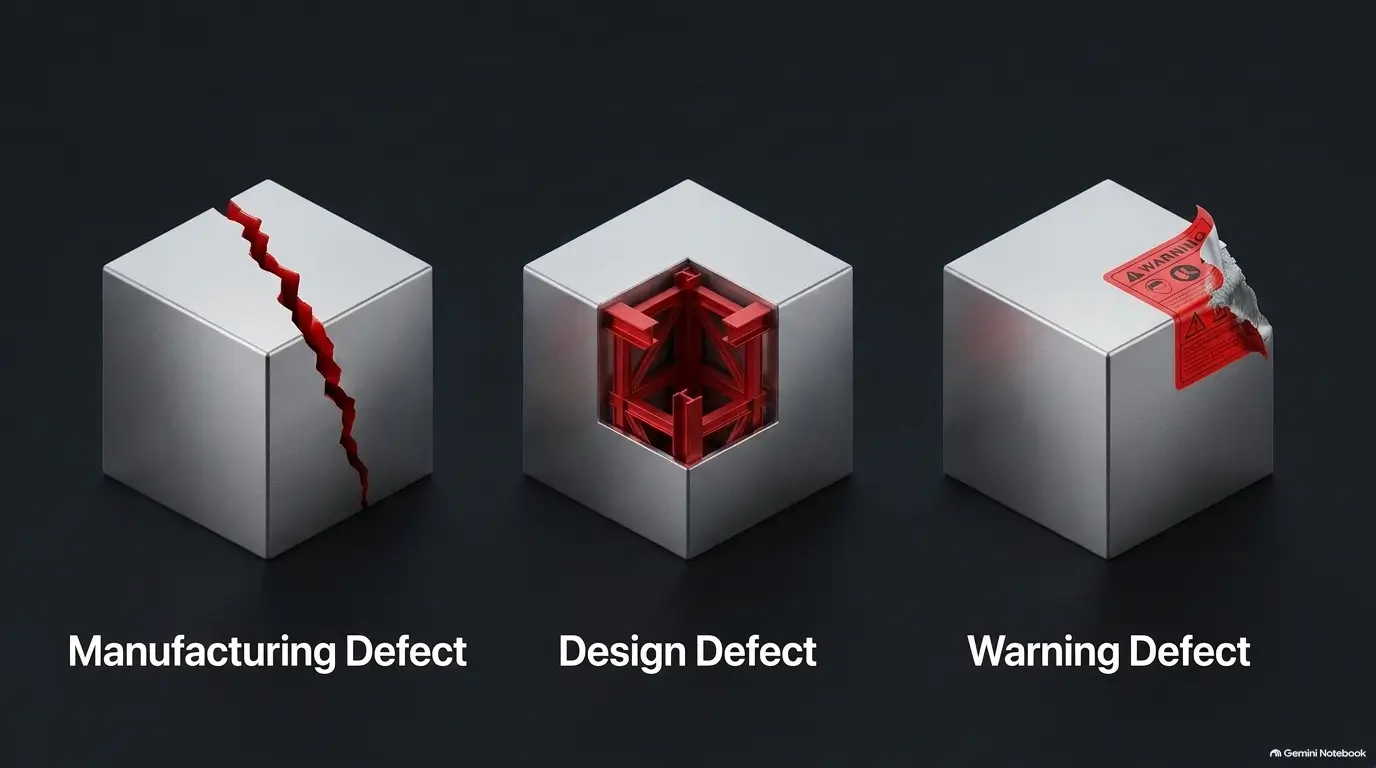
Korean product liability law broadly recognizes manufacturing, design, and indication-related defects. That last category matters to importers because a technically sound product can still create liability problems if appropriate explanations, instructions, or warnings are missing.
- Manufacturing defect: the individual product departs from its intended design or manufacturing standard and lacks the safety ordinarily expected.
- Design defect: a reasonable alternative design could have reduced or prevented the relevant danger, but the safer design was not adopted.
- Indication or warning defect: reasonable instructions, explanations, warnings, or other indications could have reduced or avoided the risk, but were not adequately provided.
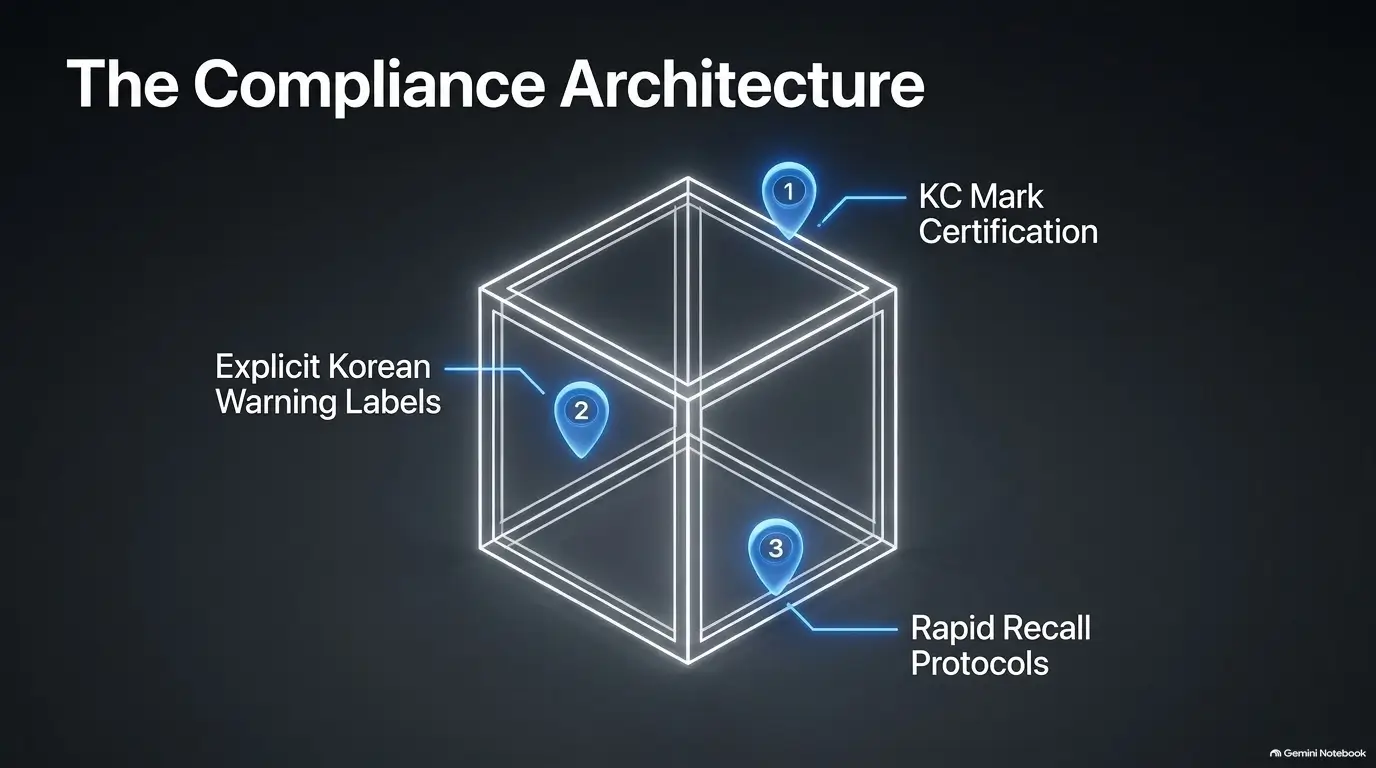
For importers, the warning issue deserves particular attention. Foreign-language packaging, instructions written for another country’s regulations, electrical warnings designed around a different power system, or safety instructions that make sense only in the manufacturer’s home market may need review before Korean distribution.
What Damages Can Create Product Liability?
The Product Liability Act addresses damage to a person’s life, body, or property caused by a defective product. Damage occurring only to the defective product itself is excluded from the statutory product-liability rule described in the Act.
That distinction matters when considering insurance. A defective blender that simply stops working is a different risk from a blender that catches fire and damages the customer’s kitchen. The first problem may primarily involve warranty, repair, replacement, contractual, or commercial-loss issues. The second can involve third-party property damage and potentially product liability.
The Korean Act also permits liability of up to three times the damage in a specified serious-injury scenario where a manufacturer knew of a defect yet failed to take necessary measures and serious damage to life or body resulted. Importers should therefore treat post-sale defect information as an operational issue, not merely a customer-service problem.
Product Liability Insurance Does Not Replace Product-Safety Compliance
This is the dividing line worth drawing in thick ink: PL insurance transfers certain financial risks; it does not legalize a noncompliant product.
Some imported products must satisfy Korean safety requirements before they can legally enter or be sold in the market. The Korea Agency for Technology and Standards explains that products subject to legally compulsory certification may require certification before being placed on the market under Korea’s KC certification system.
The exact route depends on the product. Electrical appliances, batteries, children’s products, household goods, food, cosmetics, medical devices, radio equipment, chemicals, connected devices, and industrial products can fall under different regulatory regimes.
Technology importers face another variation of this problem. A connected device may have product-safety requirements on one side and cybersecurity or procurement requirements on the other. For connected or security-sensitive products, this site’s guide to Korea cybersecurity certification for B2B vendors explains why there is no single universal Korean technology certificate.
Recall Duties Can Exist Separately From the Insurance Claim
Korea’s Framework Act on the Safety of Products imposes separate obligations on business entities involved with products. Under the current Article 13 framework, when a business becomes aware that a serious product defect may cause harm to consumers’ life, body, or property, reporting and product-recall measures can be required. The current provision can be checked through the National Law Information Center’s product-recall provision.
This creates an important insurance question: does your policy cover only third-party liability, or does it also cover any part of a recall?
Do not assume that ordinary PL coverage automatically pays for retrieving stock, notifying customers, shipping replacement products, destroying inventory, inspecting warehouses, rebuilding packaging, refunding buyers, or managing a large recall campaign. Recall-related expenses should be specifically discussed with the insurer or broker and confirmed in the actual wording or endorsement.
Is Product Liability Insurance Mandatory for Every Korean Importer?
Do not treat the Product Liability Act itself as a blanket rule saying every commercial importer must purchase the same PL policy. The Act establishes product-liability exposure. Separate statutes, regulations, contractual requirements, marketplace rules, tender conditions, or industry-specific laws may create additional insurance requirements.
A useful example is medical devices. Korea’s current Medical Devices Act framework requires specified manufacturers and importers of implantable medical devices intended to remain in the human body for 30 days or more to satisfy particular liability-insurance or mutual-aid requirements, subject to statutory exceptions. The requirements can be reviewed in the Medical Devices Act Enforcement Decree provisions on liability insurance.
The lesson is not that every product needs this medical-device insurance. It is that an importer should identify the product’s regulatory category before deciding whether insurance is voluntary risk management, contractually required, or legally mandatory under a product-specific regime.
What Korean Product Liability Insurance Typically Protects Against
Product liability insurance is a form of liability insurance designed to respond when covered products cause third-party injury or property damage and the insured becomes legally liable under the policy terms.
Korea Insurance Development Institute describes liability insurance generally as protection against legal liability arising from bodily injury or property damage to others and lists product liability insurance among the recognized liability-insurance classes. Its liability insurance overview also explains the importance of policy limits and the treatment of damages and related costs.
An example from the commercial market is Samsung Fire & Marine Insurance’s product liability insurance description, which describes coverage for legal damages and other costs arising from product-related injury or damage. Actual protection depends on the issued policy, endorsements, limits, definitions, and exclusions rather than the marketing summary alone.
| Risk | Why an importer should check it |
|---|---|
| Bodily injury | A defective imported product injures a consumer or another third party. |
| Third-party property damage | A product causes fire, leakage, breakage, or other damage beyond the product itself. |
| Legal defense costs | Defense expenses can become significant even before liability is finally determined. |
| Products and completed operations | The accident may occur after the product has left the importer’s possession. |
| Recall expense | This may require separate coverage or an endorsement and should never be assumed. |
| Worldwide exposure | Korean coverage may not automatically follow goods sold or resold into other countries. |
Occurrence vs Claims-Made Coverage: A Small Phrase With a Large Consequence
One of the most technical questions on a PL quotation is also one of the most important: is the policy written on an occurrence basis or a claims-made basis?
With an occurrence-based policy, the timing of the covered accident is generally central. With a claims-made policy, the timing of the claim is central and a retroactive date may also determine whether an earlier event falls within coverage.
This becomes critical when an importer changes insurers, stops selling a product, closes a legal entity, or discovers a defect years after the first shipment.
Ask the broker to explain the answer using actual dates. For example: “If a product sold in November 2026 injures someone in January 2027 and the claim arrives in June 2027, which policy responds?” Dates are far better than insurance vocabulary floating in midair.
Coverage Questions Every Importer Should Ask Before Buying
- Who is insured? Confirm the exact Korean importer, parent company, subsidiaries, distributors, and any entities requiring additional-insured status.
- Which products are insured? Make sure the product schedule is broad enough to include every relevant model, component, private-label variation, and new SKU.
- Where is coverage valid? Confirm territorial scope and which courts or jurisdictions are recognized.
- What is the per-accident limit? A buyer requirement may specify a minimum limit.
- What is the annual aggregate? Several claims arising from one product line can consume the aggregate quickly.
- What deductible or self-insured retention applies? Compare the number with the size of loss the business can actually absorb.
- Are defense costs inside or outside the liability limit? This can materially affect the amount left for damages.
- Is recall expense covered? Ask specifically about customer notification, retrieval, shipping, disposal, inspection, and replacement expenses.
- Are contractual indemnities covered? Do not assume a promise made to a retailer or platform is automatically insured.
- How are known defects treated? Notification timing can become decisive once the importer receives incident reports.
What May Fall Outside an Ordinary PL Policy?
Insurance wording varies, so a generic list should never be treated as the exclusions in your own policy. Still, importers should specifically investigate several common problem areas before signing.
- Repairing or replacing the defective product itself.
- Product withdrawal and recall expenses.
- Pure commercial loss without covered bodily injury or property damage.
- Contractual promises that exceed the insured’s ordinary legal liability.
- Intentional misconduct or knowingly continuing to distribute a dangerous product.
- Product guarantees, performance warranties, or failure to achieve a promised result.
- Pollution or chemical exposures requiring specialized coverage.
- Professional advice, software, or service liability that does not fit the product definition.
- Penalties, administrative sanctions, or other amounts that are uninsurable or excluded under the applicable wording or law.
The practical question is not “Does PL insurance cover product liability?” Of course that is its basic purpose. The useful question is: “Does this particular wording cover the accident my particular product is realistically capable of causing?”
Why the Overseas Manufacturer’s Insurance Certificate Is Not Enough
An overseas supplier may confidently email you a certificate of insurance. That is useful evidence, but it does not automatically mean your Korean business is protected.
Check whether the foreign policy actually covers claims arising in South Korea, recognizes the Korean importer where necessary, includes the relevant product, has sufficient limits, remains active through the intended sales period, and does not contain territorial or jurisdictional restrictions that hollow out the protection.
A supplier contract should also address indemnification, cooperation with claims, access to testing and manufacturing records, notice of formulation or component changes, foreign recalls, defect investigations, preservation of evidence, and responsibility for recall expenses.
Insurance should sit beside those contractual protections rather than replace them.
Private-Label Importers Need Extra Attention
Private labeling makes the commercial story cleaner for the customer and messier for risk allocation behind the curtain.
The Korean company may own the brand, select specifications, request modifications, translate instructions, choose packaging, control online listings, and decide when to stop selling after complaints. Each additional decision creates another piece of evidence that can matter after an accident.
For private-label goods, keep version-controlled records of specifications, test reports, labels, instructions, warning language, supplier approvals, production changes, batch numbers, shipment dates, and complaint history. If a factory quietly changes a battery cell, resin, adhesive, coating, charger, or safety component, the importer needs a process that notices.
How Insurers Assess an Importer’s Risk
There is no responsible universal premium figure for Korean importers. A tiny importer of low-risk household accessories and a distributor of batteries, machinery, children’s products, or medical equipment do not belong in the same price bucket.
Underwriting can depend on the product class, Korean and overseas sales, number of units, claims history, manufacturing location, quality-control procedures, testing and certification, limits requested, deductible, territorial scope, export destinations, product age, distribution method, and whether higher-risk jurisdictions are included.
The fastest way to obtain a meaningful quotation is therefore not to ask, “How much does PL insurance cost?” It is to give the insurer a clean risk file.
Documents to Prepare Before Asking for a Quote
- Korean business name and registration information.
- Description of each imported product category and intended use.
- Manufacturer name and country of manufacture.
- Annual Korean sales and projected sales.
- Units sold or expected shipment volume.
- Past claims, complaints, recalls, and safety incidents.
- Relevant KC certificates, test reports, registrations, or licenses.
- Product labels, Korean instructions, and warning materials.
- Supplier quality-control documents.
- Requested per-occurrence and aggregate limits.
- Required territories and jurisdictions.
- Major retailer, marketplace, landlord, tender, or distributor insurance requirements.
If the products will be sold primarily online, distribution speed can make traceability more important rather than less important. This site’s explainer on how online shopping and delivery work in Korea provides useful background on the retail environment into which many imported consumer products are released.
Three Importer Scenarios That Show the Coverage Gap
Scenario 1: An imported power bank starts a fire
A Korean importer sells a power bank manufactured overseas. A battery failure causes a fire that damages a customer’s apartment.
The importer may face product-liability exposure even though it did not manufacture the battery cell. A PL policy may be highly relevant to the resulting third-party property-damage claim, subject to the exact coverage. Separately, the business may face product-safety investigation, reporting, or recall issues.
Scenario 2: A private-label kitchen product breaks
A Korean company imports a kitchen tool under its own trademark. A component breaks during normal use and seriously cuts a consumer.
The importer cannot safely assume the Chinese, Vietnamese, European, or American factory is the only legally relevant manufacturer. Korean law’s importer definition and the company’s own branding make local product-liability planning essential.
Scenario 3: The product simply fails
An imported appliance stops working after three months but causes no bodily injury and damages no other property.
This is a reminder that PL insurance is not a magical warranty fund. The dispute may instead concern repair, replacement, refund, contract terms, consumer remedies, or another form of commercial loss. The importer should not promise the customer that “insurance will pay” before the policy and legal basis are actually reviewed.
A Practical Product Liability Checklist Before the First Shipment
- Classify the product under Korean law. Identify the regulator and any safety, registration, certification, testing, or labeling regime.
- Confirm whether an importer license or registration is required.
- Verify KC or other product-specific certification requirements before shipment or sale.
- Review Korean labels, instructions, warnings, age restrictions, and safety information.
- Document the overseas manufacturer’s quality-control process.
- Require notification before the supplier changes components, materials, software, formulation, or manufacturing location.
- Maintain lot, batch, serial-number, supplier, shipment, and customer records appropriate to the product risk.
- Obtain a PL quotation using the correct Korean legal entity and complete product list.
- Compare occurrence versus claims-made terms, limits, deductible, territory, defense-cost treatment, and recall options.
- Create a written incident and recall procedure before the first serious complaint arrives.
FAQ
Does the overseas manufacturer take all the liability?
No. Korea’s Product Liability Act includes a person engaged in importing products within its definition of a manufacturer. Contractual rights against the overseas supplier may help allocate the financial burden between businesses, but they do not automatically erase the Korean importer’s exposure to an injured third party.
Is PL insurance mandatory to import normal consumer goods into Korea?
There is not one blanket Product Liability Act insurance requirement that applies identically to every importer and every product. Product-specific statutes can create separate mandatory insurance requirements, while buyers, marketplaces, tenders, distributors, or contracts may also require coverage. Confirm the rule for the exact product rather than relying on a general answer.
Does KC certification eliminate product liability?
No. Certification and product liability answer different questions. Regulatory compliance can be important evidence, but a certification mark should not be treated as immunity from a later defect, warning, injury, property-damage, or recall issue.
Will ordinary PL insurance pay for a recall?
Do not assume so. Ask whether product recall expenses are included, excluded, or available through a separate endorsement or policy. Verify which expenses are covered and any sublimits or conditions.
Can a small importer wait until a retailer requests insurance?
That can leave a gap. Liability can exist before a major retailer ever asks for a certificate. It is more useful to evaluate product risk, contractual obligations, and appropriate insurance before meaningful commercial distribution begins.
The Bottom Line for Importers
For a Korean importer, product liability insurance should be treated as the financial backstop behind a larger product-safety system.
Start with the legal reality: an importer can be treated as a manufacturer under Korea’s Product Liability Act. Then determine which product-specific safety, certification, labeling, reporting, recall, and insurance requirements apply. Only after that should you compare PL policy wording, limits, deductibles, territorial scope, defense costs, recall protection, and supplier indemnities.
The strongest setup is not the company with the thickest insurance certificate. It is the importer that can identify what it sold, who made it, which version reached which customer, what warnings accompanied it, what changed at the factory, and exactly what happens when the first serious defect report lands in the inbox.