7 Shocking Truths About “Jeong”: The Korean Emotion That Will Change Your Life Forever
Have you ever felt a connection so deep with someone that words simply fail to describe it?
That feeling of mutual affection, loyalty, and empathy that binds you together, almost like family?
In the West, we might call it a close bond, a deep friendship, or even love.
But in Korea, there’s a single, powerful word for it: Jeong (정).
It’s more than just a word; it’s a fundamental part of the Korean psyche, a guiding force in relationships, and an invisible thread that weaves together society.
If you’re trying to understand Korean culture, or even just a Korean friend, you absolutely must grasp the concept of Jeong.
It’s the secret ingredient in everything from a grandmother’s kimchi to the fierce loyalty of a K-pop fandom.
I’ve spent years trying to put my finger on it, and believe me, it’s a rabbit hole worth exploring.
Let’s dive deep into this fascinating and complex emotion. —
Table of Contents
- What Exactly is “Jeong” and Why It’s So Hard to Translate
- The Jeong That Binds: From Family to Strangers
- How Jeong Shapes Korean Culture and Daily Life
- The Pain of Losing Jeong: Why Breakups are So Hard
- Jeong in the Modern World: Is it Fading?
- How to Cultivate Jeong in Your Own Life
- My Own Personal Journey with Jeong
- Final Thoughts on This Unforgettable Emotion
—
What Exactly is Jeong and Why It’s So Hard to Translate
Alright, let’s get this out of the way first: there is no single, perfect English word for Jeong.
Seriously, don’t even try to find one.
It’s a mix of affection, love, attachment, compassion, empathy, and a deep sense of connection.
Think of it like this: imagine you’ve been working at the same office for ten years.
You and your coworkers have been through countless late nights, stressful deadlines, and celebratory dinners.
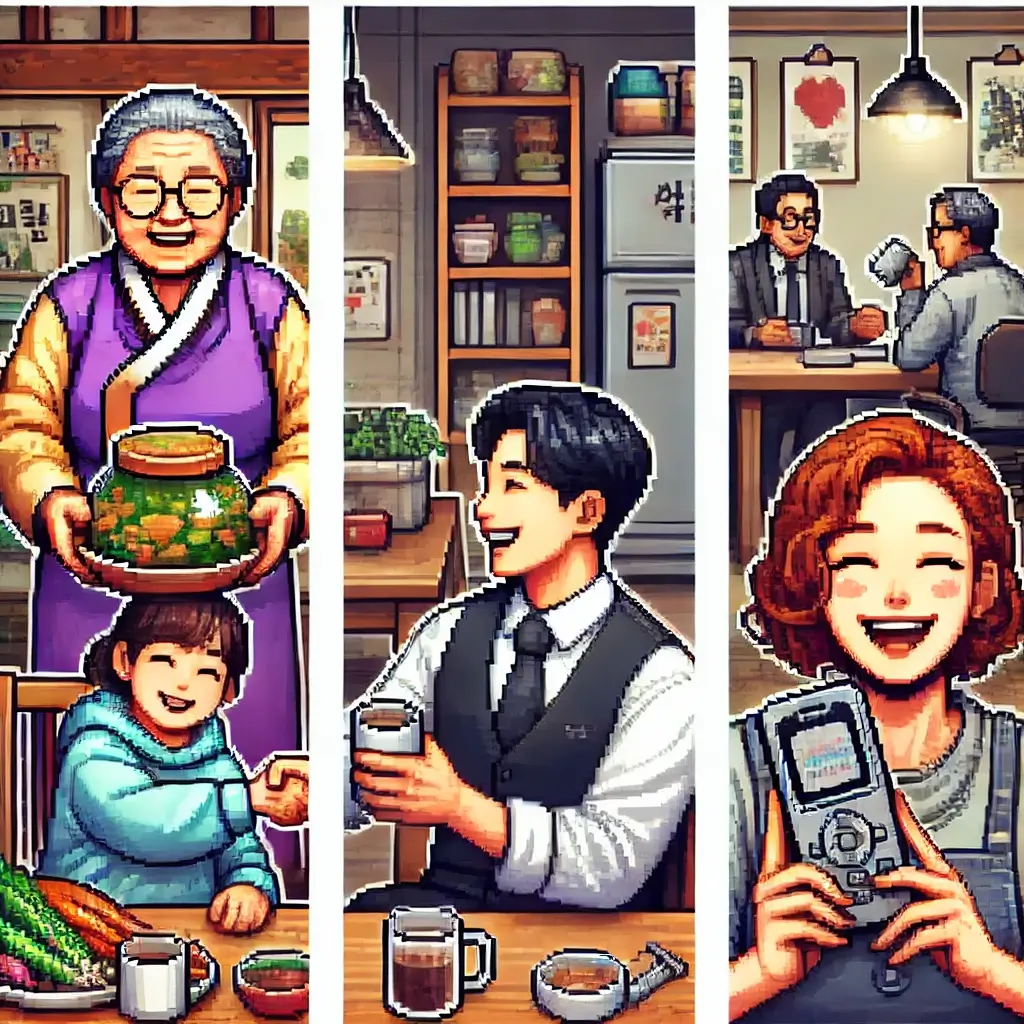
You know their kids’ names, their favorite coffee orders, and their biggest fears.
You don’t just “like” them; you feel a profound sense of camaraderie and shared history.
That feeling, that collective history and shared emotional investment, is a form of Jeong.
It’s the feeling you get when you see an old friend after years apart and it feels like no time has passed at all.
It’s the unspoken understanding that comes from a shared experience, a bond forged through time and hardship.
Some people try to translate Jeong as “affection,” but that’s like saying a symphony is just a series of notes.
It misses the depth, the history, and the emotional resonance that makes it so special.
The word itself comes from a Chinese character that means “emotion” or “feeling,” but Koreans have taken it and made it their own, infusing it with a unique cultural meaning.
It’s a connection that develops slowly, like a fine wine, and once it’s there, it’s incredibly difficult to break.
It’s not something you can just “get” overnight; it’s earned through shared experiences, acts of kindness, and a mutual understanding.
This is why Koreans can be a little reserved at first—they are waiting for Jeong to grow.
Once it does, you’re in for life.
And let me tell you, that’s a truly beautiful thing. —
The Jeong That Binds: From Family to Strangers
One of the most mind-blowing things about Jeong is how pervasive it is.
It’s not just for your family or your significant other.
Jeong extends to pretty much everyone and everything you interact with on a regular basis.
It starts with your family, of course.
The Jeong between parents and children is the foundation of Korean society.
It’s the reason a mother might spend hours meticulously preparing a meal for her children, or why a child feels a deep, unshakeable sense of duty to their parents.
It’s a selfless love, a deep-seated care that transcends everyday annoyances and disagreements.
But it doesn’t stop there.
This same emotion extends to your friends, your neighbors, and even your coworkers.
Think about the classic Korean drama trope where a group of friends live together or are constantly at each other’s side.
Their bickering and constant teasing are often just a surface-level expression of the deep Jeong that binds them.
And here’s where it gets really interesting: Jeong can even extend to inanimate objects.
I know, I know, it sounds crazy, but bear with me.
Have you ever had a favorite old sweater or a coffee mug that you just can’t bring yourself to throw away, even though it’s seen better days?
That feeling of attachment, that sense of shared history with an object, is another form of Jeong.
It’s why you see Koreans hold onto things for a long time, and why they might feel a pang of sadness when they have to get rid of something.
This isn’t just about sentimentality; it’s about the emotional energy you’ve invested in that thing.
I once had a Korean friend who was heartbroken when her old, clunky flip phone finally died.
It wasn’t a fancy smartphone, but she had used it for years, and it held countless memories.
She had Jeong for that phone, and that’s something that’s truly unique to this cultural perspective.
It’s this ability to form deep, meaningful connections with almost everything that makes Jeong such a powerful force in Korean life. —
How Jeong Shapes Korean Culture and Daily Life
Jeong isn’t just a personal feeling; it’s the glue that holds Korean society together.
It influences everything from business practices to social etiquette.
One of the most obvious places you’ll see it is in the concept of “우리” (uri), which means “we” or “our.”
In Korea, it’s common to say “our mother,” “our house,” or “our country,” even when you’re talking about something that is technically yours alone.
This isn’t about communism or shared ownership; it’s an expression of Jeong, a way of emphasizing that you’re all in this together.
This collective mentality, fostered by Jeong, is a huge part of what makes Korea such a tight-knit society.
You see it in the way neighbors look out for each other, in the way a boss might treat their employees like family, and in the incredibly strong sense of national identity.
Another place you’ll find Jeong is in the country’s famous hospitality, or “정” (jeong).
When you visit a Korean home, you’re not just a guest; you’re family for the time you’re there.
You’ll be fed until you can’t eat another bite, and you’ll be taken care of with a warmth that can be overwhelming for Westerners.
This isn’t just about being polite; it’s about sharing Jeong, about creating a temporary but deeply meaningful bond.
It’s the reason a Korean grandmother might insist you take home a container of homemade kimchi, no matter how much you protest.
That kimchi isn’t just food; it’s a physical embodiment of her Jeong for you.
You also see Jeong in the country’s drinking culture.
Sharing a bottle of soju with a friend or a colleague isn’t just about getting tipsy; it’s a ritual for building and reinforcing Jeong.
It’s a chance to open up, to be vulnerable, and to share your emotions in a way that might not be possible otherwise.
I remember one night, I was out with a group of Korean coworkers, and after a few rounds of soju, one of my colleagues started telling me about his personal struggles.
It was a moment of incredible honesty and vulnerability, and it completely changed our relationship.
That’s the power of Jeong: it turns simple interactions into profound connections.
This cultural emphasis on relationships over individualism is a core part of what makes Korea, well, Korea.
It’s a stark contrast to the West, where we often prioritize personal freedom and independence above all else.
In Korea, your identity is often tied to your relationships and your place within a group, and Jeong is the feeling that makes that possible.
For more on the cultural impact of emotions, I highly recommend checking out some academic resources. It really puts things into perspective.Psychology Today on Jeong —
The Pain of Losing Jeong: Why Breakups are So Hard
Now, here’s the flip side of the coin.
If building Jeong is a beautiful process, losing it is a truly devastating one.
The pain of a breakup or the end of a friendship in Korea isn’t just about the loss of a person; it’s about the loss of Jeong.
It’s the emotional equivalent of tearing a piece of your soul away.
When Jeong is broken, it’s not just a simple disagreement or a fading of feelings.
It’s a betrayal of the shared history, the emotional investment, and the deep, unspoken promises that were made over time.
This is why you see such intense emotional reactions in Korean dramas when a relationship ends.
It’s not just for dramatic effect; it’s a real and powerful representation of the pain of losing Jeong.
The phrase “정 떨어졌다” (jeong tteoreojyeotda) literally means “Jeong has fallen,” and it’s one of the most heartbreaking things you can say to someone.
It’s an admission that the emotional bond is gone, that the connection that once held you together has been severed.
It’s a final, irreversible statement.
I remember a friend telling me about a difficult breakup she went through.
She didn’t just miss her ex-boyfriend; she missed the Jeong they had built together.
She talked about how they had shared everything, from their childhood stories to their deepest insecurities, and how the thought of that connection just disappearing was what hurt the most.
This is also why Koreans are often very reluctant to burn bridges.
Even if a relationship ends, they might try to maintain some form of contact, or at least not have a completely acrimonious split.
It’s an attempt to preserve some of the Jeong that was built, even if the primary relationship is over.
They understand that once Jeong is gone, it’s nearly impossible to get it back, and that’s a loss worth avoiding at all costs. —
Jeong in the Modern World: Is it Fading?
In a world of fast-paced technology, fleeting connections, and global mobility, you might wonder if Jeong is still a thing.
Is this deep, time-consuming emotion a relic of the past?
The answer is a little complicated.
On one hand, the pressures of modern life—long work hours, intense competition, and a growing individualism—are definitely putting a strain on the traditional forms of Jeong.
People have less time to spend with family and friends, and the rise of social media can sometimes create a sense of connection without the actual substance of shared experience.
However, I would argue that Jeong is not fading; it’s simply evolving.
Koreans are incredibly resilient, and they’ve found new ways to express and cultivate Jeong.
You see it in the fierce loyalty of K-pop fans, who form communities and support their idols with a dedication that can only be described as Jeong.
They might not know each other in real life, but their shared love for an artist creates a powerful, emotional bond.
You also see it in the rise of online communities and gaming guilds, where people form deep connections with others who share their passions.
They might be thousands of miles apart, but they’ve built a shared history and an emotional investment that is every bit as real as a face-to-face relationship.
Jeong is a fundamental human need for connection and belonging, and as long as humans have that need, they will find a way to express it.
The form it takes might change, but the feeling itself remains as powerful as ever.
It’s a testament to the enduring power of this incredible emotion. —
How to Cultivate Jeong in Your Own Life
So, you’ve read all this and you’re thinking, “This sounds amazing. How can I get some of that Jeong in my life?”
The good news is, you don’t have to be Korean to experience it.
Jeong is a universal human emotion, expressed through a specific cultural lens.
Here are a few practical ways you can start building more meaningful connections in your own life:
1. Slow Down: Jeong is a marathon, not a sprint.
It requires time and patience.
Instead of trying to meet a hundred new people, focus on building deeper connections with the people you already have in your life.
Spend quality time with them, listen to their stories, and share your own.
2. Practice Empathy: Try to see the world from another person’s perspective.
Understand their struggles and celebrate their victories as if they were your own.
This is a core part of Jeong—the ability to feel a person’s emotions with them.
3. Give Selflessly: Jeong is often expressed through acts of selfless giving.
It doesn’t have to be a grand gesture.
It can be as simple as bringing a coworker their favorite coffee or taking the time to listen to a friend who is going through a tough time.
These small acts of kindness build a foundation of trust and affection.
4. Embrace Shared Experiences: Go on a trip with a friend, start a new hobby with your partner, or join a local club.
Shared experiences are the quickest way to build a history and create Jeong.
They give you a common language and a common set of memories to draw on.
For more on building empathy and connection, check out this great article on Harvard Business Review.Read About Empathy at HBR —
My Own Personal Journey with Jeong
I can’t talk about Jeong without sharing a few of my own personal stories.
When I first moved to Korea, I was a bit of a loner.
I was used to the Western idea of independence and keeping a healthy distance from others.
I thought it was polite and respectful.
My Korean colleagues, however, saw it as a sign that I was cold or didn’t want to connect.
One of my coworkers, a woman named Ji-hyun, took it upon herself to change that.
At first, I found her constant invitations to lunch and her questions about my family a bit intrusive.
She would bring me snacks she had made, and sometimes, she would just stop by my desk to see how I was doing, even if we had nothing work-related to talk about.
I remember one time, I was having a particularly stressful week, and I was just completely overwhelmed.
Ji-hyun saw me looking drained and just silently placed a can of my favorite coffee on my desk.
No words, no fuss, just a simple act of kindness.
In that moment, I finally understood Jeong.
It wasn’t about her trying to be my best friend; it was about her seeing my struggle and wanting to help, not because she had to, but because she cared.
Over time, our relationship blossomed.
We shared stories, we laughed, we cried, and we became an inseparable duo at the office.
When I had to leave Korea, the goodbye was one of the hardest things I’ve ever had to do.
I wasn’t just leaving a friend; I was leaving a part of myself, a piece of the Jeong we had built together.
We still talk to this day, and even though we’re on different continents, I can still feel the warmth of our connection.
That’s the power of Jeong.
It’s not just a feeling; it’s a living, breathing bond that stays with you long after the person is gone.
And for that, I am eternally grateful. —
Final Thoughts on This Unforgettable Emotion
Jeong is a beautiful, complex, and powerful concept that lies at the very heart of Korean culture.
It’s the reason for the country’s incredible sense of community, the warmth of its people, and the depth of its relationships.
It’s a reminder that in a world that often feels disconnected, there is still immense value in building deep, lasting bonds with the people and things around us.
So, the next time you share a meal with a friend, or you feel a pang of sadness when you throw out an old belonging, take a moment to reflect on that feeling.
You might just be experiencing your own version of Jeong.
And if you are, I hope you cherish it with all your heart.
It’s one of the most precious gifts you can give and receive.Explore More Korean Culture
Jeong, Korean, Culture, Relationships, Emotion
🔗 Korean Ritual Costumes Posted 2025-08-11 07:31 UTC 🔗 Korean Pottery Kilns Forged Posted 2025-08-12 03:40 UTC 🔗 Regional Dialects Posted 2025-08-13 07:37 UTC 🔗 Japanese Tea Ceremony Posted 2025-08-13 09:25 UTC 🔗 Japanese Grammar Nuances for JLPT N2/N1 Posted 2025-08-13 09:25 UTC