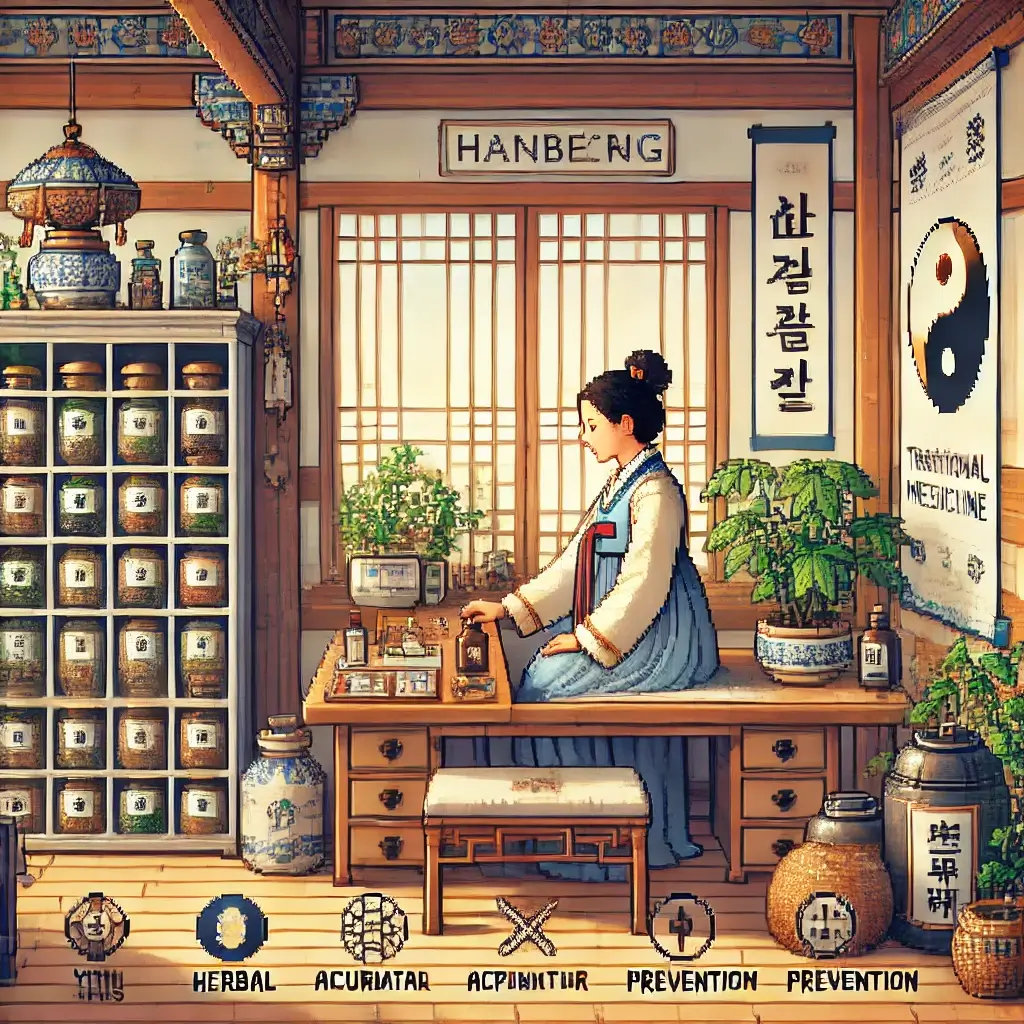
Hanbang refers broadly to traditional Korean medicine and related practices. A cultural history cannot establish that a treatment prevents illness, cures a condition or suits a particular person. The earlier transformation and personal-success framing has been removed.
Identify the exact treatment and purpose
Ask what product or procedure is proposed, for which condition and with what expected benefit. Herbal products, acupuncture, moxibustion and cupping involve different evidence and risks. A claim about one approach should not be transferred to all traditional Korean medicine.
Ask for condition-specific evidence
Discuss the quality of evidence, realistic goals, uncertainties and alternatives with appropriately qualified clinicians. NCCIH advises against using an unproven approach to replace conventional treatment or delay care. Its general guidance is not an endorsement of every Korean product or clinic.
Share information needed for safe care
Tell the treating clinician and pharmacist about medicines, supplements, relevant conditions and other treatment. Herbs can interact with medicines, and natural does not mean risk-free. Ask about ingredients, product quality, possible adverse effects and what to do if a problem occurs.
Check qualifications and written terms
Verify the practitioner’s credentials through an appropriate official route and ask about hygiene, consent, follow-up and complete costs. Do not attempt needling, burning or other clinical procedures from a blog. Individual suitability belongs in a clinical assessment, not a cultural questionnaire.
Bring questions, not a promised treatment result
If you are considering a consultation, prepare a short question sheet for the qualified clinician. Keep the proposed treatment specific. A general conversation about Korean medicine cannot answer whether a particular procedure or product is suitable for your health history.
- Proposal: Exact treatment or product and the condition it is intended to address.
- Evidence: Expected benefit, uncertainty, alternatives and how progress would be assessed.
- Safety discussion: Medicines, supplements and relevant conditions to discuss privately with the clinician.
- Practical plan: Credentials, consent, complete costs, follow-up and whom to contact about a problem.
Ask for an explanation you understand before agreeing. Do not publish your medication list or private health details as a comment to obtain individualized advice from a cultural blog. The purpose of the sheet is to support a clinical conversation; it is not a self-treatment protocol or a recommendation to replace prescribed care.
Compare two consultation proposals without treating them as equivalent
Imagine receiving one proposal for an herbal product and another for a course of acupuncture. Write the exact intervention on separate lines. Comparing only the package price would hide the difference between a product you take and a procedure delivered by a practitioner.
Use the questions below to organize a conversation with the treating clinicians. Leave unanswered items blank rather than filling them with a testimonial or a claim about tradition. This comparison supports informed questions; it does not decide which treatment is appropriate for you.
| Compare | What to record |
|---|---|
| Proposed intervention | Exact product ingredients or named procedure, intended condition and proposed course. |
| Basis for the proposal | Evidence for this condition, realistic goal and alternatives to discuss. |
| Coordination | Who checks medicines, other treatment and follow-up arrangements? |
A reader question: Can a cultural guide tell me whether a particular hanbang clinic is suitable?
No. It can help you ask better questions and recognize unsupported promises. Credentials, the proposed treatment and your circumstances need individual verification. General NCCIH information is a starting point for discussion, not a clinical approval of a specific Korean provider.
Further reading: NCCIH: considering a complementary health approach. Check the specific entry, object, edition or current provider notice relevant to your question.
Editorial revision: October 20, 2026. Practice examples are editorial constructions. The discussion distinguishes documented information, interpretation and personal choice.