
South Korea Property Compliance Guide
Korea Airbnb Regulations for Apartment Owners
What Is Actually Legal?
An apartment key may open the front door, but it does not unlock the right to run a lodging business. In South Korea, ownership, actual residence, building classification, guest nationality, apartment rules, tourism registration, platform verification, and tax registration each sit behind a different lock.
For many urban apartment hosts, the most relevant legal route is registration as a foreign-tourist urban homestay. That route is designed around a resident sharing an eligible home with foreign tourists. It is not a general licence for an overseas investor to operate a vacant apartment as a year-round holiday rental.
This guide separates the rules that are often stirred into one regulatory soup. By the end, you will know which documents to collect, which questions to put to the district office, where apartment management can intervene, and when a professional review may cost less than an avoidable mistake.
Check eligibility
Test the residence, building type, floor area, and guest model before spending.
Prepare the file
Build a district-office package that matches the real apartment and operation.
Avoid false shortcuts
Do not confuse an Airbnb account, tax number, or property deed with lodging permission.
The safest first booking is the one you do not accept until the address has passed a property-specific precheck. 🔑
Snapshot
This article is for apartment owners, foreign residents, overseas investors, tenants, and prospective hosts assessing Airbnb legality in South Korea. It explains why ownership alone is insufficient and shows how to check the hosting category, residence requirement, guest restrictions, apartment consent, registration, platform documents, and tax file before accepting reservations.
Table of Contents
Before You Act: Separate the Six Permissions
Legal and tax disclaimer
This article provides general educational information, not individual Korean legal, tax, immigration, building, insurance, or condominium-management advice. Requirements may differ by municipality, building register, visa or residence status, ownership structure, lease terms, and management bylaws. Confirm the exact address with the competent city, county, or district office before advertising, taking payment, renovating, or promising dates to guests.
The easiest way to misunderstand Korea Airbnb regulations is to ask one oversized question: “Am I allowed to host?” A safer approach is to break that question into six smaller permissions.
- Property permission: Is the official building use eligible for the intended lodging category?
- Residence permission: Does the proposed host actually live at the address in the way the category requires?
- Guest permission: May the registered accommodation serve the people you plan to accept?
- Community permission: Do apartment bylaws, resident-consent procedures, the lease, co-owners, or a lender restrict the activity?
- Government permission: Has the relevant tourism or lodging registration been completed?
- Business permission: Are tax, consumer-information, bookkeeping, and any online-sales reporting duties handled?
A “yes” in one column does not spill into the others. A tax office may issue a business number for an activity whose property still lacks lodging permission. A landlord may consent to subletting, while the building classification remains ineligible. Airbnb may let you draft a listing, while the district office would reject the operation.
Key takeaway
Treat legality as a chain. The hosting plan is only as strong as its weakest permission, and the weakest link is often residence or building use rather than ownership.
Who should pause before spending money
An owner-occupier with a spare bedroom in a legally classified apartment may have a plausible route to investigate. An absentee investor planning to rent an entire vacant unit all year has a much harder starting position.
- Overseas owners who do not genuinely reside in the apartment
- Operators planning several residential listings under one informal management business
- Hosts intending to serve mostly Korean domestic travellers
- Owners of officetels, goshiwons, or spaces recorded as business or neighbourhood-living facilities
- Tenants without written landlord permission
- Owners in public or subsidised housing
- People relying on another host’s approval package as proof that their own address qualifies
Readers assessing an officetel should first understand the difference between its residential appearance and official classification. The separate guide to officetel leases and building use in Korea explains why the front door, kitchenette, and bed do not turn a business facility into an apartment.
The Legal Fork Most Apartment Owners Miss
Foreign-tourist urban homestay versus ordinary lodging
For a typical apartment owner in a Korean city, the most relevant category is often foreign-tourist urban homestay, known in Korean as 외국인관광 도시민박업. Under the current Tourism Promotion Act framework, this category is built around an urban resident using a home in which that resident lives to provide accommodation and a Korean home-culture experience to foreign tourists.
That definition matters because it describes a form of resident home-sharing, not a miniature hotel hidden inside the residential stock. A vacant second apartment managed remotely does not become an urban homestay merely because the owner keeps a toothbrush in a drawer or blocks one room on the calendar.
Eligible housing types begin with the building register
The national framework identifies detached houses, multi-household houses, apartments, row houses, and multiplex houses among the housing types that may be used for this category. Officetels and neighbourhood-living facilities are not included in that list.
Do not identify the property by what the estate agent called it. Obtain the building register and read the official use classification. In Korea, a polished studio marketed as “apartment-style” can still be legally recorded as an officetel or another business use.
Why an Airbnb listing is not a legal classification
Airbnb is a marketplace. Korean law supplies the accommodation category. The platform can request documents, restrict property types, suspend bookings, or remove listings, but it does not transform an ineligible unit into registered lodging.
Show me the nerdy details
The legal analysis normally begins with three records that answer different questions. The building register identifies the approved use. The real-estate register addresses ownership and registered rights. Residence records and actual living facts help show whether the applicant is genuinely resident at the address.
These records can point in different directions. An applicant may own the apartment but live elsewhere, or live in the unit under a lease but lack landlord permission. A clean file aligns the records with the proposed operation rather than asking one document to perform every job.
Ownership Is Not Permission: The Residency Test
The host-residency rule changes the business model
The urban-homestay definition refers to a resident using the home in which the resident lives. Seoul’s published operating guidance also describes actual residence as part of the registration standard and notes that local review may include an on-site visit.
This means the proposed host should be prepared to explain the ordinary facts of life at the address: where they sleep, receive correspondence, store personal belongings, pay utilities, and maintain their household. A paper address that conflicts with the day-to-day operation is fragile evidence.
A vacant investment apartment raises a different problem
Clear title does not cure the absence of a resident host. A second home, inherited unit, or investment apartment operated by cleaners and a remote property manager may resemble a dedicated lodging business rather than resident home-sharing.
This is the point at which an investor should stop asking how to “make Airbnb work” and ask which lawful accommodation category, if any, fits the building and operating structure. The answer may be a different lodging registration, a long-term tenancy model, or no viable short-stay route at that address.
The address tells a story
Registration documents are only one chapter. Utility patterns, resident registration, household records, floor plans, on-site inspection, guest instructions, cleaning schedules, and the listing itself may reveal whether the host genuinely occupies the property.
Foreign residents should review how Korean address records work before relying on a certificate they do not fully understand. The guide to resident registration and address reporting in Korea provides useful background, although the district tourism officer still decides what evidence is required for the lodging application.
Residence reality check
- Is this the host’s genuine home rather than a staged business address?
- Do official records and actual living arrangements point to the same place?
- Will the operating model still look resident-led after the first six months?
- Does the listing describe a shared home honestly?
- Could the host explain the arrangement consistently during an inspection?
Illustrative example: The apartment that looked perfect on a spreadsheet
Daniel owned a two-bedroom apartment near a Seoul university. He lived overseas and planned to keep one bedroom locked, hire a cleaner, and rent the rest to visitors. His spreadsheet showed strong weekend demand and an appealing nightly rate.
He assumed the locked room would count as his “host area.” Yet his residence records, utility use, flight history, and guest instructions all pointed to the same reality: nobody from his household actually lived there.
Before buying furniture, he sent the building classification and operating plan to the district office. The officer explained that the proposed structure did not match resident home-sharing and asked for additional evidence and apartment-management documents.
Daniel changed course and pursued a conventional long-term tenant instead. He lost a promising revenue forecast, but avoided furnishing a business model that the address could not support. The lesson was plain: test the legal structure before testing the mattress.
The Foreign-Guest Rule Reshapes the Listing
Standard urban homestays are aimed at foreign tourists
The statutory definition centres on providing accommodation to foreign tourists. A narrow exception exists for qualifying village enterprises operating within an approved urban-regeneration plan, where domestic tourists may be served within specified limits. That exception is not a general permission for ordinary apartment hosts to accept Korean guests.
Guest eligibility therefore shapes pricing, marketing, language, reservation screening, house rules, and recordkeeping. A listing aimed at Seoul weekenders, domestic couples, or Korean business travellers may be commercially attractive but legally mismatched with the registration category.
Mixed-nationality groups need a local answer
Reservations involving a foreign visitor and Korean spouse, a foreign resident, a Korean account holder booking for overseas guests, or a mixed group can create operational questions. Do not settle those questions by guessing from a passport photo or relying on what another host says was accepted.
Ask the competent district office how it expects the host to document guest eligibility and whether all members of the party may stay under the registered category. Keep the response, officer’s department, date, and any written guidance in the compliance file.
Platform availability is not guest eligibility
A calendar that accepts a booking is only a piece of software doing what calendars do. It does not know the precise registration attached to the apartment, the nationality of every traveller, or the district office’s interpretation of a mixed group.
Key takeaway
Design the booking process around the legal guest category. Do not accept first and investigate nationality after payment has created cancellation pressure.
| Reservation situation | Safer response | What not to assume |
|---|---|---|
| All guests are foreign tourists | Confirm the normal identification and record process required locally | Foreign nationality alone resolves every other compliance issue |
| Foreign guest with Korean companion | Ask the district office how mixed groups are treated | The booking account holder determines legal eligibility |
| Korean domestic traveller | Do not accept under the standard category without confirming a valid exception | Airbnb’s open calendar creates permission |
| Long-stay foreign resident | Confirm whether the person fits the authority’s interpretation of a foreign tourist | Every non-Korean resident is automatically treated the same |
The Second Gate Behind the Apartment Door
Management bylaws can stop a lawful-looking plan
Even when the national tourism category appears available, apartment management rules may restrict lodging activity, commercial use, guest turnover, digital door-lock sharing, common-area access, parking, waste disposal, or repeated use of elevators by visitors.
Seoul enforcement guidance has stated that, for affected 공동주택 complexes, the applicable management bylaws may require majority consent from residents in the relevant building before foreign-tourist urban-homestay registration. This should not be treated as a single universal national checklist for every complex, but it is far too important to ignore.
Ask what the consent must actually say
A vague letter saying “the management office is aware” may not satisfy the district office. Ask whether the file requires a management-rule extract, management-office confirmation, residents’ signatures, proof of the voting threshold, or another complex-specific document.
Also confirm who counts in the vote, which building or entrance is relevant, how vacant units are treated, whether electronic consent is accepted, and whether the consent expires after a change of operator.
Tenancy, co-ownership, and finance create more veto points
- Tenant host: Obtain specific written landlord permission rather than relying on silence.
- Jeonse tenant: Review the lease, subletting rules, insurance implications, and deposit protections.
- Co-owned apartment: Confirm authority to operate, receive income, sign applications, and make alterations.
- Mortgaged property: Review loan covenants and insurance terms for business-use restrictions.
- Public or subsidised housing: Do not assume any home-sharing route is available.
- Inherited property: Resolve title and decision-making authority before applying.
Owners using jeonse or another deposit-based housing structure may also benefit from reviewing the separate guide to jeonse deposit protection in Korea before adding short-term occupants to an already complex contractual arrangement.
Noise and access are not merely hospitality problems
Late arrivals, rolling suitcases, rubbish sorting, hallway conversations, smoking, parking, and repeated intercom calls can turn an otherwise quiet operation into a complaint file. In an apartment, the common areas act as the business’s unofficial lobby, yet they belong to the residential community.
The guide to apartment noise complaints in Korea explains why a few decibels at midnight can travel farther through a building than a beautifully written house rule.
Apartment red flags
- The management office refuses to provide the relevant rule in writing.
- The plan depends on guests entering unnoticed.
- The operator intends to tell neighbours that visitors are “friends.”
- Smart-lock codes will be shared without a common-area access plan.
- The host’s insurance has not been checked for paying guests.
- The business model only works if complaints remain rare and unreported.
Registration Before Reservations: The Safer Order
Start with the office responsible for the apartment address
The competent authority is generally the city, county, or district office responsible for the property’s physical location. The owner’s overseas address, accountant’s office, or preferred Seoul district does not choose jurisdiction.
Ask for the department responsible for tourism businesses, lodging registration, or foreign-tourist urban homestays. Korean administrative offices can be highly specific about departmental boundaries, so the guide to working with local district offices in Korea may save a few rounds of telephone pinball.
The 230-square-metre rule is only part of the test
The national registration standards require the house’s total floor area to be under 230 square metres, a workable foreign-language guidance system, at least one fire extinguisher, a standalone smoke alarm in each guest room, and a carbon-monoxide alarm in each guest room when individual heating equipment is installed.
Do not measure only the bed area or the portion shown to guests. Ask the officer which floor-area record controls, particularly where balconies, extensions, merged units, enclosed spaces, or inconsistent drawings appear in the property file.
Build the document file before applying
Exact requirements vary locally, but a careful pre-application file may include the following:
- Tourism business registration application
- Business or operating plan
- Proof of ownership or lawful use
- Lease and explicit landlord consent, where relevant
- Building register and real-estate register documents
- Floor plan, room layout, and photographs
- Evidence of actual residence
- Apartment management bylaw and required consent documents
- Fire-extinguisher, alarm, evacuation, and emergency-information plan
- Foreign-language assistance plan
- Applicant identification and locally requested immigration documents
- Co-owner authority or power-of-attorney documents, where applicable
Government service information describes tourism-business registration as a formal application process and identifies property-right documents among the records that authorities may review. Local offices may request a more tailored package for an urban homestay.
The six-gate registration sequence
1. Classify
Read the official building use and floor area.
2. Prove residence
Align records with the host’s actual life at the address.
3. Clear the building
Review bylaws, consent, lease, co-owners, and finance.
4. Confirm guests
Design reservations around the approved guest category.
5. Register
Apply, prepare for review, and correct any gaps.
6. Activate
Complete tax and platform verification before bookings.
Expect local review, not automatic approval
Published Seoul guidance describes a sequence of application, receipt, review including a site visit, registration, and issuance of the registration certificate. The precise workflow and supplementary documents may differ in another municipality.
Use the pre-application conversation to flush out obstacles while they are still cheap. A question asked before renovation may cost an afternoon. The same question asked after prepaid bookings may cost refunds, furniture, and several uncomfortable emails.
Airbnb’s Licence Check Changes the Practical Risk
Accommodation paperwork now reaches the platform
Airbnb states that newly created Korean listings have been required to submit accommodation-licence information since October 2024. Listings created before 2 October 2024 were required to submit accepted documentation by 16 October 2025 to continue accepting bookings. A listing that later supplies accepted documentation may regain booking eligibility.
By July 2026, an owner should therefore assume that the old strategy of listing first and postponing documentation is commercially brittle as well as legally risky.
A business registration certificate is not a lodging licence
The documents perform different functions. A tourism or lodging registration addresses permission to operate the accommodation category. A National Tax Service business registration identifies the business for tax administration. An online-sales report, when required, addresses electronic commerce duties.
Submitting the wrong certificate may lead to rejected platform verification. More importantly, possessing a tax number does not legalise an ineligible building, a false residence arrangement, or unauthorised domestic bookings.
Officetels and goshiwons remain a flashing red light
Airbnb’s Korea policy states that officetels and goshiwons are not permitted as Korean listings and that identified listings may be removed. Its responsible-hosting guidance also warns that officetels classified as business facilities are not permitted for hosting on the platform.
A cosmetic renovation does not rewrite the building register. Before paying for beds, photography, smart locks, or professional listing management, obtain the official classification and ask the district office which category is available.
| Document or approval | What it generally proves | What it does not prove |
|---|---|---|
| Property deed or register | Ownership and registered property rights | Permission to run lodging |
| Lease | Contractual right to occupy | Landlord consent to short-term hosting |
| Tourism or lodging registration | Approval for the registered accommodation category | Completion of every tax duty |
| Business registration certificate | Tax registration of the business | Building or lodging eligibility |
| Airbnb verification | Platform acceptance of submitted information | A binding legal opinion from the district office |
Tax, Costs, and the Three-File System
Repeated hosting can make you a business operator
The National Tax Service states that a person who repeatedly rents spare accommodation for profit, on their own account and responsibility, must register as a business. Its shared-accommodation guidance says the application is generally made for each business place within 20 days after business commencement, although registration may be requested before commencement.
The NTS also identifies the local-government tourism registration certificate as an additional document for shared accommodation operated in an urban area. That sequence reinforces the distinction between lodging permission and tax registration.
Keep three compliance files rather than one untidy folder
- Accommodation file: Registration certificate, floor plan, safety records, management consent, guest-eligibility procedure, and inspection correspondence.
- Tax file: Business registration, payout statements, revenue ledger, invoices, cleaning costs, platform fees, repairs, and tax-adviser correspondence.
- Platform and consumer file: Licence verification, displayed business information, online-sales reporting documents where applicable, cancellation records, and guest communications.
For an overseas owner, add a fourth folder for cross-border matters: Korean tax residency, remittance records, foreign-currency payouts, treaty questions, local representation, and the tax treatment in the owner’s home country.
The real cost is broader than the application fee
The cheapest legal route is not always the route with the lowest administrative fee. Compliance costs can include official documents, alarms and extinguishers, floor-plan preparation, translation, management consent, accounting setup, insurance review, legal advice, renovations, cancellation exposure, and the owner’s time.
| Planning level | Best fit | Likely spending areas | Main limitation |
|---|---|---|---|
| Good: DIY precheck | Resident owner with a simple apartment and clear records | Official documents, basic safety equipment, transport, translations | Owner must interpret and organise the file carefully |
| Better: Accountant-assisted setup | Regular host expecting recurring revenue | DIY costs plus business registration, bookkeeping, and tax setup | Accountant may not advise on building or tourism law |
| Best: Coordinated professional review | Overseas owner, mixed ownership, disputed consent, or unusual property | Legal review, tax advice, document translation, building or management consultation | Higher upfront cost and no guarantee of approval |
Set the budget in Korean won and separate one-time setup from recurring operating expenses. A realistic spreadsheet should reserve money for compliance corrections and lost booking days rather than assuming every week can be sold.
Good records matter before profit feels impressive
Track gross booking revenue, cleaning charges, platform fees, refunds, utilities, consumables, repairs, replacement linen, insurance, professional fees, and capital improvements separately. Tax treatment may differ by expense and taxpayer status, so do not assume every apartment cost is deductible.
Key takeaway
A profitable calendar can still produce a poor business if compliance, cleaning, tax, neighbour management, and vacancy costs were left outside the spreadsheet.
Seven Mistakes That Turn Spare Rooms Into Legal Problems
Mistakes 1 to 3: Using the wrong business model
| Common mistake | Why it fails | Safer alternative |
|---|---|---|
| Treating an apartment as an unrestricted holiday rental | The likely urban-homestay route is built around resident home-sharing | Describe the real operating model to the district office before furnishing |
| Accepting Korean guests under a foreign-tourist registration | The guest category may not match the registered activity | Document a nationality-screening and mixed-group inquiry process |
| Using an officetel because it looks residential | Interior appearance does not replace the official building classification | Obtain the building register before buying equipment or services |
Mistakes 4 and 5: Ignoring the building and confusing documents
Mistake 4 is ignoring apartment-management rules. Noise, rubbish, parking, access cards, elevator use, visitor registration, smoking, and resident security can all become enforcement evidence as well as neighbour complaints.
Mistake 5 is treating tax registration as lodging permission. A business number is useful and may be required, but it cannot correct an ineligible building or unregistered accommodation activity.
Mistakes 6 and 7: Manufacturing residence and copying another host
Mistake 6 is creating an artificial “host zone.” Locking one bedroom, storing clothes in a cupboard, or placing the owner’s name on a utility bill may not establish genuine residence when the wider facts show an absentee operation.
Mistake 7 is copying another host’s approval package. The neighbouring building may have different bylaws, a different official use, a different management vote, another heating system, or a more accommodating floor plan. Municipal document practices can also differ.
Stop the application and get advice when:
- Official records and the real operation do not match.
- The plan depends on concealing guests from management or neighbours.
- The property is an officetel, mixed-use building, public rental, or disputed inheritance.
- The owner lives abroad and a manager will control the unit.
- The district office gives an answer that conflicts with the management office.
- An enforcement notice, complaint, platform suspension, or investigation has already begun.
When Professional Help Is Worth the Cost
Free guidance is enough for a clean first precheck
A resident owner with one clearly classified apartment may begin without hiring a full advisory team. Collect the building register, floor area, residence evidence, management rules, and proposed guest model, then request the local checklist.
Ask focused questions rather than “Can I do Airbnb?” A focused question gives the officer something concrete to answer and creates a more useful record.
- Which accommodation category could apply to this exact building use?
- What evidence of actual residence is accepted?
- How is the 230㎡ area measured for this unit?
- Which apartment-management and resident-consent documents are required?
- How should mixed-nationality bookings be handled?
- Which alarms, extinguisher, evacuation notices, and inspection items must be ready?
- May a foreign resident with this status apply, and which immigration documents are required?
A Korean lawyer becomes valuable when the structure is unusual
Legal review may be worth the cost for absentee ownership, multiple units, professional management, co-ownership, inherited property, mixed-use buildings, disputed resident consent, tenant-operated listings, public-housing questions, neighbour conflict, or an existing enforcement notice.
The goal is not to purchase a confident-sounding “yes.” Ask for a written analysis of the property classification, registration category, residence facts, management restrictions, enforcement exposure, and available alternatives.
Get tax advice before the first filing deadline
A Korean tax professional is especially useful where the host is nonresident, receives payouts in foreign currency, owns several properties, expects regular commercial revenue, has renovation costs, or must report income in another country.
Ask the adviser to explain business-registration timing, VAT status, income-tax filing, bookkeeping method, deductible evidence, foreign-owner issues, remittance records, and any online-sales reporting duty. The right adviser should separate what is certain from what depends on facts.
Compare advisers by scope, not polish
| Provider | Useful for | Question to ask before paying |
|---|---|---|
| District tourism officer | Local checklist, filing path, inspection expectations | Can the answer be sent by email or official message? |
| Management office or housing specialist | Bylaws, consent procedure, common-area rules | Which exact clause and voting rule applies? |
| Korean lawyer | Unusual ownership, enforcement, contracts, disputes | Will the review cover the specific building records and operating facts? |
| Tax accountant | Business registration, VAT, income tax, bookkeeping | Do you regularly advise accommodation or platform businesses? |
| Translator or administrative assistant | Language support and document organisation | Are you translating only, or qualified to provide the advice being offered? |
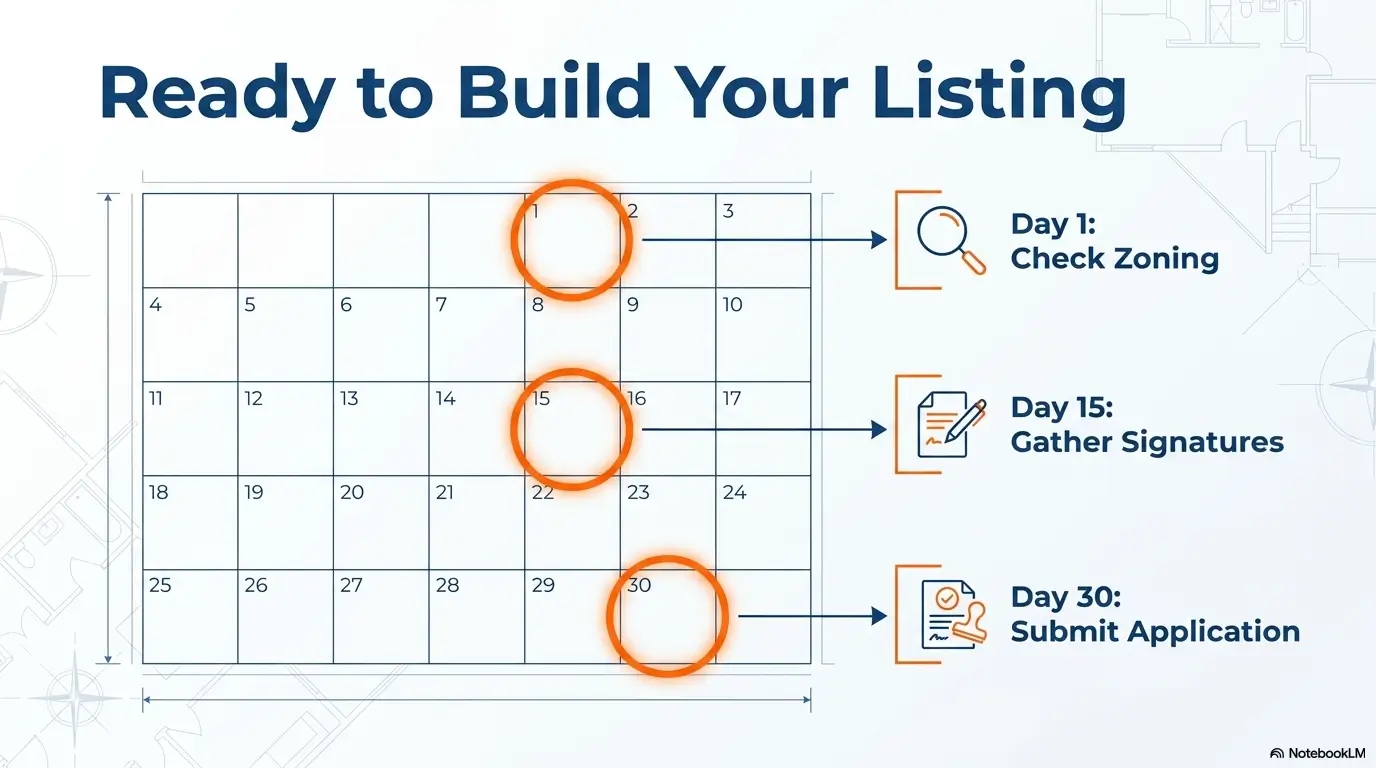
FAQ: Korea Airbnb Rules for Apartment Owners
Can I legally run Airbnb from an apartment in South Korea?
Possibly, but apartment ownership alone is not enough. A common route is foreign-tourist urban-homestay registration, which generally requires an eligible residential classification, genuine host residence, foreign-tourist guests, compliance with area and safety standards, local registration, and any required apartment-management consent.
Must I live in the apartment while hosting?
The urban-homestay category is defined around a resident using the home in which the resident lives. Actual residence is therefore central. Ask the district office how temporary travel, whole-unit reservations, and household-member hosting are treated in your circumstances.
Can I rent the entire apartment while I am overseas?
A routine absentee model is difficult to reconcile with resident home-sharing. A brief trip does not necessarily settle the question either way, but repeated whole-unit letting while the supposed host lives overseas can undermine the residence requirement. Obtain address-specific advice before listing.
Can a foreign resident register an urban homestay?
Nationality is not the only issue. The applicant must satisfy the applicable residence, property, registration, and document requirements. Foreign applicants should ask the local office which residence-status, identification, criminal-disqualification, or translated documents are required.
Are Korean citizens allowed to stay in a foreign-tourist urban homestay?
The standard category is aimed at foreign tourists. A narrow exception exists for certain qualifying urban-regeneration village enterprises, not ordinary apartment hosts generally. Mixed-nationality groups should be confirmed with the district office before the booking is accepted.
Do I need permission from the apartment management office?
It may be required under the complex’s management rules and local registration practice. Seoul enforcement guidance has referred to majority resident consent under relevant management bylaws for affected 공동주택. Ask for the exact rule and required evidence for your building.
Is an officetel eligible for Airbnb registration?
An officetel is not among the housing types listed for the foreign-tourist urban-homestay route, and Airbnb states that officetels are not permitted as Korean listings. Do not rely on residential use, interior design, or an estate agent’s description to overcome the official building classification.
Do I need both lodging registration and business registration?
Regular profit-seeking hosting commonly requires both the relevant accommodation registration and National Tax Service business registration. An online-sales business report may also apply. Confirm the sequence and filings with the district office and a Korean tax professional.
Your 15-Minute Property Precheck
Before opening Airbnb, opening a furniture catalogue, or opening your wallet, create a one-page property brief. It will not replace the application, but it will turn a vague inquiry into a useful conversation.
- Write the apartment’s full Korean address.
- Copy the official building-use classification from the building register.
- Record the total floor area shown in the official document.
- State whether you own, rent, co-own, or hold the property through another arrangement.
- Describe who actually lives there and how that residence can be documented.
- Summarise the proposed guest type, room arrangement, and periods of operation.
- Attach or identify the apartment-management rule governing lodging or commercial use.
- Send the brief to the tourism or lodging officer for the property’s district.
Ask one final question in writing: “Based on this building classification, residence arrangement, and guest model, which accommodation category may be available, and what exact local documents must be submitted before operation?”
That message is modest, but it changes the order of events. Instead of using bookings to test legality, you use records to test the business. The result may be permission, a revised plan, or a firm stop. Each is more valuable than an attractive calendar built on the wrong apartment.
Final takeaway
The legal question is not whether Airbnb exists in Korea. It is whether this host, at this address, in this building, serving these guests, under these community rules, has completed the correct registration and business files.
Last reviewed: 2026-09